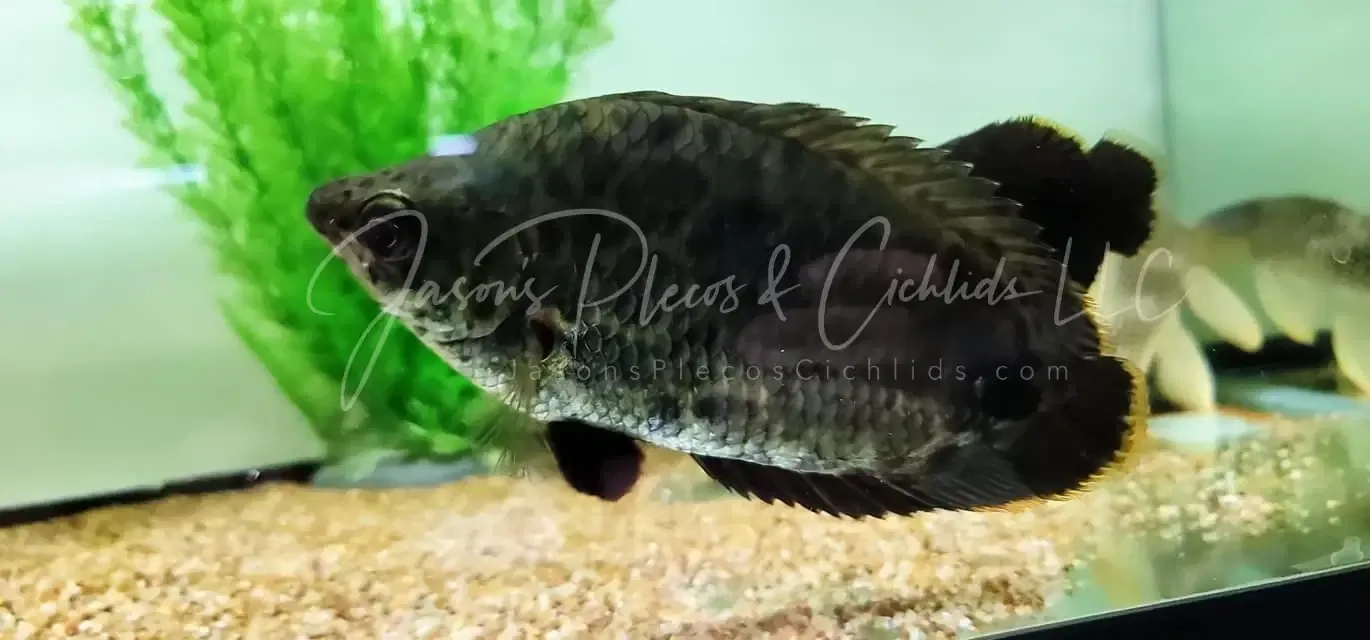
African Leopard Leaf Fish - (Ctenopoma Acutirostre)
$50.00
Sold out
Size
Price of shipping is not included.
Sold out
Save this fish to my favorites.
Customer reviews
Reviews only from verified customers
No reviews yet. You can buy this product and be the first to leave a review.
African Leopard Leaf Fish - (Ctenopoma Acutirostre)
Fish Details, Description and Information Below:
🐆 African Leopard Leaf Fish – (Ctenopoma acutirostre) – Congo Basin Ambush Predator
The African Leopard Leaf Fish (Ctenopoma acutirostre), also commonly called the Leopard Bushfish, Leopard Ctenopoma, Spotted Ctenopoma, or Spotted Climbing Perch, is an unusual Central African labyrinth fish famous for its leopard-like pattern, large eyes, leaf-like camouflage, and patient ambush-predator behavior.
Rather than actively chasing prey throughout the aquarium, this species often remains nearly motionless among:
- Plants
- Roots
- Driftwood
- Shadows
- Floating vegetation
waiting for a smaller fish, shrimp, insect, or other food item to move within striking distance.
Its mottled cream, tan, brown, olive, and black pattern allows it to blend remarkably well with aquatic vegetation and submerged structure.
One of the most important things customers should understand is that the Leopard Leaf Fish has a:
SURPRISINGLY LARGE, EXTENDABLE MOUTH
A tankmate that appears reasonably large may still be swallowed if the Leopard Leaf Fish can fit it into its mouth.
🔎 Quick Facts – African Leopard Leaf Fish
- 📛 Common Name: African Leopard Leaf Fish
- 📛 Other Names: Leopard Bushfish, Leopard Ctenopoma, Spotted Ctenopoma, Spotted Climbing Perch
- 🔬 Scientific Name: Ctenopoma acutirostre
- 📅 Described: 1899
- 🐟 Family: Anabantidae
- 🧬 Group: Labyrinth / Air-Breathing Fish
- 🌎 Origin: Central Africa
- 🌊 Native Drainage: Congo River Basin
- 🇨🇫 Native Country: Central African Republic
- 🇨🇬 Native Country: Republic of the Congo
- 🇨🇩 Native Country: Democratic Republic of the Congo
- 💧 Water Type: Freshwater
- 📏 Scientific Maximum: Approximately 15 cm / 6 inches total length
- 🏠 Recommended Aquarium: 55 gallons or larger
- 👥 Multiple Adults: 75+ gallons with substantial cover preferred
- 🌡️ Temperature: Approximately 73–82°F
- 💧 pH: Approximately 6.0–8.0
- 💦 Hardness: Approximately 5–12 dGH
- 🌊 Water Movement: Low to Moderate
- 💨 Surface Access: Essential
- 🌿 Cover: Dense plants, floating plants, roots and driftwood strongly recommended
- 🍽️ Diet: Carnivore / Ambush Predator
- 🦐 Primary Foods: Invertebrate and animal-based foods
- 🐟 Small Fish: May be eaten
- 🦐 Small Shrimp: May be eaten
- 😌 Temperament: Generally calm toward fish too large to swallow
- ⚠️ Predatory: Yes
- ⚠️ Conspecific Behavior: Territorial behavior can occur
- 🌙 Activity: Crepuscular / nocturnal
- 🫁 Air Breathing: Yes
- 🥚 Breeding: Captive breeding documented but uncommon
- 🫧 Bubble Nest: Reports are inconsistent
- 👶 Parental Care: No dependable parental care
- ⭐ Care Level: Intermediate
- 🌎 IUCN Status: Least Concern
🧬 Valid Scientific Species
The currently accepted scientific name is:
Ctenopoma acutirostre
The species was described by:
Jacques Pellegrin in 1899
and remains recognized as a valid member of the:
ANABANTIDAE
family.
For this product, use:
African Leopard Leaf Fish – (Ctenopoma acutirostre)
⚠️ Capitalization of the Scientific Name
The correct scientific spelling is:
Ctenopoma acutirostre
not:
Ctenopoma Acutirostre
In scientific names:
- Genus: Capitalized
- Species: Lowercase
🌎 Important Origin Correction
The older listing describes this species as originating from:
Central & West Africa
That is too broad.
The better description is:
CENTRAL AFRICA – CONGO RIVER BASIN
Confirmed distribution includes portions of the:
- Middle Congo River Basin
- Lower Congo River
- Ubangi system
- Kasai system
- Kwilu
- Itimbiri
- Ruki drainage
- Pool Malebo region
🇨🇫 🇨🇬 🇨🇩 Native Countries
Scientifically documented native range includes:
- Central African Republic
- Republic of the Congo
- Democratic Republic of the Congo
This is fundamentally a:
CONGO BASIN SPECIES
📍 Type Locality
The original scientific type locality is:
DIÉLÉ
in what was historically referred to as:
FRENCH CONGO
The modern range is much broader throughout portions of the Congo River system.
🐆 Leopard Pattern
The most recognizable characteristic of Ctenopoma acutirostre is its elaborate camouflage.
Body coloration may include:
- Cream
- Beige
- Tan
- Gold-brown
- Olive
- Gray-brown
covered with:
- Dark brown spots
- Black blotches
- Irregular rings
- Broken markings
🎨 Individual Pattern Variation
No two fish necessarily develop exactly the same:
- Spot arrangement
- Background color
- Amount of brown
- Amount of gold
- Darkness
Appearance can also change with:
- Lighting
- Stress
- Aquarium background
- Age
- Mood
- Water quality
👁️ Large Eyes
The Leopard Leaf Fish has noticeably:
LARGE EYES
that suit its crepuscular and ambush-oriented lifestyle.
These help the fish detect prey while moving through:
- Shaded vegetation
- Dark water
- Submerged roots
- Dimly lit habitats
🍂 Leaf-Like Camouflage
The fish's laterally compressed body and irregular pattern allow it to resemble:
- A dead leaf
- Bark
- Vegetation
- Shadowed wood
while remaining almost perfectly still.
This camouflage allows the fish to approach prey without immediately being recognized as a predator.
🎯 Ambush Predator
The African Leopard Leaf Fish is not normally a high-speed pursuit predator.
Instead, it uses:
STEALTH + PATIENCE + CAMOUFLAGE
It may:
- Remain motionless.
- Slowly drift toward prey.
- Position itself at close range.
- Suddenly extend its mouth.
- Swallow the prey in a rapid strike.
😮 Surprisingly Large Mouth
One of the biggest mistakes when selecting tankmates is judging prey size by the Leopard Leaf Fish's body width.
Its mouth can open:
MUCH WIDER THAN MANY OWNERS EXPECT
Therefore:
IF A FISH CAN FIT INTO ITS MOUTH, IT MAY EVENTUALLY BECOME FOOD.
📏 Adult Size
FishBase documents a maximum size of:
15 CM TOTAL LENGTH
or approximately:
6 INCHES
For permanent aquarium planning:
EXPECT APPROXIMATELY 5–6 INCHES
for a mature specimen.
⚠️ Do Not Exaggerate Adult Size
Some aquarium websites report:
- 7 inches
- 8 inches
- Occasionally larger
However, the established scientific reference gives:
15 CM / APPROXIMATELY 6 INCHES TOTAL LENGTH
Therefore, approximately:
5–6 INCHES
is the most defensible adult planning size.
🏠 Aquarium Size
The previous listing recommends:
40 GALLONS
I would increase the permanent recommendation to:
55 GALLONS OR LARGER
for an adult.
The additional space allows for:
- Dense cover
- Territory
- Proper tankmates
- Open hunting areas
- Stable water quality
👥 Multiple Leopard Leaf Fish
Multiple specimens may sometimes be maintained together, particularly when:
- Raised together
- Introduced simultaneously
- Provided substantial cover
- Given sufficient territory
However:
ADULT TERRITORIAL BEHAVIOR CAN OCCUR
For multiple mature specimens:
75+ GALLONS
with extensive structure is a safer starting point.
📐 Aquarium Footprint
This is not an especially frantic swimmer.
The aquarium should prioritize:
- Horizontal swimming space
- Plant cover
- Shelter
- Territories
rather than extreme aquarium height.
🌿 Dense Cover Is Important
The African Leopard Leaf Fish feels most secure in an aquarium containing:
- Live plants
- Artificial plants
- Tall vegetation
- Floating plants
- Driftwood
- Roots
- Branches
- Rock shelters
A completely open, brightly lit aquarium can leave the fish feeling exposed.
🌱 Floating Plants
Floating vegetation is especially useful.
It provides:
- Shade
- Security
- Reduced light intensity
- Natural hunting cover
- Surface structure
Suitable floating cover can create a much more natural environment.
🌑 Subdued Lighting
Bright aquarium lighting is usually unnecessary.
The species generally appreciates:
SUBDUED OR PARTIALLY SHADED LIGHTING
A combination of:
- Floating plants
- Driftwood
- Tall plants
can produce the shaded areas the fish prefers.
🪵 Driftwood & Roots
Driftwood can provide:
- Shelter
- Territorial boundaries
- Ambush positions
- Shaded resting areas
- Natural appearance
Complex branch and root structures are especially useful.
🍂 Leaf Litter
Aquarium-safe leaf litter can also be used to create a natural Congo-style environment.
Leaf litter provides:
- Visual cover
- Darker substrate
- Natural structure
- Microhabitats
Make sure decomposing organic material does not overwhelm the filtration system.
🌊 Water Movement
The African Leopard Leaf Fish does not require:
HIGH-VELOCITY CURRENT
A better environment provides:
LOW TO MODERATE WATER MOVEMENT
with good overall water quality.
Avoid positioning the fish where it must constantly fight a powerful current.
💧 Water Parameters
A practical long-term range is:
- 🌡️ Temperature: Approximately 73–82°F
- 💧 pH: Approximately 6.0–8.0
- 💦 Hardness: Approximately 5–12 dGH
- 🌊 Water Movement: Low to Moderate
- ☠️ Ammonia: 0 ppm
- ☠️ Nitrite: 0 ppm
- 🔄 Nitrate: Keep reasonably low
⚠️ pH Is More Flexible Than the Older Listing
The previous page uses:
pH 6.0–7.0
FishBase gives a broader documented range of approximately:
pH 6.0–8.0
The fish therefore does not require extremely acidic water.
Stable conditions are more important than constantly attempting to adjust the pH.
🌡️ Temperature
A practical captive range is:
73–82°F
The species can tolerate a reasonably broad tropical temperature range.
For routine maintenance, approximately:
75–80°F
works well in many aquariums.
🫁 Air-Breathing Labyrinth Fish
One of the most fascinating features of Ctenopoma acutirostre is its ability to:
BREATHE ATMOSPHERIC AIR
It belongs to the same broad labyrinth-fish group that includes:
- Gouramis
- Bettas
- Climbing perches
🧠 Labyrinth Organ
The fish possesses a specialized:
LABYRINTH ORGAN
that allows it to obtain oxygen from air at the water's surface.
You may occasionally see the fish:
- Swim toward the surface.
- Take a gulp of air.
- Return to its territory.
This is normal behavior.
🚨 Surface Access Must Remain Open
Because it breathes atmospheric air:
DO NOT COMPLETELY BLOCK ACCESS TO THE WATER SURFACE
Floating plants are excellent, but there should always be open spaces where the fish can reach air.
⚠️ Air Breathing Does Not Mean Dirty Water Is Acceptable
The ability to breathe atmospheric oxygen does not mean this species should be kept in:
- Dirty water
- High ammonia
- High nitrite
- Excessive nitrate
- Poorly maintained aquariums
Maintain:
CLEAN, STABLE WATER
at all times.
🪟 Use a Secure Aquarium Cover
A secure lid is strongly recommended.
Labyrinth fish can occasionally:
JUMP
particularly when:
- Startled
- Chased
- Newly introduced
A fitted aquarium cover also helps maintain a warmer, humid layer of air above the water.
🍽️ Diet – Carnivorous Ambush Predator
The African Leopard Leaf Fish is primarily:
CARNIVOROUS
Its natural feeding behavior focuses on:
- Small fish
- Aquatic insects
- Insect larvae
- Crustaceans
- Other small aquatic animals
🦐 Recommended Aquarium Foods
Excellent foods include:
- Mysis shrimp
- Krill
- Bloodworms
- Brine shrimp
- Earthworms
- Chopped shrimp
- Chopped prawn
- Insect larvae
- Appropriate frozen carnivore foods
- Quality carnivore pellets
🪱 Earthworms
Properly sourced earthworms can be an excellent food.
Depending on fish size, worms can be:
- Offered whole
- Cut into appropriately sized pieces
Avoid collecting worms from areas that may have been exposed to:
- Pesticides
- Herbicides
- Chemicals
🦐 Shrimp & Prawn
Chopped:
- Shrimp
- Prawn
- Krill
can provide excellent animal protein.
Use appropriately sized pieces that can be swallowed safely.
🧊 Frozen Foods
Many Leopard Leaf Fish readily accept frozen foods once acclimated.
Useful options include:
- Mysis
- Bloodworms
- Krill
- Brine shrimp
- Other quality frozen carnivore foods
🟤 Prepared Foods
Some specimens can be trained to accept:
- Floating carnivore pellets
- Slow-sinking carnivore pellets
- Other quality prepared foods
However:
NOT EVERY INDIVIDUAL ACCEPTS DRY FOODS IMMEDIATELY
🍽️ Transitioning to Prepared Food
New fish may initially recognize only moving or frozen foods.
A gradual transition can involve:
- Feeding familiar frozen foods.
- Introducing pellets at the same time.
- Allowing the fish to associate prepared food with feeding.
- Gradually reducing dependence on live foods.
🚫 Avoid Routine Feeder Fish
There is no need to use feeder fish as the staple diet.
Feeder fish can introduce:
- Parasites
- Bacteria
- Disease
- Poor nutritional balance
Safer alternatives include:
- Frozen foods
- Shrimp
- Earthworms
- Insect foods
- Quality carnivore pellets
🦐 Small Shrimp Are Potential Food
Do not assume ornamental shrimp are safe.
Small:
- Neocaridina
- Ghost shrimp
- Other dwarf shrimp
may be hunted and eaten.
🐟 Small Fish Are Potential Food
Avoid tankmates such as:
- Neon-sized tetras
- Small rasboras
- Guppy fry
- Endler-sized fish
- Small livebearers
- Very small barbs
An adult Leopard Leaf Fish may view them as:
PREY
rather than tankmates.
😌 Temperament – Predator Does Not Mean Hyper-Aggressive
The current listing describes the fish as:
TERRITORIAL AND PREDATORY
which is partly correct.
However, the Leopard Leaf Fish is generally:
MUCH MORE PREDATORY THAN AGGRESSIVE
toward unrelated fish.
It often ignores peaceful fish that are:
TOO LARGE TO SWALLOW
🐠 Suitable Tankmates
Possible tankmates include appropriately sized, peaceful species such as:
- Larger Congo tetras
- Medium-sized peaceful African fish
- Larger peaceful barbs
- Peaceful gouramis
- Medium-sized catfish
- Larger Corydoras where temperature overlaps
- Appropriate plecos
- Other calm fish too large to swallow
⚠️ Tankmate Size Matters More Than Length Alone
A long but extremely slender fish may still be swallowed.
When choosing tankmates, consider:
- Body depth
- Body width
- Mouth size of the Leopard Leaf Fish
not simply the tankmate's length.
🚫 Avoid Very Aggressive Cichlids
Large aggressive cichlids are generally poor companions.
They may:
- Harass the Leopard Leaf Fish
- Injure it
- Outcompete it for food
- Prevent it from using preferred shelter
This fish is a stealth predator, not a bruiser.
🚫 Avoid Hyperactive Food Competitors
Fast, aggressive feeders can cause problems because the Leopard Leaf Fish often feeds:
DELIBERATELY
rather than charging into a feeding frenzy.
Make sure each fish receives enough food.
🌙 Crepuscular / Nocturnal Behavior
Activity often increases:
- At dusk
- During dim lighting
- At night
- Around feeding time
Its large eyes and camouflage are well suited to hunting under lower light conditions.
☀️ Daytime Behavior
During the day, the fish may:
- Hover beneath plants
- Rest near driftwood
- Remain almost motionless
- Slowly patrol shaded areas
A motionless Leopard Leaf Fish is not necessarily sick.
Remaining still is part of its normal hunting strategy.
🎯 Fascinating Hunting Behavior
One of the most interesting things about keeping this species is watching it slowly:
- Angle its body
- Drift toward prey
- Hide behind vegetation
- Remain motionless
- Strike suddenly
Its hunting strategy can make the fish appear more like:
A FLOATING LEAF
than an active predator.
♂️ Male vs. Female
Sexing the African Leopard Leaf Fish is:
DIFFICULT
especially in juveniles.
♂️ Mature Males
Mature males have been reported to develop:
SMALL SPINES / SERRATIONS AROUND THE GILL COVER
that may be more noticeable than in females.
Some reports also describe differences in texture near the caudal region.
♀️ Mature Females
Females may develop:
- Fuller abdominal shape when carrying eggs
but body shape alone is not a dependable method of sexing.
⚠️ Sell as Unsexed
Unless a mature fish has been confidently examined:
SELL AS UNSEXED
Color and leopard pattern do not reliably indicate sex.
🥚 Captive Breeding – Documented but Uncommon
The African Leopard Leaf Fish has:
BEEN BRED IN CAPTIVITY
but successful reproduction remains relatively uncommon.
This is not generally considered an easy breeding species.
⚠️ Bubble Nest Information Is Conflicting
Many aquarium guides state that Ctenopoma acutirostre:
BUILDS A BUBBLE NEST
However, other detailed breeding accounts describe it primarily as:
AN EGG-SCATTERING SURFACE SPAWNER
with buoyant eggs and only occasional reports of a small bubble nest.
Therefore, I would not present elaborate bubble-nest construction as an absolute species fact.
🫧 Safest Breeding Description
The most accurate wording is:
CAPTIVE SPAWNING IS DOCUMENTED, WITH EGGS RELEASED NEAR THE SURFACE; SOME SPAWNS HAVE BEEN ASSOCIATED WITH A SMALL BUBBLE NEST.
This reflects the uncertainty in the available breeding literature.
🌿 Breeding Setup
Successful breeding attempts generally use:
- Large aquarium
- Warm water
- Soft water
- Slightly acidic conditions
- Floating plants
- Dense vegetation
- Calm environment
Floating plants can provide cover for buoyant eggs.
💕 Spawning
During spawning, adults may:
- Pair temporarily
- Move near the surface
- Circle or embrace
- Release eggs and sperm into the water
The fertilized eggs are:
BUOYANT
and move toward the surface vegetation.
🚫 No Dependable Parental Care
Unlike some gouramis and bettas:
DO NOT RELY ON THE ADULTS TO PROTECT THE EGGS OR FRY
Adults may consume:
- Eggs
- Newly hatched fry
For serious breeding attempts, separating the adults after spawning is generally safer.
🐣 Fry
The fry are:
EXTREMELY SMALL
when they begin feeding.
First foods may include:
- Infusoria
- Rotifers
- Other microscopic live foods
followed later by:
- Newly hatched brine shrimp
- Larger live fry foods
⚠️ Raising Fry Is Difficult
Even when adults spawn successfully:
FRY SURVIVAL CAN BE LOW
This is one reason captive breeding remains uncommon.
Maintaining extremely small fry requires:
- Appropriate microscopic food
- Excellent water quality
- Stable temperature
- Gentle filtration
- Careful husbandry
🫁 Developing Labyrinth Fish Fry
A warm, humid air layer above the breeding aquarium can be helpful as young labyrinth fish develop their air-breathing structures.
Use a:
SECURE COVER
while still maintaining appropriate ventilation and water quality.
🌎 Conservation Status
Ctenopoma acutirostre is currently classified as:
LEAST CONCERN
on the IUCN Red List.
The assessment cited by FishBase dates to:
2009
and remains the status shown in the current FishBase/IUCN dataset.
📜 CITES
Ctenopoma acutirostre is:
NOT CURRENTLY LISTED BY CITES
according to FishBase's current species information.
⭐ Why Keep an African Leopard Leaf Fish?
The African Leopard Leaf Fish combines:
- 🐆 Beautiful leopard camouflage
- 🍂 Leaf-like hunting behavior
- 👁️ Large watchful eyes
- 🎯 Fascinating ambush-predator behavior
- 🫁 Atmospheric air breathing
- 🌿 Excellent planted-aquarium appearance
- 🌎 Congo Basin origin
- 📏 Manageable approximately 6-inch adult size
- 😌 Relatively calm behavior toward non-prey fish
- 🌙 Interesting nighttime activity
into one of the most distinctive African freshwater predators available to aquarium keepers.
⚠️ Important Considerations
Before purchasing an African Leopard Leaf Fish:
- The correct scientific name is Ctenopoma acutirostre.
- The species was formally described in 1899.
- It belongs to the family Anabantidae.
- It is an air-breathing labyrinth fish.
- Always leave access to atmospheric air.
- The species is native to the Congo River Basin of Central Africa.
- Remove the older “Central & West Africa” wording.
- Scientific records include the Central African Republic, Republic of the Congo, and Democratic Republic of the Congo.
- FishBase documents approximately 15 cm / 6 inches maximum total length.
- Plan for approximately 5–6 inches as an adult.
- Provide approximately 55 gallons or larger for permanent housing.
- Use larger aquariums for multiple adults.
- Provide dense vegetation and substantial cover.
- Floating plants are strongly recommended.
- Keep lighting subdued or provide shaded areas.
- Provide low to moderate water movement.
- Maintain approximately 73–82°F.
- Maintain approximately pH 6.0–8.0.
- Maintain ammonia and nitrite at zero.
- Provide a secure aquarium lid.
- This is a carnivorous ambush predator.
- Feed meaty frozen, fresh, live, and quality prepared foods.
- Avoid relying on feeder fish.
- Small fish may be eaten.
- Small shrimp may be eaten.
- Choose peaceful tankmates that are clearly too large to swallow.
- Species-only housing is not automatically necessary.
- Avoid very aggressive cichlids and hyperactive food competitors.
- Sexing is difficult.
- Mature males may develop small spines around the gill covers.
- Sell unsexed unless confidently identified.
- Captive breeding has been documented.
- Breeding remains uncommon.
- Reports regarding bubble-nest construction are inconsistent.
- Do not state that L201-style cave spawning or strong parental care occurs—this is a completely different reproductive strategy.
- Adults should not be relied upon to protect eggs or fry.
- The species is currently Least Concern.
- Never release aquarium fish into natural waterways.
🧬 Taxonomy
The currently accepted scientific name is:
Ctenopoma acutirostre Pellegrin, 1899
Classification:
- Order: Anabantiformes
- Family: Anabantidae
- Genus: Ctenopoma
- Species: acutirostre
Native range:
CONGO RIVER BASIN – CENTRAL AFRICA
For this product, use:
African Leopard Leaf Fish – (Ctenopoma acutirostre)
🫁 Labyrinth-Fish Disclaimer
The African Leopard Leaf Fish is an air-breathing member of the family Anabantidae.
It requires:
UNOBSTRUCTED ACCESS TO THE WATER SURFACE
Floating plants should not completely cover the aquarium.
A secure cover is recommended because the species may jump when frightened.
Its ability to breathe atmospheric air does not reduce the need for:
- Clean water
- Proper filtration
- Regular water changes
🐟 Predator Disclaimer
The African Leopard Leaf Fish is an:
AMBUSH PREDATOR
Any fish, shrimp, or other aquatic animal small enough to fit into its mouth may be viewed as prey.
Tankmate compatibility cannot be determined by temperament alone.
Always consider:
- Adult size
- Body depth
- Mouth size
- Feeding behavior
before combining species.
🚚 Live Fish Shipping
Live fish are professionally packed for safe transport.
Shipping availability depends on:
- Fish size
- Destination
- Weather conditions
- Carrier availability
- Applicable state and local regulations
Please review our Shipping & Payment Information and Live Arrival Guarantee / DOA Policy before ordering.
⚠️ Buyer Responsibility
Customers are responsible for confirming that Ctenopoma acutirostre may legally be purchased, possessed, transported, and received in their state or local jurisdiction before ordering.
Never release aquarium fish into natural waterways.
Below are fish you may also like.
Captive Bred
Ocellated Shell-Dweller - (Lamprologus kungweensis)
Ocellated Shell-Dweller - (Lamprologus kungweensis)
Price of shipping is not included.
$400.00
Out of stock
Wild Caught
Jardini Arowana - (Scleropages jardinii)
Jardini Arowana - (Scleropages jardinii)
Price of shipping is not included.
5.0
(1)
was $260.00
Save 4%
$250.00
Out of stock
Wild Caught
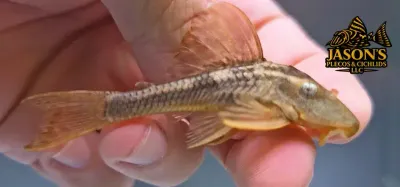
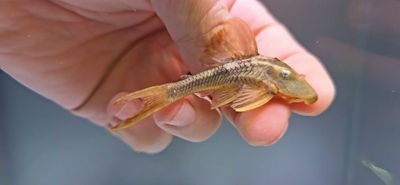
L137 Blue Eyed Red Fin Pleco - (Hypostomus soniae)
L137 Blue Eyed Red Fin Pleco - (Hypostomus soniae)
Price of shipping is not included.
was $50.00
Save 10%
$45.00
Out of stock
Wild Caught
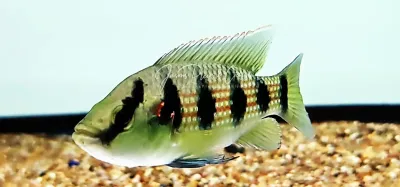
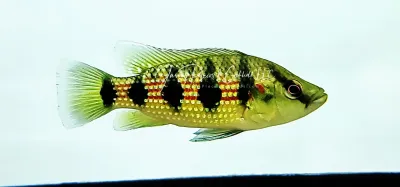
Five Star General Cichlid - (Hemichromis elongatus)
Five Star General Cichlid - (Hemichromis elongatus)
Price of shipping is not included.
$35.00
Out of stock
Wild Caught
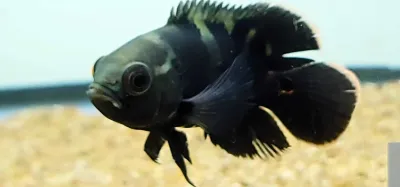
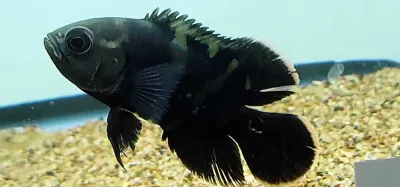
Bumblebee Oscar - (Astronotus crassipinnis)
Bumblebee Oscar - (Astronotus crassipinnis)
Price of shipping is not included.
$60.00
Out of stock
Wild Caught
Sharpnose Pike Cichlid - (Crenicichla acutirostris- Fire Stripe)
Sharpnose Pike Cichlid - (Crenicichla acutirostris- Fire Stripe)
Price of shipping is not included.
$80.00
Out of stock
Captive Bred
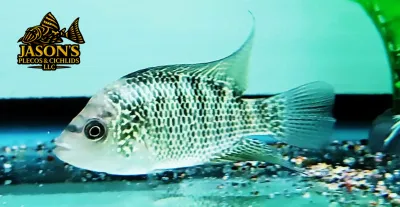
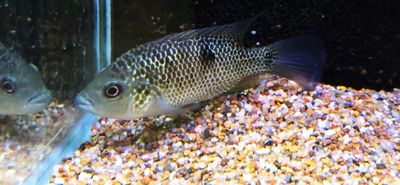
Beani Cichlid/Green Guapote Cichlid - (Mayaheros Beani)
Beani Cichlid/Green Guapote Cichlid - (Mayaheros Beani)
Price of shipping is not included.
$250.00
Out of stock
Wild Caught
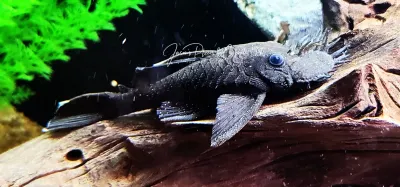
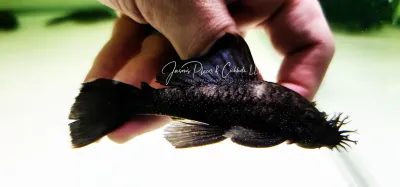
L183 Starlight Bristlenose Pleco - (Ancistrus dolichopterus)
L183 Starlight Bristlenose Pleco - (Ancistrus dolichopterus)
Price of shipping is not included.
was $80.00
Save 6%
$75.00
Out of stock
Wild Caught
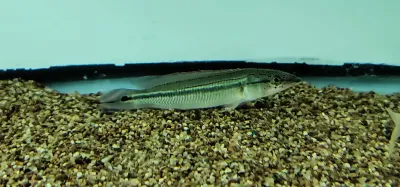
Striped Pike Cichlid/Tapajos Strigata Pike Cichlid - (Crenicichla strigata)
Striped Pike Cichlid/Tapajos Strigata Pike Cichlid - (Crenicichla strigata)
Price of shipping is not included.
$30.00
Out of stock
Wild Caught


Red Hump Eartheater - (Geophagus steindachneri)
Red Hump Eartheater - (Geophagus steindachneri)
Price of shipping is not included.
5.0
(1)
was $75.00
Save 7%
$70.00
Out of stock
Captive Bred
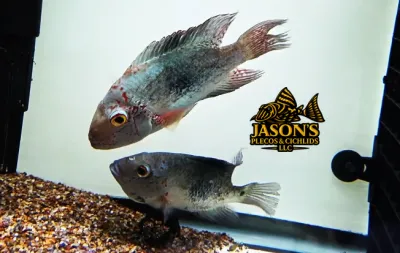
Nautla cichlid - (Hericthys Deppi) - Breeding Pair
Nautla cichlid - (Hericthys Deppi) - Breeding Pair
Price of shipping is not included.
5.0
(4)
was $400.00
Save 10%
$360.00
Out of stock
Captive Bred
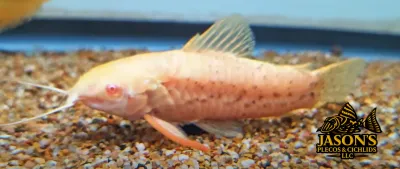
Albino Spotted Hoplo - (Megalechis thoracata)
Albino Spotted Hoplo - (Megalechis thoracata)
Price of shipping is not included.
5.0
(1)
was $45.00
Save 11%
$40.00
Out of stock
Powered by Lightspeed
Display prices in:USD