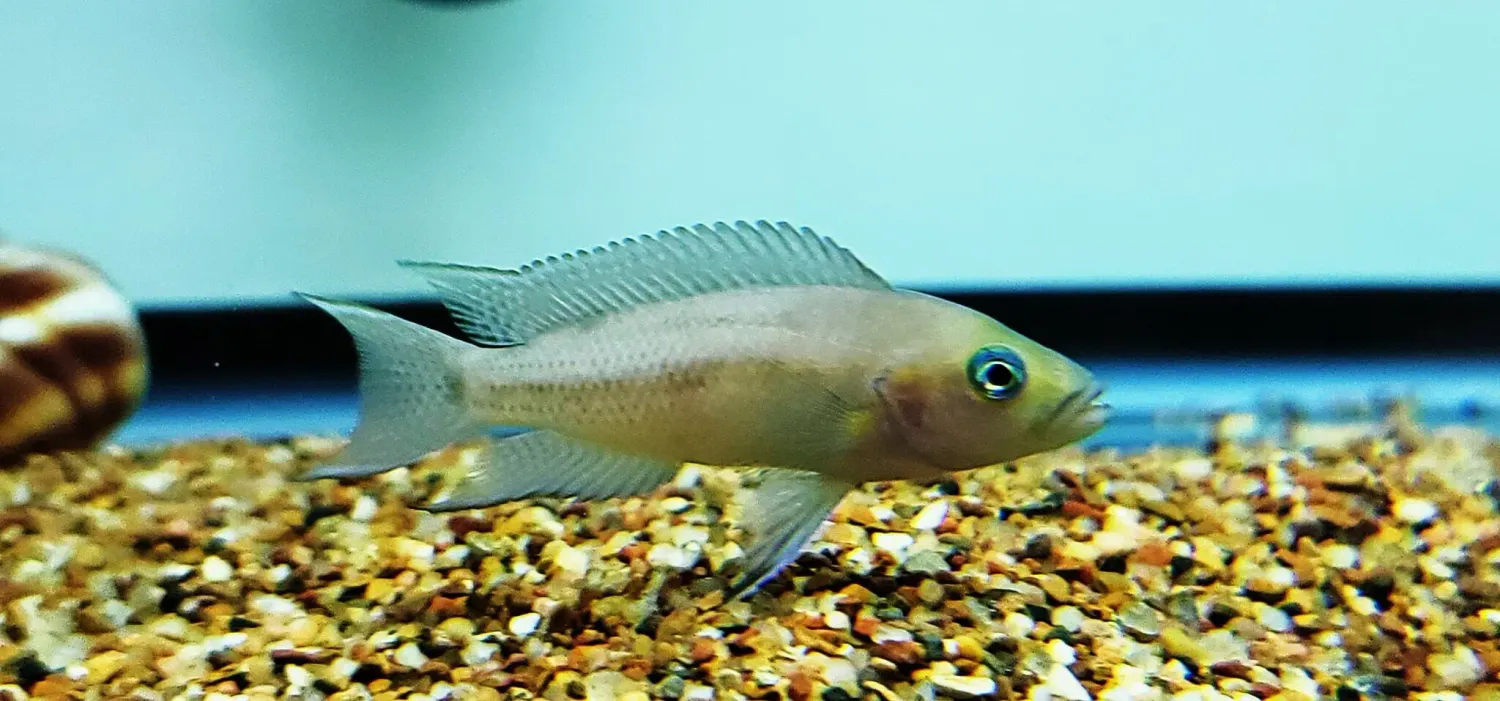
Neolamprologus cygnus
$20.00
Sold out
Size
Price of shipping is not included.
Sold out
Save this fish to my favorites.
Customer reviews
Reviews only from verified customers
No reviews yet. You can buy this product and be the first to leave a review.
Neolamprologus cygnus
Fish Details, Description and Information Below:
🐟 Neolamprologus sp. ‘Cygnus’ – Undescribed Lake Tanganyika Rock-Dwelling Cichlid
The Neolamprologus sp. ‘Cygnus’ is an unusual and highly specialized Lake Tanganyika cichlid known for its elegant elongated body, long flowing fins, subtle adult coloration, and dramatically colorful juveniles.
Unlike many of the familiar “Princess” cichlids from Lake Tanganyika, Neolamprologus sp. ‘Cygnus’ does not normally form large multigenerational colonies. Instead, adults typically live as pairs, establish relatively small rocky territories, and produce unusually small broods.
The species is native to the southern Tanzanian coastline of Lake Tanganyika, where it inhabits predominantly rocky habitat from approximately Cape Mpimbwe south toward Polombwe Bay.
It is especially interesting because coloration varies substantially by collection locality. Depending on where the fish originated, adults may develop:
- Yellowish heads
- Yellow pectoral fins
- Orange pectoral markings
- Orange-brown body coloration
- Orange tails
- Yellow fin margins
- Blue highlights
- Dark mature fin margins
Juveniles can be considerably more colorful than adults, often displaying striking combinations of:
- Yellow
- Orange
- Blue
- Dark facial markings
This fish is still scientifically undescribed, so the most accurate identification remains:
Neolamprologus sp. ‘Cygnus’
🔎 Quick Facts – Neolamprologus sp. ‘Cygnus’
- 📛 Common Name: Cygnus
- 🔬 Scientific Identification: Neolamprologus sp. ‘Cygnus’
- 📚 Alternative Hobby Name: Neolamprologus sp. ‘falcicula cygnus’
- 🧬 Taxonomic Status: Scientifically Undescribed / Potential Species
- 🐟 Family: Cichlidae
- 🧬 Tribe: Lamprologini
- 🌍 Origin: Africa
- 🌊 Native Lake: Lake Tanganyika
- 🇹🇿 Primary Country: Tanzania
- 📍 Distribution: Southern Tanzanian shoreline from approximately Cape Mpimbwe south to Polombwe Bay
- 🪨 Natural Habitat: Predominantly sediment-free rocky habitat
- 🌊 Natural Depth: Commonly around 5 meters, recorded to approximately 30 meters
- 📏 Adult Size: Approximately 9 cm / 3.5 inches total length
- ♂️ Male Size: Usually slightly larger than females
- 🏠 Recommended Aquarium for a Pair: Approximately 30–40 gallons or larger
- 🏠 Community Aquarium: Larger aquarium strongly preferred
- 🌡️ Temperature: Approximately 73–79°F
- 💧 pH: Approximately 7.8–9.0
- 💦 Water: Hard, alkaline Lake Tanganyika freshwater
- 💨 Oxygenation: Good to High
- 🌊 Water Movement: Moderate
- 🪨 Aquarium Décor: Extensive rockwork, caves and crevices
- 🍽️ Diet: Carnivore / Invertebrate & Plankton Feeder
- 🦐 Natural Foods: Small invertebrates and plankton
- 😠 Temperament: Territorial
- ⚠️ Conspecific Aggression: Can be aggressive toward its own species
- 👫 Social Structure: Usually pairs; sometimes one male with multiple females in captivity
- 🚫 Colonial Species: No
- 🥚 Breeding: Cave / Rock-Crevice Spawner
- 👶 Typical Brood: Very small, often approximately 1–5 fry
- ⭐ Care Level: Intermediate
- 🌎 IUCN Status: Not Evaluated as an undescribed form
⚠️ Important Scientific Name Correction
The older product page identifies this fish as:
Neolamprologus cygnus
That makes the name look like a formally described species.
It currently is not.
The most accurate identification is:
Neolamprologus sp. ‘Cygnus’
The:
sp.
means that this fish is recognized as belonging to the genus:
Neolamprologus
but it has not yet been given a formally published scientific species name.
🧬 Still an Undescribed Species
Modern scientific studies continue to recognize:
Neolamprologus sp. ‘cygnus’
as an undescribed or potential species.
It has also historically appeared under the aquarium designation:
Neolamprologus sp. ‘falcicula cygnus’
because of its similarity to:
Neolamprologus falcicula
However, modern Lake Tanganyika specialists generally treat Cygnus as a separate geographical and biological form deserving its own provisional identity.
🦢 Why Is It Called “Cygnus”?
The provisional name:
CYGNUS
comes from a Latinized form of the Greek word for:
SWAN
The name fits the fish's elegant appearance, particularly its:
- Slender body
- Extended fins
- Graceful swimming
- Long caudal-fin lobes
📜 Aquarium Hobby History
The Cygnus cichlid was reportedly discovered in:
1988
by Walter Dieckhoff.
Ad Konings later introduced the provisional Cygnus name to the aquarium community.
Early aquarium exports began around:
1991
with fish collected from the Kipili region of Tanzania.
This means the fish has been known to specialist Tanganyika aquarists for decades even though it still lacks a formal scientific species description.
🎨 Appearance
Adult Cygnus are elegant rather than extremely brightly colored.
Typical adult body coloration can include:
- Beige
- Gray-brown
- Olive-brown
- Yellow-brown
- Orange-brown
depending strongly on:
- Collection locality
- Age
- Sex
- Mood
- Aquarium lighting
- Social status
🐠 Elegant Body Shape
The body is:
- Slender
- Elongated
- Laterally compressed
with extended:
- Dorsal fin
- Anal fin
- Caudal-fin lobes
that create the characteristic graceful “Princess-type” appearance.
👶 Juveniles Can Be Much More Colorful
One particularly unusual feature of Cygnus is that:
THE JUVENILES MAY BE MORE COLORFUL THAN THE ADULTS
Young fish can develop spectacular combinations of:
- Bright yellow
- Orange
- Blue
- Black markings
before becoming more subdued as they mature.
🟡 Juvenile Facial Markings
Juveniles and subadults may develop:
- A short dark horizontal stripe behind the eye
- A dark vertical marking near the edge of the gill cover
These markings can become less obvious with maturity.
🎨 Geographic Color Variation
One of the most fascinating characteristics of Neolamprologus sp. ‘Cygnus’ is the amount of:
LOCALITY-BASED COLOR VARIATION
Different populations along the Tanzanian coastline may look noticeably different.
🟡 Cape Mpimbwe / Silaf Rocks
At the northern part of the known range near:
CAPE MPIMBWE
some adults can develop a:
- Yellowish head
- Reddish-yellow head
- Golden head
appearance.
These fish are sometimes informally called:
GOLDHEAD CYGNUS
🟨 Kipili / Mwila Island
Fish around the:
KIPILI ARCHIPELAGO
can develop:
YELLOW PECTORAL FINS
which create attractive highlights against the otherwise more subdued body.
🟠 Southern Forms
Farther south, some populations may develop:
- Orange-brown bodies
- Orange tails
- Yellow-orange fins
- Small blue highlights
Certain populations are therefore sold under locality names such as:
- Orange Tail
- Orange Pectoral
- Yellow Pectoral
- Goldhead
⚠️ Locality Matters
If the exact collection locality is known:
PRESERVE IT
Do not casually mix or relabel different geographic populations.
Different Cygnus populations can have distinct:
- Coloration
- Fin markings
- Adult appearance
and locality information is valuable to dedicated Lake Tanganyika keepers.
⚠️ Color Disclaimer
Exact adult coloration cannot be guaranteed.
A colorful juvenile may become much more subdued as an adult.
Likewise, different geographic populations may produce adults with:
- More yellow
- More orange
- More brown
- Darker fin margins
- Brighter pectoral markings
This is natural variation.
📏 Adult Size – Important Correction
The older product listing gives:
APPROXIMATELY 5 INCHES
as the maximum adult size.
That is larger than current specialist references support.
Typical adult Cygnus reach approximately:
9 CM TOTAL LENGTH
or approximately:
3.5 INCHES
Males are normally slightly larger than females.
🏠 Aquarium Size
Although this is a relatively small cichlid, aquarium size should not be based on body length alone.
Cygnus can become:
VERY TERRITORIAL
around:
- Rockwork
- Caves
- Breeding sites
For a compatible pair:
APPROXIMATELY 30–40 GALLONS OR LARGER
is a good permanent recommendation.
Specialist sources recommend approximately:
120 LITERS / 32 GALLONS
for a pair.
🏠 Larger Community Aquariums
For a Lake Tanganyika community aquarium:
LARGER IS BETTER
because the pair may vigorously defend its territory.
A larger aquarium allows:
- Greater territory separation
- More rock formations
- More visual barriers
- Escape routes for tankmates
🪨 Natural Habitat
Cygnus differs from some related Neolamprologus because it is strongly associated with:
PURE ROCKY HABITAT
rather than primarily living where:
- Sand
- Rock
meet.
🌊 Depth
Wild Cygnus are frequently encountered in relatively shallow water around:
5 METERS / 16 FEET
but have been recorded down to approximately:
30 METERS / 98 FEET
🪨 Rock Specialist
The fish makes extensive use of:
- Rock faces
- Caves
- Cracks
- Crevices
- Gaps between stones
for:
- Shelter
- Territory
- Feeding
- Reproduction
🏠 Aquarium Setup
The aquarium should therefore emphasize:
ROCKWORK
Recommended décor includes:
- Large rocks
- Stone piles
- Slate
- Caves
- Overhangs
- Narrow rock crevices
- Visual barriers
⚠️ Secure Rockwork
Lake Tanganyika cichlid aquariums often contain large amounts of stone.
Make sure rocks cannot:
- Shift
- Collapse
- Trap fish
- Damage aquarium glass
Place major structural rocks securely.
🏖️ Substrate
Sand can certainly be used and creates a natural Lake Tanganyika appearance.
However:
SAND IS NOT THE MOST IMPORTANT HABITAT FEATURE FOR CYGNUS
Rock structure is more important.
A suitable setup can use:
- Fine sand
- Small smooth gravel
beneath extensive rock formations.
💧 Major Water Parameter Correction
The existing product page lists:
pH 6.5–7.5
That should be changed.
Cygnus is a:
LAKE TANGANYIKA CICHLID
and should be maintained in:
HARD, ALKALINE WATER
💧 Recommended pH
A better range is:
pH 7.8–9.0
Avoid deliberately keeping this fish in acidic or soft Amazon-style conditions.
🌡️ Temperature
A practical temperature range is:
73–79°F / 23–26°C
The existing:
76–82°F
range is warmer than necessary.
Stable temperatures within the mid-to-upper 70s work well.
💦 Hard, Alkaline Water
Lake Tanganyika contains naturally mineral-rich water.
Cygnus should be maintained with:
- Stable alkalinity
- Adequate carbonate hardness
- Adequate mineral content
Avoid abrupt swings in:
- pH
- KH
- Temperature
⚠️ Stability Matters
Trying to chase an exact pH every day can be more harmful than maintaining a stable value within an appropriate Tanganyikan range.
Use:
- Appropriate source water
- Tanganyika mineral buffers when necessary
- Regular water changes
to maintain stability.
💨 Oxygenation
Provide:
GOOD TO HIGH OXYGENATION
through:
- Surface agitation
- Filter returns
- Air stones
- Sponge filters
- Appropriate circulation
Lake Tanganyika cichlids benefit from clean, oxygen-rich water.
💩 Filtration
Use strong biological filtration.
Suitable options include:
- Canister filtration
- Hang-on-back filtration
- Sump filtration
- Sponge filtration
Maintain:
AMMONIA = 0
and:
NITRITE = 0
at all times.
🔄 Water Changes
Regular partial water changes are important.
Avoid sudden large differences in:
- Temperature
- pH
- Mineral content
between new water and aquarium water.
Stable water chemistry is especially important for Tanganyikan cichlids.
🍽️ Diet – Carnivore / Invertebrate & Plankton Feeder
Cygnus is naturally:
CARNIVOROUS
Wild fish feed on small:
- Invertebrates
- Crustaceans
- Plankton
collected from:
- Rock surfaces
- Substrate
- Water column
🦐 Recommended Aquarium Foods
Suitable foods include:
- Mysis shrimp
- Brine shrimp
- Cyclops
- Daphnia
- Small krill
- Mosquito larvae
- Quality cichlid pellets
- Insect-based foods
- Quality frozen foods
🐛 Insect-Based Foods
High-quality insect-based cichlid foods are an excellent option because they provide:
- Animal protein
- Naturalistic insect nutrition
- Convenient daily feeding
⚖️ Variety Is Best
Use a varied diet rather than feeding only one product.
A good rotation may include:
QUALITY PELLETS + SMALL FROZEN INVERTEBRATES
⚠️ Avoid Excessive Feeding
Lake Tanganyika aquariums should not be heavily overfed.
Excess food can lead to:
- High nitrate
- Organic waste
- Poor water quality
Feed amounts that the fish can consume efficiently.
🌿 Not Primarily Herbivorous
Cygnus is not a Tropheus-type algae grazer.
Its diet should not be based mainly on:
- Spirulina
- Vegetables
- Plant wafers
Small amounts of plant ingredients in quality prepared foods are harmless, but its natural feeding ecology is:
ANIMAL / INVERTEBRATE ORIENTED
😠 Temperament
Cygnus is territorial.
Toward its own species:
AGGRESSION CAN BE SIGNIFICANT
especially when:
- Pairs form
- Spawning begins
- Space is limited
- Too few caves are available
👫 Pair-Based Social Structure
Unlike many famous Princess cichlids such as:
- Neolamprologus brichardi
- Neolamprologus pulcher
Cygnus does not normally establish giant:
MULTIGENERATIONAL COLONIES
🚫 Not a Typical Colonial Princess Cichlid
This is one of the most interesting Cygnus characteristics.
Adults usually live as:
PAIRS
rather than forming large cooperative family colonies.
Their offspring do not normally remain and build a huge family group generation after generation.
👥 One Male With Multiple Females
In sufficiently structured aquariums, some keepers may successfully maintain:
ONE MALE WITH TWO FEMALES
but sufficient:
- Rockwork
- Territories
- Caves
- Escape routes
are essential.
⚠️ Do Not Force a Pair
Simply placing two random adults together does not guarantee compatibility.
When possible, pairs formed naturally from a small juvenile group may be easier to manage.
Once a pair forms:
EXTRA FISH MAY NEED TO BE REMOVED
if aggression develops.
🐠 Tanganyika Community Tankmates
In a sufficiently large aquarium, Cygnus can be maintained with carefully selected Lake Tanganyika fish occupying different ecological niches.
Potential tankmates may include appropriate:
- Cyprichromis
- Paracyprichromis
- Selected shell dwellers
- Other carefully chosen Tanganyikan cichlids
⚠️ Community Territory Defense
Even though aggression toward unrelated fish may be lower than aggression toward other Cygnus:
A BREEDING PAIR WILL DEFEND ITS ROCKY TERRITORY
Tankmates must have enough room to avoid that territory.
🚫 Avoid Overcrowding Rock-Dwelling Species
Do not pack numerous:
- Cave dwellers
- Rock dwellers
- Territorial Neolamprologus
into the same small aquarium.
Competition for the same habitat can create constant aggression.
♂️ Male vs. Female
Male and female Cygnus are:
VERY SIMILAR IN APPEARANCE
There is no dramatic sexual dimorphism.
Mature males are generally:
SLIGHTLY LARGER
than females.
⚠️ Difficult to Sex
Color alone should not be used to determine sex.
Differences may involve:
- Adult body size
- Behavior
- Pair formation
- Genital papilla when mature
For normal retail sales:
SELL AS UNSEXED
unless sex is confidently known.
🥚 Breeding – Cave / Rock-Crevice Spawner
Cygnus is a:
SUBSTRATE CAVE SPAWNER
Breeding occurs inside protected:
- Rock crevices
- Cavities
- Caves
👫 Pair Spawning
A compatible pair establishes a territory around a suitable rocky spawning site.
The eggs are deposited out of direct view inside the protected shelter.
Parents then defend the:
- Cave
- Immediate territory
- Fry
👶 Extremely Small Broods
One of the most unusual characteristics of Cygnus is its:
VERY LOW REPRODUCTIVE OUTPUT
Typical broods may contain only:
1–5 FRY
🤏 Sometimes Only 2–3 Fry
Aquarium observations frequently report:
2–3 YOUNG
with a breeding pair.
Wild pairs have also been observed with only a handful of juveniles.
⚠️ Larger Broods Can Occur
The small brood size is typical but not absolute.
An early documented aquarium breeding produced:
AT LEAST 30 JUVENILES
Therefore:
DO NOT GUARANTEE AN EXACT BROOD SIZE
The important point is that Cygnus normally produces:
MUCH SMALLER BROODS
than many other Princess-type Neolamprologus.
🚫 Does Not Usually Form a Fry Colony
In species such as N. brichardi, older offspring may remain with the parents and help defend later broods.
Cygnus behaves differently.
It generally does:
NOT FORM LARGE MULTIGENERATIONAL FAMILY GROUPS
👶 Raising Fry
Once fry are free swimming, suitable foods include:
- Newly hatched baby brine shrimp
- Cyclops
- Microworms
- Fine powdered fry foods
- Crushed quality cichlid foods
Feed small amounts frequently while maintaining:
EXCELLENT WATER QUALITY
🍼 Juveniles Are Beautiful
Young Cygnus are particularly attractive and may display more intense:
- Yellow
- Orange
- Blue
than mature adults.
The dramatic juvenile coloration is one of the most unusual features of this fish.
🧬 Preserve Locality Lines
Because geographically separated populations display different coloration:
DO NOT MIX LOCALITY FORMS IF PRESERVING PURE LINES
Examples include fish associated with:
- Cape Mpimbwe
- Mwila Island
- Mvuna Island
- Kisi Island
- Popo Point
- Molwe
- Fulwe Rocks
- Other Tanzanian localities
⚠️ Label Captive-Bred Fry Correctly
If locality is known, offspring should retain that locality designation.
If locality is unknown, do not guess one based on:
- Color
- Fin markings
- Juvenile appearance
Label them simply as:
Neolamprologus sp. ‘Cygnus’ – Locality Unknown
🌎 Conservation Status
Because Cygnus remains a:
SCIENTIFICALLY UNDESCRIBED FORM
it does not have its own formal species-level IUCN Red List assessment.
Therefore:
IUCN STATUS: NOT EVALUATED
is the safest wording.
⚠️ Not Evaluated Does Not Mean Risk-Free
Lack of an IUCN assessment does not prove that a population has no conservation concerns.
Lake Tanganyika ecosystems can be affected by:
- Sedimentation
- Pollution
- Shoreline development
- Habitat alteration
- Local collection pressure
- Climate-related ecological changes
Responsible aquarium keeping and accurate locality records remain valuable.
⭐ Why Keep Neolamprologus sp. ‘Cygnus’?
Cygnus combines:
- 🦢 Elegant swan-like appearance
- 🎨 Dramatically colorful juveniles
- 🟡 Yellow and orange locality forms
- 🪨 Specialized rocky habitat
- 🌊 Lake Tanganyika origin
- 🇹🇿 Southern Tanzanian distribution
- 📏 Manageable approximately 3.5-inch adult size
- 👫 Pair-based social behavior
- 🤏 Exceptionally small broods
- 🥚 Fascinating cave-spawning behavior
- 🧬 Scientifically undescribed status
- 🗺️ Extensive geographic color variation
into one of the more unusual Neolamprologus available to dedicated Lake Tanganyika enthusiasts.
⚠️ Important Considerations
Before purchasing Neolamprologus sp. ‘Cygnus’:
- The correct identification is Neolamprologus sp. ‘Cygnus’.
- Do not list the fish simply as the formally styled Neolamprologus cygnus.
- The species remains scientifically undescribed.
- It has historically also been called Neolamprologus sp. ‘falcicula cygnus’.
- It is endemic to Lake Tanganyika.
- Its known range is primarily along the southern Tanzanian shoreline.
- The range extends approximately from Cape Mpimbwe south toward Polombwe Bay.
- The species primarily inhabits rocky habitat.
- It commonly occurs around approximately 5 meters depth but ranges to about 30 meters.
- Adult size is approximately 9 cm / 3.5 inches.
- Remove the old approximately 5-inch adult maximum.
- A pair should receive approximately 30–40 gallons or larger.
- Larger aquariums are recommended for community setups.
- Provide extensive rockwork.
- Provide numerous caves and crevices.
- Maintain hard, alkaline Lake Tanganyika water.
- Maintain approximately pH 7.8–9.0.
- Remove the old pH 6.5–7.5 recommendation.
- Maintain approximately 73–79°F.
- Maintain good to high dissolved oxygen.
- Keep ammonia and nitrite at zero.
- Maintain low nitrate.
- Feed a carnivorous / invertebrate-oriented diet.
- Small crustaceans, plankton-type foods and quality cichlid foods are appropriate.
- Do not treat this species as primarily herbivorous.
- Expect territorial behavior.
- Aggression toward its own species can be substantial.
- Cygnus normally lives as pairs.
- It does not normally form huge multigenerational colonies like N. brichardi.
- Breeding occurs in caves and rock crevices.
- Typical broods are unusually small, often only 1–5 fry.
- Larger broods are possible but are unusual.
- Males and females look very similar.
- Males are generally slightly larger.
- Geographic color variation is significant.
- Preserve locality information whenever available.
- Do not mix different locality breeding lines if maintaining geographic purity.
- The undescribed Cygnus form has no formal species-level IUCN assessment.
- Never release aquarium fish into natural waterways.
🧬 Taxonomy
The safest current identification is:
Neolamprologus sp. ‘Cygnus’
Classification:
- Order: Cichliformes
- Family: Cichlidae
- Subfamily: Pseudocrenilabrinae
- Tribe: Lamprologini
- Genus: Neolamprologus
- Species: Scientifically undescribed
- Provisional Name: ‘Cygnus’
Alternative aquarium terminology includes:
Neolamprologus sp. ‘falcicula cygnus’
Native range:
LAKE TANGANYIKA – TANZANIAN COAST
approximately:
CAPE MPIMBWE → POLOMBWE BAY
For this product, use:
Neolamprologus sp. ‘Cygnus’
🗺️ Locality Disclaimer
Neolamprologus sp. ‘Cygnus’ displays significant geographical variation throughout its Tanzanian range.
Locality forms may differ in:
- Head coloration
- Pectoral-fin coloration
- Tail coloration
- Dorsal-fin markings
- Adult body color
When locality information is available, preserve it with the fish and any captive-bred offspring.
Do not assign a collection locality based solely on appearance.
🚚 Live Fish Shipping
Live fish are professionally packed for safe transport.
Shipping availability depends on:
- Fish size
- Destination
- Weather conditions
- Carrier availability
- Applicable state and local regulations
Please review our Shipping & Payment Information and Live Arrival Guarantee / DOA Policy before ordering.
⚠️ Buyer Responsibility
Customers are responsible for confirming that Neolamprologus sp. ‘Cygnus’ may legally be purchased, possessed, transported, and received in their state or local jurisdiction before ordering.
Never release aquarium fish into natural waterways.
Below are fish you may also like.
Wild Caught
L262 Fine Dotted Pleco - (Hypancistrus sp.)
L262 Fine Dotted Pleco - (Hypancistrus sp.)
Price of shipping is not included.
was $55.00
Save 9%
$50.00
Out of stock
Wild Caught
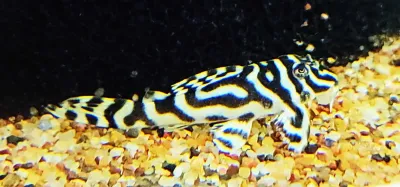
L333 King Tiger Pleco - (Hypancistrus Seideli) Special
L333 King Tiger Pleco - (Hypancistrus Seideli) Special
Price of shipping is not included.
$150.00
Out of stock
Captive Bred
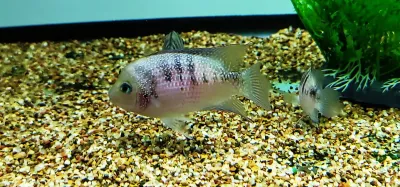
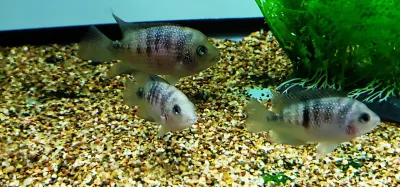
Rosy Cichlid - (Cryptoheros panamensis)
Rosy Cichlid - (Cryptoheros panamensis)
Price of shipping is not included.
$100.00
Out of stock
Captive Bred
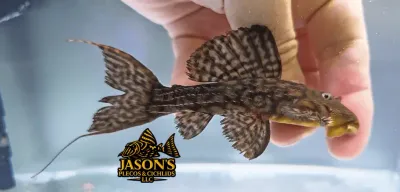
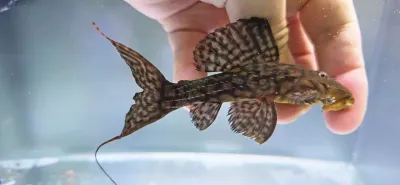
L079 Slender Cactus Pleco - (Pseudacanthicus sp.)
L079 Slender Cactus Pleco - (Pseudacanthicus sp.)
Price of shipping is not included.
5.0
(1)
was $300.00
Save 17%
$250.00
Out of stock
Captive Bred
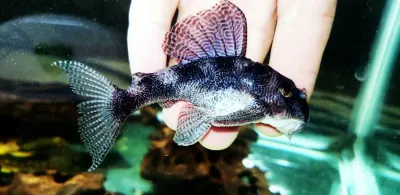
L411 Monte Dourado Pleco - (Hypancistrus sp.)
L411 Monte Dourado Pleco - (Hypancistrus sp.)
Price of shipping is not included.
$50.00
Out of stock
Sold out
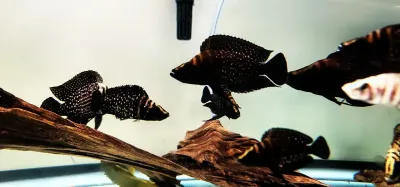
Ink Fin Calvus - (Altolamprologus calvus)
Ink Fin Calvus - (Altolamprologus calvus)
Price of shipping is not included.
$28.00
Out of stock
Wild Caught
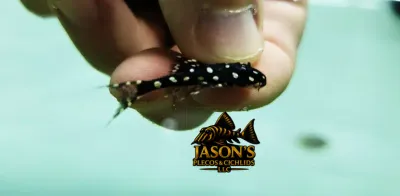
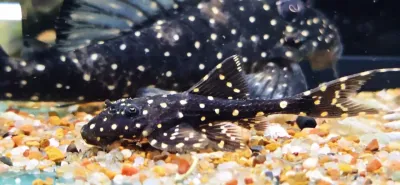
Polka Dot Lyre Tail Pleco - (Acanthicus adonis)
Polka Dot Lyre Tail Pleco - (Acanthicus adonis)
Price of shipping is not included.
was $40.00
Save 13%
$35.00
Out of stock
Captive Bred
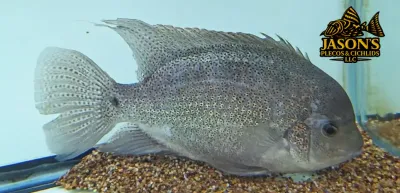
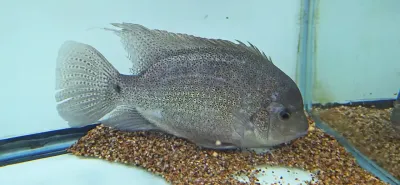
Silver Cichlid - (Vieja argentea)
Silver Cichlid - (Vieja argentea)
Price of shipping is not included.
5.0
(2)
was $150.00
Save 67%
$50.00
Out of stock
Wild Caught
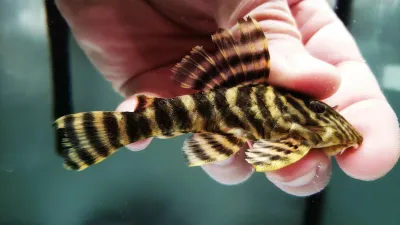
L002 Tiger Peckoltia - (Panaqolus sp.)
L002 Tiger Peckoltia - (Panaqolus sp.)
Price of shipping is not included.
$40.00
Out of stock
Wild Caught
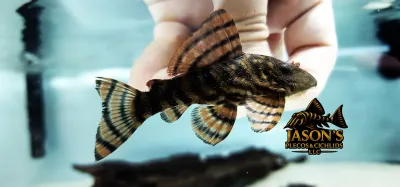
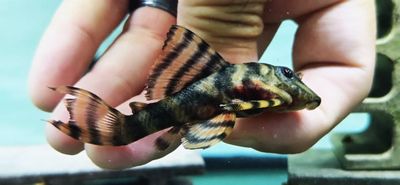
L397 Tangerine Tiger Pleco - (Panaqolus sp.)
L397 Tangerine Tiger Pleco - (Panaqolus sp.)
Price of shipping is not included.
was $95.00
Save 21%
$75.00
Out of stock
Wild Caught
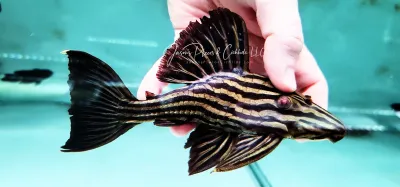
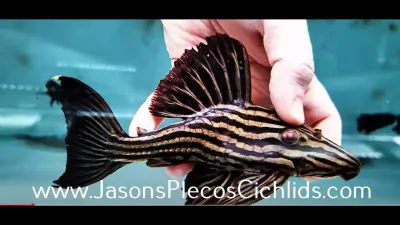
L027 Thunder Royal Pleco - (Panaque cf. armbrusteri)
L027 Thunder Royal Pleco - (Panaque cf. armbrusteri)
Price of shipping is not included.
$300.00
Out of stock
Wild Caught
Fogo Peacock Bass - (Cichla Marinae)
Fogo Peacock Bass - (Cichla Marinae)
Price of shipping is not included.
was $110.00
Save 9%
$100.00
Out of stock
Powered by Lightspeed
Display prices in:USD