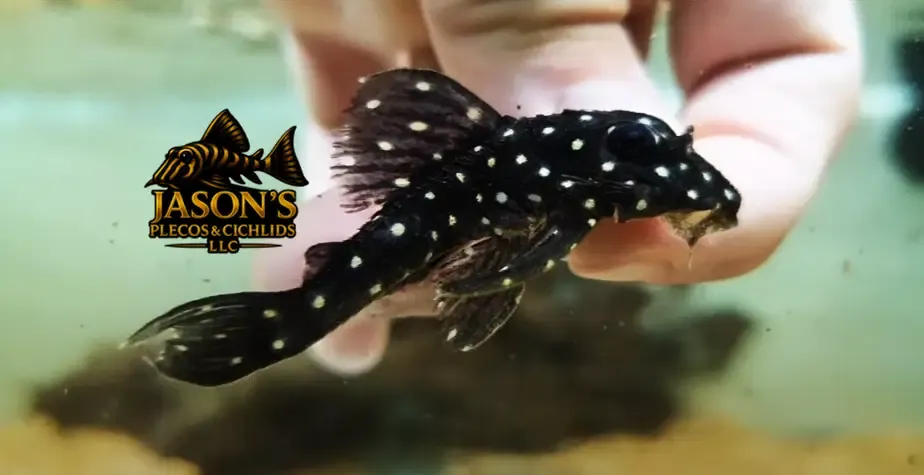
L201 Orinoco Angel Pleco - (Hypancistrus sp.)
5.0
3 reviews
Reviews from verified customers who have purchased products at this store.
$40.00
Wild Caught
was $45.00 Save 11%
Size
Questions, Comments, Concerns? Let us know!
Enter your text
Price of shipping is not included.
In stock: 2 available
1
Save this fish to my favorites.
Customer reviews
Reviews only from verified customers
Reviews are only accepted from verified customers who have signed in and purchased the products. This ensures that each review is based on genuine customer experiences. All reviews are checked before publication to prevent spam.
Tim C.
Monongahela,
United States
Sep 27, 2025
Sharp looking and visible and mobile
L201 Orinoco Angel Pleco - (Hypancistrus sp.)
Fish Details, Description and Information Below:
⚫ L201 Orinoco Angel Pleco – (Hypancistrus sp. L201) – Wild-Caught Spotted Orinoco Pleco
The L201 Orinoco Angel Pleco (Hypancistrus sp. L201) is a beautifully patterned South American pleco known for its dark brown to nearly black body covered with contrasting white, cream, yellowish, or occasionally pinkish spots.
The spots extend across much of the:
- Head
- Body
- Dorsal fin
- Pectoral fins
- Pelvic fins
- Caudal fin
and can vary considerably in:
- Size
- Number
- Color
- Distribution
between individual fish.
Juveniles often appear to have relatively large spots, while those same spots may look proportionally smaller as the fish grows.
L201 originates from the:
UPPER RIO ORINOCO BASIN
along the Venezuela–Colombia region.
Despite frequently being sold under the name Hypancistrus contradens, the typical aquarium L201 is still best identified as:
Hypancistrus sp. L201
because specialists continue to recognize differences between true L201 and the formally described H. contradens.
The Orinoco Angel Pleco is a warm-water, oxygen-loving, cave-dwelling pleco that generally reaches approximately:
4–5 INCHES AS AN ADULT
It is a protein-leaning omnivore and should receive substantial animal and insect-based foods rather than being treated as an algae-cleaning pleco.
This listing is for:
WILD-CAUGHT L201 ORINOCO ANGEL PLECOS
🔎 Quick Facts – L201 Orinoco Angel Pleco
- 📛 Common Name: Orinoco Angel Pleco
- 📛 Other Names: L201 Pleco, Orinoco Spotted Pleco, Colombian Snowball Pleco
- 🔢 L-Number: L201
- 🔬 Scientific Identification: Hypancistrus sp. L201
- 🧬 Taxonomic Status: Undescribed / unresolved
- 🐟 Family: Loricariidae
- 🧬 Subfamily: Hypostominae
- 🌿 Stock: Wild Caught
- 📏 Current Size: Approximately 2.5–3 inches
- 🌎 Origin: South America
- 🌊 Native Drainage: Upper Rio Orinoco Basin
- 🇻🇪 Primary Region: Venezuela
- 🇨🇴 Range Association: Venezuela–Colombia Orinoco region
- 💧 Water Type: Freshwater
- 📏 Typical Adult Size: Approximately 4–5 inches
- 🏠 Recommended Aquarium: 30 gallons or larger
- 👥 Groups: 40–55+ gallons preferred with substantial cave space
- 📐 Aquarium Shape: Long and wide tanks preferred
- 🌡️ Temperature: Approximately 79–86°F
- 💧 pH: Approximately 5.8–7.5
- 💦 Hardness: Soft to moderately mineralized
- 💨 Oxygenation: High
- 🌊 Water Movement: Moderate to Strong
- 🍽️ Diet: Protein-Leaning Omnivore
- 🦐 Animal / Insect Foods: Important
- 🌿 Plant Foods: Supplemental
- 🚫 Algae Cleaner: No
- 😌 Temperament: Generally peaceful and shy
- ⚠️ Pleco Temperament: Mature males territorial around caves
- 🌙 Activity: Primarily nocturnal / crepuscular
- 🥚 Breeding: Cave Spawner
- 👨👧 Parental Care: Male guards the eggs and fry
- ⭐ Care Level: Intermediate
- 🌎 IUCN Status: Not Evaluated as an undescribed L-number form
🧬 L201 Is Still an Undescribed Hypancistrus
One of the most important corrections for this product is the scientific name.
The safest identification remains:
Hypancistrus sp. L201
The abbreviation:
sp.
means the fish belongs to the genus Hypancistrus, but its exact species identity has not been formally resolved.
Therefore:
DO NOT AUTOMATICALLY CHANGE L201 TO Hypancistrus contradens.
⚠️ L201 vs. Hypancistrus contradens
This is one of the most confusing identification problems involving Orinoco Hypancistrus.
The formally described species:
Hypancistrus contradens
was described in:
2007
from Venezuela's:
RIO VENTUARI / UPPER ORINOCO REGION
It is a valid scientific species.
However:
TRUE L201 IS GENERALLY STILL TREATED AS A DIFFERENT, UNDESCRIBED FORM.
🆚 Typical L201
L201 generally has:
- Lower body profile
- Shorter head
- More compact appearance
- White to cream or yellowish spots
- Adult size generally around 4–5 inches
🆚 Hypancistrus contradens
H. contradens generally develops:
- Higher body profile
- Longer or larger head
- Heavier body
- Larger white or pinkish spots
- Larger adult size
Large-spotted H. contradens are sometimes sold incorrectly as:
“L201 BIG SPOT”
or:
“L201A”
which has contributed greatly to the confusion.
⚠️ Do Not Mix L201 & H. contradens Breeding Lines
Even when they arrive together from exporters:
KEEP THEM SEPARATE IF BREEDING
Mixing similar Hypancistrus can result in offspring whose identity becomes impossible to verify.
Preserve:
- L-number
- Supplier identification
- Wild locality when known
- Parent records
- Breeder-line information
🆚 L201 vs. L102 Snowball Pleco
Another fish commonly confused with L201 is:
L102 – Hypancistrus inspector
Both are dark plecos covered with pale spots.
However, H. inspector typically has:
DARK, UNSPOTTED MARGINS
along portions of the:
- Dorsal fin
- Caudal fin
L201 generally has pale spots extending much farther into those fins.
🆚 L201 vs. L471 Mini Snowball Pleco
The:
L471 Mini Snowball Pleco
also looks extremely similar.
One major practical difference is size.
L471 generally remains:
SMALLER
while L201 grows to approximately:
4–5 INCHES
L471 usually tops out closer to the 3-inch range.
🎨 Appearance
The L201 generally has a:
- Dark chocolate
- Deep brown
- Charcoal
- Nearly black
body.
The pale spots may appear:
- White
- Cream
- Pale yellow
- Golden cream
- Occasionally pinkish
⚪ Spot Size Varies
Different specimens may show:
- Many small spots
- Fewer medium-sized spots
- Relatively large spots
Juvenile fish often appear to have especially large spots relative to their body size.
As they grow:
THE SPOTS MAY APPEAR PROPORTIONALLY SMALLER
because the body expands faster than the spot pattern.
🟡 Yellow-Spotted L201
Some L201 develop spots that appear:
- Cream-yellow
- Golden
- Pale orange-yellow
rather than pure white.
This does not automatically indicate a different species.
Spot coloration can be influenced by:
- Genetics
- Diet
- Aquarium lighting
- Background color
- Stress
- Water conditions
⚠️ Color & Pattern Disclaimer
Exact adult pattern cannot be guaranteed.
Individual wild fish may differ in:
- Spot size
- Spot density
- Spot coloration
- Body darkness
- Fin pattern
Shipping stress can also cause the body to temporarily become:
- Gray
- Brown
- Pale
rather than deep black.
🌎 Native Distribution
L201 originates from the:
UPPER RIO ORINOCO BASIN
in northern South America.
Specialist records particularly associate the fish with the:
- Upper Orinoco
- Rio Ventuari region
- Venezuela–Colombia border region
🇻🇪 Venezuela & 🇨🇴 Colombia
The Orinoco drainage extends through both:
- Venezuela
- Colombia
and wild ornamental fish from this region may enter the aquarium trade through exporters in either country.
For the product page, the safest origin description is:
UPPER RIO ORINOCO BASIN – VENEZUELA & COLOMBIA REGION
🪨 Natural Habitat
L201 inhabits warm river environments associated with:
- Rocks
- Bedrock
- Crevices
- Cavities
- Moving water
- High dissolved oxygen
These rocky shelters provide:
- Daytime hiding areas
- Territories
- Feeding zones
- Breeding caves
🏠 Aquarium Setup
A good L201 aquarium should contain:
- Smooth rocks
- Slate
- Rock piles
- Ceramic caves
- Pleco tubes
- Driftwood
- Sand or smooth gravel
- Shaded areas
- Strong filtration
- High oxygenation
🏠 Caves Are Essential
L201 spends substantial time inside protected shelters.
Provide:
MORE CAVES THAN PLECOS
when maintaining a group.
Suitable caves include:
- Ceramic pleco caves
- Slate caves
- Rock crevices
- One-ended pleco tubes
- Driftwood cavities
📏 Adult Size
Specialist references generally place adult L201 around:
10–12 CM
or approximately:
4–5 INCHES
Therefore:
4–5 INCHES
is a good adult planning range.
⚠️ Do Not Confuse It With Larger H. contradens
If a spotted “L201” grows substantially larger and develops a very heavy, high-backed body with very large spots, re-check the identification.
It may actually be:
Hypancistrus contradens
rather than true L201.
🏠 Aquarium Size
For one adult or a compatible pair:
30 GALLONS OR LARGER
works well.
For a group:
40–55+ GALLONS
is preferred.
The aquarium should prioritize:
- Bottom area
- Caves
- Territories
- Feeding areas
rather than excessive height.
📐 Aquarium Footprint Matters
A longer aquarium offers more useful habitat than a short, tall tank.
A larger footprint allows:
- More caves
- More feeding areas
- Greater territory separation
- Reduced male conflict
🌡️ Warm-Water Pleco
L201 prefers relatively warm water.
A practical range is:
79–86°F
Specialist sources generally maintain the species around:
25–30°C / 77–86°F
with breeding often occurring toward the warmer end.
💨 HIGH OXYGENATION
Warm water naturally carries less dissolved oxygen.
L201 also originates from flowing river habitat.
Therefore:
HIGH DISSOLVED OXYGEN IS VERY IMPORTANT
Recommended methods include:
- Strong surface agitation
- Air stones
- Sponge filters
- Powerheads
- Canister-filter returns
- Sump returns
🌊 Water Movement
Provide:
MODERATE TO STRONG WATER MOVEMENT
especially around:
- Caves
- Rockwork
- Filter returns
The aquarium should also include sheltered areas where fish can rest outside the strongest flow.
💧 Water Parameters
A practical maintenance range is:
- 🌡️ Temperature: 79–86°F
- 💧 pH: Approximately 5.8–7.5
- 💦 Hardness: Soft to moderately mineralized
- 💨 Oxygenation: High
- 🌊 Flow: Moderate to Strong
- ☠️ Ammonia: 0 ppm
- ☠️ Nitrite: 0 ppm
- 🔄 Nitrate: Keep low
⚠️ Low Nitrate Is Important
L201 does not tolerate deteriorating water quality particularly well.
Avoid:
- Excess nitrate
- Accumulated waste
- Low oxygen
- Dirty substrate
- Poor filtration
Regular partial water changes are strongly recommended.
💩 Filtration
Suitable filtration may include:
- Canister filters
- Sump filtration
- Sponge filtration
- Powerheads
- Strong biological filtration
The goal is:
CLEAN + WARM + HIGHLY OXYGENATED WATER
🍽️ Diet – Protein-Leaning Omnivore
L201 should not be treated as a typical algae-eating pleco.
It is:
LARGELY CARNIVOROUS / PROTEIN-LEANING
while still capable of consuming some plant material.
🦐 Recommended Protein Foods
Suitable foods include:
- Mysis shrimp
- Brine shrimp
- Bloodworms
- White mosquito larvae
- Black mosquito larvae
- Krill
- Cyclops
- Chopped shrimp
- Insect-based sinking foods
- Quality carnivore pellets
- High-quality omnivore tablets
🌿 Plant Foods
Some plant foods may still be accepted.
Suitable options include:
- Spirulina-containing wafers
- Vegetable-containing pleco foods
- Zucchini
- Cucumber
Juveniles may consume plant foods more readily than mature adults.
🚫 Not an Algae Cleaner
L201 should:
NOT BE PURCHASED FOR ALGAE CONTROL
It will make little meaningful impact on aquarium algae compared with specialized algae-grazing plecos.
Intentional feeding is required.
⚠️ Avoid Feeding Only Vegetables
An L201 diet based primarily on:
- Zucchini
- Cucumber
- Algae wafers
does not properly reflect the species' nutritional preference.
Animal and insect protein should form:
A MAJOR PART OF THE DIET
🍽️ Poor Food Competitor
L201 can be:
SHY
and may lose food to faster aquarium fish.
Avoid extremely boisterous tankmates.
Feed:
- Close to caves
- At dusk
- After lights dim
- In several locations
🌙 Activity
L201 is primarily:
NOCTURNAL / CREPUSCULAR
It may spend much of the daylight period:
- Inside caves
- Under rocks
- Beneath driftwood
Activity normally increases:
- At dusk
- During feeding
- After lights out
🧪 Wild-Caught Acclimation
This listing is for:
WILD-CAUGHT L201 ORINOCO ANGEL PLECOS
Wild fish deserve careful acclimation.
After arrival:
- Keep lighting subdued
- Provide immediate caves
- Maintain high oxygen
- Avoid abrupt pH changes
- Avoid abrupt temperature changes
- Maintain excellent filtration
- Confirm that each fish begins feeding
🍽️ Monitor Body Condition
A healthy L201 should maintain a:
- Full abdomen
- Solid body profile
- Good muscle mass
Watch for:
- Sunken belly
- Hollow body
- Loss of weight
- Persistent refusal to eat
😌 Temperament
Toward most peaceful midwater fish, L201 is generally:
PEACEFUL AND SHY
Potential tankmates may include appropriately selected:
- Tetras
- Pencilfish
- Small characins
- Peaceful dwarf cichlids
- Other calm warm-water fish
⚠️ Territorial Around Caves
Mature males may defend:
- Breeding caves
- Favorite shelters
- Feeding areas
against other L201s.
Most conflict is territorial rather than predatory.
👥 Group Housing
L201 can be maintained successfully in groups when enough space is provided.
For groups:
- Provide numerous caves
- Provide more caves than fish
- Create visual barriers
- Feed in multiple locations
- Use adequate bottom space
⚠️ Breeding Cave Trapping
One behavior worth knowing is that during courtship:
THE MALE MAY TRAP THE FEMALE INSIDE HIS CAVE
for an extended period before spawning.
This is normal reproductive behavior, but aggressive males can occasionally injure females.
Provide:
- Adequate aquarium space
- Multiple caves
- Good visual barriers
and observe breeding groups carefully.
♂️ Male vs. Female
Sexual differences become clearer with maturity.
Mature Males
Generally develop:
- Broader head
- Longer head profile
- Stronger cheek odontodes
- Stronger pectoral-fin odontodes
- Odontodes along the rear body
- Strong cave territoriality
Mature Females
Generally:
- Have shorter odontodes
- Develop a broader abdomen
- Appear fuller when carrying eggs
Young fish may be difficult to sex accurately.
Unless confidently determined:
SELL AS UNSEXED
🥚 Captive Breeding – Confirmed
L201 has been:
SUCCESSFULLY BRED IN HOME AQUARIUMS
It is a:
CAVE-SPAWNING PLECO
and makes an excellent breeding project for aquarists experienced with warm-water Hypancistrus.
🏠 Breeding Caves
Provide several caves of slightly different:
- Diameter
- Length
- Shape
The male normally selects a cave that is:
- Closed at one end
- Slightly wider than his body
- Long enough for both adults
- Positioned in oxygen-rich moving water
💕 Courtship
Typical breeding behavior includes:
- The male establishes a cave.
- A receptive female approaches.
- The female enters.
- The male may block the cave entrance.
- The fish may remain together for several days.
- Eggs are deposited and fertilized.
- The female leaves or is pushed out.
- The male remains with the clutch.
👨👧 Male Parental Care
After spawning:
THE MALE GUARDS THE EGGS
He:
- Fans the clutch
- Protects the eggs
- Blocks the cave entrance
- Maintains water movement
The female normally provides no additional parental care.
🥚 Clutch Size
Aquarium breeding reports document clutches of approximately:
40–50 EGGS
with around:
45 EGGS
reported as a typical successful spawn in some breeding accounts.
Actual clutch size depends on:
- Female size
- Age
- Conditioning
- Genetics
and should never be guaranteed.
🐣 Hatching
At warm temperatures, eggs generally hatch after approximately:
ONE WEEK
The exact development time varies with:
- Temperature
- Oxygenation
- Water chemistry
👶 Fry
After hatching, young fish continue absorbing their:
YOLK SACS
before beginning active feeding.
Suitable first foods include:
- Baby brine shrimp
- Microworms
- Fine sinking carnivore foods
- Crushed omnivore tablets
- Fine insect foods
⚠️ Fry Can Starve Quickly
L201 fry require:
FREQUENT FEEDING
Once the yolk is absorbed, food should be available regularly.
At the same time:
WATER QUALITY MUST REMAIN EXCELLENT
because frequent protein feeding can rapidly increase organic waste.
💧 Breeding Conditions
Successful breeding is associated with:
- Warm water around 82–86°F
- High oxygenation
- Clean water
- Good circulation
- Soft water
- Slightly acidic to neutral pH
- Multiple caves
- Well-conditioned adults
A modest reduction in:
- Conductivity
- pH
combined with water changes may sometimes stimulate spawning.
🧬 Hybridization Risk
Different Hypancistrus species can potentially hybridize in captivity.
Do not mix breeding colonies of:
- L201
- Hypancistrus contradens
- L102 H. inspector
- L471
- L199
- Other unidentified Hypancistrus
if maintaining pure breeding lines.
⚠️ “Big Spot L201” Identification
Large-spotted fish sold as:
BIG SPOT L201
deserve particularly careful identification.
Some are genuine variable L201.
Others may actually be:
Hypancistrus contradens
If establishing a breeding group:
KEEP FISH OF THE SAME VERIFIED LINE TOGETHER
rather than mixing every spotted Orinoco Hypancistrus sold under the L201 name.
🌎 Conservation Status
Because the aquarium L201 remains:
SCIENTIFICALLY UNDESCRIBED
it does not have its own formal species-level IUCN assessment.
Therefore:
IUCN STATUS: NOT EVALUATED
is the safest wording.
Do not borrow the:
NEAR THREATENED
status of Hypancistrus contradens unless the fish has actually been identified as that species.
⭐ Why Keep an L201 Orinoco Angel Pleco?
The L201 combines:
- ⚫ Deep dark body coloration
- ⚪ White, cream, or yellow spotting
- 🌊 Upper Orinoco origin
- 📏 Manageable approximately 4–5 inch adult size
- 🦐 Protein-oriented feeding
- 😌 Generally peaceful personality
- 🌙 Nocturnal behavior
- 🪨 Cave-dwelling lifestyle
- 🥚 Confirmed captive breeding
- 👨👧 Male parental care
- 🧬 Fascinating unresolved taxonomy
into an excellent small-to-medium Hypancistrus for properly maintained warm-water aquariums.
⚠️ Important Considerations
Before purchasing an L201 Orinoco Angel Pleco:
- Keep the scientific identification as Hypancistrus sp. L201.
- L201 remains scientifically unresolved.
- Do not automatically rename L201 Hypancistrus contradens.
- H. contradens is a valid but different spotted Orinoco Hypancistrus in specialist aquarium references.
- Large-spotted H. contradens are sometimes mislabeled L201 Big Spot or L201A.
- L201 can also be confused with L102 Hypancistrus inspector.
- L201 can also be confused with the smaller L471.
- Preserve L-number and collection information.
- This listing is for wild-caught fish.
- Adult L201 generally reach approximately 4–5 inches.
- Provide approximately 30 gallons or larger.
- Use 40–55+ gallons for groups.
- Provide more caves than plecos.
- Maintain approximately 79–86°F.
- Maintain high dissolved oxygen.
- Provide moderate to strong water movement.
- Maintain ammonia and nitrite at zero.
- Keep nitrate low.
- Feed a protein-leaning omnivorous diet.
- Provide substantial animal and insect foods.
- Plant foods are supplemental.
- Do not purchase L201 as an algae cleaner.
- Avoid extremely aggressive feeding competition.
- Expect territorial behavior around caves.
- Captive breeding is well documented.
- Males guard the eggs and developing fry.
- Keep breeding lines separate from other Hypancistrus.
- Do not assign the conservation status of H. contradens to unresolved L201.
- Never release aquarium fish into natural waterways.
🧬 Taxonomy
The safest current identification is:
Hypancistrus sp. L201
Classification:
- Order: Siluriformes
- Family: Loricariidae
- Subfamily: Hypostominae
- Genus: Hypancistrus
- Species: Undescribed / unresolved
- L-Number: L201
For this product, use:
L201 Orinoco Angel Pleco – (Hypancistrus sp. L201)
🔢 L201 Identification Disclaimer
Several spotted Hypancistrus from the Orinoco Basin are frequently confused in the aquarium trade.
These include:
- L201 – Hypancistrus sp.
- Hypancistrus contradens
- L102 – Hypancistrus inspector
- L471 – Hypancistrus sp.
For accurate identification and responsible breeding:
- Preserve the L-number
- Preserve collection locality when available
- Keep similar breeding lines separate
- Do not assume every large-spotted L201 is H. contradens
- Do not assume every L201 is H. contradens
🚚 Live Fish Shipping
Live fish are professionally packed for safe transport.
Shipping availability depends on:
- Fish size
- Destination
- Weather conditions
- Carrier availability
- Applicable state and local regulations
Please review our Shipping & Payment Information and Live Arrival Guarantee / DOA Policy before ordering.
⚠️ Buyer Responsibility
Customers are responsible for confirming that Hypancistrus sp. L201 may legally be purchased, possessed, transported, and received in their state or local jurisdiction before ordering.
Never release aquarium fish into natural waterways.
Below are fish you may also like.
Wild Caught
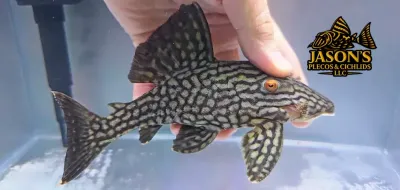
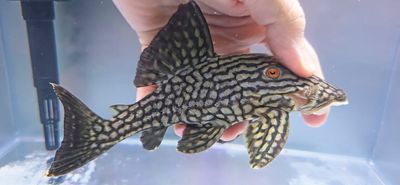
L330 Watermelon Pleco - (Panaque nigrolineatus laurafabianae)
L330 Watermelon Pleco - (Panaque nigrolineatus laurafabianae)
Price of shipping is not included.
was $250.00
Save 20%
$200.00
Captive Bred
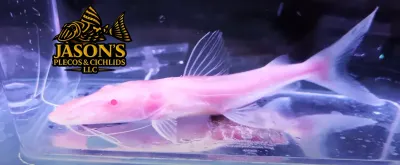
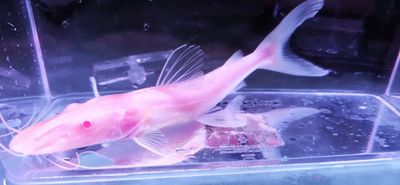
Albino Tiger Shovelnose Catfish - (Pseudoplatystoma fasciatum)
Albino Tiger Shovelnose Catfish - (Pseudoplatystoma fasciatum)
Price of shipping is not included.
was $4 000.00
Save 20%
$3 215.00
Captive Bred
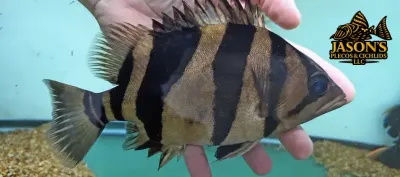
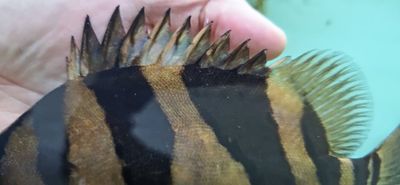
Indo Datnoid - (Datnioides microlepis)
Indo Datnoid - (Datnioides microlepis)
Price of shipping is not included.
was $800.00
Save 9%
$725.00
Captive Bred
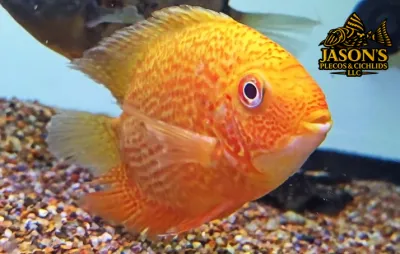
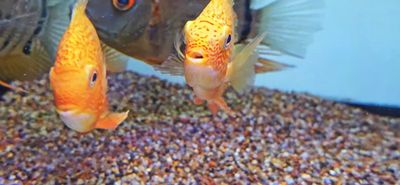
Red Spot Gold Severum - (Heros cf. efasciatus)
Red Spot Gold Severum - (Heros cf. efasciatus)
Price of shipping is not included.
5.0
(2)
was $85.00
Save 6%
$80.00
Captive Bred
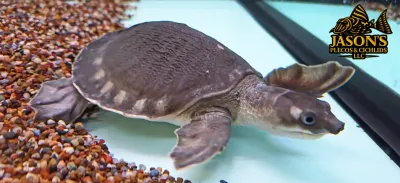
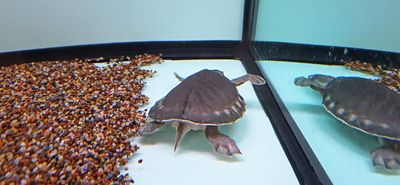
Fly River Turtle/Pig Nose Turtle - (Carettochelys insculpta)
Fly River Turtle/Pig Nose Turtle - (Carettochelys insculpta)
Price of shipping is not included.
was $1 600.00
Save 22%
$1 250.00
Powered by Lightspeed
Display prices in:USD