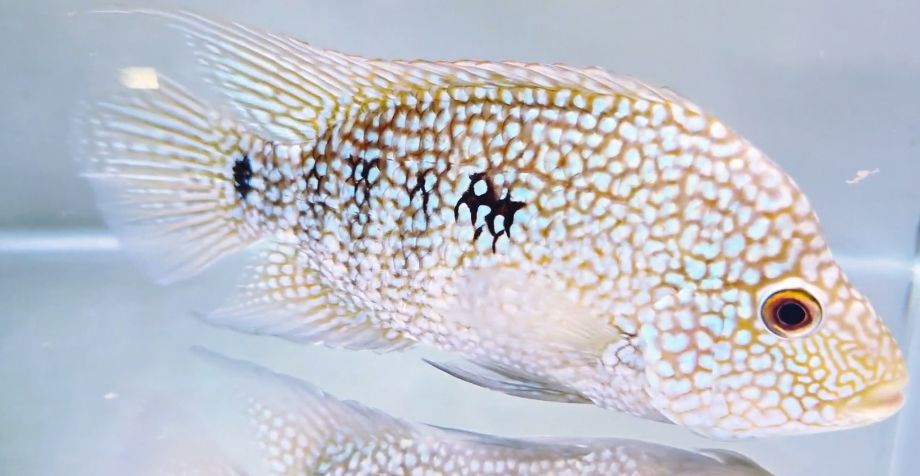
Texas Cichlid - (Herichthys cyanoguttatus)
5.0
3 reviews
Reviews from verified customers who have purchased products at this store.
$75.00
Sold out
was $100.00 Save 25%
Size
Questions, Comments, Concerns? Let us know!
Enter your text
Price of shipping is not included.
Sold out
Save this fish to my favorites.
Customer reviews
Reviews only from verified customers
Reviews are only accepted from verified customers who have signed in and purchased the products. This ensures that each review is based on genuine customer experiences. All reviews are checked before publication to prevent spam.
Lorient S.
Markham,
United States
Nov 16, 2025
I have ordered from this site a few times. I thought the extra fees for packaging of the fish was pricey. How ever it’s well worth it and the quality of the fish are always what you see in the video and pictures, very satisfied with the quality of their fish, and packaging.
Texas Cichlid - (Herichthys cyanoguttatus)
Fish Details, Description and Information Below:
🐟 Texas Cichlid – (Herichthys cyanoguttatus) – Captive-Bred True Rio Grande Cichlid
The Texas Cichlid (Herichthys cyanoguttatus), also known as the Rio Grande Cichlid or Rio Grande Perch, is a large, powerful North American cichlid famous for its spectacular turquoise-blue pearling, dark body markings, territorial personality, and dramatic breeding coloration.
This is the:
TRUE TEXAS CICHLID
and should not be confused with the fish commonly sold as the:
GREEN TEXAS CICHLID – Herichthys carpintis
Herichthys cyanoguttatus is especially significant because it is the:
ONLY CICHLID SPECIES NATIVE TO THE UNITED STATES
Its natural U.S. range is centered on southern Texas and the lower Rio Grande system, with the species continuing naturally southward into northeastern Mexico.
Adults can reach approximately 10–12 inches, develop substantial body depth, and become extremely territorial—particularly when mature or breeding.
This listing is for:
CAPTIVE-BRED TEXAS CICHLIDS
🔎 Quick Facts – Texas Cichlid
- 📛 Common Name: Texas Cichlid
- 📛 Other Names: Rio Grande Cichlid, Rio Grande Perch
- 🔬 Scientific Name: Herichthys cyanoguttatus
- 📅 Described: 1854
- 🐟 Family: Cichlidae
- 🧬 Subfamily: Cichlinae
- 🌿 Stock: Captive Bred
- 📏 Current Size: Approximately 8–10 inches
- 🌎 Origin: North America
- 🇺🇸 Native U.S. Range: Southern Texas / Lower Rio Grande region
- 🇲🇽 Native Mexican Range: Northeastern Mexico
- 🏆 Special Distinction: Only cichlid native to the United States
- 💧 Water Type: Freshwater
- 📏 Documented Maximum: Approximately 12 inches / 30 cm total length
- 📏 Adult Planning Size: Approximately 10–12 inches
- 🏠 Minimum Aquarium: Approximately 75 gallons for one adult
- 🏠 Preferred Adult Aquarium: 90+ gallons
- 💕 Adult Pair / Community Setup: Approximately 125+ gallons strongly preferred
- 📐 Aquarium Shape: Long and wide aquariums preferred
- 🌡️ Temperature: Approximately 72–82°F
- 💧 pH: Approximately 6.5–7.5
- 💦 Hardness: Approximately 5–12 dH; adaptable when conditions are stable
- 💨 Oxygenation: Good
- 🌊 Water Movement: Moderate
- 🍽️ Diet: Omnivore
- 🦐 Animal Foods: Important
- 🌿 Plant Foods: Important for dietary variety
- 😠 Temperament: Territorial / Aggressive
- ⚠️ Breeding Temperament: Highly aggressive
- 🏊 Activity: Active and highly interactive
- 🥚 Breeding: Biparental Substrate Spawner
- 👨👩👧 Parental Care: Both parents defend eggs and fry
- ⭐ Care Level: Intermediate
- 🌎 IUCN Status: Least Concern
- 🚨 No-Release Concern: High invasive-establishment potential outside its native range
🇺🇸 The True Texas Cichlid
The name:
TEXAS CICHLID
is most correctly applied to:
Herichthys cyanoguttatus
This is the species that naturally occurs in:
TEXAS
and is the only naturally occurring cichlid native to the United States.
That makes the Texas Cichlid biologically and historically unique among aquarium cichlids.
🧬 Valid Scientific Species
The accepted scientific name is:
Herichthys cyanoguttatus
The species was described by:
Baird & Girard in 1854
Older literature may use names such as:
Cichlasoma cyanoguttatum
but the accepted modern genus is:
Herichthys
For this product, use:
Texas Cichlid – (Herichthys cyanoguttatus)
💎 What Does cyanoguttatus Mean?
The species name:
cyanoguttatus
refers to the fish's characteristic:
BLUE SPOTTING
which is one of its most recognizable features.
The body can be covered with hundreds of shimmering:
- Turquoise spots
- Blue-green spots
- Cream-colored spots
- Pearl-like markings
giving healthy adults a spectacular metallic appearance.
🎨 Appearance
The background coloration may range from:
- Olive
- Gray
- Silver-gray
- Brown-gray
- Dark charcoal
overlaid with brilliant:
- Turquoise
- Blue-green
- Cream
- Pearl-colored
spots.
Depending on mood and age, darker:
- Vertical bars
- Midbody blotches
- Tail-base markings
may also become visible.
✨ Pearling
The brilliant spots covering the Texas Cichlid are commonly called:
PEARLING
in the aquarium hobby.
The spots can cover:
- Head
- Cheeks
- Gill covers
- Body
- Dorsal fin
- Anal fin
- Caudal fin
A mature specimen under good lighting can appear almost covered in:
METALLIC TURQUOISE
⚠️ Exact Color Cannot Be Guaranteed
Individual Texas Cichlids vary naturally.
The exact:
- Spot density
- Turquoise intensity
- Body darkness
- Bar pattern
- Fin coloration
can depend on:
- Genetics
- Age
- Sex
- Mood
- Social status
- Aquarium background
- Lighting
- Diet
- Breeding condition
🆚 Texas Cichlid vs. Green Texas Cichlid
This distinction is extremely important.
The true Texas Cichlid is:
Herichthys cyanoguttatus
The fish commonly sold as:
GREEN TEXAS
is generally:
Herichthys carpintis
These are:
TWO DIFFERENT SPECIES
🐟 True Texas – Herichthys cyanoguttatus
The true Texas Cichlid:
- Is naturally native to Texas
- Extends into northeastern Mexico
- Usually displays numerous relatively small turquoise or pearl spots
- Often shows dark lateral blotches or bars
- Can reach approximately 10–12 inches
🟢 Green Texas – Herichthys carpintis
The Green Texas Cichlid:
- Is native to eastern Mexico
- Is not naturally native to Texas
- Usually develops larger turquoise or blue-green pearl markings
- Often has a different overall body and pattern appearance
⚠️ Trade Names Cause Confusion
Aquarium stores have historically used names such as:
- Texas Cichlid
- Green Texas
- Blue Texas
- Pearlscale Texas
inconsistently.
For accurate identification:
ALWAYS USE THE SCIENTIFIC NAME
This product is:
HERICHTHYS CYANOGUTTATUS
🌎 Native Distribution
The Texas Cichlid is native to:
NORTH AMERICA
Its natural distribution includes:
🇺🇸 Southern Texas
and:
🇲🇽 Northeastern Mexico
🌊 Rio Grande
The species is especially associated with the:
RIO GRANDE
which forms a large portion of the international border between:
- Texas
- Mexico
The lower Rio Grande represents the core of its historically recognized U.S. native range.
🇺🇸 America's Only Native Cichlid
The United States contains many introduced cichlids today, particularly in warm regions such as:
- Florida
- Texas
- Louisiana
However:
HERICHTHYS CYANOGUTTATUS IS THE ONLY CICHLID NATIVE TO THE UNITED STATES
Other commonly encountered U.S. cichlids were introduced by humans.
🌎 Introduced Populations
Texas Cichlids have established populations outside their original native range.
Introduced populations have occurred in parts of:
- Central Texas
- Louisiana
- Florida
- Other suitable warm-water environments
The species' aquarium popularity has contributed to its movement outside its native distribution.
🚨 High Invasive-Establishment Concern
The Texas Cichlid has successfully established reproducing populations outside its native range.
Because of this:
NEVER RELEASE A TEXAS CICHLID INTO THE WILD
Even a species native to one portion of the United States can become:
NON-NATIVE OR INVASIVE IN ANOTHER WATERSHED
🌊 Natural Habitat
Wild Texas Cichlids inhabit:
- Small rivers
- Large rivers
- Pools
- Runs
- Spring-fed waters
- Vegetated areas
- Rocky areas
- Sand and mud substrates
They can tolerate a surprisingly wide range of natural habitat conditions.
🌿 Vegetation
Natural habitats may contain:
- Aquatic vegetation
- Algae
- Submerged structures
- Rocks
- Roots
However, adult aquarium specimens can be destructive toward delicate plants.
🪨 Aquarium Setup
A suitable Texas Cichlid aquarium should contain:
- Large rocks
- Heavy driftwood
- Secure caves
- Open swimming space
- Sand or smooth gravel
- Strong filtration
- Good oxygenation
⚠️ Secure the Décor
Texas Cichlids are:
POWERFUL DIGGERS
and may:
- Move gravel
- Dig pits
- Rearrange sand
- Push rocks
- Move wood
- Uproot plants
Heavy decorations should be positioned so they cannot:
COLLAPSE OR TRAP THE FISH
🏗️ Expect Aquarium Remodeling
A Texas Cichlid may decide that your aquarium design is incorrect.
It may:
- Move substrate overnight
- Clear areas around rocks
- Build spawning pits
- Rearrange decorations
This behavior is:
NORMAL
especially in mature and breeding fish.
🌿 Planted Aquariums
Delicate planted aquariums are generally not ideal.
Texas Cichlids may:
- Dig around plant roots
- Uproot plants
- Bite leaves
- Move substrate
Hardy plants attached securely to:
- Rock
- Driftwood
may have a better chance of remaining in place.
📏 Adult Size
FishBase documents a maximum size of:
30 CM TOTAL LENGTH
or approximately:
11.8 INCHES
Texas Parks & Wildlife also notes that adults can exceed:
10 INCHES
Therefore:
EXPECT APPROXIMATELY 10–12 INCHES AS AN ADULT
💪 Body Mass Matters
The Texas Cichlid is not merely a long fish.
A mature specimen can become:
- Deep-bodied
- Thick
- Heavy
- Powerful
so aquarium requirements should account for:
BODY MASS + TERRITORIALITY
not merely length.
🏠 Aquarium Size
For one mature adult:
75 GALLONS SHOULD BE CONSIDERED A PRACTICAL MINIMUM
A:
90-GALLON OR LARGER
aquarium provides more comfortable permanent space.
💕 Adult Pair
For a compatible adult pair:
125+ GALLONS IS STRONGLY PREFERRED
especially because breeding pairs can become:
EXTREMELY TERRITORIAL
🐠 Community Housing
When attempting to maintain Texas Cichlids with other large cichlids:
125 GALLONS OR LARGER
should be considered a much better starting point.
Larger aquariums provide:
- More territories
- More visual barriers
- Greater escape space
- Better water stability
📐 Aquarium Footprint
Prioritize:
LENGTH + WIDTH
over excessive aquarium height.
Large cichlids need room to:
- Turn
- Establish territory
- Avoid dominant fish
- Swim horizontally
💧 Water Parameters
A practical long-term aquarium range is:
- 🌡️ Temperature: Approximately 72–82°F
- 💧 pH: Approximately 6.5–7.5
- 💦 Hardness: Approximately 5–12 dH
- 💨 Oxygenation: Good
- 🌊 Water Movement: Moderate
- ☠️ Ammonia: 0 ppm
- ☠️ Nitrite: 0 ppm
- 🔄 Nitrate: Keep reasonably low
🌡️ Temperature
FishBase documents the species from approximately:
68–91°F / 20–33°C
in nature.
That does not mean customers should intentionally swing aquarium temperatures across that entire range.
For normal captive maintenance:
72–82°F
is a practical range.
❄️ Sensitive to Severe Cold
Texas Cichlids are more cold-tolerant than many tropical aquarium cichlids but remain fundamentally:
WARM-WATER FISH
Texas Parks & Wildlife notes that severe cold can limit survival and distribution.
Do not treat this fish as a temperate outdoor species in regions where water temperatures become dangerously low.
💧 pH
FishBase gives a natural pH range around:
6.5–7.5
The species is relatively adaptable in captivity.
More important than chasing one exact number is maintaining:
STABLE WATER CHEMISTRY
💩 Filtration
Adult Texas Cichlids:
- Eat heavily
- Produce significant waste
- Dig substrate
so strong filtration is important.
Suitable systems include:
- Large canister filters
- Sumps
- High-capacity hang-on-back filters
- Supplemental sponge filtration
🔄 Regular Water Changes
Regular partial water changes help maintain:
- Low nitrate
- Stable mineral balance
- Good oxygen levels
- Low organic waste
Maintain:
AMMONIA = 0
and:
NITRITE = 0
at all times.
🍽️ Diet – Omnivore
The Texas Cichlid is naturally:
OMNIVOROUS
Wild fish consume a varied diet that can include:
- Worms
- Crustaceans
- Aquatic insects
- Fish eggs
- Small fish
- Plant material
🍽️ Staple Diet
A quality captive diet should begin with:
HIGH-QUALITY CICHLID PELLETS
Choose pellets appropriate for the fish's:
- Size
- Mouth
- Age
A formulated staple helps provide balanced:
- Protein
- Vitamins
- Minerals
- Plant ingredients
🦐 Animal Foods
Appropriate supplemental foods include:
- Shrimp
- Mysis shrimp
- Krill
- Brine shrimp
- Insect larvae
- Bloodworms
- Quality frozen cichlid foods
🌿 Plant Foods
Plant matter should also be included.
Suitable options may include:
- Spirulina-containing pellets
- Vegetable-containing cichlid pellets
- Peas
- Appropriate blanched vegetables
A mixed diet better reflects the species' natural omnivory.
⚖️ Feed a Balanced Diet
Do not maintain Texas Cichlids exclusively on:
- Shrimp
- Bloodworms
- Meat
- High-fat foods
and do not maintain them solely on:
- Vegetable foods
A:
BALANCED OMNIVOROUS CICHLID DIET
is best.
🚫 Avoid Feeder Fish
Live feeder fish are unnecessary.
They can introduce:
- Parasites
- Bacteria
- Disease
- Poor nutritional balance
Quality prepared and frozen foods are safer.
😠 Temperament
Texas Cichlids are best described as:
TERRITORIAL TO AGGRESSIVE
Temperament varies among individuals, but mature fish can become extremely assertive.
🐟 Individual Personality Varies
Some individuals may tolerate tankmates for years.
Others may decide that:
THE ENTIRE AQUARIUM IS THEIR TERRITORY
Aggression can increase with:
- Maturity
- Pair formation
- Spawning
- Limited space
- Competition for caves
- Similar-looking tankmates
⚠️ Breeding Aggression
A spawning pair can become:
EXTREMELY AGGRESSIVE
toward every other fish in the aquarium.
A pair defending:
- Eggs
- Larvae
- Free-swimming fry
may claim a very large section of the tank.
🐠 Tankmates
Potential tankmates must be:
- Large enough not to be bullied easily
- Robust
- Similar in temperament
- Compatible in water requirements
Possible combinations may include carefully selected:
- Large Central or North American cichlids
- Large catfish
- Large robust schooling fish
⚠️ Compatibility Is Never Guaranteed
Large aggressive cichlid communities require:
- Observation
- Backup housing
- Dividers when needed
- Ability to separate incompatible fish
A combination that works when fish are juveniles may fail after:
SEXUAL MATURITY
🚫 Avoid Small Tankmates
Small fish may be:
- Chased
- Injured
- Eaten
and should generally not be considered appropriate adult tankmates.
🆚 Avoid Mixing With Green Texas for Breeding
Because:
Herichthys cyanoguttatus
and:
Herichthys carpintis
are closely related, they should be kept separate if maintaining pure breeding lines.
Do not intentionally produce mixed fish and later market them as:
- Pure Texas Cichlid
- Pure Green Texas
🧬 Hybridization Warning
Texas Cichlids have historically been involved in captive hybrid projects.
If a Texas Cichlid is bred with another species:
THE OFFSPRING MUST BE IDENTIFIED AS HYBRIDS
Never sell hybrid offspring as pure:
Herichthys cyanoguttatus
♂️ Male vs. Female
Sex differences become easier to recognize as fish mature.
Mature Males
Often develop:
- Larger overall size
- More elongated dorsal and anal fins
- Heavier body
- More pronounced forehead
- Nuchal hump in some dominant adults
Mature Females
Often:
- Remain somewhat smaller
- Have a fuller abdominal profile when carrying eggs
- Develop a more rounded body
However, visual sexing is not always perfect.
🧠 Nuchal Hump
Adult males may develop a pronounced:
NUCHAL HUMP
on the forehead.
The size of the hump can vary according to:
- Genetics
- Age
- Social dominance
- Breeding condition
Not every male will develop an enormous hump.
🥚 Breeding – Biparental Substrate Spawner
Texas Cichlids are:
PAIR-FORMING SUBSTRATE SPAWNERS
A bonded pair normally selects and cleans a:
- Flat rock
- Stone
- Hard surface
- Prepared spawning site
before egg deposition.
💕 Pair Formation
A compatible male and female may form a strong pair bond.
However:
DO NOT SIMPLY PLACE TWO LARGE ADULTS TOGETHER AND ASSUME THEY WILL ACCEPT EACH OTHER
An incompatible pair can seriously injure or kill one another.
⚠️ Introduce Adults Carefully
When attempting to establish a pair, experienced keepers may use:
- Large aquariums
- Dividers
- Visual barriers
- Multiple territories
until compatibility becomes clear.
🪨 Spawning Site
Texas Cichlids are:
SUBSTRATE BROODERS
and often select a:
- Flat stone
- Rock
- Hard surface
for egg deposition.
The pair cleans the area extensively before spawning.
🥚 Eggs
The female deposits a clutch of adhesive eggs on the prepared surface.
The male follows and fertilizes them.
Larger mature females may produce:
HUNDREDS OF EGGS
although exact clutch size varies considerably.
👨👩👧 Biparental Care
Both parents participate in:
BROOD DEFENSE
Scientific observations show that male and female Texas Cichlids divide parental responsibilities.
Typically:
Male
Spends more time:
- Patrolling territory
- Chasing intruders
- Defending the perimeter
Female
Spends more time:
- Close to the eggs
- Fanning eggs
- Tending larvae
- Guarding young
👶 Fry Protection
After hatching, parents may relocate developing larvae to:
- Prepared pits
- Depressions in substrate
- Protected areas
Once the fry become free-swimming, both parents continue defending the school.
⚫ Dramatic Breeding Coloration
Breeding adults can undergo a striking color transformation.
The:
FRONT PORTION OF THE BODY MAY BECOME VERY PALE OR WHITE
while the:
REAR AND LOWER PORTION BECOMES VERY DARK OR BLACK
This contrasting breeding dress is normal and can be extremely dramatic.
😠 Parents Become Highly Aggressive
The same parental instincts that make the species fascinating also make breeding pairs:
DANGEROUS TO TANKMATES
Be prepared to:
- Divide the aquarium
- Remove other fish
- Relocate the pair
if aggression becomes severe.
👶 Raising Fry
Once free-swimming, fry can receive:
- Newly hatched brine shrimp
- Fine powdered cichlid foods
- Crushed quality pellets
- Appropriate fry foods
Provide:
- Frequent small meals
- Excellent filtration
- Regular water changes
⭐ Why Keep a Texas Cichlid?
The Texas Cichlid combines:
- 🇺🇸 America's only native cichlid
- 💎 Spectacular turquoise pearling
- 🐟 Impressive 10–12 inch adult size
- 🧠 Intelligent and interactive behavior
- 💪 Powerful body
- 😠 Bold territorial personality
- 🥚 Fascinating substrate-spawning behavior
- 👨👩👧 Strong biparental care
- ⚫ Dramatic breeding coloration
- 🧬 True Herichthys cyanoguttatus identity
into one of North America's most distinctive freshwater fishes.
🌎 Conservation Status
Herichthys cyanoguttatus is currently classified as:
LEAST CONCERN
on the IUCN Red List.
The assessment dates to:
2018
🚨 Invasive-Species Responsibility
Although this species is native to southern Texas and northeastern Mexico:
IT HAS ESTABLISHED NON-NATIVE POPULATIONS OUTSIDE ITS ORIGINAL RANGE
The U.S. Fish & Wildlife Service has classified the species as having:
HIGH INVASIVENESS RISK
based on its record of successful introductions.
⚠️ Native Somewhere Does Not Mean Native Everywhere
This point is extremely important.
A Texas Cichlid may be native to part of Texas while still being:
NON-NATIVE IN ANOTHER STATE OR WATERSHED
Never assume that because it is an American native species it can safely be released locally.
🚨 NEVER RELEASE AQUARIUM FISH
Never release a Texas Cichlid into:
- Rivers
- Creeks
- Lakes
- Ponds
- Canals
- Springs
- Storm drains
- Drainage systems
If permanent housing becomes impossible:
- Rehome the fish
- Contact an aquarium store
- Contact an experienced cichlid keeper
- Contact an aquatic rescue
- Contact the appropriate wildlife agency
NEVER RELEASE AQUARIUM FISH INTO THE WILD.
⚠️ Important Considerations
Before purchasing a Texas Cichlid:
- The correct scientific name is Herichthys cyanoguttatus.
- This is the true Texas / Rio Grande Cichlid.
- Do not confuse it with Green Texas Herichthys carpintis.
- H. cyanoguttatus is the only cichlid native to the United States.
- Its native U.S. range is centered on southern Texas and the lower Rio Grande.
- Its natural range continues into northeastern Mexico.
- This listing is for captive-bred fish.
- Current specimens are approximately 8–10 inches.
- Adults may reach approximately 10–12 inches.
- Provide at least approximately 75 gallons for one adult.
- 90+ gallons is preferable for a large permanent specimen.
- A compatible adult pair should receive substantially more space.
- 125+ gallons is strongly preferred for pairs or large-cichlid communities.
- Texas Cichlids are territorial to aggressive.
- Breeding pairs can become extremely aggressive.
- Provide rocks, shelters, and open swimming room.
- Secure all heavy décor.
- Expect digging and substrate rearrangement.
- Maintain approximately 72–82°F.
- Maintain approximately pH 6.5–7.5.
- Maintain good filtration and oxygenation.
- Keep ammonia and nitrite at zero.
- Feed a balanced omnivorous diet.
- Include quality pellets, aquatic animal foods, and plant ingredients.
- Avoid unnecessary feeder fish.
- Adult males may develop a nuchal hump.
- Texas Cichlids are substrate spawners.
- Both parents defend eggs and fry.
- Do not mix Texas and Green Texas breeding lines if preserving pure species.
- Label any hybrid offspring honestly.
- The species is currently classified as Least Concern.
- The species has established non-native populations outside its natural range.
- Never release Texas Cichlids into natural waterways.
🧬 Taxonomy
The currently accepted scientific name is:
Herichthys cyanoguttatus Baird & Girard, 1854
Classification:
- Order: Cichliformes
- Family: Cichlidae
- Subfamily: Cichlinae
- Genus: Herichthys
- Species: cyanoguttatus
Older literature may use:
Cichlasoma cyanoguttatum
For this product, use:
Texas Cichlid – (Herichthys cyanoguttatus)
🆚 True Texas Identification Disclaimer
The aquarium trade commonly uses the word:
TEXAS
for several different fish.
For clarity:
True Texas Cichlid
Herichthys cyanoguttatus
Green Texas / Pearlscale Cichlid
Herichthys carpintis
These are separate species and should be identified accordingly.
Hybrid fish should always be clearly labeled as hybrids.
🚚 Live Fish Shipping
Live fish are professionally packed for safe transport.
Shipping availability depends on:
- Fish size
- Destination
- Weather conditions
- Carrier availability
- Applicable state and local regulations
Large Texas Cichlids may require:
- Larger insulated shipping boxes
- Additional water
- Heavy-duty shipping bags
- Multiple protective bag layers
- Specialized packing
- Airline cargo shipping depending on size and destination
Please review our Shipping & Payment Information and Live Arrival Guarantee / DOA Policy before ordering.
⚠️ Buyer Responsibility
Customers are responsible for confirming that Herichthys cyanoguttatus may legally be purchased, possessed, transported, and received in their state or local jurisdiction before ordering.
Because this species has established populations outside its native range, responsible ownership is especially important.
Never release aquarium fish into natural waterways.
Below are fish you may also like.
Captive Bred
Gold Base Flowerhorn
Gold Base Flowerhorn
Price of shipping is not included.
5.0
(1)
was $300.00
Save 33%
$200.00
Wild Caught
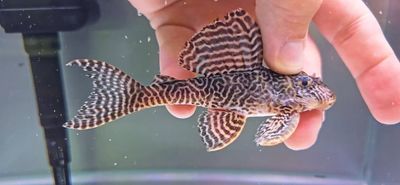
L066 King Tiger Pleco - (Hypancistrus Seideli)
L066 King Tiger Pleco - (Hypancistrus Seideli)
Price of shipping is not included.
was $75.00
Save 7%
$70.00
Captive Bred
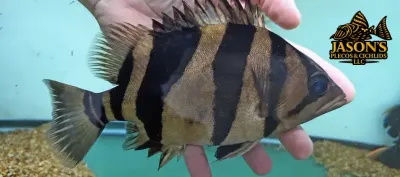
Indo Datnoid - (Datnioides microlepis)
Indo Datnoid - (Datnioides microlepis)
Price of shipping is not included.
was $800.00
Save 9%
$725.00
Captive Bred
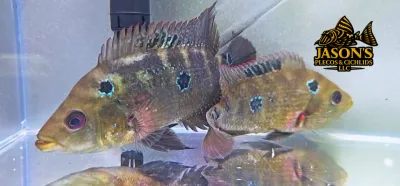
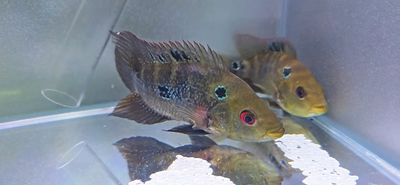
Trimac Cichlid/Three Spot Cichlid - (Amphilophus Trimaculatus)
Trimac Cichlid/Three Spot Cichlid - (Amphilophus Trimaculatus)
Price of shipping is not included.
5.0
(1)
was $70.00
Save 7%
$65.00
Captive Bred
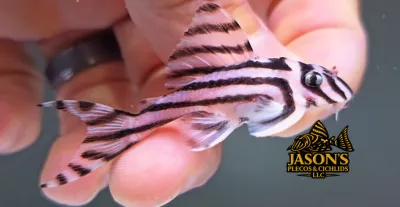
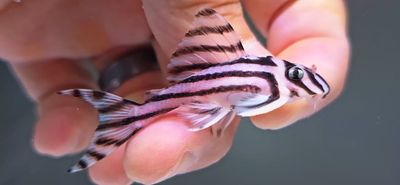
L046 Zebra Pleco - (Hypancistrus zebra)
L046 Zebra Pleco - (Hypancistrus zebra)
Price of shipping is not included.
5.0
(2)
was $250.00
Save 10%
$225.00
Powered by Lightspeed
Display prices in:USD