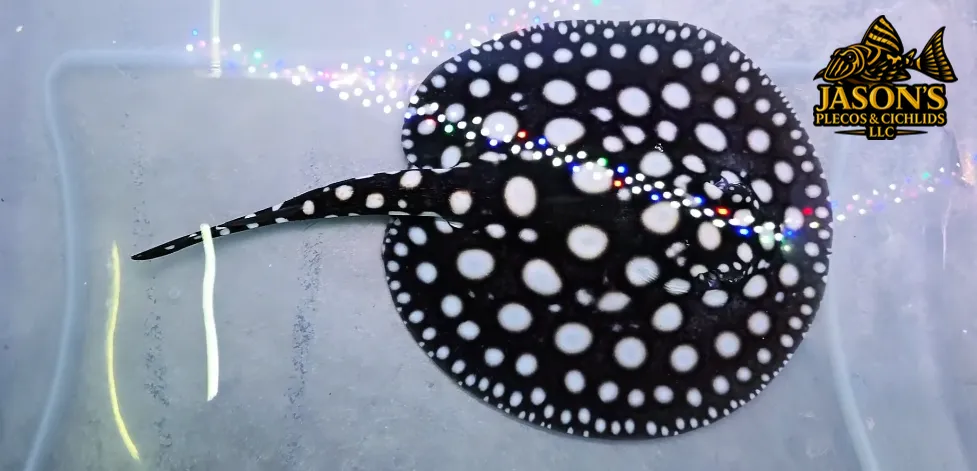
Black Diamond Stingray - (Potamotrygon leopoldi)
$720.00
Captive Bred
was $800.00 Save 10%
Size
Required Reusable Shipping Bag
Questions, Comments, Concerns? Let us know!
Enter your text
Price of shipping is not included.
In stock: 1 available
1
Save this fish to my favorites.
Customer reviews
Reviews only from verified customers
No reviews yet. You can buy this product and be the first to leave a review.
Black Diamond Stingray - (Potamotrygon leopoldi)
Fish Details, Description and Information Below:
🖤 Black Diamond Stingray – (Potamotrygon leopoldi) – Premium Xingu Freshwater Stingray
The Black Diamond Stingray (Potamotrygon leopoldi) is one of the most striking, prestigious, and highly sought-after freshwater stingrays in the aquarium hobby.
Known for its incredible velvety black coloration covered with brilliant white to cream-colored spots, the Black Diamond combines extreme contrast with the graceful swimming behavior that makes freshwater stingrays such remarkable display animals.
Black Diamond is an aquarium trade and breeding-line designation associated with high-quality Potamotrygon leopoldi. Captive breeders have selectively developed lines emphasizing characteristics such as:
- Deep black coloration
- Bright white spotting
- Increased spot density
- Clean spot definition
- Symmetrical patterns
- Additional perimeter spotting
Every individual develops its own unique pattern.
This is an advanced species requiring a very large aquarium, exceptional filtration, pristine water quality, specialized feeding, and careful handling because of its venomous tail spine.
For experienced aquarists properly equipped to maintain a large freshwater stingray, the Black Diamond is one of the ultimate freshwater centerpiece fish.
🔎 Quick Facts – Black Diamond Stingray
- 📛 Common Name: Black Diamond Stingray
- 🔬 Scientific Name: Potamotrygon leopoldi
- 🖤 Trade / Breeding Form: Black Diamond
- 🐟 Family: Potamotrygonidae
- 🌎 Origin: South America
- 🇧🇷 Country: Brazil
- 🌊 Native Range: Xingu River Basin
- 📍 Known Rivers: Xingu and Fresco rivers
- 💧 Water Type: 100% Freshwater
- 📏 Common Aquarium Adult Disc Size: Approximately 18–24 inches
- 📏 Scientific Records: Exceptionally large specimens have been recorded beyond typical aquarium sizes
- 🏠 Recommended Adult Aquarium: 300+ gallons for a single adult
- 📐 Preferred Footprint: At least approximately 8' × 3', with 8' × 4' or larger strongly preferred
- 👥 Pair / Group Housing: 500+ gallons or substantially larger
- 🌡️ Recommended Aquarium Temperature: Approximately 78–82°F
- 💧 pH: Approximately 6.0–7.0
- 💦 Water: Soft to moderately mineralized
- 🍽️ Diet: Carnivore / Benthic predator
- 😌 Temperament: Generally calm but predatory
- 🐠 Swimming Area: Bottom
- 👶 Reproduction: Live-bearing / Matrotrophic viviparity
- ☠️ Hazard: Venomous tail spine
- ⭐ Care Level: Advanced / Expert
- 🏆 Availability: Premium collector freshwater stingray
🖤 What Is a Black Diamond Stingray?
The Black Diamond Stingray is:
Potamotrygon leopoldi
It is not a separate scientific species.
Wild P. leopoldi are famous for their naturally dark coloration and contrasting white spots.
Within the aquarium hobby, Black Diamond is commonly used for particularly high-quality P. leopoldi displaying exceptionally strong black-and-white contrast.
Captive breeders have further selected these fish for desirable traits over generations.
Depending on the breeding line, Black Diamonds may display:
- Large white spots
- Small dense spotting
- Multiple rows of perimeter spots
- Extremely black backgrounds
- Symmetrical spotting
- Irregular artistic patterns
- Additional spotting as they mature
Every Ray Is Unique
No two Black Diamonds will have exactly the same pattern.
Spot size, number, placement, and coloration may continue developing as the fish grows.
🎨 Appearance
A high-quality Black Diamond Stingray typically develops a deep:
Jet-black to velvet-black background
covered with contrasting:
White, ivory, or cream-colored spots.
The tail normally continues the spotted pattern.
Many high-quality specimens develop numerous smaller spots around the outer edge of the disc, creating the dramatic appearance associated with premium Black Diamond lines.
Pattern quality may be described in the hobby using terms such as:
- Big Spot
- Thousand Island
- Eclipse
- Super Spot
- High Grade
These names refer to breeding lines or pattern types, not separate scientific species.
🌎 Natural Origin
Potamotrygon leopoldi is endemic to Brazil's:
Xingu River Basin
It is known from the:
- Rio Xingu
- Rio Fresco
- Associated tributaries
Unlike many aquarium fish with enormous geographical ranges, P. leopoldi has a relatively restricted natural distribution.
This limited distribution is one reason the species has long been considered particularly special among freshwater stingray enthusiasts.
📏 Adult Size
Adult Black Diamond Stingrays become very large.
Aquarium references commonly report adult disc diameters approaching:
18–24 inches
The disc width is the most useful measurement for stingrays because it determines how much aquarium floor space the animal requires.
The tail extends considerably beyond the disc.
Important Scientific Note
FishBase currently records an exceptional maximum of 111 cm disc width and 17 kg for P. leopoldi. This is substantially larger than the roughly 60 cm / 24-inch maximum commonly used in aquarium husbandry references.
For aquarium planning, this simply reinforces an important rule:
Give adult stingrays substantially more space than you think they will need.
Never design the permanent enclosure around the size of a juvenile ray.
🏠 Aquarium Size
For a single adult Black Diamond Stingray, I recommend:
300 gallons or larger
But gallon capacity alone can be misleading.
Floor Space Is More Important Than Height
A stingray spends nearly its entire life utilizing the bottom of the aquarium.
An aquarium that is:
Tall and narrow
is far less useful than one that is:
Long and wide.
For an adult Black Diamond, approximately:
8 feet long × 3 feet wide should be considered a starting point
with:
8 feet × 4 feet or larger strongly preferred.
For:
- Breeding pairs
- Multiple rays
- Large tankmates
consider:
500+ gallons
or a large custom aquarium / indoor pond system.
🚨 Do Not Purchase Based on Pup Size
Black Diamond pups are often sold around:
4–8 inches in disc diameter.
At that size, they can appear deceptively manageable.
That small pup can eventually become a ray approximately 2 feet across.
Before purchasing, have a realistic plan for:
- Adult aquarium dimensions
- Filtration
- Food costs
- Water-change volume
- Tankmates
- Moving the animal
- Long-term care
🏖️ Aquarium Setup
The most important feature of a stingray aquarium is:
Open floor space
Recommended setup:
- Fine sand substrate
- Large unobstructed bottom area
- Minimal décor
- Smooth driftwood if used
- Smooth rocks if used
- No sharp objects
- Strong biological filtration
- Powerful mechanical filtration
- Excellent oxygenation
- Secure aquarium cover
Decorations should not significantly reduce usable swimming area.
🏖️ Sand or Bare Bottom?
Both approaches can be successful.
Fine Sand
Fine sand allows the ray to display natural behaviors such as:
- Burying itself
- Searching for food
- Blowing sand while feeding
- Resting partially covered
Only use:
Fine, smooth aquarium-safe sand.
Avoid sharp or coarse gravel that could damage the ray's delicate underside.
Bare Bottom
Many experienced breeders use bare-bottom systems because they are easier to:
- Clean
- Siphon
- Monitor
- Maintain with heavy feeding
Either system can work when water quality is excellent.
💩 Massive Filtration Requirements
Freshwater stingrays are heavy feeders and produce a large amount of waste.
A Black Diamond aquarium requires considerably more filtration than a lightly stocked aquarium of the same volume.
Recommended filtration may include:
- Large sump filtration
- Oversized biological filtration
- High-capacity mechanical filtration
- Filter socks or rollers
- Strong return pumps
- High oxygenation
- Powerful surface agitation
Sumps are especially useful because heaters and other equipment can be placed outside the main aquarium, reducing the chance of equipment being damaged by a large ray.
💧 Water Quality – Extremely Important
Freshwater stingrays are very sensitive to deteriorating water quality.
Maintain:
- ☠️ Ammonia: 0 ppm
- ☠️ Nitrite: 0 ppm
- 🔄 Nitrate: As low as reasonably possible
- 💨 Dissolved Oxygen: High
Regular substantial water changes are essential.
Never introduce a Black Diamond Stingray into:
- An uncycled aquarium
- A newly established biological filter
- A system experiencing ammonia
- A system experiencing nitrite
- An aquarium with unstable water chemistry
The aquarium should be fully mature and biologically stable.
💧 Water Parameters
Recommended captive conditions:
- 🌡️ Temperature: Approximately 78–82°F
- 💧 pH: Approximately 6.0–7.0
- 💦 Water: Soft to moderately mineralized
- 💨 Oxygenation: High
FishBase reports natural P. leopoldi habitat around pH 6.0–6.8, while aquarium husbandry experience supports a somewhat broader temperature range than early wild records.
Stable water is far more important than continuously adjusting the aquarium in an attempt to reach one exact number.
Avoid sudden changes in:
- pH
- Temperature
- Hardness
- Water chemistry
🍽️ Diet & Feeding
The Black Diamond Stingray is a carnivorous benthic predator.
Wild P. leopoldi search the substrate for aquatic invertebrates and other prey.
Recommended aquarium foods include:
- 🪱 Earthworms / Nightcrawlers
- 🦐 Shrimp
- 🦐 Prawns
- 🦪 Mussels
- 🦪 Cockles
- 🦀 Appropriate crustaceans
- 🐟 Pieces of fish
- Krill
- Mysis shrimp
- Quality sinking carnivore pellets once accepted
Juveniles may initially require smaller foods such as:
- Bloodworms
- Mysis
- Small earthworms
- Chopped shrimp
- Chopped krill
🍽️ Feed Young Rays Frequently
Juvenile stingrays have relatively fast metabolisms.
Young animals may require:
2–3 small feedings per day
depending on:
- Size
- Body condition
- Food type
- Water temperature
Adults can generally receive larger meals with feeding frequency adjusted according to body condition.
Never allow a ray to become noticeably thin.
⚠️ Watch the Pelvic Area / “Hips”
A healthy stingray should maintain good body condition.
One warning sign of inadequate feeding or illness is a noticeably sunken appearance around the pelvic region near the base of the tail.
Healthy rays should appear:
- Well filled out
- Alert
- Responsive to food
- Active
- Breathing normally
A stingray that refuses food should be taken seriously.
🚫 Avoid Routine Feeder Fish
We do not recommend routinely feeding live feeder fish.
Feeder fish can introduce:
- Parasites
- Bacteria
- Viral disease
- Nutritional problems
Black Diamonds can usually be conditioned to accept:
- Frozen foods
- Fresh seafood
- Earthworms
- Quality prepared foods
😌 Temperament
Black Diamond Stingrays are generally calm animals, but they are still powerful predators.
They normally do not actively seek conflict with appropriately sized tankmates.
However:
Anything small enough to eat may become food.
Their calm appearance should also never cause a keeper to forget about the defensive tail spine.
🐠 Tankmates
Potential tankmates in a sufficiently large aquarium may include selected:
- Arowanas
- Datnoids
- Large peaceful cichlids
- Large peaceful characins
- Other compatible freshwater stingrays
- Large upper-water fish
Avoid:
- Small fish
- Fin nippers
- Extremely aggressive cichlids
- Hyperactive bottom dwellers
- Fish that compete constantly for food
- Species that may bite the ray's disc
🚨 Plecos & Stingrays
Special caution should be used when housing freshwater stingrays with plecos and other suckermouth catfish.
There are documented aquarium cases of loricariids attaching themselves to the stingray's disc and rasping the protective surface tissue.
This can result in:
- Open wounds
- Infection
- Stress
- Serious tissue damage
Even a normally peaceful pleco can potentially cause problems.
For this reason:
We do not recommend automatically combining plecos and freshwater stingrays simply because the aquarium is large enough.
If attempted by an experienced keeper, the animals should be watched extremely closely.
♂️ Male vs. Female
Freshwater stingrays are relatively easy to sex once the underside of the rear portion of the animal can be seen.
Males
Males possess:
Claspers
These are paired elongated reproductive structures located beside the pelvic fins.
Females
Females:
- Do not have claspers
- Have normal rounded pelvic fins
- Typically grow larger and heavier than males
Juvenile males already begin showing small developing claspers.
👶 Breeding
Black Diamond Stingrays have been bred successfully in captivity.
Unlike egg-laying fish, Potamotrygon reproduce through:
Matrotrophic Viviparity
In simple terms:
They give birth to live pups.
Fertilization takes place internally.
The embryos develop inside the female and receive additional nourishment from specialized uterine secretions.
💕 Courtship Can Be Rough
Stingray breeding is not always gentle.
During courtship, males may:
- Chase the female
- Bite the edge of her disc
- Hold onto the female
- Leave visible marks
For this reason, the female should ideally be:
- Large
- Strong
- Healthy
- Capable of defending herself
The aquarium should also provide enough room to separate rays if necessary.
A male that continually harasses a female may need to be removed.
🤰 Gestation & Pups
Aquarium breeding references report gestation commonly lasting approximately:
2–3 months
with litters often containing:
1–8 pups
although litter size varies.
The pups are born as fully formed miniature stingrays.
Young rays should be closely monitored to ensure they begin feeding properly.
Appropriate first foods may include:
- Bloodworms
- Mysis shrimp
- Small earthworms
- Chopped shrimp
- Other appropriately sized meaty foods
🧬 Black Diamond Breeding Lines
Selective breeding has produced numerous recognizable Black Diamond pattern styles.
These may include:
- Large Spot
- Super Spot
- Thousand Island
- Eclipse
- High Grade Black Diamond
These names are aquarium breeding-line descriptions, not scientifically recognized subspecies.
Pattern inheritance is not perfectly predictable.
Even offspring from exceptional parents may vary considerably.
☠️ VENOMOUS TAIL SPINE – IMPORTANT
All freshwater stingrays in the family Potamotrygonidae possess a defensive tail spine.
The Black Diamond Stingray is venomous.
The spine is located on the upper surface of the tail.
It is:
- Sharp
- Barbed
- Defensive
- Associated with venomous tissue/mucus
A sting can cause an extremely painful wound.
The ray does not normally use its spine to hunt.
It is primarily defensive and may be used if the animal is:
- Stepped on
- Grabbed
- Restrained
- Frightened
- Trapped
- Accidentally touched
🚫 Never Handle a Stingray With Bare Hands
Never:
- Grab the ray
- Hold its tail
- Pin the animal down
- Reach carelessly behind it
- Attempt to remove the stinger yourself
- Move a ray in an ordinary fish net
A net can entangle the spine and injure both the fish and the keeper.
Moving a Stingray
When a ray must be moved, experienced keepers generally guide it into a:
- Large rigid container
- Heavy-duty fish tub
- Appropriate transport container
rather than lifting it with a net.
⚠️ Shed Stingers Are Still Dangerous
Freshwater stingrays periodically shed their tail spines and replace them with new ones.
A shed spine lying on the bottom of the aquarium can still cause injury.
Always use caution when:
- Cleaning the aquarium
- Moving sand
- Reaching into filters
- Removing debris
Never assume a discarded spine is harmless.
🚑 Sting Injury
A stingray puncture should be treated seriously.
If someone is struck by the spine:
Seek prompt medical attention.
A physician may need to evaluate:
- Venom-related pain
- Tissue injury
- Retained spine fragments
- Infection risk
Do not assume that a small puncture means the injury is minor.
💊 Medication Warning
Freshwater stingrays can be unusually sensitive to aquarium medications.
Do not automatically treat a stingray aquarium using the same dosage or medications used for ordinary freshwater fish.
Use particular caution with medications containing substances such as:
- Copper
- Strong antiparasitic chemicals
- Other compounds not specifically known to be ray-safe
When treatment is necessary, research the medication specifically for freshwater stingrays and consult an aquatic veterinarian when appropriate.
Never guess with a valuable and sensitive animal.
⏳ Lifespan
Properly maintained freshwater stingrays are long-term animals.
Black Diamonds can potentially live:
20 years or more
under appropriate captive conditions.
Purchasing one should therefore be considered a significant long-term commitment.
⭐ Why Keep a Black Diamond Stingray?
The Black Diamond is one of the most impressive freshwater fish available to serious collectors.
Its combination of:
- 🖤 Deep black coloration
- ⚪ Brilliant white spotting
- 🎨 Unique individual patterns
- 🌊 Graceful swimming behavior
- 🇧🇷 Xingu River ancestry
- 👶 Live-bearing reproduction
- 🧬 Selectively developed breeding lines
- 🏆 Premium collector status
- 👀 Incredible display presence
has made Potamotrygon leopoldi one of the most desirable freshwater stingrays in the world.
A mature high-quality Black Diamond gliding across a large aquarium is truly one of the most impressive sights in the freshwater aquarium hobby.
⚠️ Important Considerations
Before purchasing a Black Diamond Stingray:
- Plan for an adult disc approximately 18–24 inches or potentially larger.
- Provide at least approximately 300 gallons for a single adult.
- Prioritize floor space over aquarium height.
- Larger systems are strongly preferred.
- Use extremely powerful filtration.
- Keep ammonia and nitrite at zero.
- Keep nitrate as low as reasonably possible.
- Maintain excellent oxygenation.
- Never place one into an immature aquarium.
- Feed a varied carnivorous diet.
- Feed juveniles frequently.
- Avoid routine feeder fish.
- Use caution with pleco tankmates.
- Understand medication sensitivity.
- Understand that the tail spine is venomous.
- Never handle the ray casually.
- Verify state and local legality before ordering.
This species is recommended for advanced or expert freshwater aquarists only.
🚨 STATE LEGALITY – VERIFY BEFORE ORDERING
Freshwater stingrays are not legal for ordinary private ownership in every state.
Some states regulate the entire:
Family Potamotrygonidae
rather than naming individual stingray species.
For example:
🚫 Texas
Texas lists:
Freshwater Stingrays – Family Potamotrygonidae – All Species
as harmful or potentially harmful exotic fish.
We will not ship a Black Diamond Stingray to Texas unless the transaction qualifies under applicable state authorization.
🚫 / ⚠️ Florida
Florida currently classifies:
Family Potamotrygonidae – All Species
as Conditional Nonnative Species.
Conditional species are subject to state permitting restrictions and are not ordinary personal-pet species.
Other states may also restrict freshwater stingrays.
⚠️ Buyer Responsibility
Before ordering, customers are responsible for confirming that Potamotrygon leopoldi may legally be:
- Purchased
- Possessed
- Imported
- Transported
- Received
at their destination.
Being available for purchase on our website does not guarantee that freshwater stingrays are legal in every state or local jurisdiction.
Jason's Plecos & Cichlids reserves the right to cancel or refuse any order when the legality of shipment or possession cannot be confirmed.
🚚 Live Fish Shipping
Live stingrays require specialized professional packing.
Shipping availability depends on:
- Ray size
- Destination
- Weather
- Carrier availability
- Packaging requirements
- State regulations
- Local regulations
Larger specimens may require:
- Oversized insulated boxes
- Additional water
- Specialized bags
- Specialized handling
- Airline cargo shipping
Please review our Shipping & Payment Information and Live Arrival Guarantee / DOA Policy before ordering.
🌎 Never Release a Freshwater Stingray
Never release a captive stingray into:
- Rivers
- Lakes
- Ponds
- Streams
- Canals
- Drainage systems
- Natural waterways
If you can no longer care for the animal, contact an experienced aquarium store, qualified keeper, rescue, or appropriate wildlife agency.
Never release aquarium animals into the wild.
Below are fish you may also like.
Wild Caught
Blue Eyed Royal Pleco - (Panaque cochliodon)
Blue Eyed Royal Pleco - (Panaque cochliodon)
Price of shipping is not included.
5.0
(3)
was $500.00
Save 7%
$465.00
Wild Caught
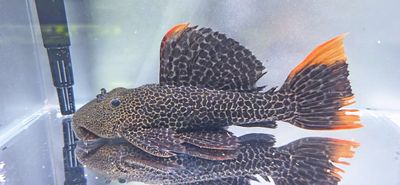
L427 Jatupu Cactus Pleco - (Pseudacanthicus sp.)
L427 Jatupu Cactus Pleco - (Pseudacanthicus sp.)
Price of shipping is not included.
was $450.00
Save 19%
$365.00
Captive Bred
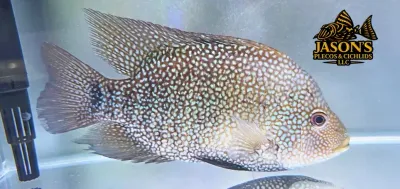
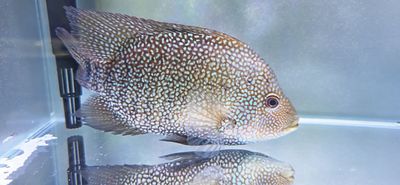
Green Texas Cichlid - (Herichthys carpintis)
Green Texas Cichlid - (Herichthys carpintis)
Price of shipping is not included.
5.0
(2)
was $80.00
Save 6%
$75.00
Wild Caught
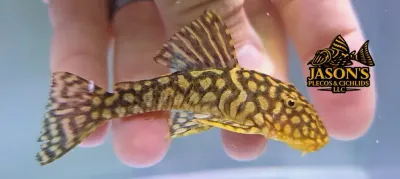
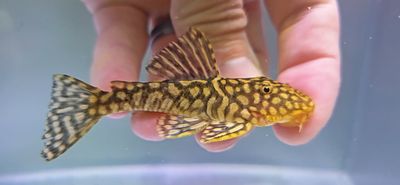
Slate Pleco - (Pseudancistrus genisetiger)
Slate Pleco - (Pseudancistrus genisetiger)
Price of shipping is not included.
5.0
(1)
was $80.00
Save 6%
$75.00
Wild Caught
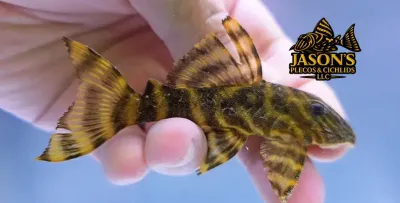
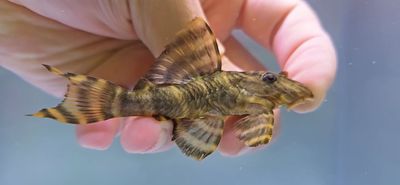
L398 Tanke Tiger Pleco - (Panaqolus tankei)
L398 Tanke Tiger Pleco - (Panaqolus tankei)
Price of shipping is not included.
was $60.00
Save 8%
$55.00
Powered by Lightspeed
Display prices in:USD