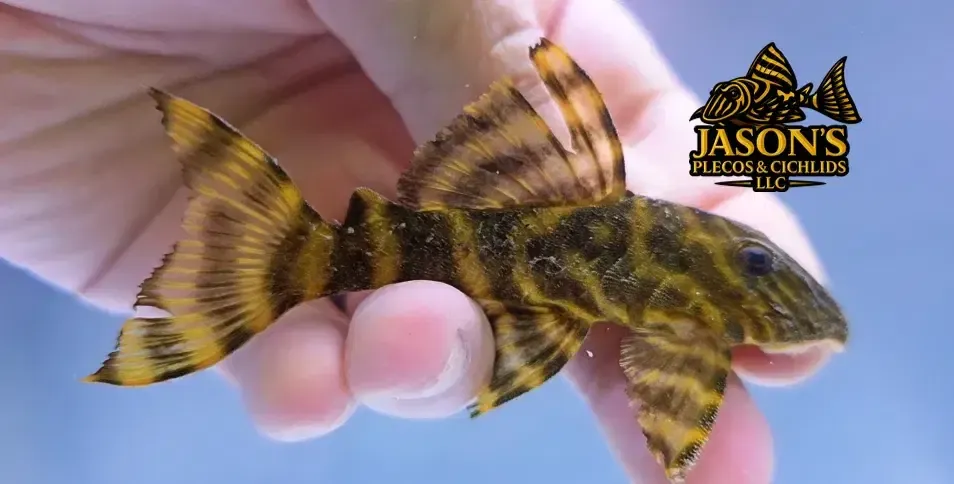
L398 Tanke Tiger Pleco - (Panaqolus tankei)
$55.00
Wild Caught
was $60.00 Save 8%
Size
Price of shipping is not included.
In stock: 1 available
1
Save this fish to my favorites.
Customer reviews
Reviews only from verified customers
No reviews yet. You can buy this product and be the first to leave a review.
L398 Tanke Tiger Pleco - (Panaqolus tankei)
Fish Details, Description and Information Below:
🐯 L398 Tanke Tiger Pleco – (Panaqolus tankei) – Wild-Caught Lower Rio Xingu Pleco
The L398 Tanke Tiger Pleco (Panaqolus tankei) is a beautifully patterned Brazilian pleco recognized by its alternating dark and light tiger-like bands, compact adult size, active personality, and strong association with submerged wood.
Unlike many L-number plecos that remain scientifically undescribed, L398 received a formal scientific name in 2016:
Panaqolus tankei
The species is endemic to the:
LOWER RIO XINGU IN PARÁ, BRAZIL
where it is found primarily around:
- Fallen trees
- Submerged wood
- Woody debris
- Riverbank structure
The Tanke Tiger Pleco is a wood-grazing, detritus-oriented omnivore. Natural driftwood should be an important part of its aquarium environment, but wood should not be treated as its entire diet or described as something required specifically for digestion.
This listing is for:
WILD-CAUGHT L398 TANKE TIGER PLECOS
🔎 Quick Facts – L398 Tanke Tiger Pleco
- 📛 Common Name: Tanke Tiger Pleco
- 📛 Other Names: Tankei Tiger Pleco, L398 Pleco, Altamira Wood-Grazing Pleco
- 🔢 L-Number: L398
- 🔬 Scientific Name: Panaqolus tankei
- 📅 Formally Described: 2016
- 🐟 Family: Loricariidae
- 🧬 Subfamily: Hypostominae
- 🌿 Stock: Wild Caught
- 🇧🇷 Country: Brazil
- 📍 State: Pará
- 🌊 Native River: Rio Xingu
- 📍 Native Range: Lower Rio Xingu downstream of the Belo Monte waterfalls
- 🪵 Natural Habitat: Fallen trees and submerged wood along riverbanks
- 🌊 Documented Habitat Depth: Approximately 1–10 meters
- 💧 Water Type: Freshwater
- 📏 Adult Planning Size: Approximately 5–6 inches
- 🏠 Recommended Aquarium: Approximately 30 gallons or larger
- 👥 Groups: Approximately 40–55+ gallons depending on bottom area
- 🌡️ Temperature: Approximately 77–84°F
- 💧 pH: Approximately 6.0–7.5
- 💦 Water: Soft to moderately mineralized
- 💨 Oxygenation: High
- 🌊 Water Movement: Moderate
- 🍽️ Diet: Wood-Grazing / Detritus-Leaning Omnivore
- 🪵 Driftwood: Strongly Recommended
- 🌿 Plant / Algae Foods: Important
- 🦐 Animal / Insect Protein: Supplemental
- 🚫 Algae Cleaner: Should not be purchased solely for algae control
- 💩 Bioload: Moderate to High for its size
- 😌 Temperament: Generally peaceful
- ⚠️ Pleco Temperament: Mature males may defend caves and feeding areas
- ☀️ Daytime Activity: Often more visible than many plecos
- 🌙 Activity: Crepuscular / nocturnal with regular daytime activity possible
- 🥚 Breeding: Confirmed Cave Spawner
- 👨👧 Parental Care: Male guards the clutch
- ♂️ Male Trait: Strong caudal-peduncle odontodes when mature
- ⭐ Care Level: Intermediate
- 🌎 IUCN Status: Not Evaluated
🧬 L398 Is Now a Formally Described Species
Older aquarium references identify this fish as:
Panaqolus sp. L398
That identification is outdated.
In:
2016
Christian Cramer and Leandro Melo de Sousa formally described L398 as:
Panaqolus tankei
The correct modern identification is therefore:
L398 Tanke Tiger Pleco – (Panaqolus tankei)
🔢 L398
The fish originally entered the aquarium hobby under the designation:
L398
and was introduced under that number in:
2005
The L-number remains useful because aquarium keepers recognize the fish strongly by:
L398
even though it now has a valid scientific name.
👨🔬 Who Is the Tanke Tiger Named After?
The species name:
tankei
honors German aquarist:
Andreas Tanke
who became especially well known for his work with:
Panaqolus
He studied:
- Husbandry
- Identification
- Behavior
- Breeding
- Natural habitats
and helped improve communication between aquarium keepers and professional scientists.
He was also probably the:
FIRST PERSON TO SUCCESSFULLY BREED L398 IN CAPTIVITY
🎨 Appearance
L398 develops an attractive combination of:
- Dark brown
- Chocolate brown
- Gray-brown
- Nearly black
bands separated by lighter:
- Cream
- Tan
- Yellow-brown
- Golden
- Pale brown
areas.
🐯 Tiger Pattern
The defining pattern consists of:
ALTERNATING DARK AND LIGHT BARS
across the body.
An important scientific identification characteristic is that the:
DARK AND LIGHT BARS ARE GENERALLY SIMILAR IN WIDTH
This helps distinguish P. tankei from some related Panaqolus in which the dark bands are two or three times wider than the pale areas.
🎨 Fin Pattern
The tiger pattern continues through the:
- Dorsal fin
- Pectoral fins
- Pelvic fins
- Caudal fin
creating attractive alternating bands.
🧑 Head Pattern
The head generally has:
- Dark lines
- Light lines
- Relatively organized markings
rather than the extensive worm-like head vermiculations seen in some related species.
🔄 Geographic Pattern Variation
Not every L398 looks identical.
The original scientific description noted differences between fish from different portions of the lower Xingu.
Fish from the:
PORTO DE MOZ REGION
near the mouth of the Xingu were observed with:
MORE NUMEROUS AND FINER LINES ON THE SNOUT
than typical specimens farther upstream.
However, scientists did not have enough preserved material to determine whether those fish represent:
- Geographic variation
or:
- Another closely related undescribed form.
Therefore:
DO NOT IDENTIFY LOCALITY BASED ONLY ON PATTERN
⚠️ Color & Pattern Disclaimer
Individual L398 may vary naturally in:
- Bar width
- Head markings
- Yellow coloration
- Body darkness
- Fin markings
- Contrast
Appearance can also change because of:
- Stress
- Shipping
- Lighting
- Diet
- Aquarium background
- Water quality
- Acclimation
Exact adult pattern cannot be guaranteed.
🌎 Native Distribution
Panaqolus tankei is endemic to:
BRAZIL
and is currently scientifically known from the:
LOWER RIO XINGU
in:
PARÁ
🌊 Downstream of Belo Monte
The original scientific description states that the species is known from the lower Xingu:
DOWNSTREAM OF THE BELO MONTE WATERFALLS
This is much more precise than simply listing the origin as:
Amazon Basin
or:
South America
📍 Type Locality
The holotype was collected from the:
RIO XINGU
approximately:
17 KM SOUTH OF SENADOR JOSÉ PORFÍRIO
in Pará, Brazil.
Additional scientific specimens were collected from areas including:
- Vitória do Xingu
- Lower Rio Xingu
- Areas toward Porto de Moz
🪵 Natural Habitat
One of the best-documented characteristics of L398 is its association with:
SUBMERGED WOOD
Researchers found the species primarily on:
- Fallen trees
- Sunken logs
- Woody debris
along the riverbank.
🌊 Habitat Depth
Scientific observations recorded L398 at approximately:
1–10 METERS DEEP
This demonstrates that the species can occupy a range of riverbank depths rather than being restricted to extremely shallow water.
🪵 Wood Is Central to Its Natural Lifestyle
L398 spends substantial time:
- Resting on wood
- Rasping wood surfaces
- Feeding around woody debris
- Hiding among submerged branches
A proper aquarium should therefore contain:
SUBSTANTIAL NATURAL DRIFTWOOD
🪵 Driftwood Is Strongly Recommended
Provide several pieces of aquarium-safe wood.
Driftwood supplies:
- Natural grazing surfaces
- Biofilm
- Detritus
- Microorganisms
- Shelter
- Shade
- Territory boundaries
- Environmental enrichment
⚠️ Important Wood-Diet Clarification
L398 is commonly described simply as a:
WOOD EATER
That description is useful but incomplete.
Panaqolus scrape and ingest wood, but aquarium wood should not be considered:
A COMPLETE FOOD
and I would not claim that wood is required specifically:
“FOR DIGESTION.”
A better description is:
WOOD-GRAZING / DETRITUS-ORIENTED OMNIVORE
🍽️ Diet
A proper L398 diet should contain:
- Wood-associated biofilm
- Plant matter
- Algae-containing prepared foods
- Fiber-rich foods
- Vegetables
- Quality sinking foods
with modest amounts of:
- Insect foods
- Frozen foods
- Animal protein
🌿 Staple Foods
Good staple foods include:
- Quality algae wafers
- Spirulina wafers
- Vegetable-based pleco pellets
- Fiber-rich sinking foods
- Quality gel diets
- Foods designed for grazing loricariids
🥒 Fresh Vegetables
Suitable vegetables include:
- Zucchini
- Squash
- Pumpkin
- Green beans
- Sweet potato
- Appropriate leafy greens
Rotate foods for greater nutritional variety.
🦐 Supplemental Protein
L398 will also consume animal and insect-based foods.
Suitable occasional foods include:
- Mysis shrimp
- Brine shrimp
- Bloodworms
- Mosquito larvae
- Insect-based sinking pellets
- Quality omnivore foods
⚠️ Avoid an Extremely High-Protein Diet
The L398 should not be fed like a:
- Vampire Pleco
- Cactus Pleco
- Predatory catfish
Its feeding program should remain primarily:
PLANT / BIOFILM / DETRITUS / GRAZING ORIENTED
with protein supplying variety.
🚫 Not Just an Algae Cleaner
L398 may consume:
- Soft algae
- Biofilm
- Organic coatings
but it should:
NOT BE PURCHASED SIMPLY TO CLEAN AN AQUARIUM
Intentional feeding remains necessary.
💩 Expect Wood-Related Waste
Like other Panaqolus, L398 can produce surprising amounts of:
FINE SAWDUST-LIKE WASTE
from grazing wood.
This material often collects:
- Beneath driftwood
- Behind rocks
- Around caves
- In low-flow areas
💩 Filtration
Good mechanical filtration helps remove:
- Feces
- Fine wood particles
- Excess food
- Organic debris
Suitable filtration may include:
- Canister filters
- Hang-on-back filters
- Sponge filtration
- Sump filtration
🔄 Regular Maintenance
Vacuum excessive debris from beneath:
- Wood
- Rocks
- Caves
while allowing healthy:
BIOFILM
to remain on natural grazing surfaces.
📏 Adult Size
The original scientific specimens included individuals exceeding:
8 CM STANDARD LENGTH
but aquarium records document larger mature fish.
Specialist husbandry sources generally place adult L398 around:
12–15 CM TOTAL LENGTH
or approximately:
5–6 INCHES
For responsible customer planning:
EXPECT APPROXIMATELY 5–6 INCHES
🏠 Aquarium Size
For one L398:
30 GALLONS OR LARGER
provides a good permanent starting point.
For:
- Groups
- Breeding colonies
- Multiple plecos
consider:
40–55+ GALLONS
depending on aquarium footprint.
📐 Bottom Area Matters
L398 spends most of its time around:
- Wood
- Caves
- Substrate
so:
LENGTH + WIDTH
are more useful than excessive aquarium height.
🪵 Aquarium Setup
A good L398 aquarium should include:
- Several pieces of driftwood
- Ceramic pleco caves
- Rock crevices
- Smooth rocks
- Slate
- Sand or smooth gravel
- Shaded areas
- Open feeding areas
- Good filtration
- Good oxygenation
🏠 Caves
Although wood is central to the natural habitat, captive L398 also make excellent use of:
- Ceramic pleco tubes
- Wooden cavities
- Slate caves
- Rock crevices
Caves become especially important for mature males.
👥 Provide More Caves Than Fish
For groups:
PROVIDE MORE CAVES THAN PLECOS
This reduces competition and gives subordinate fish alternative territories.
🌡️ Temperature
A practical long-term range is:
77–84°F / 25–29°C
Some specialist sources maintain the species somewhat warmer, but approximately:
78–82°F
works well for many established fish.
💧 Water Parameters
A practical maintenance range is:
- 🌡️ Temperature: Approximately 77–84°F
- 💧 pH: Approximately 6.0–7.5
- 💦 Hardness: Soft to moderately mineralized
- 💨 Oxygenation: High
- 🌊 Water Movement: Moderate
- ☠️ Ammonia: 0 ppm
- ☠️ Nitrite: 0 ppm
- 🔄 Nitrate: Keep reasonably low
💨 Oxygenation
Good oxygenation is important.
Use:
- Surface agitation
- Air stones
- Sponge filters
- Strong filter returns
- Appropriate circulation
🌊 Water Movement
L398 comes from a large river system, but its microhabitat is strongly associated with:
WOOD ALONG THE RIVERBANK
Therefore, I would avoid describing it as requiring extreme torrent conditions.
Provide:
MODERATE CIRCULATION + HIGH OXYGENATION
with sheltered areas among wood and caves.
😌 Temperament
L398 is generally:
PEACEFUL
and is one of the easier Panaqolus to incorporate into a suitable community aquarium.
🐠 Tankmates
Potential tankmates can include appropriately selected:
- Tetras
- Rasboras
- Corydoras
- Dwarf cichlids
- Peaceful community fish
- Other compatible plecos
provided their temperature requirements overlap.
⚠️ Territorial Behavior
Mature L398 can become territorial around:
- Caves
- Favorite wood
- Feeding areas
This is particularly true of:
MATURE MALES
👥 Group Housing
L398 can be maintained in groups when provided with:
- Multiple wood pieces
- Multiple caves
- Several feeding areas
- Adequate bottom territory
☀️ Often Visible During the Day
One appealing characteristic of L398 is that it can be:
MORE DAY-ACTIVE THAN MANY PLECOS
Established fish may:
- Graze wood during daylight
- Rest openly
- Explore the aquarium
- Feed before lights out
A well-structured aquarium helps the fish feel secure enough to remain visible.
🌙 Night Activity
Even though it can be active during daylight, activity generally increases:
- At dusk
- During feeding
- After lights dim
🧪 Wild-Caught Acclimation
This listing is for:
WILD-CAUGHT L398 TANKE TIGER PLECOS
After arrival:
- Provide immediate driftwood
- Provide caves
- Keep lighting subdued initially
- Maintain good oxygenation
- Avoid abrupt temperature changes
- Avoid abrupt pH changes
- Maintain clean water
- Confirm feeding
🍽️ Confirm Feeding
Offer food:
- Near driftwood
- Near caves
- At dusk
- After lights dim
- In several locations
Watch for:
- Sunken abdomen
- Weight loss
- Persistent hiding without feeding
♂️ Male vs. Female
The original scientific description documented clear sexual dimorphism in mature fish.
Mature Males
Develop:
LONG, STRONG ODONTODES ON THE CAUDAL PEDUNCLE
The rear portion of the body can develop a:
- Bristled
- Hairy
- Furry
appearance.
Males also commonly develop stronger odontodes on the:
- Pectoral-fin spines
Mature Females
Generally:
- Have much shorter caudal-peduncle odontodes
- Develop a fuller abdomen when carrying eggs
- Appear broader through the belly
⚠️ Juveniles Are Difficult to Sex
Young fish may not yet display reliable sexual characteristics.
Unless confidently identified:
SELL AS UNSEXED
🥚 Captive Breeding – Confirmed
L398 has been:
SUCCESSFULLY BRED IN CAPTIVITY
Breeding was documented even before the species received its scientific name.
🏠 Cave Spawner
The Tanke Tiger Pleco is a:
CAVE-SPAWNING LORICARIID
Mature males select and defend:
- Ceramic caves
- Narrow tubes
- Wood cavities
- Similar enclosed shelters
💕 Spawning
Typical breeding behavior includes:
- A mature male selects a cave.
- A receptive female enters.
- Spawning occurs inside.
- The eggs are fertilized.
- The female eventually leaves.
- The male remains with the clutch.
👨👧 Male Parental Care
After spawning:
THE MALE GUARDS THE EGGS
He remains inside the cave and helps:
- Protect the clutch
- Fan the eggs
- Maintain water movement
- Guard developing fry
🌧️ Seasonal Breeding Triggers
An especially interesting observation from the scientific description is that aquarium spawning appears to be influenced by:
SEASONAL CHANGES IN WATER QUALITY AND TEMPERATURE
This may reflect natural seasonal cycles in the lower Rio Xingu.
💧 Breeding Stimulation
Experienced breeders may experiment with:
- Larger water changes
- Changes in water temperature
- Softer incoming water
- Increased feeding
- Strong conditioning
However:
NO SINGLE METHOD GUARANTEES SPAWNING
👶 Raising Fry
Once the yolk sac is absorbed, young L398 can receive:
- Fine plant-based foods
- Spirulina foods
- Fine sinking pellets
- Quality gel foods
- Biofilm
- Small amounts of appropriate animal foods
🪵 Provide Wood to Fry
Young L398 should have access to:
SMALL PIECES OF DRIFTWOOD
for:
- Shelter
- Natural grazing
- Biofilm
- Normal behavior
However:
WOOD ALONE IS NOT A COMPLETE FRY DIET
🧬 Preserve L398 Lines
Because several similar tiger-patterned Panaqolus exist in Brazil:
PRESERVE THE L398 IDENTITY
Keep records of:
- Scientific name
- L-number
- Supplier
- Locality when known
- Parentage of captive-bred fish
🆚 L398 vs. L397
L398 should not be confused with:
L397 TANGERINE TIGER PLECO
They are:
DIFFERENT L-NUMBER FORMS
L398
- Formally described as Panaqolus tankei
- Lower Rio Xingu
- Pará, Brazil
- Brown/yellow tiger pattern
- Dark and pale bars generally similar in width
L397
- Still normally identified as Panaqolus sp. L397
- Different Brazilian drainage/locality
- Often much stronger orange/tangerine coloration
- Separate aquarium lineage
⚠️ Do Not Mix Breeding Lines
Even when two Panaqolus look similar:
KEEP IDENTIFIED L-NUMBER LINES SEPARATE
if maintaining pure aquarium lineages is important.
🌎 Conservation Status
Panaqolus tankei currently does not have a formal IUCN Red List assessment.
Therefore:
IUCN STATUS: NOT EVALUATED
is the appropriate wording.
🌊 Belo Monte Considerations
The original species description discusses the:
BELO MONTE HYDROELECTRIC DEVELOPMENT
on the Rio Xingu.
L398's known range is primarily:
DOWNSTREAM OF THE DIRECTLY IMPACTED AREA
so its principal habitats were not expected to be destroyed directly by the dam.
However, changes in:
- Water flow
- Seasonal cycles
- Water quality
- Regional development
can still affect downstream environments.
⚠️ Not Evaluated Does Not Mean No Conservation Concerns
The absence of an IUCN assessment does not prove that the species faces no threats.
Responsible sourcing and permanent care remain especially important for:
WILD-CAUGHT FISH
⭐ Why Keep an L398 Tanke Tiger Pleco?
The L398 combines:
- 🐯 Attractive tiger-like banding
- 🟡 Warm yellow and tan coloration
- 🇧🇷 Lower Rio Xingu origin
- 🪵 Fascinating wood-grazing behavior
- 📏 Manageable approximately 5–6 inch adult size
- 😌 Generally peaceful temperament
- ☀️ Good potential for daytime visibility
- 🥚 Confirmed captive breeding
- 👨👧 Male parental care
- 🧬 Formally described scientific identity
into an excellent Panaqolus for aquarists who enjoy smaller wood-associated plecos.
⚠️ Important Considerations
Before purchasing an L398 Tanke Tiger Pleco:
- The correct scientific name is Panaqolus tankei.
- L398 is no longer scientifically undescribed.
- The species was formally described in 2016.
- It was originally introduced to aquarists as L398 in 2005.
- The species was named after aquarist Andreas Tanke.
- L398 originates from Pará, Brazil.
- Its scientifically confirmed range is the lower Rio Xingu downstream of the Belo Monte waterfalls.
- Wild fish are strongly associated with fallen trees and submerged wood.
- Scientific habitat observations range from approximately 1–10 meters deep.
- This listing is for wild-caught fish.
- Adult aquarium specimens generally reach approximately 5–6 inches.
- Provide approximately 30 gallons or larger.
- Use larger aquariums for groups.
- Provide substantial natural driftwood.
- Wood is an important grazing surface and habitat feature.
- Do not treat wood as the complete diet.
- Do not claim wood is required specifically for digestion.
- Feed plant-, biofilm-, and detritus-oriented foods.
- Provide modest supplemental animal and insect protein.
- Do not maintain L398 on a heavy carnivore diet.
- Do not purchase L398 solely as an algae cleaner.
- Expect fine wood-related waste.
- Maintain strong mechanical and biological filtration.
- Maintain approximately 77–84°F.
- Maintain pH around 6.0–7.5.
- Maintain good to high dissolved oxygen.
- Moderate water movement is appropriate.
- L398 can be surprisingly active during daylight.
- Mature males develop long caudal-peduncle odontodes.
- Captive breeding is well documented.
- L398 is a cave spawner.
- Males guard the eggs and fry.
- Seasonal changes in temperature and water quality may influence spawning.
- Keep L398 breeding lines separate from similar Panaqolus.
- The species is currently Not Evaluated by the IUCN.
- Never release aquarium fish into natural waterways.
🧬 Taxonomy
The currently accepted scientific name is:
Panaqolus tankei Cramer & Melo de Sousa, 2016
Classification:
- Order: Siluriformes
- Family: Loricariidae
- Subfamily: Hypostominae
- Genus: Panaqolus
- Species: tankei
- L-Number: L398
Native range:
LOWER RIO XINGU – PARÁ, BRAZIL
For this product, use:
L398 Tanke Tiger Pleco – (Panaqolus tankei)
🔢 L-Number & Locality Disclaimer
L398 remains the established aquarium designation for Panaqolus tankei.
Because similar tiger-patterned Panaqolus occur in several Brazilian river systems, preserve:
- L398 designation
- Scientific name
- Supplier information
- Collection locality when known
- Breeding records
Do not identify unrelated tiger-patterned Panaqolus as L398 based solely on coloration.
🚚 Live Fish Shipping
Live fish are professionally packed for safe transport.
Shipping availability depends on:
- Fish size
- Destination
- Weather conditions
- Carrier availability
- Applicable state and local regulations
Please review our Shipping & Payment Information and Live Arrival Guarantee / DOA Policy before ordering.
⚠️ Buyer Responsibility
Customers are responsible for confirming that Panaqolus tankei may legally be purchased, possessed, transported, and received in their state or local jurisdiction before ordering.
Never release aquarium fish into natural waterways.
Below are fish you may also like.
Wild Caught
L004 Angelicus Pleco - (Hypancistrus sp.)
L004 Angelicus Pleco - (Hypancistrus sp.)
Price of shipping is not included.
was $50.00
Save 10%
$45.00
Wild Caught
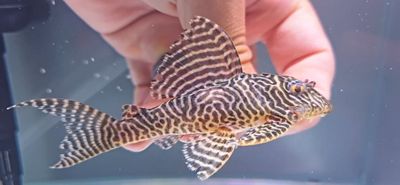
L333 King Tiger Pleco/Maze Zebra Pleco - (Hypancistrus Seideli)
L333 King Tiger Pleco/Maze Zebra Pleco - (Hypancistrus Seideli)
Price of shipping is not included.
was $80.00
Save 6%
$75.00
Captive Bred
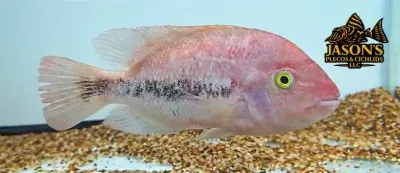
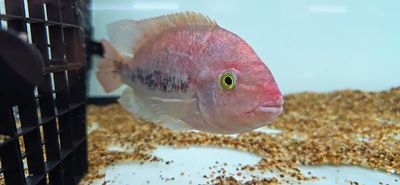
Fenestratus Cichlid - (Vieja Fenestratus)
Fenestratus Cichlid - (Vieja Fenestratus)
Price of shipping is not included.
was $80.00
Save 25%
$60.00
Captive Bred
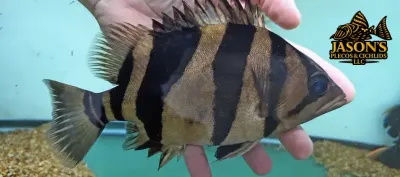
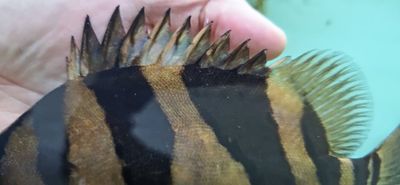
Indo Datnoid - (Datnioides microlepis)
Indo Datnoid - (Datnioides microlepis)
Price of shipping is not included.
was $800.00
Save 9%
$725.00
Wild Caught
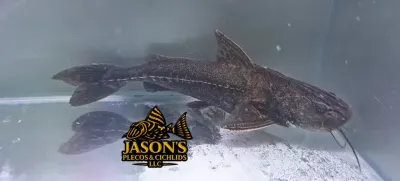
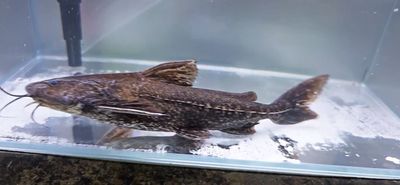
Granulated Catfish - (Pterodoras granulosus)
Granulated Catfish - (Pterodoras granulosus)
Price of shipping is not included.
$95.00
Powered by Lightspeed
Display prices in:USD