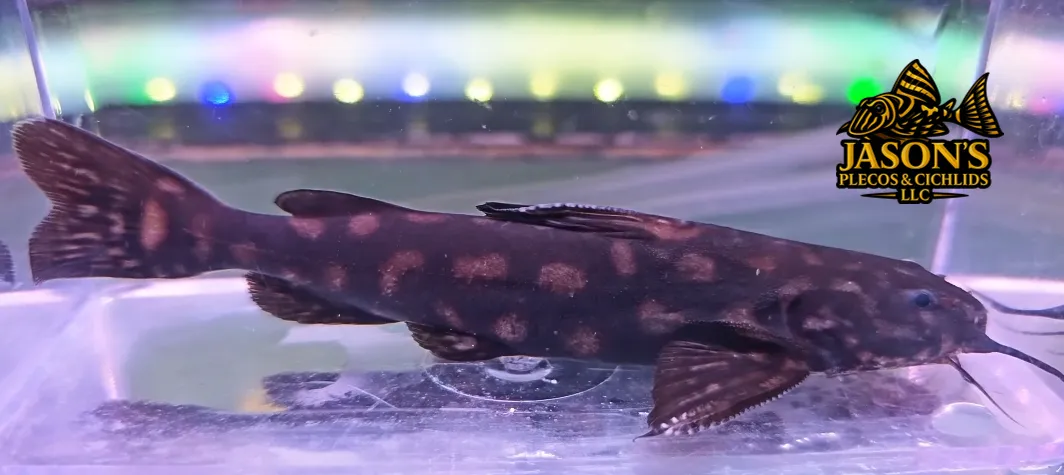
Snoring Catfish - (Wertheimeria maculata)
$250.00
Sold out
was $300.00 Save 17%
Size
Questions, Comments, Concerns? Let us know!
Enter your text
Price of shipping is not included.
Sold out
Save this fish to my favorites.
Customer reviews
Reviews only from verified customers
No reviews yet. You can buy this product and be the first to leave a review.
Snoring Catfish - (Wertheimeria maculata)
Fish Details, Description and Information Below:
🐟 Snoring Catfish – (Wertheimeria maculata) – Wild-Caught Brazilian Talking Catfish
The Snoring Catfish (Wertheimeria maculata), also known as the Jewel-Spotted Doradid, is an unusual South American catfish with a heavily armored body, long sensory barbels, dramatic adult spotting, and the ability to produce audible sounds typical of the talking-catfish family.
Unlike the many Amazonian catfish found in the aquarium hobby, Wertheimeria maculata has a much more restricted natural distribution.
It is endemic to the:
JEQUITINHONHA AND PARDO RIVER SYSTEMS OF EASTERN BRAZIL
The Snoring Catfish also has a fascinating color transformation as it matures. Scientific observations describe smaller specimens with large pale vermiculated markings, while larger adults develop a more spotted appearance over a reddish, olive, brown, or dark background.
It is a substantial catfish that can reach approximately 12–14 inches total length, requiring a spacious aquarium, substantial hiding areas, strong filtration, and appropriately sized tankmates.
This listing is for:
WILD-CAUGHT SNORING CATFISH
🔎 Quick Facts – Snoring Catfish
- 📛 Common Name: Snoring Catfish
- 📛 Other Names: Jewel-Spotted Doradid, Spotted Doradid
- 🔬 Scientific Name: Wertheimeria maculata
- 📅 Formally Described: 1877
- 🐟 Family: Doradidae
- 🧬 Subfamily: Wertheimerinae
- 🧬 Genus: Wertheimeria
- ⭐ Unique Taxonomy: Only species in the genus Wertheimeria
- 🌿 Stock: Wild Caught
- 🇧🇷 Country: Brazil
- 🌎 Region: Eastern / Southeastern Brazil
- 🌊 Native Rivers: Rio Jequitinhonha and Rio Pardo
- 🚫 Amazon Basin Species: No
- 💧 Water Type: Freshwater
- 🪨 Natural Habitat: Main river channels, large tributaries and deep pools
- 📏 Scientific Maximum: Approximately 30 cm / 11.8 inches standard length
- 📏 Adult Planning Size: Approximately 12–14 inches total length
- 🏠 Recommended Permanent Aquarium: Approximately 125 gallons or larger
- 📐 Recommended Aquarium Length: Approximately 5–6 feet or longer
- 🌡️ Temperature: Approximately 72–80°F
- 💧 pH: Approximately 6.0–7.5
- 💦 Hardness: Soft to moderately hard
- 💨 Oxygenation: Good to High
- 🌊 Water Movement: Gentle to Moderate
- 🍽️ Diet: Omnivore
- 🍎 Natural Foods: Fruits and other plant material
- 🦗 Natural Protein: Terrestrial and aquatic insects
- 🦐 Aquarium Protein: Shrimp, worms, insect foods and quality sinking pellets
- 🌿 Plant Foods: Important dietary component
- 🌙 Activity: Primarily crepuscular / nocturnal
- 😌 Temperament: Generally peaceful toward appropriately sized fish
- 🐟 Small Fish: May be eaten if small enough to swallow
- 🔊 Special Behavior: Talking / sound-producing catfish
- 🛡️ Armor: Heavy bony armor and strong fin spines
- 🥚 Natural Reproduction: Evidence suggests partial / multiple spawning periods
- 🐣 Captive Breeding: Has been reproduced in Brazil
- 🌎 IUCN Status: Least Concern
- ⭐ Care Level: Intermediate
🧬 Valid Scientific Species
The currently accepted scientific name is:
Wertheimeria maculata Steindachner, 1877
The species was originally described in:
1877
and remains scientifically valid.
It belongs to the family:
DORADIDAE
the South American group commonly known as:
- Thorny catfish
- Talking catfish
- Doradids
⭐ The Only Species in Its Genus
One of the most interesting facts about the Snoring Catfish is that:
WERTHEIMERIA MACULATA IS THE ONLY SPECIES IN THE GENUS WERTHEIMERIA
This makes it taxonomically very distinctive.
The genus itself was established by:
FRANZ STEINDACHNER IN 1877
🧬 An Evolutionarily Distinct Doradid
Wertheimeria maculata is also considered an unusually distinctive member of the Doradidae.
Scientific work has placed Wertheimeria within the subfamily:
WERTHEIMERINAE
and it represents one of the more evolutionarily distinctive branches of the talking-catfish family.
This is not simply another spotted doradid with a different trade name.
🔊 Why Is It Called the Snoring Catfish?
The common name:
SNORING CATFISH
refers to its ability to produce audible sounds.
Doradid catfish are commonly called:
TALKING CATFISH
because members of this family can generate sounds using specialized anatomical structures.
Sound production may involve:
- Movement of the pectoral-fin spine
- Specialized muscles
- Vibrations associated with the swim bladder
⚠️ It Is Not Literally Snoring While Sleeping
Some aquarium descriptions suggest the fish is called a Snoring Catfish because it makes noise while breathing.
That is misleading.
The name is better associated with the:
AUDIBLE GRUNTING / CREAKING / SNORING-LIKE SOUNDS
produced by doradid catfish.
These sounds may become especially noticeable:
- During handling
- When frightened
- When disturbed
- During interactions with other fish
🛡️ A Doradid With Unusual Armor
Most doradids possess a row of:
THORNY LATERAL SCUTES
along their sides.
Interestingly, Wertheimeria maculata differs from many familiar doradids because its lateral scutes lack the strongly recurved thorns normally associated with the family.
It still possesses:
- Heavy armor
- Strong pectoral spines
- Strong dorsal spine
and should be handled carefully.
🎨 Appearance
The Snoring Catfish has one of the more unusual developmental color changes among aquarium catfish.
Natural coloration may include:
- Reddish brown
- Olive
- Olive-brown
- Dark brown
- Charcoal
with contrasting:
- White
- Cream
- Pale gray
- Bluish-gray
markings.
👶 Juvenile Pattern
Scientific observations of smaller specimens describe:
LARGE PALE VERMICULATED MARKINGS
against a reddish to olive background.
“Vermiculated” means:
WORM-LIKE OR IRREGULARLY CURVED
So juveniles may show:
- Irregular pale lines
- Large broken markings
- Swirls
- Blotches
- Maze-like patterns
rather than clean round spots.
🐟 Adult Pattern
As the fish grows, the pattern changes.
Larger individuals develop:
MORE ISOLATED PALE SPOTS
rather than the broad juvenile vermiculations.
This means an adult Snoring Catfish can look dramatically different from the fish purchased as a juvenile.
✨ Jewel-Spotted Appearance
Mature specimens can develop striking:
- White spots
- Cream spots
- Pale blue-gray spots
- Iridescent-looking markings
over the darker body.
This adult coloration has led to another trade name:
JEWEL-SPOTTED DORADID
⚠️ Pattern Changes With Age
Customers should understand:
THE JUVENILE PATTERN IS NOT GUARANTEED TO REMAIN IDENTICAL
As the fish matures:
- Vermiculations may break apart
- Pale areas may become isolated spots
- Body color may change
- Spot density may change
- Contrast may become stronger or weaker
This is normal development.
⚠️ Color Disclaimer
Exact adult coloration cannot be guaranteed.
Appearance can vary according to:
- Age
- Genetics
- Stress
- Shipping
- Lighting
- Aquarium background
- Diet
- Water quality
A recently transported fish may appear darker or less colorful until fully acclimated.
🌎 Native Distribution
The Snoring Catfish is:
ENDEMIC TO BRAZIL
and has a relatively restricted natural distribution.
Its primary native river systems are:
RIO JEQUITINHONHA
and:
RIO PARDO
in eastern Brazil.
🚫 Not an Amazon Basin Catfish
This is an important geographic distinction.
The Snoring Catfish does:
NOT
originate from the Amazon Basin.
Instead, it occurs in independent:
EASTERN BRAZILIAN ATLANTIC COASTAL DRAINAGES
🌊 Rio Jequitinhonha
The:
JEQUITINHONHA RIVER
flows through portions of:
- Minas Gerais
- Bahia
before entering the Atlantic Ocean.
Much of the scientific ecological information available for Wertheimeria maculata comes from this river system.
🌊 Rio Pardo
The species also occurs in the:
RIO PARDO
another eastern Brazilian coastal drainage.
This restricted distribution makes locality information important for the species.
🪨 Natural Habitat
One of the best scientific studies of Wertheimeria maculata found fish primarily in:
MAIN RIVER CHANNELS AND LARGE TRIBUTARIES
rather than tiny streams.
🌊 Deep Pools
Wild specimens were particularly associated with:
DEEP POOLS
in both:
- Flowing areas
- Backwater areas
This is important because the Snoring Catfish should not automatically be treated as a high-current rapids specialist.
🌧️ Rainy-Season Activity
Scientific collections found the species most frequently during the:
RAINY SEASON
suggesting seasonal changes in:
- Movement
- Feeding
- Reproduction
- Habitat use
may influence its behavior.
🌊 Do Not Overdo Aquarium Current
Because wild fish occur in both:
- Running-water pools
- Backwater pools
there is no need to create an extreme torrent aquarium.
A better approach is:
GOOD WATER TURNOVER + GOOD OXYGENATION + GENTLE TO MODERATE CURRENT
with calm resting areas.
🏠 Aquarium Size
The Snoring Catfish is not a small catfish.
FishBase documents a maximum of:
30 CM / 11.8 INCHES STANDARD LENGTH
Standard length does:
NOT INCLUDE THE FULL TAIL FIN
Specialist aquarium references place total adult length at approximately:
35 CM / 13.8 INCHES
Therefore, customers should plan for:
APPROXIMATELY 12–14 INCHES TOTAL LENGTH
🏠 Permanent Aquarium Recommendation
For a mature specimen:
125 GALLONS OR LARGER
is a responsible permanent recommendation.
A tank approximately:
5–6 FEET LONG
or larger is strongly preferred.
📐 Aquarium Footprint Matters
The Snoring Catfish spends most of its life around the bottom.
Prioritize:
LENGTH + WIDTH
rather than excessive aquarium height.
A wide footprint gives the fish room to:
- Patrol
- Turn
- Search for food
- Use multiple shelters
🪨 Aquarium Setup
A suitable aquarium should contain:
- Sand or smooth gravel
- Large driftwood
- Smooth rocks
- Caves
- Large shaded shelters
- Open bottom areas
- Strong filtration
- Good oxygenation
🌙 Provide Dark Shelters
The species is naturally secretive and largely:
CREPUSCULAR / NOCTURNAL
Provide areas where it can completely retreat during daylight.
Suitable shelters include:
- Large driftwood caves
- Rock overhangs
- Large ceramic shelters
- Secure PVC-style tubes
- Large artificial caves
⚠️ Make the Shelter Large Enough
Remember that an adult may approach:
14 INCHES
The hiding place must be large enough for the adult fish to:
- Enter comfortably
- Turn if necessary
- Rest without becoming wedged
🪵 Driftwood
Driftwood is useful for:
- Shelter
- Shade
- Territorial structure
- Natural appearance
However:
THIS IS NOT A SPECIALIZED WOOD-EATING CATFISH
Driftwood should not be treated as a food requirement.
💧 Water Parameters
A practical aquarium range is:
- 🌡️ Temperature: Approximately 72–80°F
- 💧 pH: Approximately 6.0–7.5
- 💦 Hardness: Soft to Moderately Hard
- 💨 Oxygenation: Good to High
- 🌊 Water Movement: Gentle to Moderate
- ☠️ Ammonia: 0 ppm
- ☠️ Nitrite: 0 ppm
- 🔄 Nitrate: Keep reasonably low
🌡️ Temperature
This eastern Brazilian catfish does not need the extremely warm water used for many:
- Xingu plecos
- Orinoco plecos
- Warm-water stingrays
A practical maintenance range is:
72–80°F
with approximately:
75–79°F
being a good target for many aquariums.
💨 Oxygenation
Although extreme current is unnecessary, good oxygenation remains important.
Use:
- Surface agitation
- Air stones
- Strong filter returns
- Appropriate circulation
to maintain healthy dissolved oxygen levels.
💩 Filtration
A 12–14 inch catfish can produce substantial waste.
Strong:
- Mechanical filtration
- Biological filtration
is recommended.
Suitable systems include:
- Canister filters
- Sump filtration
- Large sponge filters as supplemental filtration
- Prefilters
🔄 Water Changes
Regular partial water changes help control:
- Nitrate
- Dissolved organic waste
- Uneaten food
- Detritus
Vacuum areas beneath:
- Driftwood
- Caves
- Large rocks
where waste can accumulate.
🍽️ Diet – True Omnivore
One of the most interesting findings from the natural-history research on Wertheimeria maculata is that the fish has a:
VERY DIVERSE NATURAL DIET
It should therefore be described as:
OMNIVOROUS
rather than strictly:
- Carnivorous
or:
- Herbivorous.
🍎 Fruits Are Important in the Wild
Scientific stomach-content research found substantial consumption of:
FRUIT
falling into the river from surrounding riparian vegetation.
This is important because many aquarium descriptions incorrectly portray the Snoring Catfish as almost entirely carnivorous.
🦗 Terrestrial Insects
Wild fish also consume substantial numbers of:
TERRESTRIAL INSECTS
that fall from vegetation into the water.
This makes insect-based prepared foods especially appropriate in captivity.
🐛 Aquatic & Terrestrial Foods
A natural-style aquarium diet can include:
- Insect-based sinking pellets
- Earthworms
- Bloodworms
- Blackworms
- Mysis shrimp
- Brine shrimp
- Appropriate crustaceans
- Quality sinking omnivore pellets
🍉 Plant & Fruit Foods
Because fruits and plant material are documented natural foods, appropriate supplemental foods may include small amounts of:
- Squash
- Pumpkin
- Zucchini
- Peas
- Appropriate fruit
- Plant-containing sinking foods
⚠️ Fruit Should Be Fed Carefully
Fruit can contain substantial:
- Sugar
- Soft organic material
and can deteriorate rapidly in aquarium water.
If offered:
- Use small portions
- Feed occasionally
- Remove leftovers promptly
⚖️ Balanced Feeding
The best approach is:
INSECTS + AQUATIC ANIMAL FOODS + QUALITY SINKING FOODS + SOME PLANT / FRUIT MATERIAL
rather than feeding only one category.
🚫 Do Not Feed Only Meat
A diet consisting entirely of:
- Shrimp
- Fish pieces
- Mussels
- Carnivore pellets
ignores the substantial plant and fruit component documented in wild fish.
🚫 Do Not Feed Only Plants
The fish also consumes:
- Insects
- Other animal foods
so a purely herbivorous feeding program is equally inappropriate.
🐟 Will It Eat Small Fish?
Like many medium-to-large nocturnal catfish, the Snoring Catfish may consume:
VERY SMALL FISH
if they fit easily into its mouth.
This does not make it an aggressive predator.
It is better described as:
OPPORTUNISTIC
😌 Temperament
Toward fish too large to swallow, Wertheimeria maculata is generally considered:
PEACEFUL
Suitable tankmates may include appropriately sized:
- Larger tetras
- Silver dollars
- Peaceful to moderately assertive cichlids
- Larger barbs
- Other peaceful catfish
provided their water requirements overlap.
🚫 Avoid Tiny Tankmates
Very small:
- Tetras
- Rasboras
- Livebearer fry
- Shrimp
may eventually be viewed as food.
Tankmates should be selected based on the:
ADULT MOUTH SIZE
not the size of the juvenile catfish being purchased.
⚠️ Avoid Extremely Aggressive Tankmates
The Snoring Catfish can be relatively shy.
Extremely aggressive fish may:
- Prevent it from feeding
- Keep it hidden
- Cause chronic stress
- Injure its barbels or fins
🌙 Nocturnal Behavior
The species is primarily:
CREPUSCULAR / NOCTURNAL
During the day it may spend long periods:
- Inside caves
- Under wood
- Behind rocks
- In shaded areas
🌙 Feeding After Lights Out
For shy specimens, offer some food:
AFTER THE AQUARIUM LIGHTS DIM
This helps make sure the catfish receives its share before faster daytime fish consume everything.
☀️ Established Fish May Become More Visible
Once accustomed to the aquarium, some individuals may:
- Leave shelter before dark
- Patrol during feeding
- Rest partially exposed
- Become accustomed to the keeper
🧪 Wild-Caught Acclimation
This listing is for:
WILD-CAUGHT SNORING CATFISH
Wild fish deserve careful acclimation.
After arrival:
- Provide immediate shelter
- Keep lighting subdued
- Maintain clean water
- Maintain good oxygenation
- Avoid sudden temperature changes
- Avoid sudden pH changes
- Confirm that the fish begins eating
🍽️ Confirm Feeding
Because this species can hide for extended periods, do not assume it is eating simply because food disappears.
Monitor:
- Body condition
- Abdominal fullness
- Activity after dark
- Actual feeding response
⚠️ Barbels Need Protection
Like many catfish, Wertheimeria maculata uses long:
SENSORY BARBELS
to locate food and explore its surroundings.
Protect the barbels by avoiding:
- Sharp gravel
- Jagged decorations
- Dirty substrate
- Accumulated waste
Sand or smooth rounded substrate is preferred.
🛡️ Handling
The Snoring Catfish has strong:
- Dorsal spine
- Pectoral spines
- Heavy armor
Handle larger individuals carefully.
🚫 Fine Nets Can Snag Spines
Ordinary fine aquarium nets can become caught on the:
DORSAL AND PECTORAL SPINES
For large specimens, safer options may include:
- Rigid containers
- Fish tubs
- Heavy-duty fish bags
- Large appropriate transfer equipment
🔊 Expect Noise During Handling
Do not be surprised if the fish produces:
- Grunts
- Creaking sounds
- Snoring-like noises
during handling.
This behavior is one reason doradids are known as:
TALKING CATFISH
♂️ Male vs. Female
Reliable external sexing information for Wertheimeria maculata is limited.
Mature females carrying eggs may become:
- Fuller through the abdomen
- Broader when viewed from above
but:
EXTERNAL SEXING IS NOT RELIABLE ENOUGH TO GUARANTEE SEX
for normal retail sales.
Unless confidently determined:
SELL AS UNSEXED
🥚 Natural Reproduction
Scientific field research suggests that Wertheimeria maculata may practice:
PARTIAL / MULTIPLE SPAWNING
rather than releasing the entire reproductive output during one single event.
Researchers found individuals at different reproductive stages during different periods.
🌧️ Seasonal Reproduction
Wild reproductive activity appears connected with seasonal river conditions.
The species was captured especially often during:
THE RAINY SEASON
Seasonal changes may influence:
- Feeding
- Movement
- Gonad development
- Spawning
⚠️ Do Not Invent Cave-Spawning Behavior
The Snoring Catfish is a doradid, not a pleco.
Do not automatically describe it as:
- Cave spawning
- Male egg guarding
- Tube spawning
simply because those behaviors are common in many loricariid plecos.
They are:
DIFFERENT CATFISH FAMILIES
🐣 Captive Breeding Has Occurred
Specialist records indicate that Wertheimeria maculata has been:
CAPTIVE BRED IN BRAZIL
including production associated with Brazilian ornamental-fish aquaculture.
This is important because it demonstrates that captive propagation is possible.
⚠️ Captive Breeding Is Still Poorly Documented
Despite successful Brazilian propagation, detailed public information about:
- Spawning setup
- Courtship
- Egg numbers
- Incubation period
- Larval development
remains limited.
Therefore, the product page should:
NOT INVENT A DETAILED BREEDING FORMULA
🌎 Conservation Status
Wertheimeria maculata is currently assessed as:
LEAST CONCERN
on the IUCN Red List.
The assessment dates to:
2018
⚠️ Restricted Range Still Matters
Least Concern does not mean the species occurs everywhere.
The Snoring Catfish remains:
GEOGRAPHICALLY RESTRICTED
to eastern Brazilian river systems.
🌎 Habitat Pressures
Within its limited native range, reported threats include:
- Siltation
- Habitat fragmentation
- Pollution
- Introduced species
- River modification
Responsible care remains important for wild-caught specimens.
⭐ Why Keep a Snoring Catfish?
The Snoring Catfish combines:
- 🔊 Talking / sound-producing behavior
- ⚪ Dramatic adult spotting
- 🌀 Changing juvenile-to-adult pattern
- 🛡️ Heavy doradid armor
- 🇧🇷 Restricted eastern Brazilian origin
- 🌊 Unique Jequitinhonha / Pardo distribution
- 🍎 Unusual fruit-eating natural behavior
- 🦗 Strong terrestrial-insect component in the wild
- 📏 Approximately 12–14 inch adult potential
- 🌙 Nocturnal personality
- 🧬 Only species in the genus Wertheimeria
into one of the most unusual South American catfish available to aquarium keepers.
⚠️ Important Considerations
Before purchasing a Snoring Catfish:
- The correct scientific name is Wertheimeria maculata.
- It was formally described in 1877.
- It is the only species in the genus Wertheimeria.
- It belongs to the Doradidae talking-catfish family.
- This listing is for wild-caught fish.
- The species is endemic to eastern Brazil.
- Its primary natural systems are the Rio Jequitinhonha and Rio Pardo.
- It is not an Amazon Basin species.
- Wild fish occur in main river channels and larger tributaries.
- Deep pools are especially important natural habitat.
- Fish occur in both flowing and backwater pool environments.
- Extreme aquarium current is unnecessary.
- Scientific records document 30 cm standard length.
- Standard length excludes the complete tail.
- Specialist records place total length around 35 cm.
- Plan for approximately 12–14 inches.
- Provide approximately 125 gallons or larger for a mature specimen.
- A 5–6 foot aquarium is strongly preferred.
- Provide large shaded shelters.
- Use sand or smooth substrate.
- Maintain approximately 72–80°F.
- Maintain pH around 6.0–7.5.
- Maintain good to high dissolved oxygen.
- Provide gentle to moderate water movement.
- Feed a varied omnivorous diet.
- Wild fish naturally eat substantial fruit and terrestrial insects.
- Include insect and aquatic-animal foods in captivity.
- Include some appropriate plant foods.
- Do not feed an exclusively carnivorous diet.
- Very small fish may be eaten.
- Appropriately sized tankmates are generally tolerated.
- The species is primarily nocturnal.
- The “snoring” name refers to sound production, not actual sleeping or breathing behavior.
- Expect doradid sounds during handling or stress.
- Handle carefully because of strong fin spines.
- Avoid fine nets that may snag the spines.
- Natural evidence suggests partial spawning.
- Captive breeding has occurred in Brazil.
- Detailed aquarium breeding behavior remains poorly documented.
- Do not invent pleco-style cave-spawning behavior.
- The species is currently classified as Least Concern.
- Never release aquarium fish into natural waterways.
🧬 Taxonomy
The currently accepted scientific name is:
Wertheimeria maculata Steindachner, 1877
Classification:
- Order: Siluriformes
- Family: Doradidae
- Subfamily: Wertheimerinae
- Genus: Wertheimeria
- Species: maculata
Wertheimeria maculata is:
THE ONLY RECOGNIZED SPECIES IN THE GENUS WERTHEIMERIA
Native distribution:
RIO JEQUITINHONHA & RIO PARDO – EASTERN BRAZIL
For this product, use:
Snoring Catfish – (Wertheimeria maculata)
🚚 Live Fish Shipping
Live fish are professionally packed for safe transport.
Shipping availability depends on:
- Fish size
- Destination
- Weather conditions
- Carrier availability
- Applicable state and local regulations
Larger Snoring Catfish require additional packing care because of their:
- Strong pectoral spines
- Strong dorsal spine
- Heavy armored body
Large specimens may require:
- Heavy-duty fish bags
- Multiple protective bag layers
- Larger insulated shipping boxes
- Additional water
- Specialized packing
- Airline cargo shipping depending on fish size and destination
Please review our Shipping & Payment Information and Live Arrival Guarantee / DOA Policy before ordering.
⚠️ Buyer Responsibility
Customers are responsible for confirming that Wertheimeria maculata may legally be purchased, possessed, transported, and received in their state or local jurisdiction before ordering.
Never release aquarium fish into natural waterways.
Below are fish you may also like.
Wild Caught
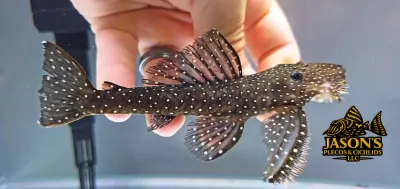
L235 Flyer Cat Pleco - (Pseudolithoxus anthrax)
L235 Flyer Cat Pleco - (Pseudolithoxus anthrax)
Price of shipping is not included.
5.0
(1)
was $75.00
Save 7%
$70.00
Captive Bred
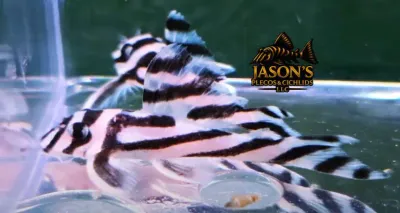
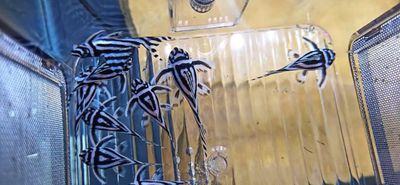
L046 Zebra Pleco - (Hypancistrus zebra)
L046 Zebra Pleco - (Hypancistrus zebra)
Price of shipping is not included.
5.0
(4)
was $175.00
Save 9%
$160.00
Captive Bred
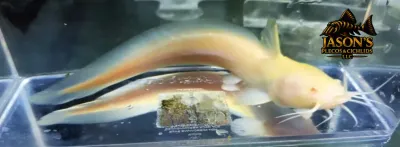
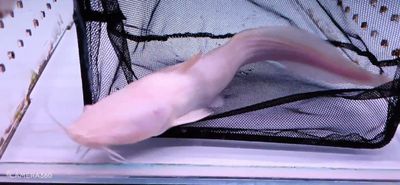
Albino Plotosus Canius
Albino Plotosus Canius
Price of shipping is not included.
was $2 000.00
Save 59%
$815.00
Wild Caught
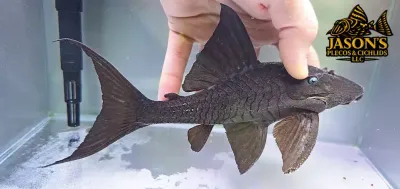
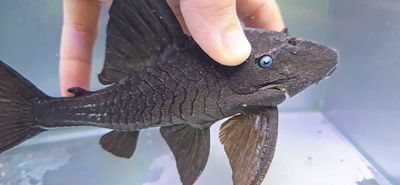
Blue Eyed Royal Pleco - (Panaque cochliodon)
Blue Eyed Royal Pleco - (Panaque cochliodon)
Price of shipping is not included.
5.0
(3)
was $500.00
Save 7%
$465.00
Wild Caught
L201 Orinoco Angel Pleco - (Hypancistrus sp.)
L201 Orinoco Angel Pleco - (Hypancistrus sp.)
Price of shipping is not included.
5.0
(3)
was $45.00
Save 11%
$40.00
Powered by Lightspeed
Display prices in:USD