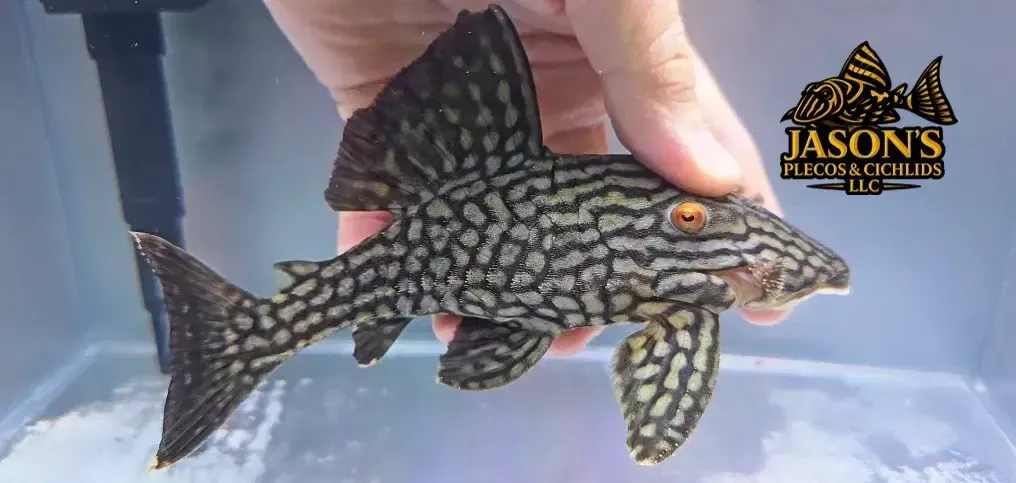
L330 Watermelon Pleco - (Panaque nigrolineatus laurafabianae)
$200.00
Wild Caught
was $250.00 Save 20%
Size
Questions, Comments, Concerns? Let us know!
Enter your text
Price of shipping is not included.
In stock: 1 available
1
Save this fish to my favorites.
Customer reviews
Reviews only from verified customers
No reviews yet. You can buy this product and be the first to leave a review.
L330 Watermelon Pleco - (Panaque nigrolineatus laurafabianae)
Fish Details, Description and Information Below:
🍉 L330 Watermelon Pleco – (Panaque nigrolineatus laurafabianae) – Wild-Caught Colombian Royal Pleco
The L330 Watermelon Pleco (Panaque nigrolineatus laurafabianae), also known as the Watermelon Royal Pleco or Spotted Royal Pleco, is a large and impressive Colombian member of the Royal Panaque group.
L330 is famous for its highly variable pattern. Many adults develop a dark gray to nearly black body covered with contrasting yellow-green, gray-green, cream, or olive spotting, while other specimens display combinations of:
- Spots
- Broken stripes
- Wavy lines
- Reticulated markings
- Mixed spotted-and-striped patterns
This variation is completely natural and is one of the characteristics that makes the Watermelon Pleco so distinctive.
The L330 is native specifically to the:
UPPER RIO GUAVIARE BASIN OF COLOMBIA
at the southwestern edge of the Orinoco River Basin.
Unlike many L-number plecos that remain scientifically undescribed, the Watermelon Pleco received formal taxonomic recognition in 2020 as:
Panaque nigrolineatus laurafabianae
It is a recognized subspecies of the Royal Pleco:
Panaque nigrolineatus
This listing is for:
WILD-CAUGHT L330 WATERMELON PLECOS
🔎 Quick Facts – L330 Watermelon Pleco
- 📛 Common Name: Watermelon Pleco
- 📛 Other Names: Watermelon Royal Pleco, Spotted Royal Pleco
- 🔢 L-Number: L330
- 🔬 Scientific Name: Panaque nigrolineatus laurafabianae
- 🧬 Taxonomic Rank: Subspecies
- 📅 Formally Described: 2020
- 🐟 Family: Loricariidae
- 🧬 Subfamily: Hypostominae
- 🌿 Stock: Wild Caught
- 📏 Current Size: Approximately 6–7 inches
- 🇨🇴 Country: Colombia
- 🌊 Native Drainage: Upper Rio Guaviare Basin
- 📍 Major Localities: Rio Ariari and Rio Güejar
- 🌎 Major River System: Rio Orinoco
- 💧 Water Type: Freshwater
- 📏 Documented Scientific Size: 319 mm / approximately 12.6 inches standard length
- 📏 Adult Planning Size: Approximately 16 inches total length
- 🏠 Recommended Permanent Aquarium: 150 gallons or larger
- 🏠 Preferred Adult Aquarium: 180+ gallons
- 📐 Recommended Aquarium Length: Approximately 6 feet or longer
- 🌡️ Temperature: Approximately 75–84°F
- 💧 pH: Approximately 6.0–7.5
- 💦 Water: Soft to moderately mineralized
- 💨 Oxygenation: Good to High
- 🌊 Water Movement: Moderate
- 🍽️ Diet: Wood-Grazing / Detritus-Leaning Omnivore
- 🪵 Natural Driftwood: Strongly Recommended
- 🌿 Plant Foods: Important
- 🦐 Animal / Insect Protein: Supplemental
- 🚫 Algae Cleaner: Should not be purchased solely for algae control
- 💩 Bioload: Very High
- 😌 Temperament: Generally peaceful toward midwater fish
- ⚠️ Pleco Temperament: Territorial toward other large plecos
- 🌙 Activity: Primarily crepuscular / nocturnal
- 💨 Special Adaptation: Panaque are facultative air breathers
- 🥚 Captive Breeding: Rare and poorly documented for L330 specifically
- ⭐ Care Level: Intermediate to Advanced
- 🌎 L330 Conservation Status: Not Separately Evaluated
- ⚠️ Wild Population Concern: Heavy ornamental collection pressure has been documented
🧬 L330 Was Formally Described in 2020
For many years, this fish was sold simply as:
Panaque sp. L330
or:
Panaque cf. nigrolineatus L330
That changed in:
2020
when researchers Armando Ortega-Lara and Nathan Lujan formally described the Watermelon Pleco as:
Panaque nigrolineatus laurafabianae
It is therefore no longer scientifically accurate to describe L330 simply as an undescribed Panaque.
🧬 Species or Subspecies?
The correct classification is:
SUBSPECIES
The full scientific name is:
Panaque nigrolineatus laurafabianae
The species is:
Panaque nigrolineatus
and the Watermelon Pleco represents a geographically and morphologically distinctive population from the:
RIO GUAVIARE BASIN
🔬 Why Was L330 Recognized as a Subspecies?
Researchers found that Guaviare L330 differed from other Panaque nigrolineatus populations in:
- Geography
- Color pattern
- Body measurements
- Certain mouth structures
However, genetic differences were relatively small.
The researchers therefore concluded that the evidence supported recognition as a:
SUBSPECIES
rather than a completely separate species.
👧 What Does laurafabianae Mean?
The subspecies was named in honor of:
Laura Fabiana Ortega Lucumi
the daughter of senior author Armando Ortega-Lara.
The scientific authors recognized the time she had sacrificed with her father because of his ichthyological research and her understanding of the importance of that work.
🍉 Why Is It Called the Watermelon Pleco?
The aquarium name:
WATERMELON PLECO
became established because of the unusual coloration and pattern displayed by fish exported from Colombia.
However, the natural pattern is much more variable than the name might suggest.
🎨 Important Color Correction
The older description says the fish is known for:
“vibrant pinkish-orange and black lines.”
That is too specific and does not accurately describe the full range of wild L330 coloration.
Scientifically documented L330 commonly display:
A DARK GRAY TO BLACK BASE
with:
LIGHT GRAY-GREEN TO YELLOW-GREEN SPOTS
⚪ Spotted Adults
Many adult L330 develop extensive spotting across the:
- Head
- Body
- Abdomen
- Fins
The belly is especially likely to remain:
HEAVILY SPOTTED
〰️ Striped L330 Exist Too
Not every L330 becomes completely spotted.
Some individuals retain varying amounts of:
- Wavy striping
- Broken stripes
- Reticulated markings
- Intermediate spot-and-stripe patterns
Therefore:
SPOTTED AND STRIPED L330 CAN BOTH BE LEGITIMATE
🔄 Pattern Changes With Age
Juvenile Royal Panaques can look very different from mature adults.
As an L330 grows:
- Stripes may break apart
- Lines may become spots
- Spots may become larger
- Pattern contrast may change
- Body color may darken
- Fins may change coloration
⚠️ Never Guarantee Adult Pattern
Because of the considerable natural variation:
EXACT ADULT PATTERN CANNOT BE GUARANTEED
A juvenile with attractive stripes may eventually become more spotted.
A spotted juvenile may become increasingly mottled or reticulated.
Each fish is an individual.
🆚 L330 vs. L190 Royal Pleco
The commonly encountered:
L190 Royal Pleco
belongs to the nominate Royal Pleco form:
Panaque nigrolineatus nigrolineatus
Typical L190-type fish usually display stronger:
- Longitudinal stripes
- Wavy black lines
while the Guaviare L330 population is much more strongly associated with:
SPOTTING
particularly as adults.
⚠️ Pattern Alone Is Not Enough
Although spotting is characteristic of L330:
LOCALITY IS EXTREMELY IMPORTANT
Other Royal Panaque forms can develop:
- Broken stripes
- Spots
- Intermediate patterns
Do not identify every spotted Royal Pleco automatically as L330.
🌎 Native Distribution
L330 has a much more restricted distribution than the broader species Panaque nigrolineatus.
The recognized L330 subspecies is native to:
COLOMBIA
within the:
UPPER RIO GUAVIARE BASIN
🌊 Rio Guaviare
The Guaviare is a major Colombian tributary of the:
RIO ORINOCO
L330 occurs at the:
SOUTHWESTERN EDGE OF THE ORINOCO BASIN
📍 Rio Ariari
Scientifically documented L330 localities include the:
RIO ARIARI
a major tributary of the Guaviare.
📍 Rio Güejar
The subspecies is also associated with the:
RIO GÜEJAR
within the upper Guaviare drainage.
For aquarium records, the best concise locality is:
UPPER RIO GUAVIARE BASIN – COLOMBIA
⚠️ Do Not List L330 as a General Amazon Fish
The broader species Panaque nigrolineatus occurs across portions of the:
- Orinoco
- Amazon drainage
However, the recognized L330 subspecies:
Panaque nigrolineatus laurafabianae
is specifically associated with:
THE GUAVIARE BASIN IN COLOMBIA
That locality should be preserved.
🪵 Natural Habitat
Royal Panaques are strongly associated with:
- Large rivers
- Submerged wood
- Fallen trees
- Logs
- Roots
- Woody debris
- Rocky structure
They spend substantial time scraping organic material from wood and other submerged surfaces.
🪵 Specialized Wood-Grazing Teeth
Members of the genus Panaque have distinctive:
SPOON-SHAPED TEETH
supported by powerful jaws.
These allow the fish to:
GOUGE AND SCRAPE WOOD
very effectively.
A mature Royal Panaque can remove visible material from driftwood surprisingly quickly.
🪵 Driftwood Is Strongly Recommended
A proper L330 aquarium should contain:
SUBSTANTIAL NATURAL AQUARIUM-SAFE DRIFTWOOD
not merely one small decorative stick.
Driftwood provides:
- Natural grazing surfaces
- Biofilm
- Detritus
- Microorganisms
- Shelter
- Shade
- Territory
- Behavioral enrichment
⚠️ Important Wood-Digestion Correction
Royal Panaques are often described as fish that:
“need wood for digestion.”
That statement is too simplistic.
Scientific feeding studies show that Panaque nigrolineatus:
- Ingests large quantities of wood
- Is highly specialized for scraping wood
- Passes wood through the intestinal tract rapidly
- Assimilates relatively little cellulose from wood itself
Fish maintained experimentally on:
WOOD ALONE
lost weight.
Therefore:
DRIFTWOOD IS IMPORTANT, BUT WOOD ALONE IS NOT A COMPLETE DIET.
🔬 Wood-Grazing vs. True Wood Digestion
A more accurate explanation is that Royal Panaques use wood as part of a:
WOOD-GRAZING / DETRITIVOROUS FEEDING STRATEGY
The surfaces and degraded material associated with wood can contain:
- Biofilm
- Bacteria
- Fungi
- Detritus
- Organic matter
- Microorganisms
that contribute to the fish's natural feeding ecology.
🚫 Do Not Feed Wood Alone
Never assume that because the fish is eating driftwood it is receiving complete nutrition.
A healthy L330 should receive:
DRIFTWOOD + PREPARED FOODS + PLANT FOODS + DIETARY VARIETY
🍽️ Diet – Wood-Grazing / Detritus-Leaning Omnivore
The L330 should receive a diet emphasizing:
- Biofilm
- Algae-containing foods
- Plant foods
- Fiber-rich foods
- Detritus-oriented foods
with modest amounts of:
- Insect foods
- Animal protein
- Quality omnivore foods
🌿 Staple Foods
Suitable staple foods include:
- Quality algae wafers
- Spirulina wafers
- Vegetable-based pleco foods
- Fiber-rich sinking pellets
- Quality gel foods
- Formulas designed for grazing loricariids
🥒 Fresh Vegetables
Suitable foods include:
- Zucchini
- Squash
- Pumpkin
- Sweet potato
- Green beans
- Peas
- Appropriate leafy greens
Rotate foods rather than relying on one vegetable.
🦐 Supplemental Protein
Small amounts of appropriate protein can include:
- Mysis shrimp
- Insect-based foods
- Brine shrimp
- Quality omnivore pellets
Protein should provide:
DIETARY VARIETY
rather than dominate the diet.
⚠️ Avoid a Heavy Carnivore Diet
L330 should not be maintained primarily on:
- Shrimp
- Mussels
- High-protein carnivore pellets
- Large amounts of bloodworms
- Massivore-style diets
as its staple feeding program.
The diet should remain:
STRONGLY PLANT / DETRITUS / GRAZING ORIENTED
🚫 Not Just an Algae Cleaner
The older page emphasizes its:
“impressive algae-eating abilities.”
I would remove that wording.
L330 may graze:
- Algae
- Biofilm
- Organic coatings
but:
THIS IS NOT A FISH TO PURCHASE SIMPLY FOR ALGAE CONTROL
A large Royal Panaque creates far more waste than it removes.
💩 Extreme Waste Production
One of the most important realities of keeping a Royal Panaque is:
THE AMOUNT OF WASTE
These fish produce large quantities of:
- Feces
- Wood fragments
- Fine sawdust-like material
- Organic debris
🪵 Expect Wood Debris
A healthy L330 actively rasping driftwood may leave piles of:
FINE WOOD-LIKE WASTE
under and around the wood.
This is normal behavior.
💩 Strong Mechanical Filtration
Mechanical filtration is especially important.
Useful filtration can include:
- Large canister filters
- Sump filtration
- Prefilters
- Filter socks
- Strong mechanical media
The filtration system must be easy to:
CLEAN REGULARLY
because wood fibers and feces can accumulate quickly.
🧫 Strong Biological Filtration
A large L330 also requires substantial:
BIOLOGICAL FILTRATION
to process the waste generated by a large fish with a substantial appetite.
Maintain:
AMMONIA = 0
and:
NITRITE = 0
at all times.
🔄 Regular Water Changes
Large Royal Panaques benefit from regular partial water changes.
Frequency depends on:
- Aquarium size
- Fish size
- Feeding
- Filtration
- Stocking
- Nitrate production
Do not allow heavy organic waste to accumulate around driftwood.
📏 Adult Size – Important Correction
The current page lists:
26 INCHES / 66 CM
That is too large for the scientifically documented L330 subspecies.
🔬 Scientific L330 Size
The formally described L330 material includes a documented maximum of approximately:
319 MM STANDARD LENGTH
or:
12.6 INCHES BEFORE THE FULL TAIL FIN
📏 Total Adult Length
Specialist L-number references place mature L330 at approximately:
40 CM TOTAL LENGTH
or:
ABOUT 15.7 INCHES
Therefore, for responsible customer planning:
EXPECT APPROXIMATELY 16 INCHES
⚠️ Large Royal Panaque Regardless
Even at approximately 16 inches, this is:
A VERY LARGE, BULKY PLECO
Royal Panaques have:
- Broad heads
- Heavy armor
- Thick bodies
- Large fins
- High waste output
Their aquarium requirements are therefore greater than body length alone might suggest.
🏠 Permanent Aquarium Size
For one mature L330:
150 GALLONS OR LARGER
is a responsible permanent recommendation.
I prefer:
180+ GALLONS
for a full-grown specimen, especially when keeping other large fish.
📐 Aquarium Length
A mature L330 should ideally have:
APPROXIMATELY 6 FEET OR MORE OF AQUARIUM LENGTH
A longer aquarium provides room for:
- Turning
- Grazing
- Territories
- Large driftwood
- Open bottom areas
📐 Width Matters
A Royal Panaque has a:
- Broad head
- Wide body
- Large pectoral fins
so:
FRONT-TO-BACK WIDTH IS VERY IMPORTANT
A 150-gallon aquarium with a generous footprint is much more useful than a tall, narrow aquarium of similar volume.
🪵 Aquarium Setup
A suitable adult L330 aquarium should contain:
- Large driftwood pieces
- Thick roots
- Large shelters
- Smooth rocks
- Open bottom space
- Sand or smooth gravel
- Strong filtration
- Good oxygenation
- Moderate water movement
⚠️ Secure Heavy Driftwood
A mature Royal Panaque is extremely strong.
Large pieces of décor should be positioned so they cannot:
- Collapse
- Roll
- Trap the fish
- Damage aquarium glass
🌿 Planted Aquariums
Large Royal Panaques are generally not ideal for delicate planted aquariums.
They may:
- Uproot plants
- Rasp leaves
- Disturb roots
- Move substrate
- Push decorations
Hardy plants attached securely to large wood or rock may fare better.
🌡️ Temperature
A practical aquarium range is:
75–84°F
with approximately:
76–82°F
working well for many established specimens.
💧 Water Parameters
A practical long-term range is:
- 🌡️ Temperature: Approximately 75–84°F
- 💧 pH: Approximately 6.0–7.5
- 💦 Hardness: Soft to moderately mineralized
- 💨 Oxygenation: Good to High
- 🌊 Water Movement: Moderate
- ☠️ Ammonia: 0 ppm
- ☠️ Nitrite: 0 ppm
- 🔄 Nitrate: Keep as low as reasonably practical
🌊 Current
L330 does not require an extreme river-torrent aquarium.
Provide:
MODERATE WATER MOVEMENT
along with:
GOOD SURFACE AGITATION
and efficient water turnover.
💨 Oxygenation
Good dissolved oxygen is especially important in a:
- Warm aquarium
- Heavily stocked aquarium
- Aquarium containing a large Royal Panaque
Provide:
- Surface movement
- Air stones when useful
- Strong filter returns
- Proper circulation
💨 Facultative Air Breathing
Members of Panaque belong to a group of loricariids capable of:
FACULTATIVE AIR BREATHING
A fish may occasionally surface and gulp air.
However:
AIR-BREATHING ABILITY DOES NOT MAKE POOR WATER QUALITY ACCEPTABLE
🌙 Behavior
L330 is primarily:
CREPUSCULAR / NOCTURNAL
Activity commonly increases:
- At dusk
- During feeding
- After lights dim
- During nighttime
☀️ Adults Can Become Very Visible
Once acclimated, many Royal Panaques learn to:
- Feed during daylight
- Rest openly on wood
- Watch activity outside the aquarium
- Patrol their territory
A secure aquarium with large shelters often produces a more confident fish.
🧪 Wild-Caught Acclimation
This listing is for:
WILD-CAUGHT L330 WATERMELON PLECOS
Wild Royal Panaques deserve careful acclimation.
After arrival:
- Provide driftwood immediately
- Provide a secure shelter
- Keep lighting subdued
- Avoid abrupt temperature changes
- Avoid abrupt pH changes
- Maintain strong filtration
- Maintain good oxygenation
- Confirm feeding
🍽️ Confirm Feeding
Newly imported Royal Panaques occasionally refuse prepared foods initially.
Watch for:
- Active wood rasping
- Vegetable consumption
- Prepared food consumption
- Good body weight
Offer food:
- Near shelters
- At dusk
- After lights out
- In several locations
⚠️ Watch for a Sunken Abdomen
A sunken belly can indicate:
- Inadequate feeding
- Stress
- Internal parasites
- Disease
Large wild fish should be monitored closely during acclimation.
😌 Temperament
L330 is generally peaceful toward appropriately sized:
- Midwater fish
- Large tetras
- Silver dollars
- Peaceful cichlids
- Other large community fish
⚠️ Territorial Toward Large Plecos
Royal Panaques can become territorial with:
- Other Royal Panaques
- Other Panaque
- Large Pterygoplichthys
- Large Hypostomus
- Other bulky bottom dwellers
⚔️ Feeding Disputes
Territorial behavior can become strongest around:
- Favorite driftwood
- Shelters
- Feeding locations
Large plecos can use:
- Head pushing
- Pectoral spines
- Body pressure
- Tail movements
during disputes.
👥 Keeping More Than One
Multiple Royal Panaques require:
- Very large aquariums
- Large amounts of driftwood
- Multiple shelters
- Multiple feeding areas
- Visual barriers
Do not crowd mature specimens.
🐢 Use Caution With Slow-Bodied Animals
Large plecos can occasionally rasp the surfaces of:
- Freshwater stingrays
- Large slow-moving fish
- Aquatic turtles
If persistent attachment or skin damage occurs:
SEPARATE THE ANIMALS
🛡️ Handling Large Adults
A mature L330 has:
- Heavy armor
- Strong dorsal spine
- Strong pectoral spines
- Powerful body
Ordinary fine aquarium nets can become snagged on its spines.
📦 Moving Large Royal Panaques
Larger specimens may be safer to move using:
- Rigid containers
- Fish tubs
- Heavy-duty fish bags
- Appropriate large transfer equipment
rather than repeatedly attempting to untangle the fish from a fine net.
♂️ Male vs. Female
Sexual differences become more apparent in mature animals.
Mature Males
May develop:
- Longer interopercular odontodes
- Stronger pectoral-fin odontodes
- Broader or more heavily armored head profile
Mature Females
May develop:
- Fuller abdomen when carrying eggs
- Less extensive odontode development
However:
SEXING LARGE ROYAL PANAQUES IS NOT ALWAYS EASY
Unless confidently identified:
SELL AS UNSEXED
🥚 Breeding – Rare & Poorly Documented
Breeding information for:
Panaque nigrolineatus laurafabianae
specifically is extremely limited.
There are occasional reports of captive reproduction within the broader Royal Panaque group, but L330 is:
NOT A ROUTINELY BRED HOME-AQUARIUM PLECO
⚠️ Do Not Overstate L330 Breeding
I would avoid advertising:
- Guaranteed cave-spawning behavior
- Exact clutch size
- Exact incubation period
- Easy captive breeding
for L330.
A safer statement is:
CAPTIVE BREEDING IS RARE AND POORLY DOCUMENTED FOR L330 SPECIFICALLY
🌱 Captive Breeding Would Be Valuable
Because wild L330 are commercially collected from a geographically limited area, successful responsible captive propagation could:
- Reduce reliance on wild collection
- Preserve aquarium lineages
- Increase husbandry knowledge
- Improve long-term availability
🌎 Conservation Status
The L330 subspecies itself does not currently have a separate species-level IUCN assessment.
Therefore:
L330 CONSERVATION STATUS: NOT SEPARATELY EVALUATED
⚠️ Broader Species vs. L330 Population
The broader species:
Panaque nigrolineatus
is currently assessed as:
LEAST CONCERN
However, this broader assessment includes a much larger geographic distribution.
It should not be used to suggest that the geographically restricted Guaviare L330 population faces no pressure.
🚨 Heavy Ornamental Collection Pressure
The scientific description of L330 specifically notes that the Guaviare Watermelon Pleco is:
HEAVILY EXPLOITED FOR THE INTERNATIONAL ORNAMENTAL FISH TRADE
because of its distinctive coloration and commercial popularity.
This makes responsible care especially important for:
WILD-CAUGHT SPECIMENS
🌱 Responsible Wild-Fish Ownership
Aquarists purchasing wild L330 should be prepared to provide:
- Permanent large housing
- Appropriate driftwood
- Strong filtration
- Proper diet
- Long-term care
This is not an appropriate impulse purchase.
⭐ Why Keep an L330 Watermelon Pleco?
The L330 combines:
- 🍉 Distinctive Watermelon Pleco identity
- ⚫ Dark body coloration
- 🟢 Yellow-green and gray-green spotting
- 〰️ Highly variable stripes and patterns
- 👑 Royal Panaque body shape
- 🪵 Fascinating wood-grazing behavior
- 🇨🇴 Restricted Colombian origin
- 📏 Approximately 16-inch adult potential
- 🛡️ Heavy armored body
- 🌙 Nocturnal personality
- 🧬 Formally recognized subspecies status
into one of the most distinctive large Royal Plecos available to experienced aquarium keepers.
⚠️ Important Considerations
Before purchasing an L330 Watermelon Pleco:
- The correct scientific name is Panaque nigrolineatus laurafabianae.
- L330 was formally described as a subspecies in 2020.
- Do not describe L330 as merely an undescribed variant.
- Do not elevate it to a separate species without a future taxonomic change.
- L330 originates from Colombia.
- Its native distribution is the upper Rio Guaviare Basin.
- Important localities include the Rio Ariari and Rio Güejar.
- The Guaviare belongs to the Orinoco River system.
- Do not list this subspecies as a generic Amazon-wide fish.
- This listing is for wild-caught fish.
- The current specimen is approximately 6–7 inches.
- Natural coloration is extremely variable.
- Many adults become heavily spotted.
- Typical spots are light gray-green, yellow-green, cream, or olive against a dark body.
- Remove the claim that L330 is defined by pinkish-orange and black stripes.
- Some legitimate L330 remain partially striped.
- Do not guarantee adult pattern.
- The documented L330 scientific maximum is approximately 319 mm standard length.
- Specialist references place total length around 40 cm.
- Plan for approximately 16 inches as an adult.
- Remove the old 26-inch maximum.
- Provide approximately 150 gallons or larger.
- 180+ gallons is preferred for a full-grown adult.
- A 6-foot or longer aquarium is strongly recommended.
- Prioritize aquarium width as well as length.
- Provide substantial natural driftwood.
- L330 naturally ingests and rasps wood.
- Wood alone is not a complete diet.
- Do not claim that wood is required specifically for digestion.
- Feed plant-, algae-, biofilm-, and detritus-oriented foods.
- Provide only modest supplemental animal or insect protein.
- Avoid a heavy carnivore diet.
- Do not purchase L330 simply as an algae cleaner.
- Expect extremely high waste production.
- Use powerful mechanical and biological filtration.
- Maintain ammonia and nitrite at zero.
- Maintain approximately 75–84°F.
- Maintain good to high dissolved oxygen.
- Provide moderate water movement.
- Expect territorial behavior toward other large plecos.
- Captive breeding is rare and poorly documented for L330 specifically.
- The broader species is Least Concern, but L330 itself is not separately evaluated.
- Heavy commercial collection of the Guaviare L330 population has been documented.
- Responsible long-term care is especially important for wild-caught specimens.
- Never release aquarium fish into natural waterways.
🧬 Taxonomy
The correct scientific name is:
Panaque nigrolineatus laurafabianae Ortega-Lara & Lujan, 2020
Classification:
- Order: Siluriformes
- Family: Loricariidae
- Subfamily: Hypostominae
- Genus: Panaque
- Species: Panaque nigrolineatus
- Subspecies: laurafabianae
- L-Number: L330
Native locality:
UPPER RIO GUAVIARE BASIN – COLOMBIA
within the:
RIO ORINOCO SYSTEM
For this product, use:
L330 Watermelon Pleco – (Panaque nigrolineatus laurafabianae)
🔢 L-Number & Locality Disclaimer
L330 remains the established aquarium designation for the Watermelon Pleco population formally described as:
Panaque nigrolineatus laurafabianae
Preserve:
- L330 identification
- Guaviare locality
- Supplier information
- Collection locality when available
- Breeding records
Do not identify unrelated spotted Royal Panaque forms as L330 solely because of appearance.
🌎 Conservation & Collection Disclaimer
The broader species Panaque nigrolineatus is currently classified as Least Concern.
However, the L330 Watermelon Pleco represents a much more geographically restricted population in Colombia's upper Rio Guaviare Basin, and its scientific description specifically documents significant ornamental-fish collection pressure.
Responsible sourcing, permanent appropriate housing, and careful long-term care are especially important for wild-caught L330 specimens.
🚚 Live Fish Shipping
Live fish are professionally packed for safe transport.
Shipping availability depends on:
- Fish size
- Destination
- Weather conditions
- Carrier availability
- Applicable state and local regulations
Larger L330 Watermelon Plecos may require:
- Larger insulated shipping boxes
- Additional water
- Heavy-duty shipping bags
- Multiple protective bag layers
- Specialized packing
- Airline cargo shipping depending on size and destination
Large Royal Panaques require extra packing care because of their:
- Strong dorsal spine
- Strong pectoral spines
- Heavy armored body
Please review our Shipping & Payment Information and Live Arrival Guarantee / DOA Policy before ordering.
⚠️ Buyer Responsibility
Customers are responsible for confirming that Panaque nigrolineatus laurafabianae may legally be purchased, possessed, transported, and received in their state or local jurisdiction before ordering.
Never release aquarium fish into natural waterways.
Below are fish you may also like.
Wild Caught
Blue Umbee/Turquoise Cichlid - (Kronoheros umbrifer)
Blue Umbee/Turquoise Cichlid - (Kronoheros umbrifer)
Price of shipping is not included.
was $350.00
Save 10%
$315.00
Wild Caught
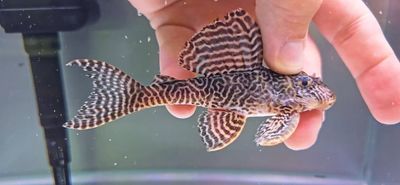
L066 King Tiger Pleco - (Hypancistrus Seideli)
L066 King Tiger Pleco - (Hypancistrus Seideli)
Price of shipping is not included.
was $75.00
Save 7%
$70.00
Captive Bred
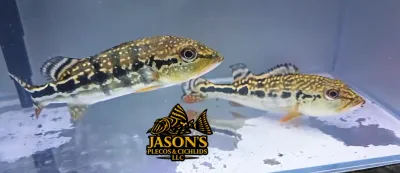
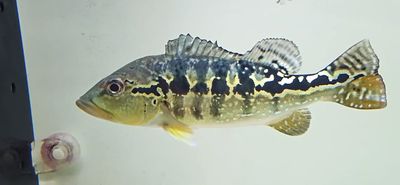
Cobra Snakeskin Peacock Bass - (Hybrid Peacock Bass)
Cobra Snakeskin Peacock Bass - (Hybrid Peacock Bass)
Price of shipping is not included.
5.0
(1)
was $190.00
Save 5%
$180.00
Captive Bred
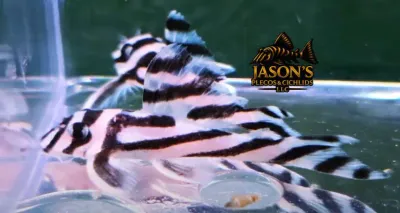
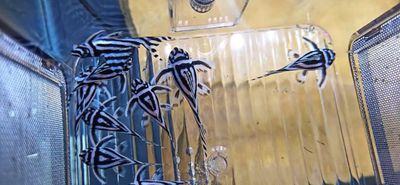
L046 Zebra Pleco - (Hypancistrus zebra)
L046 Zebra Pleco - (Hypancistrus zebra)
Price of shipping is not included.
5.0
(4)
was $175.00
Save 9%
$160.00
Wild Caught
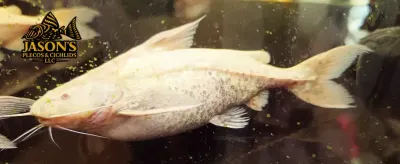
Dirty Albino Granulated Catfish - (Pterodoras granulosus)
Dirty Albino Granulated Catfish - (Pterodoras granulosus)
Price of shipping is not included.
was $3 000.00
Save 16%
$2 515.00
Powered by Lightspeed
Display prices in:USD