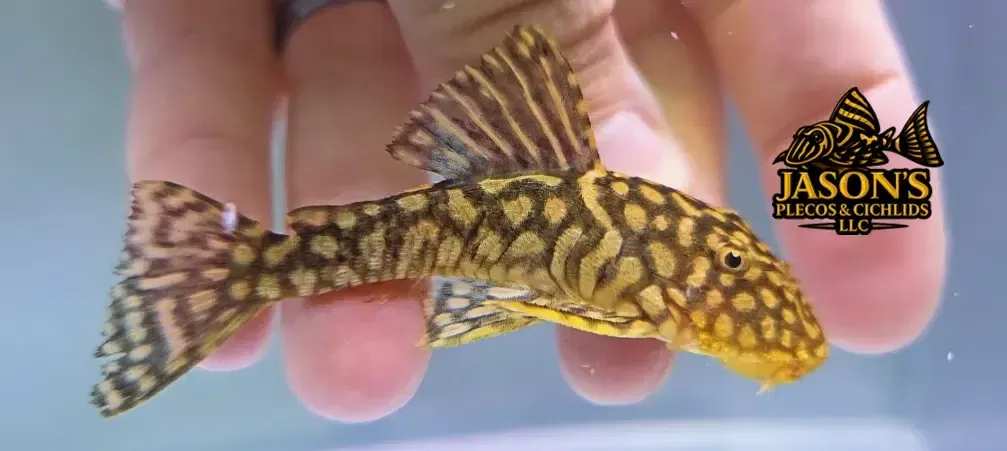
Slate Pleco - (Pseudancistrus genisetiger)
5.0
1 review
Reviews from verified customers who have purchased products at this store.
$75.00
Wild Caught
was $80.00 Save 6%
Size
Questions, Comments, Concerns? Let us know!
Enter your text
Price of shipping is not included.
In stock: 2 available
1
Save this fish to my favorites.
Customer reviews
Reviews only from verified customers
Reviews are only accepted from verified customers who have signed in and purchased the products. This ensures that each review is based on genuine customer experiences. All reviews are checked before publication to prevent spam.
Dana H.
Matthews,
United States
Jan 14, 2026
Very nice sized pleco and beautiful markings. I am so pleased with my order and I will order again soon.
Slate Pleco - (Pseudancistrus genisetiger)
Fish Details, Description and Information Below:
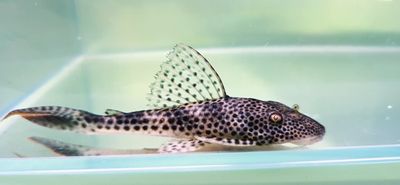
🪨 Slate Pleco – (Pseudancistrus genisetiger) – Wild-Caught Rio Jaguaribe Pleco
The Slate Pleco (Pseudancistrus genisetiger) is a compact and beautifully patterned Brazilian pleco known for its dark slate-gray to nearly black body covered with contrasting pale spots, broken markings, and vermiculated patterns.
Its broad head, stout armored body, and distinctive bristle-like odontodes give it an appearance somewhat reminiscent of an Ancistrus, but this is a completely different pleco with its own unusual history and restricted natural distribution.
The Slate Pleco is native specifically to the:
RIO JAGUARIBE BASIN IN CEARÁ, BRAZIL
This listing is for:
WILD-CAUGHT SLATE PLECOS
🔎 Quick Facts – Slate Pleco
- 📛 Common Name: Slate Pleco
- 🔬 Scientific Name: Pseudancistrus genisetiger
- 📅 Formally Described: 1941
- 🐟 Family: Loricariidae
- 🧬 Current Subfamily: Hypostominae
- 🌿 Stock: Wild Caught
- 📏 Current Size: Approximately 3 inches
- 🇧🇷 Country: Brazil
- 📍 State: Ceará
- 🌊 Native Drainage: Rio Jaguaribe Basin
- 📍 Type Locality: Rio Jaguaribe at Orós, Ceará, Brazil
- 🌎 Biogeographic Region: Northeastern Brazil / Caatinga region
- 💧 Water Type: Freshwater
- 📏 Scientific Maximum: 10.3 cm / approximately 4.1 inches standard length
- 📏 Adult Planning Size: Approximately 4–5 inches total length
- 🏠 Recommended Aquarium: Approximately 30–40 gallons or larger
- 👥 Groups: 40–55+ gallons with multiple territories preferred
- 🌡️ Temperature: Approximately 77–84°F
- 💧 pH: Approximately 5.5–7.5
- 💦 Water: Soft to moderately mineralized
- 💨 Oxygenation: High
- 🌊 Water Movement: Moderate to Strong
- 🍽️ Diet: Aufwuchs-Grazing Omnivore with Strong Plant / Algae Component
- 🌿 Plant & Algae Foods: Important
- 🦐 Animal / Insect Foods: Supplemental
- 🪵 Driftwood: Useful for habitat and grazing surfaces
- 🚫 Wood Eater: No
- 😌 Temperament: Generally peaceful toward other fish
- ⚠️ Pleco Temperament: Mature individuals, especially males, may defend territories
- ☀️ Activity: Often more visible during daylight than many plecos
- 💨 Special Adaptation: Facultative air breathing reported for the genus
- ♂️ Sexing: Head shape and odontode development
- 🥚 Captive Breeding: Species-specific reproduction remains poorly documented
- ⭐ Care Level: Intermediate
- 🌎 IUCN Status: Least Concern
🧬 Valid Scientific Species
The currently accepted scientific name is:
Pseudancistrus genisetiger
The species was formally described by:
Henry Weed Fowler in 1941
from material collected in northeastern Brazil.
The current accepted product identification is:
Slate Pleco – (Pseudancistrus genisetiger)
📚 Older Scientific Names
Older scientific literature may list this species as:
Lasiancistrus genisetiger
or:
Lithoxancistrus genisetiger
These are historical combinations.
The current Catalog of Fishes continues to recognize:
Pseudancistrus genisetiger
as the valid name.
⚠️ Interesting Taxonomic Question
Although the accepted name remains Pseudancistrus genisetiger, modern molecular studies have found something unusual.
Genetic research indicates that this species does not fit comfortably with many of the other fishes traditionally placed in:
Pseudancistrus
Researchers have suggested that P. genisetiger may eventually require:
A DIFFERENT GENUS
and possibly represents a much more evolutionarily distinct lineage than its current classification suggests.
However:
NO FORMAL RECLASSIFICATION HAS YET REPLACED THE CURRENT NAME
Therefore, continue using:
Pseudancistrus genisetiger
unless future taxonomic work formally changes it.
🌎 Native Distribution
The Slate Pleco has a much more restricted natural range than many aquarium plecos.
It is native to:
NORTHEASTERN BRAZIL
specifically the:
RIO JAGUARIBE BASIN
in:
CEARÁ
📍 Type Locality
The original type locality is:
RIO JAGUARIBE AT ORÓS, CEARÁ, BRAZIL
This precise locality is much more useful than simply listing the origin as:
“South America”
🌵 Caatinga Region
The Jaguaribe drainage crosses Brazil's:
CAATINGA
a dry tropical region with highly seasonal rainfall.
The Slate Pleco is therefore unusual compared with many aquarium plecos from permanently wet Amazonian rainforest systems.
🌊 Highly Seasonal River System
The Rio Jaguaribe is known for:
EXTREME SEASONAL CHANGES IN WATER FLOW
During portions of the dry season, sections of the drainage may experience greatly reduced water levels.
Heavy seasonal rainfall can then produce:
- Rapid increases in flow
- Flooding
- Strong current
- Major changes in available habitat
This seasonal environment helps explain why the Slate Pleco is relatively adaptable while still benefiting from:
CLEAN, WELL-OXYGENATED WATER
🪨 Natural Habitat
Habitats within the Jaguaribe system include areas with:
- Rock
- Sand
- Gravel
- Flowing water
- Seasonal pools
- Crevices
- Submerged surfaces covered with aufwuchs
Rocky habitat is especially appropriate when recreating the species' environment in captivity.
🎨 Appearance
The Slate Pleco normally has a dark:
- Slate-gray
- Charcoal
- Deep brown
- Nearly black
base coloration.
The lighter markings may appear:
- White
- Cream
- Pale gray
- Yellowish cream
⚪ Pattern
Depending on the specimen, the pale markings may form:
- Spots
- Broken spots
- Short lines
- Vermiculations
- Irregular loops
- Reticulated patterns
The head often carries especially attractive contrasting markings.
🔄 Pattern Variation
Not every Slate Pleco will develop an identical pattern.
Individuals may differ in:
- Spot size
- Spot density
- Number of lines
- Amount of vermiculation
- Body darkness
- Fin markings
This is normal natural variation.
⚠️ Color Disclaimer
Exact coloration can also change because of:
- Shipping stress
- Aquarium lighting
- Background color
- Diet
- Water quality
- Age
- Social status
A newly imported specimen may appear lighter or duller until fully acclimated.
🧔 Distinctive Facial Odontodes
One of the most interesting features of Pseudancistrus genisetiger is the presence of:
BRISTLE-LIKE ODONTODES AROUND THE HEAD
These structures are one reason fishes in this general group are sometimes called:
BEARDED PLECOS
⚠️ Both Sexes Can Have Bristles
Unlike the familiar Bristlenose Pleco, where mature males usually have dramatically larger facial tentacles:
BOTH MALE AND FEMALE SLATE PLECOS CAN HAVE BRISTLE-LIKE ODONTODES
Therefore:
THE PRESENCE OF FACIAL BRISTLES DOES NOT AUTOMATICALLY MEAN THE FISH IS MALE
♂️ Male vs. Female
Sexing becomes easier with mature specimens.
Mature Males
May show:
- Longer snout
- Broader head
- Longer or more prominent head odontodes
- Increased territorial behavior
Mature Females
Tend to show:
- Shorter snout
- Somewhat broader, rounder head profile
- Fuller abdomen when carrying eggs
👀 View From Above
Head shape is easiest to compare when mature fish are viewed:
FROM ABOVE
This is generally more useful than simply judging the amount of facial bristles.
Juveniles should normally be:
SOLD AS UNSEXED
unless sex is confidently established.
📏 Adult Size
FishBase documents a maximum of:
10.3 CM / APPROXIMATELY 4.1 INCHES STANDARD LENGTH
Standard length:
DOES NOT INCLUDE THE FULL TAIL FIN
📏 Total Adult Length
Specialist aquarium references place total length at approximately:
12–13 CM
or roughly:
4.7–5.1 INCHES
Therefore, for responsible customer planning:
EXPECT APPROXIMATELY 4–5 INCHES TOTAL LENGTH
🏠 Aquarium Size
For one adult:
30–40 GALLONS OR LARGER
provides a comfortable long-term starting point.
For several Slate Plecos:
40–55+ GALLONS
is preferred, depending on:
- Aquarium footprint
- Number of fish
- Number of caves
- Other bottom dwellers
📐 Bottom Area Matters
Like most loricariids, the Slate Pleco spends most of its time around:
- Substrate
- Rocks
- Wood
- Shelters
Therefore:
AQUARIUM LENGTH + WIDTH
are more important than excessive height.
🪨 Aquarium Setup
A good Slate Pleco aquarium should contain:
- Smooth rocks
- Rounded stones
- Slate
- Rock crevices
- Driftwood
- Ceramic caves
- Sand or smooth gravel
- Open grazing surfaces
- Strong filtration
- High oxygenation
🏠 Provide Multiple Shelters
For several fish:
PROVIDE MORE SHELTERS THAN PLECOS
Suitable shelters include:
- Rock caves
- Slate caves
- Ceramic pleco caves
- Driftwood cavities
- Shaded crevices
This allows individuals to establish territories without constant conflict.
⚠️ Avoid Sharp Décor
The species spends considerable time close to:
- Rocks
- Cave entrances
- Substrate
Avoid extremely sharp:
- Lava rock
- Jagged stones
- Decorations
that could injure:
- Belly
- Eyes
- Fins
- Mouth
🌡️ Temperature
The Slate Pleco prefers:
WARM TROPICAL WATER
A practical maintenance range is:
77–84°F / 25–29°C
⚠️ Avoid Keeping It Too Cool
Specialist aquarium references recommend avoiding prolonged temperatures below approximately:
77°F / 25°C
A temperature around:
79–82°F
works well for many established specimens.
💨 High Oxygenation
High dissolved oxygen is particularly important.
Provide:
- Strong surface agitation
- Air stones
- Sponge filters
- Canister-filter returns
- Powerheads
- Sump returns
🌊 Water Movement
The Slate Pleco's body shape suggests adaptation to flowing-water environments.
Provide:
MODERATE TO STRONG WATER MOVEMENT
but do not create an aquarium where the fish is forced to battle maximum current continuously.
Create:
FLOWING AREAS + CURRENT BREAKS
using rocks and wood.
⚠️ Oxygen Is More Important Than Extreme Current
The Jaguaribe experiences substantial seasonal flow variation.
Therefore, I would not claim that the Slate Pleco requires:
EXTREME RAPIDS AT ALL TIMES
Instead, prioritize:
HIGH OXYGENATION + CLEAN WATER + GOOD CIRCULATION
💧 Water Parameters
A practical long-term range is:
- 🌡️ Temperature: Approximately 77–84°F
- 💧 pH: Approximately 5.5–7.5
- 💦 Hardness: Soft to moderately mineralized
- 💨 Oxygenation: High
- 🌊 Water Movement: Moderate to Strong
- ☠️ Ammonia: 0 ppm
- ☠️ Nitrite: 0 ppm
- 🔄 Nitrate: Keep reasonably low
⚠️ Stable Water Is Important
Avoid:
- Rapid temperature swings
- Sudden pH changes
- Low oxygen
- Accumulated organic waste
- Excess nitrate
Regular partial water changes are recommended.
💩 Filtration
Suitable filtration may include:
- Canister filters
- Hang-on-back filters
- Sponge filtration
- Sump filtration
- Supplemental powerheads
The goal is:
CLEAN + WARM + WELL-OXYGENATED WATER
🍽️ Diet – Aufwuchs-Grazing Omnivore
The Slate Pleco is best described as an:
AUFWUCHS-GRAZING OMNIVORE
with a strong preference for:
- Algae
- Biofilm
- Plant material
- Organic surface growth
while also consuming:
- Insect larvae
- Small crustaceans
- Zooplankton
- Other small animal foods
🔬 What Is Aufwuchs?
Aufwuchs is the natural biological layer growing on submerged:
- Rocks
- Wood
- Plants
- Other surfaces
It can contain:
- Algae
- Bacteria
- Biofilm
- Detritus
- Microorganisms
- Insect larvae
- Small crustaceans
This mixed food source explains why the Slate Pleco should not be described as either:
STRICTLY HERBIVOROUS
or:
STRICTLY CARNIVOROUS
🌿 Plant & Algae Foods
Plant-based foods should make up an important part of the diet.
Suitable foods include:
- Quality algae wafers
- Spirulina wafers
- Vegetable-based pleco tablets
- Fiber-rich sinking pellets
- Quality gel foods
🥒 Fresh Vegetables
Suitable vegetable foods may include:
- Zucchini
- Squash
- Green beans
- Cucumber
- Appropriate leafy greens
Remove uneaten vegetables before they begin to deteriorate.
🦐 Supplemental Protein
Suitable animal and insect foods include:
- Bloodworms
- Mosquito larvae
- Brine shrimp
- Mysis shrimp
- Insect-based pellets
- Small crustacean foods
- Quality omnivore tablets
These foods provide:
IMPORTANT DIETARY VARIETY
but should not necessarily dominate the diet.
⚖️ Balanced Feeding
A good long-term feeding program is:
PLANT / ALGAE FOODS + BIOFILM + MODEST ANIMAL / INSECT PROTEIN
🚫 Not Just an Aquarium Cleaner
The Slate Pleco does naturally graze algae.
However:
DO NOT PURCHASE IT SOLELY TO CLEAN AN AQUARIUM
It requires intentional feeding.
Aquarium algae alone cannot provide a dependable complete diet.
🪵 Driftwood
Driftwood provides:
- Shelter
- Shade
- Biofilm
- Grazing surfaces
- Territory
and is an excellent addition to the aquarium.
However:
THE SLATE PLECO IS NOT A SPECIALIZED WOOD-EATER
Do not claim that wood is required for digestion.
☀️ Surprisingly Visible
One especially appealing characteristic of the Slate Pleco is that it can be:
MORE ACTIVE DURING DAYLIGHT THAN MANY OTHER PLECOS
Specialist observations describe established fish as:
- Frequently visible
- Social
- Curious
- Willing to rest in exposed areas
🌙 Day & Night Activity
Although shelter should always be available, an established specimen may:
- Graze during the day
- Rest openly on rocks
- Explore during feeding
- Become more active toward dusk
A comfortable fish may therefore be seen much more often than some highly secretive L-number plecos.
🧪 Wild-Caught Acclimation
This listing is for:
WILD-CAUGHT SLATE PLECOS
After arrival:
- Provide immediate shelter
- Keep lighting moderate or subdued
- Maintain high oxygen
- Avoid abrupt temperature changes
- Avoid abrupt pH changes
- Maintain excellent filtration
- Confirm feeding
🍽️ Confirm Feeding
Offer foods:
- Near rocks
- Near shelters
- At dusk
- In several areas
Monitor for:
- Sunken abdomen
- Weight loss
- Persistent hiding without feeding
- Rapid breathing
😌 Temperament
Toward most appropriately sized community fish, the Slate Pleco is generally:
PEACEFUL
Potential tankmates include compatible:
- Tetras
- Rasboras
- Corydoras
- Peaceful cichlids
- Other warm-water community fish
👥 Social Behavior
Slate Plecos may be somewhat more:
SOCIAL
than many highly territorial loricariids.
Several individuals may rest close together when enough space is available.
⚠️ Territorial Disputes Still Occur
Social does not mean completely non-territorial.
Mature fish may still:
- Push
- Chase
- Wrestle
- Defend shelters
especially males.
⚠️ Adult Males May Be Territorial
Some specialist sources report that mature males can become significantly territorial toward:
- Other males
- Similar plecos
- Large bottom dwellers
This is especially likely when:
- Space is limited
- Caves are limited
- Food is concentrated in one location
🏠 Reduce Pleco Conflict
Provide:
- More caves than fish
- Several feeding locations
- Visual barriers
- Adequate bottom area
When aquarium space is limited:
KEEPING ONE SLATE PLECO MAY BE SAFER
🥚 Breeding – Limited Species-Specific Documentation
The reproductive biology of:
Pseudancistrus genisetiger
is not well documented in reliable species-specific aquarium literature.
Some aquarium sources report that captive spawning is possible and that males may provide egg care.
However:
DETAILED VERIFIED SPECIES-SPECIFIC BREEDING DATA REMAIN LIMITED
⚠️ Do Not Invent Breeding Details
I would not advertise specific:
- Clutch sizes
- Incubation periods
- Exact spawning temperatures
- Guaranteed cave-spawning behavior
unless supported by documented observations specifically involving P. genisetiger.
For this product, the safer wording is:
CAPTIVE REPRODUCTION HAS BEEN REPORTED, BUT DETAILED SPECIES-SPECIFIC BREEDING INFORMATION REMAINS LIMITED
🧬 Interesting Evolutionary Status
One of the most fascinating characteristics of the Slate Pleco is that modern genetic studies suggest it may not truly belong with the main group currently called:
Pseudancistrus
Scientists have found it genetically unusual enough that it may eventually be recognized in:
A NEW GENUS
⚠️ Continue Using the Current Accepted Name
Until a formal taxonomic revision is published:
DO NOT CHANGE THE PRODUCT NAME
The current accepted scientific name remains:
Pseudancistrus genisetiger
🌎 Conservation Status
Pseudancistrus genisetiger is currently assessed as:
LEAST CONCERN
The assessment dates to:
2018
📍 Restricted Distribution Still Matters
Although currently Least Concern, the species has a relatively limited natural distribution centered on:
THE RIO JAGUARIBE BASIN
in northeastern Brazil.
Responsible wild-fish sourcing and long-term care remain important.
⭐ Why Keep a Slate Pleco?
The Slate Pleco combines:
- 🪨 Beautiful slate-gray coloration
- ⚪ Intricate pale spotting and vermiculation
- 🧔 Distinctive facial odontodes
- 🇧🇷 Restricted northeastern Brazilian origin
- 🌊 Fascinating seasonal-river ecology
- 📏 Manageable approximately 4–5 inch adult size
- 🌿 Interesting aufwuchs-grazing diet
- ☀️ Greater daytime visibility than many plecos
- 😌 Generally peaceful temperament
- 🧬 Unusual evolutionary history
into a very distinctive smaller loricariid.
⚠️ Important Considerations
Before purchasing a Slate Pleco:
- The correct current scientific name is Pseudancistrus genisetiger.
- The species was formally described in 1941.
- Older names include Lasiancistrus genisetiger and Lithoxancistrus genisetiger.
- Modern genetic research suggests it may eventually require a different genus.
- Continue using Pseudancistrus genisetiger until a formal revision occurs.
- This listing is for wild-caught fish.
- The current specimen is approximately 3 inches.
- The species is native to northeastern Brazil.
- Its native drainage is the Rio Jaguaribe Basin.
- The type locality is Orós, Ceará, Brazil.
- Do not describe it merely as a generic South American or Amazon pleco.
- Scientific maximum is 10.3 cm standard length.
- Standard length excludes the full tail.
- Plan for approximately 4–5 inches total length.
- Provide approximately 30–40 gallons or larger.
- Use larger aquariums when maintaining groups.
- Provide smooth rocks, caves, and driftwood.
- Maintain approximately 77–84°F.
- Maintain high dissolved oxygen.
- Provide moderate to strong circulation.
- Extreme current everywhere is unnecessary.
- Keep ammonia and nitrite at zero.
- Keep nitrate reasonably low.
- Feed an aufwuchs-grazing omnivorous diet.
- Plant, algae, and biofilm foods should be important.
- Provide supplemental insect and animal foods.
- Do not rely solely on aquarium algae.
- Do not purchase the fish simply as a tank cleaner.
- Driftwood is useful but the species is not a specialized wood eater.
- Both sexes can develop facial bristles.
- Head shape is more useful for sexing mature fish.
- Adult males may become territorial.
- The species can be surprisingly visible during daylight.
- Detailed species-specific captive breeding information remains limited.
- Do not invent exact clutch or incubation information.
- The species is currently assessed as Least Concern.
- Never release aquarium fish into natural waterways.
🧬 Taxonomy
The currently accepted scientific name is:
Pseudancistrus genisetiger Fowler, 1941
Classification:
- Order: Siluriformes
- Family: Loricariidae
- Current Subfamily: Hypostominae
- Genus: Pseudancistrus
- Species: genisetiger
Historical combinations include:
- Lasiancistrus genisetiger
- Lithoxancistrus genisetiger
Current accepted distribution:
RIO JAGUARIBE BASIN – CEARÁ, BRAZIL
For this product, use:
Slate Pleco – (Pseudancistrus genisetiger)
🧬 Taxonomy Disclaimer
Modern molecular research suggests that Pseudancistrus genisetiger may represent a lineage sufficiently different from typical Pseudancistrus to eventually require a new genus.
However, the current 2026 Catalog of Fishes continues to recognize:
Pseudancistrus genisetiger
as valid.
The product should therefore retain that scientific name unless a future formal taxonomic revision changes it.
🚚 Live Fish Shipping
Live fish are professionally packed for safe transport.
Shipping availability depends on:
- Fish size
- Destination
- Weather conditions
- Carrier availability
- Applicable state and local regulations
Please review our Shipping & Payment Information and Live Arrival Guarantee / DOA Policy before ordering.
⚠️ Buyer Responsibility
Customers are responsible for confirming that Pseudancistrus genisetiger may legally be purchased, possessed, transported, and received in their state or local jurisdiction before ordering.
Never release aquarium fish into natural waterways.
Below are fish you may also like.
Captive Bred
Rio Chacamax Cichlid - (Vieja bifasciata)
Rio Chacamax Cichlid - (Vieja bifasciata)
Price of shipping is not included.
was $100.00
Save 10%
$90.00
Captive Bred


Albino Chinese Wels Catfish - (Silurus meridionalis)
Albino Chinese Wels Catfish - (Silurus meridionalis)
Price of shipping is not included.
was $170.00
Save 6%
$160.00
Wild Caught
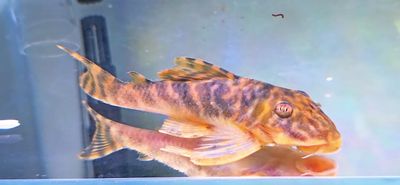
L377 Prince Tiger Pleco - (Peckoltia sp.)
L377 Prince Tiger Pleco - (Peckoltia sp.)
Price of shipping is not included.
5.0
(2)
was $125.00
Save 32%
$85.00
Captive Bred
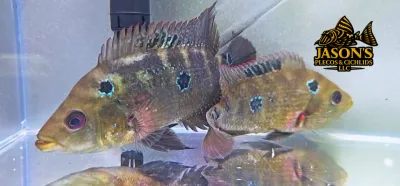
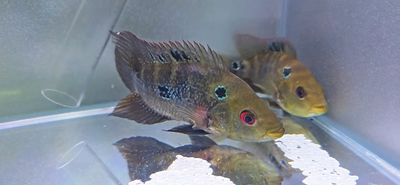
Trimac Cichlid/Three Spot Cichlid - (Amphilophus Trimaculatus)
Trimac Cichlid/Three Spot Cichlid - (Amphilophus Trimaculatus)
Price of shipping is not included.
5.0
(1)
was $70.00
Save 7%
$65.00
Wild Caught
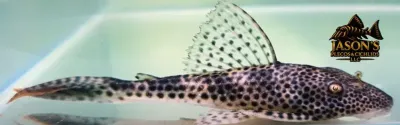
L011 Red Fin Thresher Pleco - (Aphanotorulus emarginatus)
L011 Red Fin Thresher Pleco - (Aphanotorulus emarginatus)
Price of shipping is not included.
5.0
(1)
was $55.00
Save 18%
$45.00
Powered by Lightspeed
Display prices in:USD