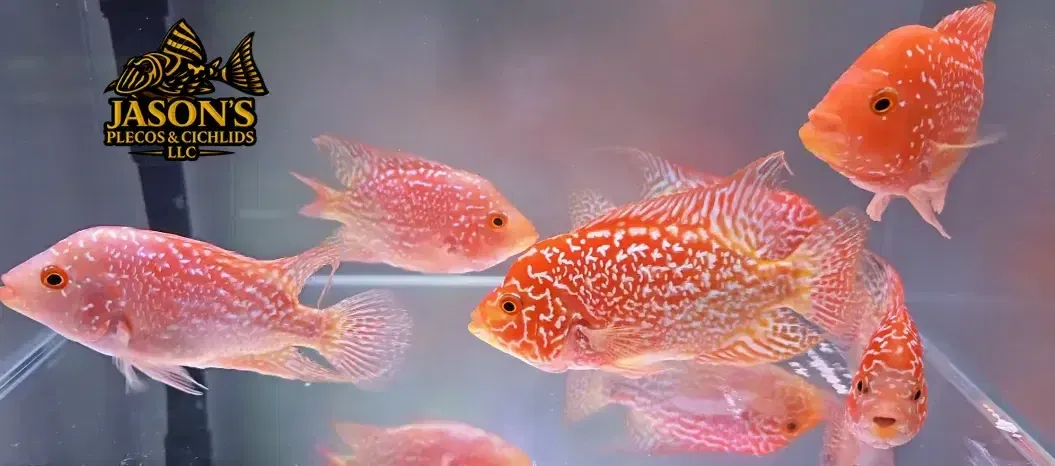
Gold Base Flowerhorn
5.0
1 review
Reviews from verified customers who have purchased products at this store.
$200.00
Captive Bred
was $300.00 Save 33%
Size
Questions, Comments, Concerns? Let us know!
Enter your text
Price of shipping is not included.
In stock: 1 available
1
Save this fish to my favorites.
Customer reviews
Reviews only from verified customers
Reviews are only accepted from verified customers who have signed in and purchased the products. This ensures that each review is based on genuine customer experiences. All reviews are checked before publication to prevent spam.
David V.
Riverside,
United States
Jun 3, 2026
Gold Base Flowerhorn
Fish Details, Description and Information Below:
🐟 Gold Base Flowerhorn – Rare Captive-Bred Designer Flowerhorn Cichlid
The Gold Base Flowerhorn, also known as a Golden Base Flowerhorn, is a spectacular captive-bred hybrid cichlid selectively developed for its intense gold, yellow, orange, red, pink, and metallic coloration, impressive body shape, interactive personality, and characteristic Flowerhorn forehead known as the kok or nuchal hump.
Gold Base Flowerhorns are especially interesting because many individuals undergo a dramatic color transformation as they mature. Juveniles may begin with darker gray, black, or patterned coloration before entering a fading phase, during which much of the dark pigmentation disappears and brighter yellow, orange, gold, pink, or red coloration begins to emerge.
No two Gold Base Flowerhorns develop exactly the same.
Depending on genetics and breeding line, mature fish may display:
- Brilliant gold coloration
- Bright yellow
- Deep orange
- Red facial coloration
- Pink or peach tones
- White or silver pearling
- Metallic blue highlights
- Red eyes
- Large nuchal humps
- Reduced or completely faded black markings
Because Flowerhorns are designer hybrids rather than naturally occurring species, exact adult coloration, pattern, body shape, and kok development cannot be guaranteed.
For aquarists looking for an intelligent, interactive centerpiece fish with the potential for dramatic color development, the Gold Base Flowerhorn is one of the most impressive hybrid cichlids available.
🔎 Quick Facts – Gold Base Flowerhorn
- 📛 Common Name: Gold Base Flowerhorn / Golden Base Flowerhorn
- 🧬 Identification: Flowerhorn Hybrid Cichlid
- 🔬 Scientific Name: No formally recognized scientific species name
- 🐟 Family: Cichlidae
- 🐣 Stock: Captive Bred
- 🎨 Strain / Color Group: Gold Base / Golden Base
- 🌎 Origin: Captive-developed ornamental hybrid
- 🌏 Development History: Flowerhorn breeding originated primarily in Southeast Asia
- 💧 Water Type: Freshwater
- 📏 Expected Adult Size: Approximately 10–12 inches, with some lines potentially larger
- 🏠 Recommended Aquarium: 75 gallons minimum for one adult
- 🏠 Preferred Aquarium: 90 gallons or larger
- 🌡️ Temperature: Approximately 78–84°F
- 💧 pH: Approximately 6.5–8.0
- 💨 Oxygenation: Good
- 🍽️ Diet: Omnivore
- 😠 Temperament: Highly territorial / Aggressive
- 🐠 Swimming Area: Middle / Lower
- 👤 Recommended Housing: Usually kept alone
- 🥚 Breeding: Substrate-spawning hybrid; fertility varies
- ⭐ Care Level: Intermediate to Advanced
- 🏆 Availability: Specialty designer Flowerhorn
🧬 What Is a Gold Base Flowerhorn?
A Gold Base Flowerhorn is:
A Captive-Bred Hybrid Cichlid
It is not a naturally occurring species.
Flowerhorns were developed through generations of selective breeding involving multiple Central American cichlid lines.
Species historically associated with Flowerhorn development include fish from genera such as:
- Amphilophus
- Vieja
- Other closely related Central American cichlids
Because modern Flowerhorn strains have undergone generations of:
- Hybridization
- Selective breeding
- Line breeding
- Backcrossing
it is usually impossible to assign one simple scientific species formula to an individual Flowerhorn unless complete breeder records are available.
For that reason, the safest identification is:
Flowerhorn Hybrid Cichlid
⚠️ Do Not Give Flowerhorns a Fake Scientific Name
You may see Flowerhorns advertised online under names such as:
- Cichlasoma sp.
- Amphilophus sp.
- Amphilophus Hybrid
These can be useful aquarium-trade descriptions, but Flowerhorns do not represent a formally recognized scientific species.
For this product, I recommend simply using:
Gold Base Flowerhorn – Hybrid Cichlid
rather than implying that it is a pure species.
🌟 What Does “Gold Base” Mean?
The Gold Base or Golden Base group is known for fish that develop a bright underlying coloration containing combinations of:
- 🟡 Yellow
- 🟠 Orange
- 🔴 Red
- 🌸 Pink
- 🟨 Gold
- ⚪ Cream or white
Many Gold Base Flowerhorns also carry:
- White pearling
- Metallic speckles
- Red eyes
- Colorful fins
- Large kok development
The exact appearance depends heavily on the genetics of the individual fish.
🎭 What Is a “Fader”?
The term:
Fader
is commonly used for Flowerhorns that undergo a dramatic pigmentation change as they mature.
During this process, a juvenile may temporarily become:
- Very dark
- Charcoal gray
- Black
- Blotchy
- Unevenly colored
This can look alarming to someone unfamiliar with Flowerhorn development.
However, in a genetically programmed fader, the dark pigmentation may gradually disappear and be replaced with brighter:
- Yellow
- Gold
- Orange
- Red
- Pink
- Cream
coloration.
⚫➡️🟠 The Fading Process
A typical fading process may look something like:
Stage 1 – Juvenile Color
The young fish may have:
- Gray coloration
- Dark bars
- Black patches
- Normal juvenile markings
Stage 2 – Darkening
The fish may suddenly become:
- Very dark
- Black
- Unevenly pigmented
This is sometimes called the:
Fading Stage
Stage 3 – Pigment Loss
Dark areas gradually begin disappearing.
Patches may become:
- Pale
- Pink
- Cream
- Yellow
Stage 4 – Mature Color
The fish may eventually develop:
- Golden-yellow
- Orange
- Red
- Pink
- White
adult coloration.
⚠️ Not Every Gold Base Develops the Same
This is extremely important for customers.
Because these are selectively bred hybrid fish:
Exact adult coloration cannot be guaranteed.
One Gold Base juvenile may become:
- Bright yellow and red
while another may become:
- Pale orange and cream
and another may retain:
- Darker markings
- Different pearling
- Less red
- More yellow
The age at which fading occurs can also vary substantially.
Some individuals may begin fading while quite small.
Others may change much later.
🎨 Color & Pattern Disclaimer
Color development can be influenced by:
- Genetics
- Age
- Sex
- Dominance
- Diet
- Stress
- Lighting
- Aquarium background
- Water quality
- Overall health
Good care helps a fish express its genetic potential.
However:
Food, lighting, or supplements cannot create genetics that the fish does not possess.
Never guarantee that a juvenile will develop a particular:
- Color
- Pattern
- Pearl density
- Kok size
unless it is already visible on the individual being sold.
🧠 What Is the Kok?
The large forehead associated with Flowerhorns is called the:
Kok
or more formally:
Nuchal Hump
This feature is one of the defining characteristics selectively emphasized in Flowerhorn breeding.
Kok development varies dramatically.
Some fish develop:
- Enormous rounded humps
while others develop:
- Medium humps
- Small humps
- Minimal forehead development
🧬 Kok Size Is Primarily Genetic
The most important factor controlling kok development is:
Genetics
Other factors can influence how fully the fish expresses that potential, including:
- Age
- Sex
- Nutrition
- Health
- Water quality
- Hormonal maturity
But there is no ethical husbandry method that can guarantee a huge kok on a fish that lacks the genetic potential.
🚫 Do Not Use Hormones or Steroids
We do not recommend using:
- Hormonal treatments
- Steroids
- Unknown color-enhancing chemicals
- Unregulated “kok boosters”
in an attempt to force unnatural development.
A healthy Flowerhorn should develop naturally through:
- Genetics
- Quality nutrition
- Clean water
- Proper aquarium space
- Good husbandry
📏 Adult Size
Flowerhorn size varies because different breeding lines contain different ancestry.
A typical adult may reach approximately:
10–12 inches
Some individuals and strains can become larger.
Males often become:
- Larger
- Heavier-bodied
- More muscular
than females.
Customers should therefore plan for a:
Large 10–12"+ adult cichlid
rather than judging permanent housing needs from the size of a juvenile.
🚨 Do Not Purchase Based on Juvenile Size
A 2-inch or 3-inch Gold Base Flowerhorn may appear easy to house.
Flowerhorns grow quickly under good conditions.
Adults become:
- Large
- Thick-bodied
- Extremely territorial
- Heavy feeders
- Heavy waste producers
Plan the aquarium around the adult fish.
🏠 Aquarium Size
For one adult Gold Base Flowerhorn:
75 gallons should be considered the minimum
with:
90 gallons or larger preferred.
For exceptionally large specimens:
100–125+ gallons
provides even better swimming room and water stability.
Aquarium length and width are more useful than excessive height.
📐 Aquarium Footprint
A mature Flowerhorn should have enough room to:
- Turn comfortably
- Swim naturally
- Establish territory
- Interact with its surroundings
- Exercise without constantly striking décor
A long aquarium provides much better usable swimming space than a tall, narrow aquarium.
🏠 Aquarium Setup
Flowerhorn aquariums are usually best kept relatively simple.
Recommended features include:
- Sand
- Smooth gravel
- Bare bottom
- Large smooth rocks
- Limited driftwood
- Open swimming space
- Strong filtration
- Good oxygenation
Avoid excessive decoration.
Adult Flowerhorns frequently:
- Dig
- Move gravel
- Rearrange decorations
- Attack equipment
- Uproot plants
⚠️ Secure Aquarium Equipment
Large Flowerhorns are powerful fish.
They may bite or move:
- Heaters
- Thermometers
- Filter intakes
- Air stones
- Decorations
Whenever possible:
- Protect heaters
- Use heater guards
- Place equipment in a sump
- Secure intake tubes
Do not leave fragile equipment where an aggressive adult can easily break it.
🌿 Plants
Flowerhorns are generally poor candidates for heavily planted aquariums.
They may:
- Dig up plants
- Bite leaves
- Move roots
- Rearrange substrate
If plants are attempted, hardy species attached to:
- Rocks
- Driftwood
may have a better chance.
However, no plant should be expected to remain untouched.
💩 Heavy Bioload
Flowerhorns:
- Eat heavily
- Grow quickly
- Produce substantial waste
Strong filtration is essential.
Recommended filtration can include:
- Large canister filters
- Sump filtration
- High-capacity biological filtration
- Strong mechanical filtration
- Strong surface agitation
Maintain:
- ☠️ Ammonia: 0 ppm
- ☠️ Nitrite: 0 ppm
- 🔄 Nitrate: Keep as low as reasonably practical
- 💨 Oxygenation: Good
Regular water changes are extremely important.
💧 Water Parameters
A practical Gold Base Flowerhorn range is:
- 🌡️ Temperature: 78–84°F
- 💧 pH: Approximately 6.5–8.0
- 💦 Hardness: Soft to moderately hard
- ☠️ Ammonia: 0 ppm
- ☠️ Nitrite: 0 ppm
- 🔄 Nitrate: Keep low
- 💨 Oxygenation: Good
Because Flowerhorns are captive-developed hybrids rather than wild biotope fish, they do not need one extremely specific natural-water chemistry.
The most important factor is:
Stable, Clean Water
Avoid sudden changes in:
- Temperature
- pH
- Hardness
🍽️ Diet & Feeding
Gold Base Flowerhorns are:
Omnivorous Cichlids
A high-quality formulated cichlid pellet should make up the nutritional foundation of the diet.
Recommended foods include:
- Premium Flowerhorn pellets
- High-quality cichlid pellets
- Quality omnivore pellets
- Krill
- Mysis shrimp
- Brine shrimp
- Shrimp
- Insect-based foods
- Spirulina-containing foods
- Appropriate vegetable-based foods
Variety is more important than relying on one “color enhancing” food.
🥬 Include Some Plant-Based Nutrition
Although Flowerhorns readily consume meaty foods, a balanced omnivorous diet should also contain:
- Spirulina
- Vegetable ingredients
- Plant-based pellets
- Other appropriate fiber sources
This helps provide a broader nutritional profile.
🚫 Avoid Routine Feeder Fish
We do not recommend routinely feeding live feeder fish.
Feeder fish can introduce:
- Parasites
- Bacteria
- Viruses
- Nutritional deficiencies
Flowerhorns normally accept:
- Pellets
- Frozen foods
- Prepared foods
readily.
There is no need to expose a valuable Flowerhorn to unnecessary feeder-fish risk.
🚫 Avoid Mammal & Poultry Meat
Do not routinely feed:
- Beef
- Beef heart
- Pork
- Chicken
These foods should not form a regular part of the diet.
Use high-quality aquatic and formulated fish foods instead.
⚠️ Avoid Overfeeding
Flowerhorns are enthusiastic eaters.
They quickly learn to:
- Recognize their keeper
- Follow people
- Beg at the glass
- Respond to feeding containers
Begging does not always mean the fish needs more food.
Overfeeding contributes to:
- Obesity
- Digestive problems
- Excessive waste
- Poor water quality
Feed controlled portions.
🧠 Intelligent “Wet Pet” Personality
One of the biggest reasons Flowerhorns are so popular is their personality.
Many individuals learn to:
- Recognize their keeper
- Follow movement outside the aquarium
- Approach the front glass
- Beg for food
- Interact during aquarium maintenance
- Defend their territory from unfamiliar people
For many keepers, a Flowerhorn becomes more like an aquatic pet than simply a display fish.
😠 Temperament
Flowerhorns are:
Highly Territorial and Aggressive
They were selectively developed from powerful Central American cichlid ancestry.
Adults may attack:
- Other cichlids
- Similar-sized fish
- Smaller fish
- Plecos
- Catfish
- Aquarium equipment
- Hands entering their territory
Temperament varies between individuals, but aggression should always be expected.
👤 Safest Housing – Keep One Flowerhorn
For most aquarists:
One Flowerhorn per aquarium is the safest recommendation.
A single Flowerhorn:
- Does not need another Flowerhorn for companionship
- Can thrive alone
- Often interacts heavily with its keeper
- Does not become lonely in the same way a social schooling fish would
Keeping one adult by itself greatly reduces the risk of serious injury.
🐠 Tankmates
Some experienced keepers maintain Flowerhorns with large robust tankmates in enormous aquariums.
However:
Compatibility is never guaranteed.
A Flowerhorn that tolerates a tankmate for months may suddenly become aggressive.
Potential injuries include:
- Torn fins
- Missing scales
- Eye injuries
- Jaw injuries
- Death
For your product page, I recommend telling customers:
Best Kept Alone
rather than advertising community compatibility.
✋ Be Careful During Aquarium Maintenance
Large Flowerhorns can bite.
Some adults aggressively defend their territory when a hand enters the aquarium.
When performing maintenance:
- Watch the fish continuously
- Avoid cornering it
- Use long aquarium tools
- Use dividers when necessary
Do not assume a fish that normally follows your hand is incapable of biting.
♂️ Male vs. Female
Sexing juveniles can be difficult.
Males Often:
- Grow larger
- Develop larger kok
- Develop longer dorsal and anal fins
- Display more intense coloration
- Become highly territorial
Females Often:
- Remain somewhat smaller
- Develop smaller kok
- Become fuller through the abdomen when carrying eggs
However:
These are tendencies, not guarantees.
Some females develop impressive coloration and forehead growth.
Some males develop relatively small humps.
Venting mature fish is more reliable than judging sex only from appearance.
🥚 Breeding
Flowerhorns can reproduce.
However, because they are hybrids:
Fertility varies between strains and individuals.
Males in some lines may have:
- Reduced fertility
- Poor fertility
- Complete sterility
Other Flowerhorn males are fertile.
Females are often fertile, but this also varies.
💕 Pairing Flowerhorns Is Dangerous
Do not simply place a male and female together and expect them to breed peacefully.
Flowerhorn courtship can become extremely aggressive.
One fish may:
- Chase
- Bite
- Ram
- Injure
- Kill
the other.
Experienced breeders often begin introductions using:
A Secure Divider
This allows the fish to:
- See one another
- Display
- Establish interest
- Prepare spawning areas
without immediately having physical access to each other.
🥚 Spawning
A compatible fertile pair may select a flat surface such as:
- Slate
- Flat rock
- Smooth stone
- Flowerpot
- Aquarium bottom
The female lays adhesive eggs while the male attempts to fertilize them.
Both parents may become extremely aggressive while guarding the spawning area.
🧬 Breeding Gold Base Flowerhorns
Because Flowerhorns are hybrids, breeding two attractive Gold Base specimens does not guarantee that every offspring will resemble the parents.
Offspring can vary tremendously in:
- Color
- Pattern
- Kok development
- Body shape
- Eye color
- Pearling
- Fading behavior
Producing high-quality Flowerhorns generally requires:
- Large numbers of fry
- Multiple generations
- Selective breeding
- Detailed breeder records
🧬 Hybrid Breeding Ethics
Any offspring produced from Flowerhorns should always be identified as:
Flowerhorn Hybrid Cichlids
Do not sell them as:
- Pure Trimac
- Pure Midas
- Pure Red Devil
- Pure Vieja
- Any other pure wild species
Accurate labeling protects both customers and pure cichlid breeding lines.
⭐ Why Keep a Gold Base Flowerhorn?
The Gold Base Flowerhorn is an outstanding fish for aquarists who want one spectacular centerpiece animal.
Its combination of:
- 🟡 Brilliant gold coloration
- 🟠 Orange and red tones
- ⚪ Metallic pearling
- 🧠 Intelligent personality
- 👀 Strong interaction with its keeper
- 🎭 Fascinating fading process
- 💪 Powerful adult appearance
- 🌟 Potential for impressive kok development
- 🧬 Unique hybrid genetics
- 🏆 Individual collector appeal
makes every Gold Base Flowerhorn unique.
Watching a dark juvenile gradually transform into a brilliant gold, orange, or red adult can be one of the most rewarding parts of keeping this strain.
⚠️ Important Considerations
Before purchasing a Gold Base Flowerhorn:
- Understand that Flowerhorns are hybrids, not a naturally occurring species.
- Exact parentage may not be known.
- Exact adult coloration cannot be guaranteed.
- Fading can occur at different ages.
- Not every individual will fade identically.
- Kok size is primarily genetic and cannot be guaranteed.
- Do not use hormones or steroids to force coloration or kok development.
- Expect approximately 10–12"+ adult size.
- Provide at least approximately 75 gallons.
- 90+ gallons is preferred.
- Maintain strong filtration.
- Keep ammonia and nitrite at zero.
- Perform regular water changes.
- Feed a varied omnivorous diet.
- Avoid routine feeder fish.
- Expect territorial aggression.
- Best kept alone.
- Use caution during aquarium maintenance.
- Use extreme caution when attempting to breed a pair.
- Label offspring honestly as hybrids.
- Never release Flowerhorns into natural waterways.
🧬 Hybrid Identification Disclaimer
The Gold Base Flowerhorn is a captive-bred ornamental hybrid.
“Gold Base,” “Golden Base,” and “Fader” are aquarium breeding and appearance terms rather than scientifically recognized species or subspecies.
There is no single universally documented parentage shared by every modern Gold Base Flowerhorn breeding line.
Therefore, this fish should be identified as:
Gold Base Flowerhorn – Hybrid Cichlid
rather than being assigned a false scientific species name.
Color, pattern, kok development, size, fertility, and fading behavior may vary significantly between individuals.
🚚 Live Fish Shipping
Live fish are professionally packed for safe transport.
Shipping availability depends on:
- Fish size
- Destination
- Weather conditions
- Carrier availability
- Applicable state and local regulations
Larger specimens may require:
- Larger insulated boxes
- Additional water
- Specialized packing
- Airline cargo shipping
Please review our Shipping & Payment Information and Live Arrival Guarantee / DOA Policy before ordering.
⚠️ Buyer Responsibility
Customers are responsible for confirming that hybrid Flowerhorn Cichlids may legally be purchased, possessed, transported, and received in their state or local jurisdiction before ordering.
Never release aquarium fish into local waterways.
Below are fish you may also like.
Wild Caught
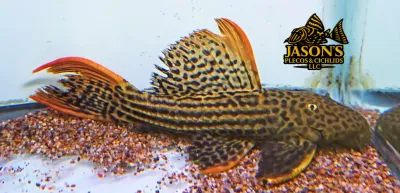
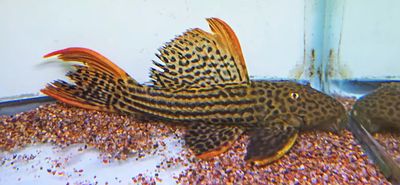
L025 Scarlet Cactus Pleco 7 Pointer - (Pseudacanthicus pirarara)
L025 Scarlet Cactus Pleco 7 Pointer - (Pseudacanthicus pirarara)
Price of shipping is not included.
was $550.00
Save 6%
$515.00
Wild Caught
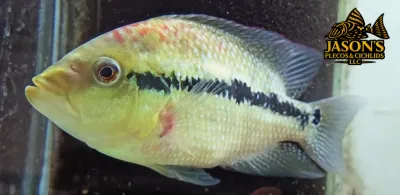
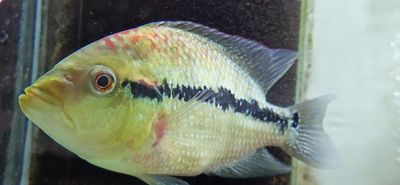
Blue Umbee/Turquoise Cichlid - (Kronoheros umbrifer)
Blue Umbee/Turquoise Cichlid - (Kronoheros umbrifer)
Price of shipping is not included.
was $350.00
Save 10%
$315.00
Captive Bred
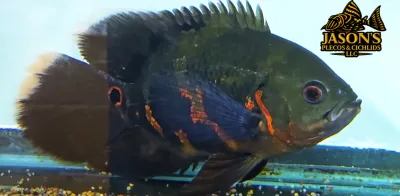
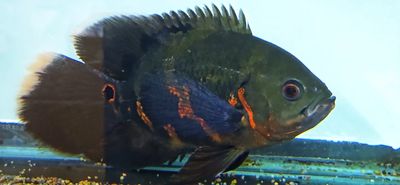
Longfin Tiger Oscar - (Astronotus ocellatus)
Longfin Tiger Oscar - (Astronotus ocellatus)
Price of shipping is not included.
5.0
(1)
was $160.00
Save 6%
$150.00
Wild Caught
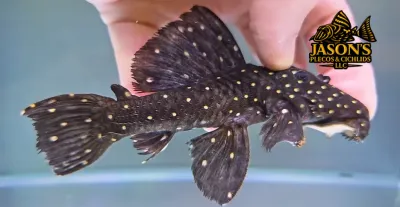
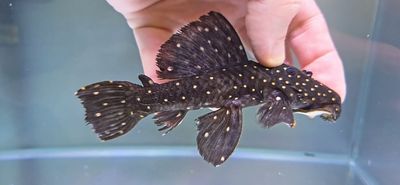
L240 Black Saum Vampire Pleco - (Leporacanthicus cf. galaxias)
L240 Black Saum Vampire Pleco - (Leporacanthicus cf. galaxias)
Price of shipping is not included.
was $85.00
Save 6%
$80.00
Captive Bred
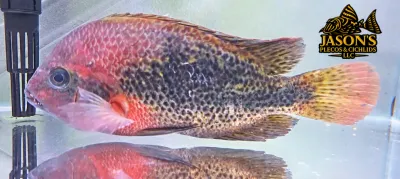
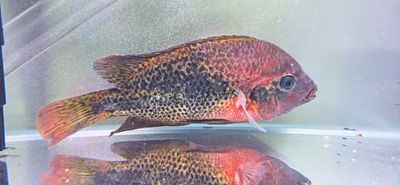
Rio Chacamax Cichlid - (Vieja bifasciata)
Rio Chacamax Cichlid - (Vieja bifasciata)
Price of shipping is not included.
was $100.00
Save 10%
$90.00
Powered by Lightspeed
Display prices in:USD