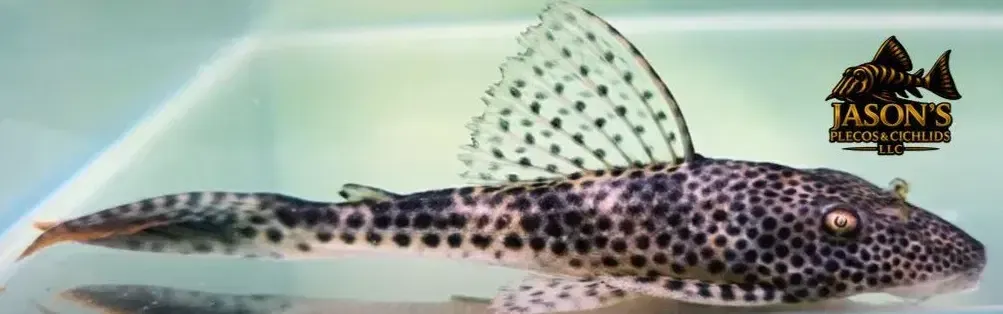
L011 Red Fin Thresher Pleco - (Aphanotorulus emarginatus)
5.0
1 review
Reviews from verified customers who have purchased products at this store.
$45.00
Wild Caught
was $55.00 Save 18%
Size
Questions, Comments, Concerns? Let us know!
Enter your text
Price of shipping is not included.
In stock: 1 available
1
Save this fish to my favorites.
Customer reviews
Reviews only from verified customers
Reviews are only accepted from verified customers who have signed in and purchased the products. This ensures that each review is based on genuine customer experiences. All reviews are checked before publication to prevent spam.
Phillip T.
Lee's Summit,
United States
Oct 17, 2025
Amazing pleco! Active and healthy when it arrived! Highly recommended seller!!
L011 Red Fin Thresher Pleco - (Aphanotorulus emarginatus)
Fish Details, Description and Information Below:
🐟 L011 Red Fin Thresher Pleco – (Aphanotorulus emarginatus) – Rare Wild-Caught Xingu Pleco
The L011 Red Fin Thresher Pleco (Aphanotorulus emarginatus) is a distinctive South American armored catfish known for its elongated body, beautiful dark spotting, tall dorsal fin, and attractive reddish-orange coloration along the fins and tail.
Juveniles typically display a pale tan, beige, or grayish body covered with numerous dark brown to black spots. Depending on the individual, the fins may develop attractive:
- Orange edging
- Reddish coloration
- Bronze tones
- Golden highlights
- Dark spotting
The streamlined body and extended tail give the species the sleek appearance responsible for the popular name:
Red Fin Thresher Pleco
L011 represents a geographic aquarium-trade form of the scientifically recognized species Aphanotorulus emarginatus. Several other L-numbers have historically been assigned to related populations of the same species from different South American river systems.
Unlike smaller decorative plecos, the Red Fin Thresher becomes a large 12–14"+ fish and requires significant aquarium space, strong filtration, excellent oxygenation, and a varied omnivorous diet.
For aquarists looking for an unusual, large-bodied wild South American pleco, the L011 Red Fin Thresher is an impressive collector species.
🔎 Quick Facts – L011 Red Fin Thresher Pleco
- 📛 Common Name: Red Fin Thresher Pleco
- 🔢 L-Number: L011
- 🔬 Scientific Name: Aphanotorulus emarginatus
- 📚 Older Scientific Name: Squaliforma emarginata
- 🐟 Family: Loricariidae
- 🧬 Subfamily: Hypostominae
- 🌿 Stock: Wild Caught
- 🌎 Origin: South America
- 🇧🇷 L011 Locality: Brazil – Rio Xingu near Altamira
- 🌊 Species Distribution: Upper Orinoco, Essequibo, Rio Negro, Rio Tapajós, Rio Xingu, and other northern South American drainages
- 💧 Water Type: Freshwater
- 📏 Documented Maximum: Approximately 13.2 inches / 33.6 cm total length
- 📏 Adult Planning Size: Approximately 12–14 inches, with some aquarium references reporting up to approximately 16 inches
- 🏠 Recommended Aquarium: 100 gallons or larger
- 🏠 Preferred Aquarium: 125+ gallons for a large adult
- 🌡️ Temperature: Approximately 76–84°F
- 💧 pH: Approximately 6.0–7.5
- 💦 Water: Soft to moderately mineralized
- 💨 Oxygenation: High
- 🌊 Flow: Moderate to strong
- 🍽️ Diet: Omnivorous Grazer
- 😌 Temperament: Generally peaceful; may become territorial with other large plecos
- 🌙 Activity: Primarily nocturnal
- 🐠 Swimming Area: Bottom
- ⭐ Care Level: Intermediate
- 🌎 IUCN Status: Least Concern
- 🏆 Availability: Uncommon L-Number Pleco
🧬 Current Scientific Name
The currently accepted scientific name is:
Aphanotorulus emarginatus
Older aquarium literature frequently identifies this fish as:
Squaliforma emarginata
and older scientific publications have also placed it in:
Hypostomus
A major taxonomic review reassigned the species to the genus:
Aphanotorulus
Therefore, the best current product name is:
L011 Red Fin Thresher Pleco – (Aphanotorulus emarginatus)
🔢 L011 Is One Population of a Widespread Species
One of the most interesting aspects of Aphanotorulus emarginatus is the number of L-numbers historically associated with it.
These include:
- L011
- L035
- L108
- L116
- L131
These numbers were originally assigned to fish collected from different locations before their taxonomic relationships were fully understood.
Today, these populations are generally included within:
Aphanotorulus emarginatus
🗺️ L011 Locality
The L011 form is associated particularly with:
Rio Xingu – Altamira, Pará, Brazil
This is different from some of the other L-number populations.
For example:
L035
Associated with:
- Rio Araguaia
- Rio Tocantins region
L108
Associated with:
- Upper Rio Napo region
L116
Associated with:
- Rio Trombetas region
L131
Associated with:
- Rio Tapajós
Because locality is valuable information for L-number collectors, the L011 product page should specifically identify the fish as:
Rio Xingu – Brazil
when that collection identification is known.
🎨 Appearance
The Red Fin Thresher Pleco has an attractive streamlined appearance.
Typical body coloration includes:
- Beige
- Tan
- Light brown
- Gray
- Olive-brown
covered with:
Numerous Dark Spots
The spotting may appear on:
- Head
- Body
- Dorsal fin
- Pectoral fins
- Pelvic fins
- Tail
The spots may vary in:
- Size
- Density
- Darkness
- Distribution
between individual fish.
🔴 Why “Red Fin”?
Healthy specimens may develop attractive reddish or orange coloration along portions of the:
- Dorsal fin
- Pectoral fins
- Pelvic fins
- Caudal fin
The intensity can vary according to:
- Genetics
- Collection locality
- Age
- Diet
- Stress
- Lighting
- Water conditions
Some specimens show stronger orange or bronze tones than others.
Exact fin coloration cannot be guaranteed.
🦈 The “Thresher” Appearance
The name:
Thresher Pleco
refers to the species' long, streamlined body and elongated tail profile.
Compared with many chunky-bodied plecos, Aphanotorulus emarginatus has a much more:
- Elongated
- Streamlined
- Shark-like
body shape.
This appearance becomes especially impressive as the fish reaches adult size.
📏 Adult Size
One of the most important corrections for this species is adult size.
FishBase documents:
33.6 cm / approximately 13.2 inches total length
for Aphanotorulus emarginatus.
Some specialist pleco references report:
Approximately 40 cm / 16 inches
for very large specimens.
For customer planning, I recommend:
Approximately 12–14 inches, with larger individuals potentially approaching 16 inches.
🚨 Do Not Plan Around an 8-Inch Adult
Your current fish may be only several inches long.
That does not mean it will remain that size.
A mature Red Fin Thresher becomes a substantial pleco requiring:
- Large bottom area
- Strong filtration
- Significant territory
- Strong oxygenation
- Large hiding places
Customers should plan around the adult fish, not the current sale size.
🏠 Aquarium Size
For one mature L011 Red Fin Thresher Pleco:
100 gallons or larger
is recommended.
For a large adult:
125 gallons or larger is strongly preferred.
If keeping:
- Multiple large plecos
- Large cichlids
- Large catfish
- Other bottom dwellers
additional space becomes increasingly important.
📐 Aquarium Footprint
Because this species spends most of its time near the bottom, aquarium:
Length and Width
are more important than excessive height.
Provide enough room for the fish to:
- Turn comfortably
- Move between feeding areas
- Establish territory
- Rest underneath structure
- Avoid other plecos
A long, wide aquarium is strongly preferred.
🪨 Natural Habitat
Wild Aphanotorulus emarginatus are associated with:
- Large river systems
- Rocky areas
- Tree roots
- Sand banks
- Submerged structure
During the daytime, fish may shelter:
Under Roots and Among Rocks
before emerging onto:
Sand Banks at Night
to feed.
This natural behavior can be recreated in the aquarium.
🏠 Aquarium Setup
Recommended aquarium features include:
- Fine sand
- Smooth gravel
- Large rocks
- Driftwood
- Large caves
- Root-like structures
- Shaded resting areas
- Open feeding areas
- Strong filtration
- Moderate to strong flow
- Excellent oxygenation
Provide enough large hiding locations for the adult fish.
🪵 Driftwood
Driftwood is strongly recommended.
It provides:
- Shelter
- Shaded resting areas
- Territory boundaries
- Biofilm
- Natural grazing surfaces
However:
The Red Fin Thresher is not a specialized wood-eating pleco.
It should not be treated like a Panaque or Panaqolus whose feeding behavior centers heavily around wood rasping.
Driftwood is useful habitat—not a complete diet.
💨 Oxygenation & Water Movement
This species benefits from:
Well-Oxygenated Water
A good aquarium should provide:
- Strong surface agitation
- Moderate current
- Efficient biological filtration
- Good circulation
Areas of stronger current can be combined with calmer sheltered areas.
Avoid stagnant water.
💧 Water Parameters
A practical aquarium range is:
- 🌡️ Temperature: 76–84°F
- 💧 pH: Approximately 6.0–7.5
- 💦 Water: Soft to moderately mineralized
- 💨 Oxygenation: High
- 🌊 Flow: Moderate to strong
- ☠️ Ammonia: 0 ppm
- ☠️ Nitrite: 0 ppm
- 🔄 Nitrate: Keep as low as reasonably possible
FishBase records the species naturally at approximately:
75–81°F / 24–27°C
but established aquarium specimens tolerate somewhat warmer tropical conditions when oxygen levels remain high.
💩 Filtration
Large plecos produce substantial amounts of waste.
Strong filtration is essential.
Recommended filtration may include:
- Large canister filters
- Sump filtration
- Powerful mechanical filtration
- High-capacity biological filtration
- Strong surface agitation
Regular partial water changes should be part of normal maintenance.
🍽️ Diet & Feeding
The L011 Red Fin Thresher should be treated as an:
Omnivorous Grazer
It should not be described simply as a strict herbivore.
A varied diet is recommended.
🌿 Plant-Based Foods
Suitable plant-based foods include:
- Quality algae wafers
- Spirulina wafers
- Vegetable-based sinking pellets
- Zucchini
- Squash
- Green beans
- Peas
- Other appropriate vegetables
These foods provide:
- Fiber
- Plant matter
- Variety
- Grazing opportunities
🦐 Protein Foods
Animal protein should also be included.
Suitable foods may include:
- Shrimp-based sinking pellets
- Mysis shrimp
- Krill
- Brine shrimp
- Bloodworms
- Insect-based foods
- Quality omnivore pellets
Protein should supplement a balanced omnivorous diet rather than completely replace plant-based foods.
⚠️ Not Just an “Algae Cleaner”
The L011 may graze:
- Algae
- Biofilm
- Organic material
but it should not be purchased simply as an aquarium cleaning tool.
A large adult requires intentional feeding.
Do not expect aquarium algae alone to provide adequate nutrition.
🌙 Nocturnal Behavior
The Red Fin Thresher Pleco is primarily:
Nocturnal
During the day it may remain underneath:
- Rocks
- Driftwood
- Root structures
- Caves
Activity usually increases:
- In the evening
- At night
- During feeding
- Under dim lighting
Established fish may become more visible during daytime once comfortable.
🌬️ Facultative Air Breathing
One fascinating biological feature of Aphanotorulus emarginatus is that it has been identified as a:
Facultative Air-Breathing Fish
This means it possesses the ability to use atmospheric oxygen under certain environmental conditions.
However, this does not mean poor oxygenation is acceptable.
In captivity:
Provide excellent dissolved oxygen at all times.
Air breathing is an adaptation, not an excuse for inadequate aquarium conditions.
😌 Temperament
The Red Fin Thresher Pleco is generally:
Peaceful Toward Most Other Fish
It can coexist with appropriately sized:
- Tetras
- Silver dollars
- Rainbowfish
- Cichlids
- Catfish
- Other community fish
However, mature specimens can become territorial toward:
- Other large plecos
- Similar-shaped bottom dwellers
- Fish competing for preferred shelters
⚠️ Pleco Territorial Behavior
Conflict usually occurs around:
- Caves
- Driftwood
- Food
- Resting locations
Provide:
- Multiple shelters
- Separate feeding locations
- Visual barriers
- Significant bottom area
when keeping several plecos.
🐠 Tankmates
Suitable tankmates may include appropriately sized:
- South American cichlids
- Central American cichlids
- Silver dollars
- Large tetras
- Rainbowfish
- Larger peaceful catfish
- Other robust community fish
Avoid overcrowding the bottom of the aquarium.
♂️ Male vs. Female
Sex differences are most obvious in mature fish.
Adult males can develop pronounced:
Odontodes
along the:
- Pectoral fins
- Sides
- Posterior portion of the body
During breeding condition, males may develop particularly long bristle-like odontodes.
Females may appear:
- Fuller-bodied
- Broader through the abdomen
Juveniles can be difficult to sex reliably.
Unless confirmed:
Sell as Unsexed
🥚 Breeding
Captive breeding of Aphanotorulus emarginatus is:
Rarely Documented
Compared with smaller plecos such as:
- Ancistrus
- Hypancistrus
- Peckoltia
there is considerably less reliable aquarium breeding information available for this species.
Its:
- Large adult size
- Large territory requirements
- Riverine ecology
make it a difficult breeding project for ordinary home aquariums.
For most customers, the Red Fin Thresher should be considered primarily:
A Display Pleco
rather than an easy breeding species.
🧬 Do Not Assume Typical Pleco Breeding
Because detailed species-specific captive breeding observations are limited, I would avoid promising that L011 reproduces exactly like:
- Bristlenose Plecos
- Zebra Plecos
- Other familiar cave-spawning species
Until more repeatable species-specific breeding information is available, breeding information should remain conservative.
🌎 Conservation Status
Aphanotorulus emarginatus currently has a broad natural distribution.
Its current IUCN assessment is:
Least Concern
The species occurs across portions of:
- Brazil
- Venezuela
- Guyana
- Ecuador
- Peru
- Other northern South American regions
depending on the population included within the species.
Responsible sourcing is still important, especially for:
Wild-Caught L-Number Locality Fish
⭐ Why Keep an L011 Red Fin Thresher Pleco?
The L011 is an excellent fish for aquarists who want a pleco that looks very different from typical:
- Royal Plecos
- Hypancistrus
- Bristlenose Plecos
Its combination of:
- 🔴 Attractive red-orange fin accents
- ⚫ Beautiful dark spotting
- 🦈 Streamlined body shape
- 🌙 Nocturnal behavior
- 🌊 Riverine lifestyle
- 📏 Impressive adult size
- 🇧🇷 Rio Xingu origin
- 🌿 Omnivorous grazing behavior
- 🏆 L-number collector appeal
makes the L011 Red Fin Thresher a distinctive centerpiece bottom-dweller.
⚠️ Important Considerations
Before purchasing an L011 Red Fin Thresher Pleco:
- The current scientific name is Aphanotorulus emarginatus.
- Older references may call it Squaliforma emarginata.
- L011 specifically represents a Rio Xingu population.
- Do not confuse the L011 locality with L035 from the Tocantins/Araguaia region.
- Plan for approximately 12–14 inches adult length.
- Large specimens may potentially approach approximately 16 inches.
- Do not use 8–10 inches as the maximum.
- Provide approximately 100 gallons or larger.
- 125+ gallons is preferred for large adults.
- Provide significant bottom area.
- Maintain strong filtration.
- Maintain excellent oxygenation.
- Provide moderate to strong water movement.
- Provide rocks, driftwood, and hiding areas.
- Feed a varied omnivorous diet.
- Include both plant-based foods and appropriate protein.
- Do not rely solely on aquarium algae.
- Expect territorial behavior toward other large plecos.
- Never release aquarium fish into natural waterways.
🧬 Taxonomy & L-Number Disclaimer
The currently accepted scientific identification is:
Aphanotorulus emarginatus (Valenciennes, 1840)
Older names include:
- Squaliforma emarginata
- Hypostomus emarginatus
- Hypostoma squalinum
- Squaliforma squalina
A major 2016 revision recognized Aphanotorulus emarginatus as a valid species and placed several historically separate forms within the same species.
Aquarium L-numbers associated with this species include:
- L011
- L035
- L108
- L116
- L131
These numbers represent or have historically represented geographic aquarium-trade forms and should not automatically be interpreted as separate scientific species.
🚚 Live Fish Shipping
Live fish are professionally packed for safe transport.
Shipping availability depends on:
- Fish size
- Destination
- Weather conditions
- Carrier availability
- Applicable state and local regulations
Large specimens may require:
- Larger insulated shipping boxes
- Additional water
- Heavy-duty shipping bags
- Specialized packing
- Airline cargo shipping
Please review our Shipping & Payment Information and Live Arrival Guarantee / DOA Policy before ordering.
⚠️ Buyer Responsibility
Customers are responsible for confirming that Aphanotorulus emarginatus may legally be purchased, possessed, transported, and received in their state or local jurisdiction before ordering.
Never release aquarium fish into natural waterways.
Below are fish you may also like.
Captive Bred
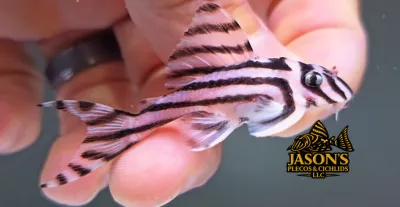
L046 Zebra Pleco - (Hypancistrus zebra)
L046 Zebra Pleco - (Hypancistrus zebra)
Price of shipping is not included.
5.0
(2)
was $250.00
Save 10%
$225.00
Wild Caught
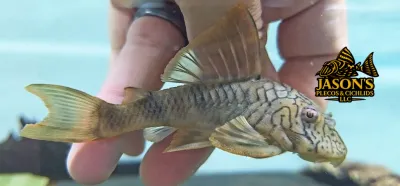
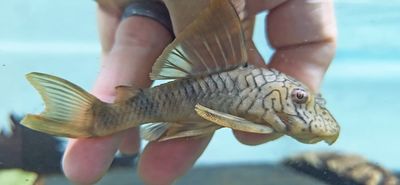
L076 Orange Seam Pleco - (Peckoltia sp.)
L076 Orange Seam Pleco - (Peckoltia sp.)
Price of shipping is not included.
5.0
(1)
was $80.00
Save 6%
$75.00
Captive Bred
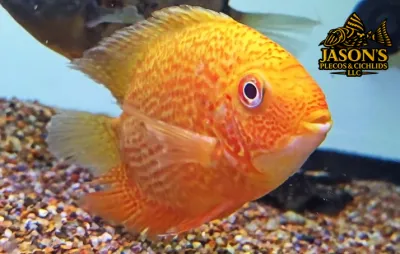
Red Spot Gold Severum - (Heros cf. efasciatus)
Red Spot Gold Severum - (Heros cf. efasciatus)
Price of shipping is not included.
5.0
(2)
was $85.00
Save 6%
$80.00
Captive Bred
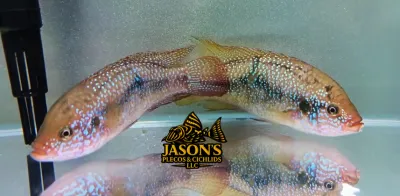
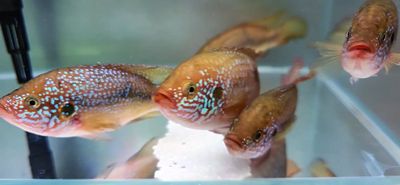
Turquoise Blue Jewel Cichlid - (Hemichromis Bimaculatus)
Turquoise Blue Jewel Cichlid - (Hemichromis Bimaculatus)
Price of shipping is not included.
5.0
(1)
was $55.00
Save 64%
$20.00
Wild Caught
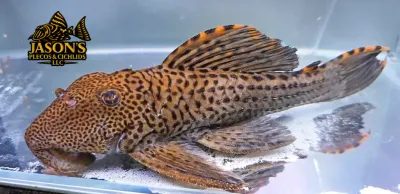
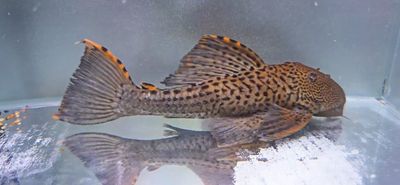
L091 Three Beacon Pleco/Redfin Blackspot Pleco - (Leporacanthicus triactis)
L091 Three Beacon Pleco/Redfin Blackspot Pleco - (Leporacanthicus triactis)
Price of shipping is not included.
5.0
(3)
was $100.00
Save 10%
$90.00
Powered by Lightspeed
Display prices in:USD