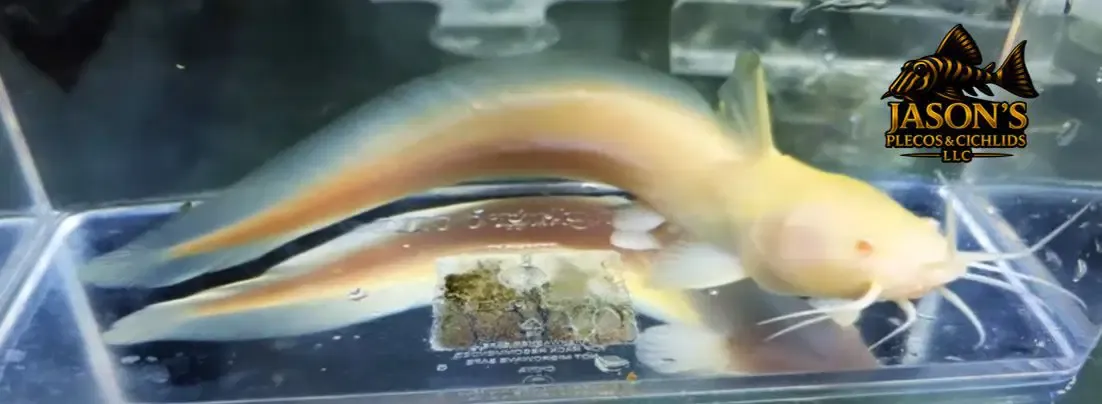
Albino Plotosus Canius
$815.00
Captive Bred
was $2 000.00 Save 59%
Size
Required Reusable Shipping Bag
Questions, Comments, Concerns? Let us know!
Enter your text
Price of shipping is not included.
In stock: 1 available
1
Save this fish to my favorites.
Customer reviews
Reviews only from verified customers
No reviews yet. You can buy this product and be the first to leave a review.
Albino Plotosus Canius
Fish Details, Description and Information Below:
🐟 Albino Plotosus Canius – (Plotosus canius) – Rare Giant Albino Eeltail Catfish
The Albino Plotosus Canius (Plotosus canius) is an exceptionally rare color morph of the massive Gray Eel-Catfish, also known as the Eeltail Catfish or Canine Catfish-Eel.
Unlike the normal wild form, which is typically dark gray to dusky brown, albino specimens display dramatically reduced dark pigmentation with pale cream, yellow, pinkish, or white coloration and light-colored to reddish eyes.
Its long eel-like body, multiple sensory barbels, continuous dorsal-tail-anal fin structure, impressive adult size, and extraordinarily rare albino coloration make this one of the most unusual monster catfish available to advanced collectors.
However, this fish requires serious long-term planning. Plotosus canius can exceed 3½ feet in length, naturally moves between freshwater and brackish/coastal environments, is a powerful predator, and possesses venomous dorsal and pectoral fin spines capable of causing an extremely painful injury.
This species is recommended only for experienced monster-fish keepers with the space, equipment, and knowledge necessary to safely maintain a very large venomous catfish.
Note: This fish does have one eye.
🔎 Quick Facts – Albino Plotosus canius
- 📛 Common Name: Albino Plotosus Canius / Albino Gray Eel-Catfish / Albino Eeltail Catfish
- 🔬 Scientific Name: Plotosus canius
- 🎨 Color Form: Albino
- 🐟 Family: Plotosidae
- 🌏 Origin: Indo-West Pacific
- 🌊 Environment: Freshwater, brackish, estuarine, and marine-influenced waters
- 📏 Documented Maximum: Approximately 43.7 inches / 111.1 cm total length
- 📏 Common Adult Length: Approximately 31.5 inches / 80 cm
- 🏠 Adult Housing: Extremely large custom aquarium, stock-tank system, or indoor pond
- 📐 Recommended Adult System: Approximately 500+ gallons, with substantially larger systems preferred for maximum-sized adults
- 🌡️ Temperature: Approximately 77–84°F
- 💧 Salinity: Euryhaline; exact long-term salinity should match the conditions in which the individual was raised and be changed only gradually
- 🍽️ Diet: Carnivore / Predator
- 🦐 Natural Foods: Crustaceans, mollusks, and fish
- 😠 Temperament: Predatory; potentially territorial
- 🐠 Swimming Area: Bottom / Lower water column
- ⭐ Care Level: Advanced / Expert
- ☠️ Hazard: VENOMOUS dorsal and pectoral fin spines
- 🏆 Availability: Extremely rare color morph
🤍 What Is an Albino Plotosus canius?
The Albino Plotosus Canius is a rare pigmentation morph of:
Plotosus canius
It is not a separate species.
The normal wild form is generally:
- Gray
- Dusky brown
- Dark brown
- Nearly black in certain conditions
Albino individuals may instead display:
- Cream
- Ivory
- Pale yellow
- Pink
- Peach
- White coloration
- Red, pink, or unusually light eyes
Exact coloration varies between individual fish and may change somewhat with age, lighting, diet, stress, and aquarium conditions.
Because albino Plotosus canius are extraordinarily uncommon, they are primarily suited to serious collectors who understand the long-term requirements of the species.
🐍 Eel-Like Appearance
Although this fish resembles an eel, it is actually a catfish.
Unlike most familiar aquarium catfish, its elongated body tapers into a continuous fin structure formed by the second dorsal, caudal, and anal fins.
This creates the distinctive eel-like appearance for which members of the family Plotosidae are known.
Other characteristics include:
- Elongated muscular body
- Broad head
- Four pairs of sensory barbels
- Long nasal barbels
- Powerful pectoral fins
- Continuous eel-like rear fin
- Venomous defensive spines
The long barbels help the fish locate prey along the substrate, particularly in low-light or turbid conditions.
📏 Adult Size – A True Monster Catfish
This is one of the most important facts customers need to understand before purchasing.
FishBase documents Plotosus canius reaching:
111.1 cm / approximately 43.7 inches total length
A commonly reported adult length is approximately:
80 cm / 31.5 inches
Older references have mentioned specimens approaching 150 cm, but FishBase specifically notes that the 150 cm figure lacks a confirmed specimen.
For your website, I would therefore advertise the scientifically documented:
Up to approximately 44 inches
rather than repeating an unsupported 5-foot maximum.
🏠 Adult Aquarium Requirements
A normal home aquarium should not be considered permanent housing for a full-grown Plotosus canius.
For long-term care, plan for:
Approximately 500 gallons or larger
with significantly larger custom systems preferred for specimens approaching maximum adult size.
Ideal permanent housing may include:
- Large custom aquariums
- Indoor ponds
- Large stock-tank systems
- Purpose-built monster-fish systems
Tank dimensions matter just as much as gallon volume.
A large adult needs enough:
- Length for swimming
- Width to turn comfortably
- Bottom area
- Open water
- Water volume
- Filtration capacity
A narrow aquarium with a high gallon capacity is not an appropriate substitute for a broad, long-footprint system.
💩 Extremely Heavy Bioload
A 3-foot or larger carnivorous catfish produces a tremendous amount of waste.
Heavy-duty filtration is essential.
Recommended systems may include:
- Large sumps
- Oversized biological filtration
- High-capacity mechanical filtration
- Powerful pumps
- Strong surface agitation
- Easy-to-clean prefilters
- Additional circulation
Maintain:
- ☠️ Ammonia: 0 ppm
- ☠️ Nitrite: 0 ppm
- 🔄 Nitrate: As low as reasonably possible
- 💨 Oxygenation: High
Regular substantial water changes should be expected as the fish grows.
Do not underestimate the long-term maintenance requirements.
🌊 Freshwater or Brackish?
This species should not simply be described as a strictly freshwater catfish.
Plotosus canius is euryhaline, meaning it naturally tolerates a broad range of salinities.
Wild adults occur primarily in:
- Estuaries
- Lagoons
- Lower portions of rivers
- Brackish water
- Coastal waters
They may also travel upstream into nearly freshwater conditions.
The species has therefore been documented from:
Freshwater + Brackish Water + Marine Environments
⚠️ Ask About Current Salinity
For captive specimens, especially rare captive-bred albinos, the safest practice is to maintain the fish initially under the same conditions in which it was raised.
Do not suddenly move the fish between:
- Freshwater
- Brackish water
- Higher salinity water
Any salinity change should be gradual.
If you sell these fish from freshwater, I would add this line directly to your product:
Current Water: Contact us before ordering for the salinity/current water conditions in which this individual is being maintained.
That is much safer than giving every customer one fixed specific gravity.
🌡️ Temperature
This is a tropical species.
A practical aquarium range is approximately:
77–84°F
FishBase's environmental modeling places its preferred temperature around 25.1–29.1°C / approximately 77–84°F.
Provide:
- Stable temperature
- Excellent oxygenation
- Strong filtration
- Clean water
Large sudden environmental changes should be avoided.
🏠 Aquarium Setup
A large Plotosus canius aquarium should prioritize open bottom space and secure shelter.
Recommended features include:
- Sand substrate
- Large driftwood
- Large smooth rocks
- Large caves or sheltered areas
- Open swimming space
- Dim or moderate lighting
- Powerful filtration
- Strong oxygenation
Avoid sharp decorations.
A very large catfish can easily move unsecured rocks, driftwood, heaters, filter intakes, and other equipment.
Everything inside the aquarium should be appropriate for a powerful adult fish.
🍽️ Diet & Feeding
Plotosus canius is a carnivorous predator.
Wild fish consume primarily:
- Crustaceans
- Mollusks
- Fish
In captivity, suitable foods may include:
- Shrimp
- Prawns
- Mussels
- Clams
- Crayfish
- Krill
- Pieces of fish
- Squid
- Large carnivore pellets
- Other high-quality aquatic animal foods
Offer a varied diet rather than relying on a single food source.
🚫 Avoid Routine Feeder Fish
We do not recommend routinely feeding live feeder fish.
Feeder fish may introduce:
- Parasites
- Bacteria
- Other diseases
- Poor nutrition
Large predatory catfish can generally be conditioned to accept frozen, fresh, and prepared foods.
A varied diet from trusted sources provides much better control over nutrition and disease exposure.
😠 Temperament & Tankmates
This is a large predatory catfish.
Any fish small enough to be swallowed should be considered potential prey.
Potential tankmates would need to be:
- Very large
- Robust
- Compatible with the same water conditions
- Too large to swallow
- Capable of safely sharing an enormous aquarium
Even then, compatibility cannot be guaranteed.
Safest Recommendation
For an exceptionally rare albino adult:
Plan around the Plotosus canius first, rather than planning it around a community aquarium.
Tankmates should only be attempted by experienced keepers with enough space to separate animals immediately if necessary.
☠️ VENOMOUS SPINES – SERIOUS SAFETY WARNING
Plotosus canius IS VENOMOUS.
This is not simply a catfish with sharp fin spines.
The species possesses venomous spines associated with the dorsal and pectoral fins.
These stout, serrated spines can inflict an extremely painful wound.
The venom hazard remains present in the albino color morph.
Never:
- Grab the fish with bare hands
- Attempt to hold the fish behind the head
- Place your hand near the dorsal spine
- Place your hand near the pectoral spines
- Use an undersized hand net
- Allow children to handle the fish
- Handle the fish unnecessarily
🛑 Moving the Fish
Because of the venomous spines and eventual giant adult size, routine handling should be avoided.
When transfer is necessary, use appropriately sized equipment that keeps hands away from the fish.
For larger individuals, a:
- Large rigid container
- Fish transport tub
- Heavy-duty fish-safe container
may be safer than attempting to physically restrain the animal.
The keeper should always know where the dorsal and pectoral spines are located.
🚑 If a Sting Occurs
A sting from Plotosus should be treated seriously.
If a person is punctured by a venomous spine:
Seek prompt medical evaluation, especially for severe pain, swelling, systemic symptoms, or a deep puncture wound.
Do not assume that a small puncture means a minor injury.
Aquarium keepers should understand this hazard before purchasing the fish.
👥 Juvenile Social Behavior
Wild juvenile Plotosus canius may occur in dense groups.
However, that does not automatically mean multiple giant adults should be kept together in a home aquarium.
As fish mature:
- Space requirements increase dramatically
- Food competition increases
- Individual behavior may change
- Territorial problems may develop
Multiple specimens would require an exceptionally large system.
🥚 Breeding
Captive aquarium breeding information for Plotosus canius is extremely limited.
Research indicates that the species likely breeds under brackish conditions.
FishBase reports that sperm survival was optimal around:
0.9% salinity
and the species produces relatively few, comparatively large eggs.
There is also evidence suggesting that:
- Males may prepare nests
- Males may guard young
- Some form of parental care may occur
However, captive reproductive behavior is not documented well enough to present breeding as straightforward or predictable.
This should be considered an advanced experimental breeding species, not a routine aquarium breeder.
🤍 Why Keep an Albino Plotosus canius?
For a qualified monster-fish keeper, this is an extraordinary collector fish.
Its combination of:
- 🤍 Extremely rare albino coloration
- 🐍 Eel-like body
- 🐟 Giant adult size
- 🧔 Long sensory barbels
- 🌊 Ability to inhabit varying salinities
- 🍽️ Powerful predatory behavior
- 🏆 Extraordinary rarity
- 🧬 Captive-bred availability
makes the Albino Plotosus canius one of the most unusual large catfish available in the aquarium hobby.
However, rarity should never overshadow the species' substantial adult requirements and venomous-spine hazard.
⚠️ Important Considerations
Before purchasing an Albino Plotosus canius:
- Plan for a fish potentially exceeding 3½ feet.
- Plan for a 500+ gallon adult system.
- Larger custom systems are strongly preferred.
- Expect extremely heavy waste production.
- Provide oversized filtration.
- Maintain excellent oxygenation.
- Feed a varied carnivorous diet.
- Do not rely on feeder fish.
- Understand that the species naturally occupies fresh, brackish, and coastal waters.
- Confirm the current salinity of the fish before changing water conditions.
- Never make sudden salinity changes.
- Assume smaller tankmates may become prey.
- Understand that the dorsal and pectoral spines are venomous.
- Never handle this fish casually.
- Have a safe plan for moving a large adult.
- Never release this species into local waterways.
This species is recommended for advanced or expert monster-fish keepers only.
🚚 Live Fish Shipping
Live fish are professionally packed for safe transport.
Because Plotosus canius possesses venomous fin spines, larger specimens may require specialized handling, containers, packing, or carrier arrangements.
Shipping availability depends on:
- Fish size
- Destination
- Weather
- Carrier availability
- Current water/salinity requirements
- Applicable state and local regulations
Larger specimens may require airline cargo or specialized shipment.
Please review our Shipping & Payment Information and Live Arrival Guarantee / DOA Policy before ordering.
⚠️ Buyer Responsibility
Customers are responsible for confirming that Plotosus canius may legally be:
- Purchased
- Possessed
- Transported
- Imported
- Received
in their state and local jurisdiction.
The venomous nature and unusual environmental requirements of this species should also be considered before purchase.
Never release aquarium fish into local waterways.
Below are fish you may also like.
Wild Caught
L340 Mega Clown Pleco - (Hypancistrus sp.)
L340 Mega Clown Pleco - (Hypancistrus sp.)
Price of shipping is not included.
5.0
(1)
was $55.00
Save 18%
$45.00
Wild Caught
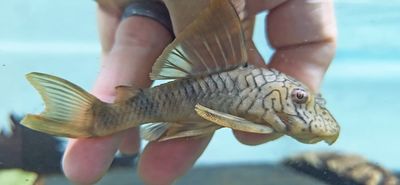
L076 Orange Seam Pleco - (Peckoltia sp.)
L076 Orange Seam Pleco - (Peckoltia sp.)
Price of shipping is not included.
5.0
(1)
was $80.00
Save 6%
$75.00
Captive Bred
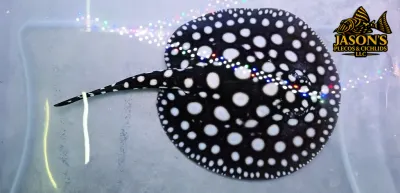
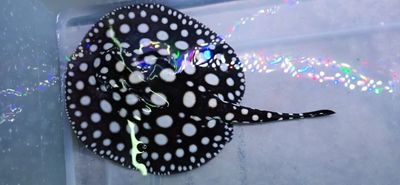
Black Diamond Stingray - (Potamotrygon leopoldi)
Black Diamond Stingray - (Potamotrygon leopoldi)
Price of shipping is not included.
was $800.00
Save 10%
$720.00
Captive Bred
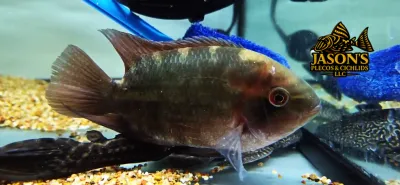
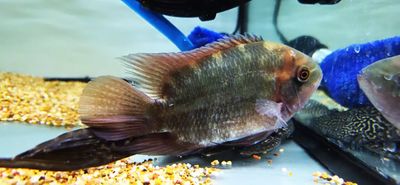
Chocolate Cichlid - (Hypselecara temporalis)
Chocolate Cichlid - (Hypselecara temporalis)
Price of shipping is not included.
5.0
(2)
was $65.00
Save 8%
$60.00
Captive Bred
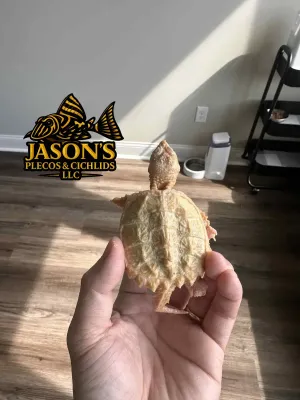
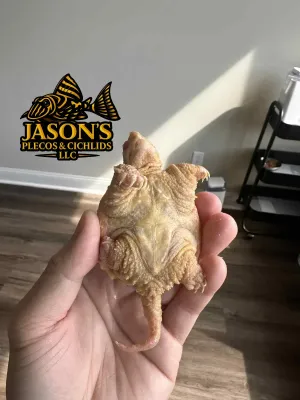
Albino Common Snapping Turtle - (Chelydra serpentina)
Albino Common Snapping Turtle - (Chelydra serpentina)
Price of shipping is not included.
$1 315.00
Powered by Lightspeed
Display prices in:USD