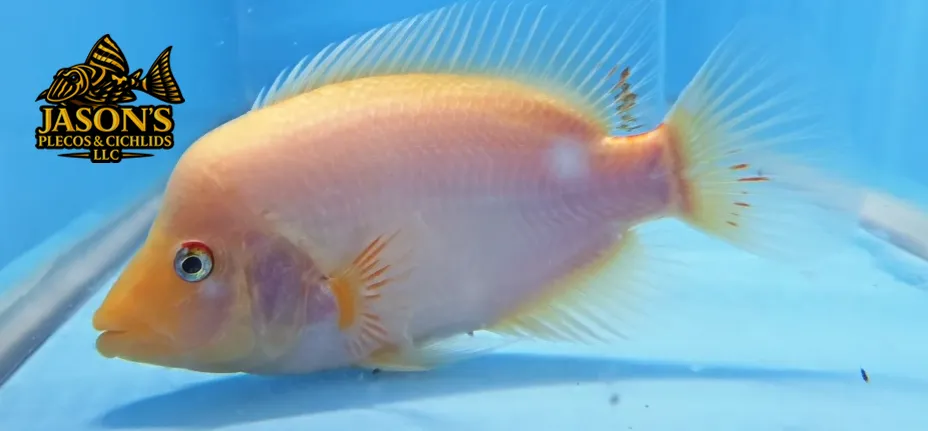
Red Devil Cichlid/Midas Cichlid/Midevil Cichlid - (Amphilophus Citrinellus)
5.0
3 reviews
Reviews from verified customers who have purchased products at this store.
$100.00
Captive Bred
Size
Required Reusable Shipping Bags
Questions, Comments, Concerns? Let us know!
Enter your text
Price of shipping is not included.
In stock: 1 available
1
Save this fish to my favorites.
Customer reviews
Reviews only from verified customers
Reviews are only accepted from verified customers who have signed in and purchased the products. This ensures that each review is based on genuine customer experiences. All reviews are checked before publication to prevent spam.
NORTH ARLINGTON,
United States
Sep 27, 2026
Spectacular selection, price and customer service.
Red Devil Cichlid/Midas Cichlid/Midevil Cichlid - (Amphilophus Citrinellus)
Fish Details, Description and Information Below:
🔥 Red Devil / Midas / Midevil Cichlid – (Amphilophus sp. Hybrid) – Captive-Bred Large Central American Cichlid
The Red Devil / Midas / Midevil Cichlid is a large, powerful, highly intelligent Central American-type cichlid known for its intense personality, brilliant orange-to-red coloration, strong territorial behavior, and impressive interaction with its keeper.
These fish may display:
- Bright orange
- Deep red-orange
- Yellow
- Cream
- White
- Peach
- Red-and-white
- Dark juvenile coloration that changes dramatically with age
Because the aquarium trade has extensively crossed Midas Cichlids (Amphilophus citrinellus) and Red Devil Cichlids (Amphilophus labiatus), fish sold under names such as:
- Red Devil
- Midas
- Midevil
- Red Devil / Midas
cannot always be reliably assigned to one pure species without documented breeder lineage.
For this product, the safest identification is:
Amphilophus sp. Hybrid
This listing is for a:
CAPTIVE-BRED RED DEVIL / MIDAS / MIDEVIL-TYPE CICHLID
🔎 Quick Facts – Red Devil / Midas / Midevil Cichlid
- 📛 Trade Names: Red Devil, Midas Cichlid, Midevil Cichlid
- 🔬 Product Identification: Amphilophus sp. Hybrid
- 🧬 Type: Captive-Bred Midas / Red Devil-Type Cichlid
- ⚠️ Lineage: Exact parentage should not be assumed unless documented by the breeder
- 🐟 Family: Cichlidae
- 🌿 Stock: Captive Bred
- 📏 Current Size: Approximately 7 inches
- 🌎 Ancestral Region: Central America
- 🇳🇮 Midas / Red Devil Ancestry: Primarily Nicaragua
- 🇨🇷 Midas Range Also Includes: Costa Rica
- 💧 Water Type: Freshwater
- 📏 Adult Planning Size: Approximately 10–14+ inches depending on lineage and sex
- 🏠 Minimum Adult Aquarium: Approximately 75 gallons for one fish
- 🏠 Preferred Single-Adult Aquarium: 90–125+ gallons
- 💕 Pair Aquarium: Approximately 125–180+ gallons with careful monitoring
- 🌡️ Temperature: Approximately 76–82°F
- 💧 pH: Approximately 6.5–8.0
- 💦 Hardness: Moderate preferred; adaptable when conditions are stable
- 💨 Oxygenation: Good
- 💩 Bioload: High
- 🍽️ Diet: Omnivore
- 🦐 Animal Foods: Important as part of a balanced diet
- 🌿 Plant / Spirulina Foods: Recommended
- 😠 Temperament: Highly Territorial / Aggressive
- 🐠 Best Housing: Often safest as a single centerpiece fish
- 🧠 Behavior: Highly interactive and intelligent
- 🪨 Décor: Heavy and securely positioned
- 🌱 Plants: Usually not recommended
- 🥚 Breeding: Substrate Spawner
- 👨👩👧 Parental Care: Biparental
- ⚠️ Hybrid Fertility: May be fertile
- ⭐ Care Level: Intermediate to Advanced
- 📦 Shipping: Special reusable / heavy-duty shipping bag required for current large specimen
🚨 Important Taxonomy Correction
The names:
MIDAS CICHLID
and:
RED DEVIL CICHLID
do not scientifically refer to the same species.
The true:
Midas Cichlid
is:
Amphilophus citrinellus
The true:
Red Devil Cichlid
is:
Amphilophus labiatus
They are closely related but:
THEY ARE DIFFERENT SPECIES
🟠 Midas Cichlid – Amphilophus citrinellus
The scientifically recognized Midas Cichlid is:
Amphilophus citrinellus
Its native range includes portions of:
- Nicaragua
- Costa Rica
including the San Juan drainage and lakes such as:
- Lake Nicaragua
- Lake Managua
- Lake Masaya
- Lake Apoyo
🔴 Red Devil Cichlid – Amphilophus labiatus
The scientifically recognized Red Devil is:
Amphilophus labiatus
Its native range is more restricted and is primarily associated with:
- Lake Nicaragua
- Lake Managua
in:
NICARAGUA
⚠️ Do Not Label Both Species Amphilophus citrinellus
A product described as:
Red Devil / Midas / Midevil – (Amphilophus citrinellus)
creates a taxonomy problem because:
- Midas = A. citrinellus
- Red Devil = A. labiatus
- Midevil = aquarium hybrid / mixed-line terminology
Therefore, unless the breeder has confirmed a pure species, the safer product identification is:
Amphilophus sp. Hybrid
🧬 What Is a Midevil Cichlid?
“Midevil” is an aquarium-trade term commonly used for fish associated with:
MIDAS × RED DEVIL
breeding.
The name combines:
MIdas
with:
DEVIL
to create:
MIDEVIL
However:
MIDEVIL IS NOT A SCIENTIFIC SPECIES
⚠️ Exact Parentage Should Not Be Invented
Not every fish sold as:
- Midevil
- Red Devil / Midas
- Red Devil
- Midas
comes with a documented pedigree.
Commercial aquarium strains have been crossed for many generations.
Unless breeder records confirm the parents:
DO NOT GUARANTEE AN EXACT RED DEVIL × MIDAS CROSS
The safest description is:
MIDAS / RED DEVIL-TYPE AMPHILOPHUS HYBRID
🧬 Why Accurate Identification Matters
Pure:
Amphilophus citrinellus
and:
Amphilophus labiatus
are legitimate natural species.
Hybrid fish are also excellent aquarium animals, but they should:
BE SOLD HONESTLY AS HYBRIDS
when their lineage is mixed or uncertain.
This protects:
- Pure species lines
- Breeder records
- Aquarium genetics
- Future buyers
🎨 Appearance
Captive Midas / Red Devil-type fish can develop spectacular coloration.
Common colors include:
- Orange
- Red-orange
- Yellow
- Gold
- Peach
- Cream
- White
- Red-and-white
Some specimens retain darker:
- Gray
- Brown
- Black
- Barred
coloration.
🔄 Color Can Change Dramatically With Age
One of the most fascinating characteristics of this group is:
COLOR MORPHING / FADING
Young fish may begin life:
- Gray
- Brown
- Black
- Barred
- Mottled
and later transform into:
- Orange
- Yellow
- Red
- Cream
- White
⚠️ Not Every Fish Will Fade
Do not assume every dark juvenile will eventually become:
BRIGHT ORANGE OR RED
Color development depends on:
- Genetics
- Parentage
- Age
- Diet
- Sex
- Hormonal development
- Environment
🟠 Wild Midas Fish Are Often Not Orange
One common misconception is that all wild Midas Cichlids are bright orange.
In fact, most wild Amphilophus citrinellus retain:
- Gray
- Brown
- Dark
- Cryptic
coloration.
Only a portion of wild Midas individuals develop the bright:
XANTHIC / GOLDEN-ORANGE MORPH
so familiar in aquariums.
🧠 Highly Intelligent Cichlid
One of the greatest attractions of these fish is their:
PERSONALITY
Many individuals learn to:
- Recognize their keeper
- Follow people around the aquarium
- Anticipate feeding
- Approach the glass
- Defend their territory from unfamiliar people
- Interact with aquarium objects
This is why they are frequently described as:
WET PETS
⚠️ Individual Personality Varies
Some fish become:
- Extremely interactive
- Bold
- Curious
while others may be:
- More defensive
- More aggressive
- More secretive
Each fish has an individual temperament.
😠 Aggression – Very Important
Midas, Red Devil, and Midevil-type cichlids are known for:
EXTREME TERRITORIALITY
A mature specimen may aggressively defend:
- The entire aquarium
- Caves
- Rocks
- Feeding areas
- Breeding territory
🚨 Often Safest Kept Alone
For many adult specimens:
SINGLE-FISH HOUSING IS THE SAFEST OPTION
A single large fish can make an outstanding centerpiece animal without the compatibility problems created by tankmates.
🐠 Tankmates Are Not Guaranteed
Some individuals tolerate appropriately sized:
- Large cichlids
- Large catfish
- Robust schooling fish
while another individual may:
ATTACK EVERYTHING PLACED IN THE AQUARIUM
There is no universally safe tankmate list.
⚠️ “Equally Aggressive” Does Not Mean Compatible
Placing two aggressive fish together does not automatically solve aggression.
It can instead result in:
- Severe fighting
- Jaw injuries
- Missing scales
- Torn fins
- Eye injuries
- Death
Tankmates require:
VERY LARGE AQUARIUMS + CAREFUL OBSERVATION + BACKUP HOUSING
📏 Adult Size
The pure Midas Cichlid Amphilophus citrinellus has scientifically documented individuals approaching approximately:
24.4 CM STANDARD LENGTH
Standard length excludes the full tail fin.
The true Red Devil A. labiatus has scientifically documented total lengths of approximately:
28.3 CM / 11.1 INCHES
📏 Hybrid Adult Size
Because this product represents captive-bred:
MIDAS / RED DEVIL-TYPE FISH
rather than a genetically documented pure population, exact adult size cannot be predicted as precisely.
For responsible aquarium planning:
EXPECT APPROXIMATELY 10–14+ INCHES
depending on:
- Sex
- Genetics
- Parentage
- Nutrition
- Aquarium conditions
Large males may develop especially:
- Thick bodies
- Large heads
- Long fins
- Prominent nuchal humps
⚠️ Do Not Promise 16 Inches
The previous page gives approximately:
13–16 INCHES
I would not present 16 inches as the normal expected adult size.
A safer customer planning range is:
10–14+ INCHES
while recognizing that exceptional aquarium hybrids can vary.
🏠 Aquarium Size
For one mature fish:
75 GALLONS SHOULD BE CONSIDERED THE MINIMUM
However:
90–125+ GALLONS IS PREFERRED
especially for a large male.
📐 Footprint Matters
These fish are:
- Large
- Deep-bodied
- Powerful
- Highly territorial
so aquarium:
LENGTH + WIDTH
matter more than excessive height.
A long aquarium provides more useful swimming and territorial space.
💕 Pair Aquarium
A compatible breeding pair should generally receive approximately:
125–180+ GALLONS
or larger.
Even bonded pairs can suddenly become aggressive toward one another.
🚨 Always Have a Separation Plan
When keeping a pair, be prepared to use:
- Heavy-duty divider
- Separate aquarium
- Egg-crate partition
- Emergency holding tank
if one fish begins attacking the other.
🪨 Aquarium Setup
A suitable aquarium can include:
- Heavy rocks
- Large caves
- Large ceramic structures
- Heavy driftwood
- Sand
- Fine rounded gravel
- Open swimming space
⚠️ Secure Everything
These fish are powerful:
AQUARIUM REDECORATORS
They may:
- Dig
- Move substrate
- Push rocks
- Move wood
- Tip decorations
- Uproot plants
Heavy décor should be securely positioned.
🪨 Do Not Balance Heavy Rocks on Loose Substrate
A digging cichlid can remove substrate from beneath unstable rocks.
This can cause:
- Rock collapse
- Aquarium damage
- Fish injury
Place major rock structures securely.
🌿 Live Plants
Most delicate planted aquariums are:
NOT A GOOD MATCH
for large Amphilophus.
These fish may:
- Uproot plants
- Tear leaves
- Dig around roots
- Move decorations
Hardy plants protected within heavy containers may sometimes work, but success varies.
🔒 Secure Aquarium Lid
Large Amphilophus can:
- Jump
- Splash
- Strike the surface
- Hit aquarium lids when startled
Use:
A STRONG, SECURE LID
🌡️ Temperature
For captive Midas / Red Devil-type fish, a practical maintenance range is:
76–82°F
The pure species occur naturally across somewhat broader and warmer conditions.
Stable temperature is more important than continuously chasing one exact number.
💧 Water Parameters
A practical captive range is:
- 🌡️ Temperature: Approximately 76–82°F
- 💧 pH: Approximately 6.5–8.0
- 💦 Hardness: Moderate
- 💨 Oxygenation: Good
- ☠️ Ammonia: 0 ppm
- ☠️ Nitrite: 0 ppm
- 🔄 Nitrate: Keep as low as reasonably practical
💩 High Bioload
A large Midevil-type cichlid:
- Eats heavily
- Produces substantial waste
- Digs substrate
- Disturbs debris
Strong filtration is essential.
💩 Filtration
Recommended filtration may include:
- Large canister filters
- Sump filtration
- Strong biological filtration
- Strong mechanical filtration
- Prefilters
Maintain:
AMMONIA = 0
and:
NITRITE = 0
🔄 Water Changes
Regular partial water changes are important.
The exact frequency depends on:
- Aquarium volume
- Fish size
- Feeding
- Filtration
- Stocking
- Nitrate production
Large adults frequently benefit from:
SUBSTANTIAL REGULAR WATER CHANGES
🍽️ Diet – Omnivore
Midas Cichlids naturally consume a broad range of foods including:
- Aufwuchs
- Snails
- Insect larvae
- Worms
- Small aquatic animals
- Some fish
- Plant-associated foods
A captive hybrid should therefore receive:
A BALANCED OMNIVOROUS DIET
🥣 Staple Diet
A high-quality:
LARGE CICHLID PELLET
should form the foundation of the diet.
Choose foods appropriate to the fish's size.
🦐 Supplemental Protein
Suitable foods include:
- Krill
- Mysis shrimp
- Shrimp
- Insect larvae
- Earthworms
- Quality frozen foods
- Insect-based pellets
🌿 Plant Component
Include some:
- Spirulina-containing foods
- Vegetable-containing pellets
- Peas
- Appropriate leafy greens
- Zucchini
for dietary variety.
⚠️ Avoid an All-Meat Diet
Do not maintain these fish entirely on:
- Shrimp
- Beef heart
- Feeder fish
- High-fat meat
A varied diet is healthier.
🚫 Avoid Mammal & Poultry Meat as Staples
Foods such as:
- Beef
- Chicken
- Pork
should not form a routine staple diet for a freshwater cichlid.
Use properly formulated aquatic foods instead.
🚫 Feeder Fish Are Unnecessary
There is no nutritional need to use live feeder fish.
Feeders can introduce:
- Parasites
- Bacteria
- Disease
- Nutritional deficiencies
High-quality pellets and appropriate frozen foods are safer.
🍊 Color-Enhancing Nutrition
Natural color can be supported with foods containing:
- Krill
- Astaxanthin
- Spirulina
- Quality carotenoid sources
However:
NO FOOD CAN GUARANTEE A COLOR MORPH THAT THE FISH DOES NOT GENETICALLY POSSESS
🚫 Do Not Use Hormones to Promise Color
Color should develop naturally through:
- Genetics
- Age
- Nutrition
- Good husbandry
Do not promise that every fish will become:
- Red
- Orange
- White
- Yellow
🧠 Enrichment
Large intelligent cichlids benefit from environmental enrichment.
This can include:
- Rearranging safe décor occasionally
- Target feeding
- Different appropriate foods
- Large movable aquarium-safe objects
- Visual interaction with the keeper
⚠️ Avoid Small Objects They Can Swallow
Any enrichment object should be:
- Aquarium safe
- Too large to swallow
- Free of sharp edges
- Free of toxic coatings
♂️ Male vs. Female
Sexing becomes easier as fish mature.
Mature Males May Develop:
- Larger body size
- Longer dorsal and anal fins
- Larger nuchal hump
- More massive head
- More territorial behavior
Mature Females May:
- Remain somewhat smaller
- Have shorter fins
- Show a smaller or absent nuchal hump
However:
APPEARANCE ALONE IS NOT ALWAYS RELIABLE
🧠 Nuchal Hump / Kok
Mature males may develop a prominent:
NUCHAL HUMP
sometimes called a:
KOK
The size varies considerably according to:
- Genetics
- Sex
- Hormones
- Breeding condition
- Age
⚠️ Do Not Guarantee a Huge Hump
Not every male develops an enormous nuchal hump.
Do not promise:
GIANT KOK DEVELOPMENT
based on juvenile appearance.
🥚 Breeding
Midas and Red Devil-type cichlids are:
SUBSTRATE SPAWNERS
and captive hybrids may also reproduce successfully.
🪨 Spawning Site
A pair may select:
- Flat rock
- Large ceramic surface
- Cave wall
- Flowerpot
- Aquarium bottom
- Other hard surface
and clean it before spawning.
🥚 Egg Production
Pure Midas Cichlids have been documented producing:
HUNDREDS OF EGGS
and large mature aquarium pairs may produce substantial clutches.
Hybrid clutch size can vary greatly.
👨👩👧 Biparental Care
Both parents may participate in:
- Guarding eggs
- Fanning eggs
- Defending territory
- Moving larvae
- Protecting fry
Parental behavior can be extremely aggressive.
🚨 Breeding Aggression
A breeding pair may become:
EXTRAORDINARILY AGGRESSIVE
toward:
- Other fish
- Aquarium equipment
- Hands
- Each other
Use caution during aquarium maintenance.
⚠️ Pair Aggression Can Turn Suddenly
Even a previously compatible pair may experience:
SUDDEN SERIOUS AGGRESSION
after:
- Failed spawning
- Fry removal
- Hormonal changes
- Territory disruption
Always have a divider or alternate aquarium available.
🧬 Hybrid Fertility
Midas / Red Devil-type hybrids may be:
FERTILE
and can produce additional generations.
🚨 Hybrid Offspring Must Be Labeled Correctly
Offspring produced from this product should be sold as:
AMPHILOPHUS HYBRIDS
unless their complete documented parentage supports a more specific identification.
Do not sell hybrid offspring as:
- Pure A. citrinellus
- Pure A. labiatus
- Pure locality Midas
- Pure locality Red Devil
🧬 Protect Pure Species Lines
Pure:
Amphilophus citrinellus
and:
Amphilophus labiatus
should be maintained separately from mixed aquarium lines when the goal is conservation of pure genetics.
🌎 Conservation Status
Because this product is being identified as:
AMPHILOPHUS SP. HYBRID
it does not have an IUCN species-level conservation category.
For reference:
Pure Midas Cichlid – Amphilophus citrinellus
is currently assessed as:
LEAST CONCERN
Pure Red Devil – Amphilophus labiatus
currently does not have the same species-level assessment status used for the Midas.
These statuses should:
NOT BE ASSIGNED TO THE HYBRID PRODUCT
🌎 Never Release Aquarium Cichlids
Large Amphilophus can survive and establish populations outside their native range in suitable climates.
Never release an unwanted fish into:
- Rivers
- Lakes
- Ponds
- Canals
- Streams
- Springs
- Storm drains
🚨 Aquarium Release Can Create Invasive Populations
Non-native cichlids may:
- Compete with native fish
- Consume native organisms
- Defend breeding territories
- Alter aquatic communities
If you can no longer keep the fish:
- Rehome it
- Contact an aquarium store
- Contact an experienced large-cichlid keeper
- Contact an aquatic rescue
NEVER RELEASE AQUARIUM FISH INTO THE WILD.
⭐ Why Keep a Red Devil / Midas / Midevil Cichlid?
These fish combine:
- 🔥 Brilliant orange, red, yellow, cream, or white coloration
- 🧠 Exceptional intelligence
- 👀 Strong interaction with their keeper
- 💪 Large, powerful body
- 😠 Fearless personality
- 🪨 Fascinating digging and territory-building behavior
- 🥚 Impressive breeding behavior
- 👨👩👧 Strong parental care
- 🐟 Large centerpiece-fish presence
into one of the most interactive large cichlid experiences available in the aquarium hobby.
⚠️ Important Considerations
Before purchasing:
- Midas and Red Devil are not the same scientific species.
- Midas Cichlid = Amphilophus citrinellus.
- Red Devil Cichlid = Amphilophus labiatus.
- Midevil is an aquarium hybrid / mixed-line trade term.
- Do not list both pure Red Devil and pure Midas as A. citrinellus.
- This product is best identified as Amphilophus sp. Hybrid unless breeder lineage proves otherwise.
- This listing is for captive-bred fish.
- The current specimen is approximately 7 inches.
- Adult size depends on lineage.
- Plan for approximately 10–14+ inches.
- A 75-gallon aquarium should be considered the minimum for one adult.
- 90–125+ gallons is preferred.
- Pairs require much larger housing and careful monitoring.
- These fish can be extremely aggressive.
- Single-fish housing is often safest.
- No tankmate is guaranteed safe.
- Provide heavy, secured décor.
- Expect digging and aquarium rearranging.
- Maintain approximately 76–82°F.
- Maintain pH approximately 6.5–8.0.
- Use powerful filtration.
- Maintain ammonia and nitrite at zero.
- Feed a balanced omnivorous cichlid diet.
- Use quality pellets as the dietary foundation.
- Supplement with appropriate aquatic and insect protein.
- Include some plant-based foods.
- Avoid feeder fish.
- Do not rely heavily on mammal or poultry meat.
- Color may change dramatically with age.
- Do not guarantee orange or red coloration.
- Do not guarantee a huge nuchal hump.
- These fish are substrate spawners.
- Parents can become extremely aggressive when breeding.
- Hybrid fish may be fertile.
- Hybrid offspring must remain identified as hybrids.
- Protect pure A. citrinellus and A. labiatus breeding lines.
- Never release aquarium fish into natural waterways.
🧬 Taxonomy & Identification
There are three different labels involved in this aquarium product.
Midas Cichlid
Amphilophus citrinellus (Günther, 1864)
Red Devil Cichlid
Amphilophus labiatus (Günther, 1864)
Midevil / Mixed Red Devil-Midas Type
Amphilophus sp. Hybrid
Because this product combines the Red Devil, Midas, and Midevil trade names without a documented pure-species pedigree, the safest product identification is:
Red Devil / Midas / Midevil Cichlid – (Amphilophus sp. Hybrid)
🧬 Hybrid Identification Disclaimer
“Midevil” is an aquarium-trade designation rather than a recognized species.
Unless breeder records establish the exact parents:
DO NOT INVENT A PRECISE HYBRID FORMULA
Maintain the fish as:
Amphilophus sp. Hybrid
and label any offspring accordingly.
🚚 Live Fish Shipping
Live fish are professionally packed for safe transport.
Shipping availability depends on:
- Fish size
- Destination
- Weather conditions
- Carrier availability
- Applicable state and local regulations
The current large specimen requires:
A SPECIAL REUSABLE / HEAVY-DUTY SHIPPING BAG
Larger specimens may also require:
- Larger insulated shipping boxes
- Additional water
- Multiple protective bag layers
- Specialized packing
- Airline cargo shipping depending on fish size and destination
Please review our Shipping & Payment Information and Live Arrival Guarantee / DOA Policy before ordering.
⚠️ Buyer Responsibility
Customers are responsible for confirming that this Amphilophus hybrid may legally be purchased, possessed, transported, and received in their state or local jurisdiction before ordering.
Never release aquarium fish into natural waterways.
Below are fish you may also like.
Captive Bred
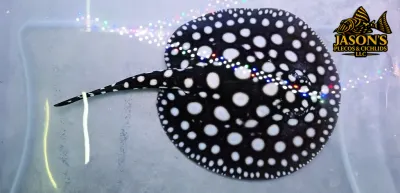
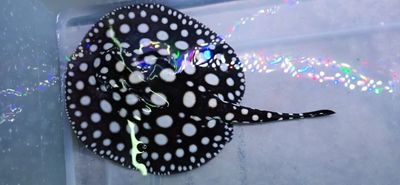
Black Diamond Stingray - (Potamotrygon leopoldi)
Black Diamond Stingray - (Potamotrygon leopoldi)
Price of shipping is not included.
was $800.00
Save 10%
$720.00
Captive Bred
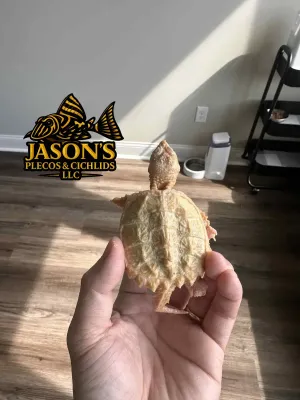
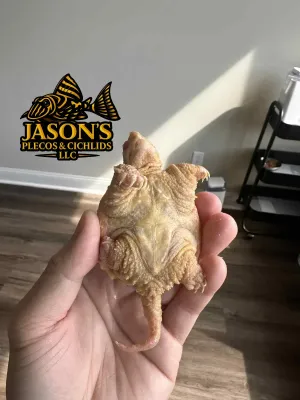
Albino Common Snapping Turtle - (Chelydra serpentina)
Albino Common Snapping Turtle - (Chelydra serpentina)
Price of shipping is not included.
$1 315.00
Wild Caught
Marbled Talking Catfish - (Amblydoras nauticus)
Marbled Talking Catfish - (Amblydoras nauticus)
Price of shipping is not included.
was $50.00
Save 10%
$45.00
Wild Caught
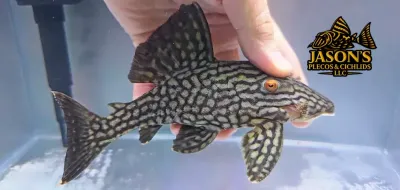
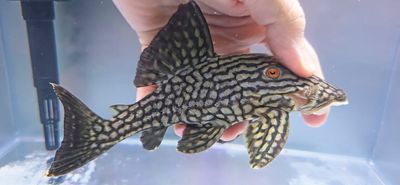
L330 Watermelon Pleco - (Panaque nigrolineatus laurafabianae)
L330 Watermelon Pleco - (Panaque nigrolineatus laurafabianae)
Price of shipping is not included.
was $250.00
Save 20%
$200.00
Wild Caught
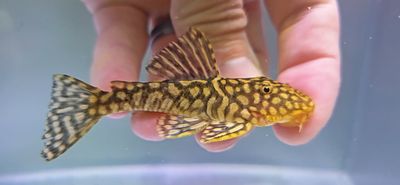
Slate Pleco - (Pseudancistrus genisetiger)
Slate Pleco - (Pseudancistrus genisetiger)
Price of shipping is not included.
5.0
(1)
was $80.00
Save 6%
$75.00
Powered by Lightspeed
Display prices in:USD