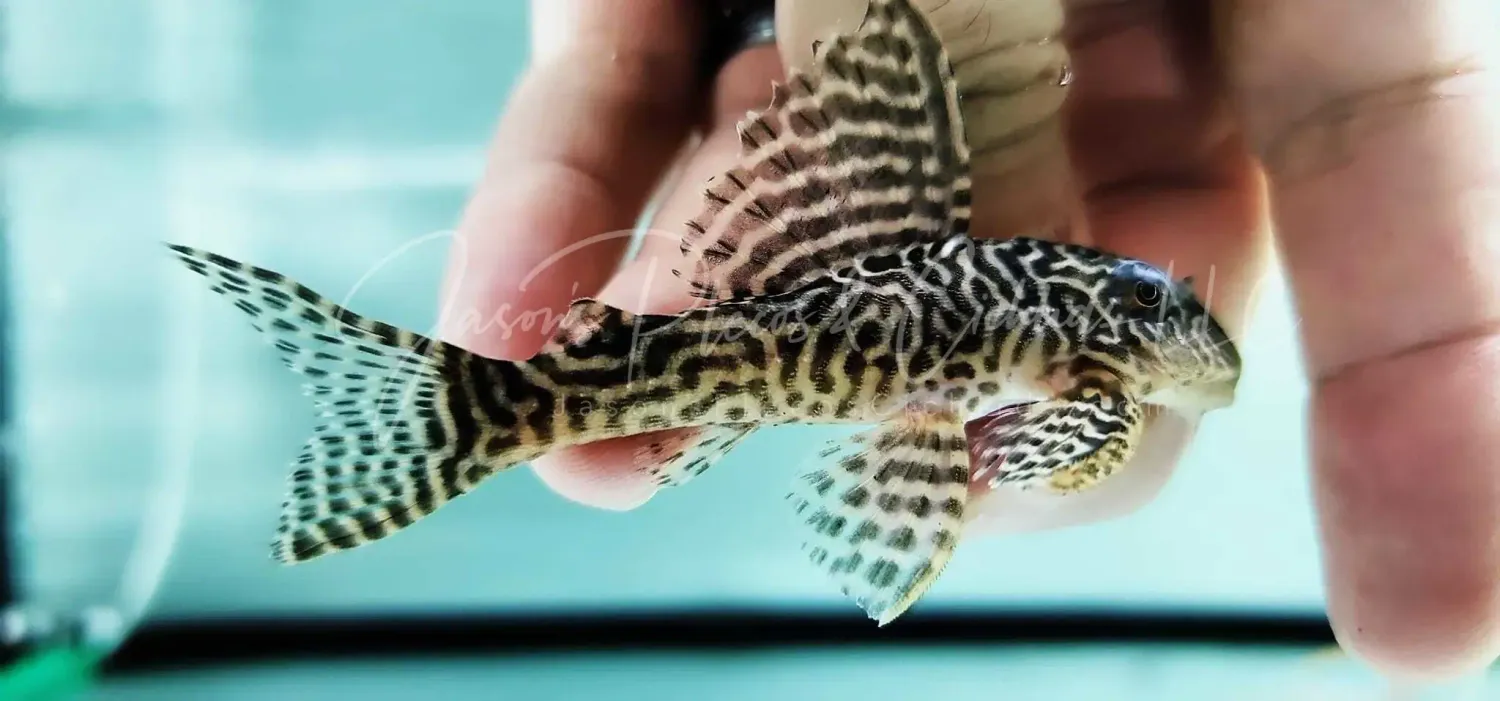
L066 King Tiger Pleco - (Hypancistrus Seideli)
$70.00
Wild Caught
was $75.00 Save 7%
Size
Price of shipping is not included.
In stock: 5 available
1
Save this fish to my favorites.
Customer reviews
Reviews only from verified customers
No reviews yet. You can buy this product and be the first to leave a review.
L066 King Tiger Pleco - (Hypancistrus Seideli)
Fish Details, Description and Information Below:
🐯 L066 King Tiger Pleco – (Hypancistrus seideli) – Wild-Caught Rio Xingu Pleco
The L066 King Tiger Pleco (Hypancistrus seideli), also known as the Xingu King Tiger Pleco, Network Pleco, or Scribbled Pleco, is a beautifully patterned pleco from Brazil's famous Rio Xingu.
Its striking appearance consists of alternating:
- Black to dark brown markings
- White to cream-colored lines
- Pale yellowish lines
- Maze-like bands
- Worm-like or vermiculated markings
covering the:
- Head
- Body
- Dorsal fin
- Pectoral fins
- Pelvic fins
- Caudal fin
No two King Tiger Plecos develop exactly the same pattern.
Some individuals display relatively clean tiger-like bands, while others develop increasingly complicated:
- Scribbles
- Waves
- Networks
- Broken lines
- Maze-like markings
as they mature.
For decades, L066 was sold in the aquarium hobby as an undescribed:
Hypancistrus sp. L066
That changed in 2025, when scientists formally described the highly variable Xingu King Tiger complex as:
Hypancistrus seideli
The new species includes several familiar aquarium L-numbers, including:
- L066
- L236
- L287
- L333
- L399
- L400
These are now scientifically recognized as different phenotypes or aquarium-trade forms within the same highly variable species.
The L066 form is particularly associated with a:
More Slender Body and Longer Caudal-Fin Lobes
than some of the stockier forms such as L333.
This listing is for:
WILD-CAUGHT L066 KING TIGER PLECOS
🔎 Quick Facts – L066 King Tiger Pleco
- 📛 Common Name: King Tiger Pleco
- 📛 Other Names: Xingu King Tiger Pleco, Network Pleco, Scribbled Pleco
- 🔢 L-Number: L066 / L66
- 🔬 Scientific Name: Hypancistrus seideli
- 📅 Formally Described: 2025
- 🐟 Family: Loricariidae
- 🧬 Subfamily: Hypostominae
- 🌿 Stock: Wild Caught
- 🇧🇷 Country: Brazil
- 🌊 Native Range: Rio Xingu, Pará
- 📍 Species Distribution: Lower Rio Xingu from the downstream portion of Volta Grande do Xingu to the Amazon River confluence
- 💧 Water Type: Freshwater
- 📏 Scientific Maximum: Approximately 150 mm / 5.9 inches total length in the 2025 description
- 📏 Adult Planning Size: Approximately 5–6 inches
- 🏠 Recommended Aquarium: 40 gallons or larger
- 👥 Group Aquarium: 55+ gallons preferred with numerous caves and territories
- 🌡️ Temperature: Approximately 79–86°F
- 💧 pH: Approximately 6.0–7.5
- 💦 Water: Soft to moderately mineralized
- 💨 Oxygenation: High
- 🌊 Water Movement: Moderate to Strong
- 🍽️ Diet: Protein-Leaning Omnivore
- 🚫 Algae Cleaner: No
- 😌 Temperament: Generally peaceful toward other fish; territorial around caves
- 🌙 Activity: Primarily nocturnal / crepuscular
- 🐠 Swimming Area: Bottom
- 🥚 Breeding: Cave Spawner
- 👨👩👧 Parental Care: Male guards eggs and fry
- ⭐ Care Level: Intermediate
- 🧬 Related Trade Forms: L236, L287, L333, L399, L400
- 🏆 Type: Rio Xingu King Tiger Pleco
🧬 Major 2025 Taxonomy Update
This is one of the most important updates for the L066 product page.
For many years, this fish was identified as:
Hypancistrus sp. L066
because it did not have a formally described scientific species name.
In 2025, a major scientific study of Rio Xingu Hypancistrus formally described the King Tiger complex as:
Hypancistrus seideli
Therefore, the correct modern identification is:
L066 King Tiger Pleco – (Hypancistrus seideli)
🔢 L066, L236, L287, L333, L399 & L400
The 2025 scientific description demonstrated that several familiar aquarium L-numbers belong to the same highly variable species.
These include:
L066
King Tiger Pleco
L236
Cracked Zebra / Super White-type forms
L287
Xingu Hypancistrus form
L333
King Tiger / Yellow King Tiger / Maze Zebra forms
L399
Elegant Zebra-type form
L400
Decorated King Tiger / Belo Monte-type form
All are currently included within:
Hypancistrus seideli
⚠️ Same Species Does Not Mean Identical Fish
This taxonomic change does not mean that every L066, L236, L333, L399, or L400 looks the same.
Quite the opposite.
One of the defining characteristics of Hypancistrus seideli is its:
Extraordinary Pattern Variation
Different populations and individuals can differ dramatically in:
- Body shape
- Stripe width
- Line thickness
- White coloration
- Yellow coloration
- Pattern complexity
- Fin shape
- Tail shape
The aquarium L-numbers remain extremely useful for describing these recognizable phenotypes.
🐯 What Makes L066 Different?
The scientific description specifically notes that L066-type fish tend to have:
A More Slender Body
with:
Longer Caudal-Fin Lobes
compared with stockier forms such as L333.
L066 also often displays:
- Strong black-and-white contrast
- Long flowing tail extensions
- More organized banding in the fins
- Network-like body markings
However, individual variation is substantial.
⚠️ Preserve the L066 Line
Even though L066 and L333 are now scientifically the same species, I recommend continuing to keep their breeding lines separate.
Why?
Because breeding an:
L066 × L333
does not create an interspecies hybrid scientifically—they are both Hypancistrus seideli.
However, it does mix two established aquarium phenotype lines.
The offspring should therefore not later be represented as pure:
- L066
- L333
- L236
- L399
- L400
unless the parent lineage actually supports that identification.
For serious pleco breeding:
Preserve L-Number Lineage Whenever Possible.
🎨 Appearance
The L066 has one of the most attractive patterns within the genus Hypancistrus.
Typical base coloration ranges from:
- White
- Cream
- Pale beige
- Yellowish cream
with:
- Dark brown
- Charcoal
- Black
markings.
The pattern can include:
- Tiger-like bands
- Wavy lines
- Scribbles
- Vermiculations
- Maze-like networks
🔄 Pattern Changes With Age
Young L066 may look noticeably different from mature adults.
Juveniles frequently show:
- Broader markings
- Cleaner banding
- Simpler patterns
As they grow, the markings may become:
- Narrower
- More irregular
- More wavy
- More interconnected
- More maze-like
The 2025 scientific description documented tremendous variation throughout the species.
⚪ White, Cream & Yellow Variations
The pale areas of Hypancistrus seideli are not always pure white.
They may appear:
- Bright white
- Cream
- Ivory
- Yellowish
- Slightly pinkish
depending on:
- Genetics
- Locality
- Age
- Lighting
- Aquarium background
- Stress
- Water conditions
Color intensity can also change temporarily during shipping and acclimation.
⚠️ Pattern Disclaimer
No exact adult pattern can be guaranteed.
Customers should expect variation in:
- Stripe width
- Stripe placement
- Amount of black
- Amount of white
- Amount of cream or yellow
- Tail pattern
- Head markings
The actual fish being purchased is always the best representation of its current appearance.
🌎 Native Distribution
Hypancistrus seideli is native to:
Brazil's Rio Xingu
in:
Pará State
Its scientifically documented distribution extends through the:
Lower Rio Xingu
from the extreme downstream portion of:
Volta Grande do Xingu
to the Xingu's:
Confluence With the Rio Amazonas
🌊 A Much Broader Habitat Than Previously Thought
Older aquarium descriptions often portrayed L066 as exclusively a:
Strong-Rapids Pleco
The 2025 scientific description shows a much broader picture.
Hypancistrus seideli has the:
Broadest Habitat Range Known Within the Genus
and has been documented at depths ranging from:
Less Than 1 Meter to Approximately 40 Meters
🪨 Natural Habitat
Wild H. seideli inhabit:
- Granitic boulders
- Sandstone formations
- Rocky crevices
- Spaces between boulders
- Submerged rock structures
Depending on locality, they occur in:
🌊 Strong Current
particularly near portions of the Volta Grande.
But they also occur in:
🌊 Slow-Moving Water
including the lower Xingu ria near the river mouth.
⚠️ Strong Current Is Not Required Everywhere
This is an important modern correction.
L066 certainly tolerates and often thrives in moving water.
However:
The entire aquarium does not need extreme current.
The species naturally occupies habitats ranging from:
- Strong flow
- Moderate flow
- Slow flow
What remains particularly important is:
Clean, Warm, Oxygen-Rich Water
🪨 Aquarium Setup
An ideal L066 aquarium should include:
- Smooth rocks
- Slate
- Rock piles
- Ceramic pleco caves
- Narrow crevices
- Driftwood
- Sand or smooth gravel
- Shaded areas
- Strong filtration
- Good circulation
- High dissolved oxygen
Provide:
MORE CAVES THAN PLECOS
when maintaining a group.
🏠 Caves Are Extremely Important
King Tiger Plecos spend much of the day inside protected shelters.
Caves provide:
- Security
- Territory
- Daytime shelter
- Breeding sites
- Protection from dominant fish
Suitable shelters include:
- Ceramic pleco caves
- Slate caves
- Rock crevices
- One-ended pleco tubes
- Driftwood cavities
📏 Adult Size
The 2025 scientific description examined Hypancistrus seideli specimens up to:
150.2 mm Total Length
which equals approximately:
5.9 Inches
The largest measured standard length was approximately:
116.5 mm / 4.6 Inches
before the tail fin.
For customer planning:
Approximately 5–6 Inches Adult Size
is appropriate.
🏠 Aquarium Size
For one L066:
40 Gallons or Larger
provides good long-term space and water stability.
For a group:
55 Gallons or Larger
is preferred.
Larger aquariums become increasingly useful when keeping:
- Multiple males
- Multiple plecos
- Other bottom dwellers
because the primary limiting factor is often:
Bottom Territory
rather than fish length alone.
📐 Aquarium Footprint Matters
A long, wide aquarium provides more useful habitat than an excessively tall aquarium.
Prioritize:
- Bottom area
- Caves
- Visual barriers
- Feeding areas
- Rockwork
particularly when keeping breeding groups.
💨 HIGH OXYGENATION
L066 originates from warm tropical water.
Warm water naturally holds less oxygen.
Therefore:
HIGH DISSOLVED OXYGEN IS IMPORTANT
Recommended methods include:
- Strong surface movement
- Air stones
- Powerheads
- Efficient filter returns
- Canister filtration
- Sump filtration
🌊 Water Movement
Provide:
Moderate to Strong Water Movement
with sheltered areas behind:
- Rocks
- Driftwood
- Caves
The goal is to create:
Good Circulation Without Eliminating Resting Areas
💧 Water Parameters
A practical aquarium range is:
- 🌡️ Temperature: 79–86°F
- 💧 pH: Approximately 6.0–7.5
- 💦 Hardness: Soft to moderately mineralized
- 💨 Oxygenation: High
- 🌊 Flow: Moderate to Strong
- ☠️ Ammonia: 0 ppm
- ☠️ Nitrite: 0 ppm
- 🔄 Nitrate: Keep as low as reasonably practical
Stable water conditions are especially important for newly imported wild fish.
🌡️ Temperature
A good general maintenance range is:
79–86°F / 26–30°C
Many breeders maintain King Tigers around:
82–86°F
particularly when conditioning adults.
Remember:
Higher Temperature = Greater Oxygen Demand
Increase aeration and circulation accordingly.
💩 Filtration
Good mechanical and biological filtration is important.
Suitable filtration may include:
- Canister filters
- Sump filtration
- Sponge filtration
- High-capacity biological media
- Powerheads
- Additional aeration
Regular partial water changes should be part of normal husbandry.
🍽️ Diet – Protein-Leaning Omnivore
The L066 King Tiger is best maintained as a:
PROTEIN-LEANING OMNIVORE
Unlike many common plecos:
L066 IS NOT AN ALGAE-CLEANING PLECO.
Although it may nibble at:
- Biofilm
- Soft organic growth
- Some vegetable foods
animal and insect-based nutrition should form an important part of the diet.
🦐 Recommended Protein Foods
Suitable foods include:
- Mysis shrimp
- Brine shrimp
- Bloodworms
- Mosquito larvae
- Krill
- Chopped shrimp
- Mussel
- Insect-based sinking pellets
- Quality carnivore pellets
- High-quality omnivore foods
Offer foods small enough for the fish to consume easily.
🌿 Plant-Based Foods
Some plant-based foods can still be included for variety.
Suitable options may include:
- Spirulina-containing foods
- Quality pleco wafers
- Vegetable-containing pellets
- Occasional zucchini
- Other appropriate vegetable foods
Juveniles may accept vegetable foods more readily than mature adults.
🚫 Do Not Feed Only Algae Wafers
An L066 should not be maintained on:
ALGAE WAFERS ALONE
and it should not be expected to survive by scraping algae from:
- Glass
- Rocks
- Driftwood
A proper diet must be deliberately provided.
🚫 Not an Aquarium Cleaner
Do not purchase a King Tiger Pleco simply to control algae.
This species should be purchased because you want to:
Keep the Fish
not because you expect it to clean the aquarium.
🪵 Driftwood
Driftwood is useful because it provides:
- Shelter
- Shade
- Biofilm
- Territory
- Natural-looking structure
However:
L066 Is Not a Specialized Wood-Eating Pleco.
It does not require wood as a digestive food source.
Driftwood is primarily:
Habitat and Enrichment
for this species.
🌙 Nocturnal Behavior
L066 King Tigers are primarily:
NOCTURNAL / CREPUSCULAR
They commonly remain hidden:
- During bright daylight
- Inside caves
- Beneath rocks
- Under driftwood
Activity usually increases:
- At dusk
- After lights go out
- During feeding
Established fish may eventually become more confident during daytime.
🧪 Wild-Caught Acclimation
This listing is for:
WILD-CAUGHT L066 KING TIGER PLECOS
Wild fish deserve careful acclimation.
After arrival:
- Provide immediate shelter
- Maintain high oxygen levels
- Keep lighting subdued
- Avoid sudden water-parameter changes
- Maintain excellent water quality
- Monitor body condition
- Confirm that each fish is feeding
🍽️ Feed Where the Pleco Can Reach It
King Tigers can be shy feeders.
Fast tankmates may consume food before the pleco emerges.
Offer food:
- Near caves
- After lights dim
- After lights go out
- In multiple locations
This is especially important when keeping them with:
- Tetras
- Cichlids
- Other catfish
- Other aggressive feeders
⚠️ Monitor the Belly
A healthy L066 should maintain good body condition.
Watch for:
- Sunken abdomen
- Hollow belly
- Loss of muscle
- Persistent refusal to eat
A fish can remain hidden while gradually starving if it is continually outcompeted at feeding time.
😌 Temperament
Toward most midwater fish, L066 is:
Generally Peaceful
Potential tankmates include appropriately selected:
- Tetras
- Pencilfish
- Rasboras
- Peaceful cichlids
- Other warm-water community fish
The biggest territorial behavior occurs around:
Caves and Other Plecos
⚠️ Territorial Around Caves
Adult males may defend:
- Breeding caves
- Favorite shelters
- Feeding territory
Conflicts may involve:
- Chasing
- Pushing
- Blocking cave entrances
- Odontode contact
Provide:
More Caves Than Plecos
whenever possible.
🧬 Avoid Mixing Similar Hypancistrus Breeding Colonies
Different Hypancistrus species can potentially interbreed in captivity.
Therefore, if breeding for accurate identification:
Keep One Scientific Species Per Breeding Aquarium Whenever Possible.
Within H. seideli, also consider keeping the established L-number phenotype lines separate.
♂️ Male vs. Female
The 2025 scientific description confirms clear secondary sexual differences.
Mature Males
Generally develop:
- Larger heads
- Longer heads
- Slimmer bodies
- Strong odontodes on the cheeks
- Strong odontodes on the pectoral-fin spine
- Odontodes across body plates
- Strong cave territoriality
Males may also grow somewhat larger than females.
Mature Females
Generally develop:
- Rounder bodies when viewed from above
- Fuller abdomens when carrying eggs
- Less extensive odontode development
Juveniles can be difficult to sex reliably.
Unless confidently identified:
Sell as Unsexed
🥚 Breeding
The L066 King Tiger Pleco has been:
SUCCESSFULLY BRED IN CAPTIVITY
for many years.
It is a:
CAVE-SPAWNING PLECO
A mature male selects and defends an appropriate cave.
A receptive female enters the cave, where spawning occurs.
💕 Spawning Behavior
During spawning:
- The male establishes a cave.
- A receptive female enters.
- The pair may remain inside together for some time.
- The female deposits eggs.
- The eggs are fertilized.
- The female leaves.
- The male remains to guard the brood.
👨👧 Male Parental Care
After spawning:
THE MALE GUARDS THE EGGS
He may:
- Block the cave entrance
- Fan the eggs
- Maintain water movement
- Remove damaged eggs
- Protect developing larvae
The female normally takes no further part in brood care.
🥚 Egg Clutch
Aquarium breeding reports commonly document approximately:
20–60 Eggs
depending on:
- Female size
- Age
- Condition
- Genetics
Other reports may vary.
The eggs generally hatch after approximately:
One Week
depending on temperature.
👶 Fry
After hatching, the fry retain large yolk sacs.
Once those are absorbed, suitable foods include:
- Baby brine shrimp
- Fine sinking carnivore foods
- Crushed pellets
- Fine insect-based foods
- Small frozen foods
- Quality fry foods
Feed frequently while maintaining extremely clean water.
💧 Breeding Conditions
Successful breeders commonly use:
- Warm water around 82–86°F
- High oxygenation
- Excellent filtration
- Regular water changes
- Multiple caves
- Protein-rich conditioning foods
A cooler water change followed by warm stable conditions may sometimes help stimulate spawning.
🏠 Breeding Caves
Provide several caves with different:
- Diameters
- Lengths
- Orientations
The male generally prefers a cave:
- Closed at one end
- Slightly wider than his body
- Long enough for spawning
- Located where good water movement reaches the entrance
🧬 Maintaining Pure L066 Lines
Because the 2025 description combines several old L-numbers into one scientific species, accurate records are now especially important.
If breeding L066:
- Keep parent records
- Record wild locality if known
- Keep L066 separate from L333/L236/etc. if preserving the phenotype
- Do not sell mixed phenotype offspring as pure L066 without disclosure
An L066 × L333 pairing would be:
Hypancistrus seideli × Hypancistrus seideli
and therefore not an interspecific hybrid.
However, it would represent:
Mixed L-Number / Trade-Line Parentage
which should be disclosed honestly.
🌎 Conservation Status
The scientists who formally described Hypancistrus seideli in 2025 found the species to be:
- Widely distributed throughout the lower Xingu
- Able to inhabit many different rocky environments
- Able to tolerate both strong and slow-moving water
They found no identified imminent threat to the species and concluded that its known condition is consistent with:
Least Concern
under IUCN criteria.
This should not be confused with a separate formal IUCN Red List assessment if one has not yet been published.
👨🔬 Who Is Hypancistrus seideli Named After?
The species name:
seideli
honors:
Ingo Seidel
a well-known German aquarist and loricariid specialist.
His decades of work with:
- Hypancistrus
- Pleco husbandry
- Identification
- Captive breeding
- Aquarium literature
have contributed substantially to modern knowledge of these fish.
Naming this species after him recognizes that contribution.
⭐ Why Keep an L066 King Tiger Pleco?
The L066 combines:
- 🐯 Dramatic tiger / maze patterning
- ⚫ Black markings
- ⚪ White, cream, or pale yellow lines
- 🐟 Elegant elongated body shape
- 📏 Manageable 5–6 inch adult size
- 🌊 Rio Xingu origin
- 🌙 Nocturnal behavior
- 🦐 Protein-oriented feeding
- 🥚 Fascinating cave-spawning reproduction
- 👨👧 Male parental care
- 🧬 Newly established scientific identity
into an impressive medium-sized pleco.
The combination of individually unique patterning and manageable adult size makes L066 especially attractive to serious pleco keepers.
⚠️ Important Considerations
Before purchasing an L066 King Tiger Pleco:
- The correct scientific name is now Hypancistrus seideli.
- The species was formally described in 2025.
- Do not continue identifying it only as Hypancistrus sp. L066.
- L066, L236, L287, L333, L399, and L400 are now included within H. seideli.
- The L-numbers remain useful phenotype and aquarium-line identifiers.
- This listing is for wild-caught L066.
- The species originates from Brazil's Rio Xingu.
- The 2025 description documented specimens to approximately 5.9 inches total length.
- Plan for approximately 5–6 inches as an adult.
- Provide approximately 40 gallons or larger.
- Use larger aquariums for groups.
- Provide more caves than plecos.
- Maintain warm water.
- Maintain high dissolved oxygen.
- Moderate to strong flow is appropriate, but extreme current everywhere is unnecessary.
- Keep ammonia and nitrite at zero.
- Feed a protein-leaning omnivorous diet.
- Do not rely solely on algae wafers.
- Do not purchase L066 as an algae cleaner.
- Monitor shy fish to ensure they are eating.
- Expect territorial behavior around caves.
- Males provide parental care.
- Keep established L-number breeding lines separate when preserving phenotype.
- Never release aquarium fish into natural waterways.
🧬 Taxonomy
The currently accepted scientific name is:
Hypancistrus seideli Sousa, Sousa, Oliveira, Sabaj Pérez, Zuanon & Rapp Py-Daniel, 2025
Classification:
- Order: Siluriformes
- Family: Loricariidae
- Subfamily: Hypostominae
- Genus: Hypancistrus
- Species: seideli
Aquarium L-numbers now included within this species include:
- L066
- L236
- L287
- L333
- L399
- L400
and potentially additional closely related forms as future research continues.
For this product, use:
L066 King Tiger Pleco – (Hypancistrus seideli)
🔢 L-Number Lineage Disclaimer
Although several King Tiger L-numbers are now scientifically recognized as the same species, their established aquarium phenotype names remain useful.
When breeding:
- Preserve L-number information
- Preserve collection locality when known
- Preserve breeder-line information
- Disclose mixed phenotype parentage
Do not knowingly breed different H. seideli forms together and later market the offspring as genetically pure L066, L236, L333, L399, or L400 lines.
🚚 Live Fish Shipping
Live fish are professionally packed for safe transport.
Shipping availability depends on:
- Fish size
- Destination
- Weather conditions
- Carrier availability
- Applicable state and local regulations
Please review our Shipping & Payment Information and Live Arrival Guarantee / DOA Policy before ordering.
⚠️ Buyer Responsibility
Customers are responsible for confirming that Hypancistrus seideli may legally be purchased, possessed, transported, and received in their state or local jurisdiction before ordering.
Never release aquarium fish into natural waterways.
Below are fish you may also like.
Wild Caught
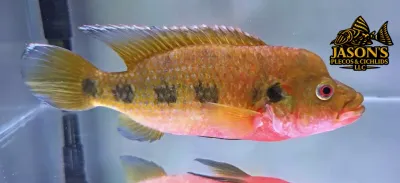

Banded Jewelfish - (Hemichromis Fasciatus)
Banded Jewelfish - (Hemichromis Fasciatus)
Price of shipping is not included.
was $90.00
Save 11%
$80.00
Out of stock
Captive Bred
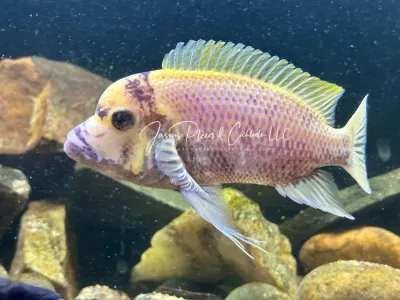
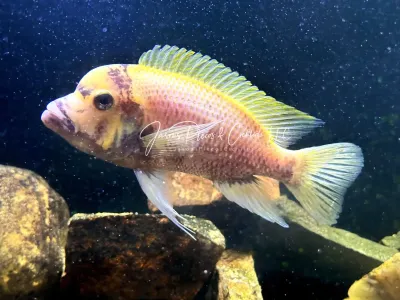
Burundi Frontosa Color Morph - (Cyphotilapia Frontosa)
Burundi Frontosa Color Morph - (Cyphotilapia Frontosa)
Price of shipping is not included.
$3 000.00
Out of stock
Wild Caught
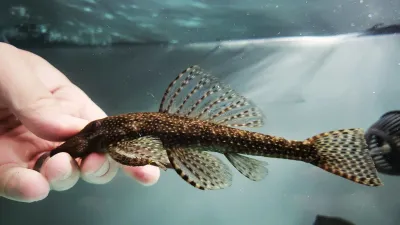
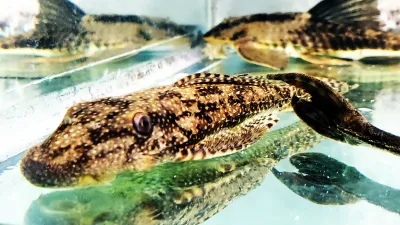
L151 Flat Head Pleco - (Dekeyseria scaphirhynchus)
L151 Flat Head Pleco - (Dekeyseria scaphirhynchus)
Price of shipping is not included.
$50.00
Out of stock
Captive Bred
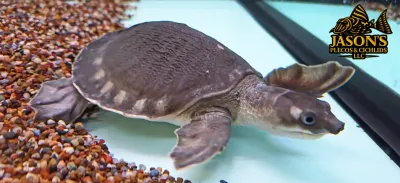
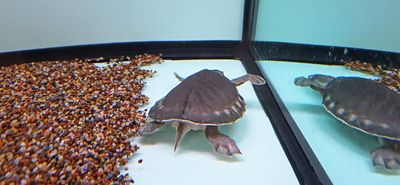
Fly River Turtle/Pig Nose Turtle - (Carettochelys insculpta)
Fly River Turtle/Pig Nose Turtle - (Carettochelys insculpta)
Price of shipping is not included.
was $1 600.00
Save 22%
$1 250.00
Captive Bred
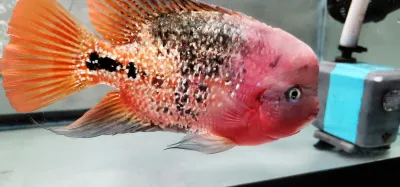
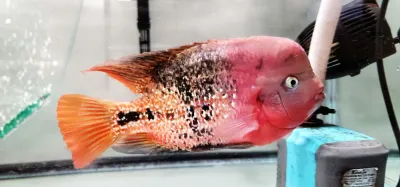
Vieja Melanurus "Synspilum" Hybrid - Pair
Vieja Melanurus "Synspilum" Hybrid - Pair
Price of shipping is not included.
$500.00
Out of stock
Captive Bred
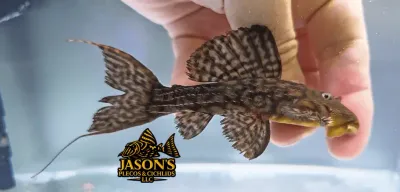
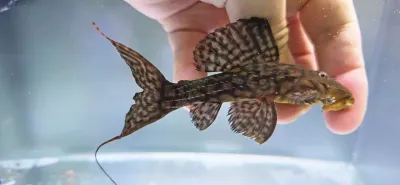
L079 Slender Cactus Pleco - (Pseudacanthicus sp.)
L079 Slender Cactus Pleco - (Pseudacanthicus sp.)
Price of shipping is not included.
5.0
(1)
was $300.00
Save 17%
$250.00
Out of stock
Captive Bred
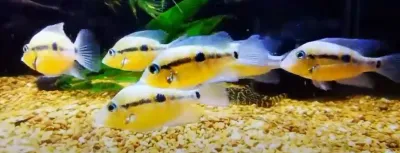
Blackgullet Cichlid - (Thorichthys pasionis)
Blackgullet Cichlid - (Thorichthys pasionis)
Price of shipping is not included.
$16.00
Out of stock
Captive Bred
Red Head Bahia Eartheater - (Geophagus sp. 'Red Head Bahia)
Red Head Bahia Eartheater - (Geophagus sp. 'Red Head Bahia)
Price of shipping is not included.
$20.00
Out of stock
Wild Caught
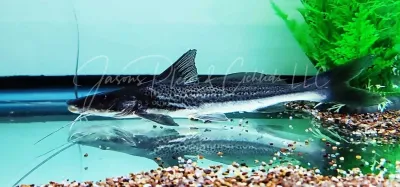
Pati Catfish - (Luciopimelodus pati)
Pati Catfish - (Luciopimelodus pati)
Price of shipping is not included.
$600.00
Out of stock
Captive Bred
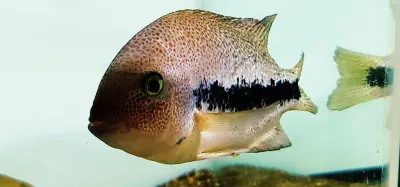
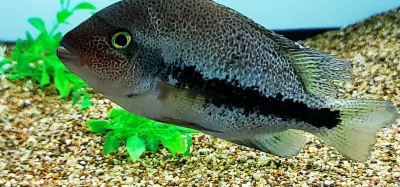
Coatique Cichlid - (Paratheraps sp. "Coatzacoalcos")
Coatique Cichlid - (Paratheraps sp. "Coatzacoalcos")
Price of shipping is not included.
$50.00
Out of stock
Captive Bred
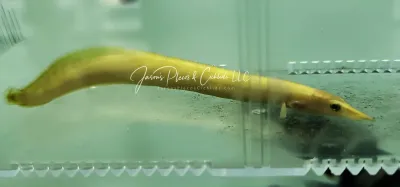

Golden Unicolor Eel - (Mastacembalus cf. unicolor ‘xanthic’)
Golden Unicolor Eel - (Mastacembalus cf. unicolor ‘xanthic’)
Price of shipping is not included.
$350.00
Out of stock
Wild Caught
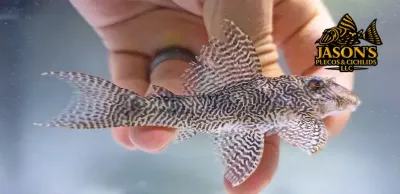
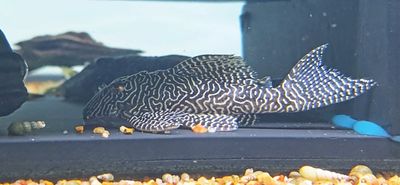
L260 Queen Arabesque Pleco - (Hypancistrus sp.)
L260 Queen Arabesque Pleco - (Hypancistrus sp.)
Price of shipping is not included.
was $80.00
Save 6%
$75.00
Powered by Lightspeed
Display prices in:USD