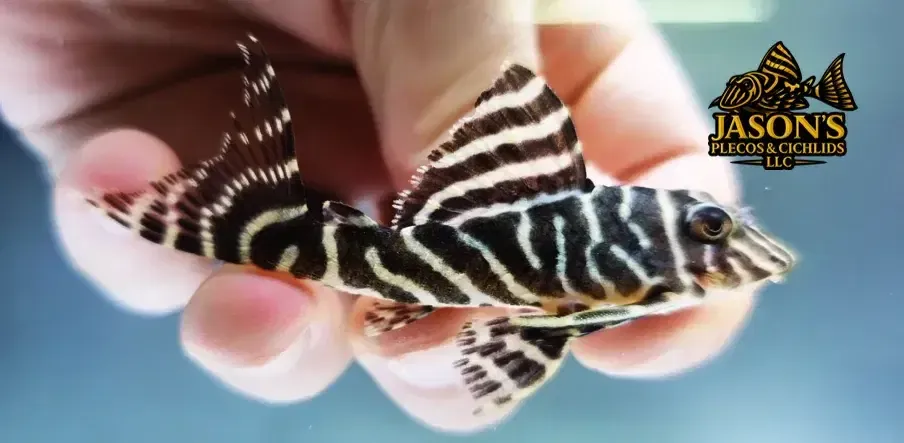
L340 Mega Clown Pleco - (Hypancistrus sp.)
5.0
1 review
Reviews from verified customers who have purchased products at this store.
$45.00
Wild Caught
was $55.00 Save 18%
Size
Questions, Comments, Concerns? Let us know!
Enter your text
Price of shipping is not included.
In stock: 2 available
1
Save this fish to my favorites.
Customer reviews
Reviews only from verified customers
Reviews are only accepted from verified customers who have signed in and purchased the products. This ensures that each review is based on genuine customer experiences. All reviews are checked before publication to prevent spam.
Chris S.
Elyria,
United States
Jul 12, 2025
These guys look Cooler than expected. I think my wife wants one now
L340 Mega Clown Pleco - (Hypancistrus sp.)
Fish Details, Description and Information Below:
🐟 L340 Mega Clown Pleco – (Hypancistrus sp. L340) – Wild-Caught Colombian Orinoco Pleco
The L340 Mega Clown Pleco (Hypancistrus sp. L340), also known as the Imperial Tiger Pleco, Red Zebra Pleco, or LDA019, is a small Colombian Hypancistrus known for its extremely variable maze-like pattern of cream, yellow, tan, rust-orange, or reddish lines over a dark brown to black body.
Despite the name:
MEGA CLOWN
this is actually one of the smaller collectible Hypancistrus, generally reaching only about 3–4 inches as an adult.
L340 originates from the:
RIO TOMO, COLOMBIA
within the:
RIO ORINOCO DRAINAGE
This listing is for:
WILD-CAUGHT L340 MEGA CLOWN PLECOS
🔎 Quick Facts – L340 Mega Clown Pleco
- 📛 Common Name: Mega Clown Pleco
- 📛 Other Names: Imperial Tiger Pleco, Red Zebra Pleco, Clown Pleco
- 🔢 L-Number: L340
- 🔢 Other Aquarium Number: LDA019 / LDA19
- 🔬 Scientific Identification: Hypancistrus sp. L340
- 🧬 Taxonomic Relationship: Member of the Hypancistrus debilittera complex
- ⚠️ Formal Species Status: Scientifically unresolved
- 🐟 Family: Loricariidae
- 🧬 Subfamily: Hypostominae
- 🌿 Stock: Wild Caught
- 🇨🇴 Country: Colombia
- 🌊 Native River: Rio Tomo
- 🌎 Drainage: Rio Orinoco Basin
- 💧 Water Type: Freshwater
- 📏 Adult Size: Approximately 3–4 inches
- 📏 Specialist Maximum: Approximately 8–10 cm / 3.1–3.9 inches
- 🏠 Recommended Aquarium: Approximately 30 gallons or larger
- 👥 Groups / Breeding Colonies: 40–55+ gallons preferred
- 🌡️ Temperature: Approximately 79–86°F
- 💧 pH: Approximately 5.5–7.5
- 💦 Water: Soft to moderately mineralized
- 💨 Oxygenation: High
- 🌊 Water Movement: Moderate to Strong
- 🍽️ Diet: Protein-Leaning Omnivore / Insectivore
- 🦐 Animal & Insect Foods: Very Important
- 🌿 Plant Foods: Supplemental
- 🚫 Algae Cleaner: No
- 🪵 Wood Eater: No
- 😌 Temperament: Generally peaceful
- ⚠️ Pleco Temperament: Mature males may defend caves
- 🌙 Activity: Primarily crepuscular / nocturnal
- 🥚 Breeding: Confirmed Cave Spawner
- 👨👧 Parental Care: Male guards eggs and developing fry
- 🧬 Hybridization Risk: Yes – keep breeding lines separate from other Hypancistrus
- ⭐ Care Level: Intermediate
- 🌎 IUCN Status: Not Evaluated as the unresolved L340 form
🧬 Scientific Identification
The safest identification remains:
Hypancistrus sp. L340
L340 has been known in the aquarium hobby since the 1990s and was originally introduced under the aquarium designation:
LDA019
before later receiving:
L340
Despite decades in the hobby, it still has not received its own formally described scientific species name.
⚠️ Is L340 Hypancistrus debilittera?
L340 is extremely closely related to:
Hypancistrus debilittera
which is associated primarily with:
L129
Some modern specialist references therefore use:
Hypancistrus cf. debilittera L340
The abbreviation:
cf.
means:
COMPARE WITH
and indicates that the fish appears closely related to the named species without claiming they have been scientifically demonstrated to be identical.
🧬 The Hypancistrus debilittera Complex
Several similar striped Hypancistrus occur throughout the Orinoco drainage.
These include forms such as:
- L129
- L340
- L454
- L474
These fishes may ultimately prove to represent geographic populations within a broader species complex.
However:
THE TAXONOMY IS NOT FULLY RESOLVED
For your product page, the safest identification remains:
L340 Mega Clown Pleco – (Hypancistrus sp. L340)
🔢 L340 / LDA019
Before receiving the L-number:
L340
this fish was already known in Europe as:
LDA019
Both numbers refer to the same aquarium form.
For modern listings:
L340
should remain the primary designation.
🐯 Why Is It Called the Mega Clown Pleco?
The name:
MEGA CLOWN
comes from the fish's dramatic and highly variable striped pattern.
Its markings can resemble:
- Tiger stripes
- Zebra stripes
- Maze patterns
- Worm-like lines
- Broken bands
- Irregular loops
Despite the word:
MEGA
the fish itself is:
SMALL
and generally reaches only about:
3–4 INCHES
🎨 Appearance
The underlying body coloration typically ranges from:
- Dark brown
- Chocolate brown
- Charcoal
- Gray-black
- Nearly black
with lighter markings that may appear:
- Cream
- Yellow
- Beige
- Tan
- Rust-orange
- Reddish brown
🟠 Orange & Rust Coloration
One characteristic that often helps distinguish L340 from similar forms is the tendency for its lighter pattern to have:
RUST-RED TO ORANGE TONES
rather than simply white or yellow.
However:
NOT EVERY L340 WILL BE ORANGE
Some individuals may appear:
- Cream
- Beige
- Yellowish
- Gray-white
instead.
🌀 Extremely Variable Pattern
L340 is:
HIGHLY VARIABLE
Some specimens develop:
- Thick pale bands
- Thin dark lines
- Broad tiger-like stripes
while others develop:
- Fine mazes
- Broken stripes
- Irregular loops
- Complex vermiculations
Two legitimate L340 can look surprisingly different.
⚠️ Pattern Alone Is Not Enough for Identification
Because L340 is so variable, appearance alone cannot always distinguish it from:
- L129
- Other H. debilittera-complex forms
- Other striped Colombian Hypancistrus
Useful information includes:
- L-number
- Collection locality
- Supplier identification
- Tooth count
- Body proportions
- Breeding records
🆚 L340 vs. L129
The L340 Mega Clown is especially similar to:
L129 – Hypancistrus debilittera
The two can sometimes be nearly impossible to separate by pattern alone.
Typical L340
Generally associated with:
RIO TOMO
and often displays:
- Broader markings
- Rust-red or orange tones
- Slightly more compressed body
- Slightly broader head
Typical L129
Associated particularly with the:
RIO BITA
and generally displays lighter markings that are more:
- White
- Cream
- Yellowish
🦷 Tooth Count Difference
One of the more useful specialist distinctions involves:
TEETH
L340 possesses unusually few teeth for a Hypancistrus.
Specialist examinations report approximately:
2–6 TEETH ON EACH SIDE OF THE LOWER JAW
with around:
5–6 TEETH PER SIDE
commonly observed.
L129 generally possesses more teeth.
⚠️ Do Not Identify Them From Color Alone
Because both forms are extremely variable:
PATTERN ALONE IS NOT RELIABLE ENOUGH
to identify every individual.
Preserve:
- L-number
- Collection locality
- Supplier information
whenever possible.
🌎 Native Distribution
The L340 Mega Clown Pleco is native to:
COLOMBIA
within the:
RIO TOMO
🌊 Rio Tomo
The Rio Tomo is a tributary of the:
RIO ORINOCO
and forms part of Colombia's extensive:
ORINOQUÍA
freshwater region.
The river originates in eastern Colombia and flows eastward before entering the Orinoco.
🇨🇴 Colombian Orinoco Pleco
For aquarium purposes, the most useful origin description is:
RIO TOMO – COLOMBIAN ORINOCO BASIN
This is much more accurate than simply listing:
South America
🪨 Natural Habitat
Detailed microhabitat information specifically for L340 is limited compared with some formally studied plecos.
However, Hypancistrus from the Colombian Orinoco system are associated with structured river habitat containing:
- Rocks
- Crevices
- Caves
- Submerged structure
- Moving water
- Oxygenated conditions
🏠 Aquarium Setup
A suitable L340 aquarium should contain:
- Ceramic pleco caves
- Smooth rocks
- Slate
- Rock crevices
- Driftwood
- Sand or smooth gravel
- Shaded areas
- Open feeding areas
- Strong filtration
- High oxygenation
🏠 Caves Are Essential
L340 uses caves for:
- Security
- Daytime shelter
- Territory
- Reproduction
When maintaining multiple fish:
PROVIDE MORE CAVES THAN PLECOS
🪨 Suitable Shelters
Useful shelters include:
- Ceramic pleco tubes
- Slate caves
- Rock crevices
- One-ended breeding tubes
- Driftwood cavities
Males especially appreciate caves that are:
- Narrow
- Secure
- Closed at one end
📏 Adult Size
L340 is one of the smaller:
Hypancistrus
Specialist records generally place mature fish around:
8–10 CM
or approximately:
3–4 INCHES
Many adults remain closer to:
3–3.5 INCHES
⚠️ Mega Does Not Mean Large
Customers may assume:
MEGA CLOWN
means the fish becomes large.
It does not.
This is:
A SMALL PLECO
and remains dramatically smaller than:
- L333
- L066
- Large Royal Plecos
- Large Cactus Plecos
- Common Plecos
🆚 L340 vs. L333 Size
L340 can superficially resemble:
L333
because both can develop complex striped patterns.
However:
L333 IS A MUCH HEAVIER AND LARGER FISH
A mature L340 remains a compact dwarf-sized Hypancistrus.
🏠 Aquarium Size
For one adult or compatible pair:
30 GALLONS OR LARGER
provides comfortable permanent housing.
For groups or breeding colonies:
40–55+ GALLONS
is preferred.
📐 Bottom Area Matters
Because L340 spends most of its life around:
- Caves
- Rocks
- Substrate
the aquarium's:
LENGTH + WIDTH
are more useful than excessive height.
👥 Group Housing
L340 can be maintained in groups when adequate:
- Caves
- Feeding locations
- Floor space
are provided.
They are generally less aggressive than many large plecos.
⚠️ Mature Male Territoriality
Mature males may still defend:
- Breeding caves
- Favorite shelters
- Feeding areas
against other males.
Most disputes can be reduced by providing:
MORE CAVES THAN FISH
🌡️ Temperature
A good long-term temperature range is:
79–86°F / 26–30°C
Some sources use temperatures slightly lower, but L340 is fundamentally a:
WARM-WATER HYPANCISTRUS
💨 High Oxygenation
Warm water naturally contains less dissolved oxygen.
Therefore L340 should receive:
HIGH DISSOLVED OXYGEN
through:
- Strong surface agitation
- Air stones
- Sponge filters
- Canister-filter returns
- Powerheads
- Sump returns
🌊 Water Movement
Provide:
MODERATE TO STRONG WATER MOVEMENT
while also creating sheltered areas behind:
- Rocks
- Caves
- Driftwood
The aquarium does not need extreme current everywhere.
💧 Water Parameters
A practical long-term range is:
- 🌡️ Temperature: Approximately 79–86°F
- 💧 pH: Approximately 5.5–7.5
- 💦 Hardness: Soft to moderately mineralized
- 💨 Oxygenation: High
- 🌊 Water Movement: Moderate to Strong
- ☠️ Ammonia: 0 ppm
- ☠️ Nitrite: 0 ppm
- 🔄 Nitrate: Keep low
Stable water conditions are more important than constantly chasing exact numbers.
⚠️ Warm Water Requires Good Maintenance
At high temperatures:
- Oxygen levels fall more quickly
- Food decomposes faster
- Bacterial activity increases
Maintain:
CLEAN, HIGHLY OXYGENATED WATER
💩 Filtration
Good filtration may include:
- Canister filters
- Sponge filtration
- Sumps
- Hang-on-back filters
- Supplemental circulation
The goal is:
CLEAN + WARM + HIGHLY OXYGENATED WATER
🍽️ Diet – Protein-Leaning Omnivore
The L340 Mega Clown is:
NOT A TRADITIONAL ALGAE-EATING PLECO
Like many Hypancistrus, it has relatively:
- Few teeth
- Larger teeth
- Limited algae-scraping ability
Its diet should emphasize:
ANIMAL AND INSECT FOODS
🦐 Recommended Protein Foods
Suitable foods include:
- Mysis shrimp
- Brine shrimp
- Bloodworms
- Mosquito larvae
- Cyclops
- Daphnia
- Insect-based sinking foods
- Quality protein-rich pleco pellets
- Quality omnivore tablets
- Small pieces of shrimp
🐛 Insect Foods
Insect and insect-larvae foods are particularly appropriate.
Suitable choices may include:
- Bloodworms
- Mosquito larvae
- Black soldier fly-based foods
- Insect-based pellets
- Appropriate aquatic insect foods
🌿 Plant Foods
Some L340 will also accept:
- Spirulina-containing foods
- Vegetable-containing wafers
- Zucchini
- Raw potato
- Other appropriate plant foods
Young fish may show somewhat more interest in vegetable matter.
However:
PLANT FOODS SHOULD GENERALLY BE SUPPLEMENTAL
🚫 Not an Algae Cleaner
L340 should:
NOT BE PURCHASED FOR ALGAE CONTROL
It is poorly equipped compared with specialized grazing plecos to scrape significant algae from aquarium surfaces.
⚠️ Aquarium Algae Is Not a Diet
Do not expect L340 to survive on:
- Glass algae
- Rock algae
- Leftover community food
Intentional feeding is necessary.
🪵 Driftwood
Driftwood can provide:
- Shelter
- Shade
- Biofilm
- Territory
- Natural appearance
However:
L340 IS NOT A SPECIALIZED WOOD-EATING PLECO
Wood is not required as a primary food and should not be described as necessary for digestion.
🌙 Activity
The Mega Clown Pleco is primarily:
CREPUSCULAR / NOCTURNAL
Activity usually increases:
- At dusk
- During feeding
- After lights dim
- At night
☀️ Established Fish May Become Visible
Once acclimated, some L340 become surprisingly confident.
They may:
- Leave caves during daylight
- Rest openly
- Search for food
- Feed before the lights turn off
Providing abundant shelter often encourages shy plecos to become:
MORE VISIBLE
🧪 Wild-Caught Acclimation
This listing is for:
WILD-CAUGHT L340 MEGA CLOWN PLECOS
Wild fish deserve careful acclimation.
After arrival:
- Provide caves immediately
- Keep lighting subdued
- Maintain high oxygenation
- Avoid sudden temperature changes
- Avoid sudden pH changes
- Maintain excellent water quality
- Confirm feeding
🍽️ Confirm Every Fish Is Eating
Newly imported L340 can hide while faster fish consume the available food.
Feed:
- Near caves
- At dusk
- After lights out
- In multiple locations
⚠️ Watch Body Condition
Monitor for:
- Sunken abdomen
- Hollow body profile
- Loss of body mass
- Persistent refusal to feed
A small pleco can lose condition quickly.
😌 Temperament
L340 is generally:
PEACEFUL
toward appropriately chosen midwater fish.
Potential tankmates include compatible:
- Tetras
- Pencilfish
- Rasboras
- Corydoras
- Small peaceful cichlids
- Other calm tropical fish
⚠️ Food Competition
Avoid combining L340 with extremely aggressive or fast-feeding bottom dwellers that prevent it from eating.
Its small adult size means it can easily be intimidated by much larger plecos.
🧬 Hybridization Risk
Different species and forms of:
Hypancistrus
can hybridize in captivity.
This is especially important with visually similar striped forms.
🚨 One Hypancistrus Breeding Line Per Tank
If maintaining L340 for breeding, avoid mixing it with:
- L129
- L199
- L201
- L260
- L333
- L066
- L236
- Other Hypancistrus
when possible.
⚠️ Mixed Offspring Must Be Labeled as Hybrids
If accidental hybridization occurs:
DO NOT SELL THE OFFSPRING AS PURE L340
Any mixed-parentage offspring must be identified honestly as:
HYBRIDS
♂️ Male vs. Female
Sex differences become clearer once the fish reaches maturity.
Mature Males
Typically develop:
- Broader head
- Longer head profile
- Stronger odontodes behind the gill covers
- Stronger odontodes on the first pectoral-fin ray
- More noticeable odontodes toward the rear of the body
Mature Females
Generally:
- Have less extensive odontode development
- Develop a fuller abdominal profile when carrying eggs
👀 View From Above
Mature females carrying eggs often appear:
BROADER THROUGH THE ABDOMEN
when viewed from above.
Mature males frequently appear:
BROADER THROUGH THE HEAD
⚠️ Juveniles Are Difficult to Sex
Young fish should generally be:
SOLD AS UNSEXED
unless the sex can be determined confidently.
🥚 Captive Breeding – Confirmed
L340 has been:
SUCCESSFULLY BRED MANY TIMES IN CAPTIVITY
It is a:
CAVE-SPAWNING PLECO
🏠 Breeding Caves
One-ended caves work very well.
Suitable materials include:
- Ceramic
- Clay
- Slate
The preferred cave should generally be:
- Closed at one end
- Slightly wider than the male
- Long enough for the pair during spawning
- Positioned in oxygen-rich water
💕 Spawning Behavior
Typical spawning behavior includes:
- The mature male selects a cave.
- He spends considerable time occupying and defending it.
- A receptive female enters.
- Eggs are deposited and fertilized.
- The female leaves.
- The male remains with the clutch.
👨👧 Male Parental Care
After spawning:
THE MALE GUARDS THE EGGS
He:
- Protects the clutch
- Fans the eggs
- Maintains water movement
- Guards the developing larvae
🥚 Small Clutches
Compared with some larger plecos, L340 often produces relatively:
SMALL BROODS
Breeding reports have documented approximately:
5–15 FRY / EGGS
from individual spawns.
Actual numbers depend on:
- Female size
- Age
- Genetics
- Conditioning
- Maturity
No clutch size should be guaranteed.
🌡️ Documented Breeding Conditions
Recent hobby breeding has occurred around:
- 🌡️ Approximately 81°F / 27°C
- 💧 pH approximately 6.8
- 💦 Low dissolved solids / TDS
- 💨 High oxygenation
These numbers demonstrate successful conditions but are:
NOT A GUARANTEED FORMULA
💧 Lower Conductivity May Help
Some breeders report improved spawning success with:
- Soft water
- Low TDS
- Large water changes
- Fresh clean water
This may mimic seasonal changes in the natural river environment.
👶 Raising Fry
After yolk absorption, fry can receive:
- Baby brine shrimp
- Fine insect-based foods
- Crushed protein-rich sinking foods
- Fine omnivore foods
- Small amounts of vegetable-containing foods
⚠️ Small Fry Need Frequent Food
Because L340 fry are small:
FOOD MUST BE EASY TO FIND
Feed small quantities frequently while keeping:
WATER QUALITY EXCELLENT
🧬 Preserve Rio Tomo L340 Lines
Because of the unresolved relationship between:
- L340
- L129
- Other H. debilittera-complex forms
accurate lineage records are especially valuable.
Preserve:
- L340 designation
- Rio Tomo locality when known
- Wild supplier information
- Parentage
- Breeder records
🌎 Conservation Status
Because L340 remains:
SCIENTIFICALLY UNRESOLVED
it does not have its own formal species-level IUCN assessment.
Therefore:
IUCN STATUS: NOT EVALUATED
is the safest wording for the L340 aquarium form.
⚠️ Not Evaluated Does Not Mean No Conservation Concerns
An undescribed or unresolved fish may still face:
- Habitat alteration
- Water-quality changes
- Collection pressure
- River development
- Other environmental threats
The absence of an IUCN assessment should not be interpreted as proof that no conservation concerns exist.
🌱 Captive Breeding Is Valuable
Because L340 breeds successfully in captivity, responsible captive propagation can:
- Reduce reliance on wild collection
- Preserve verified Rio Tomo lines
- Improve availability
- Increase husbandry knowledge
⭐ Why Keep an L340 Mega Clown Pleco?
The L340 combines:
- 🐯 Beautiful tiger and maze-like patterning
- 🟠 Unique rust-orange coloration in many specimens
- 🇨🇴 Colombian Rio Tomo origin
- 📏 Small approximately 3–4 inch adult size
- 🦐 Interesting protein-oriented feeding behavior
- 😌 Generally peaceful temperament
- 🌙 Nocturnal personality
- 🏠 Small cave-dwelling behavior
- 🥚 Proven captive breeding
- 👨👧 Male parental care
- 🧬 Fascinating relationship with the H. debilittera complex
into an excellent small Hypancistrus for properly maintained warm-water aquariums.
⚠️ Important Considerations
Before purchasing an L340 Mega Clown Pleco:
- Keep the primary identification as Hypancistrus sp. L340.
- L340 remains scientifically unresolved.
- Some specialists use Hypancistrus cf. debilittera for this form.
- Do not automatically rename L340 Hypancistrus debilittera.
- L340 is also historically known as LDA019.
- This listing is for wild-caught fish.
- L340 originates from the Rio Tomo in Colombia.
- The Rio Tomo belongs to the Orinoco drainage.
- Do not list its origin simply as South America when the locality is known.
- L340 can be confused with L129.
- L340 often has rust-orange or reddish lighter markings.
- L129 generally has whiter or more yellowish markings.
- Pattern alone cannot reliably separate every specimen.
- Tooth count is one useful specialist distinction.
- Preserve locality and supplier information.
- Adult L340 generally reach approximately 8–10 cm.
- Plan for approximately 3–4 inches.
- “Mega” does not mean this fish becomes large.
- Provide approximately 30 gallons or larger.
- Use 40–55+ gallons for groups.
- Provide more caves than plecos.
- Maintain approximately 79–86°F.
- Maintain high dissolved oxygen.
- Provide moderate to strong water movement.
- Keep ammonia and nitrite at zero.
- Keep nitrate low.
- Feed a protein-leaning omnivorous diet.
- Animal and insect foods should form an important part of the diet.
- Plant foods are supplemental.
- Do not purchase L340 for algae control.
- L340 is not a specialized wood eater.
- Expect some territorial behavior around breeding caves.
- Captive breeding is well documented.
- L340 is a cave spawner.
- Males guard the eggs and developing fry.
- Broods are often relatively small.
- Keep L340 breeding lines separate from other Hypancistrus.
- Label any mixed offspring honestly as hybrids.
- The unresolved L340 form has no formal species-level IUCN assessment.
- Never release aquarium fish into natural waterways.
🧬 Taxonomy
The safest current aquarium identification is:
Hypancistrus sp. L340
Classification:
- Order: Siluriformes
- Family: Loricariidae
- Subfamily: Hypostominae
- Genus: Hypancistrus
- Species: Scientifically unresolved
- L-Number: L340
- Earlier Aquarium Number: LDA019
- Species Complex: Hypancistrus debilittera complex
Native locality:
RIO TOMO – COLOMBIA
within the:
RIO ORINOCO BASIN
For this product, use:
L340 Mega Clown Pleco – (Hypancistrus sp. L340)
🔢 L-Number & Lineage Disclaimer
Because L340 has not received its own formally established species name:
THE L-NUMBER AND LOCALITY REMAIN IMPORTANT
Preserve:
- L340 designation
- Rio Tomo locality when known
- Supplier records
- Breeding records
- Parentage
Do not intentionally mix L340 with L129 or other Hypancistrus lines and later represent the offspring as pure L340.
🚚 Live Fish Shipping
Live fish are professionally packed for safe transport.
Shipping availability depends on:
- Fish size
- Destination
- Weather conditions
- Carrier availability
- Applicable state and local regulations
Please review our Shipping & Payment Information and Live Arrival Guarantee / DOA Policy before ordering.
⚠️ Buyer Responsibility
Customers are responsible for confirming that Hypancistrus sp. L340 may legally be purchased, possessed, transported, and received in their state or local jurisdiction before ordering.
Never release aquarium fish into natural waterways.
Below are fish you may also like.
Captive Bred
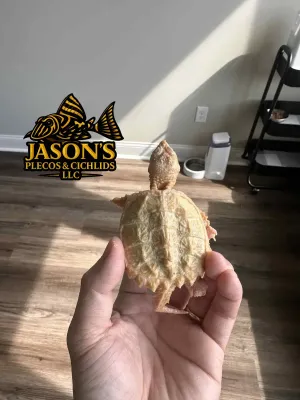
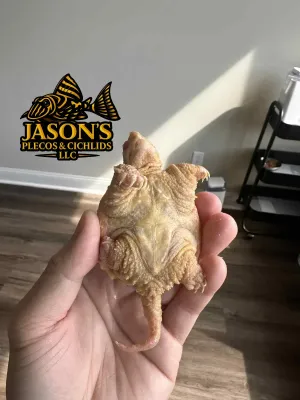
Albino Common Snapping Turtle - (Chelydra serpentina)
Albino Common Snapping Turtle - (Chelydra serpentina)
Price of shipping is not included.
$1 315.00
Wild Caught
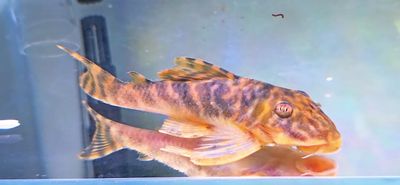
L377 Prince Tiger Pleco - (Peckoltia sp.)
L377 Prince Tiger Pleco - (Peckoltia sp.)
Price of shipping is not included.
5.0
(2)
was $125.00
Save 32%
$85.00
Captive Bred
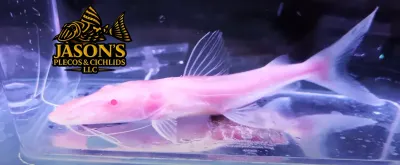
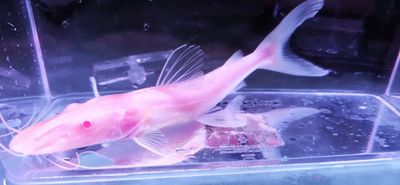
Albino Tiger Shovelnose Catfish - (Pseudoplatystoma fasciatum)
Albino Tiger Shovelnose Catfish - (Pseudoplatystoma fasciatum)
Price of shipping is not included.
was $4 000.00
Save 20%
$3 215.00
Wild Caught
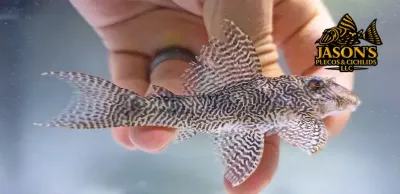
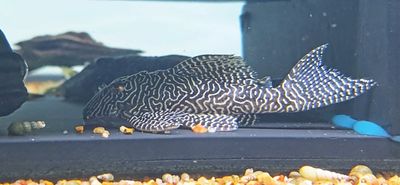
L260 Queen Arabesque Pleco - (Hypancistrus sp.)
L260 Queen Arabesque Pleco - (Hypancistrus sp.)
Price of shipping is not included.
was $80.00
Save 6%
$75.00
Captive Bred
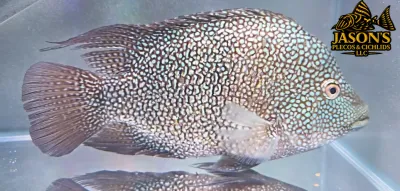
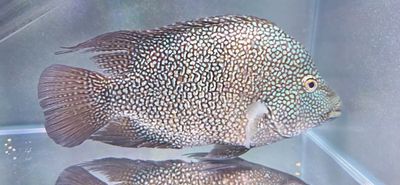
Green Texas Cichlid - (Herichthys carpintis)
Green Texas Cichlid - (Herichthys carpintis)
Price of shipping is not included.
was $190.00
Save 13%
$165.00
Powered by Lightspeed
Display prices in:USD