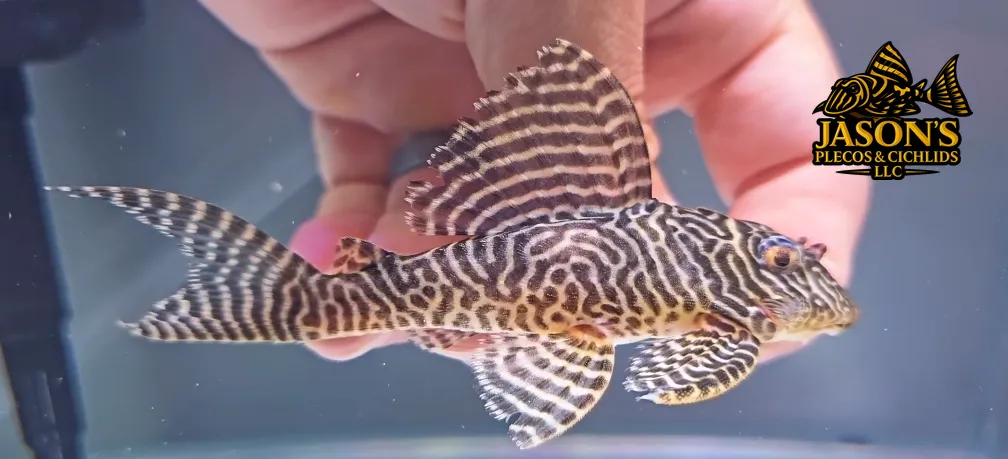
L333 King Tiger Pleco/Maze Zebra Pleco - (Hypancistrus Seideli)
$75.00
Sold out
was $80.00 Save 6%
Size
Questions, Comments, Concerns? Let us know!
Enter your text
Price of shipping is not included.
Sold out
Save this fish to my favorites.
Customer reviews
Reviews only from verified customers
No reviews yet. You can buy this product and be the first to leave a review.
L333 King Tiger Pleco/Maze Zebra Pleco - (Hypancistrus Seideli)
Fish Details, Description and Information Below:
🐯 L333 King Tiger Pleco / Maze Zebra Pleco – (Hypancistrus seideli)
The L333 King Tiger Pleco / Maze Zebra Pleco (Hypancistrus seideli) is one of the most recognizable Rio Xingu plecos, famous for its intricate black or dark-brown maze-like lines over a white, cream, yellowish, or golden background.
Individual L333 can look dramatically different from one another. Their markings may form:
- Broad tiger-like bands
- Thin maze patterns
- Wavy lines
- Vermiculations
- Loops
- Broken stripes
- Reticulated patterns
This extraordinary variation is now scientifically recognized as part of the natural diversity of:
Hypancistrus seideli
L333 was formally included in this newly described species in 2025, together with several other well-known Xingu L-number forms.
This listing is for:
L333 KING TIGER / MAZE ZEBRA PLECO BREEDING GROUP
🔎 Quick Facts – L333 King Tiger Pleco
- 📛 Common Name: King Tiger Pleco
- 📛 Other Names: Maze Zebra Pleco, Golden King Tiger Pleco
- 🔢 L-Number: L333
- 🔬 Scientific Name: Hypancistrus seideli
- 📅 Formally Described: 2025
- 🐟 Family: Loricariidae
- 🧬 Subfamily: Hypostominae
- 🧬 Genus: Hypancistrus
- 🐯 L333 Form: Stockier-bodied H. seideli phenotype
- 🐟 Listing Type: Breeding Group
- 📏 Current Group Size: Approximately 3–4.25 inches
- 🇧🇷 Country: Brazil
- 📍 State: Pará
- 🌊 Native River: Rio Xingu
- 🌎 River System: Amazon Basin
- 📍 Primary Species Range: Lower Rio Xingu
- 💧 Water Type: Freshwater
- 🪨 Natural Habitat: Rocky river habitat, cracks, crevices and submerged shelters
- 📏 Scientific Maximum: Approximately 150.2 mm / 5.9 inches total length
- 📏 Adult Planning Size: Approximately 5–6 inches
- 🏠 Breeding Group Aquarium: Approximately 40–55+ gallons
- 👥 Larger Groups: 55–75+ gallons preferred
- 🌡️ Temperature: Approximately 79–86°F
- 💧 pH: Approximately 5.5–7.5
- 💦 Water: Soft to moderately mineralized
- 💨 Oxygenation: High
- 🌊 Water Movement: Moderate; stronger circulation can be provided
- 🍽️ Diet: Protein-Leaning Omnivore
- 🦐 Animal / Insect Foods: Important
- 🌿 Plant Foods: Supplemental
- 🚫 Algae Cleaner: No
- 🪵 Wood Eater: No
- 😌 Temperament: Generally peaceful
- ⚠️ Pleco Temperament: Territorial around caves
- 🌙 Activity: Primarily crepuscular / nocturnal
- 🥚 Breeding: Cave Spawner
- 👨👧 Parental Care: Male guards eggs and developing fry
- ♂️ Adult Male Traits: Strong cheek, body and pectoral-fin odontodes
- ⭐ Care Level: Intermediate
- 🌎 Conservation: 2025 species description considers H. seideli consistent with Least Concern
🧬 Major 2025 Taxonomy Update
For decades L333 was known as:
Hypancistrus sp. L333
That changed in:
2025
when scientists formally described the species:
Hypancistrus seideli
The scientific description specifically includes the aquarium forms:
- L066
- L236
- L287
- L333
- L399
- L400
and potentially additional closely related Xingu morphotypes.
Therefore, the correct modern identification for this product is:
L333 King Tiger Pleco – (Hypancistrus seideli)
✍️ Scientific Name Formatting
The species name should be written:
Hypancistrus seideli
not:
Hypancistrus Seideli
Scientific species epithets are written with a:
LOWERCASE “s”
Therefore:
✅ Hypancistrus seideli
is correct.
👨🔬 Who Is seideli Named After?
The species was named in honor of:
INGO SEIDEL
a well-known German aquarist who has contributed extensively to:
- Pleco husbandry
- Loricariid identification
- Hypancistrus breeding
- Aquarium literature
- Pleco education
The scientific authors specifically recognized his decades of work with these fishes.
🐯 L333 Is a Distinctive Phenotype of H. seideli
One of the most interesting discoveries from the modern taxonomic work is just how variable:
Hypancistrus seideli
can be.
The fish sold as L333 represents one recognizable phenotype within that species.
🆚 Typical L333 Body Shape
Compared with the traditional L066 phenotype, L333 generally has a:
STOCKIER BODY
with:
- Deeper body profile
- More compact appearance
- Shorter-looking caudal region
- Less deeply forked caudal fin
🆚 L333 vs. L066
Both are now:
Hypancistrus seideli
but hobbyists should continue preserving their L-number identities.
L333
Generally:
- Stockier body
- Higher body profile
- Less deeply forked tail
- Cream / yellow / golden coloration common
- Strong maze-like markings
L066
Generally:
- More slender body
- Longer caudal-fin lobes
- More deeply forked tail
- Often whiter or gray-white
- Longer worm-like markings
⚠️ Same Species Does Not Mean the L-Numbers Are Meaningless
Scientifically:
L333 AND L066 ARE THE SAME SPECIES
However, the L-numbers still describe recognizable aquarium:
- Phenotypes
- Geographic forms
- Pattern lines
Therefore:
KEEP L333 IDENTIFIED AS L333
when breeding or selling these fish.
🧬 L236, L287, L399 & L400
Modern taxonomy also places:
- L236
- L287
- L399
- L400
within:
Hypancistrus seideli
This means several aquarium fish once believed to represent separate species are actually part of one exceptionally variable species.
⚠️ Breeding Different H. seideli Forms
Crossing:
- L333 × L066
- L333 × L236
- L333 × L399
- L333 × L400
would not technically be an:
INTERSPECIFIC HYBRID
because they are now considered the same species.
However, it would:
MIX DISTINCT AQUARIUM PHENOTYPE LINES
and make the offspring difficult to identify accurately.
For that reason:
KEEP L333 BREEDING LINES SEPARATE
when preservation of the L-number phenotype is the goal.
🌀 Maze-Like Pattern
L333 is famous for its:
MAZE PATTERN
The dark markings may form:
- Curves
- Loops
- Wavy lines
- Broken bars
- Vermiculations
- Reticulated networks
across the:
- Head
- Body
- Dorsal fin
- Pectoral fins
- Pelvic fins
- Caudal fin
🎨 Background Color
The pale background may range from:
- White
- Cream
- Beige
- Yellow
- Golden
- Pale pinkish cream
Scientific observations specifically document pale lines ranging from:
WHITE TO YELLOWISH
and occasionally even:
PINKISH
in living H. seideli.
⚫ Dark Pattern Color
Dark markings can appear:
- Black
- Charcoal
- Dark brown
- Gray-black
The resulting contrast can vary greatly between individual fish.
🔄 Pattern Changes With Age
Scientific work confirms that H. seideli changes pattern as it grows.
Juveniles
Generally show:
- Thicker pale lines
- Less wavy markings
- Stronger banding
- Occasional interrupted stripes
Larger Adults
May develop:
- Thinner lines
- More numerous lines
- Greater vermiculation
- Reticulated or honeycomb-like patterns
⚠️ Individual Variation Is Extreme
Even fish collected from the:
SAME POPULATION
can show substantially different patterns.
Therefore:
NO TWO L333 ARE GUARANTEED TO LOOK IDENTICAL
This is natural variation and not necessarily evidence of mixed genetics.
⚠️ Never Guarantee Adult Pattern
A juvenile with:
- Bold black-and-white bands
may mature into a more:
- Gray
- Cream
- Reticulated
- Maze-patterned
adult.
Exact future:
- Line width
- Color
- Pattern
- Contrast
cannot be guaranteed.
🆚 L333 vs. L236 “Super White” Lines
Some selectively bred L236-type fish have been developed for extremely:
HIGH WHITE COVERAGE
Modern taxonomy places those fish within the same species:
Hypancistrus seideli
However, a selectively developed Super White breeding line should still be labeled according to its:
- L-number history
- Breeder line
- Parentage
rather than simply being mixed into ordinary L333 colonies.
🌎 Native Distribution
Hypancistrus seideli is native to:
BRAZIL
within the:
RIO XINGU
in Pará.
🌊 Lower Rio Xingu
The 2025 scientific description documents the species throughout the:
LOWER XINGU CHANNEL
from the downstream end of:
VOLTA GRANDE DO XINGU
to the:
CONFLUENCE WITH THE AMAZON RIVER
📍 Broad Distribution for a Xingu Hypancistrus
This range is much broader than that of:
L046 ZEBRA PLECO – Hypancistrus zebra
which has a much more restricted distribution around the Volta Grande.
This difference has major conservation implications.
🪨 Natural Habitat
The natural habitat of H. seideli is more varied than older aquarium descriptions sometimes suggest.
Scientific observations document fish among:
- Granitoid rocks
- Sedimentary rock formations
- Cracks
- Crevices
- Submerged shelters
📏 Depth Range
Hypancistrus seideli has been documented from:
LESS THAN 1 METER
to approximately:
40 METERS / 130 FEET DEEP
and ornamental fishermen report fish from even deeper locations.
This demonstrates an unusually broad ecological range.
🌊 Current Is Variable
L333 is frequently described as requiring:
EXTREME RAPIDS
throughout the aquarium.
That is too simplistic.
Wild H. seideli occurs in habitats with:
- Stronger current
- Moderate current
- Slow-flowing areas
depending on locality.
Therefore, the aquarium does not need to resemble a permanent high-speed torrent.
💨 Oxygenation Is More Important Than Violent Current
For aquarium care:
HIGH DISSOLVED OXYGEN
is more important than forcing maximum current across every inch of the aquarium.
Provide:
- Strong surface agitation
- Good filtration
- Air stones when useful
- Powerheads
- Canister-filter returns
- Sump returns
🌊 Aquarium Water Movement
A good L333 aquarium can provide:
MODERATE WATER MOVEMENT
with some stronger-flow areas.
Also provide:
- Caves
- Rocks
- Driftwood
- Current breaks
where fish can rest.
🌡️ Temperature
L333 is a warm-water Xingu pleco.
A practical range is:
79–86°F / 26–30°C
Some breeding programs use temperatures around:
84–86°F
with very high oxygenation.
⚠️ Warm Water Requires Strong Oxygenation
As water temperature increases:
DISSOLVED OXYGEN DECREASES
Therefore, warmer L333 aquariums require:
- Strong gas exchange
- Surface movement
- Reliable circulation
💧 Water Parameters
A practical long-term range is:
- 🌡️ Temperature: Approximately 79–86°F
- 💧 pH: Approximately 5.5–7.5
- 💦 Hardness: Soft to moderately mineralized
- 💨 Oxygenation: High
- 🌊 Water Movement: Moderate to Strong
- ☠️ Ammonia: 0 ppm
- ☠️ Nitrite: 0 ppm
- 🔄 Nitrate: Keep low
💧 Stable Water Is Important
Captive-bred or long-established L333 can tolerate a reasonable range of water chemistry.
Do not constantly adjust pH simply to chase one exact number.
Prioritize:
STABILITY + CLEAN WATER + HIGH OXYGEN
📏 Adult Size
The 2025 scientific description examined more than 100 Hypancistrus seideli specimens.
The largest documented total length was:
150.2 MM
or approximately:
5.9 INCHES TOTAL LENGTH
Therefore:
5–6 INCHES
is an appropriate adult planning size for L333.
🏠 Aquarium Size
For one adult or a compatible pair:
30–40 GALLONS
can provide adequate permanent housing when properly structured.
For the current:
BREEDING GROUP
I recommend approximately:
40–55+ GALLONS
with ample caves and bottom territory.
For larger colonies:
55–75+ GALLONS
provides additional flexibility.
📐 Aquarium Footprint Matters
Because L333 spends most of its time around:
- Caves
- Rocks
- Substrate
aquarium:
LENGTH + WIDTH
matter more than excessive height.
A breeder-style footprint works extremely well.
🏠 Caves Are Essential
Every breeding setup should contain:
MORE CAVES THAN PLECOS
Suitable shelters include:
- Ceramic pleco caves
- Slate caves
- Rock crevices
- One-ended tubes
🪨 Rock Structure
Rockwork can provide:
- Natural shelter
- Territorial barriers
- Additional caves
- Shade
- Current breaks
Make sure all rocks are securely positioned.
🪵 Driftwood
Driftwood can provide:
- Shelter
- Shade
- Biofilm
- Visual barriers
- Natural structure
However:
L333 IS NOT A WOOD-EATING PLECO
Wood is not required for digestion and should not be considered its primary food.
🍽️ Diet – Protein-Leaning Omnivore
L333 is often described simply as:
CARNIVOROUS
That is somewhat too absolute.
A better practical description is:
PROTEIN-LEANING OMNIVORE
🦐 Animal & Insect Foods
L333 readily accepts foods such as:
- Mysis shrimp
- Brine shrimp
- Bloodworms
- White mosquito larvae
- Black mosquito larvae
- Krill
- Cyclops
- Chopped shrimp
- Insect-based sinking foods
- Quality carnivore-oriented pellets
- Quality omnivore tablets
🧪 L333 Larvae & Artemia
Aquaculture research on L333 demonstrated excellent acceptance of:
ARTEMIA NAUPLII
as a first external food for larvae.
Higher appropriate Artemia availability improved larval growth in the controlled study.
This reinforces the importance of:
HIGH-QUALITY ANIMAL PROTEIN
for growing L333.
🌿 Plant Foods
Some individuals will also consume:
- Spirulina-containing foods
- Vegetable-containing pleco pellets
- Zucchini
- Cucumber
- Other appropriate vegetable matter
Juveniles may show more interest in plant-based foods than mature adults.
⚖️ Balanced Feeding
A good feeding program combines:
QUALITY ANIMAL / INSECT FOODS
with:
SOME PLANT-BASED / OMNIVORE FOODS
rather than feeding only one food type.
🚫 Not an Algae Cleaner
L333 should:
NOT BE PURCHASED FOR ALGAE CONTROL
It may occasionally graze:
- Biofilm
- Organic growth
- Small amounts of algae
but it is not an efficient glass-cleaning pleco.
Intentional feeding is required.
🚫 Do Not Feed Only Algae Wafers
A diet consisting almost entirely of:
- Algae wafers
- Zucchini
- Cucumber
does not reflect the feeding preference of L333.
Provide substantial protein-rich food.
⚠️ Avoid Excessive Protein Waste
Protein-rich foods can quickly increase:
- Organic waste
- Ammonia
- Bacterial load
Do not overfeed.
Remove uneaten frozen or fresh food.
🌙 Behavior
L333 is primarily:
CREPUSCULAR / NOCTURNAL
Activity usually increases:
- At dusk
- During feeding
- After lights dim
- At night
☀️ Breeding Groups Can Become Quite Visible
Established fish may learn to:
- Feed during daylight
- Rest near cave entrances
- Explore before lights out
Providing abundant caves often makes the fish:
MORE CONFIDENT
rather than less visible.
😌 Temperament
Toward midwater fish, L333 is generally:
PEACEFUL
Potential tankmates include appropriately selected:
- Tetras
- Pencilfish
- Small characins
- Peaceful cichlids
- Other warm-water community fish
⚠️ Territorial Around Caves
The main territorial behavior occurs between plecos.
Mature males may defend:
- Breeding caves
- Preferred shelters
- Feeding areas
👥 Breeding Group Housing
A breeding group should have:
- Numerous caves
- Visual barriers
- Multiple feeding locations
- Adequate floor space
Do not place one cave per fish and assume that is enough.
Provide:
MORE CAVES THAN FISH
so each pleco can choose among several options.
⚠️ “Breeding Group” Does Not Automatically Mean “Proven”
This product is sold as a:
BREEDING GROUP
meaning the fish are selected and maintained with reproduction in mind.
Unless the listing specifically states otherwise:
DO NOT AUTOMATICALLY DESCRIBE THE GROUP AS PROVEN BREEDERS
A group may contain:
- Mature fish
- Maturing fish
- Sexually differentiated fish
without having previously produced fry together.
♂️ Male vs. Female
The 2025 scientific description confirms clear sexual dimorphism in mature Hypancistrus seideli.
Mature Males
Develop:
- Larger head
- Broader head
- Hypertrophied cheek odontodes
- Strong pectoral-spine odontodes
- Odontodes over body plates
- Slimmer body profile
Males also tend to:
GROW LARGER
than females.
Mature Females
Generally develop:
- Rounder body profile
- Fuller abdomen
- Less extensive odontodes
Gravid females can become especially broad when viewed:
FROM ABOVE
⚠️ Sexing Smaller Fish
Sexual differences become more obvious with maturity.
A fish should not be guaranteed male or female based simply on:
- Color
- Stripe width
- Body darkness
unless the sexual characteristics are clearly developed.
🥚 Captive Breeding – Well Established
L333 has been:
SUCCESSFULLY BRED EXTENSIVELY IN CAPTIVITY
It is one of the better-established Hypancistrus breeding projects in the aquarium hobby.
🏠 Cave Spawner
L333 is a:
CAVE-SPAWNING PLECO
The mature male establishes and guards a suitable cave.
🏠 Breeding Cave Design
Successful breeding caves are generally:
- Closed at one end
- Slightly wider than the male
- Long enough for both fish during spawning
- Positioned where clean oxygen-rich water reaches the entrance
Several sizes should be offered.
💕 Courtship
Typical spawning behavior includes:
- The male establishes a cave.
- A receptive female approaches.
- The female enters.
- The male may temporarily block the entrance.
- Eggs are deposited and fertilized.
- The female leaves.
- The male remains with the clutch.
👨👧 Male Parental Care
After spawning:
THE MALE GUARDS THE EGGS
He:
- Protects the clutch
- Fans the eggs
- Maintains water movement
- Guards the developing larvae
🥚 Reproductive Research
Scientific research on L333 found mature females producing approximately:
35–54 DEVELOPING OOCYTES
in the largest reproductive batch examined.
This provides valuable biological information, but it should:
NOT
be presented as a guaranteed aquarium clutch size.
Actual captive spawns may vary considerably.
🐣 Fry
After the eggs hatch, the fry initially rely on their:
YOLK SACS
before active feeding begins.
Once feeding:
- Newly hatched Artemia
- Fine sinking protein foods
- Fine omnivore foods
- Appropriate fry pellets
can be offered.
💨 Fry Need Excellent Oxygenation
Crowded fry tanks can quickly develop:
- Increased ammonia
- Reduced oxygen
- Slower growth
Scientific larviculture research found poorer performance at excessive stocking density.
Therefore:
DO NOT OVERCROWD L333 FRY
💧 Water Changes & Breeding
Breeding can sometimes be encouraged through:
- Large water changes
- Slight temperature changes
- Strong conditioning
- Increased oxygenation
- High-quality food
These may simulate seasonal changes.
However:
NO SINGLE TRIGGER GUARANTEES SPAWNING
🧬 L333 Line Preservation
Because L333 is now known to belong to a highly variable species, maintaining good breeding records is more important than ever.
Preserve:
- L333 designation
- Parentage
- Supplier information
- Breeder-line information
- Locality if known
⚠️ Do Not Mix L333 With Other Hypancistrus Species
L333 can potentially hybridize with other species of:
Hypancistrus
Therefore, breeding colonies should not be mixed with unrelated species such as:
- L046 Hypancistrus zebra
- L199 Hypancistrus furunculus
- L201-type Orinoco Hypancistrus
- L260 Queen Arabesque
⚠️ L333 × L066 Is Different From True Interspecific Hybridization
Because L333 and L066 are now:
THE SAME SPECIES
their offspring would not technically be interspecific hybrids.
However:
THEY WOULD BE MIXED L-NUMBER / PHENOTYPE LINEAGE FISH
and should not later be sold as:
- Pure L333
- Pure L066
without accurate lineage disclosure.
🌎 Conservation Status
The 2025 scientific description found Hypancistrus seideli to be:
WIDESPREAD THROUGHOUT THE LOWER RIO XINGU
from the downstream end of the Volta Grande to the Amazon confluence.
The researchers found:
NO IDENTIFIED IMMINENT THREATS
to the species and concluded its condition aligns with:
LEAST CONCERN
under IUCN criteria.
⚠️ Important Conservation Distinction
This should not be confused with:
L046 Hypancistrus zebra
or:
Hypancistrus yudja
Both have much more restricted distributions and greater conservation concerns.
L333 / H. seideli has a substantially broader natural range.
🚨 Aquarium Release Has Already Happened
The 2025 scientific description documents an:
INTRODUCED H. seideli POPULATION NEAR ALTAMIRA
believed to have originated after aquarium fish traders released captive fish.
This provides a very real example of why aquarium fish should:
NEVER BE RELEASED
even within a river basin where related populations already occur.
Releasing different geographic or aquarium forms can:
- Alter local genetics
- Mix natural populations
- Spread disease
- Change ecological relationships
⭐ Why Keep an L333 King Tiger Pleco?
The L333 combines:
- 🐯 Beautiful King Tiger pattern
- 🌀 Maze-like markings
- 🖤🤍 High-contrast coloration
- 🟡 Cream and golden forms
- 🇧🇷 Rio Xingu origin
- 📏 Manageable approximately 5–6 inch adult size
- 🦐 Protein-leaning omnivorous diet
- 😌 Generally peaceful behavior
- 🏠 Fascinating cave territoriality
- 🥚 Reliable captive breeding
- 👨👧 Male parental care
- 🧬 Newly resolved 2025 taxonomy
into one of the most interesting and established Hypancistrus breeding fish available.
⚠️ Important Considerations
Before purchasing an L333 King Tiger Pleco / Maze Zebra Pleco breeding group:
- The correct scientific name is Hypancistrus seideli.
- The species was formally described in 2025.
- The species name seideli should use a lowercase “s.”
- L333 is no longer scientifically undescribed.
- L333, L066, L236, L287, L399 and L400 are now included within H. seideli.
- L333 generally represents the stockier-bodied phenotype.
- L066 generally represents a more slender phenotype with elongated caudal lobes.
- Continue preserving L333 as a distinct aquarium breeding line.
- Mixing L333 and L066 does not create an interspecific hybrid, but it does mix L-number phenotype lines.
- This listing is for a breeding group.
- The current group is approximately 3–4.25 inches.
- “Breeding group” should not automatically be interpreted as “proven breeders” unless specifically stated.
- The species originates from the Rio Xingu in Pará, Brazil.
- Its scientific range covers much of the lower Xingu.
- Natural habitat varies considerably in depth and water movement.
- Do not claim L333 requires extreme current everywhere.
- High dissolved oxygen is very important.
- Maintain approximately 79–86°F.
- Maintain approximately pH 5.5–7.5.
- Keep ammonia and nitrite at zero.
- Keep nitrate low.
- Scientific specimens reach approximately 150.2 mm / 5.9 inches total length.
- Plan for approximately 5–6 inches as an adult.
- Provide approximately 40–55+ gallons for a breeding group.
- Provide more caves than fish.
- L333 is a protein-leaning omnivore.
- Feed substantial aquatic animal and insect foods.
- Provide some plant-based foods for variety.
- Do not purchase L333 as an algae cleaner.
- L333 is not a specialized wood eater.
- Mature males develop extensive odontodes.
- L333 is a confirmed cave spawner.
- Males guard the eggs and developing fry.
- Captive breeding is well established.
- Preserve L333 breeding records and lineage.
- Keep breeding colonies separate from unrelated Hypancistrus species.
- The 2025 species description considers H. seideli consistent with Least Concern.
- Never release aquarium fish into natural waterways.
🧬 Taxonomy
The currently accepted scientific name is:
Hypancistrus seideli Sousa, Sousa, Oliveira, Sabaj Pérez, Zuanon & Rapp Py-Daniel, 2025
Classification:
- Order: Siluriformes
- Family: Loricariidae
- Subfamily: Hypostominae
- Genus: Hypancistrus
- Species: seideli
- L-Number: L333
- Other H. seideli Aquarium Forms: L066, L236, L287, L399, L400
Native range:
LOWER RIO XINGU – PARÁ, BRAZIL
For this product, use:
L333 King Tiger Pleco / Maze Zebra Pleco – (Hypancistrus seideli)
🔢 L333 Lineage Disclaimer
The 2025 scientific description places several familiar Xingu L-number forms within the same species:
Hypancistrus seideli
However, these forms still represent recognizable aquarium phenotypes.
To preserve the L333 line:
- Breed documented L333 with L333
- Preserve parent records
- Preserve breeder/source information
- Preserve locality information when known
- Do not mix L333 with other H. seideli forms and later represent the offspring as pure L333
🚚 Live Fish Shipping
Live fish are professionally packed for safe transport.
Shipping availability depends on:
- Fish size
- Destination
- Weather conditions
- Carrier availability
- Applicable state and local regulations
Please review our Shipping & Payment Information and Live Arrival Guarantee / DOA Policy before ordering.
⚠️ Buyer Responsibility
Customers are responsible for confirming that Hypancistrus seideli L333 may legally be purchased, possessed, transported, and received in their state or local jurisdiction before ordering.
Never release aquarium fish into natural waterways.
Below are fish you may also like.
Captive Bred
Rio Chacamax Cichlid - (Vieja bifasciata)
Rio Chacamax Cichlid - (Vieja bifasciata)
Price of shipping is not included.
was $100.00
Save 10%
$90.00
Wild Caught
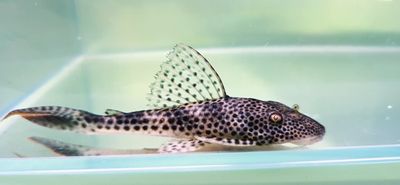
L011 Red Fin Thresher Pleco - (Aphanotorulus emarginatus)
L011 Red Fin Thresher Pleco - (Aphanotorulus emarginatus)
Price of shipping is not included.
5.0
(1)
was $55.00
Save 18%
$45.00
Captive Bred
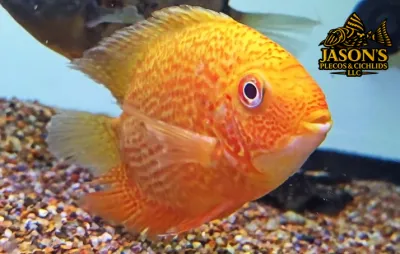
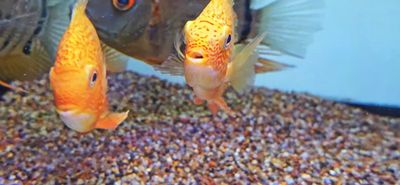
Red Spot Gold Severum - (Heros cf. efasciatus)
Red Spot Gold Severum - (Heros cf. efasciatus)
Price of shipping is not included.
5.0
(2)
was $85.00
Save 6%
$80.00
Wild Caught
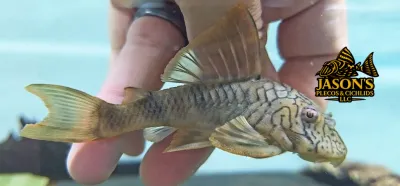
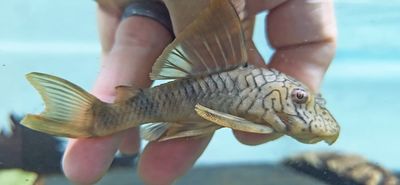
L076 Orange Seam Pleco - (Peckoltia sp.)
L076 Orange Seam Pleco - (Peckoltia sp.)
Price of shipping is not included.
5.0
(1)
was $80.00
Save 6%
$75.00
Captive Bred
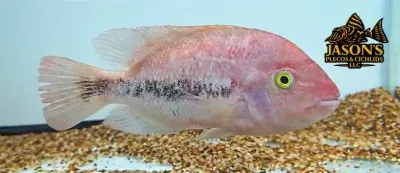
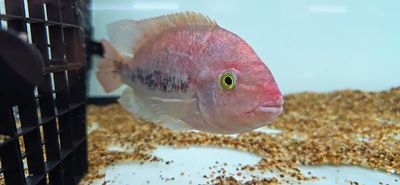
Fenestratus Cichlid - (Vieja Fenestratus)
Fenestratus Cichlid - (Vieja Fenestratus)
Price of shipping is not included.
was $80.00
Save 25%
$60.00
Powered by Lightspeed
Display prices in:USD