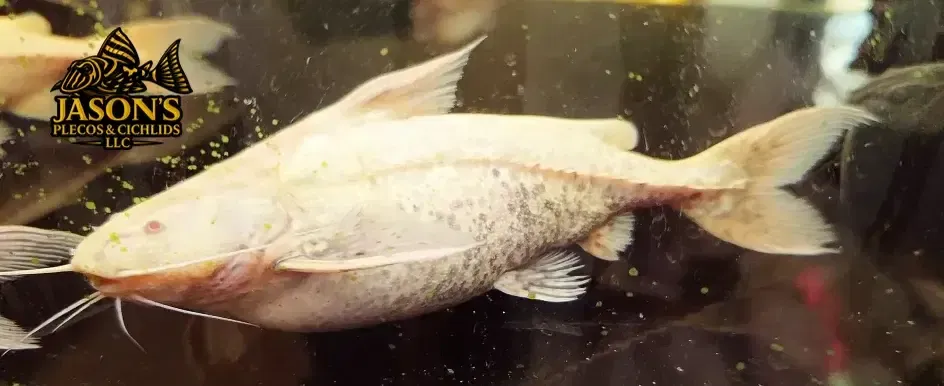
Dirty Albino Granulated Catfish - (Pterodoras granulosus)
$2 515.00
Wild Caught
was $3 000.00 Save 16%
Size
Required Reusable Shipping Bag
Questions, Comments, Concerns? Let us know!
Enter your text
Price of shipping is not included.
In stock: 2 available
1
Save this fish to my favorites.
Customer reviews
Reviews only from verified customers
No reviews yet. You can buy this product and be the first to leave a review.
Dirty Albino Granulated Catfish - (Pterodoras granulosus)
Fish Details, Description and Information Below:
🐟 Dirty Albino Granulated Catfish – (Pterodoras granulosus) – Extremely Rare Wild-Caught Color Morph
The Dirty Albino Granulated Catfish (Pterodoras granulosus) is an extraordinarily rare wild-caught color morph of one of South America's largest and most impressive armored catfish.
Normal Pterodoras granulosus are typically dark gray, brown, or charcoal-colored with darker mottling. This exceptional specimen displays dramatically reduced pigmentation, giving it the unusual pale, washed, or partially pigmented appearance commonly described in the aquarium hobby as a “Dirty Albino.”
Unlike a typical captive-produced albino strain, this fish is:
Wild Caught
making its unusual coloration especially remarkable.
The Granulated Catfish is a massive member of the thorny catfish family Doradidae. Adults develop heavily armored bodies, powerful pectoral spines, rows of protective lateral plates, a deeply forked tail, and a broad bottom-feeding head.
This is a true monster catfish. Scientific records include specimens approaching 3 feet in body length before the tail is included, so long-term housing requires an enormous custom aquarium or indoor pond-style system.
For the experienced monster-fish collector, a wild-caught Dirty Albino Pterodoras granulosus is an exceptionally unusual centerpiece animal.
🔎 Quick Facts – Dirty Albino Granulated Catfish
- 📛 Common Name: Dirty Albino Granulated Catfish
- 📛 Other Species Names: Granulated Catfish, Armado, Bacu, Common Bacu
- 🔬 Scientific Name: Pterodoras granulosus
- 🐟 Family: Doradidae
- 🧬 Subfamily: Doradinae
- 🎨 Color Form: Dirty Albino / Reduced-Pigment Morph
- 🌿 Collection: Wild Caught
- 🌎 Origin: South America
- 🌊 Native Range: Amazon and Paraná River basins and coastal drainages of Guyana and Suriname
- 💧 Water Type: Freshwater
- 📏 Maximum Scientific Record: Up to approximately 90.1 cm / 35.5 inches standard length in a documented female
- 📏 Adult Planning Size: Approximately 30–36"+ potential
- 🏠 Recommended Adult Housing: 500–750+ gallons; very large custom aquarium or indoor pond strongly preferred
- 📐 Adult Footprint: Approximately 7–8+ feet long with substantial front-to-back width
- 🌡️ Temperature: Approximately 72–79°F
- 💧 pH: Approximately 6.5–7.5
- 🍽️ Diet: Omnivore with a significant plant-based component
- 🌙 Activity: Primarily nocturnal
- 😌 Temperament: Generally peaceful for its size
- 🐠 Swimming Area: Bottom
- 👥 Social Behavior: Adults may occur in small groups in nature
- ⭐ Care Level: Advanced due to enormous adult size
- 🏆 Availability: Exceptionally Rare
🤍 What Does “Dirty Albino” Mean?
“Dirty Albino” is an aquarium trade description, not a separate scientific species or formally established taxonomic variety.
It is commonly used for unusually pale fish that retain some darker pigmentation instead of displaying the completely pigment-free appearance typically associated with classic albinism.
Depending on the individual, coloration may include:
- Cream
- Pale tan
- Light brown
- Pinkish areas
- Gold
- Gray
- Irregular darker pigmentation
- Faint mottling
Because this specimen is wild caught, its unusual pigmentation is especially noteworthy.
Important Color Morph Disclaimer
The term Dirty Albino describes the fish's appearance.
Without genetic testing or documented breeding history, the exact genetic mechanism responsible for the reduced pigmentation should not be assumed.
🌿 Wild-Caught Rarity
Most unusual aquarium color morphs are deliberately produced through generations of captive breeding.
This specimen is different.
This Dirty Albino Granulated Catfish is Wild Caught.
Finding a dramatically reduced-pigment individual of a naturally dark species in the wild is exceptionally unusual.
Wild color mutations must survive:
- Predation
- Competition
- Environmental conditions
- Natural food availability
- Disease
- Seasonal changes
before ever reaching the aquarium trade.
That makes a wild-caught specimen like this especially interesting to serious rare-fish collectors.
🛡️ A True Armored Catfish
Pterodoras granulosus belongs to the family:
Doradidae
commonly known as the:
Thorny Catfishes
The body is protected by heavy armor and prominent bony plates running along the sides.
Adults develop:
- Thick armored skin
- Lateral bony scutes
- Strong pectoral spines
- Powerful dorsal spine
- Broad head
- Sensory barbels
- Deeply forked tail
These features give mature Granulated Catfish an impressive prehistoric appearance.
⚠️ Sharp Armor & Spines
Although this species is not considered venomous, its:
- Pectoral spines
- Dorsal spine
- Lateral armor
can cause injury.
Large Doradid catfish should never be casually grabbed with bare hands.
They may also lock their pectoral spines when frightened, making conventional fish nets potentially dangerous for both the fish and the keeper.
Moving Large Specimens
For larger fish, a:
- Large rigid container
- Fish-safe transport tub
- Heavy-duty transfer container
is generally safer than attempting to lift the fish in an ordinary net.
Always know where the pectoral and dorsal spines are located.
🔊 Talking & Sound Production
Doradid catfish are famous for their ability to produce sounds.
They may create:
- Clicking
- Grunting
- Croaking
- Grinding sounds
especially when frightened or being moved.
These sounds can be produced through specialized movements involving the pectoral region and internal structures.
Hearing your Granulated Catfish make noise is therefore not necessarily a sign that something is wrong.
📏 Adult Size – A Genuine Monster Catfish
This species becomes enormous.
Scientific records include:
68 cm standard length
for male/unsexed fish
and:
90.1 cm standard length
for a documented female.
That is approximately:
35.5 inches before the tail fin is included.
For long-term aquarium planning:
Expect the possibility of a 30–36"+ adult catfish.
This is substantially larger than the 20–24 inch maximum sometimes repeated in aquarium-store descriptions.
🚨 Do Not Purchase Based on Current Size
A juvenile may appear manageable in an ordinary large aquarium.
A mature Granulated Catfish is an entirely different animal.
Before purchasing, the keeper should already understand the future requirements for:
- Aquarium dimensions
- Floor space
- Filtration
- Water changes
- Food
- Tankmates
- Moving the fish
- Long-term housing
Do not purchase this species assuming a standard 125- or 180-gallon aquarium will provide permanent adult housing.
🏠 Adult Aquarium Requirements
For a mature Pterodoras granulosus, I recommend planning around:
500–750+ gallons
with even larger custom systems preferred for exceptional adults.
Large specimens may be better suited to:
- Custom aquariums
- Indoor ponds
- Large heated pond systems
- Purpose-built monster-fish systems
Aquarium dimensions are more important than gallon volume alone.
📐 Floor Space Is Critical
A large Granulated Catfish needs room to turn.
For an adult specimen, think in terms of approximately:
7–8+ feet of aquarium length
and substantial front-to-back width.
A specialist Doradid husbandry reference recommends roughly a:
7-foot-long × 4-foot-wide footprint
for a full-sized animal.
A tall, narrow aquarium is not an appropriate substitute for a long, wide enclosure.
🏠 Aquarium Setup
Recommended adult setup includes:
- Large open bottom area
- Fine sand
- Smooth substrate
- Large driftwood
- Large sheltered areas
- Smooth rocks
- Dim or moderate lighting
- Strong filtration
- Excellent oxygenation
Avoid:
- Sharp decorations
- Tight caves
- Narrow openings
- Unsecured rock structures
A huge armored catfish can easily move aquarium décor.
🌙 Nocturnal Behavior
Pterodoras granulosus is primarily:
Nocturnal
The fish may remain relatively inactive during bright daylight and become much more active during:
- Evening
- Night
- Low-light periods
Provide shaded areas where the fish can rest comfortably.
Over time, many captive specimens learn feeding schedules and may become active during daylight when food is offered.
🌎 Natural Distribution
The Granulated Catfish has a very broad South American distribution.
It occurs in major systems including:
- Amazon River Basin
- Paraná River Basin
- La Plata drainage
- Coastal Guyana drainages
- Coastal Suriname drainages
Its distribution includes portions of several South American countries.
This widespread distribution also means that wild populations may experience somewhat different environmental conditions depending on locality.
🏞️ Natural Behavior
This is a bottom-oriented river and floodplain catfish.
Wild adults may occur in:
- Large rivers
- River channels
- Reservoirs
- Flooded areas
- Lagoons
- Floodplain environments
Adults have been observed in small groups.
The species is also:
Potamodromous
meaning it performs freshwater migrations.
These movements are associated with seasonal and reproductive cycles.
🍽️ Natural Diet – More Than a Predator
One of the most interesting things about this species is its diet.
It is sometimes described simply as a predatory catfish.
That is incomplete.
Pterodoras granulosus is an:
Opportunistic Omnivore
Wild foods can include:
- Fruits
- Seeds
- Plant material
- Filamentous algae
- Detritus
- Mollusks
- Aquatic invertebrates
- Terrestrial invertebrates
- Small fish
Research has even found that plant material can become increasingly important as the fish matures.
🍎 A Fruit-Eating Catfish
Wild Pterodoras granulosus are known to consume fallen fruits in flooded forest environments.
Palm fruits have been documented as an important food.
The fish can swallow fruits and seeds and may contribute to:
Seed dispersal
in South American floodplain ecosystems.
This unusual feeding ecology makes the Granulated Catfish much more than a simple meat-eating scavenger.
🍽️ Aquarium Diet
A varied omnivorous diet is recommended.
Suitable foods include:
- High-quality sinking catfish pellets
- Omnivore pellets
- Large sinking wafers
- Shrimp
- Krill
- Mussels
- Earthworms
- Insect-based foods
- Appropriate fish pieces
- Vegetable-based sinking foods
- Peas
- Squash
- Zucchini
- Other appropriate plant foods
Large specimens should receive a varied diet rather than only seafood.
🌿 Include Plant-Based Foods
Scientific feeding studies classify Pterodoras granulosus as an omnivore with a:
Herbivorous tendency
especially as specimens mature.
Plant-based foods should therefore remain part of the diet.
Do not maintain adults exclusively on:
- Shrimp
- Fish fillet
- Krill
- Other high-protein animal foods
Variety is important.
🚫 Avoid Routine Feeder Fish
We do not recommend routinely feeding live feeder fish.
Feeder fish may introduce:
- Parasites
- Bacteria
- Viral disease
- Nutritional problems
Granulated Catfish normally accept prepared and frozen foods readily.
There is little reason to expose an exceptionally rare fish to unnecessary feeder-fish risk.
😌 Temperament
Despite its massive adult size, the Granulated Catfish is generally considered relatively:
Peaceful
toward appropriately sized tankmates.
It is not normally an aggressive territorial predator in the same way as many monster catfish.
However:
Small fish may still be eaten.
Any fish that can comfortably fit inside the catfish's mouth should be considered at risk.
🐠 Tankmates
Potential tankmates in a sufficiently enormous aquarium may include:
- Large cichlids
- Peacock Bass
- Arowanas
- Large Datnoids
- Large Bichirs
- Large Plecos
- Other peaceful giant catfish
- Large characins
Tankmates should be:
- Too large to swallow
- Robust
- Compatible with the same water conditions
- Unable to harass the catfish
Always consider the adult size of every species, not just their current size.
⚠️ Be Careful With Extremely Aggressive Tankmates
Although heavily armored, a Granulated Catfish should not be expected to tolerate constant attacks from highly aggressive fish.
Repeated attacks can damage:
- Eyes
- Barbels
- Fins
- Soft areas between armor plates
Its armor is defensive protection, not permission to keep it with incompatible tankmates.
💩 Heavy Bioload
A 30"+ omnivorous catfish produces a tremendous amount of waste.
Strong filtration is essential.
Recommended filtration may include:
- Large sump systems
- Oversized mechanical filtration
- High-capacity biological filtration
- Large prefilters
- Powerful circulation
- Strong surface agitation
Maintain:
- ☠️ Ammonia: 0 ppm
- ☠️ Nitrite: 0 ppm
- 🔄 Nitrate: As low as reasonably possible
- 💨 Oxygenation: High
Large, regular water changes should be expected.
💧 Water Parameters
Because Pterodoras granulosus occurs across an enormous geographical range, wild conditions vary.
A practical captive range is approximately:
- 🌡️ Temperature: 72–79°F
- 💧 pH: 6.5–7.5
- 💦 Water: Soft to moderately mineralized
- 💨 Oxygenation: High
- ☠️ Ammonia: 0
- ☠️ Nitrite: 0
Some populations experience somewhat cooler conditions than many Amazonian monster fish.
There is usually no need to maintain this species permanently at extremely high tropical temperatures.
Stable, clean water is more important than chasing one exact pH value.
🧪 Wild-Caught Acclimation
Because this specimen is wild caught, careful acclimation is especially important.
After arrival:
- Match temperature carefully
- Avoid sudden pH changes
- Maintain excellent oxygenation
- Keep lighting subdued
- Provide a secure resting area
- Monitor respiration
- Monitor feeding
- Observe waste
- Quarantine when appropriate
Wild-caught fish may require additional time to become comfortable with aquarium activity and prepared foods.
♂️ Male vs. Female
Reliable external sexing is difficult.
There is no simple juvenile color or fin characteristic that should be relied upon for accurate sex determination.
Unless the sex has been confirmed by a reliable method:
Sell as Unsexed
Interestingly, current scientific records include an exceptionally large female, reinforcing that females should not automatically be assumed to remain smaller.
🥚 Breeding
Breeding Pterodoras granulosus is not considered practical in a normal home aquarium.
This is a:
- Very large
- Migratory
- Seasonal spawning species
Wild populations undertake migrations associated with reproduction and seasonal flooding.
Aquarium breeding information is extremely limited.
Unlike many plecos, this should not be described as a typical cave-spawning catfish.
For most private aquarists, it should be considered a display species rather than a realistic breeding project.
⭐ Why Keep a Dirty Albino Granulated Catfish?
For the properly equipped rare-fish collector, this is an extraordinary animal.
Its combination of:
- 🤍 Extremely unusual Dirty Albino coloration
- 🌿 Wild-caught origin
- 🛡️ Massive armored body
- 🔊 Sound-producing Doradid behavior
- 📏 Giant adult size
- 🍎 Fascinating fruit-eating behavior
- 😌 Relatively peaceful temperament
- 🌎 South American origin
- 🏆 Exceptional rarity
makes this specimen unlike almost any ordinary catfish available in the aquarium hobby.
A wild-caught reduced-pigment specimen of an already impressive giant Doradid is truly a collector-level fish.
⚠️ Important Considerations
Before purchasing a Dirty Albino Granulated Catfish:
- Understand that “Dirty Albino” is a trade description of its unusual pigmentation.
- This particular specimen is wild caught.
- Plan for a potentially 30–36"+ adult.
- Do not purchase based on juvenile or current size.
- Plan for approximately 500–750+ gallons long term.
- Larger systems are strongly preferred.
- Provide substantial aquarium width.
- Use powerful mechanical and biological filtration.
- Maintain excellent oxygenation.
- Expect heavy waste production.
- Feed both animal and plant-based foods.
- Do not rely exclusively on meat.
- Avoid routine feeder fish.
- Provide large sheltered resting areas.
- Use caution around the sharp pectoral and dorsal spines.
- Avoid ordinary nets for very large specimens.
- Do not house with fish small enough to swallow.
- Never release this fish into natural waterways.
This species is recommended for advanced monster-fish keepers with appropriate permanent housing.
🌎 Invasive Species Warning
Large nonnative catfish should never be released into natural waterways.
The species has previously been documented as a nonnative aquarium-related occurrence in Florida, although that occurrence did not result in an established population.
Never release this fish into:
- Rivers
- Lakes
- Ponds
- Streams
- Canals
- Drainage systems
If permanent care becomes impossible, contact a qualified aquarium facility, experienced keeper, rescue, or appropriate wildlife authority.
🧬 Color Morph Disclaimer
Dirty Albino is an aquarium trade designation describing the appearance of this individual.
It is not a formally recognized subspecies or separate species.
This listing identifies the fish scientifically as:
Pterodoras granulosus
Exact pigmentation and genetic inheritance cannot be guaranteed without documented genetic or breeding information.
🚚 Live Fish Shipping
Large Granulated Catfish require careful professional packing.
Shipping availability depends on:
- Fish size
- Destination
- Weather conditions
- Carrier availability
- Applicable state and local regulations
Because of the fish's:
- Heavy armor
- Strong pectoral spines
- Dorsal spine
- Large body
larger specimens may require:
- Heavy-duty shipping bags
- Multiple layers of protection
- Oversized insulated boxes
- Additional water
- Specialized packing
- Airline cargo shipping
Please review our Shipping & Payment Information and Live Arrival Guarantee / DOA Policy before ordering.
⚠️ Buyer Responsibility
Customers are responsible for confirming that Pterodoras granulosus may legally be purchased, possessed, transported, and received in their state or local jurisdiction before ordering.
Never release aquarium fish into local waterways.
Below are fish you may also like.
Wild Caught
Teapa Cichlid — (Paraneetroplus gibbiceps)
Teapa Cichlid — (Paraneetroplus gibbiceps)
Price of shipping is not included.
was $250.00
Save 20%
$200.00
Wild Caught
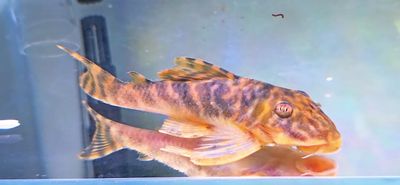
L377 Prince Tiger Pleco - (Peckoltia sp.)
L377 Prince Tiger Pleco - (Peckoltia sp.)
Price of shipping is not included.
5.0
(2)
was $125.00
Save 32%
$85.00
Captive Bred
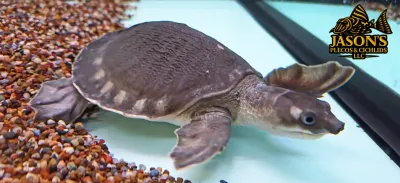
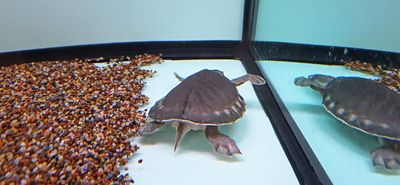
Fly River Turtle/Pig Nose Turtle - (Carettochelys insculpta)
Fly River Turtle/Pig Nose Turtle - (Carettochelys insculpta)
Price of shipping is not included.
was $1 600.00
Save 22%
$1 250.00
Captive Bred
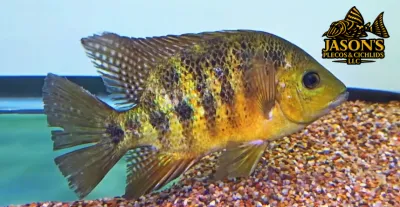
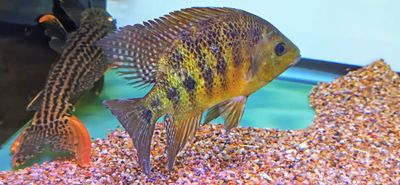
Bocourti Cichlid - (Cincelichthys bocourti)
Bocourti Cichlid - (Cincelichthys bocourti)
Price of shipping is not included.
5.0
(1)
was $95.00
Save 5%
$90.00
Wild Caught
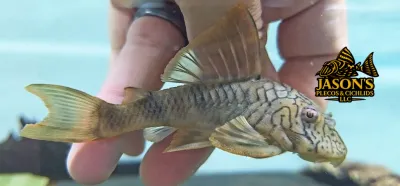
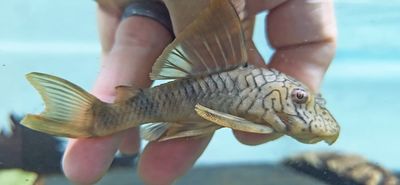
L076 Orange Seam Pleco - (Peckoltia sp.)
L076 Orange Seam Pleco - (Peckoltia sp.)
Price of shipping is not included.
5.0
(1)
was $80.00
Save 6%
$75.00
Powered by Lightspeed
Display prices in:USD