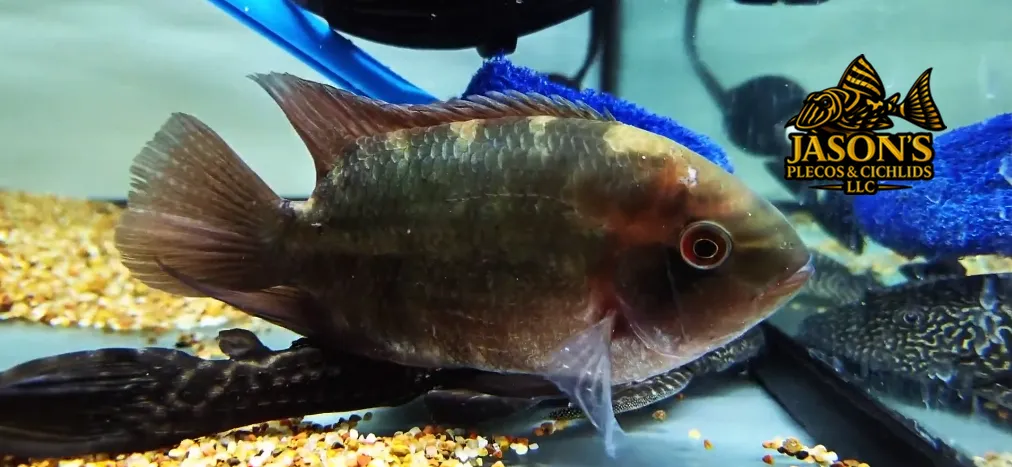
Chocolate Cichlid - (Hypselecara temporalis)
5.0
2 reviews
Reviews from verified customers who have purchased products at this store.
$50.00
Captive Bred
was $55.00 Save 9%
Size
Questions, Comments, Concerns? Let us know!
Enter your text
Price of shipping is not included.
In stock: 4 available
1
Save this fish to my favorites.
Customer reviews
Reviews only from verified customers
Reviews are only accepted from verified customers who have signed in and purchased the products. This ensures that each review is based on genuine customer experiences. All reviews are checked before publication to prevent spam.
NORTH ARLINGTON,
United States
Aug 28, 2026
If you shop at Jason's you can forget about buying fish or getting information from any other source.
Chocolate Cichlid - (Hypselecara temporalis)
Fish Details, Description and Information Below:
🍫 Chocolate Cichlid – (Hypselecara temporalis) – Large Peaceful South American Cichlid
The Chocolate Cichlid (Hypselecara temporalis), also commonly called the Emerald Cichlid, is a large South American cichlid famous for its unusual ability to shift between beautiful shades of olive green, chocolate brown, bronze, orange, burgundy, wine red, and gold.
Unlike many large cichlids, the Chocolate Cichlid is generally known for having a comparatively calm and peaceful temperament, making it an excellent centerpiece fish for a properly planned large South American aquarium.
Adults develop a deep, high-bodied profile with a characteristic dark blotch along the side. Mature specimens can become especially colorful, with shades of:
- Olive green
- Chocolate brown
- Bronze
- Burgundy
- Wine red
- Orange
- Gold
- Reddish purple
The eyes may range from amber-gold to striking red.
This is a substantial cichlid capable of reaching approximately 12 inches, so it should not be treated as a medium-sized 8-inch species.
🔎 Quick Facts – Chocolate Cichlid
- 📛 Common Name: Chocolate Cichlid
- 📛 Other Name: Emerald Cichlid
- 🔬 Scientific Name: Hypselecara temporalis
- 📅 Originally Described: 1862
- 🐟 Family: Cichlidae
- 🧬 Genus: Hypselecara
- 📏 Current Listing Size: Approximately 5–6 inches
- 🌎 Origin: South America
- 🌊 Native Region: Amazon River Basin
- 🇧🇷 Native Country: Brazil
- 🇨🇴 Native Country: Colombia
- 🇵🇪 Native Country: Peru
- 🇪🇨 Native Country: Ecuador
- 💧 Water Type: Freshwater
- 🌊 Natural Habitat: Slow-flowing and relatively calm tropical waters
- 📏 Maximum Documented Size: Approximately 12 inches / 30 cm total length
- 📏 Adult Planning Size: Approximately 10–12 inches
- 🏠 Recommended Aquarium: Approximately 90 gallons or larger for one adult
- 🏠 Pair / Community Aquarium: Approximately 125+ gallons preferred
- 📐 Aquarium Length: Approximately 5 feet or longer strongly preferred
- 🌡️ Temperature: Approximately 76–84°F
- 💧 pH: Approximately 5.0–7.5
- 💦 Water: Soft to moderately mineralized
- 🌊 Water Movement: Gentle to Moderate
- 💨 Oxygenation: Good
- 🍽️ Diet: Omnivore
- 🦐 Animal / Insect Foods: Important
- 🌿 Plant-Based Foods: Useful as part of a varied diet
- 😌 Temperament: Generally peaceful for a large cichlid
- ⚠️ Breeding Temperament: Territorial while spawning and guarding fry
- 🥚 Breeding: Substrate Spawner
- 👨👩👧 Parental Care: Biparental
- ♂️ Mature Male Trait: May develop a pronounced frontal / nuchal hump
- ⭐ Care Level: Intermediate
- 🌎 IUCN Conservation Status: Least Concern
🧬 Valid Scientific Species
The currently accepted scientific name is:
Hypselecara temporalis
The species was originally described in:
1862
by Albert Günther.
It was originally described as:
Heros temporalis
Older aquarium and scientific literature may also place this fish under names such as:
- Cichlasoma temporale
- Heros temporalis
Modern taxonomy recognizes it as:
Hypselecara temporalis
For this product, use:
Chocolate Cichlid – (Hypselecara temporalis)
🍫 Why Is It Called the Chocolate Cichlid?
The name:
CHOCOLATE CICHLID
comes from the deep:
- Chocolate brown
- Burgundy
- Bronze
- Wine-red
colors commonly displayed by mature fish.
However, this species is much more colorful than its name suggests.
A healthy adult may also show:
- Olive green
- Mustard yellow
- Orange
- Gold
- Red
- Purple
- Metallic green
depending on the individual and its condition.
🎨 A Cichlid That Changes Color
One of the most interesting characteristics of Hypselecara temporalis is its ability to change appearance dramatically.
The same fish can look:
- Olive green
- Brown
- Bronze
- Red
- Burgundy
- Orange
- Nearly gray
at different times.
Coloration can change because of:
- Mood
- Stress
- Breeding condition
- Aquarium lighting
- Background color
- Social interactions
- Water conditions
- Age
⚠️ Do Not Guarantee One Exact Adult Color
Because Chocolate Cichlids are naturally variable:
EXACT ADULT COLORATION CANNOT BE GUARANTEED
A juvenile that appears mostly brown may develop strong:
- Red
- Orange
- Green
- Burgundy
coloration as it matures.
Likewise, a brightly colored fish may temporarily become much darker or paler when stressed.
⚫ Characteristic Dark Body Blotch
A typical Hypselecara temporalis develops a noticeable:
DARK MID-BODY BLOTCH
The prominence of this marking varies according to the fish's:
- Mood
- Age
- Stress level
- Geographic origin
Some specimens also show darker markings toward the:
CAUDAL PEDUNCLE
near the base of the tail.
👁️ Beautiful Red Eyes
Mature Chocolate Cichlids often develop striking eyes.
The iris can range from:
- Amber
- Gold
- Orange
- Deep red
The reddish eye can become especially impressive when combined with the mature fish's:
- Olive-green body
- Burgundy belly
- Bronze scales
🆚 Chocolate Cichlid vs. Hypselecara coryphaenoides
There are two recognized species within the genus:
Hypselecara
and both may occasionally be referred to as Chocolate Cichlids.
The two are:
Hypselecara temporalis
and:
Hypselecara coryphaenoides
They should not be confused.
🍫 Hypselecara temporalis
The species on this page generally develops:
- Deeper body
- Steeper forehead
- Olive-green coloration
- Red or wine-colored lower body
- Distinctive mid-body dark blotch
- Larger adult size
🍫 Hypselecara coryphaenoides
The other species tends to have:
- More elongated body
- More gradual forehead profile
- Darker brown coloration
- Different placement of the major dark blotch
For this product:
THE CORRECT SPECIES IS Hypselecara temporalis
🌎 Native Distribution
The Chocolate Cichlid is widely distributed throughout portions of the:
AMAZON RIVER BASIN
Current scientific records include populations from:
- 🇧🇷 Brazil
- 🇨🇴 Colombia
- 🇵🇪 Peru
- 🇪🇨 Ecuador
🇵🇪 Peru
The species is documented from the:
UCAYALI AND AMAZON RIVER DRAINAGES
of Peru.
The Ucayali is one of the major headwater systems forming the Amazon River.
🇨🇴 Colombia
Chocolate Cichlids are also documented within the:
AMAZONAS RIVER DRAINAGE
of Colombia.
🇧🇷 Brazil
The species has an extensive Brazilian distribution including portions of the:
SOLIMÕES–AMAZON SYSTEM
and additional eastern Amazonian drainages.
⚠️ Remove Venezuela From the Origin
The older product page lists:
VENEZUELA
as part of the native distribution.
I would remove that.
For the updated page, use:
AMAZON BASIN – BRAZIL, COLOMBIA, PERU & ECUADOR
🌊 Natural Habitat
Hypselecara temporalis is documented from:
SLOW-FLOWING, TURBID WATER
rather than high-energy rapids.
This is important when designing the aquarium.
Chocolate Cichlids are not rheophilic fish that need to battle powerful current all day.
🌊 Gentle to Moderate Flow
Provide:
GENTLE TO MODERATE WATER MOVEMENT
with enough circulation to:
- Maintain oxygen
- Prevent dead zones
- Carry waste toward filtration
but avoid turning the aquarium into a high-speed river tank.
🪵 Natural-Style Aquarium
A suitable Chocolate Cichlid aquarium can contain:
- Large driftwood
- Branches
- Smooth rocks
- Sand
- Open swimming space
- Shaded areas
- Hardy plants
- Floating plants
🌿 Plants
Chocolate Cichlids can work better in planted aquariums than many large Central and South American cichlids.
However, a large adult may still:
- Dig
- Move substrate
- Disturb roots
- Damage delicate plants
Use hardy species and secure them well.
🌱 Good Plant Choices
Plants attached to décor can be especially useful.
Examples include:
- Anubias
- Java Fern
- Bolbitis
Floating plants can also provide:
- Shade
- Security
- Diffused lighting
🌑 Subdued Lighting
Chocolate Cichlids often appreciate:
SUBDUED LIGHTING
Strong lighting without sufficient cover may cause shy individuals to:
- Hide
- Darken
- Become nervous
Use:
- Driftwood
- Floating plants
- Shaded areas
to create secure resting locations.
📏 Adult Size – Important Correction
The current product page lists:
UP TO 8 INCHES
That is too small.
FishBase documents Hypselecara temporalis reaching:
30 CM TOTAL LENGTH
or approximately:
12 INCHES
📏 Responsible Adult Planning
For customers purchasing this species:
EXPECT APPROXIMATELY 10–12 INCHES
Large mature males can become especially:
- Deep-bodied
- Thick
- Heavy
so aquarium space should be planned around more than just length.
🏠 Aquarium Size – Important Update
The current:
55-GALLON
recommendation is too small for a permanent adult setup.
For one adult Chocolate Cichlid:
APPROXIMATELY 90 GALLONS OR LARGER
is a much better long-term recommendation.
👫 Pair or Community Aquarium
For:
- A bonded pair
- Chocolate Cichlid with other large cichlids
- Multiple large community fish
I recommend:
125+ GALLONS
with larger aquariums preferable when several large fish are present.
📐 Aquarium Length
A mature Chocolate Cichlid should have substantial horizontal swimming room.
Aim for approximately:
5 FEET OR LONGER
whenever possible.
A longer aquarium provides:
- More swimming space
- Better territorial separation
- More décor options
- Greater compatibility with tankmates
💩 Adult Bioload
A 10–12 inch cichlid produces substantial:
- Solid waste
- Dissolved waste
- Food debris
Use appropriately sized:
MECHANICAL + BIOLOGICAL FILTRATION
💧 Water Parameters
A practical long-term range is:
- 🌡️ Temperature: Approximately 76–84°F
- 💧 pH: Approximately 5.0–7.5
- 💦 Hardness: Soft to moderately mineralized
- 🌊 Water Movement: Gentle to Moderate
- 💨 Oxygenation: Good
- ☠️ Ammonia: 0 ppm
- ☠️ Nitrite: 0 ppm
- 🔄 Nitrate: Keep reasonably low
🌡️ Temperature
A good general maintenance range is:
76–84°F
Chocolate Cichlids can tolerate relatively warm tropical conditions.
However, stability is more important than constantly adjusting temperature within the acceptable range.
💧 Soft, Slightly Acidic Water
Much of the species' natural distribution consists of soft Amazonian water.
A slightly acidic aquarium is ideal.
However, established aquarium fish can often adapt to reasonably stable:
NEAR-NEUTRAL WATER
provided extremes are avoided.
⚠️ Stability Matters
Avoid sudden changes in:
- Temperature
- pH
- Hardness
- Total dissolved solids
Gradual acclimation is especially important when moving fish between substantially different water conditions.
🔄 Regular Water Changes
Large cichlids benefit greatly from consistent water changes.
The exact schedule depends on:
- Aquarium volume
- Fish size
- Number of tankmates
- Feeding
- Filtration
Maintain:
AMMONIA = 0
and:
NITRITE = 0
at all times.
🍽️ Diet – Omnivore
The Chocolate Cichlid is best described as:
OMNIVOROUS
and should receive a varied diet.
FishBase gives the species a relatively low omnivorous trophic level based on recorded food items, rather than identifying it as a specialized predator.
🥣 Quality Cichlid Pellets
A good-quality cichlid pellet can form the foundation of the captive diet.
Choose a food appropriate for:
- Large South American cichlids
- Omnivorous species
- The fish's mouth size
🦐 Animal & Insect Foods
Useful supplementary foods include:
- Mysis shrimp
- Brine shrimp
- Krill
- Bloodworms
- Earthworms
- Insect-based foods
- Quality frozen cichlid foods
🌿 Plant-Based Foods
Plant ingredients should also be represented in the overall diet.
Suitable options include:
- Spirulina-containing pellets
- Vegetable-containing cichlid foods
- Quality omnivore formulas
- Occasional appropriate vegetables
⚖️ Balanced Diet
The goal should be:
QUALITY PREPARED FOOD + INSECT / AQUATIC PROTEIN + PLANT MATERIAL
rather than feeding only:
- Meat
or only:
- Vegetable matter
🚫 Avoid Feeder Fish
There is no nutritional need to feed live feeder fish.
Feeders can introduce:
- Parasites
- Bacterial disease
- Poor nutrition
Quality prepared and frozen foods are safer.
🍽️ Avoid Overfeeding
Chocolate Cichlids are enthusiastic feeders and can become overweight when given excessive rich food.
Feed enough to maintain:
- Good body condition
- Strong growth
- Healthy coloration
without allowing large amounts of uneaten food to accumulate.
😌 Temperament – Peaceful for a Large Cichlid
One of the Chocolate Cichlid's greatest attractions is its generally:
CALM TEMPERAMENT
Compared with many similarly sized cichlids, Hypselecara temporalis is often:
- Less aggressive
- Less confrontational
- More tolerant of tankmates
⚠️ Peaceful Does Not Mean Defenseless
Every cichlid is an individual.
A Chocolate Cichlid may still:
- Defend territory
- Chase tankmates
- Guard food
- Become aggressive while breeding
Provide enough space for fish to avoid one another.
💕 Breeding Aggression
A normally peaceful pair can become significantly more territorial when:
- Pairing
- Spawning
- Guarding eggs
- Protecting fry
Tankmates may need substantially more space during these periods.
🐠 Tankmates
Potential tankmates may include appropriately sized:
- Severums
- Geophagus
- Large peaceful Acara-type cichlids
- Silver dollars
- Large tetras
- Peaceful catfish
- Plecos
- Other mild large South American species
⚠️ Avoid Extremely Aggressive Cichlids
Chocolate Cichlids may be intimidated by highly aggressive species.
Avoid forcing them to compete constantly with extremely territorial fish that:
- Chase continuously
- Control the entire aquarium
- Prevent feeding
- Prevent access to shelter
🐟 Small Fish
A large Chocolate Cichlid has a relatively modest mouth compared with many predators, but:
VERY SMALL FISH MAY STILL BE AT RISK
Tankmates should be appropriately sized.
🧠 Personality
Chocolate Cichlids often become very responsive to their keeper.
Established adults may:
- Recognize feeding routines
- Approach the front glass
- Follow movement outside the aquarium
- Learn where food is offered
This combination of size and relatively calm behavior makes them excellent:
CENTERPIECE FISH
for large aquariums.
♂️ Male vs. Female
Chocolate Cichlids are not always easy to sex when young.
Sexual differences become more obvious with maturity.
♂️ Mature Males
FishBase notes that mature males may develop a:
WELL-DEVELOPED FRONTAL HUMP
also commonly called a:
- Nuchal hump
- Forehead hump
Mature males may also become:
- Larger
- Deeper-bodied
- More robust
♀️ Mature Females
Females generally remain:
- Somewhat smaller
- Less strongly humped
than mature males.
However:
DO NOT SEX JUVENILES BY COLOR ALONE
🥚 Captive Breeding – Confirmed
Chocolate Cichlids are:
BIPARENTAL SUBSTRATE SPAWNERS
Captive breeding is well established.
Both parents participate in:
- Protecting eggs
- Guarding larvae
- Defending fry
💕 Pair Formation
Chocolate Cichlids can be selective when choosing mates.
A naturally bonded pair is generally preferable to simply forcing two random mature fish together.
Introductions should be monitored carefully.
🪨 Spawning Site
Aquarium pairs may choose:
- Flat rocks
- Slate
- Large smooth surfaces
- Prepared substrate areas
- Excavated pits
FishBase specifically records spawning in:
HOLES DUG IN THE SUBSTRATE
🥚 Egg Laying
A pair cleans and prepares the selected spawning location.
The female deposits eggs and the male follows to fertilize them.
Large mature females may produce:
SEVERAL HUNDRED EGGS
although clutch size varies.
👨👩👧 Biparental Care
Both parents participate in brood care.
They may:
- Fan the eggs
- Remove damaged eggs
- Guard the spawning site
- Move larvae
- Dig nursery pits
- Protect free-swimming fry
🕳️ Moving the Larvae
Chocolate Cichlids may excavate pits in the substrate and move developing young between protected locations.
This behavior is normal.
🐣 Fry
Once free swimming, fry can be offered appropriately sized foods such as:
- Baby brine shrimp
- Fine quality fry food
- Crushed high-quality flakes
- Fine cichlid foods
🛡️ Excellent Parents
Established pairs can provide impressive parental care.
Both adults may aggressively defend the brood against perceived threats.
For this reason:
BREEDING PAIRS REQUIRE ADEQUATE TERRITORY
⚠️ First-Time Parents
Young or inexperienced pairs may occasionally:
- Eat eggs
- Abandon a spawn
- Fight
- Fail to protect fry
This does not necessarily mean the pair will never breed successfully.
Experience often improves subsequent spawning attempts.
🌎 Conservation Status
Hypselecara temporalis is currently classified as:
LEAST CONCERN
on the IUCN Red List.
The assessment dates to:
2020
The species has a broad Amazonian distribution.
⭐ Why Keep a Chocolate Cichlid?
The Chocolate Cichlid combines:
- 🍫 Beautiful chocolate and burgundy coloration
- 🟢 Olive and emerald-green tones
- 🔴 Striking mature red coloration
- 👁️ Amber-to-red eyes
- ⚫ Distinctive dark body blotch
- 📏 Impressive 10–12 inch adult potential
- 😌 Comparatively peaceful temperament
- 🌊 Amazon River heritage
- 🧠 Interactive personality
- 🥚 Fascinating breeding behavior
- 👨👩👧 Excellent biparental care
- 🌈 Dramatic color changes
into one of the most interesting large South American cichlids available to aquarium keepers.
⚠️ Important Considerations
Before purchasing a Chocolate Cichlid:
- The correct scientific name is Hypselecara temporalis.
- The species remains scientifically valid.
- Older literature may use Heros temporalis or Cichlasoma temporale.
- The species is native to the Amazon River Basin.
- Current scientific records include Brazil, Colombia, Peru, and Ecuador.
- Remove Venezuela from the current origin description.
- Natural habitat includes slow-flowing and turbid waters.
- Do not provide extreme current.
- Provide gentle to moderate water movement.
- Adult coloration can change dramatically.
- Exact adult color cannot be guaranteed.
- A dark mid-body blotch is characteristic.
- Mature males may develop a pronounced frontal hump.
- The current listing size is approximately 5–6 inches.
- Do not use 8 inches as the adult maximum.
- FishBase documents approximately 12 inches / 30 cm total length.
- Plan for approximately 10–12 inches.
- Increase the permanent aquarium recommendation above 55 gallons.
- Approximately 90 gallons or larger is recommended for one adult.
- Approximately 125+ gallons is preferred for a pair or large-fish community.
- A 5-foot or longer aquarium is strongly preferred.
- Maintain approximately 76–84°F.
- Maintain approximately pH 5.0–7.5.
- Stable water conditions are important.
- Maintain ammonia and nitrite at zero.
- Feed a varied omnivorous diet.
- Use quality cichlid pellets as a staple.
- Supplement with insect and aquatic-animal foods.
- Include appropriate plant ingredients.
- Do not use feeder fish.
- The species is generally peaceful for its size.
- Individuals can still become territorial.
- Breeding pairs can become significantly more aggressive.
- Choose similarly peaceful, appropriately sized tankmates.
- Chocolate Cichlids are confirmed substrate spawners.
- Both parents guard the eggs and young.
- The species is currently classified as Least Concern.
- Never release aquarium fish into natural waterways.
🧬 Taxonomy
The currently accepted scientific name is:
Hypselecara temporalis (Günther, 1862)
Classification:
- Order: Cichliformes
- Family: Cichlidae
- Subfamily: Cichlinae
- Genus: Hypselecara
- Species: temporalis
Original scientific combination:
Heros temporalis
For this product, use:
Chocolate Cichlid – (Hypselecara temporalis)
🚚 Live Fish Shipping
Live fish are professionally packed for safe transport.
Shipping availability depends on:
- Fish size
- Destination
- Weather conditions
- Carrier availability
- Applicable state and local regulations
Larger Chocolate Cichlids may require:
- Larger insulated shipping boxes
- Additional water
- Heavy-duty shipping bags
- Multiple protective bag layers
- Specialized packing
- Airline cargo shipping depending on size and destination
Please review our Shipping & Payment Information and Live Arrival Guarantee / DOA Policy before ordering.
⚠️ Buyer Responsibility
Customers are responsible for confirming that Hypselecara temporalis may legally be purchased, possessed, transported, and received in their state or local jurisdiction before ordering.
Never release aquarium fish into natural waterways.
Below are fish you may also like.
Wild Caught
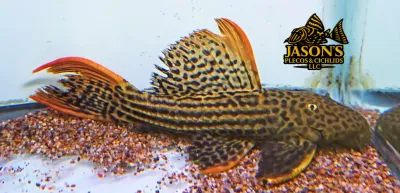
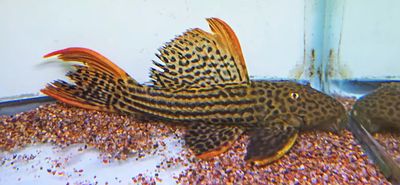
L025 Scarlet Cactus Pleco 7 Pointer - (Pseudacanthicus pirarara)
L025 Scarlet Cactus Pleco 7 Pointer - (Pseudacanthicus pirarara)
Price of shipping is not included.
was $550.00
Save 6%
$515.00
Wild Caught
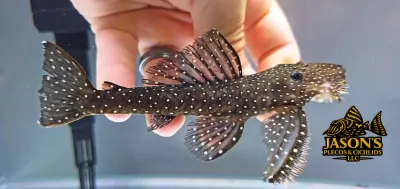
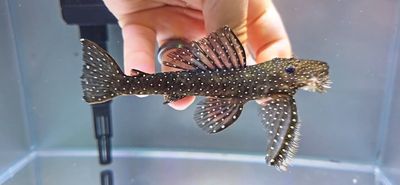
L235 Flyer Cat Pleco - (Pseudolithoxus anthrax)
L235 Flyer Cat Pleco - (Pseudolithoxus anthrax)
Price of shipping is not included.
5.0
(1)
was $75.00
Save 7%
$70.00
Wild Caught
L075 Para Pleco - (Peckoltia sabaji)
L075 Para Pleco - (Peckoltia sabaji)
Price of shipping is not included.
5.0
(3)
was $60.00
Save 17%
$50.00
Captive Bred
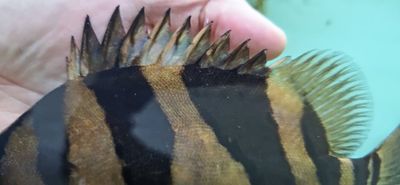
Indo Datnoid - (Datnioides microlepis)
Indo Datnoid - (Datnioides microlepis)
Price of shipping is not included.
was $800.00
Save 9%
$725.00
Captive Bred
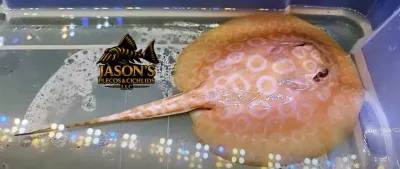
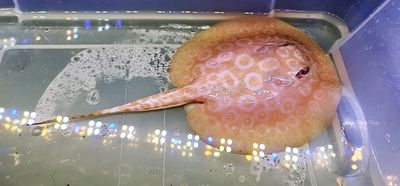
Golden Base Albino Pearl Stingray - (Potamotrygon Jabuti)
Golden Base Albino Pearl Stingray - (Potamotrygon Jabuti)
Price of shipping is not included.
was $850.00
Save 4%
$815.00
Powered by Lightspeed
Display prices in:USD