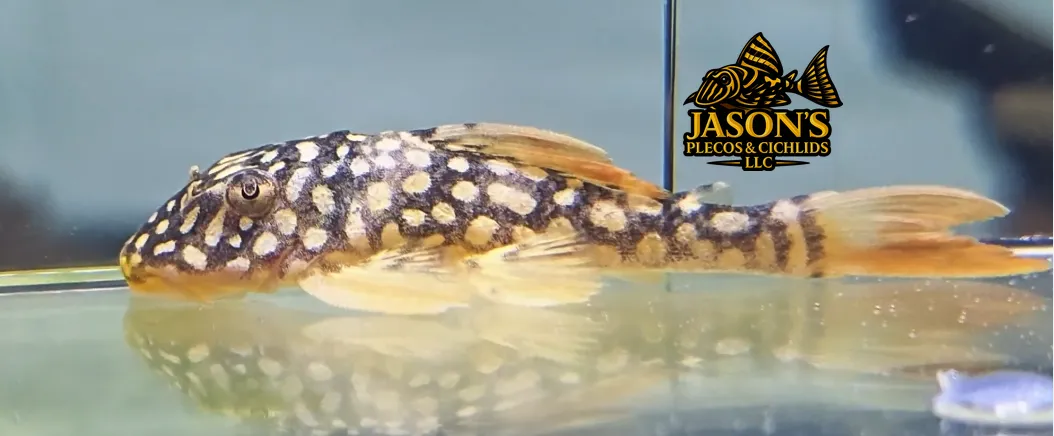
L014 Sunshine Pleco/Goldie Pleco - (Scobinancistrus aureatus)
5.0
1 review
Reviews from verified customers who have purchased products at this store.
$100.00
Sold out
was $110.00 Save 9%
Size
Questions, Comments, Concerns? Let us know!
Enter your text
Price of shipping is not included.
Sold out
Save this fish to my favorites.
Customer reviews
Reviews only from verified customers
Reviews are only accepted from verified customers who have signed in and purchased the products. This ensures that each review is based on genuine customer experiences. All reviews are checked before publication to prevent spam.
Michael T.
Paris,
United States
Sep 30, 2026
L014 Sunshine Pleco/Goldie Pleco - (Scobinancistrus aureatus)
Fish Details, Description and Information Below:
☀️ L014 Sunshine Pleco / Goldie Pleco – (Scobinancistrus aureatus) – Wild-Caught Rio Xingu Pleco
The L014 Sunshine Pleco, also known as the Goldie Pleco (Scobinancistrus aureatus), is one of the most colorful large plecos from Brazil's famous Rio Xingu.
Known for its striking combination of a dark brown to nearly black body covered with bright yellow or golden spots, this species becomes especially impressive as it matures. Its fins may display intense:
- Golden yellow
- Orange-yellow
- Gold
- Bronze-yellow
coloration that contrasts dramatically with the darker body.
Young L014 Sunshine Plecos often display larger golden spots and extremely bright yellow-orange fins. As they mature, the pattern may change significantly. The spots often become smaller and more numerous, and adult coloration can vary depending on age, locality, genetics, environment, and individual development.
This is a substantial pleco that can reach approximately 10–12 inches, requiring a large aquarium with excellent filtration, strong oxygenation, warm water, rocky hiding areas, and enough bottom territory.
Unlike many plecos commonly purchased for algae control, the L014 Sunshine Pleco is a protein-leaning omnivore that naturally consumes a combination of biofilm, aquatic organisms, invertebrates, organic material, and other available foods.
For aquarists looking for a large, colorful Rio Xingu pleco with impressive adult appearance and personality, Scobinancistrus aureatus is an outstanding showpiece fish.
🔎 Quick Facts – L014 Sunshine Pleco / Goldie Pleco
- 📛 Common Names: Sunshine Pleco, Goldie Pleco, Golden Pleco
- 🔢 L-Number: L014
- 🔬 Scientific Name: Scobinancistrus aureatus
- 🐟 Family: Loricariidae
- 🧬 Subfamily: Hypostominae
- 🌿 Stock: Wild Caught
- 🌎 Origin: South America
- 🇧🇷 Country: Brazil
- 🌊 Native Range: Rio Xingu Basin
- 📍 Locality: Xingu system in Pará, including areas around Altamira and the Volta Grande region
- 💧 Water Type: Freshwater
- 📏 Scientific Maximum: Approximately 29 cm / 11.4 inches total length
- 📏 Adult Planning Size: Approximately 10–12 inches
- 🏠 Recommended Aquarium: 100 gallons or larger
- 🏠 Preferred Aquarium: 125+ gallons for a full-grown adult or multiple large bottom dwellers
- 🌡️ Temperature: Approximately 78–84°F
- 💧 pH: Approximately 6.0–7.5
- 💦 Water: Soft to moderately mineralized
- 💨 Oxygenation: High
- 🌊 Water Movement: Moderate to Strong
- 🍽️ Diet: Protein-Leaning Omnivore
- 😌 Temperament: Generally peaceful toward midwater fish; territorial toward other large plecos
- 🌙 Activity: Primarily nocturnal / crepuscular
- 🐠 Swimming Area: Bottom
- 🥚 Breeding: Cave Spawner
- ⭐ Care Level: Intermediate to Advanced
- 🌎 Conservation Status: Vulnerable
- 🏆 Type: Large Collector / Showpiece Pleco
☀️ Why Is It Called the Sunshine Pleco?
The common name:
Sunshine Pleco
comes from the brilliant yellow and golden coloration found particularly on the:
- Dorsal fin
- Pectoral fins
- Pelvic fins
- Caudal fin
- Underside
against the fish's much darker body.
The alternative common name:
Goldie Pleco
refers to the same characteristic.
Even the scientific species name:
aureatus
refers to its golden coloration.
🎨 Appearance
The L014 has a powerful, heavily armored body covered with brilliant spotting.
Typical body coloration includes:
- Dark brown
- Chocolate brown
- Gray-black
- Charcoal
- Nearly black
The body is covered with:
- Golden spots
- Yellow spots
- Orange-yellow spots
- Cream-gold spots
The fins can become dramatically brighter than the body.
👶 Juvenile Appearance
Young Sunshine Plecos can be extremely striking.
Juveniles frequently display:
- Large yellow or orange spots
- Strong dark-and-gold contrast
- Brilliant yellow fins
- Yellow-orange fin margins
- Dark body coloration
Young fish may therefore appear somewhat different from mature adults.
🔄 Adult Color Transformation
One of the most interesting features of the L014 is how much its appearance can change with age.
As the fish grows:
- Individual spots may become smaller
- The number of spots may increase
- Spot density may increase
- Fin coloration may change
- Overall contrast may change
- The body may become lighter or darker
Some mature fish retain spectacular golden fin coloration, while others may become somewhat less intensely colored with age.
🗺️ Locality Can Affect Appearance
Wild L014 populations occur across portions of the Xingu system.
Fish from different collection locations may vary in:
- Body darkness
- Spot size
- Spot density
- Fin coloration
- Yellow edging
- Overall contrast
This is natural geographic variation.
For this reason:
Exact adult coloration should never be guaranteed from juvenile appearance alone.
⚠️ Color & Pattern Disclaimer
Every L014 Sunshine Pleco is an individual.
Exact adult:
- Spot size
- Spot density
- Gold coloration
- Fin coloration
- Body color
- Contrast
can vary.
Appearance can also temporarily change due to:
- Shipping
- Stress
- Lighting
- Aquarium background
- Water quality
- Diet
- Acclimation
Always evaluate the individual fish being purchased rather than expecting every L014 to develop identically.
🌎 Natural Distribution
Scobinancistrus aureatus is endemic to:
Brazil's Rio Xingu Basin
The species is particularly associated with the Xingu system in:
Pará, Brazil
including areas such as:
- Volta Grande do Xingu
- Middle and lower Xingu
- Areas around Altamira
- Regions near the mouth of the Rio Iriri
The Xingu is internationally famous among pleco enthusiasts because of its extraordinary diversity of loricariid catfish.
🪨 Natural Habitat
The Rio Xingu contains extensive areas of:
- Rock
- Boulders
- Crevices
- Rapids
- Strong current
- Highly oxygenated water
- Submerged structure
L014 Sunshine Plecos spend much of their time around rocky structure where they can shelter during brighter periods and emerge to search for food.
A properly designed aquarium should reflect this lifestyle.
📏 Adult Size
FishBase currently documents Scobinancistrus aureatus reaching:
29 cm / approximately 11.4 inches total length
Aquarium specimens commonly reach approximately:
10–12 inches
under good conditions.
This is a substantial adult pleco.
I would therefore avoid advertising a normal maximum of 14 inches unless you have documentation for a specific oversized specimen.
For customer planning:
Expect approximately 10–12 inches total adult length.
🚨 Do Not Purchase Based on Juvenile Size
Young Sunshine Plecos may only measure:
- 2 inches
- 3 inches
- 4 inches
- 5 inches
when purchased.
They eventually become large, powerful bottom-dwelling fish.
Customers should plan for:
- Adult body size
- Territory
- Filtration
- Food requirements
- Bottom space
- Hiding areas
- Long-term aquarium dimensions
rather than choosing permanent housing based on the fish's current size.
🏠 Aquarium Size
For one adult L014 Sunshine Pleco:
100 gallons or larger
is recommended.
For a large mature specimen:
125 gallons or larger is preferred.
If keeping:
- Multiple L014s
- Other large plecos
- Large cichlids
- Other large bottom dwellers
additional aquarium space becomes extremely important.
📐 Aquarium Footprint Matters
Because the L014 spends most of its time near the bottom:
Length and width matter more than excessive height.
A larger footprint provides:
- More caves
- More feeding territory
- More resting areas
- Greater separation between plecos
- Better water circulation
- Reduced territorial conflict
🪨 Aquarium Setup
An ideal Sunshine Pleco aquarium should include:
- Large smooth rocks
- Rock piles
- Slate
- Large caves
- Driftwood
- Sand or smooth gravel
- Shaded areas
- Open feeding areas
- Moderate to strong water movement
- Powerful filtration
- Excellent oxygenation
Provide enough room for a mature fish to enter and leave shelters without becoming trapped.
🏠 Caves & Shelters
L014 Sunshine Plecos appreciate protected daytime resting locations.
Suitable shelters include:
- Large ceramic pleco caves
- Slate caves
- Rock crevices
- Large driftwood overhangs
- Natural-looking rocky shelters
When keeping several large plecos:
Provide more shelters than fish.
This helps reduce competition over preferred territories.
🪵 Driftwood
Driftwood can be useful in an L014 aquarium because it provides:
- Shelter
- Shade
- Territory boundaries
- Biofilm
- Natural surfaces
However:
The Sunshine Pleco is not a specialized wood-eating pleco.
It should not be maintained as though it were a Panaque or Panaqolus.
Driftwood is useful habitat and enrichment, but it is not the primary diet.
💨 HIGH OXYGENATION IS IMPORTANT
The Rio Xingu is a warm river environment.
Warm water naturally holds less dissolved oxygen than cooler water.
This makes:
Strong Oxygenation Extremely Important
when maintaining Xingu plecos at elevated temperatures.
Provide:
- Strong surface movement
- Efficient filtration
- Air stones if needed
- Powerheads where appropriate
- Good circulation throughout the aquarium
Avoid stagnant areas.
🌊 Water Movement
The L014 benefits from:
Moderate to Strong Current
but the aquarium does not need to blast every square inch with extreme flow.
A good setup includes:
- Stronger-flow areas
- Moderate-flow areas
- Sheltered resting locations
This gives the fish the ability to choose its preferred environment.
💧 Water Parameters
A practical aquarium range is:
- 🌡️ Temperature: 78–84°F
- 💧 pH: Approximately 6.0–7.5
- 💦 Hardness: Soft to moderately mineralized
- 💨 Oxygenation: High
- 🌊 Flow: Moderate to Strong
- ☠️ Ammonia: 0 ppm
- ☠️ Nitrite: 0 ppm
- 🔄 Nitrate: Keep as low as reasonably possible
Specialist L014 keepers often maintain the species toward the warmer end of this range.
At higher temperatures:
Increase oxygenation accordingly.
🌡️ Avoid Unnecessarily Extreme Heat
Your previous page extended the range to:
88°F
I would not use 88°F as the routine care recommendation.
For ordinary long-term maintenance:
Approximately 78–84°F
provides a more practical range.
Warmer breeding temperatures can be used by experienced breeders under carefully controlled, highly oxygenated conditions.
💩 Filtration
A mature Sunshine Pleco produces a substantial amount of waste.
Strong filtration is essential.
Recommended filtration may include:
- Large canister filters
- Sump filtration
- High-capacity biological media
- Powerful mechanical filtration
- Strong surface agitation
- Additional circulation pumps
Maintain:
- Ammonia: 0 ppm
- Nitrite: 0 ppm
- Nitrate: As low as reasonably practical
Regular partial water changes should be part of normal care.
🍽️ Diet – Protein-Leaning Omnivore
One of the most important husbandry points for L014 is diet.
The Sunshine Pleco should be considered a:
Protein-Leaning Omnivore
It consumes a mixture of:
- Biofilm
- Organic material
- Aquatic invertebrates
- Small animal foods
- Algae
- Plant material
but generally shows a strong preference for protein-rich foods.
🦐 Recommended Foods
Suitable foods include:
- High-quality sinking carnivore pellets
- Quality pleco pellets
- Insect-based sinking foods
- Shrimp
- Prawns
- Mysis shrimp
- Krill
- Bloodworms
- Mussels
- Snails
- Quality gel foods
Vegetable-containing foods should also be included for variety.
🥒 Plant-Based Foods
Plant foods may include:
- Quality algae wafers
- Spirulina foods
- Zucchini
- Squash
- Green beans
- Other appropriate vegetables
These should supplement the diet rather than make up the entire feeding program.
🚫 Not an Algae-Cleaning Pleco
Do not purchase an L014 expecting it to maintain an aquarium by eating algae.
Although the fish may graze:
- Biofilm
- Soft algae
- Organic material
it requires intentional feeding.
Aquarium algae alone is not an adequate diet.
⚠️ Do Not Feed Only Vegetables
An L014 should not be maintained exclusively on:
- Zucchini
- Algae wafers
- Vegetable foods
because Scobinancistrus aureatus has a strong preference for more protein-rich foods.
A balanced feeding program should include:
Animal Protein + Prepared Foods + Some Plant Matter
🚫 Avoid Overfeeding Protein
Protein-rich does not mean unlimited food.
Large plecos fed excessive quantities of:
- Shrimp
- Mussels
- Pellets
- Other rich foods
can quickly produce:
- Excess waste
- Rising nitrate
- Poor water quality
Feed appropriate portions and remove uneaten food.
🌙 Activity
Sunshine Plecos are primarily:
Nocturnal to Crepuscular
They may remain hidden during brighter portions of the day and become more active:
- At dusk
- After lights go out
- During feeding
- Under subdued lighting
Established adults may become increasingly confident and appear during daytime.
😌 Temperament
Toward midwater and upper-water fish, the Sunshine Pleco is generally:
Peaceful
However, behavior toward other bottom dwellers can be very different.
Large L014s may become territorial toward:
- Other L014s
- Other large plecos
- Similar-shaped loricariids
- Fish competing for caves
⚠️ Pleco Territorial Behavior
Territorial disputes may involve:
- Pushing
- Chasing
- Tail slapping
- Blocking caves
- Body-to-body contests
- Odontode contact
Large plecos are powerful fish.
Provide:
- Large floor space
- Multiple shelters
- Visual barriers
- Multiple feeding locations
when keeping more than one.
🐠 Tankmates
Potential tankmates may include appropriately sized:
- Geophagus
- Severums
- Larger tetras
- Silver dollars
- Rainbowfish
- Peaceful to moderately assertive cichlids
- Other large community fish
Bottom-dwelling tankmates require more careful consideration.
🚨 Do Not Overcrowd the Bottom
A 125-gallon aquarium may comfortably hold one large L014 with appropriate midwater fish but become crowded quickly when several:
- Plecos
- Catfish
- Loaches
- Other bottom dwellers
are added.
Evaluate:
Bottom Territory
not simply total gallons.
♂️ Male vs. Female
Sexing becomes easier as the fish matures.
Mature Males May Develop:
- Broader head
- Stronger cheek odontodes
- More pronounced pectoral-fin odontodes
- More developed body odontodes
- More territorial cave behavior
Mature Females May:
- Appear fuller through the abdomen
- Have somewhat less pronounced odontodes
- Develop a more rounded body when mature
Juveniles can be extremely difficult to sex reliably.
Unless confidently established:
Sell as Unsexed
🥚 Breeding
The L014 Sunshine Pleco is an:
Egg-Laying Cave Spawner
Captive breeding has been successfully accomplished.
A mature pair enters an appropriately sized cave or breeding tube where spawning occurs.
After spawning:
The Male Provides Parental Care
and guards the eggs and developing fry.
🥚 Documented Captive Spawning
Successful aquarium breeding reports have documented clutches of approximately:
150 yellow-orange eggs
under warm, clean, highly oxygenated conditions.
Captive reproduction requires considerably more space than breeding small Hypancistrus or Ancistrus because adult L014s are much larger fish.
🏠 Breeding Caves
A mature L014 requires a very large breeding cave compared with smaller pleco species.
Successful breeders have used:
- Large ceramic tubes
- Large rectangular breeding caves
- Bamboo-style tubes
- Large one-ended shelters
The cave should be:
- Large enough for both fish during spawning
- Narrow enough for the male to defend
- Secure
- Positioned where good water movement passes the entrance
💨 Breeding Conditions
Successful breeding is generally associated with:
- Warm water
- Very high oxygen levels
- Extremely clean water
- Strong filtration
- Large water changes
- Appropriate caves
- Well-conditioned adults
Breeding temperatures may be higher than normal display-tank temperatures.
These conditions should only be attempted when oxygenation can remain extremely high.
👶 Fry
After hatching, fry initially survive from their yolk sacs.
Once actively feeding, suitable foods may include:
- Fine sinking pleco foods
- Crushed protein-rich pellets
- Small frozen foods
- Quality gel foods
- Appropriately sized vegetable foods
Young L014s require exceptionally clean water while growing.
🌎 Conservation Status
Scobinancistrus aureatus is currently assessed as:
Vulnerable
The species is endemic to the:
Rio Xingu Basin of Brazil
Its restricted distribution makes habitat conditions within the Xingu especially important to the long-term security of wild populations.
Responsible aquarium keeping means providing permanent appropriate housing and never releasing captive fish.
⭐ Why Keep an L014 Sunshine Pleco?
The L014 is an exceptional showpiece pleco because of its combination of:
- ☀️ Golden-yellow fins
- 🟡 Brilliant spotting
- ⚫ Dark body coloration
- 💪 Powerful adult build
- 📏 Impressive 10–12 inch adult size
- 🪨 Rio Xingu habitat behavior
- 🌙 Nocturnal personality
- 🥚 Fascinating cave-spawning reproduction
- 🇧🇷 Brazilian origin
- 🏆 Strong collector appeal
A mature Sunshine Pleco in excellent condition can become one of the most visually impressive fish in a large freshwater aquarium.
⚠️ Important Considerations
Before purchasing an L014 Sunshine Pleco:
- The correct scientific name is Scobinancistrus aureatus.
- L014 is native to Brazil's Rio Xingu Basin.
- This listing is for wild-caught fish.
- Expect approximately 10–12 inches adult length.
- Do not plan around juvenile size.
- Provide approximately 100 gallons or larger.
- 125+ gallons is preferred for a large mature fish.
- Prioritize aquarium length and bottom area.
- Provide large caves and rocky shelters.
- Maintain warm water.
- Maintain excellent oxygenation.
- Provide moderate to strong water movement.
- Use powerful mechanical and biological filtration.
- Keep ammonia and nitrite at zero.
- Feed a protein-leaning omnivorous diet.
- Include both animal and plant-based foods.
- Do not purchase this fish primarily for algae control.
- Expect territorial behavior toward other large plecos.
- Provide multiple territories when keeping several bottom dwellers.
- Never release aquarium fish into natural waterways.
🧬 Taxonomy
The currently accepted scientific name is:
Scobinancistrus aureatus Burgess, 1994
The species belongs to:
- Order: Siluriformes
- Family: Loricariidae
- Subfamily: Hypostominae
- Genus: Scobinancistrus
- Species: aureatus
Unlike many L-number plecos that remain scientifically undescribed:
L014 has a formally described scientific species name.
The correct product identification is:
L014 Sunshine Pleco / Goldie Pleco – (Scobinancistrus aureatus)
🚚 Live Fish Shipping
Live fish are professionally packed for safe transport.
Shipping availability depends on:
- Fish size
- Destination
- Weather conditions
- Carrier availability
- Applicable state and local regulations
Large L014 Sunshine Plecos may require:
- Larger insulated shipping boxes
- Additional water
- Heavy-duty shipping bags
- Reusable shipping bags
- Specialized packing
- Airline cargo shipping
Please review our Shipping & Payment Information and Live Arrival Guarantee / DOA Policy before ordering.
⚠️ Buyer Responsibility
Customers are responsible for confirming that Scobinancistrus aureatus may legally be purchased, possessed, transported, and received in their state or local jurisdiction before ordering.
Never release aquarium fish into natural waterways.
Below are fish you may also like.
Captive Bred
Red Devil Cichlid/Midas Cichlid/Midevil Cichlid - (Amphilophus Citrinellus)
Red Devil Cichlid/Midas Cichlid/Midevil Cichlid - (Amphilophus Citrinellus)
Price of shipping is not included.
5.0
(3)
$100.00
Captive Bred
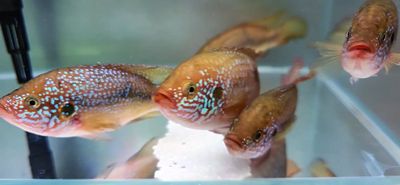
Turquoise Blue Jewel Cichlid - (Hemichromis Bimaculatus)
Turquoise Blue Jewel Cichlid - (Hemichromis Bimaculatus)
Price of shipping is not included.
5.0
(1)
was $55.00
Save 64%
$20.00
Captive Bred
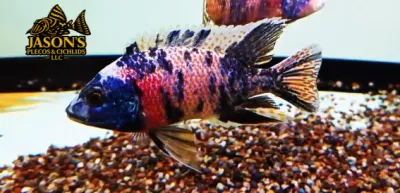
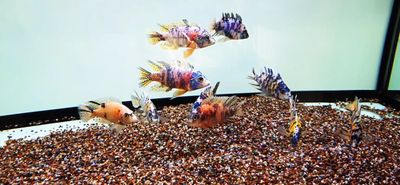
OB Peacock Cichlid (Aulonocara sp.)
OB Peacock Cichlid (Aulonocara sp.)
Price of shipping is not included.
was $50.00
Save 10%
$45.00
Captive Bred
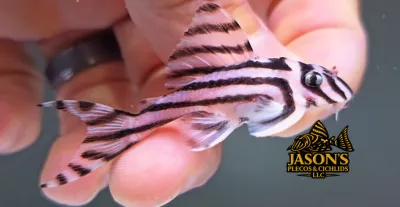
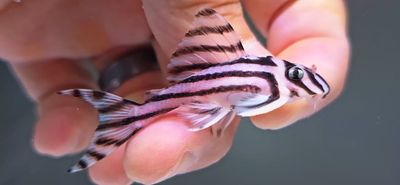
L046 Zebra Pleco - (Hypancistrus zebra)
L046 Zebra Pleco - (Hypancistrus zebra)
Price of shipping is not included.
5.0
(2)
was $250.00
Save 10%
$225.00
Wild Caught
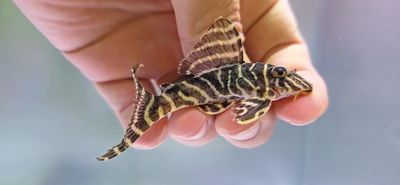
L340 Mega Clown Pleco - (Hypancistrus sp.)
L340 Mega Clown Pleco - (Hypancistrus sp.)
Price of shipping is not included.
5.0
(1)
was $55.00
Save 18%
$45.00
Powered by Lightspeed
Display prices in:USD