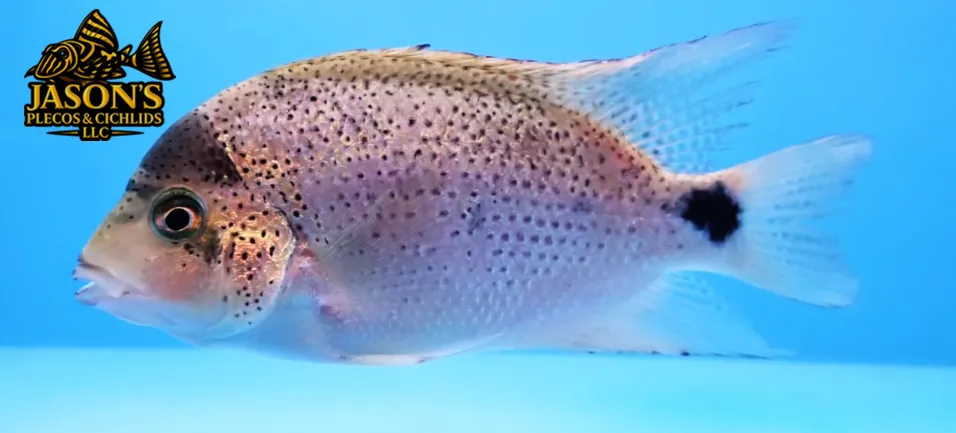
Silver Cichlid - (Vieja argentea)
5.0
2 reviews
Reviews from verified customers who have purchased products at this store.
$120.00
Captive Bred
was $130.00 Save 8%
Size
Questions, Comments, Concerns? Let us know!
Enter your text
Price of shipping is not included.
In stock: 1 available
1
Save this fish to my favorites.
Customer reviews
Reviews only from verified customers
Reviews are only accepted from verified customers who have signed in and purchased the products. This ensures that each review is based on genuine customer experiences. All reviews are checked before publication to prevent spam.
NORTH ARLINGTON,
United States
Feb 7, 2026
Jason alerted the buyer that it was a fish who recovered from an injury. I barely noticed the scar when it arrived. It acclimated well with its tankmates
Silver Cichlid - (Vieja argentea)
Fish Details, Description and Information Below:
🐠 Silver Cichlid (Vieja argentea)
The Silver Cichlid, also known as the White Cichlid or Silver Vieja, is a stunning Central American cichlid admired for its brilliant silver-white coloration, intricate black pearling, and impressive size. Its shimmering metallic appearance and bold personality make it one of the most visually striking large cichlids available in the aquarium hobby.
Scientifically recognized today as Maskaheros argenteus, this species is still widely sold under its former name, Vieja argentea.
With its powerful body, intelligent behavior, and beautiful coloration, the Silver Cichlid is an excellent centerpiece fish for experienced aquarists with spacious aquariums.
🧬 Scientific Classification
- 🐟 Common Name: Silver Cichlid, White Cichlid, Silver Vieja
- 🔬 Scientific Name: Maskaheros argenteus
- 📖 Former Scientific Name: Vieja argentea
- 🧬 Family: Cichlidae
- 🌎 Origin: Mexico and the Usumacinta River drainage of Central America
- 📏 Maximum Size: Approximately 10–12 inches
- ⏳ Lifespan: Approximately 10–15 years with proper care
- ⚠️ Temperament: Aggressive and territorial
- ⭐ Care Level: Moderate to Advanced
- 🍽️ Diet: Omnivore
- 🏠 Minimum Tank Size: 125 gallons recommended for an adult
- 🌡️ Temperature: 76–84°F
- 💧 pH Range: 7.0–8.0
The currently accepted scientific classification is supported by the California Academy of Sciences' Catalog of Fishes.
Eschmeyer's Catalog of Fishes+1
🎨 Appearance & Coloration
The Silver Cichlid is famous for its beautiful metallic coloration and striking black markings.
Adults typically develop a brilliant silver-white body with numerous dark speckles or pearling across the scales. These intricate markings create an attractive contrast against the fish's reflective coloration.
Its body is deep, muscular, and laterally compressed, giving it the powerful appearance characteristic of many large Central American cichlids.
✨ Distinctive Physical Characteristics
- 🤍 Silver-White Coloration: A bright metallic body that reflects aquarium lighting beautifully.
- ⚫ Black Pearling: Small black markings scattered across the body and fins.
- 🐟 Powerful Body: A deep-bodied, muscular appearance.
- 🧠 Prominent Forehead: Mature males may develop a noticeable nuchal hump.
- 🪶 Extended Fins: Adult males may develop longer, more pointed dorsal and anal fins.
- 🌈 Color Changes: Color intensity and contrast can vary with age, mood, and environmental conditions.
Juveniles often appear less colorful than adults, with silver-gray coloration and markings that become more distinct as they mature.
Under proper aquarium conditions, mature specimens can develop an almost porcelain-white appearance with spectacular dark patterning.
🌎 Natural Habitat & Origin
The Silver Cichlid is native to the Usumacinta River drainage, primarily associated with southern Mexico and northern Guatemala.
This river system contains a variety of freshwater habitats, including large rivers, channels, and connected lakes.
The species inhabits freshwater environments where it encounters rocky areas, submerged structures, and open spaces.
Unlike many commercially produced hybrid cichlids, the Silver Cichlid is a naturally occurring species.
🌿 Natural Habitat Characteristics
- 🌊 Large freshwater rivers and connected waterways
- 🪨 Rocky areas and submerged structures
- 🏝️ Sandy, gravel, and mixed substrates
- 🌡️ Warm tropical water
- 💧 Neutral to moderately alkaline water
- 🐟 Areas with access to shelter and open swimming space
Recreating these general environmental characteristics helps provide a comfortable and stimulating aquarium environment.
Its natural distribution and freshwater habitat are documented by FishBase and Cichlid Room Companion.
fishbase.org+1
🏡 Aquarium Setup & Water Parameters
Silver Cichlids are large, strong fish that require spacious aquariums and excellent filtration.
Although they can adapt to a range of aquarium conditions, stable water chemistry and consistent maintenance are essential for long-term health.
💧 Recommended Water Parameters
- 🌡️ Temperature: 76–84°F
- 🧪 pH: 7.0–8.0
- 💎 General Hardness: Approximately 8–15 dGH
- ⚠️ Ammonia: 0 ppm
- ⚠️ Nitrite: 0 ppm
- 💦 Nitrate: Ideally below 20–30 ppm
- 🌊 Water Movement: Moderate
- 🔄 Filtration: Strong biological and mechanical filtration
🏠 Aquarium Size
A 125-gallon aquarium is recommended as a practical minimum for a single adult, with 150–180 gallons or larger preferred for additional swimming space.
Aquariums containing multiple large cichlids may require significantly more room depending on the species and individual temperaments.
Because Silver Cichlids can become aggressive and territorial, aquarium length and available floor space are especially important.
🪨 Recommended Decorations
- 🪵 Large driftwood pieces
- 🪨 Stable rock formations
- 🏠 Caves and sheltered areas
- 🏝️ Sand or smooth gravel
- 🏊 Large open swimming areas
- 🌿 Hardy, securely anchored plants or artificial decorations
Silver Cichlids may dig, move substrate, and rearrange decorations.
⚠️ Important: Heavy rocks should be supported securely to prevent shifting or collapse when the fish excavates the substrate.
Strong filtration and regular water changes are particularly important because these fish produce substantial amounts of waste as they mature.
😎 Temperament & Behavior
Silver Cichlids are intelligent, confident, and highly territorial fish.
They are known for developing strong personalities and often become very responsive to their keepers.
Many individuals learn to associate people with feeding and may approach the front glass whenever someone enters the room.
However, their impressive appearance comes with a relatively aggressive temperament.
⚠️ Territorial Behavior
Silver Cichlids may display aggression toward:
- Other Silver Cichlids
- Similarly sized cichlids
- Fish entering their preferred territory
- Newly introduced tankmates
- Other fish during breeding activity
Aggression often becomes more pronounced as the fish matures.
Males may be particularly territorial, although females can also display substantial aggression.
Providing adequate swimming space, visual barriers, and carefully selected tankmates can help reduce conflicts.
Even in large aquariums, compatibility is never guaranteed.
🐟 Tankmate Compatibility
Silver Cichlids are generally best suited for large aquariums containing carefully selected, similarly sized fish.
Their territorial nature makes them unsuitable for most peaceful community aquariums.
✅ Potential Tankmates
Depending on individual temperament and aquarium size, possible tankmates include:
- 🐠 Severum Cichlids
- 🐟 Other large Vieja species
- 🐠 Large Paraneetroplus species
- 🐟 Appropriately sized Silver Dollars
- 🐡 Large, robust Plecos
- 🐠 Other similarly sized Central American cichlids
These combinations should be attempted only in appropriately sized aquariums with careful observation.
❌ Tankmates to Avoid
- Small tetras and livebearers
- Small or timid cichlids
- Delicate, slow-moving fish
- Fish requiring significantly different water conditions
- Species unable to withstand territorial aggression
⚠️ Important: Silver Cichlids can become extremely aggressive during breeding. A compatible community may become unstable when a pair begins defending a spawning territory.
For many hobbyists, keeping a single Silver Cichlid as a centerpiece fish is the safest and most predictable option.
🍽️ Diet & Feeding
Silver Cichlids are omnivores that consume a variety of food sources.
In nature, their feeding habits include both animal and plant-based material. In captivity, a balanced diet containing quality prepared foods and vegetable matter is recommended.
🥬 Recommended Foods
- 🟤 High-quality large cichlid pellets
- 🌿 Spirulina-based pellets
- 🥬 Blanched spinach and other suitable leafy vegetables
- 🥒 Zucchini and other vegetables
- 🦐 Mysis shrimp
- 🦞 Krill in moderation
- 🪱 Bloodworms as an occasional treat
- 🐟 Quality omnivore cichlid foods
A high-quality pellet containing both plant and animal ingredients should form the foundation of the diet.
Vegetable-based foods provide useful nutritional variety and should be offered regularly.
⏰ Feeding Frequency
Juveniles generally benefit from smaller meals twice daily, while adults can usually be maintained on one or two controlled feedings per day.
Avoid feeding excessive amounts of rich, protein-heavy foods.
⚠️ Feeding Tip: Overfeeding can contribute to obesity, digestive problems, and deteriorating water quality. A balanced diet and consistent feeding schedule are preferable to excessive feeding intended to accelerate growth.
📏 Growth Rate & Adult Size
Silver Cichlids are large, relatively substantial fish that commonly approach 10 inches in adulthood, with some specimens reaching approximately 12 inches.
FishBase documents a maximum reported total length of approximately 10.6 inches (27 cm), although aquarium reports may describe larger individuals.
fishbase.org+1
Growth is generally fastest during the juvenile stages and gradually slows as the fish reaches maturity.
📈 Factors Influencing Growth
- 🧬 Genetics
- 🍽️ Nutritional quality
- 🏠 Aquarium dimensions
- 💧 Water quality
- 🌡️ Temperature stability
- 🐟 Competition with tankmates
- ❤️ Overall health
Males commonly become larger and heavier-bodied than females.
Some mature males also develop a prominent nuchal hump, particularly during breeding periods.
Maintaining stable water conditions and providing sufficient aquarium space are essential for proper development.
🥚 Breeding & Reproduction
Silver Cichlids are substrate-spawning cichlids that may reproduce successfully in captivity.
Breeding requires a compatible male and female, adequate space, and suitable spawning surfaces.
Because these fish can be extremely aggressive, pairing adults must be approached carefully.
❤️ Pair Formation
Compatible pairs may establish territories and begin displaying courtship behaviors such as:
- 🪨 Cleaning rocks or other flat surfaces
- 🎨 Displaying intensified coloration
- 🐟 Swimming together and defending a territory
- 🏝️ Excavating shallow areas in the substrate
- ⚠️ Increasing aggression toward other fish
🥚 Spawning Process
Once a suitable location is selected, the female deposits eggs on a cleaned surface while the male fertilizes them.
Depending on the size and maturity of the female, a substantial number of eggs may be produced.
Both parents typically participate in protecting the eggs and developing offspring.
Eggs may hatch within several days, depending on water temperature.
After hatching, the larvae are commonly moved into small depressions prepared by the parents until they become free-swimming.
🐣 Raising the Fry
Once free-swimming, fry can be offered:
- Newly hatched brine shrimp
- Finely crushed quality fry foods
- Appropriate powdered foods
- Other suitably sized nutritious foods
Frequent small feedings and excellent water quality encourage healthy development.
⚠️ Breeding Warning: Silver Cichlids may become extremely aggressive while protecting eggs and fry. A dedicated breeding aquarium is strongly recommended.
🩺 Health & Disease Prevention
Silver Cichlids are generally hardy when maintained under proper aquarium conditions.
However, poor water quality, nutritional deficiencies, stress, and aggressive tankmates can contribute to health problems.
⚠️ Potential Health Concerns
- External parasites
- Bacterial infections
- Internal parasites
- Digestive problems
- Injuries from territorial disputes
- Skin and fin damage
- Stress-related illness
Like other large cichlids, they may also develop head and lateral line erosion under certain chronic husbandry conditions.
✅ Signs of a Healthy Silver Cichlid
- 🏊 Active and confident swimming
- 👀 Clear eyes
- 🍽️ Strong appetite
- 🪶 Intact fins
- 💨 Normal breathing
- 🎨 Healthy, consistent coloration
- 🐟 Normal balance and posture
- ❤️ No visible sores or abnormal growths
🛡️ Disease Prevention
- Maintain stable water parameters
- Perform regular water changes
- Provide a varied, nutritious diet
- Avoid overcrowding
- Monitor aggression
- Quarantine newly acquired fish
- Use appropriate filtration and oxygenation
Proper quarantine is especially valuable for preventing the introduction of parasites and infectious diseases into established aquariums.
🧠 Intelligence & Interaction
One of the most appealing characteristics of the Silver Cichlid is its intelligence and responsiveness.
These fish often develop recognizable routines and may become accustomed to the presence of their keepers.
🤩 Common Interactive Behaviors
- 👀 Following movement outside the aquarium
- 🍽️ Recognizing feeding routines
- 🐟 Approaching the front glass when people enter the room
- 🪨 Rearranging substrate and decorations
- 🏠 Establishing and defending territories
- 😎 Displaying distinct individual personalities
Some Silver Cichlids become exceptionally interactive, making them particularly enjoyable for hobbyists who appreciate fish with bold personalities.
💡 Interesting Facts About the Silver Cichlid
- 🤍 Brilliant Silver Coloration: Its reflective silver-white scales give it an almost metallic appearance.
- ⚫ Unique Black Pearling: The intricate dark markings create a beautiful contrast against its light-colored body.
- 🧬 Scientific Name Changes: Originally described as Vieja argentea, the species is now classified as Maskaheros argenteus.
- 🌎 Central American Native: It naturally inhabits the Usumacinta River drainage.
- 🧠 Highly Intelligent: Many individuals recognize feeding routines and respond to their keepers.
- 💪 Powerful Cichlid: Its muscular body and territorial behavior make it unsuitable for small community aquariums.
- 🥚 Dedicated Parents: Breeding pairs actively defend their eggs and fry.
- 🪨 Aquarium Landscapers: They may dig and rearrange substrate and decorations.
- ⏳ Long-Lived Fish: With proper care, they can remain impressive aquarium inhabitants for many years.
- 🐟 Not a Hybrid: Unlike many ornamental cichlids, the Silver Cichlid is a naturally occurring species.
🌿 Conservation & Wild Populations
The Silver Cichlid is a naturally occurring Central American species with a relatively restricted geographic distribution.
Its populations are associated with the Usumacinta River system, an important freshwater ecosystem supporting numerous native fish species.
The species is currently classified as Least Concern (LC) by the IUCN, based on an assessment completed in 2018.
fishbase.org+1
Responsible aquarium keeping, including avoiding the release of aquarium fish into natural waterways, helps protect native aquatic ecosystems.
❤️ Final Thoughts
The Silver Cichlid (Vieja argentea, currently Maskaheros argenteus) is a spectacular Central American cichlid that combines breathtaking silver-white coloration, beautiful black pearling, and a bold, intelligent personality.
Its impressive appearance and interactive behavior make it a highly desirable species for experienced cichlid enthusiasts.
Although relatively hardy, this species requires a large aquarium, excellent filtration, consistent maintenance, and careful consideration when selecting tankmates.
For aquarists prepared to accommodate its size and territorial nature, the Silver Cichlid can become an extraordinary centerpiece and a rewarding aquarium inhabitant for many years.
📌 Important Note: The Silver Cichlid is still commonly sold as Vieja argentea, although its currently accepted scientific name is Maskaheros argenteus. Both names refer to the same species. This is a naturally occurring cichlid, not an ornamental hybrid. Aggression, adult size, and individual behavior may vary, so aquarium recommendations should be adjusted to the needs of each fish.
Below are fish you may also like.
Wild Caught
Brown Discus - (Symphysodon aequifasciatus)
Brown Discus - (Symphysodon aequifasciatus)
Price of shipping is not included.
$40.00
Out of stock
Wild Caught
L380 Army Cactus Pleco - (Pseudacanthicus sp.)
L380 Army Cactus Pleco - (Pseudacanthicus sp.)
Price of shipping is not included.
$300.00
Out of stock
Wild Caught

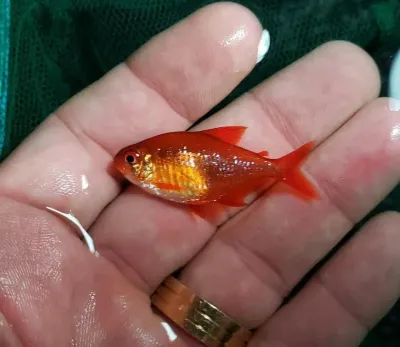
Red Cherry Tetra - (Hyphessobrycon sp. MZUEL 17771)
Red Cherry Tetra - (Hyphessobrycon sp. MZUEL 17771)
Price of shipping is not included.
$18.00
Out of stock
Wild Caught
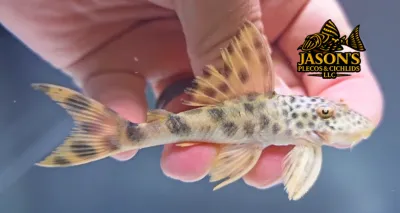
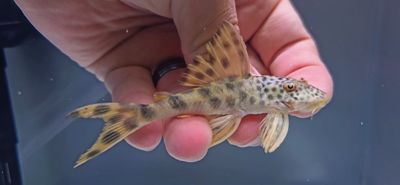
L075 Para Pleco - (Peckoltia sabaji)
L075 Para Pleco - (Peckoltia sabaji)
Price of shipping is not included.
5.0
(3)
was $60.00
Save 17%
$50.00
Captive Bred
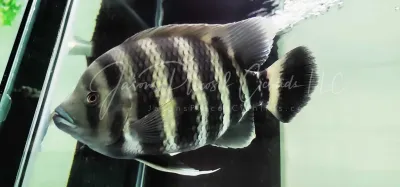
Zebra Tilapia - (Tilapia buttikoferi)
Zebra Tilapia - (Tilapia buttikoferi)
Price of shipping is not included.
was $100.00
Save 20%
$80.00
Out of stock
Wild Caught
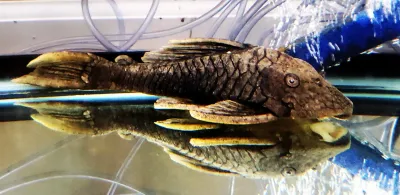
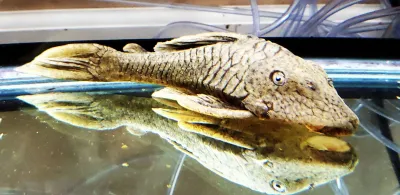
L517 Gold Dust Pleco - (Hypostomus sp.)
L517 Gold Dust Pleco - (Hypostomus sp.)
Price of shipping is not included.
$250.00
Out of stock
Wild Caught
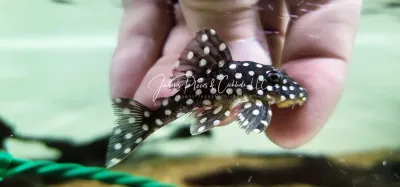
L142 Big White Spot Pleco - (Baryancistrus sp.)
L142 Big White Spot Pleco - (Baryancistrus sp.)
Price of shipping is not included.
was $50.00
Save 10%
$45.00
Out of stock
Wild Caught
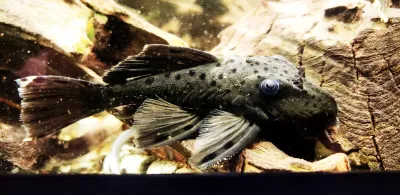
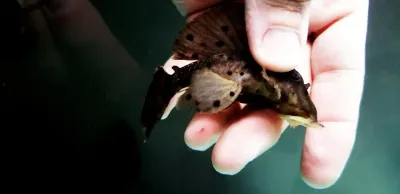
L263 Sultana Pleco - (Leporacanthicus sp.)
L263 Sultana Pleco - (Leporacanthicus sp.)
Price of shipping is not included.
$30.00
Out of stock
Wild Caught
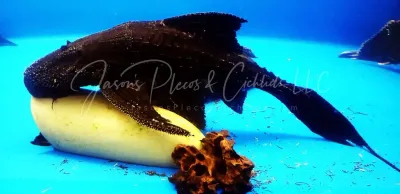
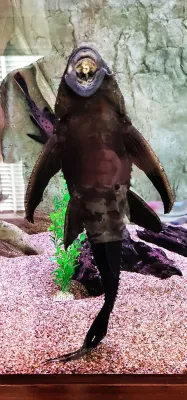
Polka Dot Lyre Tail Pleco - (Acanthicus adonis)
Polka Dot Lyre Tail Pleco - (Acanthicus adonis)
Price of shipping is not included.
$500.00
Out of stock
Wild Caught
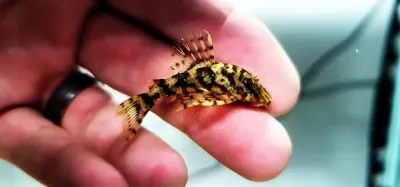
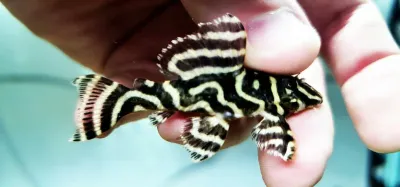
L340 Mega Clown Pleco - (Hypancistrus sp.) Special
L340 Mega Clown Pleco - (Hypancistrus sp.) Special
Price of shipping is not included.
$90.00
Out of stock
Powered by Lightspeed
Display prices in:USD