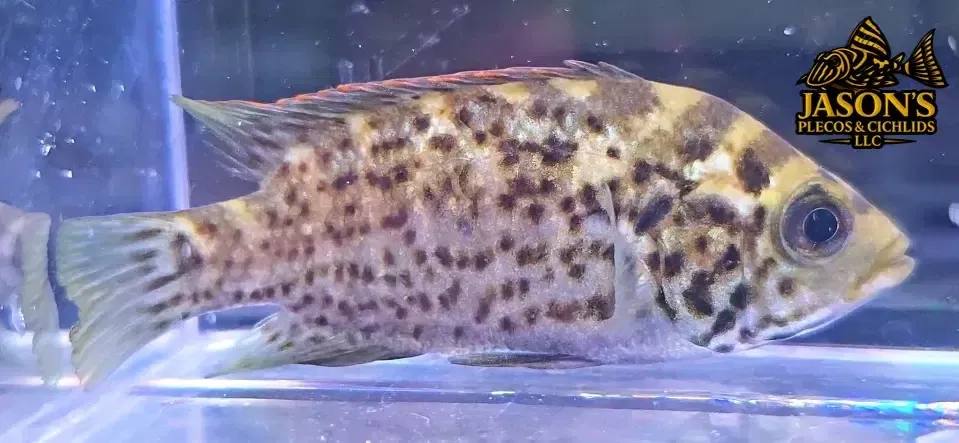
Cuban Cichlid - (Nandopsis tetracanthus)
5.0
1 review
Reviews from verified customers who have purchased products at this store.
$50.00
Sold out
was $60.00 Save 17%
Size
Questions, Comments, Concerns? Let us know!
Enter your text
Price of shipping is not included.
Sold out
Save this fish to my favorites.
Customer reviews
Reviews only from verified customers
Reviews are only accepted from verified customers who have signed in and purchased the products. This ensures that each review is based on genuine customer experiences. All reviews are checked before publication to prevent spam.
Tim C.
Monongahela,
United States
Aug 13, 2026
Cuban Cichlid - (Nandopsis tetracanthus)
Fish Details, Description and Information Below:
🐟 Cuban Cichlid – (Nandopsis tetracanthus) - Endemic Cuban Cichlid
The Cuban Cichlid (Nandopsis tetracanthus), also known as the Biajaca, is a powerful and beautifully patterned cichlid found naturally only in Cuba.
Adults develop an incredible pattern of black, charcoal, and dark brown blotches over a pale silver, cream, or golden background, often accompanied by subtle blue-green iridescence across the scales and fins.
Although juveniles may appear relatively manageable, mature Cuban Cichlids are muscular, territorial fish with the attitude expected from a large predatory cichlid. They are best suited for experienced aquarists who can provide substantial aquarium space, heavy filtration, sturdy décor, and carefully selected tankmates.
One of the most interesting characteristics of Nandopsis tetracanthus is its adaptability. Wild populations occur in freshwater rivers and lakes as well as brackish river mouths, although aquarium specimens do not require salt when maintained in appropriate freshwater conditions.
🔎 Quick Facts – Cuban Cichlid
- 📛 Common Names: Cuban Cichlid, Biajaca, Bijaca
- 🔬 Scientific Name: Nandopsis tetracanthus
- 🐟 Family: Cichlidae
- 🌎 Region: Caribbean
- 🇨🇺 Native Country: Cuba
- 🏝️ Distribution: Found across Cuba, including Isla de la Juventud
- 💧 Environment: Freshwater; also enters brackish habitats
- 📏 Scientific Maximum: Approximately 20 cm / 7.9 inches standard length
- 📏 Aquarium Planning Size: Approximately 8–10 inches total length for a large adult
- 🏠 Recommended Aquarium: 75 gallons or larger for one adult; 90–125+ gallons preferred for a pair or tankmates
- 🌡️ Temperature: Approximately 75–86°F
- 💧 Recommended Aquarium pH: Approximately 7.0–8.0
- 🍽️ Diet: Carnivore / Opportunistic omnivore
- 😠 Temperament: Aggressive / Territorial
- 🐠 Swimming Area: Middle and lower portions
- 🥚 Breeding: Biparental substrate spawner
- ⭐ Care Level: Intermediate to Advanced
- 🏆 Availability: Uncommon specialty cichlid
🇨🇺 A True Cuban Endemic
The Cuban Cichlid is especially interesting because it is native to Cuba and nowhere else naturally.
FishBase reports the species from freshwater habitats throughout the island, including:
- Rivers
- Lakes
- Vegetated waterways
- River mouths
- Some brackish environments
It occurs in both eastern and western Cuba and on Isla de la Juventud.
This restricted natural distribution makes it especially attractive to aquarists who enjoy keeping geographically distinctive Central American and Caribbean cichlids.
🎨 Appearance
The Cuban Cichlid develops one of the most unusual patterns among large Neotropical cichlids.
Typical coloration may include:
- Silver
- Cream
- Pale gold
- Olive
- Gray
- Dark brown
- Black
The body becomes covered with irregular:
- Blotches
- Spots
- Broken bars
- Checkerboard-like markings
Some individuals also develop beautiful:
- Blue
- Turquoise
- Greenish iridescence
across the head, body, and fins.
Every Fish Is Different
Pattern intensity can vary considerably between individuals.
Appearance also changes according to:
- Age
- Sex
- Dominance
- Mood
- Breeding condition
- Lighting
- Diet
- Water quality
Adult males can become particularly impressive.
📏 Adult Size
FishBase records a maximum of:
20 cm standard length
or approximately:
7.9 inches excluding the tail fin.
Because standard length excludes the tail, I would tell customers to plan for roughly:
8–10 inches total length
for a large aquarium adult.
Some hobby reports claim larger specimens, but I would not advertise 12–14 inches as a normal maximum without documented measurements.
🏠 Aquarium Size
For one adult Cuban Cichlid:
75 gallons or larger
is a reasonable starting recommendation.
For a pair:
90–125 gallons or larger
is strongly preferred.
If keeping the fish with other large cichlids:
125+ gallons
provides much more room for territories and escape routes.
Aquarium length and width matter more than excessive height.
🪨 Aquarium Setup
Recommended features include:
- Sand or smooth gravel substrate
- Large rocks
- Large driftwood
- Caves
- Visual barriers
- Open swimming areas
- Strong biological filtration
- Heavy mechanical filtration
- Good oxygenation
Secure the Décor
Adult Cuban Cichlids may:
- Dig
- Move gravel
- Rearrange rocks
- Move driftwood
- Uproot plants
Large rocks should be positioned securely so they cannot collapse if the fish excavates underneath them.
🌿 Plants
Wild Cuban Cichlids occur around aquatic vegetation, but maintaining a heavily planted aquarium with adults may be challenging. FishBase specifically notes their association with vegetated habitats.
Adults may:
- Dig around roots
- Uproot plants
- Damage softer species
Hardy plants attached to rocks or wood may work better than delicate rooted plants.
💧 Freshwater or Brackish?
The Cuban Cichlid is primarily maintained as a freshwater aquarium fish.
However, wild Nandopsis tetracanthus can also occur in:
Brackish river mouths.
That does not mean aquarium specimens need salt.
Healthy captive fish can be maintained entirely in freshwater. Experienced aquarium keepers have successfully maintained the species in hard, alkaline freshwater without added salt.
My Recommendation
Unless your particular fish was raised under different conditions:
Keep it in stable freshwater.
Do not add salt simply because the species is capable of entering brackish habitats.
💧 Water Parameters
FishBase documents a natural temperature range of:
24–30°C / approximately 75–86°F.
For aquarium care, I recommend:
- 🌡️ Temperature: 75–84°F
- 💧 pH: Approximately 7.0–8.0
- 💦 Water: Moderately mineralized freshwater works well
- ☠️ Ammonia: 0 ppm
- ☠️ Nitrite: 0 ppm
- 🔄 Nitrate: Keep as low as reasonably possible
- 💨 Oxygenation: Good
The species is relatively adaptable, but excellent water quality is still essential.
💩 Filtration
Cuban Cichlids are substantial fish with large appetites.
As adults they produce significant waste.
Recommended filtration may include:
- Large canister filters
- Sump filtration
- Strong mechanical filtration
- Large biological filtration capacity
- Strong surface agitation
Regular partial water changes are strongly recommended.
🍽️ Natural Diet
Wild Cuban Cichlids feed on:
- Worms
- Shrimp
- Aquatic insects
- Small fish
according to FishBase.
This makes them naturally predatory and strongly carnivorous, although captive fish readily accept quality prepared foods.
🍽️ Aquarium Diet
Recommended foods include:
- High-quality cichlid pellets
- Carnivore pellets
- Shrimp
- Krill
- Mysis shrimp
- Earthworms
- Insect-based foods
- Appropriate frozen seafood
- Occasional plant-based or omnivore foods for dietary variety
A quality pellet should ideally form the nutritional base of the diet.
🚫 Avoid Routine Feeder Fish
We do not recommend routinely feeding live feeder fish.
Feeder fish can introduce:
- Parasites
- Bacteria
- Viral disease
- Poor nutrition
Cuban Cichlids readily learn to accept:
- Pellets
- Frozen foods
- Shrimp
- Earthworms
which provide much better nutritional and disease control.
😠 Temperament
The Cuban Cichlid is a:
Territorial and aggressive cichlid.
Individual temperament varies considerably.
Some specimens may coexist with appropriately sized robust fish in a large aquarium.
Others may become extremely dominant.
Aggression becomes especially intense when:
- A pair forms
- A spawning site is selected
- Eggs are present
- Fry are present
Customers should never assume that a peaceful juvenile will remain peaceful as an adult.
🐠 Tankmates
Potential tankmates in a sufficiently large aquarium may include carefully selected:
- Large Central American cichlids
- Large robust catfish
- Large plecos
- Other similarly sized sturdy fish
Avoid:
- Small community fish
- Small cichlids
- Small catfish
- Delicate species
- Long-finned fish
- Very timid fish
Any fish small enough to swallow may eventually become prey.
⚠️ Have a Separation Plan
When keeping large territorial cichlids:
Always have a way to separate fish.
Useful options include:
- Aquarium divider
- Spare aquarium
- Alternate permanent enclosure
This is especially important when attempting to form a breeding pair.
♂️ Male vs. Female
Sexing juveniles can be difficult.
As the fish mature:
Males generally:
- Grow larger
- Develop heavier heads
- Become more robust
- May develop longer dorsal and anal fins
- May develop stronger overall coloration
Females generally:
- Remain somewhat smaller
- Become fuller through the abdomen when carrying eggs
Individual variation makes juveniles difficult to sex confidently.
🥚 Breeding
The Cuban Cichlid is a:
Biparental substrate-spawning cichlid.
A compatible pair selects and cleans a solid spawning surface.
Possible sites include:
- Flat rocks
- Large stones
- Slate
- Cave surfaces
- Large flowerpots
FishBase records clutches of up to approximately:
600 eggs.
👨👩👧 Strong Parental Care
Both parents participate in protecting the brood.
They may:
- Fan eggs
- Remove damaged eggs
- Guard the spawning site
- Dig pits
- Move larvae
- Aggressively protect free-swimming fry
During this period, the pair may become extraordinarily territorial.
A breeding pair may claim most or all of a smaller aquarium.
👶 Raising Fry
Once fry become free-swimming, suitable foods include:
- Newly hatched baby brine shrimp
- Microworms
- Fine-quality fry foods
- Finely crushed cichlid pellets
- Crushed flakes
Frequent small feedings combined with excellent water quality promote rapid growth.
Protect filter intakes when fry are extremely small.
🌟 Breeding Coloration
Cuban Cichlids can become particularly dramatic during reproduction.
The black pattern may intensify and contrast strongly against the pale body.
Adults can develop a striking:
Black-and-white checkerboard appearance
with additional blue-green iridescence.
This intense coloration combined with their aggressive parental behavior makes breeding pairs impressive display fish.
🧬 Cuban Cichlid vs. Nandopsis ramsdeni
Cuba has another native Nandopsis species:
Nandopsis ramsdeni
The two are separate valid species.
N. tetracanthus has a broader Cuban distribution and is the fish generally sold in the aquarium hobby as the:
Cuban Cichlid / Biajaca.
Do not confuse the two species when maintaining pure breeding lines.
⭐ Why Keep a Cuban Cichlid?
The Cuban Cichlid is an excellent choice for experienced aquarists interested in unusual Caribbean cichlids.
Its combination of:
- 🇨🇺 Cuban endemic status
- ⚫ Striking black markings
- ⚪ Pale contrasting body
- 💙 Blue-green iridescence
- 🧠 Strong cichlid personality
- 💪 Powerful adult appearance
- 🥚 Excellent parental care
- 🌊 Ability to inhabit both fresh and brackish environments
- 🏆 Uncommon availability
makes Nandopsis tetracanthus a unique centerpiece fish.
⚠️ Important Considerations
Before purchasing a Cuban Cichlid:
- Plan for approximately 8–10 inches total adult length.
- Provide at least approximately 75 gallons for one adult.
- Larger aquariums are strongly preferred for pairs.
- Use powerful filtration.
- Secure rocks and driftwood.
- Expect digging.
- Feed a varied carnivorous diet.
- Avoid routine feeder fish.
- Expect significant territorial aggression.
- Have a separation plan if keeping a pair.
- Do not add salt unless there is an actual husbandry reason.
- Do not confuse N. tetracanthus with Nandopsis ramsdeni.
- Never release aquarium fish into local waterways.
🧬 Taxonomy
The accepted scientific name remains:
Nandopsis tetracanthus (Valenciennes, 1831)
Eschmeyer’s Catalog of Fishes, updated August 13, 2026, continues to recognize Nandopsis tetracanthus as the accepted species associated with the historical Cuban synonyms.
Older aquarium literature may also use names such as:
- Cichlasoma tetracanthus
- Heros tetracanthus
For your product page, Nandopsis tetracanthus is the correct name to use.
🚚 Live Fish Shipping
Live fish are professionally packed for safe transport.
Shipping availability depends on:
- Fish size
- Destination
- Weather conditions
- Carrier availability
- Applicable state and local regulations
Please review our Shipping & Payment Information and Live Arrival Guarantee / DOA Policy before ordering.
⚠️ Buyer Responsibility
Customers are responsible for confirming that this species may legally be purchased, possessed, transported, and received in their state or local jurisdiction before ordering.
Never release aquarium fish into local waterways.
Below are fish you may also like.
Wild Caught
Marbled Talking Catfish - (Amblydoras nauticus)
Marbled Talking Catfish - (Amblydoras nauticus)
Price of shipping is not included.
was $50.00
Save 10%
$45.00
Wild Caught
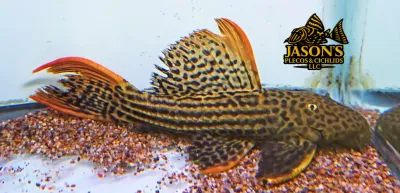
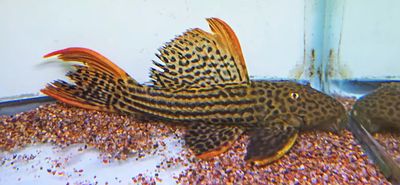
L025 Scarlet Cactus Pleco 7 Pointer - (Pseudacanthicus pirarara)
L025 Scarlet Cactus Pleco 7 Pointer - (Pseudacanthicus pirarara)
Price of shipping is not included.
was $550.00
Save 6%
$515.00
Wild Caught
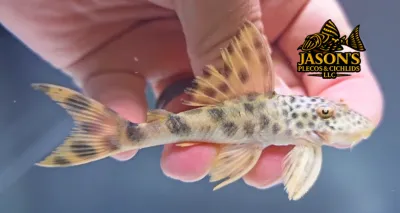
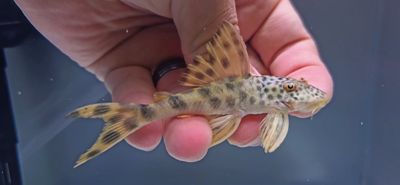
L075 Para Pleco - (Peckoltia sabaji)
L075 Para Pleco - (Peckoltia sabaji)
Price of shipping is not included.
5.0
(3)
was $60.00
Save 17%
$50.00
Captive Bred
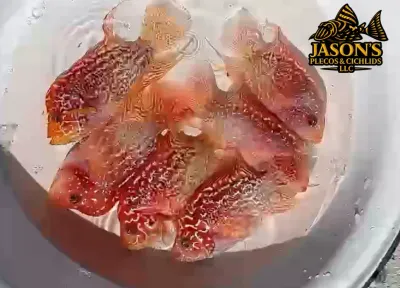
Gold Base Flowerhorn
Gold Base Flowerhorn
Price of shipping is not included.
5.0
(1)
was $300.00
Save 33%
$200.00
Captive Bred
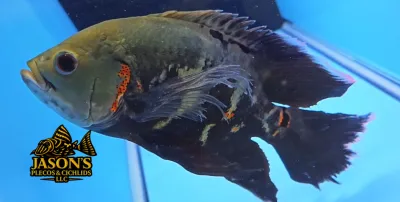
Longfin Tiger Oscar - (Astronotus ocellatus)
Longfin Tiger Oscar - (Astronotus ocellatus)
Price of shipping is not included.
5.0
(1)
was $160.00
Save 6%
$150.00
Powered by Lightspeed
Display prices in:USD