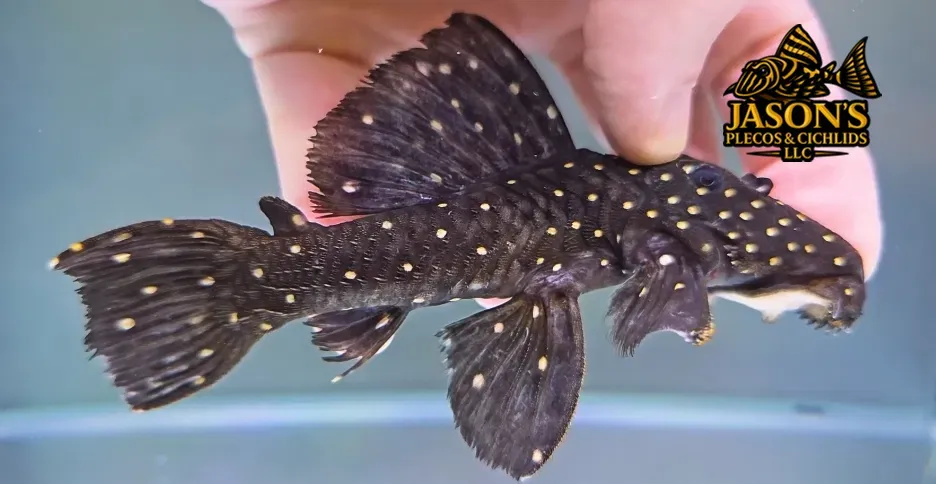
L240 Black Saum Vampire Pleco - (Leporacanthicus cf. galaxias)
$80.00
Wild Caught
was $85.00 Save 6%
Size
Questions, Comments, Concerns? Let us know!
Enter your text
Price of shipping is not included.
In stock: 1 available
1
Save this fish to my favorites.
Customer reviews
Reviews only from verified customers
No reviews yet. You can buy this product and be the first to leave a review.
L240 Black Saum Vampire Pleco - (Leporacanthicus cf. galaxias)
Fish Details, Description and Information Below:
🧛 L240 Black Saum Vampire Pleco – (Leporacanthicus cf. galaxias) – Wild-Caught Orinoco Vampire Pleco
The L240 Black Saum Vampire Pleco (Leporacanthicus cf. galaxias), also known as the Northern Vampire Pleco, Orinoco Galaxy Pleco, or L240 Vampire Pleco, is a dramatic South American pleco known for its jet-black body covered with numerous contrasting white to cream spots.
One of the most important characteristics of the true L240 form is the dark, relatively unspotted margin along portions of the dorsal and caudal fins. This creates the distinctive:
BLACK SAUM / BLACK SEAM
appearance associated with the L240 trade name.
The fish also possesses the unusual enlarged upper-jaw teeth characteristic of the genus Leporacanthicus, giving rise to the popular:
VAMPIRE PLECO
name.
🔎 Quick Facts – L240 Black Saum Vampire Pleco
- 📛 Common Name: Black Saum Vampire Pleco
- 📛 Other Names: Northern Vampire Pleco, Orinoco Galaxy Pleco, Vampire Pleco
- 🔢 L-Number: L240
- 🔬 Scientific Identification: Leporacanthicus cf. galaxias
- 🧬 Taxonomic Status: Closely related to / potentially part of the Leporacanthicus galaxias complex
- 🐟 Family: Loricariidae
- 🧬 Subfamily: Hypostominae
- 🌿 Stock: Wild Caught
- 📏 Current Size: Approximately 4.5–5.5 inches
- 🌎 Origin: South America
- 🌊 Native Drainage: Upper Rio Orinoco Basin
- 🇻🇪 Primary Origin: Venezuela
- 🇨🇴 Trade / Regional Association: Orinoco drainage of Colombia and Venezuela
- 🪨 Natural Habitat: Rapids, rocky crevices and fast-flowing river habitat
- 💧 Water Type: Freshwater
- 📏 Adult Planning Size: Approximately 10–12 inches
- 🏠 Recommended Aquarium: 75 gallons or larger
- 🏠 Preferred Adult Aquarium: 90–125+ gallons
- 📐 Aquarium Shape: Long, wide aquarium strongly preferred
- 🌡️ Temperature: Approximately 78–84°F
- 💧 pH: Approximately 6.0–7.5
- 💦 Water: Soft to moderately mineralized
- 💨 Oxygenation: Very High
- 🌊 Water Movement: Strong
- 🍽️ Diet: Carnivorous / Protein-Leaning Omnivore
- 🦐 Animal & Invertebrate Foods: Very Important
- 🌿 Plant Foods: Supplemental
- 🚫 Algae Cleaner: No
- 😠 Temperament: Territorial toward similar bottom dwellers
- ⚠️ Male Aggression: Can become strong between mature males
- 🌙 Activity: Primarily nocturnal / crepuscular
- 🥚 Breeding: Cave Spawner
- 👨👧 Parental Care: Male guards eggs and developing fry
- ⭐ Care Level: Intermediate to Advanced
- 🌎 Conservation Status: Not separately evaluated as the unresolved L240 form
⚫ Important Black Saum Color Correction
The older description refers to:
Bright Orange or Reddish Fin Edges
That should be removed.
The L240 Black Saum is instead characterized by:
BROAD DARK / BLACK FIN MARGINS
particularly along portions of the:
- Dorsal fin
- Caudal fin
The pale spots become sparse or absent toward these fin margins, creating the appearance of a:
SOLID BLACK BORDER
🇩🇪 What Does “Saum” Mean?
The aquarium term:
SAUM
comes from German terminology referring to an:
EDGE / BORDER / SEAM
So:
BLACK SAUM
describes the:
BLACK FIN EDGE
not a red or orange coloration.
This is an important identification characteristic for L240.
🎨 Appearance
L240 normally develops a:
- Jet-black
- Charcoal-black
- Very dark brown
- Blue-black
body covered with numerous:
- White spots
- Cream spots
- Pale yellow-white spots
The spots extend over much of the:
- Head
- Body
- Dorsal fin
- Pectoral fins
- Pelvic fins
- Caudal fin
⚪ White Spot Pattern
Juvenile specimens often display:
LARGER WHITE SPOTS
relative to their body size.
As the fish matures, the spots may appear:
- Smaller
- More numerous
- More densely distributed
because the body grows while the individual spots remain proportionally smaller.
⚫ Black Fin Borders
In adult L240, the outer portions of the unpaired fins generally have:
FEW OR NO PALE SPOTS
creating the characteristic:
BLACK EDGE
This feature is one of the most useful visual differences between typical L240 and some closely related Orinoco forms.
⚠️ Color & Pattern Disclaimer
Not every L240 develops exactly the same:
- Spot size
- Spot density
- Body darkness
- Fin margin width
Individual variation occurs naturally.
Appearance can also change with:
- Age
- Stress
- Shipping
- Lighting
- Diet
- Aquarium background
- Water quality
- Acclimation
🧬 Why Is It Written cf. galaxias?
The correct aquarium identification is:
Leporacanthicus cf. galaxias L240
The abbreviation:
cf.
comes from the Latin:
confer
meaning approximately:
COMPARE WITH
It indicates that L240 resembles the formally described species:
Leporacanthicus galaxias
but its exact relationship has not been completely resolved.
⚠️ Do Not Automatically Remove the “cf.”
Some scientific work has treated L240 and related forms as populations of the broadly distributed:
Leporacanthicus galaxias
complex.
However, aquarium specialists continue to distinguish:
- L240
- L241
- L029
- L007
- Other galaxias-type forms
based on:
- Geography
- Body shape
- Head shape
- Spotting
- Fin markings
Until the Orinoco forms are completely resolved:
KEEP Leporacanthicus cf. galaxias FOR L240
🆚 L240 vs. L029 Leporacanthicus galaxias
The formally described:
Leporacanthicus galaxias
is most strongly associated in the aquarium hobby with forms such as:
L029
from Amazonian drainages.
L240 is the similar:
UPPER ORINOCO FORM
and is often referred to as:
Leporacanthicus cf. galaxias
🆚 L240 vs. L241
L240 and L241 both originate from the:
UPPER RIO ORINOCO
and can look extremely similar.
There is continuing debate over whether they represent:
- Distinct populations
- Different forms of one species
- Geographic or phenotypic variations
Typical L240 Characteristics
L240 is generally described as having:
- Higher body profile
- Shorter, more convex head
- Smaller white spots
- Larger dorsal fin
- Broad black margins on the dorsal and caudal fins
Typical L241 Characteristics
L241 is generally described as having:
- Flatter body
- Proportionally longer head
- Lower dorsal fin
- Larger or more variable spots
- Spots extending closer to fin margins
However:
INTERMEDIATE-LOOKING FISH EXIST
so locality information remains extremely valuable.
⚠️ Preserve L240 Identification
When maintaining or breeding these fish:
- Keep L240 identified as L240
- Preserve supplier information
- Preserve collection locality when known
- Do not casually mix L240 and L241 breeding lines
Even if future science eventually combines them, preserving the aquarium lineage retains valuable geographic and phenotype information.
🧛 Why Is It Called a Vampire Pleco?
Members of:
Leporacanthicus
possess highly unusual teeth.
They have:
VERY FEW ENLARGED UPPER-JAW TEETH
that can appear:
- Fang-like
- Needle-like
- Vampire-like
compared with the broad rows of scraping teeth found in many algae-grazing plecos.
🦷 Specialized Teeth
The unusual dentition appears adapted for feeding on:
- Aquatic invertebrates
- Crustaceans
- Mollusks
- Insect larvae
The enlarged teeth may help manipulate or extract prey.
This is why Leporacanthicus should be fed very differently from a typical algae-grazing pleco.
🚫 Not a Fish-Eating Monster
Despite the:
VAMPIRE
name, L240 does not normally hunt healthy aquarium fish.
Its natural feeding specialization is primarily associated with:
BENTHIC INVERTEBRATES
rather than active predation on swimming fish.
🌎 Native Distribution
L240 originates from the:
UPPER RIO ORINOCO BASIN
of northern South America.
The form is particularly associated with:
VENEZUELA
and neighboring portions of the Orinoco drainage.
Wild fish may also enter the aquarium trade through:
COLOMBIAN EXPORT CHANNELS
depending on collection and distribution routes.
🌊 Orinoco Habitat
Natural L240 habitat includes:
- Rapids
- Fast-flowing streams
- Rocky river sections
- Rock crevices
- Submerged cavities
- Driftwood
- Highly oxygenated water
This explains the species' strong requirements for:
FLOW + OXYGEN
in captivity.
🪨 Rocky Crevice Habitat
L240 spends significant time sheltering:
- Between rocks
- Inside cracks
- Beneath stones
- Within caves
- Around submerged wood
The aquarium should therefore offer substantial structural cover.
🌊 Strong Water Movement
L240 is adapted to:
FAST-FLOWING WATER
Provide strong aquarium circulation using:
- Powerheads
- Circulation pumps
- Strong filter returns
- Sump returns
However, include current breaks behind:
- Rocks
- Caves
- Driftwood
so the fish can rest.
💨 VERY HIGH OXYGENATION
This is one of the most important L240 requirements.
Provide:
VERY HIGH DISSOLVED OXYGEN
using:
- Air stones
- Strong surface agitation
- Powerheads
- High-volume filtration
- Sump filtration
Warm water naturally contains less oxygen.
Therefore:
WARM TEMPERATURE + HIGH OXYGENATION MUST GO TOGETHER
🌡️ Temperature
The older page recommends:
74–80°F
I would move this warmer.
A better long-term range is:
78–84°F
with many successful keepers maintaining Leporacanthicus around:
80–82°F
💧 Water Parameters
A practical aquarium range is:
- 🌡️ Temperature: 78–84°F
- 💧 pH: Approximately 6.0–7.5
- 💦 Hardness: Soft to moderately mineralized
- 💨 Oxygenation: Very High
- 🌊 Water Movement: Strong
- ☠️ Ammonia: 0 ppm
- ☠️ Nitrite: 0 ppm
- 🔄 Nitrate: Keep low
⚠️ Sensitive to Poor Water Quality
L240 can react poorly to:
- Low dissolved oxygen
- Accumulated organic waste
- Excess nitrate
- Dirty substrate
- Sudden parameter changes
Regular partial water changes are important.
📏 Adult Size – Important Correction
The current page lists:
UP TO 7 INCHES
That is too small.
Specialist L240 records place adults around:
25–30 CM
or approximately:
10–12 INCHES TOTAL LENGTH
Large adult records approaching roughly:
9–10 INCHES STANDARD LENGTH
also exist, meaning the full fish is longer once the caudal fin is included.
For responsible customer planning:
EXPECT APPROXIMATELY 10–12 INCHES
🏠 Aquarium Size
The older:
40+ GALLON
recommendation should also be increased.
For a mature L240:
75 GALLONS OR LARGER
is a much more appropriate minimum.
I would prefer:
90–125+ GALLONS
when keeping:
- Large adults
- Several L240
- Other territorial plecos
📐 Aquarium Footprint Matters
A 10–12 inch territorial pleco needs:
BOTTOM AREA
not merely gallons.
Prioritize:
- Aquarium length
- Front-to-back width
- Caves
- Territorial separation
over excessive height.
🪨 Aquarium Setup
A suitable L240 aquarium should contain:
- Large smooth rocks
- Rock piles
- Slate
- Ceramic caves
- Large pleco tubes
- Driftwood
- Sand or smooth gravel
- Shaded areas
- Strong filtration
- Strong circulation
- Very high oxygenation
🏠 Caves Are Essential
L240 is strongly associated with caves and crevices.
Provide:
AT LEAST ONE LARGE SHELTER PER PLECO
and preferably:
MORE CAVES THAN FISH
Suitable options include:
- Ceramic pleco caves
- Large tubes
- Slate caves
- Rock crevices
- Driftwood cavities
↔️ Side-Entrance Caves
Specialist breeding experience indicates that Leporacanthicus can particularly appreciate:
CAVES WITH SIDE ENTRANCES
rather than only straight front-entry breeding tubes.
Providing several cave shapes allows the fish to select its preferred shelter.
🪵 Driftwood
Driftwood can provide:
- Shelter
- Shade
- Territory
- Biofilm
- Natural structure
However:
L240 IS NOT A SPECIALIZED WOOD-EATING PLECO
Do not claim wood is required for digestion.
Its dietary requirements are much more protein-oriented.
💩 Filtration
Large protein-eating plecos can produce substantial organic waste.
Strong filtration is important.
Suitable systems include:
- Large canister filters
- Sump filtration
- Strong mechanical filtration
- High-capacity biological filtration
- Powerheads
Maintain:
AMMONIA = 0
and:
NITRITE = 0
🍽️ Diet – Carnivorous / Protein-Leaning Omnivore
L240 is among the more:
CARNIVOROUS PLECOS
in the aquarium hobby.
Its diet should be strongly based around:
AQUATIC ANIMAL AND INVERTEBRATE FOODS
🦐 Recommended Foods
Suitable foods include:
- Shrimp
- Prawn
- Mysis shrimp
- Krill
- Mussel
- Cockle
- Bloodworms
- Mosquito larvae
- Insect larvae
- Quality carnivore pellets
- Insect-based sinking foods
- Quality omnivore tablets
🦪 Mollusks & Crustaceans
Foods such as:
- Mussels
- Shrimp
- Prawns
are especially useful because they resemble the type of:
BENTHIC INVERTEBRATE NUTRITION
that Leporacanthicus is specialized to exploit.
⚠️ Avoid Feeder Fish
There is no need to feed live feeder fish.
Feeder fish can introduce:
- Parasites
- Bacteria
- Disease
- Poor nutritional balance
Quality prepared, frozen, and fresh aquatic foods are safer.
🌿 Plant Foods
L240 may also accept small amounts of:
- Zucchini
- Cucumber
- Spirulina-containing foods
- Vegetable-containing pellets
These provide dietary variety.
However:
PLANT MATERIAL SHOULD NOT FORM THE FOUNDATION OF THE DIET
🚫 Not an Algae Cleaner
L240 is:
NOT AN ALGAE-CONTROL PLECO
It should not be purchased to clean:
- Glass
- Rocks
- Decorations
Intentional protein-rich feeding is required.
🌙 Nocturnal Behavior
The Black Saum Vampire Pleco is primarily:
NOCTURNAL / CREPUSCULAR
It may spend much of the day:
- Inside caves
- Behind rocks
- Beneath driftwood
Activity increases:
- At dusk
- During feeding
- After lights go out
🧪 Wild-Caught Acclimation
This listing is for:
WILD-CAUGHT L240 BLACK SAUM VAMPIRE PLECOS
Wild specimens deserve careful acclimation.
After arrival:
- Provide immediate caves
- Maintain very high oxygen
- Keep lighting subdued
- Avoid abrupt temperature changes
- Avoid abrupt pH changes
- Maintain excellent water quality
- Confirm feeding
🍽️ Monitor Feeding
Large territorial plecos can still become poor food competitors when stressed after import.
Offer food:
- Near caves
- At dusk
- After lights out
- At several feeding locations
Watch for:
- Sunken abdomen
- Loss of muscle
- Refusal to feed
- Rapid breathing
😠 Temperament
Toward most appropriately sized midwater fish, L240 is generally manageable.
However:
L240 CAN BE VERY TERRITORIAL TOWARD OTHER PLECOS
particularly:
- Other L240
- Other Leporacanthicus
- Similar large cave-dwelling loricariids
⚔️ Male Aggression Can Be Serious
Mature males may engage in:
- Chasing
- Pushing
- Cave blocking
- Pinning competitors
- Pectoral-spine contact
- Odontode contact
In insufficient space, territorial fighting can cause:
- Torn fins
- Skin damage
- Eye injuries
- Stress
- Death
👥 Keeping Multiple L240
Multiple specimens should only be maintained when the aquarium provides:
- Significant bottom area
- Numerous caves
- Visual barriers
- Multiple feeding locations
For several adults:
A LARGE AQUARIUM IS ESSENTIAL
♂️ Male vs. Female
Sex differences become clearer in mature fish.
Mature Males
Usually develop:
- Longer head
- Broader head
- More angular head profile
- Stronger head odontodes
- Stronger pectoral-fin odontodes
- More extensive body odontodes
Mature Females
Generally:
- Have a shorter or narrower head
- Develop a fuller abdomen when carrying eggs
- Show less extensive odontode development
Color and spot pattern should:
NOT
be used as a primary sexing method.
🥚 Captive Breeding – Confirmed
L240 has been:
SUCCESSFULLY BRED IN CAPTIVITY
It is a:
CAVE-SPAWNING PLECO
Breeding can be challenging because mature fish:
- Grow relatively large
- Mature slowly
- Can be strongly territorial
- Require large breeding shelters
🏠 Breeding Caves
Suitable breeding caves should be:
- Large enough for mature fish
- Closed at one end or otherwise defensible
- Positioned in oxygen-rich water
- Securely placed
Offering:
SIDE-ENTRANCE CAVES
in addition to traditional tubes can be useful.
💕 Spawning Behavior
Typical Leporacanthicus spawning behavior includes:
- The male establishes a cave.
- A receptive female enters.
- Spawning occurs inside.
- Eggs are fertilized.
- The female leaves.
- The male remains with the clutch.
👨👧 Male Parental Care
After spawning:
THE MALE GUARDS THE EGGS
He:
- Protects the cave
- Fans the eggs
- Maintains water movement
- Guards developing fry
🥚 Large Eggs
Leporacanthicus produce relatively:
LARGE EGGS
compared with many smaller plecos.
Clutch size depends heavily on:
- Female size
- Species/form
- Age
- Conditioning
Do not advertise one exact clutch size as guaranteed.
⚠️ Breeding Requires Experience
L240 breeding is best considered:
AN ADVANCED PLECO PROJECT
because of:
- Adult aggression
- Large aquarium requirements
- Specialized diet
- High oxygen requirements
- Need for compatible mature adults
🧬 Preserve L240 Breeding Lines
Because of the unresolved relationship between:
- L240
- L241
- L029
- L007
- Other galaxias-type forms
breeding records are especially important.
Preserve:
- L-number
- Supplier source
- Collection locality when known
- Parent identification
⚠️ Do Not Mix Similar Leporacanthicus
Do not intentionally mix:
- L240
- L241
- L029
- L007
and later sell offspring as:
PURE L240
unless the lineage is actually documented.
🌎 Conservation Status
The formally described:
Leporacanthicus galaxias
is currently assessed as:
LEAST CONCERN
However:
L240 IS AN UNRESOLVED ORINOCO FORM
identified as:
Leporacanthicus cf. galaxias
Therefore, I would not automatically assign the species-level Least Concern category to the L240 trade form.
For this listing:
CONSERVATION STATUS: NOT SEPARATELY EVALUATED AS L240
is the more precise wording.
⭐ Why Keep an L240 Black Saum Vampire Pleco?
The L240 combines:
- ⚫ Jet-black coloration
- ⚪ Brilliant white spotting
- 🖤 Distinctive black fin seams
- 🧛 Vampire-like teeth
- 🦐 Specialized protein-oriented feeding
- 🌊 Upper Orinoco origin
- 🪨 High-flow river adaptation
- 💨 Very high oxygen requirements
- 📏 Impressive 10–12 inch adult potential
- 🥚 Documented captive breeding
- 👨👧 Male parental care
into one of the most impressive larger plecos available to experienced aquarium keepers.
⚠️ Important Considerations
Before purchasing an L240 Black Saum Vampire Pleco:
- Keep the identification as Leporacanthicus cf. galaxias L240.
- Do not automatically remove the
cf.designation. - L240 belongs to the broader Leporacanthicus galaxias complex.
- Its exact relationship to L. galaxias remains debated.
- L240 originates from the upper Rio Orinoco region.
- The form is primarily associated with Venezuela.
- “Black Saum” refers to the black fin margin.
- Remove claims of orange or red fin edges.
- The fish has a dark body covered in pale spots.
- Mature L240 typically develop relatively unspotted black dorsal and caudal fin margins.
- L240 can be confused with L241.
- Preserve L-number and locality information.
- This listing is for wild-caught fish.
- Do not use 7 inches as the adult maximum.
- Plan for approximately 10–12 inches.
- Provide approximately 75 gallons minimum.
- 90–125+ gallons is preferred for large adults or multiple plecos.
- Provide numerous large caves.
- Maintain approximately 78–84°F.
- Maintain very high dissolved oxygen.
- Provide strong water movement.
- Keep ammonia and nitrite at zero.
- Keep nitrate low.
- Feed a protein-rich diet.
- Provide shrimp, mussels, insects and quality carnivore foods.
- Plant foods should be supplemental.
- Do not purchase L240 as an algae cleaner.
- L240 is not a specialized wood eater.
- Mature males can become strongly territorial.
- Provide significant bottom territory.
- Captive cave spawning is documented.
- Males guard the eggs.
- Keep L240 breeding lines separate from similar Leporacanthicus forms.
- Do not automatically assign the conservation status of formally described L. galaxias to unresolved L240.
- Never release aquarium fish into natural waterways.
🧬 Taxonomy
The safest aquarium identification is:
Leporacanthicus cf. galaxias L240
Classification:
- Order: Siluriformes
- Family: Loricariidae
- Subfamily: Hypostominae
- Tribe: Ancistrini
- Genus: Leporacanthicus
- Species Relationship: cf. galaxias
- L-Number: L240
For this product, use:
L240 Black Saum Vampire Pleco – (Leporacanthicus cf. galaxias)
🔢 L240 Identification Disclaimer
Several black-and-white-spotted Leporacanthicus forms belong to the broader:
Leporacanthicus galaxias COMPLEX
These include aquarium forms associated with:
- L007
- L029
- L240
- L241
- Other regional forms
Their exact taxonomic relationships remain incompletely resolved.
For accurate aquarium identification:
- Preserve the L-number
- Preserve locality when known
- Preserve supplier information
- Keep breeding lines separate
🚚 Live Fish Shipping
Live fish are professionally packed for safe transport.
Shipping availability depends on:
- Fish size
- Destination
- Weather conditions
- Carrier availability
- Applicable state and local regulations
Larger L240 specimens require extra care because of their:
- Strong pectoral spines
- Heavy armor
- Odontodes
- Large adult body size
Large adults may be safer to transfer using a:
- Rigid container
- Heavy-duty fish bag
- Appropriate fish tub
rather than a fine aquarium net that can snag their spines.
Please review our Shipping & Payment Information and Live Arrival Guarantee / DOA Policy before ordering.
⚠️ Buyer Responsibility
Customers are responsible for confirming that Leporacanthicus cf. galaxias L240 may legally be purchased, possessed, transported, and received in their state or local jurisdiction before ordering.
Never release aquarium fish into natural waterways.
Below are fish you may also like.
Captive Bred
Green Texas Cichlid - (Herichthys carpintis)
Green Texas Cichlid - (Herichthys carpintis)
Price of shipping is not included.
was $190.00
Save 13%
$165.00
Wild Caught
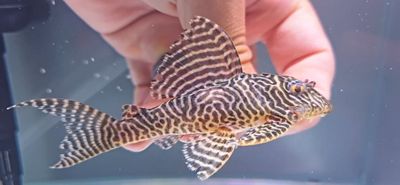
L333 King Tiger Pleco/Maze Zebra Pleco - (Hypancistrus Seideli)
L333 King Tiger Pleco/Maze Zebra Pleco - (Hypancistrus Seideli)
Price of shipping is not included.
was $80.00
Save 6%
$75.00
Captive Bred
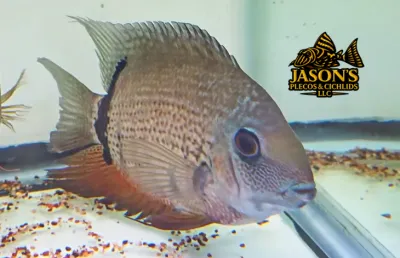
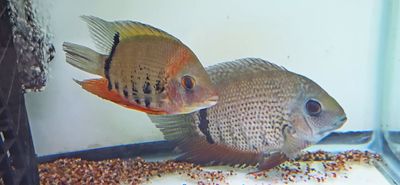
Green Severum - (Heros efasciatus)
Green Severum - (Heros efasciatus)
Price of shipping is not included.
5.0
(1)
was $75.00
Save 13%
$65.00
Captive Bred
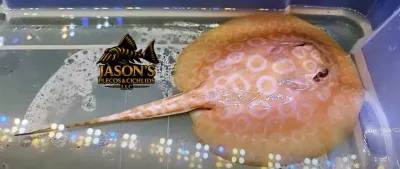
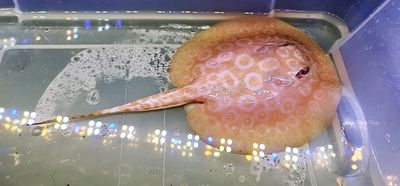
Golden Base Albino Pearl Stingray - (Potamotrygon Jabuti)
Golden Base Albino Pearl Stingray - (Potamotrygon Jabuti)
Price of shipping is not included.
was $850.00
Save 4%
$815.00
Wild Caught
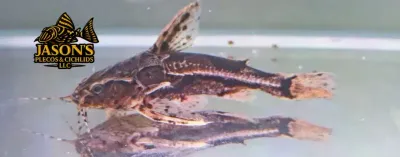
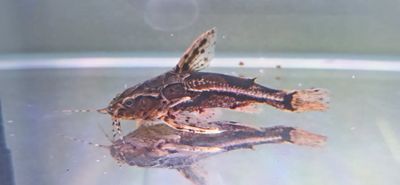
Marbled Talking Catfish - (Amblydoras nauticus)
Marbled Talking Catfish - (Amblydoras nauticus)
Price of shipping is not included.
was $50.00
Save 10%
$45.00
Powered by Lightspeed
Display prices in:USD