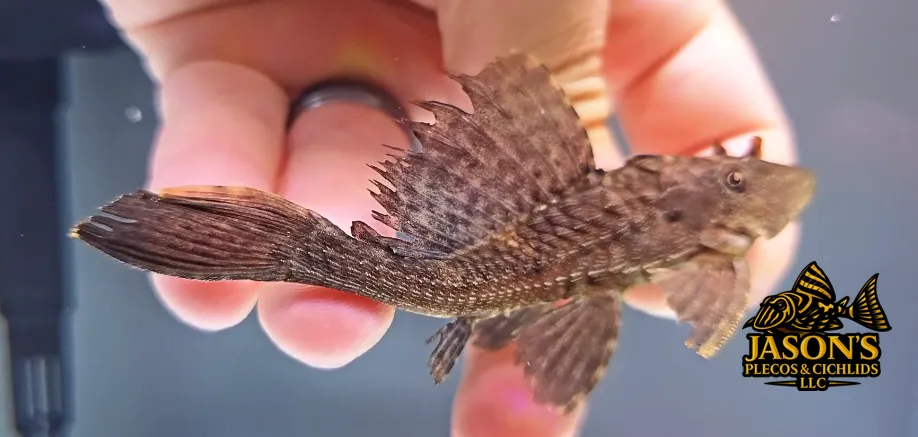
L196 Fatamorgana Pleco - (Pterygoplichthys lituratus)
$60.00
Sold out
was $65.00 Save 8%
Size
Questions, Comments, Concerns? Let us know!
Enter your text
Price of shipping is not included.
Sold out
Save this fish to my favorites.
Customer reviews
Reviews only from verified customers
No reviews yet. You can buy this product and be the first to leave a review.
L196 Fatamorgana Pleco - (Pterygoplichthys lituratus)
Fish Details, Description and Information Below:
🐟 L196 Fatamorgana Pleco – (Pterygoplichthys lituratus) – Wild-Caught Madeira Basin Sailfin Pleco
The L196 Fatamorgana Pleco (Pterygoplichthys lituratus) is a large South American sailfin pleco known for its unusual worm-like, reticulated body pattern, enormous dorsal fin, heavily armored body, and impressive adult size.
Unlike the round spotting commonly seen on many other Pterygoplichthys, the L196 develops an intricate pattern of:
- Pale yellow-brown lines
- Cream markings
- Wavy bands
- Vermiculated markings
- Irregular circles
- Maze-like patterns
over a darker brown to charcoal body.
The pattern continues through the enormous dorsal and caudal fins, giving mature specimens an especially dramatic appearance when the dorsal fin is fully extended.
L196 is native primarily to the Rio Madeira drainage, including the Rio Guaporé / Iténez system of Brazil and Bolivia.
This is not a small or medium-sized permanent aquarium pleco. Scientific records document Pterygoplichthys lituratus at 37 cm standard length before the tail, and specialist records place adults at more than 40 cm total length.
For responsible aquarium planning:
Expect Approximately 16–18 Inches as an Adult
The Fatamorgana Pleco is an omnivorous benthic grazer that should receive a varied diet containing plant-based foods, algae-containing foods, quality sinking pellets, natural biofilm, and appropriate supplemental protein.
This listing is for:
WILD-CAUGHT L196 FATAMORGANA PLECOS
🔎 Quick Facts – L196 Fatamorgana Pleco
- 📛 Common Name: Fatamorgana Pleco
- 📛 Other Names: L196 Pleco, Guaporé Sailfin Pleco
- 🔢 L-Number: L196
- 🔬 Scientific Name: Pterygoplichthys lituratus
- 📚 Older Scientific Name: Glyptoperichthys lituratus
- 🐟 Family: Loricariidae
- 🧬 Subfamily: Hypostominae
- 🌿 Stock: Wild Caught
- 🌎 Origin: South America
- 🌊 Primary Native Range: Rio Madeira Basin
- 📍 Type Locality: Rio Guaporé near Mato Grosso, Brazil
- 🇧🇷 Countries: Brazil
- 🇧🇴 Countries: Bolivia
- 💧 Water Type: Freshwater
- 📏 Scientific Maximum: Approximately 37 cm / 14.6 inches standard length
- 📏 Adult Planning Size: Approximately 16–18 inches total length
- 🏠 Minimum Permanent Adult Aquarium: Approximately 125 gallons
- 🏠 Preferred Adult Aquarium: 180+ gallons
- 📐 Recommended Aquarium Length: Approximately 6 feet or longer
- 🌡️ Temperature: Approximately 73–81°F
- 💧 pH: Approximately 5.5–7.5
- 💨 Oxygenation: Good to High
- 🌊 Water Movement: Moderate
- 🍽️ Diet: Omnivorous Benthic Grazer
- 🌿 Plant / Algae Foods: Important
- 🦐 Animal / Insect Protein: Supplemental
- 🪵 Driftwood: Recommended for habitat and grazing surfaces
- 💩 Bioload: High
- 💨 Special Adaptation: Facultative Air Breather
- 😌 Temperament: Generally peaceful toward appropriately sized fish
- ⚠️ Pleco Temperament: May become territorial toward other large plecos
- 🌙 Activity: Primarily nocturnal / crepuscular
- 🐠 Swimming Area: Bottom
- 🥚 Captive Breeding: Species-specific aquarium breeding poorly documented
- ⭐ Care Level: Intermediate due primarily to adult size and filtration requirements
- 🌎 Conservation Status: Least Concern
🧬 Valid Scientific Species
The currently accepted scientific name is:
Pterygoplichthys lituratus
The species was originally scientifically described in:
1854
as:
Ancistrus lituratus
Older aquarium and scientific references may also use:
Glyptoperichthys lituratus
Modern taxonomy places it within:
Pterygoplichthys
Therefore, the correct modern product identification is:
L196 Fatamorgana Pleco – (Pterygoplichthys lituratus)
🔢 L196
The aquarium designation:
L196
is associated with:
Pterygoplichthys lituratus
Unlike many L-number plecos that still await scientific description, L196 already has a formally recognized species name.
The L-number remains valuable as its established aquarium-trade identification.
🌀 Why Is It Called the Fatamorgana Pleco?
The common name:
Fatamorgana Pleco
is used in the aquarium hobby for the unusual L196.
Its complicated pattern has a shifting, almost illusion-like appearance consisting of:
- Wavy lines
- Irregular loops
- Vermiculations
- Broken rings
- Maze-like markings
rather than the simple round spots seen on many other sailfin plecos.
🎨 Appearance
Typical body coloration includes:
- Dark brown
- Chocolate brown
- Gray-brown
- Olive-brown
- Charcoal
overlaid with lighter:
- Cream
- Yellow-brown
- Tan
- Golden-brown
markings.
🪱 Worm-Like Body Pattern
One of the defining visual characteristics of Pterygoplichthys lituratus is its:
VERMICULATED PATTERN
“Vermiculated” means the markings resemble:
WAVY OR WORM-LIKE LINES
These markings may:
- Curve
- Branch
- Join together
- Form irregular circles
- Create maze-like patterns
across the body.
🔍 Belly Pattern
The underside can be particularly useful when examining this species.
The ventral surface may display:
LONG, CURVED, WORM-LIKE LIGHT MARKINGS
rather than simple isolated round spots.
This characteristic can help separate P. lituratus from several similar sailfin plecos.
⛵ Massive Sail-Like Dorsal Fin
Like other members of Pterygoplichthys, the L196 develops a large:
SAIL-LIKE DORSAL FIN
When fully extended, the dorsal fin becomes one of the fish's most impressive features.
The fin is covered with pale lines or markings that continue the body's vermiculated pattern.
🆚 L196 vs. Other Sailfin Plecos
Large Pterygoplichthys species can be difficult to identify because several have:
- Large dorsal fins
- Brown coloration
- Reticulated markings
- Similar body proportions
L196 should not automatically be confused with:
- Pterygoplichthys gibbiceps
- Pterygoplichthys joselimaianus
- Pterygoplichthys pardalis
- Pterygoplichthys disjunctivus
🆚 L196 vs. Pterygoplichthys joselimaianus
The L196 can superficially resemble:
Pterygoplichthys joselimaianus
However, P. joselimaianus is associated primarily with the:
Rio Tocantins / Araguaia Basin
while P. lituratus is strongly associated with the:
Madeira / Guaporé System
L196 also tends to develop longer, curved pale lines that can connect into irregular loops and circles.
Correct locality and pattern information are important when distinguishing these large sailfin species.
⚠️ Identification Can Be Difficult
Large sailfin plecos have historically been mislabeled frequently in the aquarium trade.
Identification should consider:
- Pattern
- Belly markings
- Dorsal-fin pattern
- Body proportions
- L-number
- Collection locality
- Supplier identification
Do not identify a large sailfin pleco solely by one photograph or one color characteristic.
🌎 Native Distribution
The L196 Fatamorgana Pleco is native to South America.
Its primary distribution is associated with the:
RIO MADEIRA BASIN
The Madeira is one of the largest tributaries of the Amazon River.
🌊 Rio Guaporé / Iténez
The type locality of Pterygoplichthys lituratus is:
RIO GUAPORÉ
near Mato Grosso, Brazil.
The river is known as:
RIO ITÉNEZ
in Bolivia.
The Guaporé / Iténez forms part of the larger:
MAMORÉ → MADEIRA → AMAZON
river system.
🇧🇷 Brazil & 🇧🇴 Bolivia
The species is strongly documented from:
- Brazil
- Bolivia
within the Madeira drainage.
The:
MADEIRA / GUAPORÉ SYSTEM
is the most important locality information for the L196 aquarium form.
🌊 Natural Habitat
Species-specific ecological information for Pterygoplichthys lituratus is still relatively limited.
Available records associate it with:
- Rivers
- Lakes
- Slow-moving waters
- Submerged wood
- Marginal habitats
- Bottom structure
This is not a species that requires an artificial high-speed torrent throughout the aquarium.
🪵 Submerged Wood & Structure
A natural-style aquarium should include:
- Large driftwood
- Roots
- Smooth rocks
- Sheltered areas
- Open bottom space
Wood provides:
- Shelter
- Shade
- Biofilm
- Grazing surfaces
- Territory boundaries
🪵 Driftwood Is Recommended
Driftwood is an excellent addition to an L196 aquarium.
It provides:
- Natural structure
- Biofilm
- Organic grazing surfaces
- Shelter
- Shade
- Environmental enrichment
However:
DO NOT CLAIM THAT L196 MUST EAT WOOD FOR DIGESTION
It is not a specialized wood-feeding Panaque.
Driftwood is habitat and a grazing surface, not a complete diet.
📏 Adult Size – Important Correction
Scientific records document Pterygoplichthys lituratus reaching:
37 CM / APPROXIMATELY 14.6 INCHES STANDARD LENGTH
Standard length does:
NOT INCLUDE THE FULL TAIL FIN
Specialist loricariid references list the species at:
MORE THAN 40 CM TOTAL LENGTH
Therefore, for responsible customer planning:
EXPECT APPROXIMATELY 16–18 INCHES TOTAL LENGTH
⚠️ Do Not Call This a Medium-Sized Pleco
A heavily armored sailfin pleco capable of reaching approximately:
16–18 INCHES
should be treated as:
A LARGE PLECO
Permanent housing should be planned accordingly.
🏠 Permanent Aquarium Size
For one mature L196:
125 GALLONS SHOULD BE CONSIDERED THE MINIMUM
with:
180+ GALLONS PREFERRED
for a full-grown adult.
Larger aquariums become especially important when keeping:
- Other large plecos
- Large cichlids
- Large catfish
- Multiple bottom-dwelling fish
📐 Aquarium Length
A large adult benefits from an aquarium approximately:
6 FEET LONG OR LONGER
A mature L196 needs room to:
- Turn comfortably
- Extend its dorsal fin
- Rest fully stretched
- Move around large décor
- Establish territory
📐 Width Matters Too
For large plecos:
FRONT-TO-BACK WIDTH IS IMPORTANT
A narrow aquarium can contain many gallons while still making it difficult for a large pleco to maneuver comfortably.
Choose:
LONG + WIDE
rather than simply:
TALL
🪨 Aquarium Setup
A suitable L196 aquarium should contain:
- Large open bottom areas
- Large pieces of driftwood
- Smooth rocks
- Large shelters
- Sand or smooth gravel
- Shaded areas
- Strong filtration
- Good oxygenation
- Moderate water movement
⚠️ Secure the Décor
A mature L196 is:
- Large
- Armored
- Strong
It may:
- Move wood
- Push rocks
- Rearrange substrate
- Uproot plants
Make sure heavy decorations cannot collapse or trap the fish.
🌿 Planted Aquariums
Large sailfin plecos can be difficult in delicate planted aquariums.
Adults may:
- Uproot plants
- Rasp soft leaves
- Disturb roots
- Move substrate
Hardier plants attached firmly to rocks or wood generally have a better chance of remaining intact.
💨 Facultative Air Breathing
Pterygoplichthys lituratus is a:
FACULTATIVE AIR BREATHER
This means it can use atmospheric oxygen under certain conditions.
The fish may occasionally:
- Rise toward the surface
- Gulp air
- Return to the bottom
⚠️ Air Breathing Does Not Replace Good Aquarium Care
The ability to breathe atmospheric air does not mean it should be maintained in:
- Low oxygen
- Dirty water
- High ammonia
- High nitrite
- Excessive organic waste
Always provide:
CLEAN, WELL-OXYGENATED WATER
💧 Water Parameters
A practical long-term range is:
- 🌡️ Temperature: Approximately 73–81°F
- 💧 pH: Approximately 5.5–7.5
- 💨 Oxygenation: Good to High
- 🌊 Water Movement: Moderate
- ☠️ Ammonia: 0 ppm
- ☠️ Nitrite: 0 ppm
- 🔄 Nitrate: Keep as low as reasonably practical
Stable aquarium conditions are more important than continuously adjusting parameters.
🌡️ Temperature
A practical maintenance range is:
73–81°F / 23–27°C
There is generally no reason to maintain L196 continuously at extremely high temperatures.
💩 High Bioload
Like other large sailfin plecos, L196 can produce:
A LARGE AMOUNT OF WASTE
A mature fish consumes substantial amounts of food and requires strong filtration.
💩 Filtration
Recommended filtration may include:
- Large canister filters
- Sump filtration
- Strong mechanical filtration
- High-capacity biological filtration
- Prefilters
- Strong surface agitation
Maintain:
AMMONIA = 0
and:
NITRITE = 0
at all times.
🔄 Water Changes
Regular partial water changes are essential.
The exact frequency depends on:
- Aquarium volume
- Fish size
- Stocking
- Feeding
- Filtration
- Nitrate production
Vacuum areas beneath:
- Driftwood
- Rocks
- Caves
where pleco waste can accumulate.
🍽️ Diet – Omnivorous Benthic Grazer
Detailed species-specific natural diet studies for L196 remain limited.
The safest description is:
OMNIVOROUS BENTHIC GRAZER
rather than claiming it is strictly:
- Herbivorous
or:
- Carnivorous
🌿 Plant & Algae-Based Foods
Plant-based foods should form an important part of the captive diet.
Recommended foods include:
- Quality algae wafers
- Spirulina wafers
- Vegetable-based pleco pellets
- Fiber-rich sinking foods
- Quality gel diets
🥒 Fresh Vegetables
Suitable vegetables may include:
- Zucchini
- Squash
- Pumpkin
- Green beans
- Peas
- Appropriate leafy greens
Remove leftovers before they decompose.
🦐 Supplemental Protein
Appropriate supplemental protein can include:
- Mysis shrimp
- Bloodworms
- Insect-based sinking foods
- Shrimp-containing pellets
- Quality omnivore foods
Animal foods should provide:
DIETARY VARIETY
rather than becoming the entire diet.
⚖️ Avoid Extreme Diet Claims
Because detailed feeding ecology for P. lituratus remains poorly studied, avoid claiming that L196 is:
STRICTLY HERBIVOROUS
or:
STRICTLY CARNIVOROUS
A varied omnivorous diet is the safer approach.
🚫 Not Just an Aquarium Cleaner
Like other large sailfin plecos, L196 may graze:
- Algae
- Biofilm
- Organic material
However:
DO NOT PURCHASE L196 SIMPLY TO CLEAN AN AQUARIUM
A large adult creates significant waste and requires intentional feeding.
🧹 Eating Algae Does Not Remove Waste
When an L196 eats algae, that material does not disappear.
It is converted into:
- Feces
- Dissolved organic waste
- Nitrate-producing material
A large sailfin pleco may actually increase aquarium-maintenance requirements substantially.
🌙 Behavior
L196 is primarily:
NOCTURNAL / CREPUSCULAR
Activity generally increases:
- At dusk
- After lights out
- During feeding
Established fish may become increasingly comfortable feeding during daylight.
🧪 Wild-Caught Acclimation
This listing is for:
WILD-CAUGHT L196 FATAMORGANA PLECOS
Wild fish deserve careful acclimation.
After arrival:
- Provide immediate shelter
- Keep lighting subdued
- Maintain good oxygenation
- Avoid sudden temperature changes
- Avoid sudden pH changes
- Maintain excellent filtration
- Confirm feeding
🍽️ Confirm Feeding
Newly imported plecos may hide while faster tankmates consume the available food.
Offer food:
- Near shelters
- At dusk
- After lights out
- In multiple areas
Monitor body condition carefully.
😌 Temperament
L196 should generally be peaceful toward:
- Midwater fish
- Larger community fish
- Appropriately sized cichlids
when enough space is available.
However:
LARGE PLECOS CAN BECOME TERRITORIAL
toward similar bottom dwellers.
⚠️ Territorial With Other Plecos
A mature L196 may defend:
- Preferred driftwood
- Shelters
- Feeding areas
- Resting locations
against:
- Other L196s
- Other Pterygoplichthys
- Large Hypostomus
- Similar bottom dwellers
⚔️ Large Pleco Conflicts
Territorial disputes can involve:
- Pushing
- Tail slapping
- Pectoral-spine contact
- Blocking shelters
Provide:
- Large bottom area
- Multiple shelters
- Visual barriers
- Multiple feeding locations
when keeping more than one large pleco.
🐠 Tankmates
Potential tankmates may include appropriately sized:
- Large tetras
- Silver dollars
- Peaceful to moderately assertive cichlids
- Large community fish
- Other robust tropical species
Always consider:
- Adult size
- Temperature compatibility
- Bottom territory
- Filtration capacity
🐢 Use Caution With Slow-Bodied Animals
Large plecos can occasionally develop problematic rasping behavior toward:
- Slow-moving fish
- Freshwater stingrays
- Aquatic turtles
If a pleco repeatedly attaches to another animal and damages its:
- Slime coat
- Skin
- Tissue
the animals should be separated.
🛡️ Handling Large Adults
A large L196 has:
- Heavy armor
- Strong pectoral spines
- Large dorsal spine
- Powerful body
Ordinary aquarium nets can become caught on the fish's spines.
Large specimens may be safer to move using:
- Large rigid containers
- Fish tubs
- Heavy-duty transfer bags
♂️ Male vs. Female
Reliable species-specific visual sexing information for L196 is limited.
General Pterygoplichthys differences may include:
Mature Males
- Broader head
- Larger dorsal-fin development
- More convex genital papilla
Mature Females
- Fuller abdominal profile
- Flatter or more recessed genital opening
However:
DO NOT GUARANTEE SEX BASED ON APPEARANCE ALONE
unless confidently determined.
For normal sales:
SELL AS UNSEXED
🥚 Breeding – Limited Species-Specific Information
Captive reproduction of:
Pterygoplichthys lituratus
is not well documented.
Therefore:
DO NOT DESCRIBE L196 AS A CONFIRMED HOME-AQUARIUM CAVE SPAWNER
🕳️ Related Pterygoplichthys Are Burrow Spawners
Other well-studied members of the genus Pterygoplichthys reproduce by digging:
NESTING BURROWS
into:
- Mud banks
- Earthen riverbanks
- Soft shoreline substrate
This is very different from the small ceramic cave spawning of:
- Hypancistrus
- Peckoltia
- Ancistrus
⚠️ Do Not Overstate L196 Breeding Behavior
Because species-specific reproductive observations remain limited, the most accurate wording for this product is:
CAPTIVE BREEDING IS POORLY DOCUMENTED
It is reasonable to expect reproductive biology broadly similar to related Pterygoplichthys, but exact:
- Nest design
- Egg count
- Incubation period
- Breeding temperature
should not be presented as established L196 facts without species-specific documentation.
🌎 Conservation Status
Pterygoplichthys lituratus is currently assessed as:
LEAST CONCERN
The species occurs through portions of the Madeira/Amazon drainage.
Responsible care remains important, particularly for:
WILD-CAUGHT FISH
🌎 Invasive-Species Responsibility
Several members of:
Pterygoplichthys
have become highly invasive outside South America after aquarium releases.
The genus contains fish capable of:
- Air breathing
- Surviving challenging conditions
- Reaching large adult sizes
- Establishing populations in warm climates
I would not claim that L196 itself is established everywhere that Common Plecos are invasive.
However:
THE SAME RESPONSIBLE NO-RELEASE RULE ABSOLUTELY APPLIES
🚨 Never Release L196
Never release an unwanted Fatamorgana Pleco into:
- Rivers
- Streams
- Lakes
- Ponds
- Canals
- Springs
- Storm drains
- Natural waterways
If permanent housing becomes impossible:
- Rehome the fish
- Contact an aquarium store
- Contact an experienced large-fish keeper
- Contact an aquatic rescue
- Contact the appropriate wildlife agency
NEVER RELEASE AQUARIUM FISH INTO THE WILD.
⭐ Why Keep an L196 Fatamorgana Pleco?
The L196 is an impressive choice for aquarists prepared for a large sailfin pleco.
Its combination of:
- 🌀 Intricate worm-like markings
- 🕸️ Maze and reticulated pattern
- ⛵ Massive sail-like dorsal fin
- 🛡️ Heavy armored body
- 📏 Approximately 16–18 inch adult potential
- 🌊 Madeira / Guaporé origin
- 💨 Air-breathing adaptation
- 🌙 Nocturnal personality
- 🌿 Omnivorous grazing behavior
- 🏆 Distinctive L-number identity
makes Pterygoplichthys lituratus very different from many of the more familiar sailfin plecos.
⚠️ Important Considerations
Before purchasing an L196 Fatamorgana Pleco:
- The correct scientific name is Pterygoplichthys lituratus.
- Older literature may use Glyptoperichthys lituratus.
- L196 is a formally identified species.
- This listing is for wild-caught fish.
- The species is native primarily to the Rio Madeira Basin.
- The type locality is the Rio Guaporé in Brazil.
- The Guaporé is called the Iténez in Bolivia.
- Scientific records document 37 cm / 14.6 inches standard length.
- Standard length excludes the full tail fin.
- Plan for approximately 16–18 inches total adult size.
- Do not describe L196 as a medium-sized pleco.
- Provide approximately 125 gallons minimum for permanent adult housing.
- 180+ gallons is preferred.
- A 6-foot or longer aquarium is strongly recommended.
- Prioritize aquarium length and width.
- Provide substantial driftwood and large shelters.
- Maintain strong mechanical and biological filtration.
- Expect high waste production.
- Maintain ammonia and nitrite at zero.
- Maintain approximately 73–81°F.
- Maintain good to high dissolved oxygen.
- Feed a varied omnivorous diet.
- Provide algae and plant-based foods regularly.
- Offer appropriate supplemental animal and insect protein.
- Do not rely solely on aquarium algae.
- Do not purchase L196 simply as a tank cleaner.
- Do not claim that driftwood is required for digestion.
- Expect territorial behavior toward other large plecos.
- Species-specific captive breeding remains poorly documented.
- Do not invent cave-spawning details.
- Understand the invasive potential associated with large Pterygoplichthys.
- Never release aquarium fish into natural waterways.
🧬 Taxonomy
The currently accepted scientific name is:
Pterygoplichthys lituratus (Kner, 1854)
Classification:
- Order: Siluriformes
- Family: Loricariidae
- Subfamily: Hypostominae
- Genus: Pterygoplichthys
- Species: lituratus
- L-Number: L196
Older scientific combinations include:
- Ancistrus lituratus
- Glyptoperichthys lituratus
For this product, use:
L196 Fatamorgana Pleco – (Pterygoplichthys lituratus)
🔢 L-Number Disclaimer
L196 is the established aquarium designation associated with Pterygoplichthys lituratus.
Large sailfin plecos can be difficult to identify correctly because several related species have similar:
- Body shapes
- Dorsal fins
- Patterns
Preserve the:
- L-number
- Supplier identification
- Collection locality when known
for wild-caught specimens.
🌎 No-Release Disclaimer
Several Pterygoplichthys species have established non-native populations in multiple warm regions following aquarium releases.
L196 must never be released into:
- Natural waterways
- Ponds
- Canals
- Lakes
- Rivers
- Streams
Rehome unwanted fish responsibly.
🚚 Live Fish Shipping
Live fish are professionally packed for safe transport.
Shipping availability depends on:
- Fish size
- Destination
- Weather conditions
- Carrier availability
- Applicable state and local regulations
Larger L196 Fatamorgana Plecos may require:
- Larger insulated shipping boxes
- Additional water
- Heavy-duty shipping bags
- Multiple protective layers
- Specialized packing
- Airline cargo shipping
Large specimens require extra care because of their:
- Large dorsal spine
- Strong pectoral spines
- Heavy armored body
Please review our Shipping & Payment Information and Live Arrival Guarantee / DOA Policy before ordering.
⚠️ Buyer Responsibility
Customers are responsible for confirming that Pterygoplichthys lituratus may legally be purchased, possessed, transported, and received in their state or local jurisdiction before ordering.
Never release aquarium fish into natural waterways.
Below are fish you may also like.
Wild Caught
Thai Puffer - (Pao barbatus)
Thai Puffer - (Pao barbatus)
Price of shipping is not included.
was $160.00
Save 6%
$150.00
Out of stock
Wild Caught
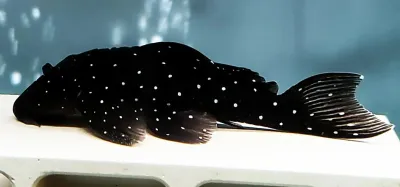
L391 Starry Sky Pleco - (Spectracanthicus sp.)
L391 Starry Sky Pleco - (Spectracanthicus sp.)
Price of shipping is not included.
$65.00
Out of stock
Wild Caught
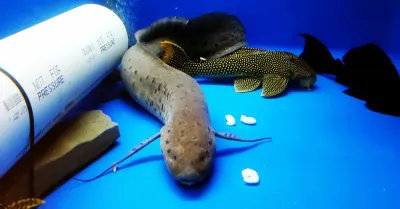
West African lungfish - (Protopterus annectens)
West African lungfish - (Protopterus annectens)
Price of shipping is not included.
$120.00
Out of stock
Wild Caught
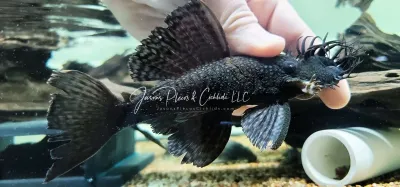
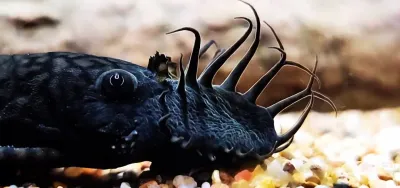
Colombia Ancistrus sp.
Colombia Ancistrus sp.
Price of shipping is not included.
5.0
(1)
was $110.00
Save 9%
$100.00
Out of stock
Captive Bred
Albino Common Snapping Turtle - (Chelydra serpentina)
Albino Common Snapping Turtle - (Chelydra serpentina)
Price of shipping is not included.
$1 315.00
Captive Bred
Fenestratus Cichlid - (Vieja Fenestratus)
Fenestratus Cichlid - (Vieja Fenestratus)
Price of shipping is not included.
was $110.00
Save 9%
$100.00
Out of stock
Captive Bred
Silver Arowana - (Osteoglossum bicirrhosum)
Silver Arowana - (Osteoglossum bicirrhosum)
Price of shipping is not included.
5.0
(1)
$90.00
Out of stock
Wild Caught
Albino Luteus Pleco/Golden Sailfin Pleco - (Hypostomus Luteus)
Albino Luteus Pleco/Golden Sailfin Pleco - (Hypostomus Luteus)
Price of shipping is not included.
$4 000.00
Out of stock
Captive Bred
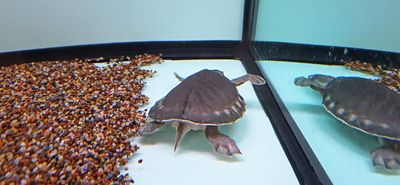
Fly River Turtle/Pig Nose Turtle - (Carettochelys insculpta)
Fly River Turtle/Pig Nose Turtle - (Carettochelys insculpta)
Price of shipping is not included.
was $1 600.00
Save 22%
$1 250.00
Captive Bred
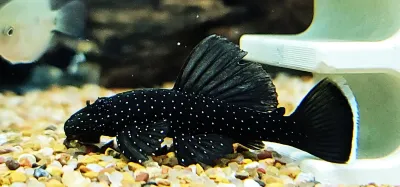
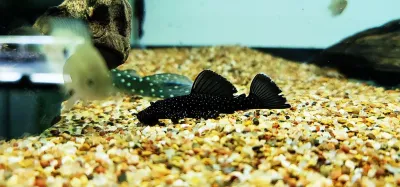
L071 Peppermint Pleco - (Ancistrus sp.)
L071 Peppermint Pleco - (Ancistrus sp.)
Price of shipping is not included.
$60.00
Out of stock
Captive Bred
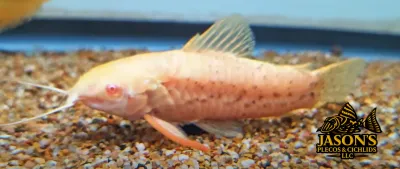
Albino Spotted Hoplo - (Megalechis thoracata)
Albino Spotted Hoplo - (Megalechis thoracata)
Price of shipping is not included.
5.0
(1)
was $45.00
Save 11%
$40.00
Out of stock
Wild Caught
Apure Jelly Catfish/Orange Catfish - (Cephalosilurus apurensis)
Apure Jelly Catfish/Orange Catfish - (Cephalosilurus apurensis)
Price of shipping is not included.
$160.00
Out of stock
Powered by Lightspeed
Display prices in:USD