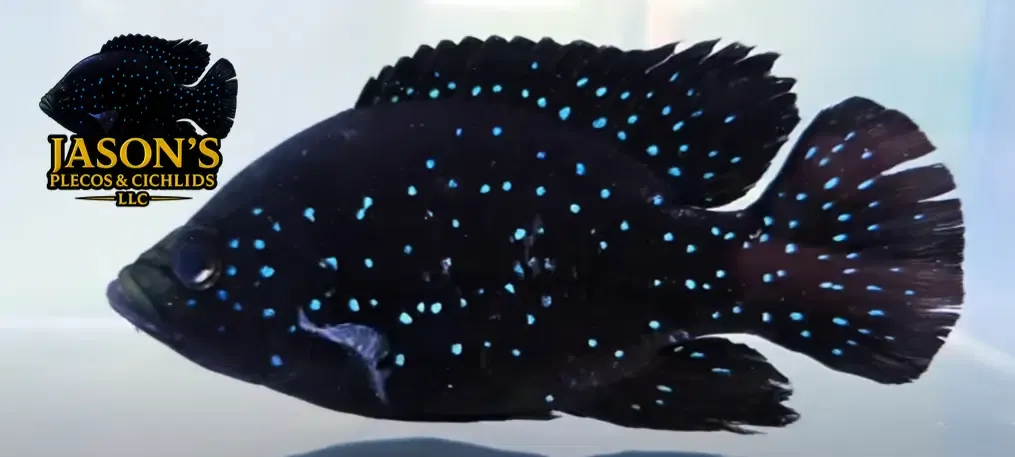
Polleni Cichlid/Starry Night Cichlid - (Paratilapia polleni)
5.0
2 reviews
Reviews from verified customers who have purchased products at this store.
$150.00
Sold out
was $160.00 Save 6%
Size
Questions, Comments, Concerns? Let us know!
Enter your text
Price of shipping is not included.
Sold out
Save this fish to my favorites.
Customer reviews
Reviews only from verified customers
Reviews are only accepted from verified customers who have signed in and purchased the products. This ensures that each review is based on genuine customer experiences. All reviews are checked before publication to prevent spam.
NORTH ARLINGTON,
United States
Dec 4, 2024
A dark and mysterious fish.
Polleni Cichlid/Starry Night Cichlid - (Paratilapia polleni)
Fish Details, Description and Information Below:
🌌 Polleni Cichlid / Starry Night Cichlid – (Paratilapia polleni) – Madagascar Black Diamond Cichlid
The Polleni Cichlid (Paratilapia polleni), commonly known as the Starry Night Cichlid, Black Diamond Madagascar Cichlid, or Marakely, is one of Madagascar's most distinctive freshwater cichlids.
Its deep:
- Black
- Charcoal
- Dark chocolate
- Blue-black
body is covered with hundreds of brilliant metallic spots that can appear:
- White
- Silver
- Pale blue
- Turquoise
- Blue-green
depending on the fish, lighting, mood, and viewing angle.
Against the dark body, these shimmering markings resemble:
STARS ACROSS A NIGHT SKY
which gives this species its popular:
STARRY NIGHT CICHLID
name.
Paratilapia polleni is found naturally only on the island of:
MADAGASCAR
and is currently classified as:
VULNERABLE
making responsible aquarium care and captive propagation especially valuable.
🔎 Quick Facts – Polleni / Starry Night Cichlid
- 📛 Common Name: Polleni Cichlid
- 🌌 Popular Name: Starry Night Cichlid
- 💎 Other Names: Black Diamond Madagascar Cichlid, Pollen's Cichlid, Marakely
- 🔬 Scientific Name: Paratilapia polleni
- 📅 Described: 1868
- 🐟 Family: Cichlidae
- 🧬 Subfamily: Ptychochrominae
- 🌎 Origin: Madagascar
- 🇲🇬 Native Status: Endemic to Madagascar
- 💧 Water Type: Freshwater
- 📏 Scientific Maximum: Approximately 28 cm / 11 inches total length
- 📏 Adult Planning Size: Approximately 10–12 inches
- 🏠 Recommended Aquarium – Single Adult: Approximately 90 gallons or larger
- 🏠 Recommended Aquarium – Pair: Approximately 125+ gallons
- 📐 Aquarium Length: Approximately 4–5 feet or longer
- 🌡️ Temperature: Approximately 76–82°F
- 💧 pH: Approximately 6.5–8.0
- 💦 Hardness: Soft to moderately hard
- 💨 Oxygenation: Good to High
- 🍽️ Diet: Carnivorous-Leaning Omnivore / Opportunistic Predator
- 🦐 Animal Foods: Important
- 🐟 Small Fish: May Be Eaten
- 🌿 Plant Foods: Minor / Supplemental
- 😠 Temperament: Territorial / Semi-Aggressive
- ⚠️ Male-to-Male Aggression: Can Be Severe
- 💕 Pair Bond: Strong Once Compatible Pair Forms
- 🥚 Breeding: Substrate / Hollow Spawner
- 👨👩👧 Parental Care: Biparental
- 🌙 Activity: Often Crepuscular – Active Around Dawn and Dusk
- ⭐ Care Level: Intermediate
- 🚨 IUCN Status: Vulnerable
- 🌎 CITES: Not currently listed by FishBase
🧬 Accepted Scientific Name
The currently accepted scientific name is:
Paratilapia polleni
The species was described by:
Pieter Bleeker in 1868
and remains recognized as a valid species.
Older scientific names associated with this fish include:
- Paratilapia typus
- Paracara typus
- Paratilapia bleekeri
Current FishBase taxonomy treats these names as synonyms of:
Paratilapia polleni
For this product, use:
Polleni Cichlid / Starry Night Cichlid – (Paratilapia polleni)
⚠️ Important “Large Spot” vs. “Small Spot” Taxonomy Note
The aquarium history of Paratilapia is complicated.
You may see fish advertised as:
- Polleni
- Small Spot Polleni
- Large Spot Polleni
- Bleekeri
- Andapa
- East Coast Small Spot
- Other locality forms
Aquarium specialists have long recognized several geographically distinct Paratilapia forms from Madagascar.
Some may eventually prove to represent:
DIFFERENT SPECIES
even though modern formal taxonomy currently recognizes Paratilapia polleni and treats several older names as synonyms.
⚠️ Do Not Identify Fish Solely by Spot Size
A fish should not automatically be called:
Paratilapia bleekeri
simply because it has large spots.
Likewise, small spots alone do not prove a particular locality.
Spot size can vary according to:
- Genetics
- Age
- Geographic lineage
- Condition
- Aquarium strain
- Potential mixed ancestry
Without documented locality or breeder lineage:
USE PARATILAPIA POLLENI
rather than inventing a more specific identification.
🧬 Preserve Locality When Known
If a specimen comes with reliable locality information, preserve it.
For conservation-oriented breeding, information such as:
- Collection locality
- Original breeder
- Parent lineage
- Large-spot or small-spot line
- Generation
can be extremely valuable.
Avoid deliberately mixing geographically different Paratilapia populations if the goal is to preserve pure lines.
🌌 Appearance
The Starry Night Cichlid is famous for its:
VELVETY DARK BODY
covered with brilliant iridescent spots.
The base body coloration may range from:
- Deep black
- Charcoal
- Dark brown
- Greenish black
- Blue-black
✨ Star-Like Spots
The spots may appear:
- Bright white
- Silver
- Pale blue
- Turquoise
- Green-blue
and commonly extend across:
- Head
- Gill covers
- Body
- Dorsal fin
- Anal fin
- Caudal fin
- Pelvic fins
Under aquarium lighting, the contrast can be dramatic.
🔄 Color Can Change Quickly
Paratilapia can alter their appearance considerably.
A relaxed fish may appear:
- Very dark
- Deep brown-black
- Heavily spotted
while a stressed specimen may become:
- Pale
- Gray-brown
- Beige
- Less contrasting
This is normal physiological color change.
⚠️ Exact Spot Pattern Cannot Be Guaranteed
Every specimen can differ in:
- Spot size
- Spot density
- Spot color
- Body darkness
- Fin pattern
- Adult coloration
Appearance can also change with:
- Age
- Mood
- Stress
- Lighting
- Aquarium background
- Diet
- Social status
🌎 Madagascar Endemic
Paratilapia polleni is:
ENDEMIC TO MADAGASCAR
meaning its natural populations occur nowhere else on Earth.
Madagascar has an exceptionally distinctive freshwater fish fauna because of its long geographic isolation.
🌊 Natural Distribution
Paratilapia polleni has been recorded from numerous freshwater systems across Madagascar.
Scientific records include populations from:
- Rivers
- Streams
- Lakes
- Tributaries
- Wetland-associated waters
FishBase records the species from locations including:
- Nosivolo tributary system
- Marolambo region
- Manantenina River
The species historically had a relatively broad Malagasy distribution compared with many other endemic Madagascar cichlids.
🌿 Adaptable Natural Habitat
Starry Night Cichlids can occupy a range of freshwater habitats.
Their natural environments may contain:
- Rock
- Submerged branches
- Roots
- Vegetation
- Open water
- Sheltered margins
- Submerged cavities
Aquarium décor should provide:
STRUCTURE + OPEN SWIMMING SPACE
📏 Adult Size
FishBase documents a maximum size of approximately:
28 CM TOTAL LENGTH
or approximately:
11 INCHES
For responsible aquarium planning:
EXPECT APPROXIMATELY 10–12 INCHES
for a mature adult.
⚠️ Some Aquarium Paratilapia Grow Larger
Some Paratilapia forms in the aquarium hobby have been reported at:
12+ INCHES
and occasionally larger.
However, because several geographically distinct forms are sold under the general Polleni name, those exceptionally large measurements should not automatically be assigned to confirmed P. polleni.
For this product:
10–12 INCHES
is the safer planning range.
🏠 Aquarium Size
For one mature adult:
90 GALLONS OR LARGER
is a good permanent recommendation.
For a compatible adult pair:
125 GALLONS OR LARGER
is preferred.
Larger aquariums provide more flexibility when keeping:
- Tankmates
- Breeding pairs
- Large males
- Territorial adults
📐 Aquarium Footprint
A Starry Night Cichlid benefits more from:
LENGTH + WIDTH
than excessive height.
Provide approximately:
4–5 FEET OR MORE OF AQUARIUM LENGTH
for mature fish.
A pair benefits greatly from additional floor space.
🪨 Aquarium Setup
A suitable aquarium can include:
- Large rocks
- Driftwood
- Large caves
- Slate
- Smooth substrate
- Sand
- Hardy plants
- Open swimming space
- Shaded areas
Create several areas where the fish can:
- Retreat
- Establish territory
- Break visual contact with tankmates
🌿 Plants
Unlike highly destructive herbivorous cichlids, Paratilapia generally do not intentionally consume large amounts of aquarium plants.
Plants can therefore be used.
However:
BREEDING FISH MAY DIG OR UPROOT THEM
while preparing spawning areas.
Hardy plants attached securely to:
- Wood
- Rocks
are usually easier to maintain.
🪵 Driftwood
Driftwood provides:
- Shelter
- Shade
- Territorial boundaries
- Natural appearance
Large pieces can help create:
VISUAL BARRIERS
which are useful with territorial cichlids.
🌡️ Temperature
FishBase gives a tropical temperature range of approximately:
75–82°F / 24–28°C
For aquarium maintenance, a practical target is:
76–82°F
⚠️ Avoid Chronic Cold Conditions
Madagascar Paratilapia in the aquarium hobby are generally maintained warm.
A good target around:
78–80°F
works well for most established fish.
Avoid unnecessary rapid temperature changes.
💧 pH
A practical aquarium range is:
6.5–8.0
The species is more adaptable than many specialized soft-water fishes.
The most important factor is:
STABILITY
rather than constantly trying to adjust the aquarium to an exact number.
💦 Hardness
Soft to moderately hard freshwater is appropriate.
Avoid sudden changes in:
- pH
- Conductivity
- Hardness
- Temperature
especially with newly introduced fish.
💨 Oxygenation
Provide:
GOOD TO HIGH OXYGENATION
using:
- Strong surface agitation
- Air stones
- Canister-filter returns
- Sump returns
- Supplemental circulation
Large cichlids also produce significant amounts of waste, making strong filtration important.
💩 Filtration
A mature Polleni Cichlid requires strong:
- Biological filtration
- Mechanical filtration
Suitable systems may include:
- Large canister filters
- Sump filtration
- Large hang-on-back systems
- Supplemental sponge filtration
Maintain:
AMMONIA = 0
and:
NITRITE = 0
at all times.
🔄 Water Changes
Regular partial water changes are essential.
Frequency depends on:
- Aquarium volume
- Fish size
- Number of fish
- Feeding
- Filtration
- Nitrate production
Large protein-fed cichlids can produce significant organic waste.
🍽️ Diet – Carnivorous-Leaning Omnivore
The Starry Night Cichlid is best considered a:
CARNIVOROUS-LEANING OMNIVORE / OPPORTUNISTIC PREDATOR
Natural Paratilapia consume:
- Small fish
- Aquatic invertebrates
- Insects
- Other available animal prey
🐟 Opportunistic Piscivore
Small fish that fit into the mouth may be:
EATEN
especially during:
- Dawn
- Dusk
- Low-light periods
A Polleni can remain relatively motionless while watching prey before lunging quickly.
🦐 Recommended Foods
Suitable aquarium foods include:
- High-quality cichlid pellets
- Insect-based pellets
- Mysis shrimp
- Krill
- Brine shrimp
- Chopped shrimp
- Earthworms
- Appropriate frozen fish-based foods
- Quality carnivore or omnivore pellets
🚫 Live Feeder Fish Are Not Necessary
There is no need to feed live feeder fish.
Feeder fish can introduce:
- Parasites
- Bacteria
- Disease
and may provide poor nutrition.
A varied diet of:
QUALITY PREPARED + FROZEN FOODS
is safer.
🌿 Plant Foods
Some individuals may consume foods containing vegetable ingredients.
However:
PLANT MATTER SHOULD NOT BE THE FOUNDATION OF THE DIET
This is not an algae-grazing or strongly herbivorous cichlid.
⚖️ Avoid an Extremely Fatty Diet
Do not feed excessive amounts of:
- Mammalian meat
- Fatty foods
- Low-quality feeder fish
Use appropriately formulated aquatic foods instead.
🌙 Crepuscular Behavior
Paratilapia often become especially active around:
DAWN AND DUSK
This is known as:
CREPUSCULAR BEHAVIOR
Their large eyes are well suited to hunting and navigating under lower light levels.
👀 Large Eyes
The Starry Night Cichlid's large eyes contribute to its distinctive appearance.
They also make biological sense for a fish that commonly feeds during:
- Dawn
- Dusk
- Shaded conditions
😠 Temperament
The Polleni is a:
TERRITORIAL CICHLID
but its aggression differs considerably between individuals.
Many adults can be relatively calm toward unrelated large fish while being extremely intolerant of:
- Other Paratilapia
- Rival males
- Fish entering breeding territory
⚠️ Male-to-Male Aggression
Two mature males can become:
VERY AGGRESSIVE TOWARD ONE ANOTHER
Keeping multiple adult males together is not recommended unless the aquarium is exceptionally large and the keeper is prepared to separate them immediately.
💕 Compatible Pairs
Once a compatible male and female form a pair, they can develop a:
STRONG PAIR BOND
Pairs may remain close together and cooperate in:
- Territory defense
- Spawning
- Egg care
- Fry protection
⚠️ Do Not Force a Pair
Putting one random male and one random female together does not guarantee compatibility.
A rejected fish can be:
- Chased
- Cornered
- Injured
The safest breeding method is often to raise several juveniles together, allow a natural pair to form, and then:
REMOVE THE REMAINING FISH
🐠 Tankmates
Possible tankmates should be:
- Too large to swallow
- Robust
- Not excessively aggressive
- Able to tolerate similar water conditions
Potential examples include appropriately selected:
- Larger cichlids
- Large barbs
- Large rainbowfish
- Large catfish
- Other robust freshwater fish
Compatibility always depends on:
INDIVIDUAL TEMPERAMENT + AQUARIUM SIZE
🚫 Avoid Small Tankmates
Small fish may eventually become:
FOOD
Even if a juvenile Polleni ignores them initially.
Always plan tankmates based on:
ADULT MOUTH SIZE
rather than juvenile behavior.
♂️ Male vs. Female
Sexing becomes easier as the fish matures.
Mature Males
Generally:
- Grow larger
- Develop longer, more pointed fins
- Can develop a pronounced nuchal hump
- May become more territorial
- Have a longer, more pointed genital papilla
Mature Females
Generally:
- Remain somewhat smaller
- May show particularly intense spotting
- Develop a shorter, broader genital papilla when mature
🌌 Females Can Be Extremely Colorful
Unlike some cichlids where males are always the more colorful sex:
FEMALE PARATILAPIA CAN BE EXCEPTIONALLY BEAUTIFUL
Some females retain very dense:
- Blue
- Green
- White
spotting while mature males may become darker and less heavily patterned.
Individual variation is substantial.
🧠 Mature Male Nuchal Hump
Older dominant males may develop a:
NUCHAL HUMP
on the forehead.
This can become especially noticeable on mature breeding males.
Its size varies between individuals.
🥚 Fascinating Reproductive Biology
Breeding Paratilapia is particularly interesting because its eggs differ from those of most familiar cichlids.
The fish are:
BENTHIC / SUBSTRATE-ASSOCIATED SPAWNERS
with:
BIPARENTAL CARE
🪨 Spawning Site
A compatible pair may choose:
- Rock
- Slate
- Driftwood
- Substrate depression
- Hollow
- Sheltered cavity
as the breeding location.
A partially enclosed area is especially useful because of the unusual egg structure.
🥚 Unusual Egg Mass
Scientific research has shown that Paratilapia polleni eggs:
ATTACH TO ONE ANOTHER
through specialized filament tufts.
The individual eggs are not strongly glued to the substrate in the way many other cichlid eggs are.
Instead:
THE EGGS FORM A COHESIVE, MOVABLE CLUSTER
🍇 Grape-Like Cluster
Aquarists often describe the resulting egg mass as resembling:
A BUNCH OF GRAPES
The egg filaments become intertwined, holding the eggs together.
This is an unusual reproductive adaptation among cichlids.
👨👩👧 Biparental Care
Both parents can participate in:
- Guarding the eggs
- Defending the spawning area
- Moving or manipulating the egg mass
- Protecting fry
Parental care may vary between individual pairs.
⚠️ Breeding Aggression
During spawning:
TERRITORIAL AGGRESSION CAN INCREASE DRAMATICALLY
Other aquarium inhabitants may be attacked.
For established breeding pairs, a:
SPECIES-ONLY BREEDING AQUARIUM
is often safest.
🥚 Clutch Size
Aquarium reports commonly describe:
SEVERAL HUNDRED EGGS
under good conditions.
Rather than guaranteeing an exact number, clutch size should be understood to vary with:
- Female size
- Age
- Conditioning
- Genetics
- Environmental conditions
🐣 Hatching
At warm aquarium temperatures, eggs typically develop and hatch within:
A FEW DAYS
Exact timing varies with:
- Temperature
- Oxygenation
- Water conditions
👶 Fry
After becoming free swimming, fry can receive:
- Newly hatched brine shrimp
- Fine commercial fry food
- Small zooplankton-type foods
- Fine high-quality prepared foods
⚠️ Fry Can Become Cannibalistic
Young Paratilapia do not always grow at the same rate.
Larger fry may prey upon:
SMALLER SIBLINGS
As they grow, separating fry by:
SIZE
can greatly improve survival.
🧬 Conservation Breeding
Because Paratilapia polleni is classified as:
VULNERABLE
responsible captive breeding can be valuable.
Breeders should preserve:
- Accurate species identification
- Locality when known
- Parentage
- Breeder records
🚨 Conservation Status – Vulnerable
The current IUCN Red List classification is:
VULNERABLE – VU
The assessment cited by FishBase was completed in:
2016
⚠️ Why Is Paratilapia polleni Vulnerable?
Major threats to Madagascar's native freshwater fish include:
- Habitat degradation
- Deforestation
- Alteration of river catchments
- Water diversion
- Loss of suitable freshwater habitat
- Introduced non-native fish
These pressures have caused continued decline and fragmentation of native fish habitats.
🐟 Introduced Species
Introduced fish have created additional pressure on Madagascar's endemic freshwater species through:
- Competition
- Predation
- Habitat displacement
This makes Madagascar's native cichlid fauna especially important from a conservation perspective.
⚠️ Vulnerable Does Not Mean CITES Listed
The IUCN category:
VULNERABLE
is a conservation assessment.
It does not automatically mean the species is:
- CITES Appendix I
- CITES Appendix II
- Illegal to own
- Illegal to sell domestically
FishBase currently does not list P. polleni under CITES.
🌱 Responsible Captive Propagation
Responsible captive breeding can:
- Reduce pressure on wild populations
- Maintain aquarium populations
- Preserve genetic lines
- Improve husbandry knowledge
- Increase awareness of Madagascar's threatened freshwater fauna
🧬 Avoid Mixing Uncertain Paratilapia Lines
Because multiple geographic Paratilapia forms exist in the aquarium hobby:
DO NOT DELIBERATELY MIX DIFFERENT LINES FOR BREEDING
unless hybrid offspring are clearly identified as such.
This is particularly important with fish sold as:
- Large Spot
- Small Spot
- Andapa
- Fianarantsoa
- Bleekeri
- Unidentified Polleni-type forms
⚠️ Lineage Matters
A fish without known locality can still make an excellent aquarium animal.
However, for conservation breeding:
UNKNOWN LINEAGE SHOULD BE RECORDED AS UNKNOWN
rather than inventing a locality based on spot size or appearance.
⭐ Why Keep a Polleni / Starry Night Cichlid?
The Polleni Cichlid combines:
- 🌌 Incredible star-like coloration
- ⚫ Deep velvet-black body
- ✨ Blue, white and green iridescent spotting
- 🇲🇬 Madagascar endemic heritage
- 📏 Impressive approximately 10–12 inch adult size
- 👀 Large expressive eyes
- 🌙 Crepuscular hunting behavior
- 🧠 Intelligent cichlid personality
- 💕 Strong pair bonding
- 🥚 Extremely unusual filamented egg masses
- 👨👩👧 Biparental care
- 🚨 Vulnerable conservation status
into one of Madagascar's most distinctive aquarium cichlids.
⚠️ Important Considerations
Before purchasing a Polleni / Starry Night Cichlid:
- The accepted scientific name is Paratilapia polleni.
- The species was described in 1868.
- It is endemic to Madagascar.
- Current formal taxonomy treats Paratilapia bleekeri as a synonym.
- Aquarium large-spot and small-spot forms remain taxonomically complicated.
- Do not assign a geographic form solely by spot size.
- Preserve locality information when known.
- Do not intentionally mix distinct Paratilapia breeding lines.
- FishBase documents approximately 28 cm / 11 inches maximum total length.
- Plan for approximately 10–12 inches.
- Provide approximately 90 gallons or larger for one mature adult.
- Provide approximately 125+ gallons for a compatible pair.
- Larger is preferred when tankmates are present.
- Maintain approximately 76–82°F.
- Maintain approximately pH 6.5–8.0.
- Maintain good to high oxygenation.
- Use strong mechanical and biological filtration.
- Feed a carnivorous-leaning omnivorous diet.
- Quality pellets, shrimp, krill, insects, and appropriate frozen foods are excellent choices.
- Live feeder fish are unnecessary.
- Small tankmates may be eaten.
- Adult males can be strongly territorial toward one another.
- Do not assume any random male and female will form a compatible pair.
- Breeding pairs provide parental care.
- The eggs have unusual filament structures and attach to one another rather than being firmly glued individually to the substrate.
- Fry may become cannibalistic as size differences develop.
- The species is currently classified as Vulnerable.
- Vulnerable status does not automatically mean CITES-listed.
- Responsible captive propagation is valuable.
- Never release aquarium fish into natural waterways.
🧬 Taxonomy
The currently accepted scientific name is:
Paratilapia polleni Bleeker, 1868
Classification:
- Order: Cichliformes
- Family: Cichlidae
- Subfamily: Ptychochrominae
- Genus: Paratilapia
- Species: polleni
Current synonyms include:
- Paracara typus
- Paratilapia typus
- Paratilapia bleekeri
For this product, use:
Polleni Cichlid / Starry Night Cichlid – (Paratilapia polleni)
🌎 Madagascar Lineage Disclaimer
Several geographically distinct Paratilapia forms have circulated through the aquarium hobby under overlapping names.
Spot size alone is not sufficient to determine locality or taxonomic identity.
When known, preserve:
- Collection locality
- Breeder source
- Parentage
- Aquarium strain information
Do not represent fish of uncertain lineage as a specific Madagascar locality without documentation.
🚨 Vulnerable Species Disclaimer
Paratilapia polleni is currently classified as:
VULNERABLE
on the IUCN Red List.
Responsible aquarium care and captive breeding are especially important for Madagascar's endemic freshwater fishes.
The IUCN conservation category is separate from legal trade classifications and does not automatically mean the species is prohibited from aquarium ownership.
🚚 Live Fish Shipping
Live fish are professionally packed for safe transport.
Shipping availability depends on:
- Fish size
- Destination
- Weather conditions
- Carrier availability
- Applicable state and local regulations
Larger Starry Night Cichlids may require:
- Larger insulated shipping boxes
- Additional water
- Heavy-duty shipping bags
- Multiple protective bag layers
- Specialized packing
- Airline cargo shipping depending on fish size and destination
Please review our Shipping & Payment Information and Live Arrival Guarantee / DOA Policy before ordering.
⚠️ Buyer Responsibility
Customers are responsible for confirming that Paratilapia polleni may legally be purchased, possessed, transported, and received in their state or local jurisdiction before ordering.
Never release aquarium fish into natural waterways.
Below are fish you may also like.
Wild Caught
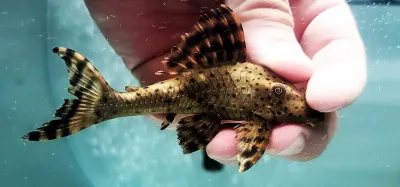
L303 Red Pepper Pleco - (Hypostomus macushi)
L303 Red Pepper Pleco - (Hypostomus macushi)
Price of shipping is not included.
$50.00
Out of stock
Wild Caught
L016 Bluespotted Pleco - (Spectracanthicus punctatissimus)
L016 Bluespotted Pleco - (Spectracanthicus punctatissimus)
Price of shipping is not included.
$40.00
Out of stock
Wild Caught
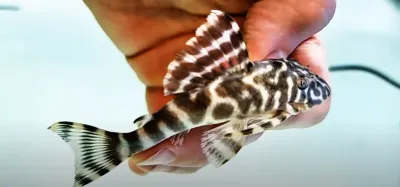
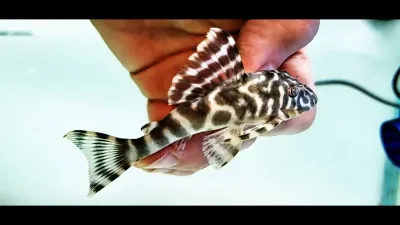
L015 Candy Striped Pleco - (Peckoltia vittata)
L015 Candy Striped Pleco - (Peckoltia vittata)
Price of shipping is not included.
was $50.00
Save 10%
$45.00
Out of stock
Captive Bred
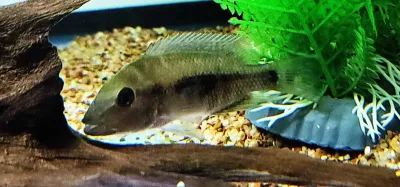
Bluemouth Cichlid - (Wajpamheros nourissati)
Bluemouth Cichlid - (Wajpamheros nourissati)
Price of shipping is not included.
$35.00
Out of stock
Captive Bred
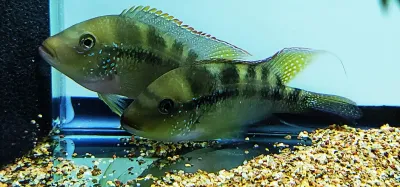
Pastel cichlid - (Cribroheros Alfari) Rio Carana
Pastel cichlid - (Cribroheros Alfari) Rio Carana
Price of shipping is not included.
$50.00
Out of stock
Captive Bred
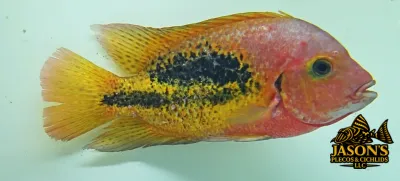
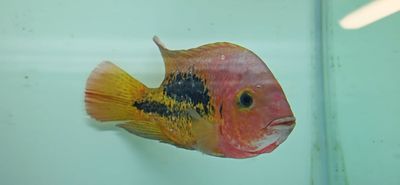
Rio Chacamax Cichlid - (Vieja bifasciata)
Rio Chacamax Cichlid - (Vieja bifasciata)
Price of shipping is not included.
5.0
(4)
$130.00
Out of stock
Wild Caught
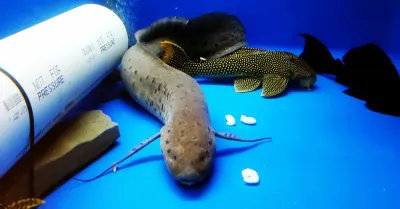
West African lungfish - (Protopterus annectens)
West African lungfish - (Protopterus annectens)
Price of shipping is not included.
$120.00
Out of stock
Wild Caught
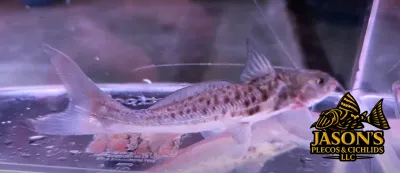
Vulture Catfish - (Calophysus macropterus)
Vulture Catfish - (Calophysus macropterus)
Price of shipping is not included.
was $120.00
Save 17%
$100.00
Out of stock
Wild Caught
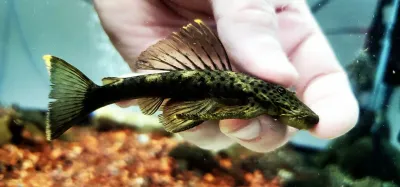
L244 Black Spotted Orinoco-Ancistrus - (Pseudolithoxus dumus)
L244 Black Spotted Orinoco-Ancistrus - (Pseudolithoxus dumus)
Price of shipping is not included.
$40.00
Out of stock
Wild Caught
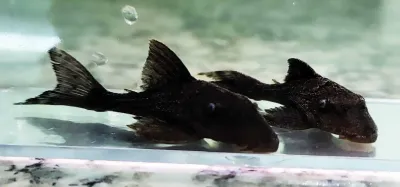
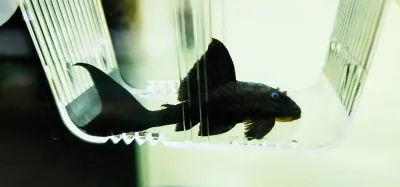
Blue Eyed Royal Pleco - (Panaque cochliodon)
Blue Eyed Royal Pleco - (Panaque cochliodon)
Price of shipping is not included.
$270.00
Out of stock
Wild Caught
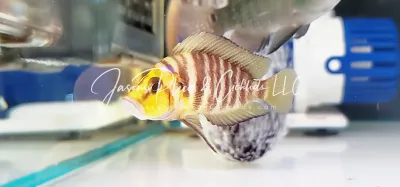
Gold Head Compressiceps - (Altolamprologus compressiceps)
Gold Head Compressiceps - (Altolamprologus compressiceps)
Price of shipping is not included.
$75.00
Out of stock
Wild Caught
Indo-Pacific Tarpon - (Megalops cyprinoides)
Indo-Pacific Tarpon - (Megalops cyprinoides)
Price of shipping is not included.
$100.00
Out of stock
Powered by Lightspeed
Display prices in:USD