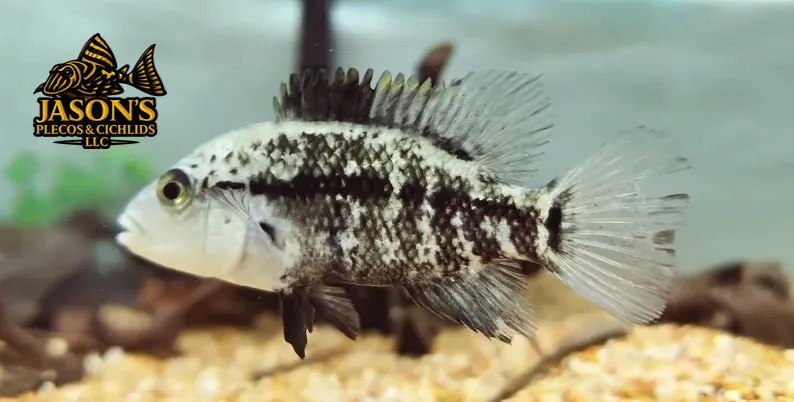
Haitian Cichlid - (Nandopsis haitiensis)
5.0
1 review
Reviews from verified customers who have purchased products at this store.
$50.00
Sold out
was $55.00 Save 9%
Size
Questions, Comments, Concerns? Let us know!
Enter your text
Price of shipping is not included.
Sold out
Save this fish to my favorites.
Customer reviews
Reviews only from verified customers
Reviews are only accepted from verified customers who have signed in and purchased the products. This ensures that each review is based on genuine customer experiences. All reviews are checked before publication to prevent spam.
NORTH ARLINGTON,
United States
Jul 2, 2026
Wonderful selection and service
Haitian Cichlid - (Nandopsis haitiensis)
Fish Details, Description and Information Below:
🐟 Haitian Cichlid / Black Nasty Cichlid – (Nandopsis haitiensis) – Large Hispaniola Cichlid
The Haitian Cichlid (Nandopsis haitiensis), also widely known in the aquarium hobby as the Black Nasty Cichlid or Odo Cichlid, is a large, powerful Caribbean cichlid known for its dramatic black-and-white pattern, heavy adult body, impressive nuchal hump in mature males, and extremely territorial personality.
Despite the common name “Haitian Cichlid,” this species is not restricted to Haiti. It is endemic to the Caribbean island of:
HISPANIOLA
which includes both:
- 🇭🇹 Haiti
- 🇩🇴 Dominican Republic
This is a large, intelligent, highly territorial cichlid best suited to experienced aquarists prepared to provide substantial aquarium space, strong filtration, carefully selected tankmates, and the ability to separate incompatible fish when necessary.
🔎 Quick Facts – Haitian Cichlid
- 📛 Common Name: Haitian Cichlid
- 📛 Other Names: Black Nasty Cichlid, Odo Cichlid, Haiti Cichlid
- 🔬 Scientific Name: Nandopsis haitiensis
- 📚 Older Scientific Name: Cichlasoma haitiensis
- 🐟 Family: Cichlidae
- 🌎 Native Region: Caribbean
- 🏝️ Native Island: Hispaniola
- 🇭🇹 Native Country: Haiti
- 🇩🇴 Native Country: Dominican Republic
- 💧 Natural Environments: Freshwater and some naturally brackish habitats
- 🌊 Habitat: Lakes, rivers, streams, springs, reservoirs and other inland waters
- 📏 Scientific Maximum: 21.5 cm / approximately 8.5 inches standard length
- 📏 Large Aquarium Adults: Approximately 12–14 inches
- 📏 Exceptional Male Potential: Larger individuals approaching 15–16 inches have been reported
- 🏠 Recommended Aquarium – Single Adult: Approximately 125 gallons or larger
- 🏠 Adult Pair: Approximately 180–250+ gallons strongly preferred
- 📐 Aquarium Length: Approximately 6 feet or longer preferred for large adults
- 🌡️ Temperature: Approximately 78–84°F
- 💧 pH: Approximately 7.0–8.5
- 💦 Hardness: Moderate to Hard
- 💨 Oxygenation: Good to High
- 🌊 Water Movement: Low to Moderate
- 🍽️ Diet: Omnivore
- 🌿 Plant / Algae Foods: Important
- 🐌 Mollusks / Snails: Part of documented natural diet
- 🦐 Animal Foods: Supplemental
- 😠 Temperament: Aggressive / Highly Territorial
- ⚠️ Breeding Aggression: Very High
- 🐠 Community Fish: Generally Not Recommended
- 🥚 Breeding: Open-Substrate Spawner
- 🪨 Spawning Site: Cleaned rock or other firm surface
- 👨👩👧 Parental Care: Strong parental care
- 🥚 Documented Egg Count: Approximately 150–200 eggs in FishBase records
- ⭐ Care Level: Advanced
- 🌎 IUCN Status: Least Concern
- 🚫 CITES: Not Listed / Not Evaluated by CITES
🧬 Valid Scientific Species
The currently accepted scientific name is:
Nandopsis haitiensis
The species was originally described in:
1935
as:
Cichlasoma haitiensis
Modern taxonomy places it in the genus:
Nandopsis
Therefore, the correct product identification is:
Haitian Cichlid – (Nandopsis haitiensis)
🏝️ Endemic to Hispaniola
One of the biggest corrections from older aquarium descriptions is the native range.
Nandopsis haitiensis is not simply:
“Native to Haiti.”
It is endemic to:
THE ENTIRE ISLAND OF HISPANIOLA
Hispaniola is divided politically between:
🇭🇹 HAITI
and:
🇩🇴 THE DOMINICAN REPUBLIC
Natural populations occur in both countries.
🇭🇹 Haiti
Documented Haitian populations include waters associated with areas such as:
- Cul-de-Sac drainage
- Étang de Miragoâne
- Other Haitian rivers and inland waters
🇩🇴 Dominican Republic
Documented Dominican populations include:
- Rio Yuna drainage
- Rio Yaque del Sur drainage
- Baní region
- Lago Enriquillo-associated springs
- Additional rivers, streams and inland waters
This makes the species a true:
HISPANIOLAN ENDEMIC
rather than a Haiti-only fish.
🌊 Extremely Diverse Natural Habitats
One of the most interesting characteristics of the Haitian Cichlid is its ability to occur in many different environments.
Populations have been documented in:
- Mountain streams
- Lowland rivers
- Lakes
- Reservoirs
- Springs
- Slow-moving waters
- Flowing waters
- Freshwater
- Naturally brackish environments
This makes Nandopsis haitiensis much more ecologically flexible than its common aquarium description sometimes suggests.
🧂 Brackish Populations Exist
FishBase recognizes Nandopsis haitiensis as occurring in:
FRESHWATER AND BRACKISH WATER
Some natural populations live in waters influenced by:
- Mineral-rich springs
- Coastal drainage
- Brackish conditions
However:
SALT IS NOT REQUIRED FOR NORMAL AQUARIUM CARE
Fish maintained successfully in freshwater should remain in stable freshwater unless there is a specific reason to reproduce the chemistry of a known locality.
⚠️ Do Not Add Salt Just Because the Species Can Tolerate Brackish Water
Natural tolerance of brackish conditions does not mean every Haitian Cichlid needs:
- Aquarium salt
- Marine salt
- Constant salinity
Stable water chemistry is more important than trying to force every aquarium specimen into brackish conditions.
🎨 Appearance
The Haitian Cichlid develops one of the most distinctive patterns among Caribbean cichlids.
Typical coloration can include:
- Ivory white
- Silver-gray
- Gray
- Olive-gray
- Charcoal
- Nearly black
with extensive:
- Black spotting
- Speckling
- Broken bands
- Reticulated markings
- Dark scale edging
⚫ Why Is It Called the Black Nasty?
The aquarium nickname:
BLACK NASTY CICHLID
comes from the combination of its:
- Dark adult coloration
- Bold territorial behavior
- Powerful body
- Strong breeding aggression
The nickname describes its aquarium reputation.
It is not part of the scientific name.
🎨 Color Can Change Dramatically
Nandopsis haitiensis can change appearance according to:
- Age
- Mood
- Sex
- Social status
- Breeding condition
- Stress
- Aquarium background
- Lighting
Some individuals may appear almost:
IVORY WHITE WITH BLACK SPECKLING
while others become:
VERY DARK GRAY OR NEARLY BLACK
👶 Juvenile Appearance
Juveniles can display:
- Dark vertical bars
- Mid-body blotches
- Gray-brown coloration
- Fine spotting
The pattern changes considerably as the fish matures.
👑 Mature Male Nuchal Hump
Large mature males can develop an impressive:
NUCHAL HUMP
on the forehead.
The hump may become especially pronounced in:
- Older males
- Dominant males
- Breeding males
Not every male develops an equally large hump.
⚠️ Never Guarantee a Huge Nuchal Hump
Nuchal-hump development depends on:
- Genetics
- Sex
- Age
- Hormonal condition
- Social dominance
- Nutrition
A customer should never be promised that a young fish will develop an enormous forehead hump.
📏 Adult Size – Important Clarification
FishBase documents a maximum of:
21.5 CM / APPROXIMATELY 8.5 INCHES STANDARD LENGTH
Standard length measures from the snout to the base of the tail.
It:
DOES NOT INCLUDE THE FULL CAUDAL FIN
📏 Aquarium Males Can Grow Considerably Larger
Experienced cichlid keepers have documented aquarium males exceeding:
30 CM / APPROXIMATELY 12 INCHES
and exceptional captive specimens approaching:
40 CM / NEARLY 16 INCHES
Your current large specimen demonstrates why the FishBase standard-length record should not be used as a hard aquarium maximum.
For responsible customer planning:
EXPECT APPROXIMATELY 12–14 INCHES FOR A LARGE ADULT
with exceptional males potentially growing larger.
⚠️ This Is a Large Cichlid
A Haitian Cichlid should not be purchased with the expectation that it will remain:
- 6 inches
- 8 inches
- A medium community cichlid
Large males can become:
- Long
- Deep-bodied
- Heavy
- Extremely territorial
Permanent housing should be selected accordingly.
🏠 Aquarium Size – Single Adult
For one mature Haitian Cichlid:
125 GALLONS OR LARGER
is a responsible long-term recommendation.
A large male benefits greatly from:
- 6 feet of aquarium length
- Good front-to-back width
- Large territories
- Heavy filtration
❤️ Adult Pair
A compatible breeding pair needs substantially more room.
I would recommend:
180–250+ GALLONS
whenever possible.
More space provides:
- Escape distance
- Multiple territories
- Broken sightlines
- Room for a female to retreat
- Greater water volume
⚠️ A Pair Is Not Automatically Safe
A male and female Haitian Cichlid are not guaranteed to remain compatible.
Even an established pair can suddenly become:
VIOLENTLY AGGRESSIVE
toward one another.
A large male can seriously injure or kill a female.
Anyone attempting to maintain a pair should have:
- A sturdy divider
- A backup aquarium
- Multiple escape areas
- Close observation
🛑 Be Prepared to Separate Them
When keeping a pair:
ALWAYS HAVE A SEPARATION PLAN
Do not wait until severe injuries occur before deciding how the fish can be separated.
🪨 Aquarium Setup
A good Haitian Cichlid aquarium should include:
- Large rocks
- Large driftwood
- Strong caves
- Visual barriers
- Open swimming space
- Sand or smooth gravel
- Heavy filtration
Décor should divide the aquarium into:
SEPARATE VISUAL TERRITORIES
👀 Break the Line of Sight
This is especially important for:
- Pairs
- Multiple large cichlids
- Breeding fish
Use:
- Large driftwood
- Rock structures
- Tall sturdy décor
to prevent one fish from constantly seeing and pursuing another across the entire aquarium.
⚠️ Secure All Décor
Large Haitian Cichlids are powerful.
They may:
- Dig
- Move gravel
- Push rocks
- Rearrange wood
- Uproot plants
Heavy rocks should be positioned securely so they cannot:
- Collapse
- Trap a fish
- Damage aquarium glass
🌿 Plants
Young fish may occur naturally around aquatic vegetation.
However, large adults are usually poor candidates for carefully landscaped planted aquariums.
They may:
- Dig around roots
- Uproot plants
- Damage delicate vegetation
- Rearrange substrate
Hardy plants attached securely to rocks or wood may have a better chance of surviving.
💧 Water Chemistry – An Adaptable Species
Because Nandopsis haitiensis occurs in many different natural environments, there is no single water chemistry that represents every wild population.
Some habitats are:
- Freshwater
- Hard
- Alkaline
- Mineral-rich
while others can have different chemistry.
🌡️ Temperature
For aquarium maintenance, a practical range is:
78–84°F
The species comes from a warm Caribbean environment.
Some wild localities have been recorded at considerably warmer temperatures, but there is generally no need to maintain aquarium fish constantly at extreme temperatures.
💧 pH
A practical range is:
pH 7.0–8.5
This species generally does especially well in:
NEUTRAL TO ALKALINE WATER
💦 Hardness
Moderately mineralized to hard water is appropriate.
A practical approach is:
MODERATE TO HARD WATER
with stable chemistry.
⚠️ Stability Is More Important Than Chasing an Exact Number
Avoid continually changing:
- pH
- Hardness
- Temperature
trying to reach one exact value.
Stable, clean water is much safer than constant chemical adjustment.
💨 Oxygenation
Provide:
GOOD TO HIGH OXYGENATION
using:
- Strong surface movement
- Air stones when useful
- Sump returns
- Canister-filter returns
Large cichlids consume substantial oxygen, especially in warm water.
🌊 Water Movement
Unlike rheophilic plecos that require strong current, the Haitian Cichlid does not need an artificial river torrent.
Use:
LOW TO MODERATE WATER MOVEMENT
while maintaining excellent:
- Oxygenation
- Surface agitation
- Filtration
💩 Heavy Bioload
A mature Haitian Cichlid is a:
LARGE, HEAVY-FEEDING FISH
and can produce substantial waste.
Strong filtration is essential.
💩 Filtration
Suitable systems include:
- Large canister filters
- Sump filtration
- Strong biological filtration
- High-capacity mechanical filtration
- Prefilters
Maintain:
AMMONIA = 0
and:
NITRITE = 0
at all times.
🔄 Water Changes
Regular partial water changes are extremely important.
The exact frequency depends on:
- Aquarium volume
- Fish size
- Feeding
- Stocking
- Filtration
- Nitrate production
For a large adult:
DO NOT ALLOW ORGANIC WASTE TO BUILD UP
🍽️ Diet – Important Correction
The Haitian Cichlid is sometimes described online as a:
PREDATORY CARNIVORE
That is too simplistic.
Wild feeding records document consumption of:
- Algae
- Aquatic plants
- Snails / turret shells
Therefore, a more accurate description is:
OMNIVORE WITH A STRONG PLANT / ALGAE COMPONENT AND MOLLUSK FEEDING
🌿 Plant & Algae Foods
Plant-based nutrition should not be ignored.
Suitable foods include:
- Spirulina-containing pellets
- Vegetable-based cichlid foods
- Quality omnivore pellets
- Blanched greens
- Peas
- Other appropriate vegetable matter
🐌 Snails Are Part of the Natural Diet
FishBase specifically documents consumption of:
TURRET SHELLS / SNAILS
in the wild.
Appropriate captive mollusk foods can therefore provide useful:
- Dietary enrichment
- Natural feeding behavior
- Variety
🦐 Animal Foods
Animal foods can include:
- Mysis shrimp
- Brine shrimp
- Krill
- Insect larvae
- Quality cichlid pellets
- Appropriate crustacean foods
The goal should be:
VARIETY
rather than maintaining the fish exclusively on heavy animal protein.
🚫 Avoid a Meat-Only Diet
Do not feed the Haitian Cichlid exclusively:
- Shrimp
- Fish
- Bloodworms
- High-protein carnivore pellets
because its documented natural feeding ecology includes substantial plant material.
🚫 Avoid Feeder Fish
Live feeder fish are unnecessary.
They can introduce:
- Parasites
- Bacteria
- Disease
- Nutritional deficiencies
A balanced prepared and frozen diet is safer.
😠 Temperament – Highly Territorial
The Haitian Cichlid has earned its aquarium reputation.
Adults can become:
EXTREMELY TERRITORIAL
especially:
- Toward their own species
- During pair formation
- During spawning
- While guarding fry
🐠 Best Housing Strategy
For many aquarists, the safest approach is:
ONE ADULT PER AQUARIUM
A compatible pair can be maintained by experienced keepers in a very large aquarium, but compatibility must be monitored.
⚠️ Tankmates
Tankmate selection is difficult.
Potential tankmates would need to be:
- Large
- Robust
- Confident
- Fast enough to avoid constant harassment
- Compatible with the same water conditions
Even then:
NO TANKMATE IS GUARANTEED TO BE SAFE
🚫 Avoid Small or Passive Fish
Do not combine a mature Haitian Cichlid with:
- Small community fish
- Timid cichlids
- Slow delicate fish
- Fish unable to defend territory
They may be:
- Harassed
- Injured
- Killed
⚔️ Breeding Aggression
Once a pair begins spawning:
AGGRESSION CAN INCREASE DRAMATICALLY
Tankmates that were previously tolerated may suddenly become targets.
Species-only breeding setups are strongly preferred.
♂️ Male vs. Female
Mature males generally become:
- Larger
- Heavier
- More massive through the head
- More likely to develop a prominent nuchal hump
- Longer in the dorsal and anal fins
♀️ Females
Females generally remain:
- Smaller
- Less heavily built
- Less likely to develop an enormous forehead hump
However, individual variation can be substantial.
⚠️ Size Alone Is Not Perfect Sexing
A younger male can be smaller than an older female.
Sex should be determined using multiple characteristics rather than one feature alone.
🥚 Breeding – Open-Substrate Spawner
Nandopsis haitiensis is an:
OPEN-SUBSTRATE SPAWNER
The adults prepare a firm spawning surface such as:
- Flat rock
- Large stone
- Other solid surface
🧹 Cleaning the Spawning Surface
Before spawning, the pair may spend considerable time:
CLEANING A ROCK
or other selected location.
This is typical cichlid preparation for egg deposition.
🥚 Documented Egg Count
FishBase records approximately:
150–200 EGGS
being deposited on a cleaned stone.
Aquarium females can potentially produce different numbers depending on:
- Female size
- Age
- Condition
- Previous spawning history
Therefore:
DO NOT GUARANTEE AN EXACT CLUTCH SIZE
👩 Female Egg Care
Scientific records specifically document the:
FEMALE CARING FOR THE EGGS AND LARVAE
She may:
- Fan the eggs
- Remove damaged eggs
- Guard the spawning surface
- Tend developing larvae
👨 Male Territory Defense
The male typically plays an important role in:
- Defending the territory
- Driving away threats
- Protecting the outer perimeter
Both parents can become extremely aggressive during brood defense.
👨👩👧 Strong Parental Care
The species displays substantial:
PARENTAL CARE
which makes breeding behavior fascinating to observe.
However, the same behavior also makes breeding pairs potentially dangerous to:
- Tankmates
- Each other
- The aquarist's hands during maintenance
⚠️ Watch the Female Closely
Even after successful spawning:
PAIR COMPATIBILITY CAN BREAK DOWN
A male may suddenly attack the female.
Always provide:
- Hiding areas
- Escape space
- Divider access
- Backup housing
👶 Fry
Once fry become free-swimming, suitable first foods can include:
- Newly hatched brine shrimp
- Fine cichlid fry foods
- Quality powdered foods
- Fine spirulina-containing foods
As they grow, gradually introduce larger foods.
🌿 Juvenile Diet
Remember that natural juvenile feeding can include substantial:
ALGAE AND PLANT MATERIAL
so developing fish should receive varied nutrition rather than only animal protein.
🌎 Conservation Status
Nandopsis haitiensis is currently assessed as:
LEAST CONCERN
on the IUCN Red List.
The current assessment dates to:
2020
🏝️ Endemic Species Still Deserves Responsible Care
Least Concern does not change the fact that this species is:
NATIVE ONLY TO HISPANIOLA
Responsible aquarium ownership remains important.
🆚 Haitian Cichlid vs. Cuban Cichlid
The Haitian Cichlid is closely related to the:
CUBAN CICHLID – Nandopsis tetracanthus
They should not be confused.
Haitian Cichlid
Nandopsis haitiensis
- Hispaniola
- Haiti and Dominican Republic
- Extensive fine dark spotting
- Large males may develop pronounced nuchal humps
Cuban Cichlid
Nandopsis tetracanthus
- Cuba
- Different geographic species
- Variable black-and-white pattern
Both belong to:
Nandopsis
but they are separate species and should remain separately identified.
🧬 Preserve Pure Nandopsis Lines
If breeding:
- Keep N. haitiensis with verified N. haitiensis
- Keep N. tetracanthus separately
- Keep N. ramsdeni separately
Do not intentionally hybridize them and later sell offspring as pure species.
🛡️ Handling Large Adults
Large Haitian Cichlids have:
- Strong jaws
- Powerful bodies
- Sharp dorsal spines
- Strong territorial instincts
Use caution during:
- Netting
- Tank cleaning
- Moving décor
- Breeding
⚠️ Large Cichlids Can Bite
A territorial adult may attempt to bite:
- Hands
- Nets
- Cleaning equipment
especially when guarding:
- Eggs
- Fry
- Territory
Use appropriate care around large breeding adults.
⭐ Why Keep a Haitian Cichlid?
The Haitian Cichlid combines:
- ⚫ Dramatic black-and-white coloration
- 🏝️ Unique Hispaniola origin
- 👑 Impressive mature male nuchal hump
- 🐟 Large adult size
- 🧠 Intelligent cichlid behavior
- 😠 Powerful territorial personality
- 🐌 Unusual natural snail-feeding behavior
- 🌿 Interesting plant-and-algae component to its natural diet
- 🥚 Open-substrate spawning
- 👨👩👧 Strong parental care
- 🧬 Distinct Caribbean cichlid lineage
into an impressive species for experienced large-cichlid keepers.
⚠️ Important Considerations
Before purchasing a Haitian Cichlid:
- The correct scientific name is Nandopsis haitiensis.
- Older literature may use Cichlasoma haitiensis.
- “Black Nasty” and “Odo” are aquarium/common names.
- The species is endemic to Hispaniola.
- It naturally occurs in both Haiti and the Dominican Republic.
- Do not describe it as Haiti-only.
- It occupies lakes, rivers, streams and other inland waters.
- Some populations naturally occur in brackish environments.
- Aquarium salt is not automatically required.
- FishBase documents 21.5 cm standard length.
- Standard length excludes the full tail.
- Aquarium males exceeding 12 inches are documented.
- Exceptional specimens can grow larger.
- Plan for approximately 12–14 inches for a large adult.
- Provide approximately 125 gallons or larger for one adult.
- A 180–250+ gallon aquarium is strongly preferred for an adult pair.
- A 6-foot or longer aquarium is recommended for large adults.
- Provide substantial rocks, wood and visual barriers.
- Secure all heavy décor.
- Maintain approximately 78–84°F.
- Maintain neutral to alkaline water.
- Maintain approximately pH 7.0–8.5.
- Moderate to hard water is appropriate.
- Provide good oxygenation.
- Use powerful filtration.
- Maintain ammonia and nitrite at zero.
- Do not describe the species as strictly carnivorous.
- Wild fish consume algae, aquatic vegetation and snails.
- Feed a varied omnivorous diet.
- Include plant and algae-based foods.
- Provide appropriate animal foods for variety.
- Avoid feeder fish.
- Expect very strong territorial behavior.
- Single-specimen housing is often safest.
- Adult pairs require careful monitoring.
- Always have a divider or backup aquarium available when keeping a pair.
- Breeding aggression can be extreme.
- The species is an open-substrate spawner.
- FishBase documents spawning on cleaned stones.
- Approximately 150–200 eggs have been documented.
- The female provides direct care to eggs and larvae.
- Both parents may participate in brood defense.
- Keep N. haitiensis separate from other Nandopsis breeding lines.
- The species is currently Least Concern.
- Never release aquarium fish into natural waterways.
🧬 Taxonomy
The currently accepted scientific name is:
Nandopsis haitiensis (Tee-Van, 1935)
Classification:
- Order: Cichliformes
- Family: Cichlidae
- Genus: Nandopsis
- Species: haitiensis
Original scientific combination:
Cichlasoma haitiensis
Native range:
HISPANIOLA – HAITI & DOMINICAN REPUBLIC
For this product, use:
Haitian Cichlid – (Nandopsis haitiensis)
🏝️ Hispaniola Locality Disclaimer
The name:
HAITIAN CICHLID
can make it sound as though this fish occurs only in Haiti.
That is incorrect.
Nandopsis haitiensis is native to:
THE ISLAND OF HISPANIOLA
and naturally occurs in both:
- Haiti
- Dominican Republic
Preserve locality information when known, especially for breeding populations.
🚚 Live Fish Shipping
Live fish are professionally packed for safe transport.
Shipping availability depends on:
- Fish size
- Destination
- Weather conditions
- Carrier availability
- Applicable state and local regulations
Large Haitian Cichlids may require:
- Larger insulated shipping boxes
- Additional water
- Heavy-duty shipping bags
- Multiple protective bag layers
- Specialized packing
- Airline cargo shipping depending on size and destination
Large specimens should be handled carefully because of their:
- Powerful body
- Sharp dorsal spines
- Large adult size
Please review our Shipping & Payment Information and Live Arrival Guarantee / DOA Policy before ordering.
⚠️ Buyer Responsibility
Customers are responsible for confirming that Nandopsis haitiensis may legally be purchased, possessed, transported, and received in their state or local jurisdiction before ordering.
Never release aquarium fish into natural waterways.
Below are fish you may also like.
Wild Caught
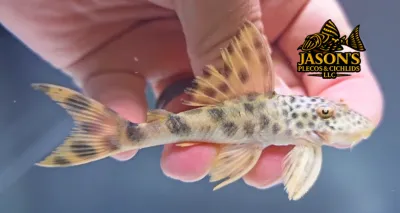
L075 Para Pleco - (Peckoltia sabaji)
L075 Para Pleco - (Peckoltia sabaji)
Price of shipping is not included.
5.0
(3)
was $60.00
Save 17%
$50.00
Captive Bred
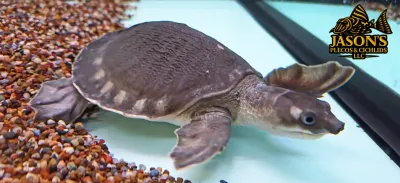
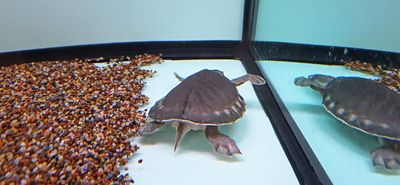
Fly River Turtle/Pig Nose Turtle - (Carettochelys insculpta)
Fly River Turtle/Pig Nose Turtle - (Carettochelys insculpta)
Price of shipping is not included.
was $1 600.00
Save 22%
$1 250.00
Captive Bred
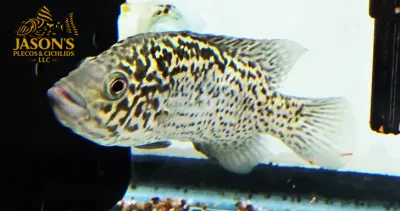
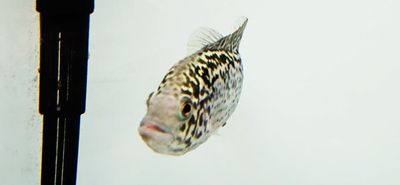
Cuban Cichlid - (Nandopsis tetracanthus)
Cuban Cichlid - (Nandopsis tetracanthus)
Price of shipping is not included.
was $100.00
Save 20%
$80.00
Wild Caught
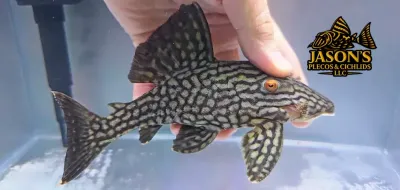
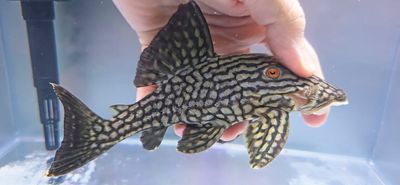
L330 Watermelon Pleco - (Panaque nigrolineatus laurafabianae)
L330 Watermelon Pleco - (Panaque nigrolineatus laurafabianae)
Price of shipping is not included.
was $250.00
Save 20%
$200.00
Wild Caught
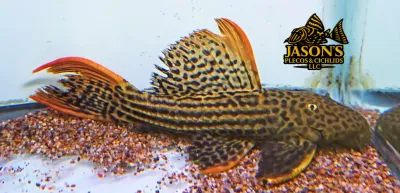
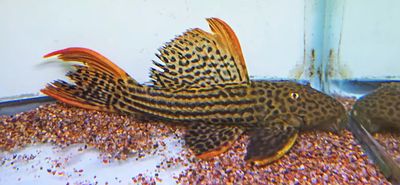
L025 Scarlet Cactus Pleco 7 Pointer - (Pseudacanthicus pirarara)
L025 Scarlet Cactus Pleco 7 Pointer - (Pseudacanthicus pirarara)
Price of shipping is not included.
was $550.00
Save 6%
$515.00
Powered by Lightspeed
Display prices in:USD