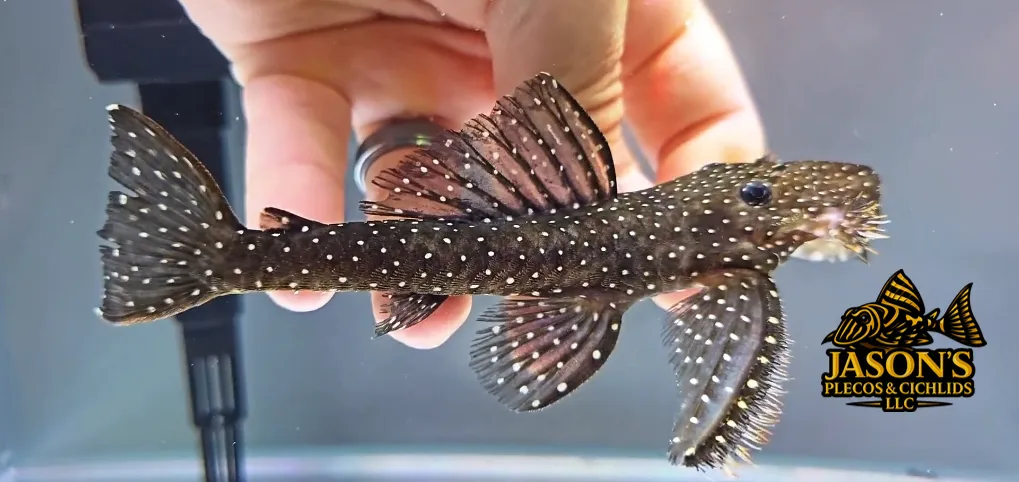
L235 Flyer Cat Pleco - (Pseudolithoxus anthrax)
5.0
1 review
Reviews from verified customers who have purchased products at this store.
$70.00
Wild Caught
was $75.00 Save 7%
Size
Price of shipping is not included.
In stock: 1 available
1
Save this fish to my favorites.
Customer reviews
Reviews only from verified customers
Reviews are only accepted from verified customers who have signed in and purchased the products. This ensures that each review is based on genuine customer experiences. All reviews are checked before publication to prevent spam.
Adrian B.
Fayeteville,
United States
Jun 18, 2026
Fish arrived in great health and well packaged. Jason personally helped me with my selection when I emailed a question. Great experience!
L235 Flyer Cat Pleco - (Pseudolithoxus anthrax)
Fish Details, Description and Information Below:
✈️ L235 Flyer Cat Pleco – (Pseudolithoxus anthrax) – Wild-Caught Orinoco Flat-Bodied Pleco
The L235 Flyer Cat Pleco (Pseudolithoxus anthrax), also known as the Flyer Pleco, Flat Flyer Pleco, or White-Spotted Flyer Cat, is a distinctive South American pleco known for its extremely flattened body, oversized wing-like pectoral fins, and charcoal-black body covered with bright white spots.
Its unusual body shape immediately separates it from many more familiar plecos.
A mature L235 has:
- A broad flattened head
- A very low body profile
- Exceptionally long pectoral fins
- Strong pectoral spines
- Dark charcoal to nearly black coloration
- Numerous small white or cream spots
When the pectoral fins are fully extended, they resemble a pair of wings, which is the reason this unusual pleco became known as the:
FLYER CAT
L235 originates from the:
RIO ORINOCO SYSTEM OF VENEZUELA
where it inhabits rocky, flowing, oxygen-rich freshwater environments.
Although the species was originally described in 2000 as Lasiancistrus anthrax, modern taxonomy places it in the genus:
Pseudolithoxus
The Flyer Cat is an omnivorous aufwuchs-grazing pleco with an important animal/insect component. It should receive both plant-based foods and protein-rich foods rather than being treated as either a strict herbivore or a strict carnivore.
This listing is for:
WILD-CAUGHT L235 FLYER CAT PLECOS
🔎 Quick Facts – L235 Flyer Cat Pleco
- 📛 Common Name: Flyer Cat Pleco
- 📛 Other Names: Flyer Pleco, Flat Flyer Pleco, White-Spotted Flyer Cat
- 🔢 L-Number: L235
- 🔬 Scientific Name: Pseudolithoxus anthrax
- 📚 Older Scientific Name: Lasiancistrus anthrax
- 📅 Formally Described: 2000
- 🐟 Family: Loricariidae
- 🧬 Subfamily: Hypostominae
- 🌿 Stock: Wild Caught
- 📏 Current Size: Approximately 5–7 inches
- 🇻🇪 Country: Venezuela
- 🌊 Native Drainage: Rio Orinoco Basin
- 📍 Primary Range: Upper Orinoco and Orinoco tributaries
- 🌊 Additional Rivers: Rio Caura, Rio Aro, Rio Ventuari, Rio Atabapo
- 💧 Water Type: Freshwater
- 🪨 Habitat: Rocky, flowing, oxygen-rich river environments
- 📏 Scientific Maximum: 12.4 cm / approximately 4.9 inches standard length
- 📏 Adult Planning Size: Approximately 6–8 inches total length
- 🏠 Recommended Aquarium: 55 gallons or larger
- 👥 Multiple Adults: 75+ gallons with substantial bottom territory
- 📐 Aquarium Length: Approximately 4 feet or longer preferred
- 🌡️ Temperature: Approximately 77–85°F
- 💧 pH: Approximately 5.5–7.2
- 💦 Hardness: Soft to moderately mineralized
- 💨 Oxygenation: Very High
- 🌊 Water Movement: Strong
- 🍽️ Diet: Omnivorous Aufwuchs Grazer
- 🦐 Animal / Insect Foods: Important
- 🌿 Plant Foods: Important
- 🪵 Driftwood: Useful but not a specialized wood-eating species
- 🚫 Algae Cleaner: Should not be purchased solely for algae control
- 😌 Temperament: Generally peaceful toward midwater fish
- ⚠️ Pleco Temperament: Mature males may be territorial
- 🌙 Activity: Crepuscular / nocturnal, but established fish may be visible during the day
- 🥚 Breeding: Cave / Crevice Spawner
- 👨👧 Parental Care: Male guards the eggs
- ⭐ Care Level: Intermediate
- 🌎 Conservation Status: Near Threatened
🧬 Valid Scientific Species
The currently accepted scientific name is:
Pseudolithoxus anthrax
The species was originally scientifically described in:
2000
as:
Lasiancistrus anthrax
Later taxonomic work showed that this group differed sufficiently from true Lasiancistrus, and the species was transferred to:
Pseudolithoxus
The current product identification should therefore be:
L235 Flyer Cat Pleco – (Pseudolithoxus anthrax)
⚫ What Does anthrax Mean?
The species name:
anthrax
refers to its:
DARK COAL-LIKE COLORATION
The body is typically:
- Charcoal gray
- Deep gray
- Black
- Nearly jet black
covered with bright pale spotting.
The contrast can be dramatic on a healthy, fully acclimated specimen.
✈️ Why Is It Called the Flyer Cat?
The most obvious characteristic of L235 is its enormous:
PECTORAL FINS
The pectoral spines and fins extend outward from the body like:
WINGS
giving the fish a remarkably broad appearance when viewed from above.
This characteristic inspired names such as:
- Flyer Cat
- Flyer Pleco
- Flat Flyer Pleco
🛩️ Extremely Flattened Body
The L235 has a much flatter body than most common aquarium plecos.
Its body is:
- Broad
- Low
- Dorsoventrally compressed
This shape is an adaptation to life around:
ROCKS AND FLOWING WATER
A low body profile helps the fish remain close to surfaces where current pressure is reduced.
🪨 Built for Flowing Water
The combination of:
- Flattened body
- Large pectoral fins
- Strong sucker mouth
- Powerful fin spines
allows the fish to maintain its position around rocky surfaces in moving water.
This is one reason proper:
CURRENT + OXYGENATION
are especially important for L235.
🎨 Appearance
The body of Pseudolithoxus anthrax is normally:
- Dark charcoal
- Black-gray
- Deep brown-black
- Nearly black
with many contrasting:
- White spots
- Cream spots
- Pale yellow-white spots
distributed over the:
- Head
- Back
- Body
- Dorsal fin
- Pectoral fins
- Pelvic fins
- Tail
⚪ White Spots
The spots are generally:
- Small
- Round
- Evenly distributed
and create a starry appearance over the dark fish.
Spot size can vary somewhat between individuals.
⚠️ Caudal Fin Edge Is Important
One useful identification characteristic is that true:
Pseudolithoxus anthrax
does:
NOT HAVE A BRIGHT WHITE BAND AROUND THE EDGE OF THE CAUDAL FIN
The outer tail margin is generally dark and may contain few or no pale spots.
This helps distinguish L235 from certain similar Pseudolithoxus species.
🆚 L235 vs. Pseudolithoxus nicoi
One of the species most commonly confused with L235 is:
Pseudolithoxus nicoi
Both are:
- Extremely flat
- Dark
- White-spotted
- Equipped with enormous pectoral fins
However:
L235 – Pseudolithoxus anthrax
Generally:
- Has numerous small white spots
- Lacks a strong white caudal-fin seam
- Comes primarily from the Orinoco system
Pseudolithoxus nicoi
Typically:
- Has somewhat larger/fewer spots
- Frequently develops a white caudal-fin edge
- Is especially associated with the Rio Casiquiare / upper Rio Negro connection region
⚠️ White Fin Seams Need Careful Identification
If a supposed L235 develops a very strong:
WHITE CAUDAL FIN EDGE
its identity deserves closer examination.
It may be:
- Pseudolithoxus nicoi
- A related Pseudolithoxus
- An aquarium form historically labeled L235a
rather than typical P. anthrax.
🔢 L235a Is Not the Same Thing
Aquarium Glaser imported a very similar flyer cat from the:
RIO NEGRO NEAR SÃO GABRIEL DA CACHOEIRA, BRAZIL
and provisionally called it:
L235a
Those fish differed from typical L235 by characteristics including:
- Larger pale spots toward the rear
- Pale or white fin seams
They should not automatically be assumed to represent true:
Pseudolithoxus anthrax
⚠️ Preserve L235 Identification
For wild-caught Flyer Cats:
- Preserve supplier identification
- Preserve collection locality when known
- Do not automatically combine L235 with L235a
- Do not automatically combine L235 with P. nicoi
This is especially important for breeding records.
🌎 Native Distribution
Pseudolithoxus anthrax is native to:
VENEZUELA
within the:
RIO ORINOCO BASIN
Scientific and specialist records include the:
- Main Rio Orinoco
- Upper Orinoco
- Rio Caura
- Rio Aro
- Rio Ventuari
- Rio Atabapo
📍 Type Locality
The original type locality is from the:
RIO ORINOCO
in:
AMAZONAS STATE, VENEZUELA
near:
ISLA TEMBLADOR
The type specimens were collected from a backwater area behind a sand beach associated with the Orinoco.
🌊 Broader Orinoco Range
Specialist records indicate L235 is relatively broadly distributed through portions of the upper Orinoco region.
This includes fish recorded from:
- Amazonas State
- Bolívar State
- Upper Orinoco tributaries
- Major rocky tributary systems
For the product page:
RIO ORINOCO BASIN – VENEZUELA
is the best concise origin.
🪨 Natural Habitat
The Flyer Cat is strongly associated with:
ROCKY RIVER HABITAT
Natural environments contain:
- Large rocks
- Bedrock
- Rocky cracks
- Crevices
- Current-swept surfaces
- High dissolved oxygen
🌊 Strong Current
The extremely flattened body gives a strong clue to how L235 should be kept.
This species is adapted to:
FLOWING WATER
and benefits from considerably more aquarium current than many typical community plecos.
💨 Very High Oxygenation
Good oxygenation is one of the most important husbandry requirements.
Provide:
VERY HIGH DISSOLVED OXYGEN
using:
- Strong surface agitation
- Air stones
- Powerheads
- Circulation pumps
- Strong filter returns
- Sump returns
🌡️ Warm Water + High Oxygen
L235 prefers relatively warm temperatures.
A practical range is:
77–85°F / 25–29°C
Warm water holds less oxygen than cool water.
Therefore:
THE WARMER THE WATER, THE MORE IMPORTANT AERATION BECOMES
🌊 Aquarium Water Movement
Provide:
STRONG WATER MOVEMENT
but design the aquarium so the fish can still retreat behind:
- Rocks
- Caves
- Slate
- Wood
A proper river-style layout contains:
HIGH-FLOW AREAS + CURRENT BREAKS
rather than forcing the fish to fight maximum current everywhere.
🪨 Aquarium Setup
A good L235 aquarium should contain:
- Large smooth rocks
- Flat stones
- Slate
- Rock piles
- Narrow crevices
- Low caves
- Driftwood
- Sand or smooth gravel
- Strong filtration
- Strong circulation
- Very high oxygenation
🏠 Low, Flat Shelters
Because L235 has such a flattened body, it especially appreciates:
LOW, NARROW SHELTERS
Suitable hiding places include:
- Flat slate caves
- Rock cracks
- Low ceramic caves
- Tight crevices
A tall round cave designed for a bulky pleco may be less attractive than a:
LOW HORIZONTAL SHELTER
🏠 Provide Multiple Shelters
When keeping more than one L235:
PROVIDE MORE HIDING PLACES THAN FISH
This gives mature males and subordinate fish room to avoid one another.
📏 Adult Size – Important Correction
Your older listing uses:
4–5 INCHES
as the maximum size.
FishBase documents:
12.4 CM / APPROXIMATELY 4.9 INCHES STANDARD LENGTH
Standard length does:
NOT INCLUDE THE COMPLETE TAIL FIN
📏 Specialist Adult Records
Long-established specialist L-number references place adult L235 around:
15–20 CM TOTAL LENGTH
or approximately:
6–8 INCHES
Your current wild specimens are already listed at:
5–7 INCHES
which also demonstrates why the old 4–5 inch maximum should be removed.
For responsible customer planning:
EXPECT APPROXIMATELY 6–8 INCHES TOTAL LENGTH
🏠 Aquarium Size
Your existing:
30-GALLON
recommendation is possible for a smaller specimen but is not my preferred permanent recommendation.
For one adult:
55 GALLONS OR LARGER
is a better long-term starting point.
For:
- Multiple adults
- Breeding groups
- Other bottom dwellers
consider:
75+ GALLONS
with substantial floor area.
📐 Aquarium Length Matters
Specialist references recommend tanks around:
100–120 CM / APPROXIMATELY 40–48 INCHES LONG
for mature fish.
For Jason's product page, I would encourage:
A 4-FOOT AQUARIUM OR LARGER
for a mature specimen whenever possible.
💧 Water Parameters
A practical long-term range is:
- 🌡️ Temperature: 77–85°F
- 💧 pH: Approximately 5.5–7.2
- 💦 Hardness: Soft to moderately mineralized
- 💨 Oxygenation: Very High
- 🌊 Current: Strong
- ☠️ Ammonia: 0 ppm
- ☠️ Nitrite: 0 ppm
- 🔄 Nitrate: Keep low
⚠️ Water Quality Matters
This is not a pleco I would recommend for poorly maintained aquariums.
L235 benefits from:
- Clean water
- Low organic waste
- High oxygen
- Stable temperatures
- Regular water changes
Avoid:
- Stagnant water
- Dirty substrate
- Low oxygen
- Excessive nitrate
💩 Filtration
Use strong:
- Mechanical filtration
- Biological filtration
- Circulation
Suitable systems may include:
- Canister filters
- Sump filtration
- Powerheads
- Supplemental sponge filters
The filtration system should be capable of maintaining:
CLEAN, FAST-MOVING, HIGHLY OXYGENATED WATER
🍽️ Diet – Omnivorous Aufwuchs Grazer
The old page describes L235 simply as:
OMNIVOROUS
which is broadly correct, but we can be more specific.
The safest description is:
OMNIVOROUS AUFWUCHS GRAZER
with substantial:
- Animal/insect foods
- Prepared sinking foods
and regular:
- Plant-based foods
- Algae-containing foods
🔬 What Is Aufwuchs?
Aufwuchs is the mixed biological layer growing on submerged rocks and other surfaces.
It can contain:
- Algae
- Biofilm
- Bacteria
- Detritus
- Microorganisms
- Tiny invertebrates
- Insect larvae
L235 grazes this complex natural food source rather than fitting neatly into a strict:
- Herbivore
or:
- Carnivore
category.
🦐 Animal & Insect Foods
Specialist keepers report excellent acceptance of:
- Bloodworms
- Mosquito larvae
- Brine shrimp
- Mysis shrimp
- Insect-based foods
- Chopped shrimp
- Quality sinking omnivore tablets
- Quality carnivore-oriented sinking foods
Animal foods can make up a substantial portion of the captive diet.
🌿 Plant Foods
Regular plant-based foods should also be offered.
Suitable foods include:
- Spirulina wafers
- Algae-containing wafers
- Vegetable-based sinking foods
- Zucchini
- Squash
- Green beans
- Quality gel foods
⚖️ Balanced Feeding
The best long-term approach is:
ANIMAL / INSECT FOODS + PLANT FOODS + AUFWUCHS / BIOFILM
rather than maintaining the fish on only:
- Algae wafers
or only:
- Meat-heavy carnivore foods
🪵 Driftwood
Driftwood may be included and can provide:
- Shelter
- Biofilm
- Grazing surfaces
- Shade
- Territory
Some specialist keepers report that L235 will rasp softer wood.
However:
L235 IS NOT A SPECIALIZED WOOD-EATING PLECO
like:
- Panaque
- Panaqolus
Do not claim that wood is required specifically for digestion.
🚫 Not Just an Algae Cleaner
L235 should:
NOT BE PURCHASED SOLELY FOR ALGAE CONTROL
It may graze algae-containing surfaces but requires intentional feeding.
Aquarium algae alone is not a complete diet.
☀️ More Visible Than Many Plecos
Although L235 is primarily:
CREPUSCULAR / NOCTURNAL
established fish can sometimes be surprisingly active during daylight.
Specialist keepers have reported fish:
- Leaving shelters during the day
- Resting openly on rocks
- Watching activity outside the aquarium
- Exploring before feeding
Provide shaded areas so the fish feels comfortable enough to emerge.
🧪 Wild-Caught Acclimation
This listing is for:
WILD-CAUGHT L235 FLYER CAT PLECOS
Wild fish deserve careful acclimation.
After arrival:
- Provide immediate rocky shelter
- Maintain very high oxygen
- Keep lighting subdued
- Avoid abrupt temperature changes
- Avoid abrupt pH changes
- Maintain excellent water quality
- Confirm feeding
🍽️ Confirm Feeding
A newly imported fish may remain hidden while faster tankmates consume the food.
Feed:
- Near caves
- Near rockwork
- At dusk
- After lights dim
- In several locations
Monitor for:
- Sunken abdomen
- Weak body condition
- Persistent refusal to eat
😌 Temperament
L235 is generally:
PEACEFUL TOWARD MIDWATER FISH
and can coexist with many appropriately chosen community species.
Possible tankmates include fish that tolerate:
- Warm temperatures
- Strong oxygenation
- Moving water
⚠️ Territorial With Other Plecos
Mature L235 may become territorial toward:
- Other L235
- Similar Pseudolithoxus
- Other bottom-dwelling plecos
especially around preferred shelters.
⚔️ Pectoral Spines Are Powerful
The enormous pectoral fins are not only decorative.
Mature fish have strong:
PECTORAL SPINES
and males develop prominent:
ODONTODES
along these structures.
Territorial contact between adults can therefore cause injury when space is inadequate.
♂️ Male vs. Female
Sex differences become clearer in mature specimens.
Mature Males
Typically develop:
- Longer pectoral-fin odontodes
- Heavier odontode development
- Broader head profile
- Stronger shelter territoriality
Mature Females
Generally show:
- Narrower head
- Broader body
- Fuller abdomen when carrying eggs
- Shorter pectoral odontodes
Viewing adults:
FROM ABOVE
is especially useful when comparing body shape.
🥚 Captive Breeding – Documented
Some older care guides state:
NO CAPTIVE BREEDING HAS BEEN REPORTED
However, more detailed specialist L-number records document that:
L235 HAS BEEN BRED IN CAPTIVITY MULTIPLE TIMES
It should therefore be described as a:
DOCUMENTED CAVE / CREVICE SPAWNER
🏠 Breeding Shelters
L235 appears to prefer:
LOW, FLAT BREEDING CAVES
Suitable options include:
- Flat ceramic caves
- Slate caves
- Tight rock crevices
This matches the fish's extremely flattened natural body shape.
🥚 Egg Placement
Specialist breeding observations have found egg clutches:
ATTACHED TO THE CEILING OF THE CAVE
or sheltered within rock-like crevices.
This is an interesting difference from the more familiar appearance of some Hypancistrus spawning sites.
👨👧 Male Parental Care
As with many cave-spawning loricariids:
THE MALE GUARDS THE CLUTCH
and remains with the developing eggs.
He helps:
- Protect the eggs
- Maintain water movement
- Guard the breeding shelter
👶 Raising Fry
Young L235 have been successfully raised using foods such as:
- Artemia / baby brine shrimp
- Fine powdered foods
- Fine sinking foods
while maintaining:
VERY HIGH WATER QUALITY
⚠️ Breeding Is Not Common
Although documented:
L235 IS NOT A COMMONLY MASS-PRODUCED AQUARIUM PLECO
Breeding should still be considered an:
INTERMEDIATE TO ADVANCED PROJECT
requiring:
- Mature compatible adults
- Proper flat shelters
- Excellent oxygenation
- Strong water quality
- Appropriate conditioning
🧬 Keep Similar Flyer Cats Separate
Several Pseudolithoxus can appear extremely similar.
Do not mix breeding lines of:
- Pseudolithoxus anthrax
- Pseudolithoxus nicoi
- L235a-type fish
- Other unidentified Pseudolithoxus
and later sell offspring as pure L235.
🌎 Conservation Status
Pseudolithoxus anthrax is currently classified as:
NEAR THREATENED
The assessment category is:
NT – B2b(iii)
and the global assessment dates to:
2019
⚠️ Why Near Threatened?
The assessment reflects concerns involving:
- Restricted area of occupancy
- Freshwater habitat alteration
- Declining habitat quality in portions of its range
This does not mean the species is currently listed as Endangered, but it is:
NOT LEAST CONCERN
🧬 Wild-Caught Responsibility
Because this listing is for:
WILD-CAUGHT FISH
responsible permanent care is especially important.
Aquarists should:
- Provide appropriate long-term housing
- Maintain excellent water quality
- Avoid preventable losses
- Consider captive breeding when possible
- Never release fish into the environment
⭐ Why Keep an L235 Flyer Cat Pleco?
The L235 combines:
- ✈️ Huge wing-like pectoral fins
- ⚫ Coal-black body coloration
- ⚪ Bright white spotting
- 🛩️ Extremely flattened body shape
- 🌊 Orinoco River origin
- 🪨 High-flow river adaptation
- 💨 Strong oxygen requirement
- 📏 Approximately 6–8 inch adult potential
- 🍽️ Interesting mixed aufwuchs diet
- 🥚 Documented captive breeding
- 👨👧 Male parental care
- 🌎 Near Threatened conservation status
into one of the most unusual plecos available in the aquarium hobby.
⚠️ Important Considerations
Before purchasing an L235 Flyer Cat Pleco:
- The correct scientific name is Pseudolithoxus anthrax.
- The species was originally described as Lasiancistrus anthrax.
- L235 originates from the Rio Orinoco system of Venezuela.
- Scientific records include the Caura and Aro rivers.
- Specialist records also include the Ventuari and Atabapo regions.
- The species has an extremely flattened body.
- Its oversized pectoral fins give it the Flyer Cat name.
- True L235 generally lacks a bright white seam on the caudal fin.
- Do not confuse L235 with Pseudolithoxus nicoi.
- Do not automatically treat L235a as the same fish.
- This listing is for wild-caught fish.
- FishBase documents 12.4 cm standard length before the tail.
- Specialist records place adults around 15–20 cm total length.
- Plan for approximately 6–8 inches.
- Provide approximately 55 gallons or larger.
- Use larger aquariums for multiple adults.
- Provide substantial bottom area.
- Provide low, flat caves and rock crevices.
- Maintain approximately 77–85°F.
- Maintain very high dissolved oxygen.
- Provide strong water movement.
- Keep ammonia and nitrite at zero.
- Keep nitrate low.
- Feed a varied omnivorous diet.
- Provide regular animal and insect foods.
- Include plant-based foods.
- Do not maintain L235 only on algae wafers.
- Do not maintain it exclusively on heavy meat foods.
- Do not purchase it simply as an algae cleaner.
- Driftwood can be useful but L235 is not a specialized wood eater.
- Mature males develop strong pectoral odontodes.
- Captive cave / crevice spawning has been documented.
- Males guard the eggs.
- The species is currently Near Threatened.
- Never release aquarium fish into natural waterways.
🧬 Taxonomy
The currently accepted scientific name is:
Pseudolithoxus anthrax (Armbruster & Provenzano, 2000)
Classification:
- Order: Siluriformes
- Family: Loricariidae
- Subfamily: Hypostominae
- Tribe: Ancistrini
- Genus: Pseudolithoxus
- Species: anthrax
- L-Number: L235
Original scientific combination:
Lasiancistrus anthrax
For this product, use:
L235 Flyer Cat Pleco – (Pseudolithoxus anthrax)
🔢 L235 Identification Disclaimer
Several white-spotted Flyer Cats can look similar.
True L235 Pseudolithoxus anthrax should be kept separate from:
- Pseudolithoxus nicoi
- L235a-type Rio Negro fish
- Other unidentified Pseudolithoxus
Useful identification features include:
- Spot pattern
- Tail-fin edging
- Body shape
- Collection locality
- Supplier identification
Preserve accurate records when breeding or reselling wild-origin fish.
🚚 Live Fish Shipping
Live fish are professionally packed for safe transport.
Shipping availability depends on:
- Fish size
- Destination
- Weather conditions
- Carrier availability
- Applicable state and local regulations
Extra care should be taken with larger L235 because of their:
- Extremely long pectoral fins
- Strong pectoral spines
- Odontodes
- Flattened armored body
Large specimens may be safer to transfer using a:
- Rigid container
- Large fish bag
- Appropriate fish tub
rather than a fine aquarium net that could snag their spines.
Please review our Shipping & Payment Information and Live Arrival Guarantee / DOA Policy before ordering.
⚠️ Buyer Responsibility
Customers are responsible for confirming that Pseudolithoxus anthrax may legally be purchased, possessed, transported, and received in their state or local jurisdiction before ordering.
Never release aquarium fish into natural waterways.
Below are fish you may also like.
Wild Caught
L075 Para Pleco - (Peckoltia sabaji)
L075 Para Pleco - (Peckoltia sabaji)
Price of shipping is not included.
5.0
(3)
was $60.00
Save 17%
$50.00
Wild Caught
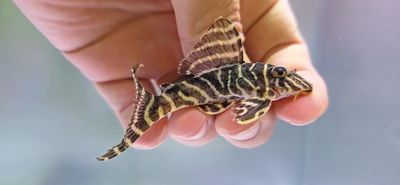
L340 Mega Clown Pleco - (Hypancistrus sp.)
L340 Mega Clown Pleco - (Hypancistrus sp.)
Price of shipping is not included.
5.0
(1)
was $55.00
Save 18%
$45.00
Captive Bred
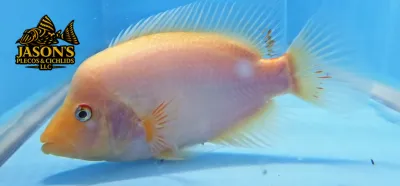
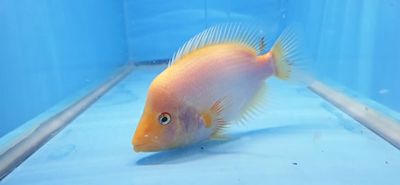
Red Devil Cichlid/Midas Cichlid/Midevil Cichlid - (Amphilophus Citrinellus)
Red Devil Cichlid/Midas Cichlid/Midevil Cichlid - (Amphilophus Citrinellus)
Price of shipping is not included.
5.0
(3)
$100.00
Captive Bred
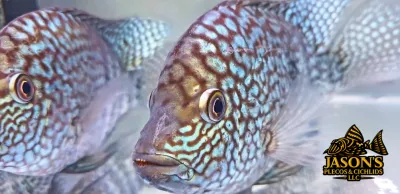
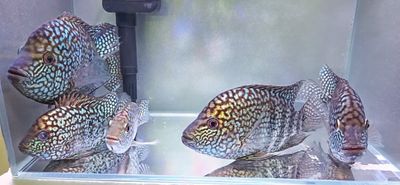
Blue Escondido Cichlid/Pearlscale Cichlid - (Herichthys carpintis)
Blue Escondido Cichlid/Pearlscale Cichlid - (Herichthys carpintis)
Price of shipping is not included.
was $100.00
Save 5%
$95.00
Wild Caught
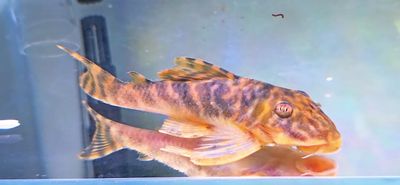
L377 Prince Tiger Pleco - (Peckoltia sp.)
L377 Prince Tiger Pleco - (Peckoltia sp.)
Price of shipping is not included.
5.0
(2)
was $125.00
Save 32%
$85.00
Powered by Lightspeed
Display prices in:USD