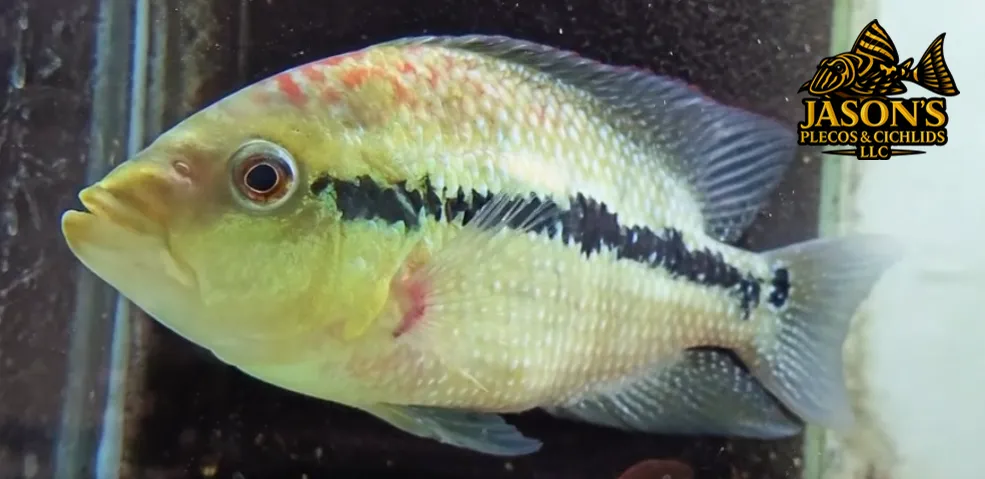
Blue Umbee/Turquoise Cichlid - (Kronoheros umbrifer)
$315.00
Wild Caught
was $350.00 Save 10%
Size
Required Reusable Shipping Bag
Questions, Comments, Concerns? Let us know!
Enter your text
Price of shipping is not included.
In stock: 1 available
1
Save this fish to my favorites.
Customer reviews
Reviews only from verified customers
No reviews yet. You can buy this product and be the first to leave a review.
Blue Umbee/Turquoise Cichlid - (Kronoheros umbrifer)
Fish Details, Description and Information Below:
🐟 Blue Umbee / Turquoise Cichlid – (Kronoheros umbrifer) – Giant Blue-Spangled Predatory Cichlid
The Blue Umbee Cichlid, also known as the Turquoise Cichlid (Kronoheros umbrifer), is one of the largest, most powerful, and most impressive Neotropical cichlids available in the aquarium hobby.
Mature males can develop incredible turquoise to electric-blue spotting across the head, body, and fins, combined with a massive muscular build, large head, powerful jaws, and commanding personality.
Native to river systems of Colombia and Panama, the Umbee is a highly predatory cichlid that naturally feeds heavily on fish, shrimp, crabs, and other aquatic prey.
This is not an ordinary large cichlid. Adult males can approach or exceed 20 inches in total length, become extremely territorial, and require an enormous aquarium with powerful filtration and carefully planned tankmates.
For experienced monster-cichlid keepers with the necessary space, a mature Blue Umbee can become one of the most spectacular freshwater centerpiece fish in the hobby.
🔎 Quick Facts – Blue Umbee / Turquoise Cichlid
- 📛 Common Names: Blue Umbee, Umbee Cichlid, Turquoise Cichlid
- 🔬 Current Scientific Name: Kronoheros umbrifer
- 🔬 Older Hobby Names: Kronoheros umbriferus, Kronoheros umbriferum, Caquetaia umbrifera, Cichlasoma umbriferum
- 🐟 Family: Cichlidae
- 🌎 Region: Central and South America
- 🇨🇴 Native Country: Colombia
- 🇵🇦 Native Country: Panama
- 🌊 Native Drainages: Atrato, Magdalena, Tuíra, and Chucunaque
- 💧 Water Type: Freshwater
- 📏 Documented Maximum: 47.5 cm standard length / approximately 18.7 inches excluding the tail
- 📏 Expected Aquarium Size: Approximately 20"+ total length for large males
- 🏠 Recommended Aquarium: 250 gallons or larger for a large adult; 300–500+ gallons strongly preferred for pairs or tankmates
- 🌡️ Temperature: Approximately 72–82°F
- 💧 pH: Approximately 7.0–7.9
- 💦 Hardness: Naturally recorded around 1–5 dH
- 🍽️ Diet: Carnivore / Piscivore
- 😠 Temperament: Highly territorial / Aggressive
- 🐠 Swimming Area: Open water / Middle and lower areas
- 🥚 Breeding: Biparental substrate spawner
- ⭐ Care Level: Advanced / Expert
- 🏆 Availability: Highly sought-after monster cichlid
💙 What Is a Blue Umbee?
“Blue Umbee” is an aquarium hobby name used for particularly blue forms of:
Kronoheros umbrifer
Colombian populations—especially fish associated in the hobby with the Magdalena drainage—are particularly famous for intense turquoise-blue spotting.
Adult males may become covered with brilliant:
- Turquoise spots
- Electric-blue speckles
- Blue-green scales
- Metallic facial markings
- Blue coloration across the fins
Some populations and breeding lines can look noticeably different from one another.
Locality Matters
Umbees occur across several separate river systems in Colombia and Panama.
Different populations may vary in:
- Blue coloration
- Spot density
- Head coloration
- Overall darkness
- Adult body shape
If your fish have a documented locality such as:
Rio Magdalena
that locality is worth including in the product listing.
If the locality is unknown, I would simply sell them as:
Blue Umbee – Kronoheros umbrifer
rather than guessing a collection location.
🧬 Current Scientific Name
For many years this species has appeared in aquarium literature under several names.
Older names include:
- Cichlasoma umbriferum
- Caquetaia umbrifera
- Petenia umbrifera
- Kronoheros umbriferus
- Kronoheros umbriferum
The current Catalog of Fishes recognizes:
Kronoheros umbrifer
as the valid scientific name.
The genus Kronoheros was created specifically for this remarkable cichlid.
🏛️ Why the Name Kronoheros?
The genus name refers to Kronos, the powerful Titan of Greek mythology, combined with the old cichlid genus Heros.
The name was chosen in reference to the enormous size of this species.
FishBase describes Kronoheros in connection with the Umbee being among the largest Neotropical cichlids.
It is an appropriate name for a fish that can become one of the dominant animals in any aquarium large enough to house it.
🎨 Appearance
Adult males can become spectacular.
Typical coloration may include:
- Gray
- Olive
- Green
- Blue-green
- Turquoise
- Dark charcoal
The head and body can become covered with hundreds of metallic:
Blue to turquoise spots
High-quality adult males may develop an almost completely blue-spangled appearance.
Large males can also develop:
- Massive heads
- Thick lips
- Heavy jaws
- Extended dorsal and anal fins
- A pronounced forehead or nuchal hump
- Extremely deep, muscular bodies
Females are generally more subdued but can still display attractive turquoise spotting.
📏 Adult Size – One of the Largest Cichlids
The Blue Umbee is a true monster cichlid.
FishBase scientifically documents:
47.5 cm standard length
which equals approximately:
18.7 inches before the tail fin is included
Because standard length excludes the tail, a large male can reasonably reach:
Approximately 20 inches or more in total length
Some hobby reports claim even larger individuals, but I would use the scientifically documented measurement rather than advertising an unsupported 24–30 inch maximum.
🚨 Do Not Purchase Based on Juvenile Size
Juvenile Umbees may be sold at:
- 1.5 inches
- 2 inches
- 3 inches
- 4 inches
At those sizes, they can look like ordinary young cichlids.
They do not stay that way.
A mature male becomes:
- Extremely large
- Thick-bodied
- Powerful
- Highly territorial
- Capable of seriously injuring tankmates
Buy this fish based on the requirements of the adult, not the size being purchased today.
🏠 Aquarium Size
For one mature Blue Umbee, I recommend:
250 gallons or larger
For a pair or aquarium containing other very large fish:
300–500+ gallons is strongly preferred.
Some experienced European cichlid references recommend approximately 700–1,200+ liters, while more conservative husbandry recommendations go considerably larger.
The important point is that:
Aquarium dimensions matter more than gallon count alone.
📐 Aquarium Footprint
Umbees are powerful open-water swimmers.
Prioritize:
- Aquarium length
- Front-to-back width
- Open swimming space
rather than simply aquarium height.
A large adult needs room to:
- Turn comfortably
- Accelerate
- Establish territory
- Move away from tankmates
- Display natural swimming behavior
For a large male, an aquarium approaching 8 feet in length is far more appropriate than a short, tall aquarium with the same water volume.
🏠 Aquarium Setup
The aquarium should provide a balance between open swimming room and substantial structure.
Recommended features include:
- Large rocks
- Large pieces of driftwood
- Sand or smooth gravel
- Large visual barriers
- Open swimming lanes
- Powerful filtration
- Strong oxygenation
- Secure aquarium lids
Avoid overcrowding the aquarium with decorations.
Large Umbees need significant open space.
🪨 Secure the Aquarium
An adult Blue Umbee is extremely powerful.
Large specimens may:
- Move rocks
- Dig deeply
- Rearrange gravel
- Move driftwood
- Damage plants
- Attack equipment
- Strike heaters
Secure:
- Heaters
- Filter intakes
- Rocks
- Driftwood
- Other aquarium equipment
Whenever possible, placing heaters inside a protected sump rather than directly in the display aquarium is preferable.
💩 Heavy Bioload
A 20-inch carnivorous cichlid produces a substantial amount of waste.
Strong filtration is essential.
Recommended systems may include:
- Large sump filtration
- Oversized canister filters
- High-capacity mechanical filtration
- Large biological filtration chambers
- Strong surface agitation
- Powerful circulation
Maintain:
- ☠️ Ammonia: 0 ppm
- ☠️ Nitrite: 0 ppm
- 🔄 Nitrate: As low as reasonably possible
- 💨 Oxygen: High
Regular substantial water changes should be expected.
💧 Water Parameters
FishBase records Kronoheros umbrifer in:
- 💧 pH: 7.0–7.9
- 💦 Hardness: Approximately 1–5 dH
- 🌡️ Temperature: Approximately 66–82°F / 19–28°C
For aquarium maintenance, I recommend:
- 🌡️ Temperature: Approximately 72–82°F
- 💧 pH: Approximately 7.0–7.9
- 💦 Water: Soft to moderately mineralized
- 💨 Oxygenation: High
This species can encounter somewhat cooler water than many tropical American cichlids, so there is generally no need to maintain it permanently at 84–86°F.
Stable, clean water is considerably more important than constantly adjusting the aquarium to reach one exact number.
🌎 Natural Distribution
The Blue Umbee occurs naturally in:
🇨🇴 Colombia
Including the:
- Río Atrato Basin
- Río Magdalena Basin
🇵🇦 Panama
Including the:
- Río Tuíra Basin
- Río Chucunaque Basin
The species inhabits rivers and larger freshwater systems where adults have substantial open-water habitat.
🍽️ Natural Diet
The Umbee is a highly effective predator.
FishBase reports that wild fish feed mainly on:
- Smaller fish
- Astyanax and similar characins
- Shrimp
- Crabs
This makes the species primarily:
Piscivorous / Carnivorous
Its large jaws and powerful body are adapted for capturing substantial aquatic prey.
🍽️ Aquarium Diet
In captivity, Blue Umbees can usually be trained to accept a wide variety of high-quality foods.
Recommended foods include:
- Large premium cichlid pellets
- Carnivore pellets
- Shrimp
- Prawns
- Krill
- Mysis shrimp
- Mussels
- Appropriate fish fillet
- Insect-based foods
- Other suitable frozen aquatic foods
A quality pellet should ideally form a regular part of the diet rather than depending entirely on raw seafood.
🚫 Avoid Routine Feeder Fish
We do not recommend routinely feeding live feeder fish.
Feeder fish can introduce:
- Parasites
- Bacterial infections
- Viral diseases
- Poor nutrition
Umbees readily learn to consume:
- Pellets
- Frozen food
- Fresh seafood
which provides much better control over nutrition and disease risk.
🚫 Avoid Mammal & Poultry Meat
Do not routinely feed:
- Beef
- Beef heart
- Pork
- Chicken
These meats should not form a regular part of a large predatory cichlid's diet.
Aquatic proteins and quality formulated fish foods are more appropriate.
😠 Temperament
The Blue Umbee has a reputation for a reason.
This is an extremely powerful territorial cichlid.
Young fish can initially appear:
- Shy
- Nervous
- Relatively tolerant
That can change dramatically with maturity.
Adult males may claim nearly the entire aquarium as their territory.
Aggression may be directed toward:
- Other Umbees
- Other cichlids
- Similar-sized fish
- Tankmates
- Occasionally the aquarium glass or objects outside the aquarium
Individual personality varies, but this species should always be purchased with the expectation that it may eventually need to be housed alone.
🐠 Tankmates
There is no universally safe tankmate for an adult Umbee.
In extremely large aquariums, experienced keepers have maintained them with selected:
- Very large cichlids
- Large catfish
- Large plecos
- Other robust monster fish
However:
Compatibility is never guaranteed.
An adult Umbee can severely injure or kill another large fish.
Always have:
- A divider
- Spare aquarium
- Alternate housing
- Immediate separation plan
available.
⚠️ Plan to Keep It Alone
For customers buying a juvenile, I would make this very clear:
Purchase the fish assuming that it may ultimately require an aquarium by itself.
If an individual happens to tolerate tankmates long-term, that should be considered a bonus rather than something to depend upon.
♂️ Male vs. Female
Sex differences become obvious as the fish mature.
Mature Males
Males generally:
- Grow substantially larger
- Develop much heavier bodies
- Display much stronger blue/turquoise spotting
- Develop longer dorsal and anal fins
- May develop a pronounced nuchal hump
- Become highly territorial
Mature Females
Females generally:
- Remain smaller
- Have more subdued coloration
- Develop a fuller abdomen when carrying eggs
- May display fewer intense blue markings than dominant males
Juveniles can be difficult to sex accurately.
🥚 Breeding
The Blue Umbee is a:
Biparental substrate-spawning cichlid
A compatible pair selects and cleans an exposed spawning site.
FishBase reports that the species may deposit:
Several thousand eggs
on an open, preferably horizontal surface.
Potential aquarium spawning sites include:
- Large flat rocks
- Slate
- Smooth stone
- Other firm horizontal surfaces
👨👩👧 Division of Parental Care
Parental roles are particularly interesting.
During breeding:
Female
The female generally:
- Guards the eggs
- Fans the eggs
- Guards the larvae
- Remains close to the brood
Male
The male primarily:
- Defends the surrounding territory
- Drives away intruders
- Protects the female and brood area
Both parents participate in protecting the offspring.
🚨 Breeding Aggression
This is one of the most important considerations when attempting to breed Umbees.
A bonded pair can become extremely aggressive.
Even the male and female may injure one another.
A breeding aquarium should provide:
- Massive space
- Strong visual barriers
- Escape routes for the female
- Secure divider options
- Immediate ability to separate the pair
Never assume that because two fish spawned once they will remain permanently compatible.
👶 Raising Fry
Once fry become free-swimming, they can be offered:
- Newly hatched baby brine shrimp
- Fine quality pellets
- Crushed cichlid foods
- Small frozen foods
- Other appropriately sized high-protein foods
As fry grow, they should be:
- Sorted by size when necessary
- Given abundant space
- Fed multiple appropriately sized meals
- Maintained under excellent water quality
Young Umbees can grow rapidly.
💙 Blue Umbee vs. Panama Umbee
There is significant geographic variation throughout the species' range.
In the aquarium hobby, Colombian fish—particularly Magdalena-associated populations—are generally associated with the heavily blue-spotted Blue Umbee appearance.
Panamanian populations may display:
- More yellow coloration
- More silver or greenish spotting
- Different facial coloration
Because these populations may represent genetically distinct groups, serious breeders should preserve known localities rather than mixing unrelated lines.
🧬 Preserve Locality Lines
If your fish have documented collection or breeder locality, keep that information.
Examples could include:
- Rio Magdalena
- Rio Atrato
- Rio Tuíra
- Rio Chucunaque
Do not mix known locality lines and then sell offspring under a specific river name.
For serious cichlid collectors, verified locality is a significant part of the fish's value.
⭐ Why Keep a Blue Umbee?
The Blue Umbee is one of the ultimate large cichlids for experienced keepers.
Its combination of:
- 💙 Brilliant turquoise spotting
- 📏 Massive adult size
- 💪 Incredible strength
- 🧠 Intelligent cichlid personality
- 🍽️ Powerful predatory behavior
- 🥚 Impressive parental care
- 🌎 Colombian and Panamanian origin
- 🏆 Legendary monster-cichlid status
makes Kronoheros umbrifer a truly unforgettable freshwater fish.
A fully mature dominant male covered in intense blue spotting can rival almost any freshwater cichlid for sheer visual impact.
⚠️ Important Considerations
Before purchasing a Blue Umbee:
- Plan for approximately 20"+ total adult length.
- Expect males to become significantly larger than females.
- Provide approximately 250 gallons or more for a large adult.
- Larger systems are strongly preferred.
- Prioritize aquarium length and width.
- Use powerful filtration.
- Maintain excellent oxygenation.
- Secure heaters and aquarium equipment.
- Expect digging and rearranging.
- Feed a varied carnivorous diet.
- Avoid routine feeder fish.
- Expect major territorial aggression.
- Have a separation plan before keeping a pair.
- Assume the fish may ultimately need to live alone.
- Preserve documented locality lines.
- Never release aquarium fish into local waterways.
This species is recommended for experienced or advanced large-cichlid keepers.
🚚 Live Fish Shipping
Live fish are professionally packed for safe transport.
Shipping availability depends on:
- Fish size
- Destination
- Weather conditions
- Carrier availability
- Applicable state and local regulations
Larger specimens may require:
- Larger insulated boxes
- Additional water
- Specialized packing
- Airline cargo shipping
Please review our Shipping & Payment Information and Live Arrival Guarantee / DOA Policy before ordering.
⚠️ Buyer Responsibility
Customers are responsible for confirming that this species may legally be purchased, possessed, transported, and received in their state or local jurisdiction before ordering.
Never release aquarium fish into local waterways.
Powered by Lightspeed
Display prices in:USD