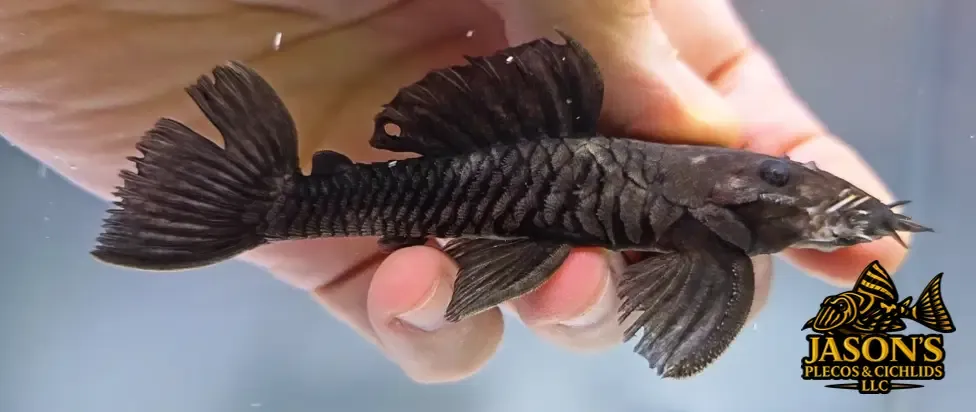
L034 Medusa Pleco - (Ancistrus ranunculus)
$60.00
Wild Caught
was $65.00 Save 8%
Size
Questions, Comments, Concerns? Let us know!
Enter your text
Price of shipping is not included.
In stock: 1 available
1
Save this fish to my favorites.
Customer reviews
Reviews only from verified customers
No reviews yet. You can buy this product and be the first to leave a review.
L034 Medusa Pleco - (Ancistrus ranunculus)
Fish Details, Description and Information Below:
🐟 L034 Medusa Pleco – (Ancistrus ranunculus) – Wild-Caught Broad-Headed Brazilian Pleco
The L034 Medusa Pleco (Ancistrus ranunculus) is one of the most unusual members of the genus Ancistrus, instantly recognizable by its extremely broad, flattened head, dark coloration, and thick tentacle-like facial growths.
The dramatic facial tentacles are responsible for the name:
Medusa Pleco
because mature specimens—especially males—can develop a crown of thick projections around the snout that resembles the snakes associated with Medusa in Greek mythology.
Unlike the familiar Common Bristlenose Pleco, Ancistrus ranunculus has a remarkably wide, low-profile body adapted to sheltering inside narrow cracks, spaces between submerged rocks, and beneath flat stones.
Its unusual body shape can almost resemble a:
Tadpole or Small Aquatic Frog
when viewed from above.
The species is native to Brazil's Rio Xingu and Rio Tocantins basins, where it inhabits clear, moving freshwater over rocky bottoms.
Although many Ancistrus species are strongly plant-oriented grazers, the L034 is somewhat unusual because it readily accepts and often prefers a greater proportion of animal and insect-based foods. It should therefore be maintained as a varied omnivore rather than being purchased simply as an algae-eating fish.
This listing is for:
WILD-CAUGHT L034 MEDUSA PLECOS
🔎 Quick Facts – L034 Medusa Pleco
- 📛 Common Name: Medusa Pleco
- 📛 Other Name: Tadpole Bristlenose Catfish
- 🔢 L-Number: L034
- 🔬 Scientific Name: Ancistrus ranunculus
- 🐟 Family: Loricariidae
- 🧬 Subfamily: Hypostominae
- 🌿 Stock: Wild Caught
- 🇧🇷 Country: Brazil
- 🌊 Native Range: Rio Xingu and Rio Tocantins basins
- 📍 Type Locality: Rio Xingu near Arroz Cru, Pará, Brazil
- 💧 Water Type: Freshwater
- 📏 Typical Aquarium Adult: Approximately 5–6 inches
- 📏 Scientific Maximum: Approximately 19.5 cm / 7.7 inches total length
- 🏠 Recommended Aquarium: 40 gallons or larger for one adult
- 👥 Groups / Multiple Plecos: 55–75+ gallons with abundant territories
- 🌡️ Temperature: Approximately 79–84°F
- 💧 pH: Approximately 6.0–7.5
- 💦 Hardness: Soft to moderately mineralized
- 💨 Oxygenation: High
- 🌊 Water Movement: Moderate with strong oxygenation
- 🍽️ Diet: Omnivore with a stronger protein preference than many Ancistrus
- 😌 Temperament: Generally peaceful toward other fish; territorial around shelters
- 🌙 Activity: Primarily nocturnal / crepuscular
- 🐠 Swimming Area: Bottom
- 🥚 Breeding: Shelter / cave spawner with male parental care
- ⭐ Care Level: Intermediate
- 🌎 Conservation Status: Near Threatened
- 🏆 Type: Distinctive Brazilian L-Number Pleco
🧬 A Formally Described Species
Unlike many L-number plecos that are still awaiting formal scientific description, L034 already has a valid scientific name:
Ancistrus ranunculus
The species was formally described in:
1994
by:
- Sonia Fisch-Muller
- Lúcia H. Rapp Py-Daniel
- Jansen Zuanon
The correct current product identification is therefore:
L034 Medusa Pleco – (Ancistrus ranunculus)
🐸 What Does “ranunculus” Mean?
The unusual species name:
ranunculus
is derived from Latin terminology associated with a:
Small Frog / Tadpole-Like Form
and refers to the extremely broad, flattened body and head.
When viewed from above, the L034 looks noticeably different from the more streamlined shape of an ordinary bristlenose pleco.
🐍 Why Is It Called the Medusa Pleco?
The common name comes from the fish's extraordinary facial tentacles.
Mature specimens develop thick fleshy projections around the:
- Snout
- Forehead
- Upper head
Males can develop especially dramatic tentacles that resemble:
A Crown of Spines or Snakes
giving rise to the name:
Medusa Pleco
👃 Unusual Tentacles
The facial tentacles of Ancistrus ranunculus are different from those of many common bristlenose plecos.
They tend to be:
- Thick
- Heavy
- Thorn-like
- Relatively unbranched
rather than forming extremely fine branching structures.
This is one of the characteristics that gives mature L034s such a distinctive appearance.
♀️ Females Have Tentacles Too
One unusual characteristic of the Medusa Pleco is that:
Both Males and Females Can Develop Facial Tentacles
This can make sexing somewhat more confusing than with common captive-bred bristlenose plecos.
Mature Males Typically Develop:
- Longer tentacles
- Thicker tentacles
- More extensive tentacle growth
- Tentacles extending farther across the head
Females Typically Have:
- Shorter tentacles
- Less extensive tentacle development
- More limited growth around the snout margin
Young specimens may remain difficult to sex.
⚫ Appearance
Adult L034 Medusa Plecos are typically very dark.
Normal coloration may include:
- Deep brown
- Charcoal
- Gray-black
- Blue-black
- Nearly solid black
Some individuals may show:
- Pale blotches
- Gray markings
- Temporary mottling
especially during:
- Stress
- Shipping
- Acclimation
- Changes in mood
👶 Juveniles May Have Spots
Young Ancistrus ranunculus can display:
Pale or White Spots
that may make them resemble the closely related-looking:
L255 Spotted Medusa Pleco
However, the spotting on typical L034:
Usually Fades or Disappears With Maturity
while L255-type fish generally retain obvious white spotting as adults.
This is an important identification point.
🆚 L034 vs. L255 Spotted Medusa Pleco
L034 and L255 are extremely similar.
Both have the characteristic:
- Very broad head
- Flattened body
- Large sucker mouth
- Thick facial tentacles
However:
L034 – Ancistrus ranunculus
Typically becomes:
Mostly Solid Dark / Black as an Adult
Juvenile spots usually fade substantially with age.
L255 – Spotted Medusa Pleco
Typically retains:
Distinct White Spots Into Adulthood
The exact taxonomic relationship between these forms has historically been debated, and L255 remains closely associated with the ranunculus group.
For accurate aquarium records:
Keep L034 and L255 Identification Separate Unless Lineage Is Known.
🌎 Native Distribution
Ancistrus ranunculus is native to:
Brazil
and occurs in the:
- Rio Xingu Basin
- Rio Tocantins Basin
This is more specific than simply stating:
“Amazon Basin”
The Xingu and Tocantins systems contain many highly specialized loricariid catfish adapted to rocky, oxygen-rich river environments.
🪨 Natural Habitat
Wild L034s inhabit:
Clear Running Freshwater
and are strongly associated with rocky bottom structure.
They shelter in:
- Narrow rock cracks
- Spaces between overlapping stones
- Areas beneath flat rocks
- Small rocky passages
- Protected crevices
During the dry season, specimens have been collected at depths down to approximately:
3 meters / 10 feet
🌊 Current – Moderate, Not an Extreme Torrent Everywhere
The species benefits from moving water, but its scientific habitat description does not require an aquarium that is violently turbulent everywhere.
A good setup should provide:
Moderate Current + Very Good Oxygenation
with both:
Moving-Water Areas
for:
- Oxygen
- Natural behavior
- Feeding
and:
Protected Areas
beneath rocks and inside shelters where the fish can rest.
🪨 Extremely Flat Body Shape
The Medusa Pleco's unusual flat body is not just decorative.
It is an adaptation that allows the fish to squeeze into:
Extremely Narrow Rocky Crevices
where larger predators and competitors may have difficulty reaching it.
This means aquarium shelters should include:
- Low caves
- Flat rock overhangs
- Slate gaps
- Narrow protected spaces
rather than only tall traditional pleco caves.
🏠 Aquarium Setup
Recommended features include:
- Smooth rocks
- Flat slate
- Rock piles
- Narrow crevices
- Driftwood
- Sand or smooth gravel
- Shaded areas
- Open feeding surfaces
- Strong filtration
- Good water movement
- High dissolved oxygen
Create several protected spaces where the fish can completely disappear from view.
⚠️ Secure the Rocks
Because the fish likes very narrow areas:
Rock structures must be secure.
Never create loose rock piles that can:
- Shift
- Collapse
- Trap the pleco
if the fish digs or wedges itself underneath them.
Flat stones can be extremely useful when arranged safely.
🏠 Caves & Flat Shelters
Traditional ceramic pleco caves can be used, but the species may also prefer:
- Low slate caves
- Flat ceramic shelters
- Narrow rock crevices
- Spaces beneath smooth stones
- Flat pieces of wood
Providing multiple styles lets the fish choose its preferred shelter.
📏 Adult Size
Many aquarium references place the typical adult L034 around:
5–6 Inches
However, current FishBase records include a maximum of:
19.5 cm / Approximately 7.7 Inches Total Length
For responsible customer planning:
Expect approximately 5–6 inches normally, but allow for individuals approaching 7–8 inches.
Do not build permanent housing around an absolute 5-inch maximum.
🏠 Aquarium Size
For one adult:
40 gallons or larger
is a good long-term recommendation.
For:
- Multiple L034s
- Other plecos
- Additional bottom dwellers
I recommend:
55–75+ gallons
depending on stocking.
Bottom area and shelter availability are more important than tank height alone.
📐 Bottom Territory Matters
Plecos spend most of their lives near the bottom.
A long aquarium provides more usable territory for:
- Rock shelters
- Feeding areas
- Visual barriers
- Separate territories
than a tall narrow aquarium of the same volume.
💨 High Oxygenation
The L034 benefits from:
Clean, Oxygen-Rich Water
Recommended methods include:
- Strong surface agitation
- Powerful filter returns
- Air stones
- Powerheads
- Sump filtration
- Additional circulation
This becomes especially important when keeping the fish near:
82–84°F
because warm water naturally contains less dissolved oxygen.
🌡️ Temperature
Specialist references generally place this species in warm tropical conditions.
A practical long-term range is:
79–84°F
Some experienced keepers maintain L034 at approximately:
79–86°F
but there is usually no need to run the aquarium at the extreme upper end continuously.
Stable conditions and excellent oxygenation are more important than simply increasing temperature.
💧 Water Parameters
Recommended aquarium conditions:
- 🌡️ Temperature: 79–84°F
- 💧 pH: Approximately 6.0–7.5
- 💦 Hardness: Soft to moderately mineralized
- 💨 Oxygenation: High
- 🌊 Flow: Moderate
- ☠️ Ammonia: 0 ppm
- ☠️ Nitrite: 0 ppm
- 🔄 Nitrate: Keep as low as reasonably practical
Avoid sudden changes in:
- Temperature
- pH
- Hardness
- Conductivity
especially with newly imported wild fish.
💩 Filtration
A well-established aquarium with strong biological filtration is recommended.
Suitable filtration may include:
- Canister filters
- Sump filtration
- Hang-on-back filtration
- Sponge filtration as supplemental filtration
- Powerheads for circulation
Regular partial water changes help maintain:
- High oxygen
- Low nitrate
- Stable water chemistry
🍽️ Diet – Different From the Typical Bristlenose
One of the most important husbandry points for L034 is diet.
Most Ancistrus are heavily oriented toward:
- Plant matter
- Algae
- Biofilm
- Vegetable foods
However:
Ancistrus ranunculus Shows a Stronger Preference for Protein-Rich Foods
than many familiar bristlenose plecos.
The safest description is:
Omnivore With a Stronger Animal-Protein Component Than Typical Ancistrus
🦐 Recommended Protein Foods
Suitable foods include:
- Mysis shrimp
- Brine shrimp
- Bloodworms
- Insect larvae
- Chopped shrimp
- Krill
- Insect-based sinking pellets
- High-quality omnivore pellets
- Sinking catfish tablets
These foods should form a meaningful part of the diet.
🌿 Plant-Based Foods Still Matter
Protein preference does not mean the fish should be maintained exclusively on meat.
Also provide:
- Algae wafers
- Spirulina foods
- Zucchini
- Squash
- Green beans
- Vegetable-containing pellets
- Quality gel foods
The goal is:
A Balanced Omnivorous Diet
🚫 Not Simply an Algae Cleaner
L034 should not be purchased merely to clean algae from an aquarium.
Although it may graze:
- Algae
- Biofilm
- Organic material
it requires intentional feeding.
Aquarium algae alone will not provide complete nutrition.
🪵 Driftwood
Driftwood is useful because it provides:
- Cover
- Shade
- Biofilm
- Territory boundaries
- Natural-looking structure
However:
L034 is not a specialized wood-eating pleco.
Wood should be considered:
Habitat and Enrichment
rather than its main nutritional requirement.
🌙 Nocturnal Behavior
The Medusa Pleco is primarily:
Nocturnal / Crepuscular
New wild-caught specimens may remain hidden for much of the day.
Activity usually increases:
- At dusk
- After lights go out
- During feeding
- Under subdued lighting
Established specimens may eventually become more visible during daytime feeding.
🧪 Wild-Caught Acclimation
Because this listing is for:
WILD-CAUGHT L034 MEDUSA PLECOS
careful acclimation is particularly important.
After arrival:
- Maintain strong oxygenation
- Keep lighting subdued
- Provide immediate hiding areas
- Avoid aggressive tankmates
- Monitor feeding carefully
- Watch body condition
- Keep water exceptionally clean
Wild plecos can take time to accept unfamiliar aquarium foods.
🍽️ Make Sure the Fish Is Actually Eating
In community aquariums, more aggressive fish can consume food before a shy pleco emerges.
Feed some food:
- Near the L034's shelter
- At dusk
- After lights out
Monitor the abdomen for:
- Severe hollowing
- Sunken belly
- Loss of body mass
These can indicate inadequate food intake or health problems.
😌 Temperament
Toward most midwater fish, L034 is generally:
Peaceful
Suitable companions may include appropriately sized fish that tolerate:
- Warm water
- Good current
- High oxygen
However, adult plecos can become territorial around preferred shelters.
⚠️ Territorial Behavior
Conflict may occur between:
- Two mature males
- Other Ancistrus
- Similar plecos
- Bottom dwellers using the same shelters
Disputes can involve:
- Chasing
- Pushing
- Blocking shelter entrances
- Odontode contact
Provide:
More Shelters Than Plecos
whenever possible.
🐠 Tankmates
Possible tankmates include appropriately selected:
- Tetras
- Pencilfish
- Larger characins
- Geophagus
- Peaceful cichlids
- Other compatible catfish
Avoid fish that:
- Require cool water
- Constantly attack bottom dwellers
- Prevent the pleco from feeding
- Occupy every available cave
♂️ Male vs. Female
Sexing mature L034s is easier than sexing juveniles.
Mature Males
Typically develop:
- Much heavier facial tentacles
- Longer tentacles
- More extensive tentacle coverage
- Greater territorial behavior
Mature Females
May still develop:
- Facial tentacles
but they are usually:
- Shorter
- Less numerous
- Concentrated closer to the snout edge
This is important because female L034s can appear more “male-like” than females of some familiar bristlenose species.
🥚 Breeding
Captive breeding of Ancistrus ranunculus has been successfully documented.
Like other Ancistrus, the species uses a protected spawning shelter where:
The Male Provides Parental Care
The female deposits eggs inside or beneath the protected spawning area.
The male then:
- Guards the eggs
- Fans them
- Protects the developing embryos
- Remains with the brood
🪨 An Interesting Documented Spawn
Recent captive breeding work has shown that L034 does not always insist on a conventional ceramic pleco cave.
A documented successful spawning occurred:
Under a Flat Porcelain Tile
The eggs were attached to the underside or “ceiling” of the protected shelter.
The male remained beneath the structure while caring for the eggs.
This fits the species' natural preference for:
- Flat rocks
- Narrow cracks
- Low shelters
🏠 Breeding Shelter
When attempting breeding, offer several choices:
- Low ceramic caves
- Slate caves
- Flat tile shelters
- Narrow rock crevices
- One-ended pleco caves
The fish may prefer:
A Low, Tight, Horizontal Shelter
rather than a large open cave.
💨 Breeding Conditions
Potential breeding conditions should emphasize:
- Mature healthy adults
- Excellent oxygenation
- Soft to moderately mineralized water
- Clean water
- Warm temperature
- Large water changes
- Multiple spawning shelters
- Heavy conditioning with varied foods
L034 is more demanding to breed than ordinary commercially produced bristlenose plecos.
👶 Fry
After the eggs hatch, young fish initially rely on their:
Yolk Sacs
Once feeding independently, foods may include:
- Fine sinking omnivore foods
- Crushed pleco pellets
- Baby brine shrimp
- Fine insect-based foods
- Spirulina-containing foods
- Quality gel foods
Maintain extremely clean water and avoid leaving uneaten food to decay.
🌎 Conservation Status
Ancistrus ranunculus is currently assessed as:
Near Threatened
Its natural distribution is restricted to portions of Brazil's:
- Rio Xingu
- Rio Tocantins
Responsible keeping is especially important with wild-caught specimens.
Never purchase this fish without being prepared to provide appropriate permanent housing.
⭐ Why Keep an L034 Medusa Pleco?
The L034 is one of the most distinctive Ancistrus species available because of its combination of:
- 🐍 Dramatic Medusa-like facial tentacles
- ⚫ Deep dark coloration
- 🐸 Extremely broad tadpole-shaped head
- 🪨 Specialized rock-crevice behavior
- 🌊 Brazilian river origin
- 🦐 Unusual protein preference
- 🥚 Interesting paternal breeding behavior
- 🌙 Nocturnal personality
- 🏆 Strong L-number collector appeal
A mature male displaying a full crown of thick facial tentacles looks dramatically different from an ordinary bristlenose pleco.
⚠️ Important Considerations
Before purchasing an L034 Medusa Pleco:
- The correct scientific name is Ancistrus ranunculus.
- L034 is a formally described species.
- It occurs in Brazil's Xingu and Tocantins river basins.
- Do not list its origin simply as “Amazon Basin.”
- This listing is for wild-caught fish.
- Typical aquarium adults are often around 5–6 inches.
- Scientific records reach approximately 7.7 inches total length.
- Provide approximately 40 gallons or larger.
- Use larger aquariums for groups or multiple bottom dwellers.
- Provide narrow rocky crevices and flat shelters.
- Maintain high dissolved oxygen.
- Provide moderate water movement.
- Maintain warm, clean water.
- Keep ammonia and nitrite at zero.
- Feed a varied omnivorous diet.
- Provide more animal/insect protein than you would for a typical Common Bristlenose.
- Still include vegetable and algae-based foods.
- Do not rely solely on aquarium algae.
- Understand that juvenile spotting may disappear with maturity.
- Do not automatically confuse L034 with L255.
- Expect some territorial behavior around shelters.
- Preserve L-number and locality information when breeding.
- Never release aquarium fish into natural waterways.
🧬 Taxonomy
The currently accepted scientific name is:
Ancistrus ranunculus Muller, Rapp Py-Daniel & Zuanon, 1994
Classification:
- Order: Siluriformes
- Family: Loricariidae
- Subfamily: Hypostominae
- Genus: Ancistrus
- Species: ranunculus
For this product, use:
L034 Medusa Pleco – (Ancistrus ranunculus)
🆚 L255 Identification Disclaimer
The L255 Spotted Medusa Pleco is extremely similar to Ancistrus ranunculus.
Typical L034 juveniles may have pale spotting but generally become much more uniformly dark as they mature.
L255-type fish typically retain their:
White Spotted Pattern
into adulthood.
Because the exact relationship between these closely related forms has been debated, preserve the fish's original:
- L-number
- Collection information
- Supplier identification
whenever possible.
Do not intentionally mix identified L034 and L255 breeding lines and later sell the offspring as pure locality fish.
🚚 Live Fish Shipping
Live fish are professionally packed for safe transport.
Shipping availability depends on:
- Fish size
- Destination
- Weather conditions
- Carrier availability
- Applicable state and local regulations
Please review our Shipping & Payment Information and Live Arrival Guarantee / DOA Policy before ordering.
⚠️ Buyer Responsibility
Customers are responsible for confirming that Ancistrus ranunculus may legally be purchased, possessed, transported, and received in their state or local jurisdiction before ordering.
Never release aquarium fish into natural waterways.
Below are fish you may also like.
Captive Bred
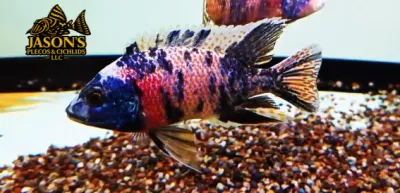
OB Peacock Cichlid (Aulonocara sp.)
OB Peacock Cichlid (Aulonocara sp.)
Price of shipping is not included.
was $50.00
Save 10%
$45.00
Captive Bred
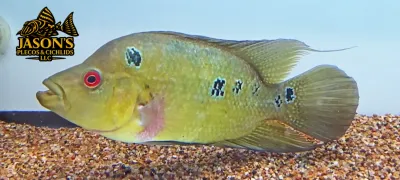
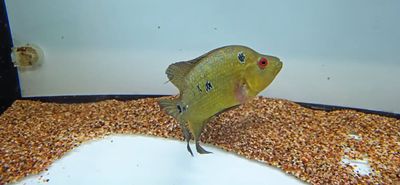
Trimac Cichlid/Three Spot Cichlid - (Amphilophus Trimaculatus)
Trimac Cichlid/Three Spot Cichlid - (Amphilophus Trimaculatus)
Price of shipping is not included.
was $190.00
Save 11%
$170.00
Wild Caught
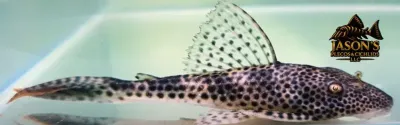
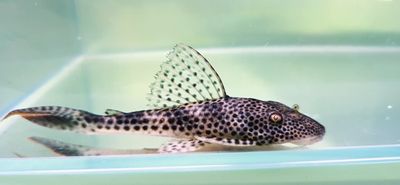
L011 Red Fin Thresher Pleco - (Aphanotorulus emarginatus)
L011 Red Fin Thresher Pleco - (Aphanotorulus emarginatus)
Price of shipping is not included.
5.0
(1)
was $55.00
Save 18%
$45.00
Captive Bred
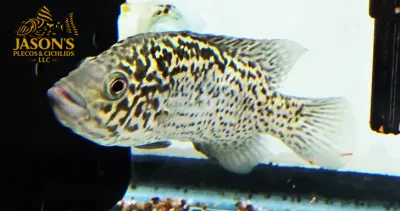
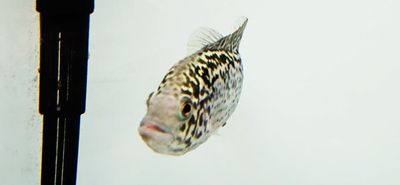
Cuban Cichlid - (Nandopsis tetracanthus)
Cuban Cichlid - (Nandopsis tetracanthus)
Price of shipping is not included.
was $100.00
Save 20%
$80.00
Wild Caught
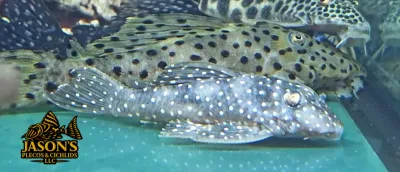
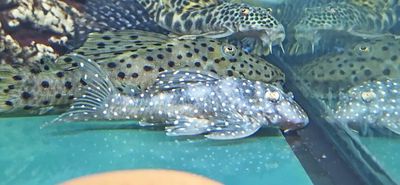
L004 Angelicus Pleco - (Hypancistrus sp.)
L004 Angelicus Pleco - (Hypancistrus sp.)
Price of shipping is not included.
was $50.00
Save 10%
$45.00
Powered by Lightspeed
Display prices in:USD