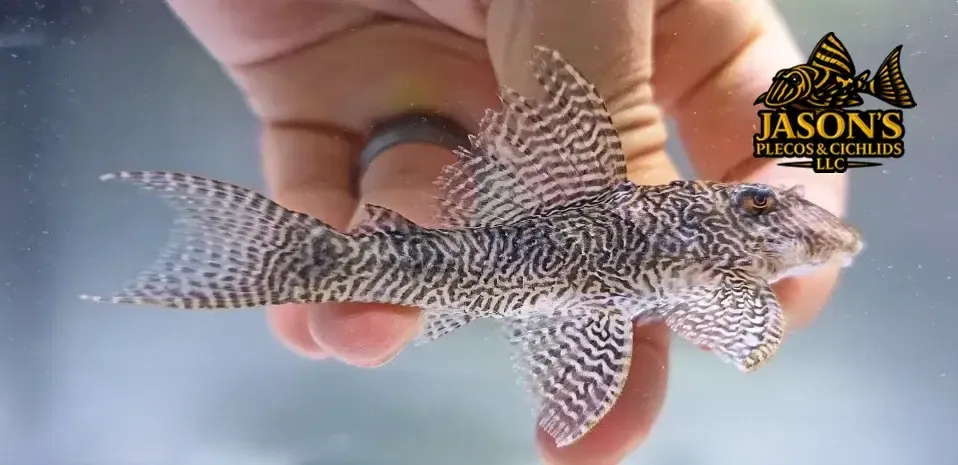
L260 Queen Arabesque Pleco - (Hypancistrus sp.)
$75.00
Wild Caught
was $80.00 Save 6%
Size
Questions, Comments, Concerns? Let us know!
Enter your text
Price of shipping is not included.
In stock: 1 available
1
Save this fish to my favorites.
Customer reviews
Reviews only from verified customers
No reviews yet. You can buy this product and be the first to leave a review.
L260 Queen Arabesque Pleco - (Hypancistrus sp.)
Fish Details, Description and Information Below:
👑 L260 Queen Arabesque Pleco – (Hypancistrus sp. L260) – Wild-Caught Rio Tapajós Pleco
The L260 Queen Arabesque Pleco (Hypancistrus sp. L260) is one of the most beautifully patterned members of the genus Hypancistrus, famous for its incredibly intricate white-to-cream maze-like lines over a dark black, charcoal, or chocolate-brown body.
Unlike plecos with simple:
- Spots
- Straight stripes
- Broad bands
the L260 develops an extremely fine network of:
- Wavy lines
- Swirls
- Loops
- Vermiculations
- Maze-like markings
that gives the fish its elegant:
QUEEN ARABESQUE
name.
L260 originates from the:
RIO TAPAJÓS IN PARÁ, BRAZIL
and is particularly associated with the river between:
SANTARÉM AND PIMENTAL
Despite being known to aquarists since the 1990s, this pleco has still not received a formally described scientific species name.
The correct identification therefore remains:
Hypancistrus sp. L260
This listing is for:
WILD-CAUGHT L260 QUEEN ARABESQUE PLECOS
🔎 Quick Facts – L260 Queen Arabesque Pleco
- 📛 Common Name: Queen Arabesque Pleco
- 📛 Other Names: Queen Arabesque, Arabesque Pleco
- 🔢 L-Number: L260
- 🔬 Scientific Identification: Hypancistrus sp. L260
- 🧬 Taxonomic Status: Scientifically Undescribed
- 🐟 Family: Loricariidae
- 🧬 Subfamily: Hypostominae
- 🌿 Stock: Wild Caught
- 🇧🇷 Country: Brazil
- 📍 State: Pará
- 🌊 Native River: Rio Tapajós
- 📍 Primary Aquarium Locality: Santarém–Pimental region
- 💧 Water Type: Freshwater
- 📏 Adult Size: Approximately 4–5 inches
- 📏 Specialist Maximum: Approximately 12 cm / 4.7 inches
- 🏠 Recommended Aquarium: Approximately 40 gallons or larger
- 👥 Groups / Breeding Colonies: 55+ gallons preferred
- 📐 Aquarium Shape: Long and wide aquarium preferred
- 🌡️ Temperature: Approximately 79–86°F
- 💧 pH: Approximately 5.5–7.5
- 💦 Water: Soft to moderately mineralized
- 💨 Oxygenation: High
- 🌊 Water Movement: Moderate to Strong
- 🍽️ Diet: Protein-Leaning Omnivore
- 🦐 Animal / Insect Foods: Important
- 🌿 Plant Foods: Supplemental
- 🚫 Algae Cleaner: No
- 🪵 Driftwood: Useful for shelter but not required as food
- 😌 Temperament: Generally peaceful and relatively calm
- ⚠️ Pleco Temperament: Mature males may defend caves
- 🌙 Activity: Primarily crepuscular / nocturnal
- 🥚 Breeding: Cave Spawner
- 👨👧 Parental Care: Male guards eggs and developing fry
- 🧬 Hybridization Risk: Yes – keep breeding lines separate from other Hypancistrus
- ⭐ Care Level: Intermediate
- 🌎 IUCN Status: Not Evaluated as an undescribed species
🧬 L260 Is Still Scientifically Undescribed
The correct identification remains:
Hypancistrus sp. L260
The abbreviation:
sp.
indicates that the fish clearly belongs to the genus:
Hypancistrus
but has not yet received a formally published species name.
Even though L260 has been maintained and bred by aquarists for decades, aquarium popularity does not equal formal scientific description.
For this product:
DO NOT INVENT OR SUBSTITUTE A SPECIES NAME
Use:
L260 Queen Arabesque Pleco – (Hypancistrus sp. L260)
🔢 The L260 Number
The Queen Arabesque received the aquarium designation:
L260
after entering the European aquarium trade.
The L-number remains extremely important because the fish still lacks a formal species name.
Therefore:
L260 IS PART OF ITS IDENTITY
and should always be preserved when:
- Selling
- Breeding
- Trading
- Recording locality
- Maintaining bloodlines
👑 Why Is It Called the Queen Arabesque?
An:
ARABESQUE
is an intricate decorative pattern made from flowing:
- Curves
- Lines
- Scrolls
- Interwoven shapes
That description perfectly fits L260.
Its pale lines create an elaborate pattern that appears almost:
- Hand drawn
- Engraved
- Etched
- Maze-like
across the fish.
🎨 Appearance
The base coloration is generally:
- Black
- Charcoal
- Dark brown
- Chocolate brown
covered by fine:
- White
- Cream
- Pale yellow-white
lines.
🌀 Extremely Fine Pattern
One of the most important identification features of L260 is the:
VERY FINE PALE LINE PATTERN
The markings are typically much narrower than those of many other striped Hypancistrus.
They may form:
- Wavy lines
- Loops
- Rings
- Broken circles
- Swirls
- Complex vermiculations
👶 Juvenile Pattern
Young L260 generally display:
A SOMEWHAT COARSER PATTERN
than fully mature fish.
As they grow, the pale lines commonly become:
FINER AND MORE COMPLEX
which can make a mature Queen Arabesque especially impressive.
🖤 Adults May Become Darker
Some mature males become:
- Darker
- More charcoal
- More black
as they age.
Females may retain somewhat stronger contrast in certain aquarium lines.
However:
COLOR ALONE SHOULD NOT BE USED TO SEX L260
⚠️ Pattern Variation
No two Queen Arabesques are guaranteed to have identical markings.
Individual fish may differ in:
- Line width
- Number of swirls
- Number of spots
- Body darkness
- Head pattern
- Fin pattern
This natural variation is part of the appeal of L260.
⚠️ Color & Pattern Disclaimer
Exact adult appearance cannot be guaranteed.
Color and contrast can change because of:
- Genetics
- Age
- Sex
- Stress
- Shipping
- Lighting
- Aquarium background
- Water quality
- Diet
- Acclimation
Wild specimens may temporarily appear much darker or lighter after transportation.
🆚 L260 vs. L411 Monte Dourado Pleco
One of the most important identification issues involving L260 is confusion with:
L411
The L411 Monte Dourado Pleco originates from the:
RIO JARI
while L260 originates from the:
RIO TAPAJÓS
They should not be treated as interchangeable.
👑 Typical L260 Characteristics
L260 generally develops:
- Extremely fine pale lines
- Dense maze-like pattern
- Strong white-to-dark contrast
- Some spot-like elements within the pattern
- Relatively compact adult size
Mature L260 often retain attractive contrast as they age.
🆚 Typical L411 Characteristics
L411 generally develops:
- Broader markings
- Less delicate linework
- Darker adult appearance
- Different pattern proportions
- Larger adult potential
Young L411 can sometimes look remarkably similar to L260.
⚠️ Juveniles Can Be Difficult to Separate
Juvenile:
- L260
- L411
may look extremely similar.
Identification becomes easier when considering:
- Adult pattern
- Line width
- Body proportions
- Locality
- Supplier information
- Parentage
🚨 Mislabeling Happens
L411 has historically been sold as:
L260
because young L411 can display beautiful high-contrast patterns.
Hybrid or mixed-line Hypancistrus may also enter the trade under incorrect L-numbers.
For breeding projects:
SOURCE MATTERS
🧬 Preserve Pure L260 Lines
When breeding L260:
- Keep L260 with verified L260
- Preserve supplier records
- Preserve locality when available
- Record parentage
- Avoid mixing with L411
This protects the recognizable Queen Arabesque aquarium lineage.
🌎 Native Distribution
L260 is native to:
BRAZIL
within the:
RIO TAPAJÓS DRAINAGE
in the state of:
PARÁ
🌊 Santarém to Pimental
Specialist L-number records associate L260 with the Rio Tapajós between:
SANTARÉM
near the lower river and:
PIMENTAL
farther upstream.
This makes:
RIO TAPAJÓS – SANTARÉM TO PIMENTAL
far more useful than simply listing the origin as:
South America
🌊 The Rio Tapajós
The Tapajós is one of the major southern tributaries of the:
AMAZON RIVER
It is known as a:
CLEARWATER RIVER
with extensive:
- Rocky habitat
- Sand
- Submerged structures
- Flowing channels
- Highly oxygenated environments
🪨 Natural Habitat
Detailed locality-specific habitat information for L260 is more limited than for some formally studied species.
However, Hypancistrus from this region are associated with:
- Rocks
- Crevices
- Caves
- Sheltered spaces
- Moving water
- Oxygen-rich conditions
A structured rocky aquarium is therefore appropriate.
🏠 Aquarium Setup
A good L260 aquarium should contain:
- Ceramic pleco caves
- Slate
- Smooth rocks
- Rock crevices
- Driftwood
- Sand or smooth gravel
- Shaded areas
- Open feeding areas
- Strong biological filtration
- Good mechanical filtration
- High oxygenation
🏠 Caves Are Essential
L260 uses caves for:
- Security
- Daytime resting
- Territory
- Reproduction
Provide:
MORE CAVES THAN PLECOS
when maintaining several fish.
🪨 Suitable Caves
Good shelters include:
- Ceramic pleco tubes
- Slate caves
- Rock crevices
- One-ended breeding tubes
- Driftwood cavities
The fish should be able to rest with most of its body protected.
📐 Aquarium Footprint
L260 spends most of its life around:
- Substrate
- Rocks
- Caves
so:
LENGTH + WIDTH
are more useful than excessive aquarium height.
A breeder-style aquarium footprint works especially well.
📏 Adult Size
Specialist L-number references document adult L260 reaching approximately:
12 CM
or:
4.7 INCHES
Therefore, a practical customer planning size is:
APPROXIMATELY 4–5 INCHES
⚠️ Do Not Confuse L260 Size With L411
Some larger plecos sold as Queen Arabesques may actually represent:
- L411
- Mixed lines
- Incorrectly identified Hypancistrus
True L260 is generally considered a relatively:
COMPACT HYPANCISTRUS
🏠 Aquarium Size
For one adult or a compatible pair:
40 GALLONS OR LARGER
provides a comfortable long-term setup.
For a group or breeding colony:
55 GALLONS OR LARGER
is preferred.
Experienced breeders can maintain pairs in smaller specialized aquariums, but a retail care recommendation should give customers sufficient:
- Floor space
- Water volume
- Filtration capacity
- Territory
👥 Group Housing
L260 is generally considered relatively:
PEACEFUL AND SOCIAL FOR A PLECO
Groups can work well when adequate:
- Caves
- Food
- Bottom territory
are provided.
⚠️ Cave Territoriality
Mature males may still defend:
- Preferred caves
- Breeding sites
- Resting locations
against other males.
Minor:
- Chasing
- Pushing
- Cave disputes
can occur.
🪵 Driftwood
Driftwood can provide:
- Shelter
- Shade
- Biofilm
- Territory
- Natural appearance
However:
L260 IS NOT A SPECIALIZED WOOD-EATING PLECO
Wood is:
NOT REQUIRED AS A FOOD SOURCE
and should not be described as necessary for digestion.
🌡️ Temperature
L260 prefers relatively warm water.
A practical maintenance range is:
79–86°F / 26–30°C
For routine maintenance:
79–82°F
works well for many established fish.
Breeders frequently use temperatures closer to:
84–86°F
when conditioning adults for spawning.
💨 High Oxygenation
Warm water naturally holds less dissolved oxygen.
L260 should therefore receive:
HIGH OXYGENATION
through:
- Strong surface agitation
- Air stones
- Sponge filters
- Powerheads
- Canister-filter returns
- Sump returns
🌊 Water Movement
Provide:
MODERATE TO STRONG WATER MOVEMENT
with quieter areas behind:
- Rocks
- Caves
- Driftwood
The aquarium does not need violent current everywhere.
💧 Water Parameters
A practical long-term range is:
- 🌡️ Temperature: Approximately 79–86°F
- 💧 pH: Approximately 5.5–7.5
- 💦 Hardness: Soft to moderately mineralized
- 💨 Oxygenation: High
- 🌊 Water Movement: Moderate to Strong
- ☠️ Ammonia: 0 ppm
- ☠️ Nitrite: 0 ppm
- 🔄 Nitrate: Keep low
⚠️ Cleaner Water Than a Common Pleco
L260 should not be treated like an extremely tolerant Common Pleco.
Maintain:
- Stable temperature
- Good oxygen
- Low organic waste
- Clean substrate
- Regular partial water changes
💩 Filtration
Suitable filtration includes:
- Canister filters
- Sump filtration
- Sponge filtration
- Hang-on-back filtration
- Supplemental powerheads
The goal is:
CLEAN + WARM + WELL-OXYGENATED WATER
🍽️ Diet – Protein-Leaning Omnivore
L260 belongs to the genus:
Hypancistrus
and should not be treated as a typical algae-eating pleco.
The most accurate aquarium description is:
PROTEIN-LEANING OMNIVORE
🦐 Animal & Insect Foods
Suitable foods include:
- Mysis shrimp
- Brine shrimp
- Bloodworms
- Mosquito larvae
- Cyclops
- Insect-based sinking foods
- Quality omnivore tablets
- Quality carnivore-oriented sinking foods
- Small pieces of shrimp
🌿 Plant Foods
Some L260 will also accept:
- Spirulina-containing foods
- Vegetable-containing tablets
- Raw potato
- Zucchini
- Other appropriate vegetable foods
However:
MOST ADULT L260 SHOW FAR LESS INTEREST IN VEGETABLE MATTER THAN TRUE HERBIVOROUS PLECOS
🥔 Raw Potato
Long-time L260 keepers have reported especially good acceptance of:
RAW POTATO PIECES
particularly when acclimating wild-caught specimens.
One advantage is that properly prepared potato remains firm underwater longer than many soft vegetables.
Remove uneaten food before it deteriorates.
⚠️ Potato Is Supplemental
Raw potato can be useful, but it should:
NOT BECOME THE ENTIRE DIET
A varied feeding program remains important.
🚫 Not an Algae Cleaner
L260 should:
NOT BE PURCHASED FOR ALGAE CONTROL
Specialist observations indicate that adult Queen Arabesques consume:
VERY LITTLE ALGAE
compared with true grazing plecos.
🚫 Do Not Rely on Aquarium Algae
Aquarium algae cannot provide the nutrition required by L260.
Feed intentionally every day or according to an appropriate feeding schedule.
🍽️ Feeding Shy Fish
L260 can be:
RELATIVELY SHY
especially when newly imported.
Feed:
- Near caves
- At dusk
- After lights dim
- In several locations
This helps prevent faster tankmates from consuming everything first.
🌙 Activity
The Queen Arabesque is primarily:
CREPUSCULAR / NOCTURNAL
and commonly spends bright daylight inside:
- Caves
- Rock crevices
- Driftwood shelters
☀️ Established Fish May Become Visible
Once comfortable, L260 may begin:
- Leaving caves before lights out
- Feeding during daylight
- Resting openly
- Exploring its territory
A heavily structured aquarium often makes shy fish feel secure enough to become:
MORE VISIBLE
🧪 Wild-Caught Acclimation
This listing is for:
WILD-CAUGHT L260 QUEEN ARABESQUE PLECOS
Wild fish deserve careful acclimation.
After arrival:
- Provide immediate caves
- Keep lighting subdued
- Maintain high oxygen
- Avoid abrupt temperature changes
- Avoid abrupt pH changes
- Maintain excellent filtration
- Confirm that every fish is eating
🍽️ Monitor Body Condition
Watch newly imported specimens for:
- Sunken abdomen
- Hollow body profile
- Weight loss
- Persistent refusal to eat
Do not assume that a fish hiding in a cave is receiving enough food.
😌 Temperament
L260 is generally:
PEACEFUL
toward appropriately chosen:
- Tetras
- Rasboras
- Small characins
- Corydoras
- Peaceful cichlids
- Other calm aquarium fish
provided their temperature requirements overlap.
⚠️ Avoid Overly Aggressive Feeding Competition
Large aggressive cichlids or very competitive catfish can prevent a shy L260 from receiving enough food.
Choose tankmates carefully.
♂️ Male vs. Female
Sex differences become more obvious once fish are mature.
Mature Males
Typically develop:
- Broader head
- Longer head profile
- Stronger cheek odontodes
- Longer odontodes on the pectoral-fin spine
- More noticeable odontodes toward the rear body
Mature Females
Typically:
- Have less extensive odontodes
- Develop a fuller abdominal profile
- Look broader through the abdomen when carrying eggs
👀 View From Above
One of the best ways to compare mature L260 is:
FROM ABOVE
Females carrying eggs often show a noticeably:
FULLER ABDOMEN
than mature males.
⚠️ Juveniles Are Difficult to Sex
Young L260 should normally be:
SOLD AS UNSEXED
unless there is strong evidence of sex.
🥚 Captive Breeding – Well Documented
L260 has been:
SUCCESSFULLY BRED MANY TIMES IN CAPTIVITY
and is one of the more established breeding Hypancistrus in the aquarium hobby.
It is a:
CAVE SPAWNER
🏠 Breeding Caves
Successful breeders commonly use:
- Ceramic pleco tubes
- Clay caves
- Slate caves
The preferred cave is generally:
- Closed at one end
- Slightly wider than the male
- Long enough for both adults during spawning
- Easy for the male to defend
💕 Spawning Behavior
Typical spawning behavior includes:
- A mature male selects a cave.
- A receptive female approaches.
- The female enters the cave.
- The pair may remain together for some time.
- Eggs are deposited and fertilized.
- The female leaves.
- The male remains with the clutch.
👨👧 Male Parental Care
After spawning:
THE MALE GUARDS THE EGGS
He:
- Fans the clutch
- Protects the eggs
- Guards the cave
- Remains with the developing young
The female normally provides no further parental care.
🥚 Clutch Size
Documented breeding reports commonly describe approximately:
10–25 EGGS
for mature L260.
Actual clutch size depends on:
- Female size
- Age
- Nutrition
- Genetics
- Breeding condition
No exact clutch size should be guaranteed.
🐣 Hatching
At warm breeding temperatures, documented L260 eggs may hatch after approximately:
6 DAYS
Development time varies according to:
- Temperature
- Water chemistry
- Oxygenation
👶 Yolk-Sac Stage
Young fry continue using their:
YOLK SAC
for several additional days after hatching.
Some breeding reports place full yolk absorption around approximately:
12 DAYS AFTER SPAWNING / DEVELOPMENT
depending on conditions.
🍽️ Raising Fry
Once actively feeding, suitable foods include:
- Baby brine shrimp
- Fine insect foods
- Crushed quality sinking pellets
- Fine omnivore tablets
- Appropriate fry foods
Feed small amounts frequently.
⚠️ Fry Grow Relatively Slowly
L260 fry can grow more slowly than some other aquarium plecos.
Good growth requires:
- Frequent feeding
- Excellent oxygenation
- Stable warm water
- Low waste
- Clean conditions
💧 Breeding Triggers
Aquarists have successfully stimulated breeding using combinations of:
- Large water changes
- Repeated water changes
- Increased current
- Increased protein feeding
- Slightly warmer temperatures
- Soft, slightly acidic water
However:
NO SINGLE METHOD GUARANTEES SPAWNING
Healthy mature fish remain the most important factor.
🧬 Hybridization Risk – Very Important
Different:
Hypancistrus
can hybridize in aquariums.
Hybridization has even been reported between:
L260 AND L046 ZEBRA PLECO
Therefore:
DO NOT MIX BREEDING COLONIES OF DIFFERENT HYPANCISTRUS
if maintaining pure lines is important.
🚨 Keep L260 Pure
Avoid breeding L260 with:
- L046
- L066
- L201
- L236
- L333
- L399
- L400
- L411
- Other Hypancistrus
⚠️ Hybrid Offspring Must Never Be Sold as Pure L260
If accidental hybridization occurs:
LABEL THE OFFSPRING AS HYBRIDS
Do not return uncertain fish to the hobby as:
PURE QUEEN ARABESQUE
Accurate lineage protects everyone.
🆚 L260 vs. L066 / L333-Type Fish
L260 may superficially resemble striped Xingu Hypancistrus.
However, L260:
- Comes from the Rio Tapajós
- Has much finer arabesque markings
- Remains a distinct aquarium L-number form
Do not identify every finely striped Hypancistrus as L260 based on appearance alone.
🆚 L260 vs. L411 – Locality Matters Most
When identification becomes uncertain:
L260
RIO TAPAJÓS
L411
RIO JARI
Preserving locality and parentage is much more dependable than relying solely on:
- Stripe width
- Body darkness
- Juvenile appearance
🌎 Conservation Status
Because L260 remains:
SCIENTIFICALLY UNDESCRIBED
it does not have its own formal species-level IUCN Red List assessment.
Therefore:
IUCN STATUS: NOT EVALUATED
is the most accurate wording.
⚠️ Not Evaluated Does Not Mean “No Conservation Concerns”
An unassessed species may still face:
- Habitat alteration
- Water-quality changes
- Collection pressure
- River-development impacts
The absence of an IUCN assessment should not be interpreted as proof that a population has no conservation concerns.
🌱 Captive Breeding Is Valuable
L260 is already established in captive breeding programs.
Continued responsible breeding can:
- Reduce reliance on wild collection
- Preserve pure L260 aquarium lines
- Increase availability
- Maintain genetic diversity
- Improve husbandry knowledge
⭐ Why Keep an L260 Queen Arabesque Pleco?
The L260 combines:
- 👑 Beautiful Queen Arabesque pattern
- ⚪ Extremely fine white linework
- ⚫ Deep dark body coloration
- 🌀 Unique maze-like markings
- 🇧🇷 Rio Tapajós origin
- 📏 Manageable approximately 4–5 inch adult size
- 🦐 Interesting protein-leaning diet
- 😌 Generally peaceful temperament
- 🌙 Nocturnal behavior
- 🥚 Well-documented captive breeding
- 👨👧 Male parental care
- 🧬 Fascinating undescribed scientific status
into one of the most distinctive smaller Hypancistrus available to pleco enthusiasts.
⚠️ Important Considerations
Before purchasing an L260 Queen Arabesque Pleco:
- Keep the scientific identification as Hypancistrus sp. L260.
- L260 remains scientifically undescribed.
- Do not invent a species name.
- This listing is for wild-caught fish.
- L260 originates from Pará, Brazil.
- Its primary locality is the Rio Tapajós between Santarém and Pimental.
- Preserve locality information whenever possible.
- L260 is commonly confused with L411.
- L411 originates from the Rio Jari.
- Young L260 and L411 can be difficult to distinguish.
- Do not mix L260 and L411 breeding lines.
- Adult L260 reach approximately 12 cm / 4.7 inches.
- Plan for approximately 4–5 inches.
- Provide approximately 40 gallons or larger.
- Use 55+ gallons for groups or breeding colonies.
- Provide more caves than plecos.
- Maintain approximately 79–86°F.
- Maintain high dissolved oxygen.
- Provide moderate to strong circulation.
- Maintain ammonia and nitrite at zero.
- Keep nitrate low.
- Feed a protein-leaning omnivorous diet.
- Provide regular animal and insect foods.
- Plant foods are supplemental.
- Raw potato is accepted by many L260 but should not be the complete diet.
- Do not purchase L260 as an algae cleaner.
- L260 is not a specialized wood-eating pleco.
- Expect some territorial behavior around caves.
- Mature males develop stronger odontodes.
- Captive cave spawning is well documented.
- Males guard the eggs and developing fry.
- L260 can hybridize with other Hypancistrus.
- Keep breeding colonies separate from other Hypancistrus.
- Label any mixed offspring honestly as hybrids.
- The unresolved L260 form has no formal species-level IUCN assessment.
- Never release aquarium fish into natural waterways.
🧬 Taxonomy
The safest current identification is:
Hypancistrus sp. L260
Classification:
- Order: Siluriformes
- Family: Loricariidae
- Subfamily: Hypostominae
- Genus: Hypancistrus
- Species: Undescribed
- L-Number: L260
Native aquarium locality:
RIO TAPAJÓS – PARÁ, BRAZIL
particularly the:
SANTARÉM–PIMENTAL REGION
For this product, use:
L260 Queen Arabesque Pleco – (Hypancistrus sp. L260)
🔢 L-Number & Lineage Disclaimer
Because L260 has not yet received a formal scientific species name:
THE L-NUMBER IS ESPECIALLY IMPORTANT
Preserve:
- L260 designation
- Supplier information
- Wild collection locality when known
- Breeding records
- Parentage
Do not intentionally mix L260 with similar Hypancistrus and later represent the offspring as pure Queen Arabesques.
🚚 Live Fish Shipping
Live fish are professionally packed for safe transport.
Shipping availability depends on:
- Fish size
- Destination
- Weather conditions
- Carrier availability
- Applicable state and local regulations
Please review our Shipping & Payment Information and Live Arrival Guarantee / DOA Policy before ordering.
⚠️ Buyer Responsibility
Customers are responsible for confirming that Hypancistrus sp. L260 may legally be purchased, possessed, transported, and received in their state or local jurisdiction before ordering.
Never release aquarium fish into natural waterways.
Below are fish you may also like.
Captive Bred
Black Diamond Stingray - (Potamotrygon leopoldi)
Black Diamond Stingray - (Potamotrygon leopoldi)
Price of shipping is not included.
was $800.00
Save 10%
$720.00
Captive Bred
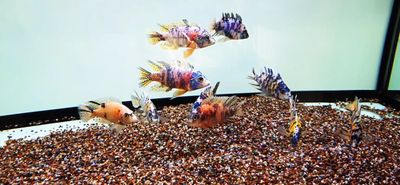
OB Peacock Cichlid (Aulonocara sp.)
OB Peacock Cichlid (Aulonocara sp.)
Price of shipping is not included.
was $50.00
Save 10%
$45.00
Wild Caught
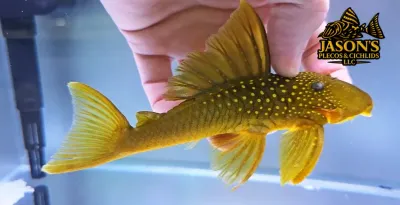
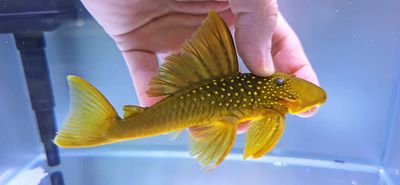
L200 Green Phantom Pleco - (Hemiancistrus subviridis)
L200 Green Phantom Pleco - (Hemiancistrus subviridis)
Price of shipping is not included.
5.0
(1)
was $80.00
Save 6%
$75.00
Wild Caught
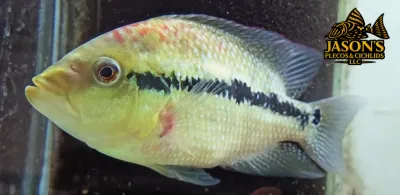
Blue Umbee/Turquoise Cichlid - (Kronoheros umbrifer)
Blue Umbee/Turquoise Cichlid - (Kronoheros umbrifer)
Price of shipping is not included.
was $350.00
Save 10%
$315.00
Wild Caught
L025 Scarlet Cactus Pleco 7 Pointer - (Pseudacanthicus pirarara)
L025 Scarlet Cactus Pleco 7 Pointer - (Pseudacanthicus pirarara)
Price of shipping is not included.
was $550.00
Save 6%
$515.00
Powered by Lightspeed
Display prices in:USD