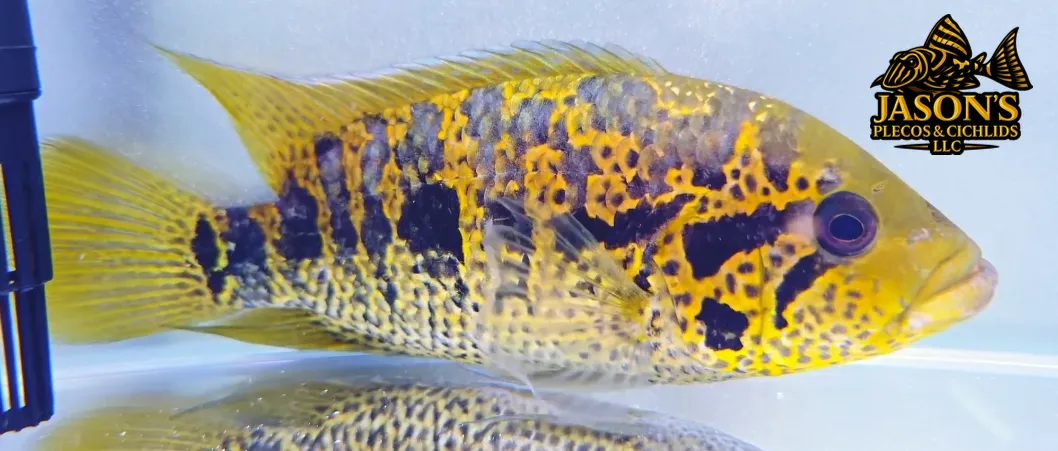
Yellowjacket Cichlid - (Parachromis multifasciatus)
5.0
1 review
Reviews from verified customers who have purchased products at this store.
$80.00
Sold out
was $85.00 Save 6%
Size
Questions, Comments, Concerns? Let us know!
Enter your text
Price of shipping is not included.
Sold out
Save this fish to my favorites.
Customer reviews
Reviews only from verified customers
Reviews are only accepted from verified customers who have signed in and purchased the products. This ensures that each review is based on genuine customer experiences. All reviews are checked before publication to prevent spam.
marlan m.
Waukon,
United States
Jul 8, 2026
Great fish, great shipping. Love the bagging. With fish with spines these bags prevent punctures. Will buy from jason again.
Yellowjacket Cichlid - (Parachromis multifasciatus)
Fish Details, Description and Information Below:
🐝 Yellowjacket Cichlid – (Parachromis multifasciatus) – Captive-Bred Central American Predatory Cichlid
The Yellowjacket Cichlid (Parachromis multifasciatus) is a powerful Central American predatory cichlid known for its striking golden-yellow body, bold black vertical markings, large predatory mouth, intelligence, and highly territorial personality.
Adults can develop an impressive combination of:
- Bright yellow
- Golden yellow
- Olive-yellow
- Black vertical bars
- Dark blotches
- Black lateral markings
- Iridescent blue-green highlights in the fins
The Yellowjacket belongs to the genus Parachromis, the group commonly known as the guapotes, which also includes the Jaguar Cichlid, Wolf Cichlid, and Red Tiger Motaguense.
This listing is for:
CAPTIVE-BRED YELLOWJACKET CICHLIDS
🔎 Quick Facts – Yellowjacket Cichlid
- 📛 Common Name: Yellowjacket Cichlid
- 📛 Other Names: Yellow Jacket Cichlid, Yellow Guapote
- 🔬 Current Scientific Name: Parachromis multifasciatus
- 📚 Former Aquarium Identification: Parachromis friedrichsthalii
- ⚠️ Important Taxonomy Note: The classic Yellowjacket formerly called P. friedrichsthalii is now P. multifasciatus
- 🐟 Family: Cichlidae
- 🧬 Genus: Parachromis
- 🌿 Stock: Captive Bred
- 🌎 Origin: Central America
- 🇲🇽 Native Region: Southern / southeastern Mexico
- 🇬🇹 Native Region: Guatemala
- 🇧🇿 Native Region: Belize
- 🇭🇳 Regional Records: Portions of Honduras
- 🌊 Major Native Systems: Grijalva–Usumacinta / Petén and neighboring Atlantic-slope drainages
- 💧 Water Type: Freshwater; some populations may occur near brackish-influenced habitats
- 📏 Typical Adult Size: Approximately 10–12 inches
- 📏 Large Male Potential: Around 12 inches
- 🏠 Recommended Aquarium – One Adult: 100–125+ gallons
- 🏠 Adult Pair: 125–180+ gallons strongly preferred
- 📐 Aquarium Length: Approximately 5–6 feet or longer preferred
- 🌡️ Temperature: Approximately 76–84°F
- 💧 pH: Approximately 6.5–8.0
- 💦 Hardness: Moderate range tolerated
- 💨 Oxygenation: Good to High
- 🌊 Water Movement: Low to Moderate
- 🍽️ Diet: Carnivore / Piscivore
- 🦐 Animal & Insect Foods: Primary
- 🚫 Feeder Fish: Not recommended
- 😠 Temperament: Aggressive and highly territorial
- 🐟 Tankmates: Only large, robust fish with extreme caution
- 🥚 Breeding: Open-Substrate Spawner
- 👨👩👧 Parental Care: Strong Biparental Care
- 🥚 Potential Clutch: Several hundred eggs; approximately 500–700 documented historically
- ⭐ Care Level: Advanced due to aggression, adult size, and territorial behavior
- 🌎 IUCN Status: Not Evaluated under the currently recognized P. multifasciatus name
🚨 Important Taxonomy Update
This product has historically been sold as:
Parachromis friedrichsthalii
That identification is now outdated for the classic Yellowjacket Cichlid.
A major taxonomic review published in:
2018
re-examined the original type material collected by Emanuel von Friedrichsthal.
The result changed two familiar aquarium names.
The fish historically known in the aquarium hobby as:
Parachromis loisellei
is now correctly called:
Parachromis friedrichsthalii
Meanwhile, the classic northern Central American Yellowjacket that aquarists had been calling:
Parachromis friedrichsthalii
returned to the valid name:
Parachromis multifasciatus
Therefore, for the traditional Yellowjacket product:
YELLOWJACKET CICHLID – (Parachromis multifasciatus)
is the more accurate modern identification.
⚠️ Why Is There So Much Confusion?
The older scientific name:
Parachromis friedrichsthalii
was used for the Yellowjacket in:
- Aquarium books
- Fish stores
- Import lists
- Breeder records
- Websites
- Scientific databases
for decades.
Because of this history, many websites and wholesalers still use:
P. friedrichsthalii
for the classic Yellowjacket.
That does not necessarily mean the fish itself changed.
The:
SCIENTIFIC NAME CHANGED
after researchers clarified which species was represented by the original type specimen.
🧬 Current Product Identification
For this product, use:
Yellowjacket Cichlid – (Parachromis multifasciatus)
Older aquarium identification:
Parachromis friedrichsthalii
may be mentioned only as a:
FORMER / HISTORICAL IDENTIFICATION
to help customers understand why older references use a different name.
🐝 Why Is It Called the Yellowjacket?
The name:
YELLOWJACKET CICHLID
comes from the fish's distinctive combination of:
YELLOW + BLACK
coloration.
Adults commonly develop a bright:
- Yellow
- Golden
- Yellow-orange
background covered with bold:
- Black bars
- Black blotches
- Dark lateral markings
creating a pattern reminiscent of a:
YELLOWJACKET WASP
🎨 Appearance
A mature Yellowjacket can be exceptionally colorful.
Typical coloration includes:
- Golden-yellow body
- Olive-yellow upper body
- Black vertical barring
- Dark lateral blotches
- Dark facial markings
- Blue-green iridescence in the fins
- Yellow to golden fins
⚫ Vertical Black Bars
One of the characteristic features of the classic Yellowjacket is its:
DARK VERTICAL BARRING
Several black bars or blotches can extend vertically through the sides.
Depending on:
- Mood
- Age
- Sex
- Breeding condition
- Stress
these markings can become:
- Extremely dark
- Partially faded
- Broken
- Connected
🔄 Color Changes
Like many large Central American cichlids, the Yellowjacket can change appearance rapidly.
A fish may become:
- Brighter yellow
- Darker
- More strongly barred
- Paler
depending on:
- Territorial behavior
- Breeding
- Stress
- Lighting
- Tank background
- Social status
⚠️ Color Disclaimer
Exact adult coloration cannot be guaranteed.
Captive-bred Yellowjackets can vary in:
- Yellow intensity
- Number of black markings
- Bar width
- Fin coloration
- Body shape
- Adult pattern
Genetics and individual development strongly influence final appearance.
🌎 Native Distribution
The classic Yellowjacket Parachromis multifasciatus is native to:
NORTHERN CENTRAL AMERICA
Its range is centered on Atlantic-slope freshwater systems associated with:
- Southern Mexico
- Guatemala
- Belize
- Portions of Honduras
🇲🇽 Southern Mexico
Important regional systems include portions of the:
GRIJALVA–USUMACINTA
drainage.
This is one of the largest river systems in Central America.
🇬🇹 Guatemala
The species is also associated with northern Guatemalan waters, including the:
PETÉN REGION
The type material of Parachromis multifasciatus came from:
LAGO PETÉN ITZÁ
in Guatemala.
🇧🇿 Belize
Yellowjacket-type Parachromis also occur in Atlantic-slope drainages through Belize.
This region contains:
- Rivers
- Lagoons
- Lakes
- Lowland freshwater systems
that provide excellent habitat for predatory cichlids.
🌊 Natural Habitat
Yellowjackets inhabit a range of freshwater environments including:
- Rivers
- Lakes
- Lagoons
- Backwaters
- Lowland streams
- Slower-moving river sections
They are particularly associated with areas where predators can use:
- Rocks
- Roots
- Wood
- Vegetation
- Shoreline structure
as cover.
🐊 Ambush Predator
The Yellowjacket is primarily a:
PISCIVOROUS AMBUSH PREDATOR
Rather than constantly chasing prey through open water, it can position itself near:
- Shorelines
- Structure
- Vegetation
- Rocks
- Submerged wood
and attack smaller fish moving within range.
🍽️ Natural Diet
In nature, Yellowjackets feed heavily on:
OTHER FISH
and may also consume:
- Aquatic insects
- Insect larvae
- Crustaceans
- Other aquatic animals
This carnivorous feeding ecology should be reflected in captivity.
📏 Adult Size
The Yellowjacket is a:
LARGE CENTRAL AMERICAN CICHLID
Mature adults commonly reach approximately:
10–12 INCHES
with males usually becoming larger and heavier-bodied than females.
For responsible planning:
EXPECT AROUND 12 INCHES FOR A LARGE ADULT MALE
♂️ Males vs. Females in Size
Mature Males
Generally become:
- Larger
- Longer
- Heavier-bodied
- More powerful
Mature Females
Generally remain:
- Somewhat smaller
- More compact
Individual growth varies considerably.
🏠 Aquarium Size
The Yellowjacket requires substantially more room than many smaller Central American cichlids.
For a single mature fish:
100–125+ GALLONS
is a responsible long-term recommendation.
👫 Adult Pair
For a mature compatible pair:
125–180+ GALLONS
is strongly preferred.
More space is especially important because breeding adults can become:
EXTREMELY TERRITORIAL
📐 Aquarium Length
A large adult benefits greatly from:
5–6 FEET OR MORE OF AQUARIUM LENGTH
A longer aquarium provides:
- Swimming room
- Territory
- Escape distance
- Space for visual barriers
- Safer pair housing
📐 Footprint Matters
Prioritize:
LENGTH + WIDTH
over excessive height.
Large Parachromis need horizontal space in which to:
- Swim
- Establish territory
- Turn comfortably
- Avoid one another
🪨 Aquarium Setup
A suitable aquarium may include:
- Sand
- Fine gravel
- Large smooth rocks
- Large driftwood
- Heavy caves
- Open swimming areas
- Visual barriers
- Powerful filtration
🏗️ Build the Aquarium Around the Fish
Yellowjackets are:
POWERFUL DIGGERS
They may:
- Move substrate
- Dig pits
- Rearrange gravel
- Uproot plants
- Push lightweight decorations
Do not expect the aquarium to remain exactly as originally decorated.
⚠️ Secure Heavy Décor
Large rocks and driftwood must be:
STABLE
A strong adult cichlid can move surprisingly large objects.
Avoid rock structures that can:
- Collapse
- Trap the fish
- Damage aquarium glass
🌿 Planted Aquariums
Yellowjackets are generally:
NOT IDEAL FOR DELICATE PLANTED AQUARIUMS
They may:
- Uproot plants
- Dig around roots
- Move substrate
- Damage softer plants
Hardy plants attached securely to:
- Rocks
- Wood
may survive better.
💩 Strong Filtration
Large predatory cichlids:
- Eat heavily
- Produce substantial waste
- Create food debris
Use strong:
- Mechanical filtration
- Biological filtration
- Water circulation
🔄 Regular Water Changes
Regular partial water changes are essential.
Maintain:
AMMONIA = 0
and:
NITRITE = 0
Keep nitrate as low as reasonably practical.
💧 Water Parameters
A practical captive range is:
- 🌡️ Temperature: Approximately 76–84°F
- 💧 pH: Approximately 6.5–8.0
- 💦 Hardness: Moderate range tolerated
- 💨 Oxygenation: Good to High
- 🌊 Water Movement: Low to Moderate
- ☠️ Ammonia: 0 ppm
- ☠️ Nitrite: 0 ppm
🌡️ Temperature
For most captive Yellowjackets:
76–84°F
is a practical range.
Around:
78–82°F
works well for routine maintenance.
⚠️ Higher Temperature Can Increase Activity
Warmer water may increase:
- Metabolism
- Feeding response
- Activity
- Territorial behavior
There is generally no reason to maintain an aggressive adult at the highest possible temperature unless there is a specific husbandry reason.
🌊 Current
Unlike rheophilic plecos, Yellowjackets do not require:
EXTREME CURRENT
Their natural habitats include slower-moving water.
Provide:
- Good circulation
- Surface movement
- Strong filtration
without forcing the fish to constantly fight a powerful current.
🍽️ Diet – Carnivore / Piscivore
The Yellowjacket is naturally:
PREDATORY
and feeds primarily on animal foods.
A good captive diet should be centered around:
HIGH-QUALITY CICHLID / CARNIVORE FOODS
🥣 Staple Prepared Foods
High-quality pellets should form the foundation of the diet.
Suitable foods include:
- Large cichlid pellets
- Carnivore pellets
- Krill-based pellets
- Insect-based pellets
- Quality fish-based foods
Prepared foods provide consistent nutrition and are cleaner than relying heavily on raw foods.
🦐 Supplemental Foods
Suitable supplemental foods include:
- Shrimp
- Prawn
- Krill
- Mysis shrimp
- Earthworms
- Insects
- Appropriate frozen aquatic foods
🪱 Earthworms
Earthworms can be an excellent occasional food because they provide:
- Animal protein
- Strong feeding response
- Naturalistic prey behavior
Use appropriately sourced worms free from:
- Pesticides
- Fertilizers
- Other contaminants
🚫 Avoid Feeder Fish
Even though the Yellowjacket naturally eats fish:
LIVE FEEDER FISH ARE NOT NECESSARY
Feeder fish may introduce:
- Parasites
- Bacteria
- Viral disease
- Poor nutrition
A healthy Yellowjacket can thrive without live fish.
⚠️ Avoid Mammalian Meat
Do not routinely feed:
- Beef
- Chicken
- Pork
- Mammalian organ meat
These foods are not appropriate staples for tropical predatory fish.
Use aquatic and insect-based protein instead.
😠 Temperament – Aggressive
The Yellowjacket is:
AN AGGRESSIVE, TERRITORIAL CICHLID
Temperament varies individually, but aquarists should assume that a mature specimen may become:
- Dominant
- Territorial
- Predatory
- Unpredictable
🚨 Anything Small Enough to Eat Is at Risk
A Yellowjacket is a natural fish predator.
Any tankmate small enough to fit into its mouth should be considered:
POTENTIAL FOOD
Do not combine it with:
- Small tetras
- Livebearers
- Small catfish
- Small cichlids
- Small community fish
🐟 Tankmates
The safest housing option for many adults is:
ALONE
or with a:
PROVEN COMPATIBLE MATE
⚠️ Large Community Housing
Experienced keepers sometimes maintain Yellowjackets with:
- Large cichlids
- Large silver dollars
- Robust large catfish
- Other strong Central American species
However, this requires:
- Very large aquariums
- Careful observation
- Multiple territories
- Backup separation plans
🚫 Compatibility Is Never Guaranteed
A combination that works when the fish are:
JUVENILES
may fail completely after:
- Sexual maturity
- Pair formation
- Spawning
- Territorial establishment
Always have a method available to:
SEPARATE FISH IMMEDIATELY
⚔️ Do Not Underestimate Pair Aggression
Even a bonded male and female can injure one another.
Courtship and breeding can include:
- Chasing
- Jaw locking
- Gill flaring
- Biting
- Ramming
Provide:
- Large aquarium
- Visual barriers
- Escape routes
🧱 Divider Recommended for Breeding Projects
For breeding large aggressive cichlids, an experienced keeper may use a:
HEAVY-DUTY DIVIDER
to allow the pair to:
- See one another
- Become conditioned
- Display
without immediate physical contact.
Any divider used with large Parachromis must be:
EXTREMELY SECURE
🧠 Intelligence & Personality
Yellowjackets are highly interactive aquarium fish.
Many learn to recognize:
- Their keeper
- Feeding routines
- Movement outside the aquarium
They may:
- Approach the glass
- Follow people
- Display at reflections
- Defend specific areas
Their strong personality is a major part of their appeal.
♂️ Male vs. Female
Sexing becomes easier with mature fish.
Mature Males
Generally:
- Grow larger
- Develop a heavier body
- Have more extended dorsal and anal fins
- May develop stronger coloration
- Can develop a more substantial head profile
Mature Females
Generally:
- Stay smaller
- Have a rounder body
- Show a visible ovipositor when preparing to spawn
⚠️ Juveniles Are Difficult to Sex
Young fish should generally be:
SOLD AS UNSEXED
unless the sex has been confidently determined.
Do not guarantee sex from:
- Color alone
- Fin shape alone
- Behavior alone
in small juveniles.
🥚 Captive Breeding – Well Established
Yellowjackets readily reproduce under suitable captive conditions.
They are:
OPEN-SUBSTRATE SPAWNERS
🪨 Spawning Surface
A breeding pair may clean:
- Large flat rock
- Slate
- Cave wall
- Other solid surface
before spawning.
The female deposits rows of eggs and the male fertilizes them.
🥚 Clutch Size
Historical biological records report approximately:
500–700 EGGS
for this species complex.
Actual clutch size varies with:
- Female size
- Age
- Condition
- Genetics
- Previous spawning experience
Do not guarantee an exact number.
👨👩👧 Biparental Care
Both parents participate strongly in brood protection.
Typical behavior includes:
Female
Often remains closer to:
- Eggs
- Larvae
- Fry
Male
Often patrols the:
- Outer territory
- Aquarium perimeter
- Approaching threats
🚨 Breeding Aggression Becomes Extreme
A spawning pair may attack:
- Tankmates
- Nets
- Siphons
- Hands
- Aquarium tools
with considerably more aggression than during normal maintenance.
⚠️ Use Caution During Maintenance
Large Parachromis have:
- Powerful jaws
- Strong teeth
- Fast strikes
They can deliver painful bites.
Use appropriate tools when working around an actively breeding pair.
👶 Fry Care
Once fry become free swimming, appropriate foods include:
- Baby brine shrimp
- Fine high-protein fry foods
- Crushed quality pellets
- Small frozen foods as they grow
📈 Fast-Growing Juveniles
Young Yellowjackets can grow rapidly when provided:
- High-quality food
- Clean water
- Space
- Regular water changes
Rapid growth means customers should purchase the aquarium based on:
ADULT SIZE
not current juvenile size.
🧬 Keep Parachromis Species Pure
Different Parachromis species can look similar, particularly when young.
Similar species include:
- Parachromis friedrichsthalii
- Parachromis motaguensis
- Parachromis managuensis
Do not intentionally hybridize them if preserving pure species lines is the goal.
🆚 Yellowjacket vs. Current Parachromis friedrichsthalii
This distinction is especially important after the 2018 taxonomy change.
Yellowjacket
Parachromis multifasciatus
This is the fish traditionally called:
P. friedrichsthalii
in older aquarium literature.
Current Parachromis friedrichsthalii
The name:
Parachromis friedrichsthalii
now applies to the fish formerly known as:
Parachromis loisellei
These should not be treated as interchangeable names anymore.
🆚 Yellowjacket vs. Red Tiger Motaguense
The:
Parachromis motaguensis
is commonly known as the:
Red Tiger Motaguense / False Yellowjacket
It can resemble a Yellowjacket when young.
Motaguensis generally develops more:
- Red
- Orange
- Red-orange
coloration, especially on mature females and portions of the head and body.
Accurate:
- Supplier identity
- Parentage
- Locality
remain important.
🌎 Conservation Status
The currently recognized:
Parachromis multifasciatus
has:
NOT YET BEEN FORMALLY EVALUATED
under its current name by the IUCN Red List.
Therefore, the safest wording is:
IUCN STATUS: NOT EVALUATED
⚠️ Do Not Borrow the Old Least Concern Status
Some older references list:
Parachromis friedrichsthalii
as:
LEAST CONCERN
However, after the taxonomic correction, that name refers to a different species concept.
Therefore:
DO NOT AUTOMATICALLY APPLY THE P. FRIEDRICHSTHALII LEAST CONCERN ASSESSMENT TO P. MULTIFASCIATUS.
🌎 Wild Population Concerns
Specialist Central American fish references report that wild P. multifasciatus populations have experienced pressure from:
- Habitat alteration
- Introduced fish
- Competition
- Potential hybridization
Of particular concern is the introduced:
Parachromis managuensis
in portions of the Grijalva–Usumacinta region.
🧬 Hybridization Concerns
Hybridization between closely related Parachromis has been reported or suspected in portions of their native and captive ranges.
For aquarium breeding:
KEEP VERIFIED SPECIES LINES SEPARATE
and do not sell mixed offspring as pure Yellowjackets.
🌱 Why Captive-Bred Is Valuable
This listing is for:
CAPTIVE-BRED YELLOWJACKETS
Captive production can:
- Reduce reliance on wild collection
- Preserve established aquarium lines
- Improve adaptation to aquarium foods
- Provide documented parentage when breeders maintain good records
⭐ Why Keep a Yellowjacket Cichlid?
The Yellowjacket combines:
- 🐝 Brilliant yellow-and-black coloration
- ⚫ Bold vertical patterning
- 🧠 High intelligence
- 🐟 Predatory guapote behavior
- 📏 Impressive 10–12 inch adult size
- 💪 Powerful body
- 😠 Strong territorial personality
- 🥚 Fascinating breeding behavior
- 👨👩👧 Intense biparental care
- 🌎 Central American heritage
into an impressive display fish for experienced large-cichlid keepers.
⚠️ Important Considerations
Before purchasing a Yellowjacket Cichlid:
- The classic Yellowjacket is now correctly identified as Parachromis multifasciatus.
- Parachromis friedrichsthalii is the current name for the fish formerly called P. loisellei.
- Older aquarium literature may still use P. friedrichsthalii for the Yellowjacket.
- This listing is for captive-bred fish.
- The species is native to northern Central America.
- Important regions include southern Mexico, Guatemala, Belize, and neighboring Atlantic-slope drainages.
- Adult males may approach approximately 12 inches.
- Plan for approximately 10–12 inches.
- Provide approximately 100–125+ gallons for one adult.
- Use approximately 125–180+ gallons for a pair.
- A 5–6 foot or longer aquarium is strongly preferred.
- Provide strong filtration.
- Expect substantial waste production.
- Provide stable rock and wood structure.
- Expect significant digging and aquarium rearranging.
- Maintain approximately 76–84°F.
- Maintain pH around 6.5–8.0.
- Maintain ammonia and nitrite at zero.
- Feed a carnivorous diet.
- Use high-quality pellets as a nutritional foundation.
- Supplement with shrimp, krill, insects, earthworms, and similar foods.
- Live feeder fish are unnecessary and not recommended.
- Do not keep small fish with an adult Yellowjacket.
- Expect aggressive and territorial behavior.
- Housing alone is often safest.
- Large tankmates require extreme caution.
- Never assume juvenile compatibility will continue into adulthood.
- Breeding pairs can become extremely aggressive.
- Provide a separation plan when attempting to form a pair.
- The species is an open-substrate spawner.
- Both parents guard eggs and fry.
- Keep breeding lines separate from other Parachromis.
- The currently recognized P. multifasciatus has not been formally evaluated by the IUCN.
- Never release aquarium fish into natural waterways.
🧬 Taxonomy
The modern scientific identification for the classic Yellowjacket is:
Parachromis multifasciatus (Regan, 1905)
Classification:
- Order: Cichliformes
- Family: Cichlidae
- Subfamily: Cichlinae
- Genus: Parachromis
- Species: multifasciatus
Original scientific description:
Cichlosoma multifasciatum Regan, 1905
Historical aquarium identification:
Parachromis friedrichsthalii
Current correct product identification:
Yellowjacket Cichlid – (Parachromis multifasciatus)
🚨 Taxonomy Disclaimer
The common name Yellowjacket Cichlid has historically been used inconsistently in the aquarium trade.
Following the 2018 re-examination of the original Parachromis friedrichsthalii type specimen:
- The fish formerly called Parachromis loisellei became Parachromis friedrichsthalii.
- The classic Yellowjacket formerly called Parachromis friedrichsthalii became Parachromis multifasciatus.
Because older supplier and aquarium records may still use the former names, maintaining accurate:
- Parentage
- Supplier records
- Locality records
- Photographic identification
is strongly recommended.
🚚 Live Fish Shipping
Live fish are professionally packed for safe transport.
Shipping availability depends on:
- Fish size
- Destination
- Weather conditions
- Carrier availability
- Applicable state and local regulations
Larger Yellowjacket Cichlids may require:
- Larger insulated shipping boxes
- Additional water
- Heavy-duty fish bags
- Additional bag layers
- Specialized packing
- Airline cargo shipping depending on size and destination
Please review our Shipping & Payment Information and Live Arrival Guarantee / DOA Policy before ordering.
⚠️ Buyer Responsibility
Customers are responsible for confirming that Parachromis multifasciatus may legally be purchased, possessed, transported, and received in their state or local jurisdiction before ordering.
Never release aquarium fish into natural waterways.
Below are fish you may also like.
Wild Caught
Red Fin Compressiceps - (Altolamprologus Compressiceps)
Red Fin Compressiceps - (Altolamprologus Compressiceps)
Price of shipping is not included.
$60.00
Out of stock
Captive Bred
Polar Blue Convict Parrot Cichlid
Polar Blue Convict Parrot Cichlid
Price of shipping is not included.
$8.00
Out of stock
Wild Caught
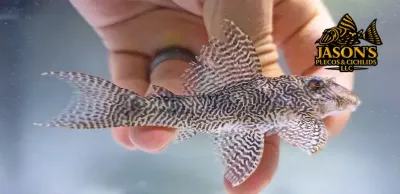
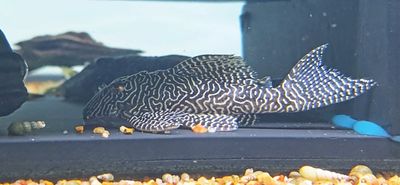
L260 Queen Arabesque Pleco - (Hypancistrus sp.)
L260 Queen Arabesque Pleco - (Hypancistrus sp.)
Price of shipping is not included.
was $80.00
Save 6%
$75.00
Captive Bred
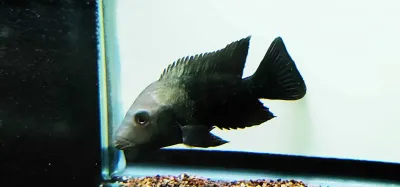
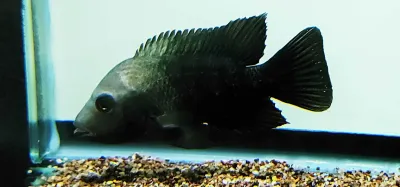
Blackthroat cichlid - (Astatheros Macracanthus)
Blackthroat cichlid - (Astatheros Macracanthus)
Price of shipping is not included.
$55.00
Out of stock
Captive Bred
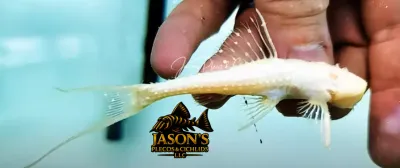
Albino Polka Dot Lyre Tail Pleco - (Acanthicus adonis)
Albino Polka Dot Lyre Tail Pleco - (Acanthicus adonis)
Price of shipping is not included.
was $100.00
Save 15%
$85.00
Out of stock
Wild Caught
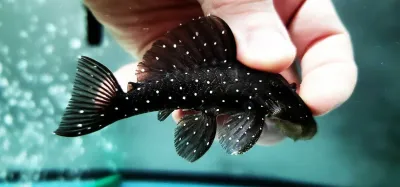
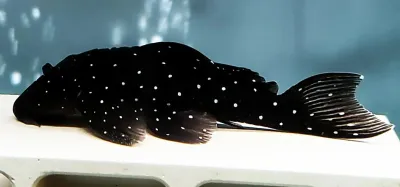
L391 Starry Sky Pleco - (Spectracanthicus sp.)
L391 Starry Sky Pleco - (Spectracanthicus sp.)
Price of shipping is not included.
$65.00
Out of stock
Wild Caught
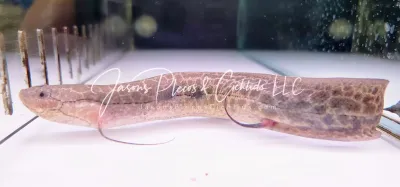
Marbled Lungfish - (Protopterus aethiopicus)
Marbled Lungfish - (Protopterus aethiopicus)
Price of shipping is not included.
$160.00
Out of stock
Captive Bred
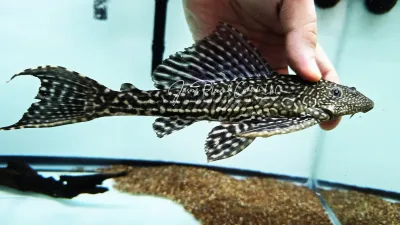
Vermiculated Sailfin Catfish - (Pterygoplichthys disjunctivus)
Vermiculated Sailfin Catfish - (Pterygoplichthys disjunctivus)
Price of shipping is not included.
was $50.00
Save 10%
$45.00
Out of stock
Captive Bred
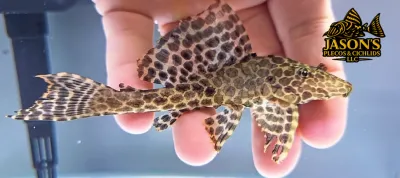
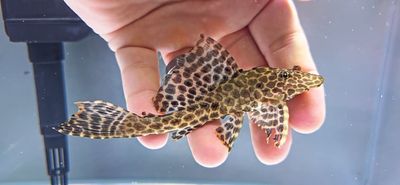
L165 Sail Fin Pleco - (Pterygoplichthys gibbiceps)
L165 Sail Fin Pleco - (Pterygoplichthys gibbiceps)
Price of shipping is not included.
4.0
(1)
was $50.00
Save 10%
$45.00
Out of stock
Wild Caught
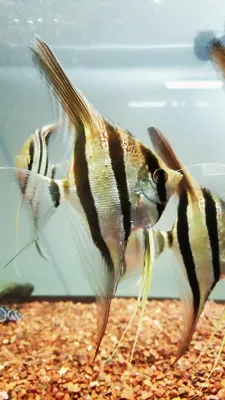
True Altum Angelfish - (Pterophyllum altum)
True Altum Angelfish - (Pterophyllum altum)
Price of shipping is not included.
$150.00
Out of stock
Wild Caught
Green Congo/West African Bichir - (Polypterus retropinnis)
Green Congo/West African Bichir - (Polypterus retropinnis)
Price of shipping is not included.
$70.00
Out of stock
Captive Bred
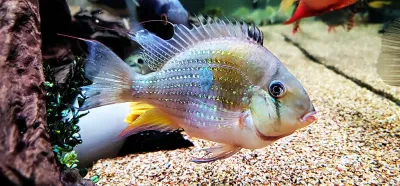
Threadfin Acara - (Acarichthys Heckelii)
Threadfin Acara - (Acarichthys Heckelii)
Price of shipping is not included.
$75.00
Out of stock
Powered by Lightspeed
Display prices in:USD