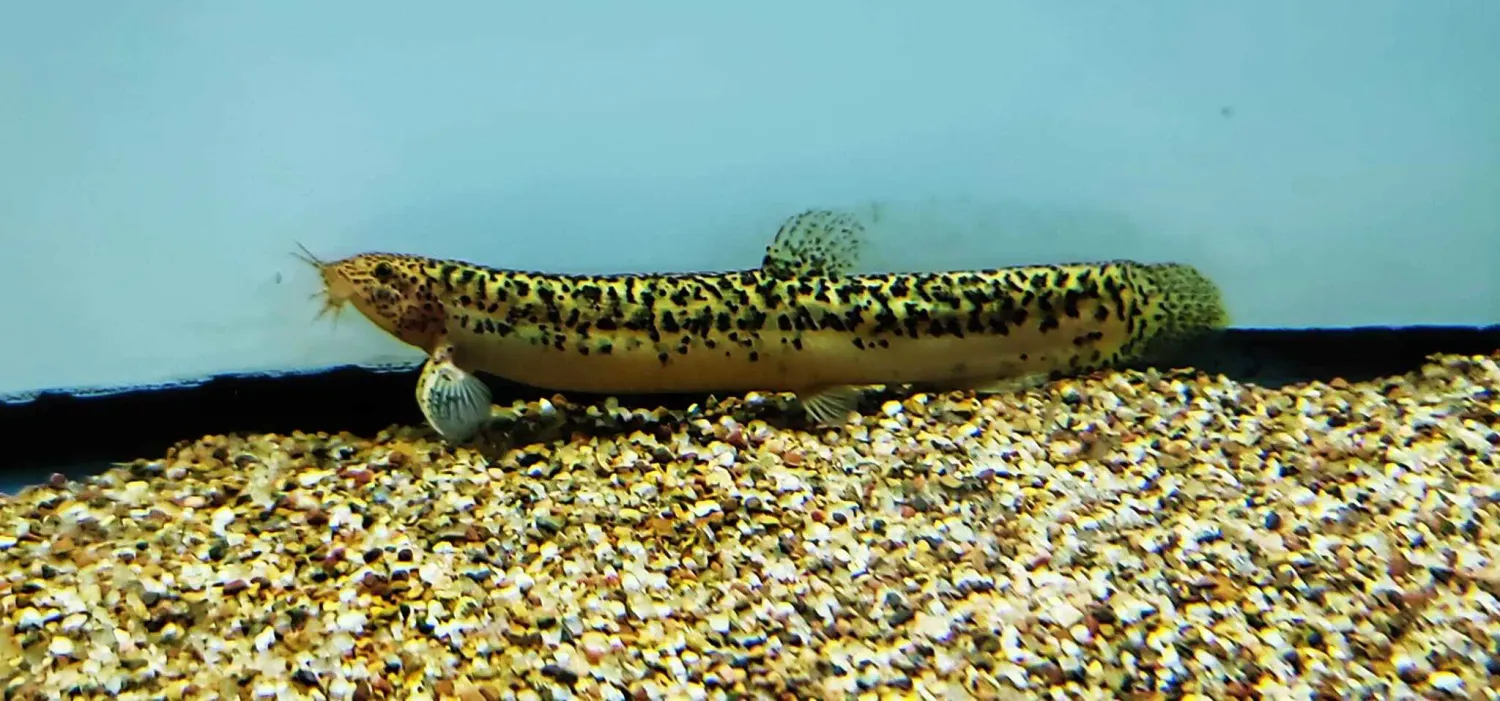
Mojo Dogo Loach - (Paramisgurnus dabryanus)
$50.00
Sold out
Size
Price of shipping is not included.
Sold out
Save this fish to my favorites.
Customer reviews
Reviews only from verified customers
No reviews yet. You can buy this product and be the first to leave a review.
Mojo Dogo Loach - (Paramisgurnus dabryanus)
Fish Details, Description and Information Below:
🐟 Mojo Dogo Loach – (Misgurnus dabryanus) – Large-Scale Asian Weather Loach
The Mojo Dogo Loach (Misgurnus dabryanus), more widely known as the Large-Scale Loach and also sold in the aquarium trade as the Mojo Dojo Loach, is an unusual East Asian weather-loach relative with an elongated body, sensitive barbels, curious personality, and remarkable ability to breathe atmospheric air through a specialized portion of its intestine.
Its coloration is highly variable and may include combinations of:
- Olive
- Golden brown
- Tan
- Gray
- Yellow-brown
covered with irregular:
- Dark spots
- Speckles
- Blotches
- Mottling
The species is naturally adapted to cooler, slow-moving freshwater environments, including muddy rivers, ponds, irrigation channels, rice-field habitats, and other low-gradient waters.
One of its most remarkable adaptations is its ability to:
BREATHE ATMOSPHERIC AIR USING ITS INTESTINE
This allows the fish to survive periods of low dissolved oxygen far better than most aquarium species.
That impressive survival ability also makes responsible ownership especially important because the species has demonstrated the potential to survive outside aquariums and establish non-native populations.
🔎 Quick Facts – Mojo Dogo / Large-Scale Loach
- 📛 Store Name: Mojo Dogo Loach
- 📛 Common Name: Large-Scale Loach
- 📛 Other Trade Name: Mojo Dojo Loach
- 🌦️ Related Common Group: Weather Loach / Dojo-Type Loach
- 🔬 Current Scientific Name: Misgurnus dabryanus
- 📚 Widely Used Former / Alternative Name: Paramisgurnus dabryanus
- 📚 Other Historical Name: Misgurnus mizolepis
- 🐟 Family: Cobitidae
- 🌎 Native Region: East Asia
- 🇨🇳 Primary Native Range: Central and Southern China
- 🇹🇼 Native Range: Taiwan
- 📍 Type Locality: Yangtze River, China
- 💧 Water Type: Freshwater
- 🌡️ Climate: Subtropical / Cool-Water
- 📏 Current Listed Size: Approximately 5–6 inches
- 📏 Published Maximum: Approximately 21.5 cm / 8.5 inches total length
- 📏 Adult Planning Size: Approximately 8–9 inches
- 🏠 Recommended Aquarium: Approximately 55 gallons or larger
- 👥 Small Social Group: 75+ gallons preferred
- 📐 Aquarium Shape: Long aquarium with substantial bottom area
- 🌡️ Documented Temperature Range: Approximately 50–77°F
- 🌡️ Practical Aquarium Range: Approximately 59–75°F
- 💧 pH: Approximately 6.0–8.0
- 💦 Hardness: Approximately 6–18 dGH
- 💨 Oxygenation: Good
- 🌊 Water Movement: Gentle to Moderate
- 🏖️ Substrate: Soft sand strongly preferred
- 🍽️ Diet: Omnivorous Benthic Feeder
- 🪱 Animal Foods: Worms, insect larvae, small crustaceans and similar foods
- 🌿 Plant / Algae Material: Naturally consumed as part of the diet
- 😌 Temperament: Peaceful
- 👥 Social Behavior: Social; benefits from compatible companions
- 🐠 Swimming Area: Primarily bottom
- 💨 Special Adaptation: Facultative Intestinal Air Breathing
- 🕳️ Burrowing: Yes
- 🚪 Escape Risk: High – secure lid strongly recommended
- 🥚 Reproduction: Egg Layer
- 👶 Parental Care: None
- ⭐ Care Level: Easy to Intermediate
- 🌎 IUCN Status: Least Concern
- 🚨 Invasive-Species Concern: Yes – never release
🧬 Important Scientific Name Update
Your older page uses:
Paramisgurnus dabryanus
That name is still extremely common in:
- Aquarium literature
- U.S. government databases
- Aquaculture research
- Scientific papers
However, the current:
ESCHMEYER CATALOG OF FISHES
recognizes the accepted name as:
Misgurnus dabryanus
Therefore, I would update the product title to:
Mojo Dogo Loach – (Misgurnus dabryanus)
while retaining:
Paramisgurnus dabryanus
within the page so customers searching the older name can still recognize the fish.
⚠️ Why Do Both Scientific Names Appear Online?
The taxonomy of East Asian weather loaches has been complicated for many years.
This fish has been called:
- Paramisgurnus dabryanus
- Misgurnus dabryanus
- Misgurnus mizolepis
by different scientific authorities.
Even recent research continues to use:
Paramisgurnus dabryanus
while the current Catalog of Fishes and FishBase use:
Misgurnus dabryanus
This is a genuine taxonomic difference between authorities rather than simply an aquarium-store spelling error.
For the current product page, use:
Misgurnus dabryanus
as the primary scientific name.
🐟 Mojo Dogo vs. Mojo Dojo
Your established product name is:
MOJO DOGO LOACH
The more commonly encountered aquarium-trade spelling is:
MOJO DOJO LOACH
Neither is the formal scientific common name.
The recognized common name is:
LARGE-SCALE LOACH
Therefore, including all three names helps customers understand exactly which fish is being sold.
🔍 Identification
The Large-Scale Loach resembles the familiar:
Dojo / Oriental Weather Loach – Misgurnus anguillicaudatus
but they are different species.
Important identifying characteristics of M. dabryanus include:
- Larger-looking scales
- High fleshy crests around the caudal peduncle
- Distinctive male pectoral-fin structure
- No dark spot at the upper base of the caudal fin
⚫ Important Tail-Spot Difference
One practical distinction is:
Misgurnus dabryanus
NO DISTINCT DARK SPOT AT THE UPPER BASE OF THE TAIL
Misgurnus anguillicaudatus
commonly shows:
A DARK SPOT NEAR THE UPPER CAUDAL-FIN BASE
However, these species can still be difficult to distinguish visually.
⚠️ Misidentification Is Common
Large-Scale Loaches have frequently been imported or sold as:
DOJO LOACHES
because of their very similar body structure.
Scientific studies have even discovered populations originally identified as M. anguillicaudatus that genetic testing later proved were:
M. dabryanus
Therefore, supplier identity and locality information are valuable.
🎨 Appearance
Typical coloration ranges through:
- Olive-brown
- Gray-brown
- Golden brown
- Yellow-brown
- Tan
with irregular dark:
- Spots
- Speckles
- Blotches
- Mottling
along the body.
🐍 Long, Eel-Like Body
The fish has an elongated:
LOACH / EEL-LIKE BODY
designed for moving along:
- Mud
- Sand
- Vegetation
- Shallow bottom habitat
Despite the eel-like appearance, it is a true loach in the family:
COBITIDAE
👃 Sensitive Barbels
The mouth is surrounded by sensitive:
BARBELS
that help locate food within:
- Sand
- Mud
- Detritus
- Vegetation
The fish constantly investigates the substrate looking for edible material.
🏖️ Natural Habitat
Large-Scale Loaches naturally occupy habitats including:
- Slow-moving rivers
- Ponds
- Irrigation canals
- Rice fields
- Drainage channels
- Muddy pools
- Low-gradient streams
They are especially associated with:
SOFT MUDDY SUBSTRATES
and relatively calm water.
🚫 Not a High-Flow Loach
This species should not be treated like a:
- Hillstream loach
- Torrent loach
- Fast-water stone loach
It does:
NOT
require extreme current.
Provide:
GENTLE TO MODERATE WATER MOVEMENT
with excellent filtration.
🏖️ Soft Sand Is Strongly Preferred
A fine:
SOFT SAND SUBSTRATE
is ideal.
The fish naturally:
- Digs
- Searches through substrate
- Pushes its face into sand
- Partially buries itself
Avoid extremely sharp gravel that can damage:
- Barbels
- Mouth
- Belly
🕳️ Burrowing Behavior
Large-Scale Loaches are capable of:
BURROWING INTO SOFT SUBSTRATE
This is an important natural survival behavior.
In nature, mud can help protect them from:
- Drying
- Temperature extremes
- Predators
- Poor environmental conditions
🌿 Aquarium Setup
A good aquarium should contain:
- Soft sand
- Smooth stones
- Driftwood
- Root-like structures
- Hardy plants
- Shaded shelters
- Open foraging areas
- Strong biological filtration
🌱 Plants
Plants can provide:
- Cover
- Shade
- Security
- Foraging habitat
However, an active loach may:
- Dig around roots
- Disturb substrate
- Uproot delicate plants
Use sturdy or well-anchored plants.
🚪 SECURE LID REQUIRED
Weather-type loaches are:
EXCELLENT ESCAPE ARTISTS
They can investigate:
- Filter openings
- Gaps around tubing
- Small holes around lids
The aquarium should have:
A SECURE, WELL-FITTING COVER
⚠️ Seal Small Openings
Check spaces around:
- Filter hoses
- Heater cables
- Airline tubing
- Overflow boxes
- Lid corners
An opening that appears too small may still be investigated by a determined loach.
💨 Intestinal Air Breathing
One of the most fascinating characteristics of this species is:
INTESTINAL AIR BREATHING
The fish can swim rapidly to the surface and:
- Swallow atmospheric air.
- Pass the air into a specialized portion of the intestine.
- Absorb oxygen across highly vascularized intestinal tissue.
🔬 The Posterior Intestine Is a Respiratory Organ
Scientific research has demonstrated that the:
POSTERIOR INTESTINE
is specialized for gas exchange.
The tissue is:
- Thin
- Highly vascularized
- Adapted for oxygen absorption
This functions as an:
ACCESSORY RESPIRATORY ORGAN
💨 Surface Gulping Can Be Normal
It is normal to occasionally see the fish:
- Rush to the surface
- Swallow air
- Return to the bottom
This does not automatically mean something is wrong.
However:
CONSTANT SURFACE GASPING SHOULD STILL PROMPT A WATER-QUALITY CHECK
⚠️ Air Breathing Does Not Excuse Poor Water
This species can tolerate low oxygen better than many aquarium fish.
That does not mean it should be intentionally maintained in:
- Dirty water
- High ammonia
- High nitrite
- Poorly filtered water
- Chronically low dissolved oxygen
Always provide:
GOOD WATER QUALITY
🎈 Unusual Floating Behavior
Scientific researchers have documented a curious behavior in this species known as:
FLOATING
Individuals may occasionally float near the surface briefly, particularly at night.
This behavior appears connected with:
- Intestinal respiration
- Resting behavior
- Possibly sleep-like behavior
Short episodes are not necessarily a sign of disease.
⚠️ Know the Difference Between Floating & Illness
Occasional controlled floating can occur naturally.
However, persistent:
- Loss of balance
- Inability to submerge
- Heavy breathing
- Bloated abdomen
- Lethargy
should always be investigated as a potential health problem.
🌡️ Important Temperature Correction
Your older page recommends:
76–82°F
That is too warm as a normal long-term recommendation.
FishBase gives a documented environmental range of:
50–77°F / 10–25°C
This is therefore:
A SUBTROPICAL / COOL-WATER LOACH
rather than a warm tropical species.
🌡️ Practical Aquarium Temperature
For normal aquarium maintenance, I would recommend approximately:
59–75°F
with:
65–72°F
being a comfortable middle range for many setups.
Avoid keeping the fish continuously above:
77°F
unless there is a specific short-term reason.
⚠️ Cooler Water Does Not Mean Freezing Water
The species tolerates cool temperatures, but aquarium fish should still be protected from:
- Rapid temperature swings
- Freezing conditions
- Sudden cold-water changes
Stability remains important.
💧 Water Parameters
A practical long-term range is:
- 🌡️ Temperature: Approximately 59–75°F
- 🌡️ Documented Broader Range: Approximately 50–77°F
- 💧 pH: Approximately 6.0–8.0
- 💦 Hardness: Approximately 6–18 dGH
- 💨 Oxygenation: Good
- 🌊 Flow: Gentle to Moderate
- ☠️ Ammonia: 0 ppm
- ☠️ Nitrite: 0 ppm
- 🔄 Nitrate: Keep reasonably low
⚠️ Avoid Warm Tropical Tankmates
Because of its cooler temperature preference, Largescale Loaches should generally not be permanently combined with tropical species requiring:
80–86°F
Examples include many:
- Warm-water plecos
- Discus
- Certain stingrays
- Warm-water cichlids
Choose tankmates based on overlapping temperature requirements.
📏 Adult Size – Important Correction
Your old page lists:
10 INCHES
as the approximate adult maximum.
FishBase currently documents a maximum of:
21.5 CM TOTAL LENGTH
or approximately:
8.5 INCHES
Therefore, I would use:
APPROXIMATELY 8–9 INCHES
for responsible adult planning.
🏠 Aquarium Size
Although the fish is relatively slender, it is:
- Active
- Curious
- Social
- Capable of reaching nearly 9 inches
For long-term care:
55 GALLONS OR LARGER
is a good recommendation.
For several adults:
75+ GALLONS
with a long aquarium footprint is preferred.
📐 Aquarium Length Matters
This species spends a great deal of time:
- Exploring
- Foraging
- Swimming along the substrate
A:
LONG AQUARIUM
is therefore much more useful than a short, tall aquarium.
👥 Social Behavior
Large-Scale Loaches are generally:
PEACEFUL AND SOCIAL
They can be maintained singly, but social interaction is natural for weather-type loaches.
When space allows, keeping several compatible individuals can result in:
- More activity
- More exploration
- More natural behavior
⚠️ Do Not Overcrowd Them
A group of nearly 9-inch loaches requires substantial room.
Do not compensate for a small aquarium simply by adding more fish because the species is social.
Aquarium size must increase with group size.
😌 Temperament
This is generally a:
VERY PEACEFUL FISH
It does not normally hunt or attack healthy tankmates.
Its constant foraging can make it:
- Active
- Curious
- Energetic
but not normally aggressive.
🐠 Tankmates
Good tankmates include peaceful species that tolerate similar:
COOL TO SUBTROPICAL TEMPERATURES
Avoid mixing solely based on temperament.
Temperature compatibility is equally important.
⚠️ Small Animals May Be Eaten
Although peaceful, this is still an:
OMNIVOROUS BOTTOM FEEDER
Very small animals that fit into its mouth may be eaten, including:
- Tiny shrimp
- Small worms
- Very small fry
This is feeding behavior rather than aggression.
🍽️ Diet – Omnivorous Benthic Feeder
Scientific ecological studies describe this species as an:
OMNIVOROUS BENTHIC FEEDER
Its natural diet includes:
- Zooplankton
- Macroinvertebrates
- Insect larvae
- Small crustaceans
- Algae
- Organic material
🪱 Animal Foods
Suitable aquarium foods include:
- Bloodworms
- Blackworms
- Earthworm pieces
- Mysis shrimp
- Brine shrimp
- Mosquito larvae
- Insect-based foods
- Small crustacean foods
🥣 Prepared Foods
Quality prepared foods should also be offered.
Suitable choices include:
- Sinking omnivore pellets
- Sinking loach wafers
- Insect-based granules
- Quality bottom-feeder tablets
🌿 Plant Material
The natural diet also includes:
- Algae
- Plant-associated organic material
so a completely meat-only diet is unnecessary.
A balanced omnivorous feeding program is best.
⚖️ Balanced Diet
For long-term health, offer:
INVERTEBRATE FOODS + QUALITY SINKING FOODS + SOME PLANT / ALGAE MATERIAL
rather than feeding one item exclusively.
🚫 Not an Aquarium Cleaner
Although the fish scavenges food from the bottom:
DO NOT PURCHASE IT SIMPLY TO CLEAN UNEATEN FOOD
Every aquarium animal increases:
- Waste
- Ammonia production
- Filtration demand
Intentional feeding is required.
👃 Constant Foraging Is Normal
The fish uses its barbels constantly to:
- Search sand
- Investigate crevices
- Detect food
- Explore the aquarium
This energetic bottom-searching behavior is normal.
🌙 Activity
Large-Scale Loaches can be active:
- During daylight
- At dusk
- At night
Their activity may vary according to:
- Lighting
- Feeding schedule
- Temperature
- Barometric changes
- Individual personality
🌦️ Weather-Loach Behavior
Weather loaches have long been associated with behavioral changes before:
- Storms
- Pressure changes
- Weather fronts
They may become unusually active and swim rapidly around the aquarium.
This is one reason related loaches earned the:
WEATHER LOACH
name.
🐟 Sexing
Adult males and females can sometimes be distinguished.
Mature Females
often become:
- Larger
- Fuller-bodied
- Rounder through the abdomen
especially when carrying eggs.
Mature Males
may develop differences in the:
- Pectoral-fin structure
- Lamina circularis
associated with reproduction.
Juveniles are difficult to sex reliably.
🥚 Reproduction
The Large-Scale Loach is an:
EGG-LAYING SPECIES
rather than a cave spawner or livebearer.
🌿 Natural Spawning Habitat
Spawning occurs in habitats containing:
- Aquatic vegetation
- Flooded margins
- Soft substrate
- Seasonal shallow water
Eggs are dispersed rather than guarded in a pleco-style nest.
👶 No Parental Care
After spawning:
THE ADULTS DO NOT PROVIDE PARENTAL CARE
Eggs and fry therefore require protection from:
- Adult fish
- Other tankmates
- Filtration intakes
if deliberate captive reproduction is attempted.
🧪 Captive Breeding
This species is widely used in:
COMMERCIAL AQUACULTURE
in Asia.
However, controlled aquarium breeding is:
NOT COMMONLY DOCUMENTED AS A ROUTINE HOME-AQUARIUM PROJECT
Commercial production may involve:
- Seasonal conditioning
- Specialized spawning systems
- Aquaculture techniques
📈 High Reproductive Potential
Scientific risk assessments report that Large-Scale Loaches can become sexually mature at approximately:
1–2 YEARS OF AGE
with maturity reported in fish roughly:
10–20 CM LONG
under suitable conditions.
This reproductive capability is one reason responsible no-release practices are important.
🌎 Native Range – Important Correction
Your older page described a very broad range including:
- Yangtze
- Pearl River
- Taiwan
- Amur River / Russia
Current taxonomic sources are more conservative.
The current Catalog of Fishes recognizes the native distribution primarily as:
CENTRAL AND SOUTHERN CHINA + TAIWAN
🇨🇳 China
The species was originally described from the:
YANGTZE RIVER
and occurs across substantial portions of:
CENTRAL AND SOUTHERN CHINA
🇹🇼 Taiwan
Native populations are also recognized from:
TAIWAN
⚠️ Introduced Populations Complicate Range Maps
The species has been moved extensively for:
- Food
- Aquaculture
- Fishing bait
- Aquarium trade
As a result, some populations historically considered native may actually represent:
HUMAN INTRODUCTIONS
This is another reason distribution information varies among references.
🌎 Conservation Status
Misgurnus dabryanus is currently assessed as:
LEAST CONCERN
on the IUCN Red List.
The current assessment dates to:
2023
🚨 Invasive-Species Concern
This section is especially important for this fish.
Large-Scale Loaches have been introduced outside their native range through:
- Aquarium release
- Aquaculture escape
- Bait-fish movement
🇺🇸 Confirmed in the United States
Genetic testing confirmed:
M. dabryanus
from the:
SAN JOAQUIN RIVER IN CALIFORNIA
Fish collected there had originally been mistaken for the Oriental Weather Loach.
Aquarium release was identified as a suspected introduction pathway.
⚠️ High U.S. Climate Match
A U.S. Fish & Wildlife Service ecological risk assessment found the species has:
A HIGH OVERALL CLIMATE MATCH
for the contiguous United States.
Particularly suitable climatic areas included portions of:
- The Southeast
- Mid-Atlantic
- Midwest
- Eastern Kentucky region
This means an unwanted fish should:
NEVER BE RELEASED
even in areas where winters seem cold.
🌍 Global Invasion Potential
Modern ecological modeling has also concluded that the Large-Scale Loach has substantial potential to:
ESTABLISH OUTSIDE ITS NATIVE RANGE
in suitable climates.
Its survival adaptations include:
- Air breathing
- Burrowing
- Cool-temperature tolerance
- Low-oxygen tolerance
- Broad habitat use
🚨 NEVER RELEASE THIS FISH
Never release a Mojo Dogo / Large-Scale Loach into:
- Rivers
- Streams
- Lakes
- Ponds
- Drainage ditches
- Canals
- Storm drains
- Outdoor waterways
If you can no longer keep the fish:
- Rehome it
- Contact an aquarium store
- Contact another experienced aquarist
- Contact an aquatic rescue
- Contact the appropriate wildlife agency
NEVER RELEASE AQUARIUM FISH INTO THE WILD.
⚠️ State & Local Laws Can Differ
Weather loaches and other nonnative fishes are regulated differently from state to state.
Some jurisdictions specifically restrict certain:
Misgurnus
species or weather loaches.
Because identification between closely related species can also be difficult:
CUSTOMERS MUST CONFIRM THEIR LOCAL REGULATIONS BEFORE ORDERING
⭐ Why Keep a Mojo Dogo Loach?
This species combines:
- 🐍 Long, eel-like appearance
- 👃 Sensitive barbels
- 🐟 Curious personality
- 🏖️ Entertaining sand-foraging behavior
- 💨 Intestinal air breathing
- 🎈 Unusual floating behavior
- 🌡️ Cool-water adaptability
- 😌 Peaceful temperament
- 🌦️ Weather-loach behavior
- 📏 Approximately 8–9 inch adult potential
into one of the more unusual loaches available to aquarium keepers.
⚠️ Important Considerations
Before purchasing a Mojo Dogo Loach:
- The currently accepted Catalog of Fishes name is Misgurnus dabryanus.
- Paramisgurnus dabryanus remains widely used in scientific and aquarium literature.
- Keep the older name somewhere on the page for identification.
- “Large-Scale Loach” is the standard common name.
- “Mojo Dojo Loach” is a commonly used aquarium trade name.
- “Mojo Dogo Loach” can remain the store's established product name.
- The fish originates naturally primarily from central and southern China and Taiwan.
- It is a cool-water / subtropical species.
- Remove the old 76–82°F recommendation.
- The documented temperature range is approximately 50–77°F.
- Approximately 59–75°F is a practical aquarium range.
- Avoid continuously maintaining it at warm tropical temperatures.
- FishBase documents a maximum of approximately 21.5 cm / 8.5 inches total length.
- Plan for approximately 8–9 inches as an adult.
- A 55-gallon or larger aquarium is recommended.
- Use larger aquariums for social groups.
- Prioritize aquarium length and bottom area.
- Provide soft sand.
- Provide shelters and shaded areas.
- Use a tight-fitting lid.
- This species can escape through surprisingly small openings.
- It is a facultative air breather.
- The posterior intestine functions as an accessory respiratory organ.
- Occasional surface air-gulping is normal.
- Air-breathing ability does not justify poor water quality.
- Feed a varied omnivorous diet.
- Natural foods include invertebrates, zooplankton and algae.
- Provide quality sinking foods and animal/insect foods.
- Do not purchase it merely as a scavenger or aquarium cleaner.
- The species is generally peaceful.
- It is social and benefits from compatible companions when sufficient space is available.
- Reproduction is by egg laying.
- Adults do not provide parental care.
- The species has high reproductive potential.
- It is currently classified as Least Concern.
- It has been introduced outside its native range.
- It has been genetically confirmed from the San Joaquin River in California.
- U.S. ecological assessments show substantial climate compatibility.
- Never release this fish into natural waterways.
- Customers must confirm state and local legality before ordering.
🧬 Taxonomy
The current accepted scientific name used by the Catalog of Fishes is:
Misgurnus dabryanus (Guichenot, 1872)
Classification:
- Order: Cypriniformes
- Family: Cobitidae
- Genus: Misgurnus
- Species: dabryanus
Widely used former / alternative scientific name:
Paramisgurnus dabryanus
Historical synonym:
Misgurnus mizolepis
For this product, I recommend:
Mojo Dogo Loach – (Misgurnus dabryanus)
🧬 Scientific-Name Disclaimer
Taxonomic authorities do not all currently use the same genus for this fish.
Recent scientific literature and U.S. government resources may continue to use:
Paramisgurnus dabryanus
while the current Eschmeyer Catalog of Fishes and FishBase recognize:
Misgurnus dabryanus
The two names in this context refer to the same Large-Scale Loach.
🚨 Invasive-Species & No-Release Disclaimer
The Large-Scale Loach has been transported internationally through the:
- Aquarium trade
- Aquaculture industry
- Food-fish industry
- Bait trade
and has established or been detected outside its native range.
The species possesses several adaptations that can increase survival after accidental or deliberate release, including:
- Intestinal air breathing
- Burrowing behavior
- Low-oxygen tolerance
- Broad temperature tolerance
NEVER RELEASE THIS FISH INTO THE ENVIRONMENT.
🚚 Live Fish Shipping
Live fish are professionally packed for safe transport.
Shipping availability depends on:
- Fish size
- Destination
- Weather conditions
- Carrier availability
- Applicable state and local regulations
Weather and destination restrictions are especially important for this species because nonnative loaches may be regulated differently between states.
Please review our Shipping & Payment Information and Live Arrival Guarantee / DOA Policy before ordering.
⚠️ Buyer Responsibility
Customers are responsible for confirming that Misgurnus dabryanus / Paramisgurnus dabryanus may legally be purchased, possessed, transported, and received in their state or local jurisdiction before ordering.
Never release aquarium fish into natural waterways.
Below are fish you may also like.
Captive Bred
L306 Bloodred Tiger Pleco - (Panaqolus claustellifer)
L306 Bloodred Tiger Pleco - (Panaqolus claustellifer)
Price of shipping is not included.
5.0
(1)
was $75.00
Save 13%
$65.00
Out of stock
Wild Caught
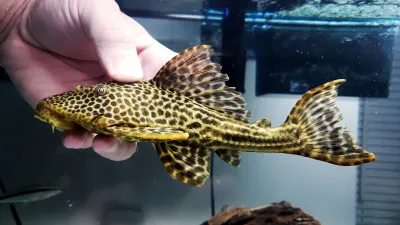
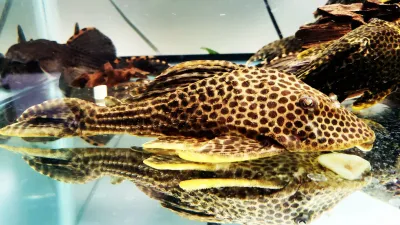
L050 Spotted Humpbacked Pleco - (Hypostomus cf. cochliodon)
L050 Spotted Humpbacked Pleco - (Hypostomus cf. cochliodon)
Price of shipping is not included.
$100.00
Out of stock
Captive Bred
LDA105 Typhoon Pleco/Fire Spot Cactus Pleco - (Pseudacanthicus sp.)
LDA105 Typhoon Pleco/Fire Spot Cactus Pleco - (Pseudacanthicus sp.)
Price of shipping is not included.
$280.00
Out of stock
Captive Bred
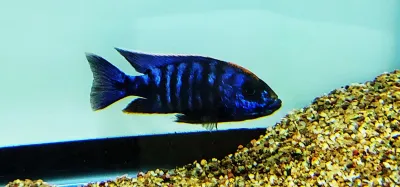
Apache Peacock Cichlid - (Aulonocara sp.)
Apache Peacock Cichlid - (Aulonocara sp.)
Price of shipping is not included.
$45.00
Out of stock
Captive Bred
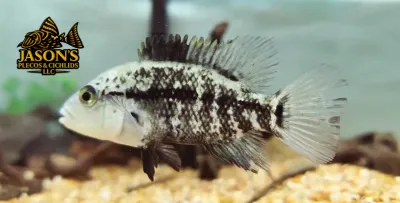
Haitian Cichlid - (Nandopsis haitiensis)
Haitian Cichlid - (Nandopsis haitiensis)
Price of shipping is not included.
5.0
(1)
was $55.00
Save 9%
$50.00
Out of stock
Captive Bred
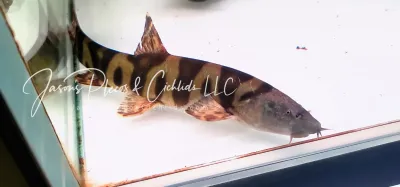
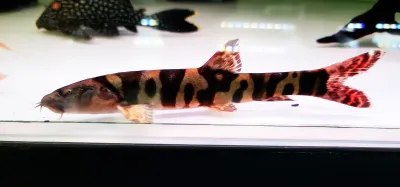
Imperial Flower Loach - (Leptobotia elongata)
Imperial Flower Loach - (Leptobotia elongata)
Price of shipping is not included.
$150.00
Out of stock
Wild Caught
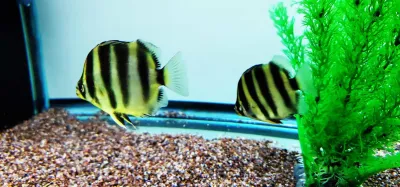
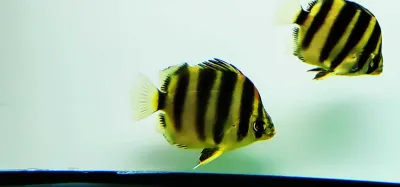
African Tiger Scat - (Scatophagus tetracanthus)
African Tiger Scat - (Scatophagus tetracanthus)
Price of shipping is not included.
$100.00
Out of stock
Wild Caught
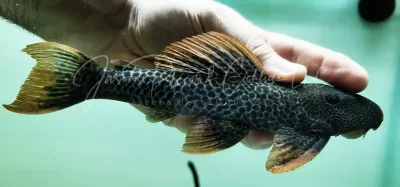
Mandarin Pleco - (Hypostomus asperatus)
Mandarin Pleco - (Hypostomus asperatus)
Price of shipping is not included.
$400.00
Out of stock
Wild Caught
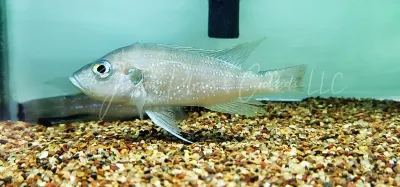
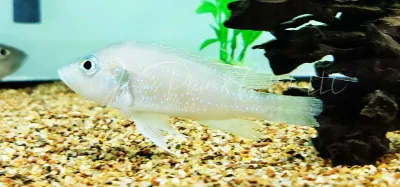
Greenwoodochromis christyi
Greenwoodochromis christyi
Price of shipping is not included.
$50.00
Out of stock
Wild Caught
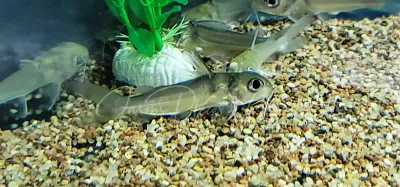
Aluminum Catfish/African Big Eye Catfish - (Chrysichthys longipinnis)
Aluminum Catfish/African Big Eye Catfish - (Chrysichthys longipinnis)
Price of shipping is not included.
was $45.00
Save 33%
$30.00
Out of stock
Wild Caught
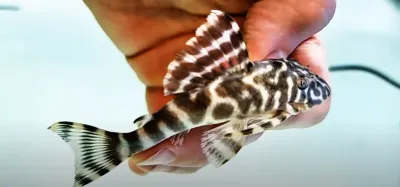
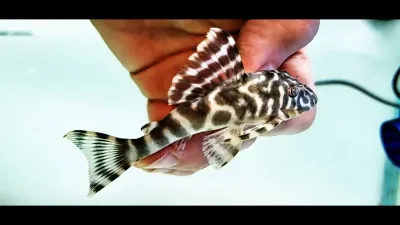
L015 Candy Striped Pleco - (Peckoltia vittata)
L015 Candy Striped Pleco - (Peckoltia vittata)
Price of shipping is not included.
was $50.00
Save 10%
$45.00
Out of stock
Captive Bred
Blue Eyed Longfin Bushynose - (Ancistrus sp.)
Blue Eyed Longfin Bushynose - (Ancistrus sp.)
Price of shipping is not included.
$25.00
Out of stock
Powered by Lightspeed
Display prices in:USD