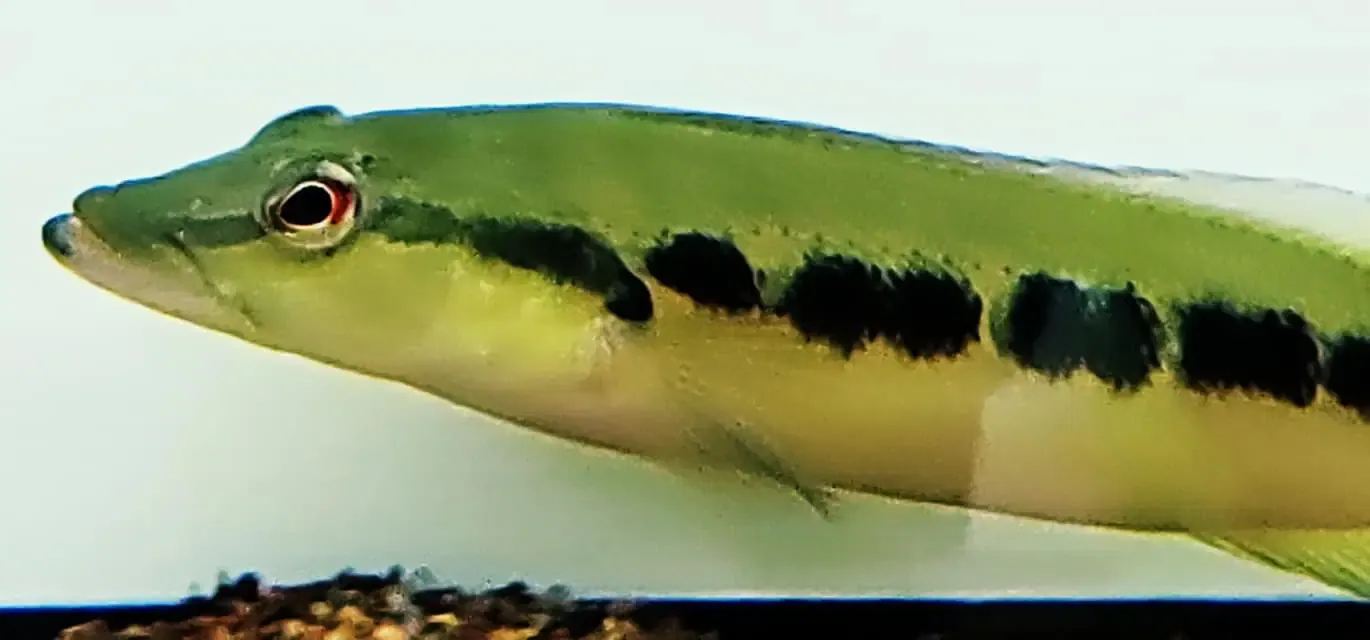
Minuano Pike Cichlid - (Crenicichla minuano)
$120.00
Sold out
Size
Price of shipping is not included.
Sold out
Save this fish to my favorites.
Customer reviews
Reviews only from verified customers
No reviews yet. You can buy this product and be the first to leave a review.
Minuano Pike Cichlid - (Crenicichla minuano)
Fish Details, Description and Information Below:
🐟 Minuano Pike Cichlid – (Crenicichla minuano) – Uruguay River Mollusk-Eating Pike Cichlid
The Minuano Pike Cichlid (Crenicichla minuano) is a distinctive medium-sized South American pike cichlid native to the Uruguay River basin.
Unlike many large pike cichlids that are strongly piscivorous, Crenicichla minuano has evolved a highly specialized feeding strategy centered heavily on:
SNAILS & BIVALVES
Scientific stomach-content research found mollusks to make up the majority of its natural diet, making the Minuano Pike one of the more unusual feeding specialists within the genus Crenicichla.
The species combines:
- An elongated pike-like body
- Olive to greenish coloration
- Dark lateral markings
- Attractive orange, reddish, and iridescent coloration in mature fish
- Strong sexual color differences
- Territorial cichlid behavior
- Fascinating pair-bonding and breeding behavior
FishBase documents Crenicichla minuano reaching approximately:
26 CM / 10.2 INCHES TOTAL LENGTH
making 8–10 inches a good practical adult planning range.
🔎 Quick Facts – Minuano Pike Cichlid
- 📛 Common Name: Minuano Pike Cichlid
- 🔬 Scientific Name: Crenicichla minuano
- 📅 Formally Described: 1992
- 🐟 Family: Cichlidae
- 🧬 Subfamily: Cichlinae
- 🧬 Tribe: Geophagini
- 🌎 Origin: South America
- 🌊 Native Drainage: Uruguay River Basin
- 🇧🇷 Range: Brazil
- 🇺🇾 Range: Uruguay
- 🇦🇷 Range: Argentina
- 📍 Primary Distribution: Middle and Upper Uruguay River system and tributaries
- 📏 Current Listing Size: Approximately 5–6 inches
- 📏 Scientific Maximum: Approximately 26 cm / 10.2 inches total length
- 📏 Adult Planning Size: Approximately 8–10 inches
- 🏠 Recommended Aquarium: Approximately 75 gallons or larger
- 🏠 Pair / Community: Approximately 90–125+ gallons preferred
- 🌡️ Practical Temperature: Approximately 72–80°F
- 💧 pH: Approximately 6.5–7.5
- 💦 Water: Soft to moderately mineralized
- 💨 Oxygenation: Good to High
- 🌊 Water Movement: Moderate
- 🪨 Habitat: Rocky river channels, stones, sand, crevices and submerged structure
- 🍽️ Natural Feeding Specialty: Molluscivore
- 🐌 Primary Wild Foods: Snails and bivalves
- 🦐 Other Foods: Insects and other aquatic invertebrates
- 🐟 Fish: Not primarily piscivorous, although small fish may still be taken opportunistically
- 😠 Temperament: Territorial / Semi-Aggressive to Aggressive
- ⚠️ Conspecific Aggression: Can be strong
- 💕 Pairing: Monogamous pair-forming cichlid
- 🥚 Breeding: Substrate / cave spawning
- 👨👩👧 Parental Care: Biparental
- ⭐ Care Level: Intermediate to Advanced
- 🌎 Conservation Status: Least Concern
🧬 Valid Scientific Species
The currently accepted scientific name is:
Crenicichla minuano
The species was formally described in:
1992
by:
Carlos Alberto Santos de Lucena & Sven O. Kullander
It remains recognized as a valid species.
The correct product identification is:
Minuano Pike Cichlid – (Crenicichla minuano)
🌎 Native Distribution
The Minuano Pike Cichlid is native to the:
URUGUAY RIVER BASIN
in southern South America.
Its distribution is associated primarily with tributaries of the:
MIDDLE & UPPER RIO URUGUAY
🇧🇷 Brazil
The species was originally scientifically described from the Brazilian portion of the Uruguay River drainage.
Its type locality is associated with the:
RIO COMANDAÍ
in:
RIO GRANDE DO SUL, BRAZIL
🇺🇾 Uruguay
Crenicichla minuano is also well documented from Uruguay.
Aquarium and field records include specimens from tributaries and river habitats connected to the:
RIO URUGUAY
🇦🇷 Argentina
Modern distribution records also document the species within portions of the Uruguay drainage in:
ARGENTINA
including the northeastern river system associated with:
MISIONES
⚠️ This Is Not an Amazonian Pike Cichlid
Unlike many familiar Crenicichla, the Minuano Pike is not an Amazon Basin species.
Its natural home is the:
URUGUAY RIVER SYSTEM
of southern South America.
That distinction matters because this region experiences much greater:
SEASONAL TEMPERATURE VARIATION
than equatorial Amazonian habitats.
🌡️ A More Seasonally Tolerant Pike Cichlid
The Uruguay River basin is subtropical and experiences substantial seasonal changes.
Field observations have recorded C. minuano in water around:
75°F / 24°C
while other summer collecting locations containing the species have reached considerably warmer temperatures.
This means Minuano Pike Cichlids are naturally exposed to greater seasonal variation than many tropical Amazonian cichlids.
🌡️ Practical Aquarium Temperature
For normal aquarium maintenance, a useful range is approximately:
72–80°F
Short-term seasonal variation outside this range may occur naturally, but aquarium fish should always be adjusted gradually.
There is generally no need to maintain Minuano Pike Cichlids continuously at extremely high temperatures.
⚠️ Avoid Sudden Temperature Changes
Seasonal tolerance does:
NOT
mean the fish should be exposed to abrupt aquarium temperature swings.
Always make temperature changes gradually.
💧 Water Parameters
A practical aquarium range is:
- 🌡️ Temperature: Approximately 72–80°F
- 💧 pH: Approximately 6.5–7.5
- 💦 Hardness: Soft to moderately mineralized
- 💨 Oxygenation: Good to High
- 🌊 Water Movement: Moderate
- ☠️ Ammonia: 0 ppm
- ☠️ Nitrite: 0 ppm
- 🔄 Nitrate: Keep reasonably low
Stable, clean water is more important than attempting to hit one exact pH number.
🌊 Natural Habitat
Crenicichla minuano is associated with freshwater river habitat containing combinations of:
- Rocks
- Stone
- Sand
- Pebbles
- Rock crevices
- Deeper river channels
- Submerged structure
Field observations have found Minuano Pike Cichlids sharing rocky Uruguay River habitats with several other Crenicichla species.
🪨 Rock-Oriented Habitat
A natural-style aquarium should include substantial:
ROCKWORK
with:
- Large smooth stones
- Rock piles
- Slate
- Crevices
- Caves
- Overhangs
These structures provide:
- Security
- Territory boundaries
- Breeding sites
- Retreat areas
🪵 Driftwood
Driftwood may also be included for:
- Shelter
- Visual barriers
- Shaded areas
- Natural structure
However, the aquarium does not need to be built primarily around wood.
Rock and cave structure is particularly useful for this species.
🏖️ Substrate
Suitable substrates include:
- Sand
- Fine rounded gravel
- Smooth mixed gravel
Avoid extremely sharp substrate that could injure fish while they:
- Dig
- Chase
- Establish breeding territories
🏠 Aquarium Setup
A suitable Minuano Pike aquarium should contain:
- Large rock formations
- Multiple caves
- Driftwood
- Sand or smooth gravel
- Open swimming areas
- Strong filtration
- Good oxygenation
- Visual barriers
🏠 Provide Multiple Retreats
Even when keeping a bonded pair:
PROVIDE SEVERAL HIDING AREAS
Do not build an aquarium with only one cave.
Multiple shelters allow a subordinate fish to escape if aggression suddenly increases.
📏 Adult Size
FishBase documents a maximum size of:
26 CM TOTAL LENGTH
or approximately:
10.2 INCHES
Therefore, the existing:
8–10 INCH
adult estimate is appropriate.
📏 Adult Planning Size
For customer planning:
EXPECT APPROXIMATELY 8–10 INCHES
with the scientific maximum reaching approximately:
10.2 INCHES TOTAL LENGTH
🏠 Aquarium Size
Although Minuano Pike Cichlids are smaller than many giant Crenicichla, they still require significant room because of their:
- Territorial behavior
- Elongated body
- Pair aggression
- Need for multiple retreats
For one adult:
75 GALLONS OR LARGER
is a good permanent recommendation.
💕 Pair Aquarium
For a compatible adult pair:
90–125+ GALLONS
is preferred.
The additional space provides room for:
- Multiple territories
- Caves
- Visual barriers
- Escape routes
⚠️ Aquarium Size Alone Does Not Prevent Aggression
Even a large aquarium can fail if it contains:
- No visual barriers
- Only one cave
- No escape routes
- Incompatible adults
Aquarium structure is just as important as gallon volume.
🍽️ Diet – Important Scientific Correction
The Minuano Pike Cichlid has a much more specialized natural diet than many aquarium descriptions suggest.
Scientific stomach-content research found:
MOLLUSKS MADE UP APPROXIMATELY 73% OF ITS NATURAL DIET BY VOLUME
The primary prey consisted of:
BIVALVES & SNAILS
This makes Crenicichla minuano a genuine:
MOLLUSCIVORE
🐌 Mollusk Specialist
The species has evolved powerful feeding structures adapted for processing:
- Snails
- Bivalves
- Other hard-bodied aquatic prey
Researchers have identified Minuano Pike Cichlids as part of a specialized:
MOLLUSC-EATING ECOMORPH
within the pike cichlids.
🧬 Specialized Jaws
Compared with more fish-eating Crenicichla, C. minuano has specialized:
PHARYNGEAL JAWS
adapted for crushing hard prey.
These jaws contain robust:
MOLAR-LIKE TEETH
that help process mollusk shells.
🐌 Appropriate Captive Foods
Suitable dietary items can include:
- Appropriate aquarium snails
- Mussel meat
- Clam
- Cockle
- Shrimp
- Prawn
- Krill
- Mysis shrimp
- Insect larvae
- Quality insect-based pellets
- Quality carnivore or cichlid pellets
🦪 Shellfish Foods
Mollusk-based foods are especially appropriate.
Suitable options include:
- Mussel
- Clam
- Cockle
These reflect the natural feeding specialization better than feeding only fish meat.
🐛 Insects & Invertebrates
The natural diet also includes smaller amounts of aquatic invertebrates.
Suitable foods include:
- Bloodworms
- Mosquito larvae
- Insect-based pellets
- Mysis
- Krill
- Shrimp
🐟 Not Primarily a Fish-Eating Pike
The elongated shape and name:
PIKE CICHLID
may lead customers to assume that Minuano Pike Cichlids primarily eat fish.
Scientific evidence shows that this species is instead heavily specialized toward:
MOLLUSKS
⚠️ Small Fish Can Still Be at Risk
Not being primarily piscivorous does not mean tiny tankmates are automatically safe.
A cichlid approaching:
10 INCHES
can still opportunistically consume small fish that fit into its mouth.
Avoid very small tankmates.
🚫 Avoid Feeder Fish
Live feeder fish are unnecessary.
They can introduce:
- Parasites
- Bacteria
- Disease
- Poor nutritional balance
A varied diet using high-quality prepared, frozen, and appropriate fresh foods is safer.
🍽️ Current Prepared Foods
Minuano Pike Cichlids can learn to accept prepared aquarium foods.
Your current fish have been maintained on foods including:
- Fluval Bug Bites
- Tropical granules
- Tilapia
Prepared foods can remain part of the diet, but adding:
MOLLUSK & INVERTEBRATE-BASED FOODS
better reflects the species' natural feeding ecology.
⚖️ Dietary Variety
A strong captive diet can combine:
MOLLUSKS + CRUSTACEANS + INSECT FOODS + QUALITY PREPARED CICHLID FOODS
There is no need to feed one food exclusively.
🎨 Appearance
Crenicichla minuano has the elongated, streamlined shape typical of pike cichlids.
Base coloration can include:
- Olive green
- Gray-green
- Brown-green
- Pale gray
- Yellow-green
with darker markings along the flanks.
➖ Lateral Pattern
Depending on:
- Age
- Sex
- Mood
- Breeding condition
the fish may display:
- Dark lateral markings
- Broken blotches
- Vertical bars
- Subtle horizontal patterning
Pattern intensity can change considerably.
🔴 Mature Female Coloration
Female Crenicichla typically develop stronger:
ORANGE TO RED ABDOMINAL COLORATION
when sexually mature.
This can become especially intense during:
BREEDING CONDITION
🌈 Breeding Color
Minuano Pike Cichlids may become dramatically more colorful during courtship.
Observed colors can include:
- Orange
- Red
- Pinkish-orange
- Green
- Blue-green iridescence
Breeding fish may also develop stronger:
VERTICAL BODY BARS
⚠️ Color Disclaimer
Exact adult coloration cannot be guaranteed.
Color varies according to:
- Sex
- Age
- Genetics
- Collection locality
- Dominance
- Stress
- Breeding condition
- Aquarium background
- Diet
- Water quality
♂️ Male vs. Female
Sexual differences become easier to recognize in mature fish.
Mature Females
Often develop:
- Stronger orange/red abdominal coloration
- More obvious breeding coloration
- Dorsal-fin markings or ocelli in many Crenicichla
- Fuller abdomen when carrying eggs
Mature Males
May develop:
- Larger overall body size
- More elongated profile
- Different dorsal-fin coloration
- Strong greenish or orange coloration during courtship
⚠️ Juvenile Sexing
Young Minuano Pike Cichlids can be difficult to sex reliably.
Unless sexual characteristics are clearly developed:
SELL AS UNSEXED
😠 Temperament
Minuano Pike Cichlids should be considered:
TERRITORIAL CICHLIDS
They are not automatically as aggressive as the largest Crenicichla, but individuals can still become:
- Dominant
- Territorial
- Aggressive
- Intolerant of conspecifics
⚠️ Conspecific Aggression
The greatest risk can be between:
OTHER MINUANO PIKE CICHLIDS
An apparently peaceful group can develop a strong hierarchy as fish mature.
💕 Pairing Can Be Difficult
Do not assume that placing:
ONE MALE + ONE FEMALE
together automatically creates a compatible pair.
An incompatible fish may be:
- Chased
- Cornered
- Injured
- Killed
🧱 Visual Barriers Are Essential
Use:
- Rocks
- Driftwood
- Caves
- Plants when appropriate
to break the aquarium into separate visual territories.
A subordinate fish should be able to:
DISAPPEAR FROM THE DOMINANT FISH'S VIEW
🐠 Tankmates
Potential tankmates should be:
- Too large to swallow
- Able to tolerate similar water conditions
- Not excessively aggressive
- Not extremely slow or fragile
Possible companions in sufficiently large aquariums may include appropriate:
- Medium-to-large cichlids
- Larger characins
- Robust catfish
- Other compatible South American fishes
⚠️ Avoid Tiny Tankmates
Do not combine adult Minuano Pike Cichlids with very small:
- Tetras
- Rasboras
- Livebearers
- Juvenile fish
that could be viewed as prey.
⚠️ Avoid Extremely Aggressive Tankmates
An aggressive fish that continuously dominates the pike can cause:
- Chronic stress
- Refusal to feed
- Injury
- Disease
Tankmate selection should be based on:
TEMPERAMENT + SIZE + AQUARIUM SPACE
🥚 Captive Breeding – Documented
Minuano Pike Cichlids have been:
SUCCESSFULLY SPAWNED IN CAPTIVITY
They form:
MONOGAMOUS BREEDING PAIRS
and reproduce using the protected substrate/cave-spawning behavior characteristic of Crenicichla.
🏠 Cave / Protected Substrate Spawner
Provide several potential breeding locations such as:
- Rock caves
- Slate structures
- Large ceramic shelters
- Driftwood cavities
- Overhangs
The pair can select its preferred spawning location.
💕 Pair Formation
Allow compatible adults to establish their own bond whenever possible.
Courtship may involve:
- Increased coloration
- Body displays
- Territory defense
- Increased vertical barring
- Stronger red/orange coloration
🥚 Spawning
Like other Crenicichla, eggs are deposited on a protected:
SUBSTRATE SURFACE WITHIN A CAVE OR OVERHANG
rather than being scattered through the aquarium.
👨👩👧 Biparental Care
Both parents participate in protecting:
- Eggs
- Larvae
- Fry
- Breeding territory
The pair can become significantly more aggressive toward tankmates after spawning.
⚠️ Breeding Aggression
Once eggs or fry are present:
TERRITORIAL AGGRESSION CAN INCREASE DRAMATICALLY
A community setup that worked before spawning may become unsafe.
Have a backup plan for:
- Dividing the aquarium
- Removing tankmates
- Separating an injured fish
🌡️ Seasonal Breeding Considerations
Because Minuano Pike Cichlids come from a river system with pronounced seasons, natural:
- Temperature changes
- Water changes
- Seasonal rainfall patterns
may influence breeding behavior.
There is no need to force dramatic parameter changes.
Stable, healthy adults are more important than chasing one exact spawning trigger.
🌎 Conservation Status
Crenicichla minuano is currently classified as:
LEAST CONCERN
The global assessment was completed in:
2020
⚠️ Least Concern Does Not Mean Disposable
A Least Concern classification means the species is not currently considered globally threatened under IUCN criteria.
It does not remove the responsibility to:
- Provide permanent housing
- Avoid unnecessary mortality
- Source fish responsibly
- Never release aquarium fish
🧬 Interesting Evolutionary Specialist
The Uruguay River contains an unusually diverse group of closely related pike cichlids that evolved different feeding strategies.
Within this group:
- Some species specialize on fish
- Some specialize on insects
- Some graze periphyton
- Crenicichla minuano specializes heavily on mollusks
This ecological specialization makes the Minuano Pike especially interesting from both:
AQUARIUM & EVOLUTIONARY PERSPECTIVES
⭐ Why Keep a Minuano Pike Cichlid?
The Minuano Pike combines:
- 🐟 Classic elongated pike-cichlid shape
- 🐌 Highly unusual mollusk-specialist feeding ecology
- 🌎 Uruguay River origin
- 📏 Manageable 8–10 inch adult size
- 🪨 Interesting rock-oriented behavior
- 🌈 Dramatic breeding coloration
- 💕 Pair-bonding behavior
- 🥚 Captive breeding potential
- 👨👩👧 Biparental parental care
- 🧬 Fascinating evolutionary specialization
into one of the most interesting medium-sized Crenicichla available to serious South American cichlid keepers.
⚠️ Important Considerations
Before purchasing a Minuano Pike Cichlid:
- The correct scientific name is Crenicichla minuano.
- The species was formally described in 1992.
- It is a valid species.
- It originates from the Uruguay River drainage.
- Its distribution is centered on the middle and upper Uruguay River system.
- Records exist from Brazil, Uruguay, and Argentina.
- This is not an Amazon Basin pike cichlid.
- The species comes from a more seasonally variable subtropical region.
- The current listing size is approximately 5–6 inches.
- FishBase documents a maximum of approximately 26 cm / 10.2 inches.
- The existing 8–10 inch adult estimate is appropriate.
- Provide approximately 75 gallons or larger for one adult.
- Approximately 90–125+ gallons is preferred for a pair or community.
- Provide substantial rockwork.
- Provide several caves and shelters.
- Create strong visual barriers.
- Maintain approximately 72–80°F for routine aquarium care.
- Avoid abrupt temperature changes.
- Maintain approximately pH 6.5–7.5.
- Maintain good water quality.
- Keep ammonia and nitrite at zero.
- The species is a specialized molluscivore.
- Scientific research found mollusks to make up approximately 73% of its natural diet by volume.
- Snails and bivalves are especially important natural prey.
- Insects and other aquatic invertebrates supplement the diet.
- Do not describe C. minuano primarily as a fish eater.
- Small fish may still be eaten opportunistically.
- Avoid feeder fish.
- Quality pellets and prepared foods can be used.
- Include mollusk and invertebrate foods for better dietary variety.
- Expect territorial cichlid behavior.
- Conspecific aggression can become strong.
- Do not assume any male and female will form a compatible pair.
- Provide escape routes for subordinate fish.
- Breeding has been documented in captivity.
- The species forms monogamous pairs.
- It is a protected-substrate / cave-spawning cichlid.
- Both parents defend the brood.
- Breeding aggression can become intense.
- The species is currently classified as Least Concern.
- Never release aquarium fish into natural waterways.
🧬 Taxonomy
The currently accepted scientific name is:
Crenicichla minuano Lucena & Kullander, 1992
Classification:
- Order: Cichliformes
- Family: Cichlidae
- Subfamily: Cichlinae
- Tribe: Geophagini
- Genus: Crenicichla
- Species: minuano
Native distribution:
URUGUAY RIVER BASIN – SOUTH AMERICA
For this product, use:
Minuano Pike Cichlid – (Crenicichla minuano)
🚚 Live Fish Shipping
Live fish are professionally packed for safe transport.
Shipping availability depends on:
- Fish size
- Destination
- Weather conditions
- Carrier availability
- Applicable state and local regulations
Please review our Shipping & Payment Information and Live Arrival Guarantee / DOA Policy before ordering.
⚠️ Buyer Responsibility
Customers are responsible for confirming that Crenicichla minuano may legally be purchased, possessed, transported, and received in their state or local jurisdiction before ordering.
Never release aquarium fish into natural waterways.
Below are fish you may also like.
Wild Caught
Featherfin Cichlid - (Cyathopharynx furcifer)
Featherfin Cichlid - (Cyathopharynx furcifer)
Price of shipping is not included.
$130.00
Out of stock
Captive Bred
Mouthbrooding Severum - (Heros liberifer)
Mouthbrooding Severum - (Heros liberifer)
Price of shipping is not included.
was $250.00
Save 40%
$150.00
Out of stock
Wild Caught
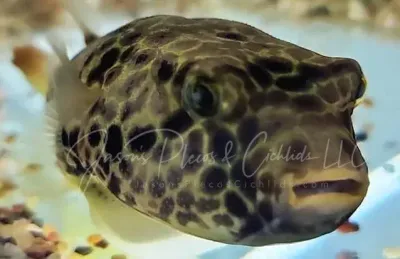
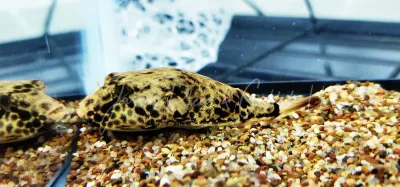
Duboisi Puffer/Malebo Puffer - (Tetraodon duboisi)
Duboisi Puffer/Malebo Puffer - (Tetraodon duboisi)
Price of shipping is not included.
was $1 200.00
Save 33%
$800.00
Out of stock
Wild Caught
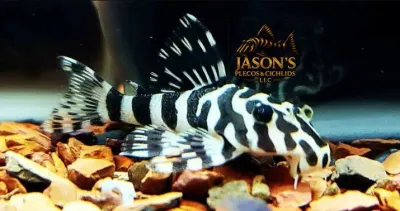
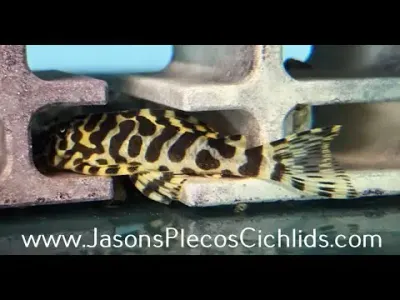
L134 Leopard Frog Pleco - (Peckoltia compta)
L134 Leopard Frog Pleco - (Peckoltia compta)
Price of shipping is not included.
5.0
(2)
was $80.00
Save 6%
$75.00
Wild Caught
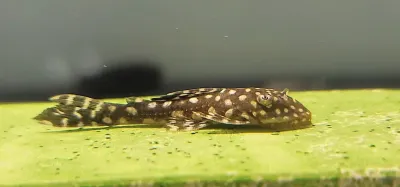
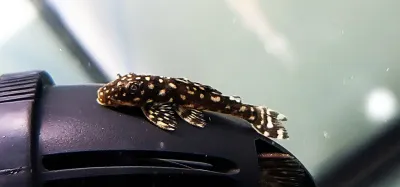
Sertanejo Pleco - (Hypostomus sertanejo)
Sertanejo Pleco - (Hypostomus sertanejo)
Price of shipping is not included.
$45.00
Out of stock
Wild Caught
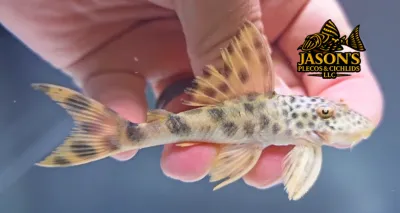
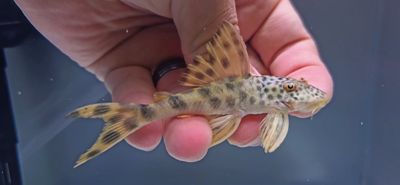
L075 Para Pleco - (Peckoltia sabaji)
L075 Para Pleco - (Peckoltia sabaji)
Price of shipping is not included.
5.0
(3)
was $60.00
Save 17%
$50.00
Wild Caught
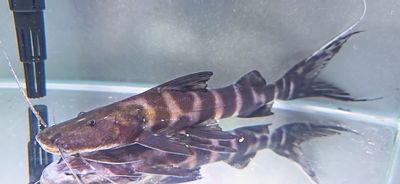
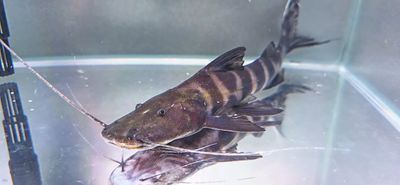
Juruense Catfish/Gold Zebra Pim/Flash Zebra Catfish - (Brachyplatystoma juruense)
Juruense Catfish/Gold Zebra Pim/Flash Zebra Catfish - (Brachyplatystoma juruense)
Price of shipping is not included.
was $300.00
Save 13%
$260.00
Out of stock
Captive Bred
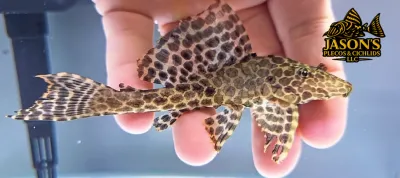
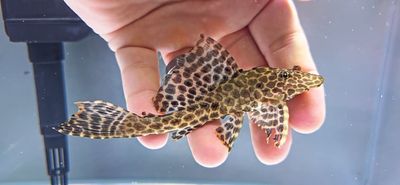
L165 Sail Fin Pleco - (Pterygoplichthys gibbiceps)
L165 Sail Fin Pleco - (Pterygoplichthys gibbiceps)
Price of shipping is not included.
4.0
(1)
was $50.00
Save 10%
$45.00
Out of stock
Wild Caught
Malawi Blue Dolphin - (Cyrtocara moorii)
Malawi Blue Dolphin - (Cyrtocara moorii)
Price of shipping is not included.
$30.00
Out of stock
Captive Bred
Salvini Cichlid/Yellow belly Cichlid/Salvin's Cichlid - (Trichromis Salvini)
Salvini Cichlid/Yellow belly Cichlid/Salvin's Cichlid - (Trichromis Salvini)
Price of shipping is not included.
was $65.00
Save 8%
$60.00
Out of stock
Wild Caught
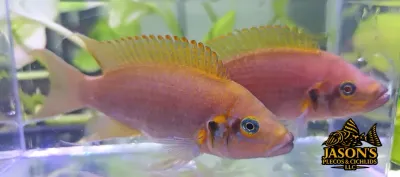
Daffodil Pulcher - (Neolamprologus pulcher) Breeding Pair
Daffodil Pulcher - (Neolamprologus pulcher) Breeding Pair
Price of shipping is not included.
5.0
(1)
was $110.00
Save 9%
$100.00
Out of stock
Captive Bred
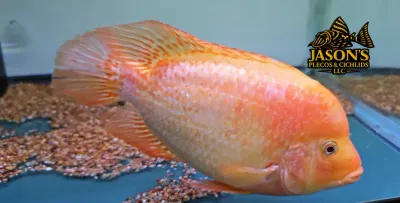
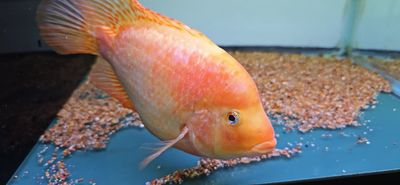
Super Red Texas - (Herichthys cyanoguttatus x Paraneetroplus synspilus x Amphilophus citrinellus)
Super Red Texas - (Herichthys cyanoguttatus x Paraneetroplus synspilus x Amphilophus citrinellus)
Price of shipping is not included.
5.0
(2)
was $150.00
Save 40%
$90.00
Out of stock
Powered by Lightspeed
Display prices in:USD