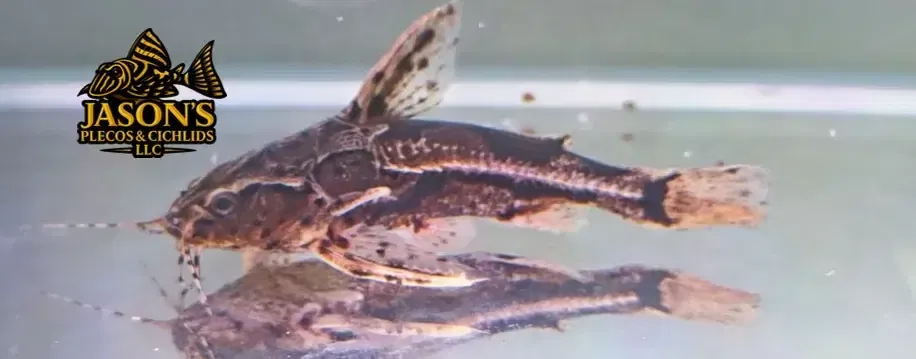
Marbled Talking Catfish - (Amblydoras nauticus)
$45.00
Wild Caught
was $50.00 Save 10%
Size
Questions, Comments, Concerns? Let us know!
Enter your text
Price of shipping is not included.
In stock: 1 available
1
Save this fish to my favorites.
Customer reviews
Reviews only from verified customers
No reviews yet. You can buy this product and be the first to leave a review.
Marbled Talking Catfish - (Amblydoras nauticus)
Fish Details, Description and Information Below:
🐟 Marbled Talking Catfish – (Amblydoras nauticus) – Wild-Caught Upper Amazon Thorny Catfish
The Marbled Talking Catfish (Amblydoras nauticus), also commonly called the Marbled Raphael Catfish or Croaking Spiny Catfish, is a small South American armored catfish famous for its unusual marbled pattern, peaceful personality, sharp protective spines, and ability to produce audible sounds.
Its coloration typically combines:
- Cream
- Tan
- Beige
- Light brown
- Chocolate brown
- Dark brown
- Black
in an irregular pattern of:
- Blotches
- Bands
- Spots
- Broken lines
- Marbled markings
The species is native to the:
UPPER AMAZON RIVER BASIN
with confirmed records from:
- Peru
- Colombia
- Ecuador
and especially well-documented populations in the:
RIO NANAY SYSTEM OF PERU
This is a peaceful, mostly nocturnal bottom-dwelling catfish that generally reaches approximately 4.5–5 inches total length, making it considerably smaller than many of the better-known Raphael and Talking Catfish.
This listing is for:
WILD-CAUGHT MARBLED TALKING CATFISH
🔎 Quick Facts – Marbled Talking Catfish
- 📛 Common Name: Marbled Talking Catfish
- 📛 Other Names: Marbled Raphael Catfish, Croaking Spiny Catfish
- 🔬 Scientific Name: Amblydoras nauticus
- 📅 Originally Described: 1874
- 📚 Original Scientific Name: Zathorax nauticus
- 📚 Older Combination: Anadoras nauticus
- 🐟 Family: Doradidae
- 🧬 Subfamily: Astrodoradinae
- 🌿 Stock: Wild Caught
- 🌎 Origin: South America
- 🌊 Native Drainage: Upper Amazon River Basin
- 🇵🇪 Confirmed Country: Peru
- 🇨🇴 Confirmed Country: Colombia
- 🇪🇨 Confirmed Country: Ecuador
- 📍 Important Aquarium Locality: Rio Nanay, Loreto, Peru
- 📍 Type Locality: Nauta region of the upper Amazon, Peru
- 💧 Water Type: Freshwater
- 🐠 Lifestyle: Demersal / Bottom Dwelling
- 📏 Scientific Maximum: 11.1 cm / approximately 4.4 inches standard length
- 📏 Adult Planning Size: Approximately 4.5–5 inches total length
- 🏠 Recommended Aquarium: Approximately 30 gallons or larger
- 👥 Social Housing: Can be maintained singly or in compatible groups
- 🌡️ Temperature: Approximately 73–83°F
- 💧 pH: Approximately 6.0–7.5
- 💦 Hardness: Soft to moderately hard
- 🌊 Water Movement: Gentle to Moderate
- 💨 Oxygenation: Good
- 🍽️ Diet: Omnivorous Bottom Feeder
- 🪱 Animal / Insect Foods: Important
- 🌿 Plant Foods: Supplemental
- 🌙 Activity: Primarily nocturnal / crepuscular
- 😌 Temperament: Peaceful
- 🔊 Special Feature: Produces audible “talking” or croaking sounds
- 🛡️ Armor: Bony plates and sharp lateral scutes
- ⚠️ Spines: Strong dorsal and pectoral fin spines
- 🥚 Captive Breeding: Documented
- ⭐ Care Level: Easy to Intermediate
- 🌎 IUCN Status: Least Concern
🧬 Valid Scientific Species
The currently accepted scientific name is:
Amblydoras nauticus
The species was originally described by Edward Drinker Cope in:
1874
under the name:
Zathorax nauticus
Older references may also use:
Anadoras nauticus
Modern taxonomy places it in:
Amblydoras
within the thorny catfish family:
DORADIDAE
For this product, use:
Marbled Talking Catfish – (Amblydoras nauticus)
⚠️ Important Identification Note
This species has historically been mislabeled in the aquarium hobby under several names.
One especially common older identification was:
“Amblydoras hancockii”
The Marbled Talking Catfish sold in the aquarium hobby is properly identified as:
Amblydoras nauticus
Aquarium-trade naming among small doradids has historically been confusing, so preserving the correct scientific name is important.
🧬 Interesting Type-Specimen History
There is an unusual scientific complication involving the original material used to describe Amblydoras nauticus.
Modern taxonomic work determined that several of the original syntypes actually represented juvenile:
Amblydoras monitor
rather than A. nauticus.
Despite this historical issue:
Amblydoras nauticus REMAINS A VALID SPECIES
and is recognized as such by current major fish-taxonomy references.
🌎 Native Distribution – Important Correction
The Marbled Talking Catfish should be listed as an:
UPPER AMAZON BASIN SPECIES
Current scientific records place it in:
- 🇵🇪 Peru
- 🇨🇴 Colombia
- 🇪🇨 Ecuador
I would remove older product wording that lists:
THE ORINOCO BASIN
as part of its normal native range.
🇵🇪 Rio Nanay – Peru
One of the best-documented wild populations occurs in the:
RIO NANAY
near:
IQUITOS, PERU
Scientific fish surveys from the lower Rio Nanay recorded Amblydoras nauticus in substantial numbers.
During one low-water sampling period, it represented more than a quarter of the fish collected at surveyed locations.
This confirms the Rio Nanay as an important natural locality for the species.
📍 Nauta, Peru
The scientific name:
nauticus
is associated with:
NAUTA
a Peruvian town in the upper Amazon region near the confluence of major Amazon headwaters.
The historical type locality is associated with this area.
🌊 Natural Habitat
The Marbled Talking Catfish occurs in Amazonian environments that may include:
- Slow-moving rivers
- Tributaries
- Floodplain habitats
- Blackwater environments
- Sandy margins
- Muddy-bottomed areas
- Root tangles
- Fallen branches
- Woody debris
- Leaf litter
- Flooded vegetation
🌑 Rio Nanay Blackwater Habitat
Parts of the Rio Nanay system have:
- Slightly acidic water
- Low conductivity
- Dark tannin-stained water
- Sandy or muddy substrate
- Fallen wood
- Leaf litter
- Flooded vegetation
This makes a natural-style Amazon aquarium especially appropriate.
🏠 Aquarium Setup
A good Marbled Talking Catfish aquarium should contain:
- Driftwood
- Root structures
- Rock caves
- Coconut-style shelters
- Leaf litter
- Smooth rocks
- Sand or fine smooth gravel
- Shaded areas
- Open feeding areas
The goal is to provide:
DARK, SECURE HIDING PLACES
where the fish can spend the daytime hours.
🌑 Shelter Is Extremely Important
Marbled Talking Catfish are naturally:
SECRETIVE DURING THE DAY
Without suitable hiding places, they may attempt to wedge themselves into inappropriate spaces.
Provide shelters such as:
- Wood cavities
- Rock crevices
- Ceramic caves
- Root structures
⚠️ Heater Safety
Because these catfish like tight, dark spaces, they may occasionally attempt to hide:
BETWEEN AN AQUARIUM HEATER AND THE GLASS
This can lead to serious burns.
Whenever practical:
- Use heater guards
- Use sump-mounted heaters
- Provide abundant proper shelters
so the fish is not tempted to use aquarium equipment as a hiding place.
🎨 Appearance
The coloration of Amblydoras nauticus is highly variable.
Typical body colors include:
- Cream
- Beige
- Tan
- Brown
- Gray-brown
overlaid with:
- Dark blotches
- Irregular dark lines
- Black spots
- Broken marbling
🟤 Marbled Pattern
The fish frequently develops prominent dark areas around:
- The rear body
- The caudal peduncle
- Beneath the adipose fin
- The head
- The lateral body
These dark markings combine to create the:
MARBLED
appearance responsible for its common name.
⚠️ Natural Pattern Variation
Wild individuals may differ considerably.
One fish may be:
- Pale
- Highly mottled
- Strongly banded
while another may be:
- Darker
- More spotted
- Less heavily patterned
Exact coloration should therefore:
NOT BE GUARANTEED
🔄 Stress Coloration
A newly shipped Marbled Talking Catfish may temporarily appear:
- Pale
- Gray
- Washed out
- Less patterned
After acclimation, the coloration often becomes:
- Darker
- More contrasted
- More clearly marbled
🛡️ Thorny Catfish Armor
Amblydoras nauticus belongs to:
DORADIDAE
the:
THORNY CATFISH FAMILY
These catfish are protected by specialized:
- Bony plates
- Lateral scutes
- Fin spines
🛡️ Lateral Scutes
Sharp bony scutes occur especially along the:
POSTERIOR PORTION OF THE BODY
These structures provide protection against predators.
They also make handling more difficult than their small size might suggest.
⚠️ Sharp Dorsal & Pectoral Spines
The dorsal and pectoral fins contain strong:
LOCKING SPINES
The dorsal spine has serrations, and the pectoral spines can also become firmly locked.
These structures can:
- Snag nets
- Puncture bags
- Scratch hands
- Cause painful punctures
🚫 Do Not Grab With Bare Hands
Even though this is a peaceful fish:
ITS SPINES ARE NOT HARMLESS TO HANDLE
Avoid squeezing or grabbing the body.
Use careful transfer techniques instead.
🥅 Netting Warning
Fine aquarium nets can become badly tangled around:
- Pectoral spines
- Dorsal spine
- Lateral scutes
Once caught, struggling can injure the fish.
A better method for larger adults is often:
- A rigid plastic container
- Specimen cup
- Fish-safe transfer container
📦 Shipping Considerations
Doradids require careful packing because their spines can puncture thin bags.
Professional shipping should use:
- Appropriate heavy-duty bags
- Multiple protective bag layers when required
- Proper water volume
- Secure packing
🔊 Why Is It Called a “Talking” Catfish?
The common name comes from the species' ability to produce:
AUDIBLE SOUNDS
Talking catfish may create sounds when:
- Disturbed
- Handled
- Competing socially
- Defending themselves
🔊 Pectoral-Spine Stridulation
One important sound-producing method in Doradidae is:
PECTORAL-SPINE STRIDULATION
The sound is generated as specialized surfaces of the pectoral spine interact with the shoulder-girdle socket during fin movement.
This can produce:
- Clicks
- Creaks
- Croaks
- Grating noises
🥁 Gas-Bladder Sound Production
Doradid catfish also possess specialized structures involving the:
SWIM / GAS BLADDER
and associated muscles.
Rapid muscular movement can vibrate the gas bladder and produce lower-frequency:
DRUMMING SOUNDS
⚠️ Important Sound Correction
The sound is sometimes described simply as the fish:
“rubbing its spine against its body armor.”
That is not the best anatomical description.
A more accurate explanation is:
THE PECTORAL SPINE STRIDULATES WITH SPECIALIZED SURFACES OF THE PECTORAL GIRDLE / SPINE SOCKET.
🔊 You May Actually Hear It
During transfer or handling, an adult can sometimes make sounds audible:
OUTSIDE THE AQUARIUM
This is normal defensive behavior.
It does not automatically mean the fish is injured.
However, handling should still be minimized to reduce stress.
📏 Adult Size – Updated
Older aquarium references often list the Marbled Talking Catfish at approximately:
3 INCHES
That was based on older published size information.
Current FishBase data documents:
11.1 CM / APPROXIMATELY 4.4 INCHES STANDARD LENGTH
📐 What Is Standard Length?
Standard length measures the fish from:
THE TIP OF THE SNOUT TO THE BASE OF THE TAIL
and:
DOES NOT INCLUDE THE FULL CAUDAL FIN
Therefore, responsible aquarium planning should allow for approximately:
4.5–5 INCHES TOTAL LENGTH
🏠 Aquarium Size
For an adult or small compatible group:
30 GALLONS OR LARGER
is a good general recommendation.
The fish itself is relatively small, but additional volume provides:
- Stable water quality
- More hiding places
- More bottom area
- Better group housing
- Easier feeding
📐 Bottom Area Matters
This species spends nearly all of its time around:
- Substrate
- Wood
- Roots
- Caves
so:
AQUARIUM FOOTPRINT
matters more than excessive height.
👥 Social Behavior
Marbled Talking Catfish can be maintained:
- Singly
- In pairs
- In compatible groups
They are generally peaceful toward their own kind when enough:
- Shelter
- Food
- Bottom space
is available.
🐟 Community Aquarium Compatibility
This species is an excellent candidate for many peaceful South American community aquariums.
Potential tankmates include appropriately sized:
- Tetras
- Pencilfish
- Hatchetfish
- Corydoras
- Small to medium peaceful cichlids
- Other peaceful catfish
⚠️ Very Tiny Fish & Fry
Although this species is not normally considered a dedicated fish predator, it is an:
OPPORTUNISTIC OMNIVORE
and may eat extremely small organisms it can easily swallow.
Very small:
- Fry
- Newly hatched fish
- Tiny shrimp
should not automatically be assumed safe.
😌 Temperament
Toward most appropriately sized aquarium fish:
PEACEFUL
is the correct description.
Its defensive appearance comes from its:
- Armor
- Spines
- Scutes
rather than aggressive behavior.
🌙 Nocturnal Behavior
The Marbled Talking Catfish is primarily:
NOCTURNAL / CREPUSCULAR
During the day it may remain almost completely hidden.
Activity normally increases:
- Around dusk
- During feeding
- After aquarium lights switch off
- At night
🌙 Feed After Lights Begin to Dim
For shy specimens, feed:
SHORTLY BEFORE OR AFTER LIGHTS OUT
This allows the catfish to forage without competing heavily with daytime fish.
☀️ Established Fish May Learn Daytime Feeding
Once accustomed to aquarium life, some individuals will:
- Leave shelters during feeding
- Eat in dim daylight
- Become more visible
However, this should not be expected from every specimen.
💡 Lighting
Low to moderate lighting works well.
If the aquarium uses intense lighting for plants, provide shaded areas under:
- Driftwood
- Large leaves
- Floating plants
- Rock overhangs
🌡️ Temperature
A practical maintenance range is:
73–83°F / 23–28°C
A comfortable general target is approximately:
75–80°F
💧 pH
A practical range is:
6.0–7.5
Although wild Rio Nanay habitats can be acidic, aquarium specimens do not require extremely low pH.
Stability is more important than continually adjusting the aquarium to chase an exact number.
💦 Hardness
The species tolerates:
SOFT TO MODERATELY HARD WATER
A specialist aquarium range extends to approximately:
2–20° dGH
although extremes are unnecessary.
🌊 Water Movement
Unlike many rheophilic plecos:
MARBLED TALKING CATFISH DO NOT REQUIRE EXTREME CURRENT
Gentle to moderate circulation is appropriate.
Provide enough movement for:
- Good filtration
- Oxygen exchange
- Waste removal
without creating an artificial high-speed river tank.
💨 Oxygenation
Maintain:
GOOD DISSOLVED OXYGEN
through normal:
- Filtration
- Surface agitation
- Water circulation
There is generally no need for the extreme oxygenation required by warm-water Xingu plecos.
💧 Water Parameters
A practical long-term range is:
- 🌡️ Temperature: 73–83°F
- 💧 pH: Approximately 6.0–7.5
- 💦 Hardness: Soft to moderately hard
- 🌊 Flow: Gentle to Moderate
- 💨 Oxygenation: Good
- ☠️ Ammonia: 0 ppm
- ☠️ Nitrite: 0 ppm
- 🔄 Nitrate: Keep reasonably low
🔄 Regular Water Changes
Regular partial water changes help maintain:
- Low nitrate
- Stable chemistry
- Clean substrate
- Healthy fish
Because the fish feeds from the bottom, remove uneaten foods before they rot.
🍽️ Diet – Omnivorous Bottom Feeder
The Marbled Talking Catfish is best described as an:
OPPORTUNISTIC OMNIVOROUS BOTTOM FEEDER
It readily consumes animal and insect-based foods along with quality prepared sinking foods.
🪱 Animal & Insect Foods
Excellent foods include:
- Bloodworms
- Blackworms
- Whiteworms
- Small earthworm pieces
- Brine shrimp
- Mysis shrimp
- Mosquito larvae
- Insect-based sinking foods
🦐 Frozen Foods
Frozen foods are especially useful for conditioning wild specimens.
Options include:
- Bloodworms
- Mysis
- Brine shrimp
- Cyclops
Always thaw appropriately before feeding.
🍽️ Prepared Foods
Suitable prepared foods include:
- Sinking catfish pellets
- Quality omnivore tablets
- Small carnivore pellets
- Insect-based pellets
- Quality sinking wafers
Food must:
REACH THE BOTTOM
before faster midwater fish consume everything.
🌿 Plant Foods
Small amounts of plant-containing foods can be included for dietary variety.
Examples include:
- Spirulina-containing wafers
- Vegetable-containing sinking foods
- Quality omnivore formulations
However, it should not be treated as a specialized algae-grazing herbivore.
🚫 Not an Algae Cleaner
The Marbled Talking Catfish should:
NOT BE PURCHASED FOR ALGAE CONTROL
It is a scavenging omnivore rather than a specialized algae-eating pleco.
⚠️ Scavenger Does Not Mean It Eats Waste
Like all aquarium fish:
IT DOES NOT LIVE ON FISH WASTE
Being a bottom feeder does not mean the fish will survive by eating:
- Feces
- Rotten food
- Aquarium debris
Provide a deliberate, balanced feeding program.
🍽️ Make Sure Wild Fish Are Eating
This listing is for:
WILD-CAUGHT MARBLED TALKING CATFISH
After arrival, monitor feeding closely.
Offer food:
- Near shelters
- After lights dim
- In multiple locations
⚠️ Watch Body Condition
Look for:
- Normal rounded abdomen
- Good muscle condition
- Active nighttime feeding
Watch carefully for:
- Sunken belly
- Weight loss
- Persistent refusal to eat
- Abnormal breathing
🧪 Wild-Caught Acclimation
For newly arrived fish:
- Keep lighting subdued
- Provide hiding places immediately
- Avoid abrupt pH changes
- Avoid abrupt temperature changes
- Maintain excellent water quality
- Keep handling to a minimum
♂️ Male vs. Female
Sexual dimorphism is:
SUBTLE
and should not be overstated.
Older specialist reports suggest:
Males
May develop:
- More mottled or flecked underside coloration
Females
May show:
- Paler underside
- Fuller body profile when carrying eggs
However:
THESE ARE NOT RELIABLE ENOUGH TO GUARANTEE SEX IN NORMAL RETAIL SALES
Unless confidently determined:
SELL AS UNSEXED
🥚 Captive Breeding – Important Update
Older aquarium books often stated:
MARBLED TALKING CATFISH HAD NEVER BEEN BRED IN CAPTIVITY
That information is now outdated.
A detailed article titled:
“Breeding the Marbled Talking Catfish, Amblydoras nauticus”
was published in the:
CATFISH STUDY GROUP JOURNAL
in:
DECEMBER 2023
🥚 Captive Spawning Is Documented
Specialist breeding records now confirm:
SUCCESSFUL AQUARIUM REPRODUCTION
This means the page should no longer state that breeding has never occurred.
💧 Documented Breeding Water
A specialist breeding record lists successful conditions around:
- 🌡️ 24.5–25.5°C / approximately 76–78°F
- 💧 pH approximately 7.0–7.2
This demonstrates that reproduction does not necessarily require extremely:
- Acidic
- Hot
- Specialized
water.
⚠️ Breeding Biology Is Still Not Routine
Although captive spawning is now documented:
THIS IS NOT YET A COMMONLY MASS-BRED AQUARIUM CATFISH
Detailed spawning behavior is still far less well known than for:
- Corydoras
- Ancistrus
- Hypancistrus
Therefore, avoid promising:
- Exact clutch size
- Exact incubation period
- Guaranteed spawning triggers
unless they are documented for the particular breeding line.
🌿 Historical Nest Reports
Older literature reports reproductive behavior involving:
- Vegetation
- Leaf material
- Protected nesting areas
- Seasonal flooding
Some accounts describe parental guarding.
Because modern captive breeding has only recently been well documented:
DO NOT PRESENT EVERY OLDER NESTING CLAIM AS CONFIRMED FACT
🧬 Captive Breeding Is Valuable
Successful captive propagation can:
- Reduce future wild collection
- Improve husbandry knowledge
- Establish aquarium populations
- Increase availability
For a peaceful, manageable doradid such as A. nauticus, continued captive breeding is worthwhile.
🌎 Conservation Status
Amblydoras nauticus is currently classified as:
LEAST CONCERN
on the IUCN Red List.
FishBase currently lists the species as:
LC – LEAST CONCERN
⚠️ Least Concern Does Not Mean Disposable
Even common wild species deserve responsible aquarium care.
Wild-caught specimens should receive:
- Proper permanent housing
- Appropriate food
- Suitable shelter
- Careful acclimation
⭐ Why Keep a Marbled Talking Catfish?
The Marbled Talking Catfish combines:
- 🔊 Audible “talking” behavior
- 🟤 Attractive marbled coloration
- 🛡️ Armored thorny-catfish body
- 🌙 Interesting nocturnal behavior
- 😌 Peaceful temperament
- 🌎 Upper Amazon origin
- 📏 Manageable approximately 4.5–5 inch adult size
- 🍽️ Easy omnivorous feeding
- 🏠 Community aquarium compatibility
- 🥚 Documented captive breeding
- 🌿 Natural blackwater-biotope appeal
into a fascinating catfish for aquarists who want something very different from a typical pleco or Corydoras.
⚠️ Important Considerations
Before purchasing a Marbled Talking Catfish:
- The correct scientific name is Amblydoras nauticus.
- The species was originally described in 1874.
- Older names include Zathorax nauticus and Anadoras nauticus.
- It has historically been confused with other talking catfish.
- Its correct native range is the upper Amazon Basin.
- Current scientific records include Peru, Colombia, and Ecuador.
- The Rio Nanay in Peru is a well-documented locality.
- Remove older claims that the species naturally occurs throughout the Orinoco Basin.
- This listing is for wild-caught fish.
- FishBase documents 11.1 cm / approximately 4.4 inches standard length.
- Standard length excludes the complete tail.
- Plan for approximately 4.5–5 inches total length.
- Approximately 30 gallons or larger is recommended.
- Provide abundant secure hiding places.
- Driftwood, roots, leaf litter, and caves work well.
- Use sand or smooth substrate.
- Maintain approximately 73–83°F.
- Maintain approximately pH 6.0–7.5.
- Gentle to moderate circulation is sufficient.
- Maintain good dissolved oxygen.
- Feed a varied omnivorous diet.
- Animal and insect foods are important.
- Use quality sinking foods.
- Do not purchase this species as an algae cleaner.
- Do not assume a bottom feeder survives on aquarium waste.
- Expect primarily nocturnal behavior.
- “Talking” sounds are real.
- Sound production includes pectoral-spine stridulation.
- Doradids also possess specialized gas-bladder sound-producing mechanisms.
- Do not describe the sound simply as rubbing the spine against body plates.
- The fish has strong locking dorsal and pectoral spines.
- Handle carefully.
- Fine nets can become tangled in the spines.
- Heavy-duty shipping precautions may be necessary.
- Captive breeding has now been documented.
- Remove older claims that the species has never bred in captivity.
- Sexing remains unreliable for ordinary retail specimens.
- Sell as unsexed unless confidently determined.
- The species is currently classified as Least Concern.
- Never release aquarium fish into natural waterways.
🧬 Taxonomy
The currently accepted scientific name is:
Amblydoras nauticus (Cope, 1874)
Classification:
- Order: Siluriformes
- Family: Doradidae
- Subfamily: Astrodoradinae
- Genus: Amblydoras
- Species: nauticus
Original scientific name:
Zathorax nauticus
Older combination:
Anadoras nauticus
Current native distribution:
UPPER AMAZON RIVER BASIN
with confirmed records from:
- Peru
- Colombia
- Ecuador
For this product, use:
Marbled Talking Catfish – (Amblydoras nauticus)
🔊 Talking Catfish Disclaimer
The Marbled Talking Catfish may produce audible noises when:
- Disturbed
- Handled
- Transferred
- Interacting with other fish
This sound production is normal for doradid catfish.
Avoid intentionally disturbing or handling the fish simply to make it produce sounds.
⚠️ Spine & Handling Warning
Amblydoras nauticus possesses strong:
- Dorsal-fin spine
- Pectoral-fin spines
- Sharp lateral body scutes
These structures can:
- Snag nets
- Puncture shipping bags
- Scratch skin
- Cause painful puncture wounds
Handle only when necessary and use appropriate transfer methods.
🚚 Live Fish Shipping
Live fish are professionally packed for safe transport.
Shipping availability depends on:
- Fish size
- Destination
- Weather conditions
- Carrier availability
- Applicable state and local regulations
Marbled Talking Catfish require careful packing because their:
- Dorsal spine
- Pectoral spines
- Bony scutes
can potentially snag or puncture inappropriate shipping materials.
Please review our Shipping & Payment Information and Live Arrival Guarantee / DOA Policy before ordering.
⚠️ Buyer Responsibility
Customers are responsible for confirming that Amblydoras nauticus may legally be purchased, possessed, transported, and received in their state or local jurisdiction before ordering.
Never release aquarium fish into natural waterways.
Below are fish you may also like.
Captive Bred
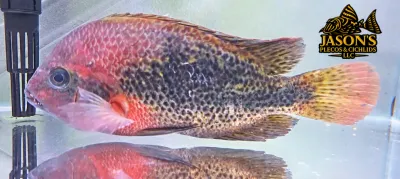
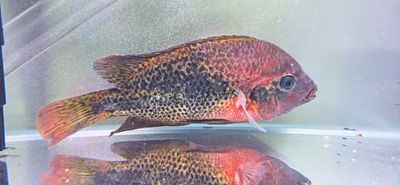
Rio Chacamax Cichlid - (Vieja bifasciata)
Rio Chacamax Cichlid - (Vieja bifasciata)
Price of shipping is not included.
was $100.00
Save 10%
$90.00
Wild Caught
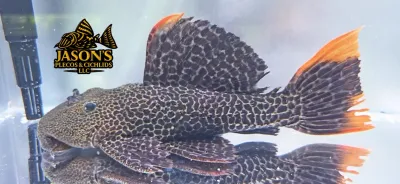
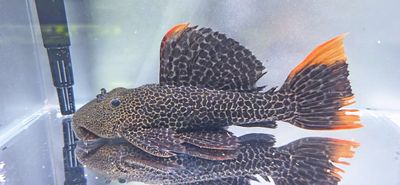
L427 Jatupu Cactus Pleco - (Pseudacanthicus sp.)
L427 Jatupu Cactus Pleco - (Pseudacanthicus sp.)
Price of shipping is not included.
was $450.00
Save 19%
$365.00
Captive Bred
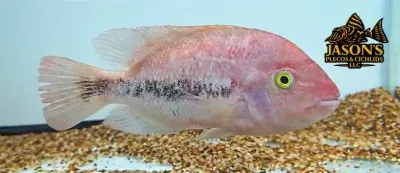
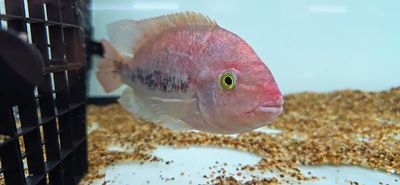
Fenestratus Cichlid - (Vieja Fenestratus)
Fenestratus Cichlid - (Vieja Fenestratus)
Price of shipping is not included.
was $80.00
Save 25%
$60.00
Captive Bred
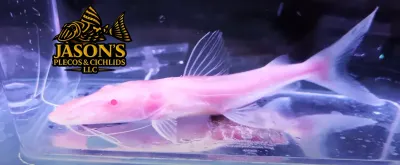
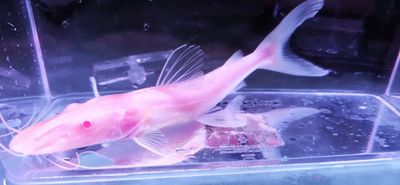
Albino Tiger Shovelnose Catfish - (Pseudoplatystoma fasciatum)
Albino Tiger Shovelnose Catfish - (Pseudoplatystoma fasciatum)
Price of shipping is not included.
was $4 000.00
Save 20%
$3 215.00
Wild Caught
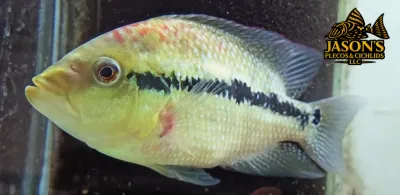
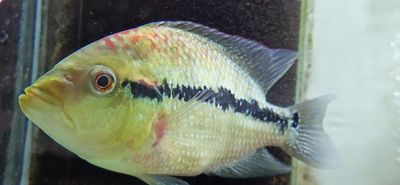
Blue Umbee/Turquoise Cichlid - (Kronoheros umbrifer)
Blue Umbee/Turquoise Cichlid - (Kronoheros umbrifer)
Price of shipping is not included.
was $350.00
Save 10%
$315.00
Powered by Lightspeed
Display prices in:USD