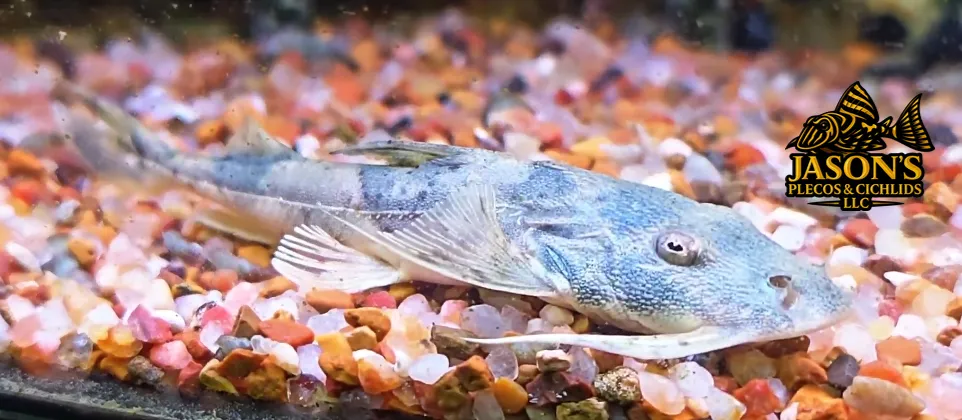
Yarrelli Goonch Catfish - (Bagarius Yarrelli)
$100.00
Sold out
was $120.00 Save 17%
Size
Questions, Comments, Concerns? Let us know!
Enter your text
Price of shipping is not included.
Sold out
Save this fish to my favorites.
Customer reviews
Reviews only from verified customers
No reviews yet. You can buy this product and be the first to leave a review.
Yarrelli Goonch Catfish - (Bagarius Yarrelli)
Fish Details, Description and Information Below:
🐟 Yarrelli Goonch Catfish – (Bagarius bagarius, formerly Bagarius yarrelli) – Giant Indian River Catfish
The Yarrelli Goonch Catfish, traditionally sold in the aquarium hobby as Bagarius yarrelli, is one of the largest and most specialized predatory freshwater catfish encountered in the monster-fish hobby.
Current scientific taxonomy has changed.
The name:
Bagarius yarrelli
is now treated as a junior synonym of:
Bagarius bagarius
For aquarium customers, the name Yarrelli Goonch Catfish can remain useful as the familiar trade name, but the accepted scientific identification should now be listed as Bagarius bagarius.
This enormous river catfish is built for life in powerful current. It has a:
- Extremely broad, flattened head
- Huge mouth
- Long barbels
- Muscular body
- Strong pectoral fins
- Deeply forked tail
- Mottled brown, gray, tan, and black camouflage pattern
Wild Goonch inhabit large, rocky rivers of the Indian subcontinent, where they occupy rapid-flowing water and rocky pools and feed primarily on fish, aquatic insects, shrimp, and other animal prey.
This is an extreme specialist fish that can exceed seven feet in total length.
It is not suitable for a conventional home aquarium as an adult.
This listing is for:
WILD-CAUGHT YARRELLI GOONCH CATFISH
🔎 Quick Facts – Yarrelli Goonch Catfish
- 📛 Common Name: Yarrelli Goonch Catfish
- 📛 Other Names: Goonch, Giant Goonch, Giant Devil Catfish
- 🔬 Accepted Scientific Name: Bagarius bagarius
- 📚 Former / Trade Scientific Name: Bagarius yarrelli
- ⚠️ Taxonomy: Bagarius yarrelli is currently considered a junior synonym of Bagarius bagarius
- 🐟 Family: Sisoridae
- 🧬 Subfamily: Sisorinae
- 🌿 Stock: Wild Caught
- 🌎 Region: South Asia / Indian Subcontinent
- 🇮🇳 Countries: India
- 🇵🇰 Countries: Pakistan
- 🇳🇵 Countries: Nepal
- 🇧🇹 Countries: Bhutan
- 🇧🇩 Countries: Bangladesh
- 🇨🇳 Range: Also recorded from the Xizang / Tibetan region of China
- 🌊 Important Drainages: Ganges, Brahmaputra and other major Indian-subcontinent river systems
- 🪨 Habitat: Large rivers, rapids, rocky pools and strong-current areas
- 💧 Water Type: Primarily freshwater
- 📏 Maximum Recorded Size: Up to approximately 230 cm / 90.5 inches total length
- 📏 Potential Adult Size: More than 7 feet
- 🏠 Adult Housing: Public-aquarium-scale or enormous custom system
- 🚫 Conventional Home Aquarium: Not suitable as permanent adult housing
- 🌡️ Temperature: Approximately 64–77°F
- 💧 pH: Approximately 6.5–7.8
- 💦 Hardness: Approximately 12–30 dGH documented
- 💨 Oxygenation: Extremely High
- 🌊 Water Movement: Strong
- 🍽️ Diet: Carnivorous Predator
- 🐟 Natural Foods: Fish
- 🦐 Natural Foods: Shrimp and other crustaceans
- 🐛 Natural Foods: Aquatic insects
- 🐸 Natural Foods: Frogs may also be consumed
- 🌙 Activity: Bottom-oriented ambush predator; can feed both day and night
- ⚠️ Tankmates: Extreme caution
- 🐟 Small Fish: Will be viewed as prey
- 🥚 Reproduction: River spawner associated with the pre-monsoon / early rainy season
- 🏠 Aquarium Breeding: Not considered a practical home-aquarium project
- ⭐ Care Level: Expert / Institutional
- 🚨 IUCN Status: Vulnerable
🚨 Important Taxonomy Update
The aquarium trade has traditionally sold this fish as:
Bagarius yarrelli
However, modern taxonomic work concluded that the Indian-subcontinent fish formerly called B. yarrelli does not represent a separate species from:
Bagarius bagarius
Because B. bagarius was named first, in 1822, that older scientific name takes priority.
Therefore:
Bagarius yarrelli = Junior Synonym
and the accepted name is:
Bagarius bagarius (Hamilton, 1822)
🏷️ Why Keep “Yarrelli Goonch” in the Product Name?
The name:
YARRELLI GOONCH
has been used in the aquarium trade for decades and remains familiar to monster-fish keepers.
It can still be retained as the:
TRADE / COMMON NAME
while using the scientifically accepted name:
Bagarius bagarius
in the species information.
A good product title is:
Yarrelli Goonch Catfish – (Bagarius bagarius, formerly Bagarius yarrelli)
⚠️ Major Identification Warning – Southeast Asian Goonch
Historically, the name:
Bagarius yarrelli
was applied far too broadly.
Fish from:
- India
- Nepal
- Bangladesh
- Thailand
- Laos
- Cambodia
- Vietnam
- Malaysia
- Indonesia
were sometimes all grouped together under the “Yarrelli Goonch” name.
Modern taxonomy shows that this was incorrect.
🌏 Indian vs. Southeast Asian Goonch
The currently accepted:
Bagarius bagarius
is associated with the:
INDIAN SUBCONTINENT
Large Southeast Asian Goonch formerly identified as B. yarrelli may instead represent:
Bagarius lica
or another member of the genus Bagarius.
🚨 Collection Locality Matters
For wild-caught Goonch Catfish:
SUPPLIER ORIGIN IS EXTREMELY IMPORTANT
If a fish was collected or exported from:
- India
- Bangladesh
- Nepal
- Pakistan
then Bagarius bagarius is the expected identification.
If it originated from:
- Thailand
- Cambodia
- Laos
- Vietnam
- Malaysia
- Sumatra
- Borneo
the fish should not automatically be labeled Bagarius bagarius.
It may instead be:
- Bagarius lica
- Bagarius rutilus
- Bagarius suchus
- Bagarius vegrandis
- Another recognized Bagarius
depending on locality and morphology.
❌ Remove the Mekong From This Species Page
The older product page lists:
GANGES + MEKONG + BRAHMAPUTRA
under the same species.
That should be removed.
Under current taxonomy:
BAGARIUS BAGARIUS IS AN INDIAN-SUBCONTINENT SPECIES
The famous giant Goonch of Southeast Asian river systems are now treated separately.
🌎 Native Distribution
Current scientific records place Bagarius bagarius primarily across the:
INDIAN SUBCONTINENT
including:
- India
- Pakistan
- Nepal
- Bhutan
- Bangladesh
with records extending into the Xizang / Tibetan region of China.
🇮🇳 India
The species is widely recorded from India.
Important river systems include portions of the:
- Ganges
- Brahmaputra
- Krishna
- Mahanadi
- Narmada
- Other large river systems
🇳🇵 Nepal
Goonch are documented from major Nepalese rivers including systems such as the:
- Karnali
- Gandaki
- Bheri
- Mahakali
- Seti
These are powerful river environments that illustrate how specialized this fish is for moving water.
🇧🇩 Bangladesh
The species occurs within major Bangladeshi river systems associated with the:
- Ganges
- Brahmaputra
- Meghna
and connected river habitats.
🪨 Natural Habitat
The Goonch is strongly associated with:
LARGE, FLOWING RIVERS
especially:
- Rapids
- Rocky pools
- Boulders
- Deep channels
- Strong current
- Highly oxygenated water
This is not a swamp, pond, or slow-water catfish.
🌊 Built for Powerful Current
Its unusual body shape is an adaptation to strong water flow.
The Goonch has a:
- Broad flattened head
- Flattened front body
- Large pectoral fins
- Powerful musculature
that helps it remain close to the river bottom even in strong current.
🪨 Rocky River Bottom
Natural habitat commonly contains:
- Large boulders
- Stones
- Gravel
- Rock ledges
- Deep rocky pools
- Current breaks
The fish can rest behind large rocks and then move into faster water when feeding.
💨 Extremely High Oxygen Requirement
For captive Goonch:
OXYGENATION IS CRITICAL
These fish evolved in moving river systems.
Suitable systems require:
- Powerful pumps
- Strong filtration
- Surface agitation
- Air stones
- High-capacity circulation pumps
- Multiple water returns
- Large biological filtration systems
⚠️ Warm, Stagnant Water Is Dangerous
A Goonch should never be maintained in:
- Hot stagnant water
- Low-flow aquariums
- Poorly oxygenated systems
- Dirty water
- High-organic-load conditions
This species is fundamentally a:
HIGH-FLOW RIVER CATFISH
🌡️ Temperature
Current biological references give a temperature range of approximately:
64–77°F / 18–25°C
This is important.
The Goonch should not automatically be treated like a tropical catfish requiring:
80–84°F
year-round.
⚠️ Avoid Excessive Heat
As temperature rises:
DISSOLVED OXYGEN FALLS
That is particularly problematic for a fish naturally associated with highly oxygenated river environments.
For long-term maintenance:
COOLER + HIGHLY OXYGENATED
is preferable to:
HOT + LOW OXYGEN
💧 Water Parameters
A scientifically supported range includes:
- 🌡️ Temperature: Approximately 64–77°F
- 💧 pH: Approximately 6.5–7.8
- 💦 Hardness: Approximately 12–30 dGH documented
- 💨 Dissolved Oxygen: Extremely High
- 🌊 Current: Strong
- ☠️ Ammonia: 0 ppm
- ☠️ Nitrite: 0 ppm
- 🔄 Nitrate: Keep as low as practical
📏 Adult Size – True River Monster
One of the most important facts customers must understand is the potential adult size.
Current scientific databases document:
UP TO APPROXIMATELY 230 CM TOTAL LENGTH
That equals approximately:
90.5 INCHES
or:
7½ FEET
🚨 Seven-Foot Adult Potential
A juvenile Goonch may be only:
- 3 inches
- 5 inches
- 8 inches
when offered for sale.
That does not make it an aquarium-sized species.
Customers must plan for the:
ADULT FISH
not its current juvenile size.
❌ A 1,000-Gallon Aquarium Is Not a Lifetime Guarantee
The older page gives:
1,000+ GALLONS
as the minimum.
That number needs more explanation.
A fish capable of exceeding:
7 FEET
cannot responsibly be assigned a simple conventional aquarium minimum.
Even a 1,000-gallon aquarium may eventually be inadequate depending on:
- Aquarium dimensions
- Individual growth
- Filtration
- Current
- Turning radius
- Tankmates
🏢 Adult Housing – Public Aquarium Scale
Permanent adult housing should be thought of as:
PUBLIC-AQUARIUM SCALE
or an exceptionally large purpose-built private system.
A permanent enclosure needs enough room for the fish to:
- Turn without touching both sides
- Swim against current
- Rest fully extended
- Move between current zones
- Hunt and feed naturally
- Avoid constant contact with walls
📐 Footprint Matters More Than Gallons
With giant fish, aquarium gallon volume alone becomes misleading.
A tall tank may contain thousands of gallons but still have an inadequate:
- Length
- Width
- Turning radius
A Goonch needs an:
EXTREMELY LONG + EXTREMELY WIDE
system.
🚨 This Is Not a Typical Monster-Fish Aquarium Species
Adult housing may ultimately require:
- Several thousand gallons
- Indoor pond construction
- Public aquarium infrastructure
- Commercial filtration
- Large-volume water changes
- Custom pumps
- Emergency backup systems
Potential buyers should establish their permanent housing plan:
BEFORE PURCHASING THE FISH
💩 Giant Fish = Giant Bioload
A large predatory catfish produces enormous quantities of:
- Feces
- Nitrogenous waste
- Uneaten food debris
- Dissolved organic material
Industrial-scale filtration becomes increasingly important as the fish grows.
💧 Filtration
A permanent system should provide extremely high-capacity:
Mechanical Filtration
to remove:
- Feces
- Food debris
- Suspended material
Biological Filtration
to process:
- Ammonia
- Nitrite
Oxygenation
through:
- Surface agitation
- Aeration
- High water turnover
⚡ Backup Equipment
For exceptionally large Goonch systems, redundancy should be considered essential.
Useful safeguards include:
- Backup air pumps
- Backup circulation
- Generator capability
- Water-temperature alarms
- Power-loss alarms
A major pump failure can become dangerous quickly for a large oxygen-demanding fish.
🎨 Appearance
The Goonch is built for camouflage.
Typical coloration includes:
- Gray
- Olive
- Tan
- Brown
- Yellow-brown
with darker:
- Saddles
- Blotches
- Mottling
- Speckling
🪨 Riverbed Camouflage
Its irregular pattern allows the fish to blend extremely effectively among:
- Rocks
- Gravel
- Boulders
- Shadowed river bottoms
A motionless Goonch can be surprisingly difficult to see against natural rockwork.
😮 Massive Head & Mouth
One of the defining characteristics is the:
EXTREMELY BROAD HEAD
combined with a very large mouth.
This allows the fish to take substantial animal prey.
🐱 Barbels
Like other catfish, Goonch possess sensory:
BARBELS
around the mouth.
These assist in locating prey and navigating river-bottom habitat.
🍽️ Diet – Carnivorous Predator
Bagarius bagarius is best described as:
CARNIVOROUS
Natural foods include:
- Small and medium fish
- Shrimp
- Prawns
- Aquatic insects
- Other crustaceans
- Frogs
🐟 Fish Are an Important Natural Food
Fish form a major part of the diet of large Goonch.
In captivity, suitable alternatives can include appropriately sized:
- Frozen whole fish
- Fish fillets with appropriate nutritional variety
- Whole marine foods
- Prepared predator diets
🦐 Crustaceans
Excellent foods may include:
- Whole shrimp
- Prawns
- Krill
- Mysis for juveniles
🪱 Other Foods
Depending on fish size, suitable foods can include:
- Earthworms
- Insect larvae
- Large carnivore pellets
- Other appropriately balanced carnivore foods
⚠️ Feed a Varied Diet
Do not feed only:
- Shrimp
or only:
- One species of fish
for the fish's entire life.
Dietary variety helps reduce nutritional deficiencies.
🚫 Avoid Feeder Fish
There is generally no need to use live feeder fish.
Feeder fish may introduce:
- Parasites
- Bacteria
- Internal disease
- Poor nutritional balance
A Goonch can be conditioned to accept appropriately selected:
FROZEN + FRESH + PREPARED FOODS
⚠️ Small Tankmates Are Food
Any fish small enough to fit into the Goonch's mouth should be considered:
POTENTIAL PREY
Do not assume a tankmate is safe simply because the Goonch has ignored it previously.
🐟 Tankmates – Extreme Caution
This species is not recommended for a normal community aquarium.
Potential tankmates would have to be:
- Extremely large
- Too large to swallow
- Compatible with cooler high-flow conditions
- Able to withstand extremely strong current
Even then:
COMPATIBILITY IS NOT GUARANTEED
✅ Safest Long-Term Option
For most privately maintained specimens:
SPECIES-ONLY / SINGLE-FISH HOUSING
is the safest recommendation.
⚠️ Do Not House With Slow, Delicate Fish
Avoid tankmates that are:
- Slow-moving
- Delicate
- Long-finned
- Small enough to swallow
- Unable to tolerate powerful current
🌊 Activity & Behavior
Goonch are strongly bottom-oriented.
They commonly:
- Rest against the substrate
- Shelter behind rocks
- Face into current
- Remain motionless for extended periods
- Accelerate rapidly when feeding
⚡ Extremely Powerful Fish
Do not mistake a resting Goonch for an inactive or weak animal.
When motivated, these fish can produce:
VERY POWERFUL BURSTS OF MOVEMENT
A large specimen can easily disturb:
- Rocks
- Decorations
- Plumbing
- Poorly secured lids
🪨 Aquarium / Pond Setup
A juvenile or subadult system should contain:
- Large open bottom area
- Smooth stones
- Large boulders
- Secure rock formations
- Current breaks
- Strong flow
- Extremely high oxygenation
⚠️ Avoid Sharp Decorations
Because these fish rest close to the bottom and can move explosively:
USE SMOOTH STRUCTURE
Avoid sharp decorations capable of:
- Cutting the skin
- Damaging barbels
- Injuring the abdomen
🪨 Secure Everything
A large Goonch is extremely powerful.
Aquarium décor, plumbing, and equipment should be:
SECURELY INSTALLED
A large fish can shift objects that would be immovable to normal aquarium species.
🛡️ Handling Warning
A large Goonch should never be handled casually.
The combination of:
- Extreme body size
- Powerful musculature
- Large mouth
- Teeth
- Strong fin structures
creates a genuine injury risk.
🚫 Never Hand Feed a Large Goonch
Do not intentionally condition a giant predatory catfish to:
TAKE FOOD FROM YOUR HAND
Use:
- Feeding tongs
- Long feeding tools
- Controlled feeding methods
when the fish becomes large.
⚠️ Bite Risk
The species should not be marketed sensationally as a:
“MAN-EATER”
but a large predatory catfish with a powerful mouth can still cause significant injury.
Keep hands away from the mouth of large specimens.
🚫 Do Not Use Sensational Human-Attack Claims
Goonch became famous through stories of alleged attacks on people.
Those stories are not necessary for responsible product marketing.
A more accurate description is:
A VERY LARGE AND POWERFUL PREDATORY RIVER CATFISH
That is impressive enough without unsupported claims.
♂️ Male vs. Female
Reliable visual sexing information for aquarium specimens is extremely limited.
There is no simple dependable juvenile characteristic that allows a retailer to guarantee:
- Male
- Female
Therefore:
SELL AS UNSEXED
unless sex is confidently established by qualified examination.
🥚 Reproduction
Bagarius bagarius is a:
RIVER-SPAWNING SPECIES
Natural reproduction is associated with the period:
BEFORE OR NEAR THE BEGINNING OF THE MONSOON / ANNUAL FLOOD SEASON
🌧️ Seasonal River Breeder
Natural reproductive behavior is tied to:
- River flow
- Rainfall
- Seasonal flooding
- Migration
- Large-scale environmental changes
These conditions are extremely difficult to reproduce in normal aquariums.
🚫 Not a Practical Home Breeding Project
Do not describe this fish as:
- Cave spawning
- Easy to breed
- Routinely captive bred
There is no established conventional home-aquarium breeding method for giant Goonch.
🌎 Conservation Status – Vulnerable
The currently accepted Bagarius bagarius is classified globally as:
VULNERABLE
The current assessment dates to:
2022
⚠️ Why Vulnerable?
Major pressures include:
- Fishing
- Overharvesting
- Habitat degradation
- River modification
- Dams
- Pollution
Large river fishes can be especially vulnerable because they depend on connected river habitats and may reproduce slowly compared with smaller species.
🌿 Wild-Caught Responsibility
This listing is for:
WILD-CAUGHT FISH
A customer purchasing one should be fully prepared for:
- Extreme adult size
- Permanent specialized housing
- Large filtration systems
- High electricity use
- Powerful circulation
- Long-term feeding expenses
- Potential rehoming difficulty
🚨 Think About the Adult Before Buying the Juvenile
The most important message on this entire page is:
A SMALL GOONCH DOES NOT STAY SMALL
A juvenile may fit comfortably into an aquarium today.
The same fish has the biological potential to become:
SEVERAL FEET LONG
❌ Do Not Buy With Plans to “Upgrade Later”
For a fish with this adult potential, the permanent housing plan should already exist.
Finding a new home for a multi-foot Goonch can be extremely difficult because:
- Most aquarium stores cannot accept one
- Most hobbyists cannot house one
- Many public aquariums do not accept surrendered fish
- Transporting giant fish is difficult and expensive
⭐ Why Keep a Yarrelli Goonch?
For the extremely small number of aquarists equipped to maintain it properly, the Goonch offers:
- 🐟 Extraordinary adult size
- 🌊 True high-current river behavior
- 🪨 Specialized rocky-river adaptations
- 😮 Massive flattened head
- ⚡ Incredible power
- 🎨 Natural camouflage
- 🦐 Predatory feeding behavior
- 🌏 Fascinating South Asian origin
- 🧬 Important modern taxonomic history
It is one of the most extraordinary freshwater catfish in the world.
However:
THIS IS AN EXPERT / INSTITUTIONAL-SCALE SPECIES
and should only be purchased with a realistic permanent housing plan.
⚠️ Important Considerations
Before purchasing a Yarrelli Goonch Catfish:
- The accepted scientific name is now Bagarius bagarius.
- Bagarius yarrelli is currently treated as a junior synonym.
- “Yarrelli Goonch” may remain as the familiar aquarium trade name.
- Do not list the accepted B. bagarius range as South and Southeast Asia.
- True B. bagarius is associated with the Indian subcontinent.
- Remove the Mekong from the normal B. bagarius distribution.
- Giant Southeast Asian Goonch may represent Bagarius lica or another species.
- Supplier country and collection locality are extremely important for identification.
- This listing is for wild-caught fish.
- Current scientific records document up to approximately 230 cm / 90.5 inches total length.
- Adult potential exceeds seven feet.
- This is not suitable for a conventional home aquarium as an adult.
- Permanent housing should be considered public-aquarium scale.
- Do not treat 1,000 gallons as a guaranteed lifetime minimum.
- Aquarium footprint is more important than gallon number alone.
- Maintain approximately 64–77°F.
- Do not maintain continuously at unnecessarily high tropical temperatures.
- Maintain extremely high dissolved oxygen.
- Provide very strong water movement.
- Keep ammonia and nitrite at zero.
- Keep nitrate and organic waste low.
- Use extremely powerful mechanical and biological filtration.
- Provide smooth rocky structure.
- Secure all décor and equipment.
- Feed a varied carnivorous diet.
- Fish, shrimp, prawns, insects, and other suitable animal foods are appropriate.
- Avoid relying on live feeder fish.
- Small tankmates will be eaten.
- Species-only housing is safest.
- Large specimens can cause serious injuries if handled improperly.
- Do not hand-feed large adults.
- Do not market the species with unsupported “man-eater” claims.
- Captive aquarium breeding is not established as a routine practice.
- Natural reproduction is associated with seasonal river conditions.
- The accepted species is currently classified as Vulnerable.
- Never release this fish into natural waterways.
🧬 Taxonomy
The currently accepted scientific name is:
Bagarius bagarius (Hamilton, 1822)
Classification:
- Order: Siluriformes
- Family: Sisoridae
- Subfamily: Sisorinae
- Genus: Bagarius
- Species: bagarius
Former aquarium/scientific identification:
Bagarius yarrelli (Sykes, 1839)
Current status:
JUNIOR SYNONYM OF BAGARIUS BAGARIUS
For this product, use:
Yarrelli Goonch Catfish – (Bagarius bagarius, formerly Bagarius yarrelli)
🧬 Identification Disclaimer
The name “Yarrelli Goonch” has historically been applied to multiple large Bagarius from different parts of Asia.
Modern revisions recognize several distinct species, including:
- Bagarius bagarius
- Bagarius lica
- Bagarius rutilus
- Bagarius suchus
- Bagarius vegrandis
- Bagarius protos
- Bagarius dolichonema
Because this listing is for a wild-caught fish:
COLLECTION COUNTRY AND LOCALITY SHOULD BE PRESERVED WHENEVER POSSIBLE
If supplier records indicate Southeast Asian origin rather than the Indian subcontinent, the fish's identification should be reviewed rather than automatically calling it Bagarius bagarius.
🚨 Vulnerable Species Disclaimer
Bagarius bagarius is currently classified as:
VULNERABLE
on the IUCN Red List.
The IUCN conservation category is not itself a blanket prohibition on aquarium ownership or domestic sale, but responsible sourcing and permanent care are especially important for a wild-caught giant river fish.
🚚 Live Fish Shipping
Live fish are professionally packed for safe transport.
Shipping availability depends on:
- Fish size
- Destination
- Weather conditions
- Carrier availability
- Applicable state and local regulations
As Goonch Catfish grow, shipping becomes progressively more specialized.
Large specimens may require:
- Oversized insulated shipping containers
- Heavy-duty fish bags
- Multiple protective bag layers
- Large amounts of water
- Specialized oxygen packing
- Airline cargo transportation
Very large specimens eventually become unsuitable for ordinary parcel shipment.
Please review our Shipping & Payment Information and Live Arrival Guarantee / DOA Policy before ordering.
⚠️ Buyer Responsibility
Customers are responsible for confirming that Bagarius bagarius may legally be purchased, possessed, transported, and received in their state or local jurisdiction before ordering.
Customers should also have appropriate permanent housing planned before purchasing this species.
Never release aquarium fish into natural waterways.
Below are fish you may also like.
Wild Caught
L260 Queen Arabesque Pleco - (Hypancistrus sp.)
L260 Queen Arabesque Pleco - (Hypancistrus sp.)
Price of shipping is not included.
was $80.00
Save 6%
$75.00
Wild Caught
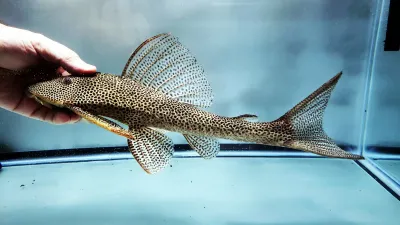
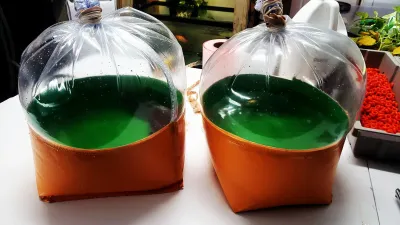
Isorineloricaria tenuicauda
Isorineloricaria tenuicauda
Price of shipping is not included.
$300.00
Out of stock
Captive Bred
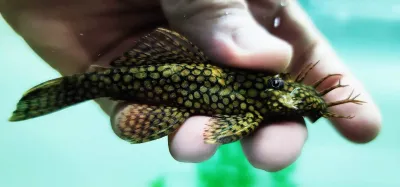
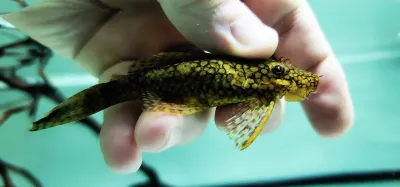
Honeycomb Bristlenose - (Ancistrus sp. Wabenmuster) Breeding Pair
Honeycomb Bristlenose - (Ancistrus sp. Wabenmuster) Breeding Pair
Price of shipping is not included.
$350.00
Out of stock
Wild Caught
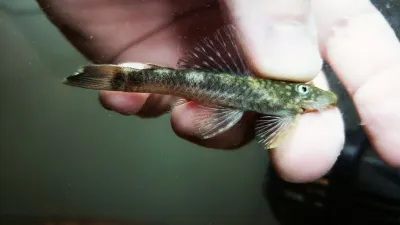
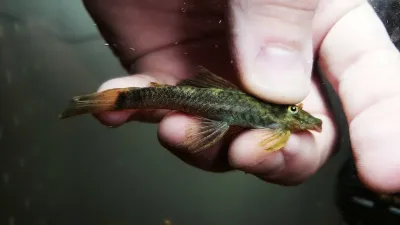
L325 Jari Blue Ancistrus - (Ancistrus sp.)
L325 Jari Blue Ancistrus - (Ancistrus sp.)
Price of shipping is not included.
$50.00
Out of stock
Captive Bred
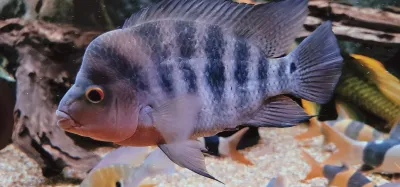
Red isletas Cichlid - (Amphilophus sp.)
Red isletas Cichlid - (Amphilophus sp.)
Price of shipping is not included.
$100.00
Out of stock
Wild Caught
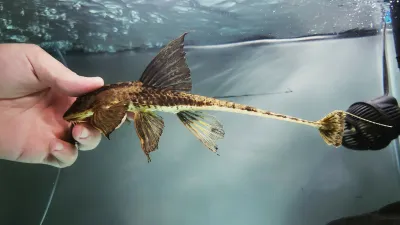
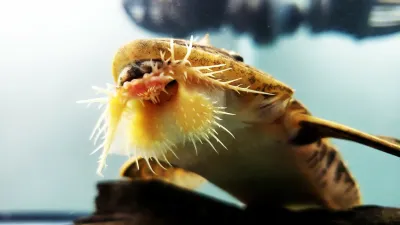
Crying Whiptail - (Loricaria nimairaco)
Crying Whiptail - (Loricaria nimairaco)
Price of shipping is not included.
was $120.00
Save 8%
$110.00
Out of stock
Wild Caught
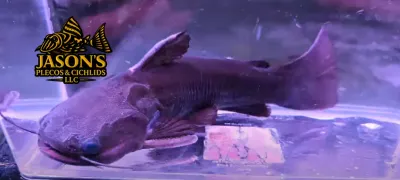
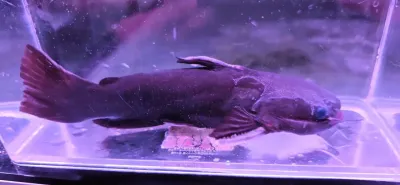
Iron Head Driftwood Catfish - (Trachycorystes trachycorystes)
Iron Head Driftwood Catfish - (Trachycorystes trachycorystes)
Price of shipping is not included.
5.0
(1)
was $90.00
Save 6%
$85.00
Out of stock
Wild Caught
Blunthead Cichlid - (Tropheus moorii)
Blunthead Cichlid - (Tropheus moorii)
Price of shipping is not included.
$65.00
Out of stock
Wild Caught
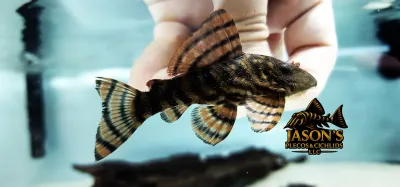
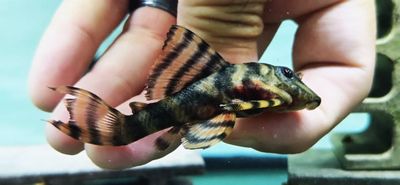
L397 Tangerine Tiger Pleco - (Panaqolus sp.)
L397 Tangerine Tiger Pleco - (Panaqolus sp.)
Price of shipping is not included.
was $95.00
Save 21%
$75.00
Out of stock
Wild Caught
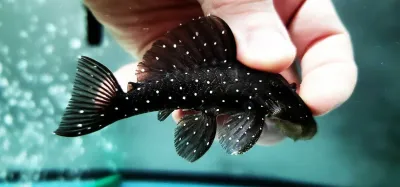
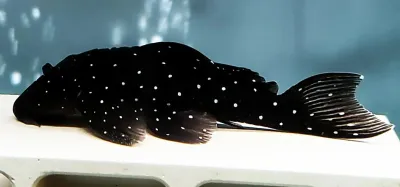
L391 Starry Sky Pleco - (Spectracanthicus sp.)
L391 Starry Sky Pleco - (Spectracanthicus sp.)
Price of shipping is not included.
$65.00
Out of stock
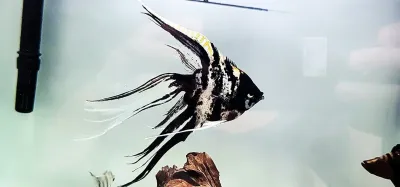
Wild Caught
L520 - (Pseudacanthicus sp.)
L520 - (Pseudacanthicus sp.)
Price of shipping is not included.
was $800.00
Save 38%
$500.00
Out of stock
Powered by Lightspeed
Display prices in:USD