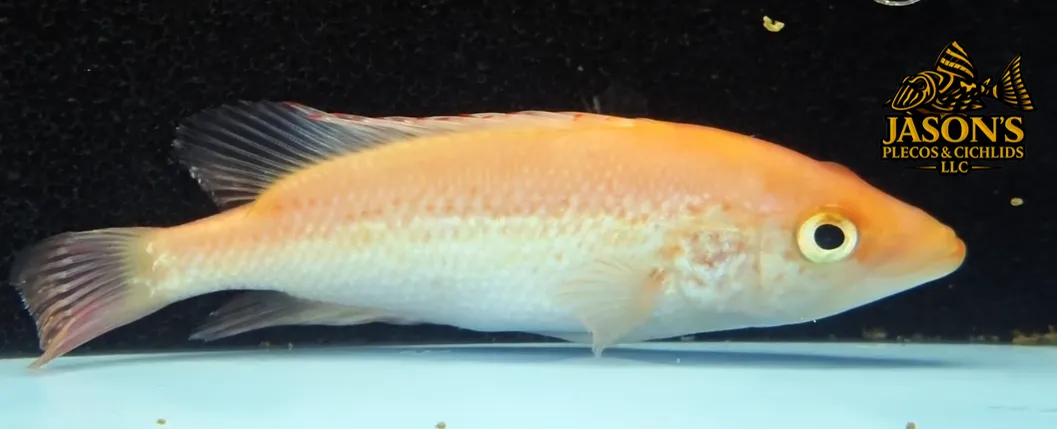
Bay Snook/Red Bay Snook/Green Bay Snook - (Petenia splendida)
5.0
1 review
Reviews from verified customers who have purchased products at this store.
$100.00
Captive Bred
was $110.00 Save 9%
Size
Questions, Comments, Concerns? Let us know!
Enter your text
Price of shipping is not included.
In stock: 1 available
1
Save this fish to my favorites.
Customer reviews
Reviews only from verified customers
Reviews are only accepted from verified customers who have signed in and purchased the products. This ensures that each review is based on genuine customer experiences. All reviews are checked before publication to prevent spam.
John N.
Ellendale,
United States
Jul 2, 2025
This customer didn’t leave a review but rated the product.
Bay Snook/Red Bay Snook/Green Bay Snook - (Petenia splendida)
Fish Details, Description and Information Below:
🐠 Bay Snook / Red Bay Snook / Green Bay Snook (Petenia splendida)
The Bay Snook (Petenia splendida) is a fascinating and impressive Central American cichlid known for its extraordinary extendable mouth, large adult size, predatory feeding behavior, and beautiful coloration. Available in both red and green color forms, this species is highly sought after by experienced aquarists who appreciate large, unusual predatory cichlids.
One of its most remarkable features is its ability to rapidly extend its jaws forward to capture prey, allowing it to engulf fish that may appear surprisingly large compared to its mouth when closed.
Despite its predatory nature, the Bay Snook is not necessarily as aggressive as some other large Central American cichlids. However, its size, powerful feeding response, and ability to swallow smaller tankmates make careful aquarium planning essential.
🧬 Scientific Classification
- 🐟 Common Names: Bay Snook, Red Bay Snook, Green Bay Snook
- 🔬 Scientific Name: Petenia splendida
- 🧬 Family: Cichlidae
- 🌎 Origin: Southern Mexico, Guatemala, and Belize
- 📏 Maximum Size: Approximately 18–20 inches, occasionally larger
- ⏳ Lifespan: Approximately 10–15 years with proper care
- ⚠️ Temperament: Predatory, territorial, and moderately aggressive
- ⭐ Care Level: Advanced
- 🍽️ Diet: Carnivore / Piscivore
- 🏠 Minimum Tank Size: 180 gallons for an adult; larger preferred
- 🌡️ Temperature: 76–82°F
- 💧 pH Range: 7.0–8.0
- 🏊 Swimming Level: Middle to bottom
- 🥚 Breeding: Substrate spawner
🎨 Appearance & Coloration
The Bay Snook is a distinctive, elongated cichlid with a large head, powerful body, and an unusually extendable mouth.
Its body is more streamlined than that of many other large Central American cichlids, allowing it to maneuver quickly when pursuing prey.
The most recognizable feature is its highly protrusible jaw, which extends dramatically when feeding.
🔴 Red Bay Snook
The Red Bay Snook is especially desirable for its beautiful reddish-orange coloration.
- 🔥 Bright orange to reddish body coloration
- 🧡 Color intensity varies between individuals
- 🐟 Elongated, streamlined body
- 👄 Large, extendable mouth
- 🎨 Some individuals display darker markings or subtle spotting
Red Bay Snooks are color variants of Petenia splendida, not a separate species.
Their coloration can vary depending on genetics, age, diet, and environmental conditions.
🟢 Green Bay Snook
The Green Bay Snook represents the more typical wild-type appearance of the species.
- 🌿 Olive-green to bronze body coloration
- ⚫ Dark spots and irregular markings
- ✨ Subtle metallic reflections
- 🐟 Elongated predatory body structure
- 👄 Highly extendable mouth
Green Bay Snooks often display natural camouflage patterns that help them blend into vegetation and other underwater surroundings.
Both color forms share the same general care requirements, adult size potential, and predatory feeding behavior.
🌎 Natural Habitat & Origin
Bay Snooks are native to freshwater habitats throughout portions of southern Mexico, Guatemala, and Belize.
They inhabit rivers, lakes, lagoons, and other relatively slow-moving freshwater environments.
These fish are often associated with submerged vegetation, branches, and other structures that provide concealment while hunting.
🌿 Natural Habitat Characteristics
- 🌊 Slow-moving rivers and freshwater lakes
- 🪵 Submerged branches and woody structures
- 🌱 Aquatic vegetation
- 🏝️ Sandy or muddy substrates
- 🌡️ Warm tropical water
- 🐟 Areas containing abundant smaller fish
Their elongated bodies and specialized jaws are well suited for ambushing prey.
In the wild, Bay Snooks are primarily fish predators, using a combination of stealth and rapid jaw extension to capture food.
🏡 Aquarium Setup & Water Parameters
Bay Snooks require large aquariums with excellent filtration, stable water quality, and ample swimming space.
Although relatively hardy once established, their eventual size and predatory feeding habits make them better suited for experienced fishkeepers.
💧 Recommended Water Parameters
- 🌡️ Temperature: 76–82°F
- 🧪 pH: 7.0–8.0
- 💎 General Hardness: Approximately 5–15 dGH
- ⚠️ Ammonia: 0 ppm
- ⚠️ Nitrite: 0 ppm
- 💦 Nitrate: Ideally below 20–30 ppm
- 🌊 Water Movement: Low to moderate
- 🔄 Filtration: Strong biological and mechanical filtration
🏠 Aquarium Size
A minimum of approximately 180 gallons is recommended for a single adult, with 240 gallons or larger preferred, especially for exceptionally large individuals.
Tank dimensions are just as important as total water volume. Long, wide aquariums provide better swimming and turning space than tall, narrow aquariums.
Multiple adults or large tankmates may require substantially larger systems.
🪨 Recommended Aquarium Decorations
- 🪵 Large driftwood and submerged branches
- 🪨 Secure rock formations
- 🌱 Hardy plants or artificial vegetation
- 🏝️ Sand or smooth gravel
- 🏊 Large open swimming areas
- 🏠 Sheltered areas and visual barriers
Bay Snooks benefit from an aquarium layout that provides both open swimming space and areas where they can retreat.
⚠️ Important: These fish may react suddenly when startled or feeding. Provide a secure aquarium cover and avoid sharp decorations that could cause injury.
😎 Temperament & Behavior
Bay Snooks are predatory cichlids with an interesting combination of cautious and aggressive behaviors.
Unlike some highly territorial Central American cichlids, they may appear relatively calm when maintained with suitably sized tankmates.
However, their peaceful appearance should not be confused with an inability to capture and consume smaller fish.
🐟 Common Behaviors
- 👀 Carefully observing their surroundings
- 🐠 Stalking smaller fish
- ⚡ Rapidly extending their jaws to capture prey
- 🪵 Resting near submerged structures
- 🍽️ Displaying strong feeding responses
- 🏠 Establishing territories as they mature
Juveniles may be somewhat timid, particularly when first introduced into an unfamiliar aquarium.
As they grow and become comfortable, many develop more confident and interactive personalities.
⚠️ Predatory Nature
One of the most important considerations when keeping Bay Snooks is their ability to swallow other fish.
Because their mouths extend dramatically, they may consume tankmates that appear too large to fit inside their mouths when closed.
Any fish small or slender enough to be swallowed should be considered a potential food item.
🐟 Tankmate Compatibility
Bay Snooks can sometimes be maintained with other large, appropriately sized fish, provided the aquarium offers adequate space.
However, compatibility depends on individual temperament, size differences, and feeding behavior.
✅ Potential Tankmates
- 🐠 Large Severum Cichlids
- 🐟 Appropriately sized Vieja species
- 🐠 Large Chocolate Cichlids
- 🐟 Large Silver Dollars
- 🐡 Robust, appropriately sized Plecos
- 🐠 Other large, moderately aggressive cichlids
Even large tankmates should be carefully evaluated because of the Bay Snook's unusual jaw structure.
❌ Tankmates to Avoid
- Small tetras
- Guppies and other small livebearers
- Small cichlids
- Juvenile fish that could be swallowed
- Delicate or timid species
- Extremely aggressive fish that may injure the Bay Snook
⚠️ Important: Bay Snooks may attempt to swallow fish that are too large to consume safely. This can result in serious injury or death to either fish.
🍽️ Diet & Feeding
Bay Snooks are primarily carnivorous fish predators.
In their natural habitat, fish make up a major portion of their diet. Their specialized jaws allow them to capture prey through rapid suction feeding.
In captivity, they should be provided with a varied diet of high-quality, appropriately sized foods.
🦐 Recommended Foods
- 🐟 High-quality carnivorous cichlid pellets
- 🦐 Frozen mysis shrimp for smaller specimens
- 🐟 Appropriately sized pieces of fish such as tilapia
- 🦞 Krill
- 🪱 Earthworms from safe sources
- 🦐 Suitable frozen aquatic invertebrates
- 🍽️ Quality prepared foods designed for large predatory fish
Juveniles may initially prefer frozen or meaty foods, while many individuals can eventually be trained to accept pellets.
⏰ Feeding Frequency
Juveniles generally benefit from smaller meals once or twice daily.
Adults can typically be fed several times per week or smaller portions more frequently, depending on their condition, activity level, and feeding response.
⚠️ Important Feeding Considerations
Avoid using feeder goldfish or other commercially sourced feeder fish as a routine food source.
Feeder fish can introduce parasites and infectious diseases, and some species are nutritionally unsuitable when fed regularly.
Avoid excessive feeding of fatty mammalian meats such as beef heart.
Frozen fish and seafood should be selected carefully, with attention to freshness, nutritional suitability, and any additives.
💡 Feeding Tip: Bay Snooks have an impressive feeding response. Use feeding tongs when necessary and avoid placing your fingers directly in front of a hungry fish.
👄 Unique Extendable Mouth & Hunting Technique
One of the most fascinating features of Petenia splendida is its highly specialized mouth.
Unlike most aquarium cichlids, the Bay Snook can extend its jaws dramatically forward when attacking prey.
⚡ How It Works
- 👀 The fish locates and approaches a potential food item.
- 🐟 It positions itself within striking distance.
- 👄 Its jaws rapidly extend forward.
- 🌊 Water and prey are drawn toward the mouth through suction.
- 🍽️ The prey is captured and swallowed.
This specialized feeding mechanism allows Bay Snooks to capture prey quickly and efficiently.
The jaw structure also makes them especially dangerous to smaller aquarium fish.
🧠 Interesting Fact: The Bay Snook's mouth extension is among its most distinctive evolutionary adaptations, making it one of the most recognizable predatory cichlids in the aquarium hobby.
📏 Growth Rate & Adult Size
Bay Snooks are capable of reaching impressive adult sizes.
Mature individuals commonly grow well beyond 12 inches, and larger specimens may approach or exceed 18 inches.
Males generally become larger than females, although individual growth varies.
📈 Factors Influencing Growth
- 🧬 Genetics
- 🍽️ Diet quality
- 🏠 Aquarium dimensions
- 💧 Water quality
- 🌡️ Stable temperatures
- ❤️ Overall health
- 🐟 Competition and stress
Juveniles may grow relatively quickly under favorable conditions, but growth gradually slows as they mature.
Because these fish become large and powerful, it is important to plan for their adult size rather than purchasing them based on their juvenile appearance.
🥚 Breeding & Reproduction
Bay Snooks are substrate-spawning cichlids that may reproduce successfully in captivity.
Breeding generally requires a mature, compatible pair and a large aquarium with suitable spawning surfaces.
❤️ Pair Formation
During courtship, pairs may display:
- 🎨 Intensified coloration
- 🐟 Increased interaction and territorial behavior
- 🪨 Cleaning of flat rocks or other spawning surfaces
- 🏝️ Excavation of shallow substrate areas
- ⚠️ Aggression toward other fish
🥚 Spawning Process
Once a suitable spawning location is selected, the female deposits eggs on a cleaned surface while the male fertilizes them.
The number of eggs produced depends on the size and maturity of the female.
Both parents may participate in guarding the eggs and developing fry.
Eggs generally hatch after several days, depending on temperature and water conditions.
Newly hatched larvae may be moved into small depressions until they become free-swimming.
🐣 Raising the Fry
Once free-swimming, fry may be offered:
- 🦐 Newly hatched brine shrimp
- 🐟 Appropriately sized fry foods
- 🍽️ Finely crushed high-quality prepared foods
- 🪱 Small live foods from safe, controlled sources
Fry should be fed small meals regularly while maintaining excellent water quality.
⚠️ Breeding Warning: Adult Bay Snooks can become highly territorial when protecting eggs and fry. A dedicated breeding aquarium is recommended.
🩺 Health & Disease Prevention
Bay Snooks are generally hardy when maintained in clean, stable water with appropriate nutrition.
However, like other large predatory cichlids, they can experience health problems when exposed to poor aquarium conditions, inadequate diets, or stress.
⚠️ Potential Health Concerns
- External parasites
- Internal parasites
- Bacterial infections
- Digestive problems
- Jaw or mouth injuries
- Physical injuries from aggressive tankmates
- Stress-related illnesses
- Nutritional deficiencies
Because Bay Snooks use their mouths extensively when hunting, injuries to the jaws can interfere with normal feeding.
✅ Signs of a Healthy Bay Snook
- 👀 Clear, alert eyes
- 🏊 Normal swimming and balance
- 🍽️ Strong feeding response
- 👄 Normal jaw movement
- 🪶 Healthy fins
- 💨 Normal breathing
- 🎨 Appropriate coloration
- ❤️ No visible sores or unusual growths
🛡️ Disease Prevention
- Maintain stable water quality
- Avoid overcrowding
- Provide adequate swimming space
- Feed a varied, nutritious diet
- Avoid questionable feeder fish
- Quarantine newly acquired fish
- Monitor aggression and feeding behavior
- Use strong filtration and regular water changes
🔴 Red Bay Snook vs. 🟢 Green Bay Snook
Although they may look significantly different, both color forms belong to the same species, Petenia splendida.
|
Characteristic |
🔴 Red Bay Snook |
🟢 Green Bay Snook |
|---|---|---|
|
Scientific Name |
Petenia splendida |
Petenia splendida |
|
Coloration |
Red to orange |
Olive-green to bronze |
|
Pattern |
Variable darker markings |
Dark spots and camouflage patterns |
|
Adult Size |
Up to approximately 18–20 inches |
Up to approximately 18–20 inches |
|
Diet |
Carnivorous / Piscivorous |
Carnivorous / Piscivorous |
|
Temperament |
Predatory |
Predatory |
|
Aquarium Care |
Advanced |
Advanced |
|
Breeding |
Substrate spawner |
Substrate spawner |
🎨 Important: Red and green Bay Snooks are color forms of the same species. The red form is not a separate scientifically recognized species, and individual coloration may vary considerably.
🧠 Intelligence & Interaction
Bay Snooks are observant fish that often become familiar with their keepers and feeding routines.
Although some individuals may initially be shy, they frequently become more confident after adjusting to their aquarium.
🤩 Common Interactive Behaviors
- 👀 Watching movement outside the aquarium
- 🍽️ Recognizing feeding routines
- 🐟 Following food along the front glass
- 🪵 Using decorations as cover
- ⚡ Demonstrating rapid hunting strikes
- 🏠 Establishing preferred resting areas
Their unusual mouth structure and feeding behavior make them especially interesting to observe.
💡 Interesting Facts About the Bay Snook
- 👄 Incredible Extendable Mouth: Bay Snooks can rapidly project their jaws forward to capture prey.
- 🔴 Two Popular Color Forms: Red and green varieties are commonly available in the aquarium trade.
- 🐟 Natural Fish Predator: Their diet in the wild consists largely of smaller fish.
- 🌎 Central American Native: They inhabit freshwater systems in Mexico, Guatemala, and Belize.
- 📏 Impressive Adult Size: Large individuals can approach or exceed 18 inches.
- 🧠 Intelligent Hunters: They often rely on stealth and rapid strikes rather than constant pursuit.
- ⚡ Powerful Suction Feeding: Their specialized jaws help draw prey into the mouth.
- 🥚 Protective Parents: Breeding pairs guard their eggs and developing fry.
- 🏡 Large Aquarium Required: Adults need substantial swimming and turning space.
- 🧬 One Species, Different Colors: Red and green Bay Snooks are both Petenia splendida.
🌿 Conservation & Responsible Aquarium Keeping
Bay Snooks are naturally occurring freshwater predators that play an important role in their native aquatic ecosystems.
As with other large aquarium fish, responsible ownership is especially important because of their adult size and predatory nature.
Never release Bay Snooks or other aquarium fish into local rivers, lakes, or ponds.
Introducing nonnative predatory fish can negatively affect native fish populations and disrupt aquatic ecosystems.
Aquarists should also consider the long-term space, filtration, and feeding requirements of this species before purchasing one.
❤️ Final Thoughts
The Bay Snook (Petenia splendida) is one of the most fascinating large predatory cichlids available to aquarium enthusiasts.
Whether displaying the brilliant reddish-orange coloration of the Red Bay Snook or the natural olive-green appearance of the Green Bay Snook, this species offers a unique combination of beauty, size, intelligence, and extraordinary feeding adaptations.
Its remarkable extendable mouth makes it especially interesting to observe, while its impressive adult size requires careful long-term planning.
Although not always as territorial as some other large Central American cichlids, Bay Snooks remain powerful predators that should only be housed with appropriately sized tankmates.
For experienced aquarists with spacious aquariums and a passion for unusual predatory fish, the Bay Snook can become an extraordinary centerpiece and a rewarding aquarium inhabitant for many years.
📌 Important Note: The Red Bay Snook and Green Bay Snook are color forms of the same species, Petenia splendida. Their adult size, behavior, and care requirements are generally similar. Because of their highly protrusible jaws, Bay Snooks can swallow surprisingly large prey. Never assume a tankmate is safe simply because it appears too large to fit inside the fish's closed mouth.
Below are fish you may also like.
Wild Caught

L100 Xingu-antennesugemalle - (Ancistrus sp.)
L100 Xingu-antennesugemalle - (Ancistrus sp.)
Price of shipping is not included.
$25.00
Out of stock
Wild Caught
Six-banded Distichodus - (Distichodus sexfasciatus)
Six-banded Distichodus - (Distichodus sexfasciatus)
Price of shipping is not included.
$40.00
Out of stock
Captive Bred
L236 Super White - (Hypancistrus seideli)
L236 Super White - (Hypancistrus seideli)
Price of shipping is not included.
was $280.00
Save 11%
$250.00
Out of stock
Sold out
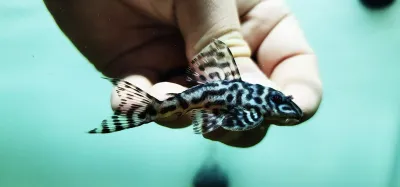
L173 Wavy Zebra Pleco - (Hypancistrus sp.)
L173 Wavy Zebra Pleco - (Hypancistrus sp.)
Price of shipping is not included.
$350.00
Out of stock
Wild Caught
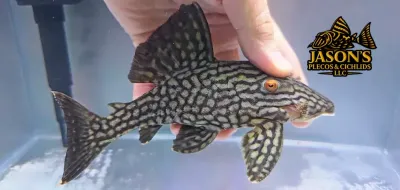
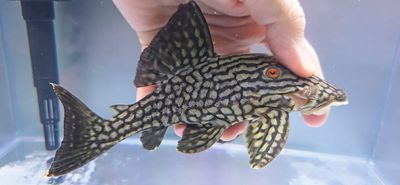
L330 Watermelon Pleco - (Panaque nigrolineatus laurafabianae)
L330 Watermelon Pleco - (Panaque nigrolineatus laurafabianae)
Price of shipping is not included.
was $250.00
Save 20%
$200.00
Captive Bred
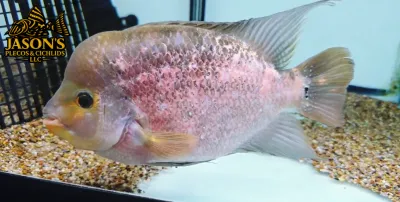
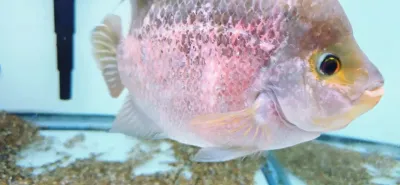
Flowerhorn x Midas Hybrid
Flowerhorn x Midas Hybrid
Price of shipping is not included.
5.0
(1)
was $160.00
Save 6%
$150.00
Out of stock
Captive Bred
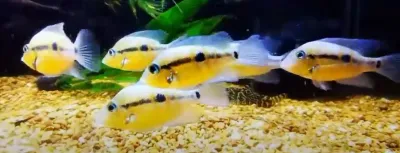
Blackgullet Cichlid - (Thorichthys pasionis)
Blackgullet Cichlid - (Thorichthys pasionis)
Price of shipping is not included.
$16.00
Out of stock
Wild Caught
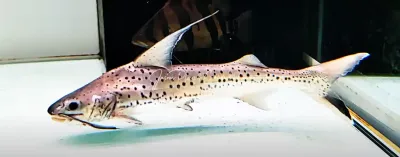
Lince Catfish - (Platynematichthys notatus)
Lince Catfish - (Platynematichthys notatus)
Price of shipping is not included.
was $1 500.00
Save 20%
$1 200.00
Out of stock
Wild Caught
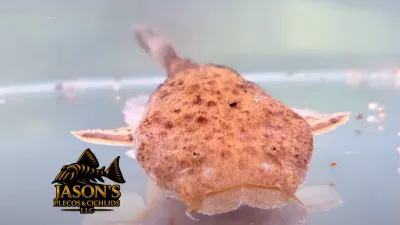
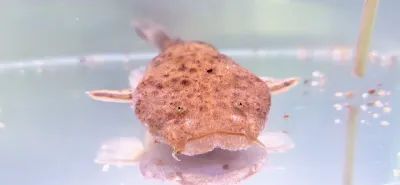
Pac-man Catfish - (Lophiosilurus alexandri)
Pac-man Catfish - (Lophiosilurus alexandri)
Price of shipping is not included.
$500.00
Out of stock
Captive Bred
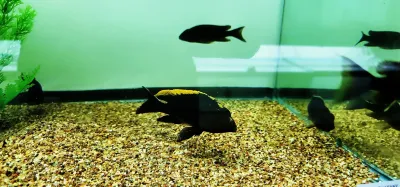
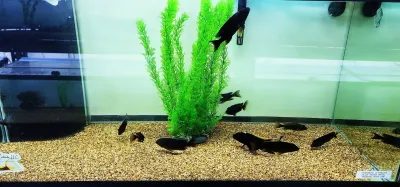
Black Orange Dorsal - (Otopharynx Lithobates) Breeding Colony
Black Orange Dorsal - (Otopharynx Lithobates) Breeding Colony
Price of shipping is not included.
$400.00
Out of stock
Captive Bred

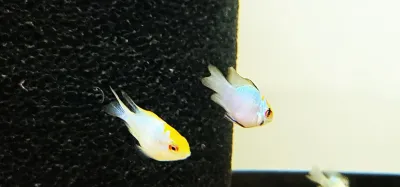
Electric Blue Ram Cichlid - (Mikrogeophagus ramirezi)
Electric Blue Ram Cichlid - (Mikrogeophagus ramirezi)
Price of shipping is not included.
$14.00
Out of stock
Powered by Lightspeed
Display prices in:USD