African Leaf Fish - (Polycentropsis abbreviata)
$25.00
Sold out
Size
Price of shipping is not included.
Sold out
Save this fish to my favorites.
Customer reviews
Reviews only from verified customers
No reviews yet. You can buy this product and be the first to leave a review.
African Leaf Fish - (Polycentropsis abbreviata)
Fish Details, Description and Information Below:
🍂 African Leaf Fish – (Polycentropsis abbreviata) – West African Ambush Predator
The African Leaf Fish (Polycentropsis abbreviata) is a small but highly specialized predatory freshwater fish famous for its incredible ability to resemble a dead leaf drifting through the water.
Its unusual combination of:
- Flattened body shape
- Mottled brown coloration
- Irregular dark markings
- Transparent portions of the fins
- Slow, deliberate movements
- Large expandable mouth
allows the African Leaf Fish to disappear among:
- Fallen leaves
- Roots
- Driftwood
- Aquatic plants
- Dark shaded areas
Rather than chasing prey around the aquarium, the African Leaf Fish is a:
STEALTH AMBUSH PREDATOR
It slowly approaches prey while appearing almost motionless, then rapidly extends its highly protrusible mouth and sucks the prey inside.
This is a fascinating specialty fish, but it should not be treated like an ordinary community fish. Anything small enough to fit inside its surprisingly large mouth may eventually become food.
🔎 Quick Facts – African Leaf Fish
- 📛 Common Name: African Leaf Fish
- 📛 Also Written: African Leaffish
- 🔬 Scientific Name: Polycentropsis abbreviata
- 📅 Described: Boulenger, 1901
- 🐟 Family: Polycentridae
- 📚 Older Family Placement: Nandidae in some older references
- 🌎 Origin: Western-Central Africa
- 🇧🇯 Benin: Native
- 🇳🇬 Nigeria: Native
- 🇨🇲 Cameroon: Native
- 🇬🇦 Gabon: Native
- 🌊 Major Drainages: Ouémé, Niger, Cross, Meme, Wouri, Sanaga, Lokoundje, Komo and Ogowe systems
- 💧 Water Type: Freshwater
- 🌿 Natural Habitat: Shaded rainforest streams and associated freshwater habitats
- 📏 Scientific Maximum: Approximately 6.7 cm / 2.6 inches standard length
- 📏 Reported Maximum Total Length: Approximately 8 cm / 3.1 inches
- 📏 Adult Planning Size: Approximately 3–3.5 inches
- 🏠 Recommended Aquarium: 30 gallons or larger
- 🌿 Aquascape: Heavily planted / highly structured
- 🌑 Lighting: Low to subdued
- 🌊 Water Movement: Low to Gentle
- 🌡️ Temperature: Approximately 79–86°F
- 💧 pH: Approximately 6.0–6.5
- 💦 Hardness: Soft, preferably below approximately 10 dGH
- 🍽️ Diet: Carnivore / Ambush Predator
- 🦐 Live Invertebrates: Excellent
- ❄️ Frozen Foods: Some individuals can be conditioned to accept them
- 🐟 Small Fish: Natural prey
- 🦐 Small Shrimp: Likely prey
- 🚫 Algae Eater: No
- 😌 General Activity: Quiet and slow-moving
- ⚠️ Predatory: Extremely
- 🌙 Activity: Primarily crepuscular / nocturnal
- 🥚 Breeding: Bubble-Nest Spawner
- 👨👧 Parental Care: Male guards eggs and newly hatched larvae
- ⭐ Care Level: Intermediate to Advanced
- 🌎 IUCN Status: Least Concern
🧬 Valid Scientific Species
The currently accepted scientific name is:
Polycentropsis abbreviata
The species was described by:
George Albert Boulenger
in:
1901
The original type locality is from the:
NIGER DELTA
at the junction of the:
- Ethiop River
- Jamieson River
The species remains scientifically valid today.
🐟 Current Family – Polycentridae
Modern FishBase and Catalog of Fishes classification places the African Leaf Fish in:
FAMILY POLYCENTRIDAE
also known as the:
LEAFFISHES
Older aquarium books and websites may still place the species in:
NANDIDAE
which explains why both family names can appear when researching this fish.
For the updated listing, use:
POLYCENTRIDAE
🍂 Incredible Dead-Leaf Camouflage
The African Leaf Fish is one of the freshwater aquarium hobby's most impressive examples of:
CAMOUFLAGE
Its body resembles a dead leaf in both:
- Shape
- Color
- Movement
The fish can remain nearly motionless among vegetation while slowly moving its transparent fins.
From a distance, it can look less like a fish and more like a piece of:
DRIFTING PLANT MATERIAL
🎨 Appearance
Typical coloration includes:
- Brown
- Dark brown
- Beige
- Gray-brown
- Olive-brown
- Nearly black
with irregular:
- Dark blotches
- Black markings
- Cream markings
- Marbling
across the head and body.
🔄 Remarkable Color-Changing Ability
The African Leaf Fish can change its coloration considerably.
The same specimen may shift between:
- Pale beige
- Brown
- Heavily marbled
- Very dark brown
- Almost black
depending on:
- Mood
- Stress
- Lighting
- Background
- Surroundings
- Hunting behavior
This helps the fish remain concealed in changing environments.
👶 Juvenile Coloration
Very young African Leaf Fish can look dramatically different from adults.
Small juveniles may display:
STRONG BLACK-AND-WHITE CONTRAST
before developing the more subdued leaf-like mottling associated with mature fish.
Do not assume that a strongly patterned juvenile will retain exactly the same colors as an adult.
⚠️ Color Disclaimer
Exact coloration cannot be guaranteed.
African Leaf Fish can change appearance rapidly according to:
- Stress
- Shipping
- Aquarium lighting
- Background color
- Plants
- Mood
- Age
- Acclimation
A newly transported fish may look significantly different after it settles into its permanent aquarium.
👄 Massive Protrusible Mouth
One of the most impressive features of Polycentropsis abbreviata is its:
EXTENDABLE MOUTH
At rest, the mouth does not appear especially enormous.
When attacking prey, however, the jaws rapidly extend forward and form a:
TUBE-LIKE OPENING
that creates suction and pulls the prey inside.
🎯 Ambush Hunting
The African Leaf Fish does not normally chase prey over long distances.
Instead, it:
- Remains nearly motionless.
- Uses camouflage to avoid detection.
- Slowly approaches its target.
- Uses tiny fin movements to maintain position.
- Waits until the prey is extremely close.
- Rapidly extends its mouth.
- Sucks the prey inside.
The strike happens:
EXTREMELY FAST
compared with the fish's otherwise slow movements.
🐟 Do Not Underestimate Its Mouth
An African Leaf Fish can consume prey that appears surprisingly large compared with its own body.
Therefore:
IF ANOTHER FISH CAN FIT INTO ITS MOUTH, CONSIDER IT POTENTIAL FOOD.
Do not judge compatibility based only on body length.
A slender fish may be swallowed even when it appears relatively long.
📏 Adult Size
FishBase documents a maximum of approximately:
6.7 CM STANDARD LENGTH
or approximately:
2.6 INCHES BEFORE THE FULL TAIL FIN
A reported maximum total length is approximately:
8 CM / 3.1 INCHES
For aquarium planning:
EXPECT APPROXIMATELY 3–3.5 INCHES
⚠️ Small Fish – Large Predator
Its modest size can be misleading.
Although an adult is only around 3 inches long, it has:
- An unusually large mouth
- Powerful suction feeding
- Excellent camouflage
- Strong predatory instincts
This is:
A TRUE PREDATORY FISH IN A SMALL PACKAGE
🌎 Native Distribution
The African Leaf Fish has a fairly broad western-central African distribution.
Its range extends from:
BENIN TO GABON
🇧🇯 Benin
The species occurs in the:
OUÉMÉ RIVER SYSTEM
in Benin.
🇳🇬 Nigeria
Its Nigerian range includes:
- Lower Niger River
- Niger Delta
- Cross River region
Nigeria is also an important source of African Leaf Fish entering the international aquarium trade.
🇨🇲 Cameroon
The species occurs in coastal portions of several Cameroon river systems including:
- Meme
- Wouri
- Sanaga
- Lokoundje
🇬🇦 Gabon
Its range continues into Gabon, including:
- Komo Basin
- Ogowe / Ogooué Basin
🌿 Rainforest Fish
The African Leaf Fish is strongly associated with:
RAINFOREST HABITATS
These environments commonly provide:
- Heavy shade
- Overhanging vegetation
- Submerged branches
- Roots
- Fallen leaves
- Dark bottoms
- Soft acidic water
- Gentle current
🌊 Natural Water Movement
This fish is not a high-current river specialist.
Provide:
LOW TO GENTLE WATER MOVEMENT
The fish's hunting strategy depends on:
- Slow movement
- Hovering
- Camouflage
A powerful current can make the fish uncomfortable and interfere with its natural behavior.
💨 Filtration Without Excessive Current
Good filtration is still important.
Useful choices include:
- Sponge filters
- Gentle canister-filter returns
- Diffused hang-on-back returns
- Low-flow internal filtration
The goal is:
CLEAN WATER WITHOUT TURNING THE AQUARIUM INTO A RIVER TORRENT
🌡️ Temperature – Important Update
A good long-term temperature range is:
79–86°F / 26–30°C
This species naturally prefers:
WARM TROPICAL WATER
A useful target for routine maintenance is approximately:
80–84°F
⚠️ Avoid Keeping It Too Cool
Older aquarium information sometimes recommends temperatures in the mid-70s°F.
I would not use those temperatures as the preferred long-term range.
The African Leaf Fish does better in consistently:
WARM WATER
💧 pH
Natural records strongly associate the species with:
SLIGHTLY ACIDIC WATER
A good target is:
pH 6.0–6.5
💦 Hardness
Provide:
SOFT WATER
Ideally, hardness should remain around:
10 dGH OR LESS
when practical.
💧 Water Parameters
A good aquarium range is:
- 🌡️ Temperature: 79–86°F
- 💧 pH: Approximately 6.0–6.5
- 💦 Hardness: Soft, generally below approximately 10 dGH
- 🌊 Flow: Low to Gentle
- ☠️ Ammonia: 0 ppm
- ☠️ Nitrite: 0 ppm
- 🔄 Nitrate: Keep low
Stable conditions are extremely important.
⚠️ Sensitive to Deteriorating Water Quality
The African Leaf Fish should not be considered a fish for:
- Neglected aquariums
- Uncycled tanks
- Rapidly fluctuating parameters
- Heavy organic buildup
Maintain:
CLEAN, STABLE WATER
with regular partial water changes.
🏠 Aquarium Size
For one adult or a carefully selected pair:
30 GALLONS OR LARGER
provides a comfortable permanent setup.
Although the fish is small, the additional space allows for:
- Dense vegetation
- Feeding territory
- Multiple hiding areas
- Stable water quality
- Reduced stress
📐 Floor Space & Structure
The aquarium does not need to be extremely tall.
More useful features include:
- Horizontal swimming space
- Dense plant groups
- Root structures
- Driftwood
- Open hunting areas
🌿 Heavily Planted Aquarium
African Leaf Fish benefit greatly from:
DENSE AQUATIC VEGETATION
Plant heavily around:
- Sides
- Back
- Corners
while leaving some open space for feeding.
🌱 Suitable Plant Structure
Useful plants may include species that create:
- Dense stems
- Broad leaves
- Floating cover
- Root systems
- Shaded areas
The exact plant species matters less than providing:
COVER + SHADE + AMBUSH STRUCTURE
🌿 Floating Plants
Floating plants are particularly useful because they:
- Diffuse aquarium lighting
- Create shade
- Make the fish feel secure
- Provide potential bubble-nest structure
- Produce hanging roots for cover
🌑 Subdued Lighting
African Leaf Fish generally prefer:
LOW TO MODERATE LIGHT
Bright, exposed aquariums can make them:
- Shy
- Stressed
- Reluctant to feed
Use:
- Floating plants
- Dark substrate
- Driftwood
- Leaf litter
to create shaded areas.
🍂 Leaf Litter
Aquarium-safe leaf litter can be especially appropriate.
It provides:
- Natural visual camouflage
- Tannins
- Darkened water
- Microhabitat
- A rainforest appearance
Always use leaves known to be safe for aquarium use.
🪵 Driftwood & Roots
Driftwood is valuable for:
- Cover
- Shade
- Visual barriers
- Natural appearance
- Hunting positions
African Leaf Fish may remain nearly motionless beside a branch or root while waiting for prey.
🍽️ Diet – Specialized Carnivore
The African Leaf Fish is a:
CARNIVORE
and natural ambush predator.
Wild fish feed primarily on:
- Small fish
- Shrimp
- Crustaceans
- Aquatic insects
- Insect larvae
- Worms
- Other small animals
🪱 Excellent Live Foods
Suitable cultured live foods include:
- Earthworms
- White mosquito larvae
- Large Daphnia
- Tubifex from a reliable source
- Appropriate live aquatic invertebrates
Movement strongly stimulates the fish's feeding response.
❄️ Frozen Foods
Some individuals can eventually be conditioned to accept:
- Frozen bloodworms
- Frozen mysis
- Frozen brine shrimp
- Other appropriately sized frozen foods
However:
DO NOT ASSUME EVERY AFRICAN LEAF FISH WILL IMMEDIATELY ACCEPT FROZEN OR PREPARED FOODS
⚠️ Feeding Can Be the Biggest Challenge
One of the major difficulties with this species is getting newly acquired fish to eat consistently.
Some individuals strongly prefer:
MOVING LIVE PREY
and may initially ignore:
- Pellets
- Flakes
- Stationary frozen foods
For this reason, customers should be prepared to provide appropriate live foods if necessary.
🚫 Not a Pellet-Only Beginner Fish
Do not purchase this species expecting it to immediately eat:
- Flakes
- Generic pellets
- Algae wafers
Some individuals can be conditioned onto nonliving foods, but it should not be guaranteed.
🐟 Small Fish Are Natural Prey
Small fish are part of the natural predatory diet.
However, there is normally no reason to depend on cheap commercial feeder fish.
Routine feeder fish can introduce:
- Parasites
- Bacteria
- Disease
- Poor nutritional balance
Cultured live invertebrates and suitable frozen foods are generally preferable when the fish will accept them.
🦐 Shrimp Warning
Small ornamental shrimp should be considered:
FOOD
rather than tankmates.
This includes many:
- Dwarf shrimp
- Juvenile shrimp
- Small freshwater crustaceans
🎯 Feed Near the Fish
Because African Leaf Fish are deliberate ambush predators, they may not compete well with fast-moving fish at feeding time.
Offer food:
- Near their hiding area
- During subdued lighting
- Toward evening
- Where the fish can stalk naturally
🌙 Activity
The African Leaf Fish is most active:
AT DUSK AND DURING THE NIGHT
During the day it may spend long periods:
- Hovering
- Hiding
- Remaining motionless
- Mimicking leaves
This is normal behavior.
😌 Peaceful Does Not Mean Community Safe
African Leaf Fish are sometimes described as:
PEACEFUL
because they do not constantly chase other fish.
That description can be misleading.
They are:
HIGHLY PREDATORY
and will consume smaller tankmates.
🐠 Tankmate Rule
The simplest rule is:
DO NOT HOUSE IT WITH ANY FISH SMALL ENOUGH TO SWALLOW.
Also avoid:
- Tiny tetras
- Guppies
- Small rasboras
- Juvenile fish
- Small shrimp
⚠️ Avoid Boisterous Tankmates
Fast or aggressive tankmates can also be a problem.
African Leaf Fish are:
- Slow-moving
- Deliberate feeders
- Easily outcompeted
Avoid fish that constantly:
- Chase them
- Harass them
- Steal their food
🏠 Species-Focused Aquarium Is Safest
For the best opportunity to observe natural behavior:
A SPECIES-FOCUSED AQUARIUM IS AN EXCELLENT CHOICE
A single specimen or carefully monitored compatible individuals allow the keeper to control:
- Feeding
- Water conditions
- Stress
- Competition
much more easily.
⚠️ Intraspecific Behavior
African Leaf Fish can sometimes show aggression toward one another, particularly:
- In small aquariums
- During breeding
- When territories are limited
Provide plenty of:
- Plants
- Visual barriers
- Cover
when keeping multiple individuals.
♂️ Male vs. Female
African Leaf Fish are:
VERY DIFFICULT TO SEX
There is no simple, completely dependable juvenile visual difference.
Some observations suggest:
Mature Males
May develop:
- Slightly larger head
- More pronounced breeding behavior
- Bubble-nest construction
Mature Females
May:
- Remain slightly smaller
- Have a somewhat smaller head
- Become visibly fuller when carrying eggs
These differences can be subtle.
Unless confidently identified:
SELL AS UNSEXED
🥚 Captive Breeding – Documented
Unlike many unusual predatory fish, African Leaf Fish breeding behavior is well known.
They are:
BUBBLE-NEST SPAWNERS
This is particularly interesting because they are not gouramis or bettas.
🫧 Bubble Nest
A mature male constructs a bubble nest:
UNDER OR AMONG BROAD PLANT LEAVES
often near the water surface.
The bubble structure provides a protected area for the developing eggs.
💕 Spawning
When a compatible female is ready:
- The male prepares the nest.
- Courtship occurs around the spawning area.
- Eggs are deposited into or beneath the bubble nest.
- The male fertilizes them.
- The male remains with the nest.
👨👧 Male Parental Care
After spawning:
THE MALE PROVIDES THE PARENTAL CARE
He guards:
- Eggs
- Nest
- Newly hatched larvae
and maintains the bubble nest.
⚠️ Female May Need Removal
After spawning, the female may need to be:
SEPARATED
in a dedicated breeding aquarium.
The male becomes responsible for nest defense and brood care.
🐣 Hatching
Breeding reports indicate that eggs can hatch within several days depending on:
- Temperature
- Water chemistry
- Oxygenation
Around warm tropical temperatures, approximately:
5–6 DAYS
has been reported in some breeding accounts.
Exact timing should not be considered guaranteed.
👶 Extremely Small Fry
Newly free-swimming fry are:
VERY SMALL
and require appropriately tiny foods.
Suitable first foods can include:
- Infusoria
- Other microscopic live foods
As the fry grow, they can progress to:
- Artemia nauplii
- Small live foods
⚠️ Fry Rearing Is Specialized
Producing eggs is only part of the breeding challenge.
Raising fry requires:
- Very small live foods
- Excellent water quality
- Careful feeding
- Low waste
- Stable warm conditions
Captive breeding should therefore be considered:
AN INTERMEDIATE TO ADVANCED PROJECT
🌎 Conservation Status
Polycentropsis abbreviata is currently assessed as:
LEAST CONCERN
The assessment dates to:
2019
Its natural range extends across multiple West and Central African drainage systems.
⚠️ Least Concern Does Not Mean Release Is Safe
The conservation category does not change aquarium responsibility.
Never release African Leaf Fish into:
- Rivers
- Lakes
- Streams
- Ponds
- Canals
- Drainage systems
Aquarium fish must never be introduced into local ecosystems.
⭐ Why Keep an African Leaf Fish?
The African Leaf Fish combines:
- 🍂 Incredible dead-leaf camouflage
- 🎨 Rapid color-changing ability
- 👄 Highly protrusible mouth
- 🎯 Fascinating ambush hunting
- 🌿 Rainforest habitat behavior
- 📏 Compact approximately 3-inch adult size
- 🌙 Crepuscular and nocturnal behavior
- 🫧 Unusual bubble-nest reproduction
- 👨👧 Male parental care
- 🌍 Genuine West African origin
into one of the most unusual small predatory freshwater fish available to experienced aquarium keepers.
⚠️ Important Considerations
Before purchasing an African Leaf Fish:
- The correct scientific name is Polycentropsis abbreviata.
- The species was formally described in 1901.
- Current taxonomy places it in Polycentridae.
- Older references may place it in Nandidae.
- It is native from Benin through Nigeria and Cameroon to Gabon.
- Important river systems include the Ouémé, Niger, Cross, Wouri, Sanaga, Lokoundje, Komo and Ogowe.
- FishBase documents approximately 6.7 cm standard length.
- Maximum reported total length is approximately 8 cm / 3.1 inches.
- Plan for approximately 3–3.5 inches.
- Despite its small adult size, it is a highly efficient predator.
- Anything that fits in its mouth may become food.
- Small shrimp should be considered prey.
- Provide approximately 30 gallons or larger.
- Use dense plants, roots, driftwood and shaded areas.
- Floating plants are strongly recommended.
- Maintain subdued lighting.
- Maintain low to gentle water movement.
- Maintain approximately 79–86°F.
- Maintain slightly acidic water around pH 6.0–6.5.
- Soft water is preferred.
- Keep ammonia and nitrite at zero.
- Maintain low nitrate and stable water quality.
- Feed a carnivorous diet.
- Be prepared to offer cultured live foods.
- Some individuals may be conditioned to frozen foods.
- Do not assume the fish will eat flakes or pellets.
- Avoid routine use of disease-prone feeder fish.
- Avoid small tankmates.
- Avoid fast, aggressive feeding competition.
- A species-focused aquarium is often safest.
- Sexing is difficult.
- African Leaf Fish build bubble nests.
- The male guards the eggs and newly hatched larvae.
- Fry require microscopic live foods initially.
- The species is currently classified as Least Concern.
- Never release aquarium fish into natural waterways.
🧬 Taxonomy
The currently accepted scientific name is:
Polycentropsis abbreviata Boulenger, 1901
Classification:
- Family: Polycentridae
- Genus: Polycentropsis
- Species: abbreviata
Older references may place the species in:
NANDIDAE
but modern Catalog of Fishes and FishBase classification uses:
POLYCENTRIDAE
Native distribution:
WESTERN-CENTRAL AFRICA – BENIN TO GABON
For this product, use:
African Leaf Fish – (Polycentropsis abbreviata)
🚚 Live Fish Shipping
Live fish are professionally packed for safe transport.
Shipping availability depends on:
- Fish size
- Destination
- Weather conditions
- Carrier availability
- Applicable state and local regulations
Please review our Shipping & Payment Information and Live Arrival Guarantee / DOA Policy before ordering.
⚠️ Buyer Responsibility
Customers are responsible for confirming that Polycentropsis abbreviata may legally be purchased, possessed, transported, and received in their state or local jurisdiction before ordering.
Never release aquarium fish into natural waterways.
Below are fish you may also like.
Wild Caught
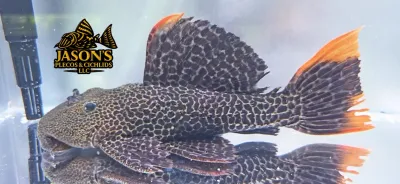
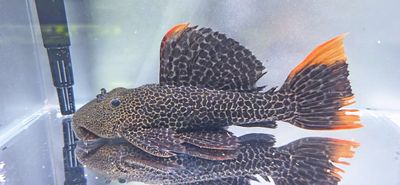
L427 Jatupu Cactus Pleco - (Pseudacanthicus sp.)
L427 Jatupu Cactus Pleco - (Pseudacanthicus sp.)
Price of shipping is not included.
was $450.00
Save 19%
$365.00
Wild Caught
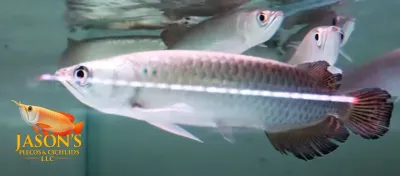
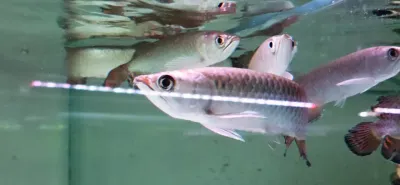
Jardini Arowana - (Scleropages jardinii)
Jardini Arowana - (Scleropages jardinii)
Price of shipping is not included.
5.0
(1)
was $260.00
Save 4%
$250.00
Out of stock
Wild Caught
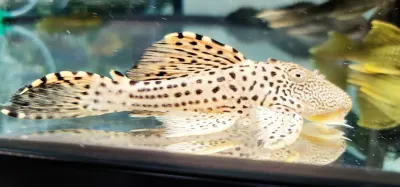
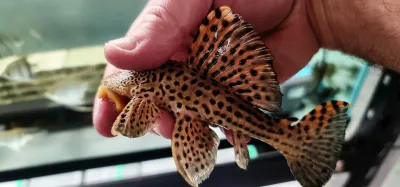
L091 Three Beacon Pleco/Redfin Blackspot Pleco - (Leporacanthicus triactis) Dragon Fin
L091 Three Beacon Pleco/Redfin Blackspot Pleco - (Leporacanthicus triactis) Dragon Fin
Price of shipping is not included.
$400.00
Out of stock
Wild Caught
Gold Bar Puffer - (Chonerhinos naritus)
Gold Bar Puffer - (Chonerhinos naritus)
Price of shipping is not included.
$250.00
Out of stock
Captive Bred
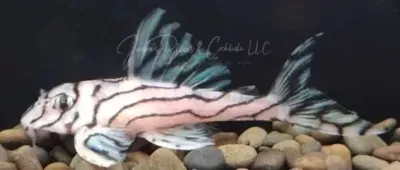
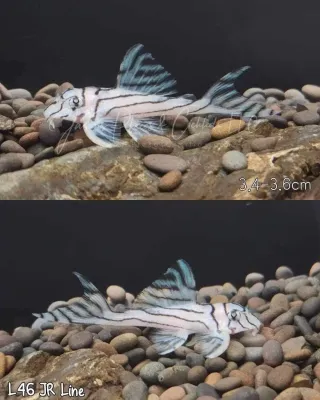
L046 Zebra Pleco JR Line - (Hypancistrus zebra)
L046 Zebra Pleco JR Line - (Hypancistrus zebra)
Price of shipping is not included.
$4 000.00
Out of stock
Wild Caught
L128 Blue Phantom Pleco - (Hemiancistrus sp.)
L128 Blue Phantom Pleco - (Hemiancistrus sp.)
Price of shipping is not included.
was $55.00
Save 18%
$45.00
Out of stock
Wild Caught
L090 Papa Panaque - (Panaque bathyphilus)
L090 Papa Panaque - (Panaque bathyphilus)
Price of shipping is not included.
$220.00
Out of stock
Wild Caught
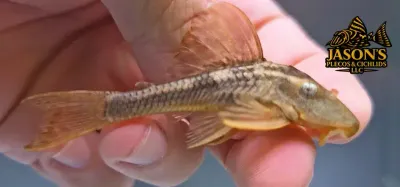
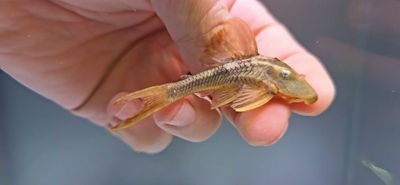
L137 Blue Eyed Red Fin Pleco - (Hypostomus soniae)
L137 Blue Eyed Red Fin Pleco - (Hypostomus soniae)
Price of shipping is not included.
was $50.00
Save 10%
$45.00
Out of stock
Wild Caught
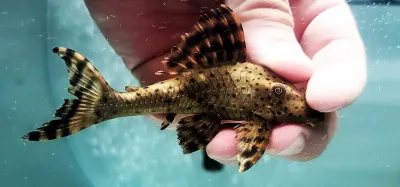
L303 Red Pepper Pleco - (Hypostomus macushi)
L303 Red Pepper Pleco - (Hypostomus macushi)
Price of shipping is not included.
$50.00
Out of stock
Wild Caught
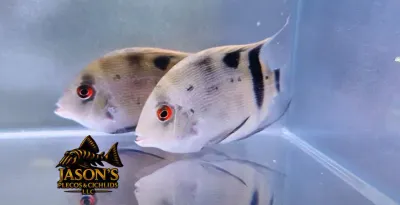
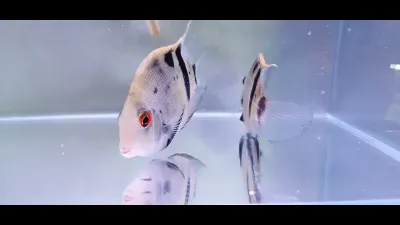
Panda Uaru - (Uaru fernandezyepezi)
Panda Uaru - (Uaru fernandezyepezi)
Price of shipping is not included.
was $95.00
Save 5%
$90.00
Out of stock
Wild Caught
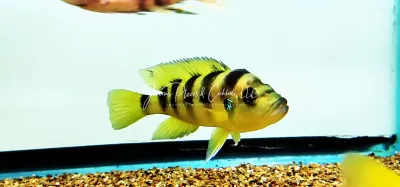
Six-barred Lamprologus - (Neolamprologus sexfasciatus)
Six-barred Lamprologus - (Neolamprologus sexfasciatus)
Price of shipping is not included.
$45.00
Out of stock
Wild Caught
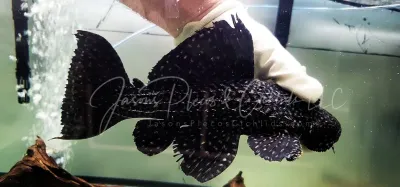
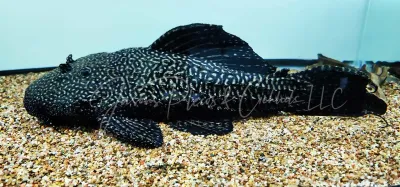
L520 - (Pseudacanthicus sp.)
L520 - (Pseudacanthicus sp.)
Price of shipping is not included.
was $800.00
Save 38%
$500.00
Out of stock
Powered by Lightspeed
Display prices in:USD