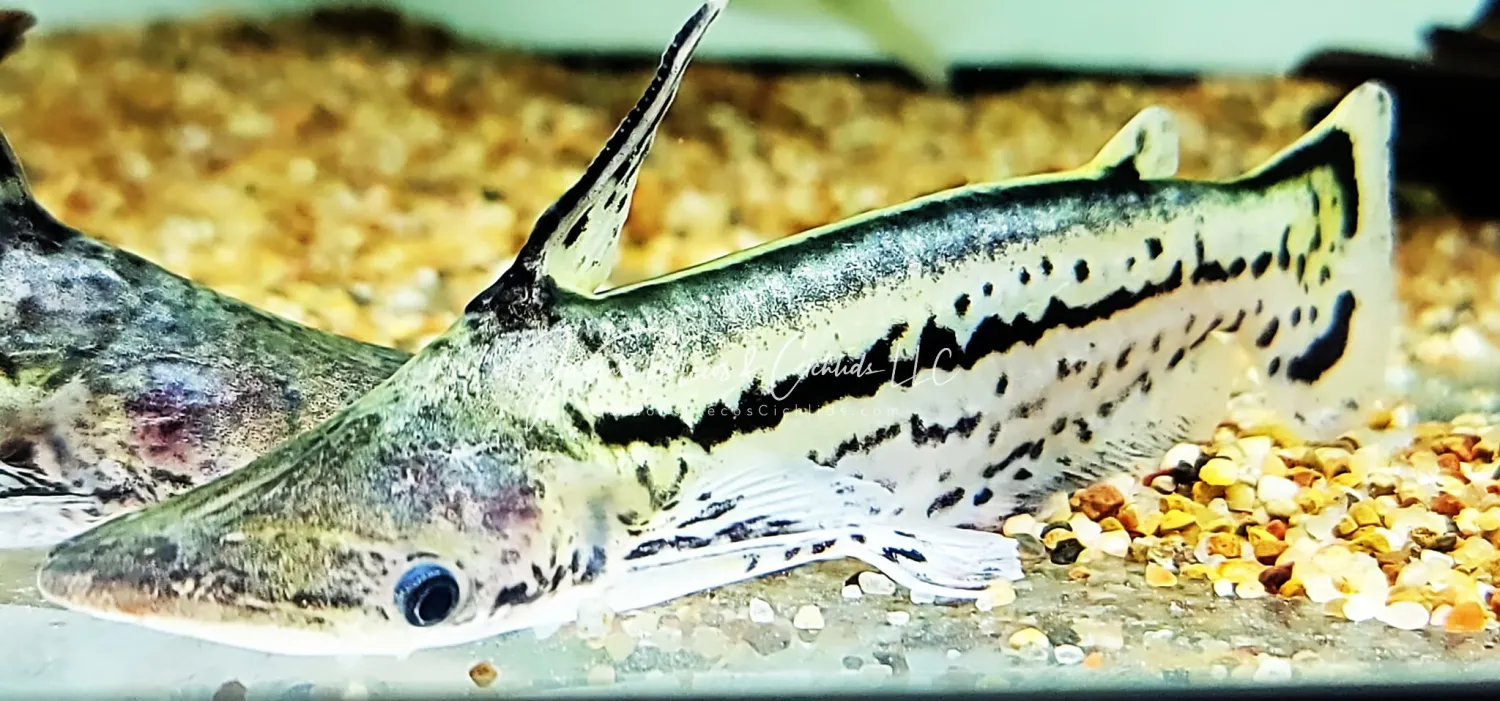
Unicorn Catfish - (Ageneiosus magoi)
$100.00
Sold out
was $110.00 Save 9%
Size
Questions, Comments, Concerns? Let us know!
Enter your text
Price of shipping is not included.
Sold out
Save this fish to my favorites.
Customer reviews
Reviews only from verified customers
No reviews yet. You can buy this product and be the first to leave a review.
Unicorn Catfish - (Ageneiosus magoi)
Fish Details, Description and Information Below:
🦄 Unicorn Catfish – (Ageneiosus magoi) – Wild-Caught Orinoco Driftwood Catfish
The Unicorn Catfish (Ageneiosus magoi) is a highly distinctive South American driftwood catfish with a sleek, streamlined body, unusually small barbels, bold dark lateral markings, and fascinating breeding-season changes in mature males.
Unlike many catfish that spend most of their lives resting on the bottom, Ageneiosus magoi is an active:
OPEN-WATER / PELAGIC CATFISH
that requires substantial swimming room.
The species is native to the:
RIO ORINOCO BASIN OF VENEZUELA
including the Orinoco, Apure, Portuguesa, Guárico, and associated floodplain and river systems.
It is also an opportunistic predator capable of swallowing smaller aquarium fish.
However, it is better described as:
PREDATORY RATHER THAN GENERALLY AGGRESSIVE
and can coexist with appropriately sized tankmates that are too large to swallow.
This listing is for:
WILD-CAUGHT UNICORN CATFISH
🔎 Quick Facts – Unicorn Catfish
- 📛 Common Name: Unicorn Catfish
- 📛 Other Names: Dolphin Catfish, Slopehead Catfish
- 🔬 Scientific Name: Ageneiosus magoi
- 📅 Formally Described: 1989
- 🐟 Family: Auchenipteridae
- 🧬 Subfamily: Auchenipterinae
- 🌿 Stock: Wild Caught
- 📏 Current Size: Approximately 4–5 inches
- 🇻🇪 Country: Venezuela
- 🌊 Native Drainage: Rio Orinoco Basin
- 📍 Type Locality: Esteros de Camaguán, Guárico, Venezuela
- 💧 Water Type: Freshwater
- 🐟 Lifestyle: Pelagic / Active Open-Water Catfish
- 📏 Documented Scientific Specimens: At least 20.5 cm / 8.1 inches standard length
- 📏 Adult Planning Size: Approximately 8–10 inches total length
- 🏠 Recommended Aquarium: Approximately 125 gallons or larger
- 📐 Aquarium Length: Approximately 5–6 feet or longer strongly preferred
- 🌡️ Temperature: Approximately 75–83°F
- 💧 pH: Approximately 6.5–7.5
- 💦 Water: Soft to moderately mineralized
- 💨 Oxygenation: Good to High
- 🌊 Water Movement: Moderate
- 🏊 Swimming Space: Very Important
- 🍽️ Diet: Predatory Carnivore
- 🦐 Primary Foods: Fish, crustaceans, insects, worms, and other animal foods
- 🚫 Feeder Fish Required: No
- 😌 Temperament: Generally peaceful toward fish too large to swallow
- ⚠️ Predatory: Yes
- 🐟 Small Fish Safe: No
- 👥 Conspecifics: Can be kept with similarly sized individuals when adequate space is provided
- 🌙 Activity: Crepuscular / nocturnal but often active during daylight
- ♂️ Breeding Male: Develops enlarged curved dorsal spine, longer barbels, and modified anal fin
- 🥚 Aquarium Breeding: Not reliably documented
- ⭐ Care Level: Intermediate to Advanced
- 🌎 IUCN Status: Least Concern
🧬 Valid Scientific Species
The currently accepted scientific name is:
Ageneiosus magoi
The species was formally described in:
1989
by Castillo and Brull.
A major taxonomic revision of the genus Ageneiosus in 2017 continued to recognize:
Ageneiosus magoi
as a valid species.
Therefore, the correct product identification is:
Unicorn Catfish – (Ageneiosus magoi)
🦄 Important “Unicorn” Correction
The older product description states that this fish has a:
“horn-like extension on its snout.”
That should be removed.
THE UNICORN CATFISH DOES NOT HAVE A PERMANENT HORN ON ITS SNOUT.
Instead, one of the most remarkable features of this species occurs in:
SEXUALLY ACTIVE MALES
during the reproductive season.
♂️ The Male's Temporary “Horn”
When a mature male enters breeding condition, the:
FIRST DORSAL-FIN SPINE
becomes dramatically:
- Enlarged
- Elongated
- Curved
- Irregularly shaped
This structure can give a mature breeding male an unusual horn-like appearance.
🔄 The Dorsal Spine Changes Again After Breeding
Even more unusual:
THE ENLARGED BREEDING SPINE IS TEMPORARY
After the reproductive period, the exaggerated dorsal structure regresses.
The male can then become considerably harder to distinguish from a female.
This unusual seasonal transformation is one of the most fascinating characteristics of Ageneiosus catfish.
🧔 Almost “Beardless”
The genus name:
Ageneiosus
comes from Greek roots referring roughly to:
WITHOUT A BEARD
This refers to the extremely reduced barbels compared with the prominent whiskers found on many other catfish.
🔬 Tiny Maxillary Barbels
Under normal conditions, the maxillary barbels are:
- Extremely small
- Easily overlooked
- Partly concealed near the upper lip
This gives the fish a very different facial appearance from typical long-whiskered catfish.
♂️ Male Barbels Change During Breeding
During reproductive condition, mature males can develop:
ELONGATED MAXILLARY BARBELS
These temporary structures are associated with mating behavior.
After the reproductive period, they regress again.
🎨 Appearance
The Unicorn Catfish has an elongated, hydrodynamic body designed for active swimming.
Typical coloration includes:
- Silver
- Gray
- Cream
- Pale bronze
- Yellowish tones
combined with:
- Dark brown
- Charcoal
- Black
markings.
➖ Lateral Stripes
Many specimens display two prominent dark markings extending along the sides of the body.
These may appear as:
- Continuous dark stripes
- Broken stripes
- Irregular bands
- Rows of blotches
depending on the individual.
⚫ Spotted & Marbled Markings
Additional dark markings can appear across the:
- Head
- Flanks
- Dorsal fin
- Caudal fin
creating an attractive mixture of:
- Spots
- Blotches
- Stripes
- Marbling
🟡 Yellow Coloration
Some wild specimens display an attractive:
YELLOW OR GOLDEN TINGE
to portions of the body and fins.
However, this coloration may:
- Fade after import
- Change with maturity
- Vary between specimens
- Appear differently under aquarium lighting
⚠️ Color Disclaimer
Exact coloration cannot be guaranteed.
Individual wild fish may differ in:
- Stripe width
- Spot size
- Number of blotches
- Yellow coloration
- Body darkness
- Fin pattern
Color may also change temporarily because of:
- Shipping
- Stress
- Lighting
- Aquarium background
- Diet
- Water quality
- Acclimation
🌎 Native Distribution
Ageneiosus magoi is native to:
VENEZUELA
within the:
RIO ORINOCO BASIN
📍 Type Locality
The original type locality is:
ESTEROS DE CAMAGUÁN
in:
GUÁRICO STATE, VENEZUELA
This area forms part of the broad Orinoco floodplain ecosystem.
🌊 Documented River Systems
Scientific records include fish from areas associated with:
- Rio Orinoco
- Rio Apure
- Rio Portuguesa
- Rio Guárico
- Rio Caracol
- Rio El Canito
- Caño Dora
- Caño Maporal
- Caño Anabata
- Caño Araguaito
- Lago Tineo
- Esteros de Camaguán
This is a much more widespread Orinoco-basin species than a fish restricted to one tiny rocky locality.
🌾 Floodplain Habitat
The type region includes extensive:
- Floodplains
- Seasonal wetlands
- River channels
- Lagoons
- Caños
- Flooded habitats
This is important because the Unicorn Catfish should not be described as strictly inhabiting:
FAST ROCKY RAPIDS
🏊 Pelagic Catfish
FishBase classifies Ageneiosus magoi as:
PELAGIC
which is unusual for a catfish commonly placed in the aquarium's “bottom-fish” category.
The Unicorn Catfish spends considerable time:
ACTIVELY SWIMMING THROUGH OPEN WATER
⚠️ Not a Typical Bottom-Dwelling Catfish
Do not expect this species to spend its entire life:
- Sitting inside a cave
- Attached to wood
- Resting on the substrate
It is much more active than many:
- Plecos
- Doradids
- Large benthic catfish
🏠 Aquarium Size
Although the Unicorn Catfish does not reach the enormous size claimed on some older aquarium pages, it still deserves a:
LARGE AQUARIUM
because it is such an active swimmer.
For long-term housing:
APPROXIMATELY 125 GALLONS OR LARGER
is recommended.
📐 Aquarium Length Is Extremely Important
For Ageneiosus magoi:
SWIMMING LENGTH MATTERS MORE THAN EXCESSIVE HEIGHT
A tank approximately:
5–6 FEET LONG OR LONGER
is strongly preferred.
This becomes especially important when keeping:
- Multiple Unicorn Catfish
- Large tankmates
⚠️ Why Such a Large Aquarium for a 10-Inch Fish?
The recommendation is based on:
BEHAVIOR
not merely body length.
The Unicorn Catfish is:
- Streamlined
- Fast
- Pelagic
- Active
- Capable of rapid bursts of swimming
A short aquarium can severely restrict its natural behavior.
📏 Adult Size – Important Correction
The older product page lists:
12–14 INCHES
as the maximum size.
That is considerably larger than the best-supported scientific information.
🔬 Scientific Records
FishBase currently lists approximately:
18.1 CM / 7.1 INCHES STANDARD LENGTH
However, the comprehensive 2017 taxonomic revision examined Ageneiosus magoi specimens reaching:
205 MM / 20.5 CM STANDARD LENGTH
or approximately:
8.1 INCHES BEFORE THE TAIL
📏 Specialist Aquarium Size
Long-established aquarium references report adults around:
24 CM
or approximately:
9.5 INCHES TOTAL LENGTH
Therefore, for responsible customer planning:
EXPECT APPROXIMATELY 8–10 INCHES TOTAL LENGTH
⚠️ Remove the 12–14 Inch Claim
There is currently insufficient evidence to advertise:
12–14 INCHES
as the normal adult size for Ageneiosus magoi.
That larger size may result from confusion with:
OTHER AGENEIOSUS SPECIES
some of which grow substantially larger.
🆚 Other Ageneiosus
The genus contains multiple species that can appear similar in the aquarium trade.
Some grow much larger than:
A. magoi
Accurate identification is therefore important.
⚠️ Do Not Identify Solely by Common Name
Names such as:
- Dolphin Catfish
- Bottlenose Catfish
- Slopehead Catfish
- Unicorn Catfish
may be applied inconsistently within the trade.
Always preserve:
Ageneiosus magoi
as the scientific identification for this product.
🪵 Driftwood
Driftwood can be included for:
- Shade
- Cover
- Visual structure
- Natural appearance
but do not overcrowd the aquarium with décor.
Remember:
THIS FISH NEEDS OPEN SWIMMING SPACE
🪨 Aquarium Setup
A suitable aquarium should include:
- Large open swimming areas
- Smooth driftwood around the edges
- Robust plants around the perimeter if desired
- Smooth rocks
- Sand or smooth substrate
- Dimmer resting areas
- Strong filtration
- Good oxygenation
🌿 Keep the Center Open
Place much of the décor around the:
- Back
- Corners
- Sides
while maintaining:
AN OPEN CENTRAL SWIMMING AREA
This allows the fish to display its natural movement.
⚠️ Avoid Sharp Décor
Because this is a fast-moving fish, avoid sharp decorations that could cause injury during:
- Feeding
- Startle responses
- Nighttime swimming
Smooth aquarium furnishings are preferred.
🌡️ Temperature
A practical maintenance range is:
75–83°F / APPROXIMATELY 24–28°C
The current 75–82°F recommendation is therefore already reasonable.
💧 Water Parameters
A practical long-term range is:
- 🌡️ Temperature: Approximately 75–83°F
- 💧 pH: Approximately 6.5–7.5
- 💦 Hardness: Soft to Moderately Mineralized
- 💨 Oxygenation: Good to High
- 🌊 Water Movement: Moderate
- ☠️ Ammonia: 0 ppm
- ☠️ Nitrite: 0 ppm
- 🔄 Nitrate: Keep reasonably low
🌊 Moderate Water Movement
The old page recommends:
MODERATE TO STRONG FLOW
I would soften that.
The species occurs across:
- River channels
- Floodplain habitats
- Lagoons
- Caños
and does not require a high-speed river-torrent aquarium.
Provide:
GOOD CIRCULATION + GOOD OXYGENATION
rather than excessive current.
💨 Oxygenation
Maintain dependable oxygenation using:
- Surface agitation
- Air stones
- Strong filter returns
- Sump filtration
- Appropriate circulation
This is particularly important in warm water and heavily stocked aquariums.
💩 Filtration
As a carnivorous catfish, A. magoi can produce significant organic waste.
Recommended filtration may include:
- Large canister filters
- Sump filtration
- Strong biological filtration
- Efficient mechanical filtration
Maintain:
AMMONIA = 0
and:
NITRITE = 0
at all times.
🔄 Water Changes
Regular partial water changes are important.
The exact schedule depends on:
- Aquarium size
- Number of fish
- Feeding
- Filtration
- Nitrate production
Do not allow large quantities of uneaten protein foods to remain in the aquarium.
🍽️ Diet – Predatory Carnivore
The Unicorn Catfish is primarily:
CARNIVOROUS
Natural diet studies have documented foods including:
- Fish
- Shrimp
- Aquatic insects
- Insect larvae
- Other arthropods
- Frogs seasonally
🦐 Recommended Aquarium Foods
Suitable foods include:
- Shrimp
- Prawns
- Mysis shrimp
- Krill
- Mussel
- Earthworms
- Nightcrawlers
- Insect larvae
- Quality carnivore pellets
- Appropriate sinking or slow-sinking prepared foods
🐟 Fish-Based Foods
Appropriate fish flesh can also be used as part of a varied diet.
Good choices include appropriately prepared:
- Tilapia
- Other safe fish flesh
Cut food into portions appropriate for the catfish's mouth.
🚫 Live Feeder Fish Are Not Necessary
The old page recommends live or frozen fish.
Although A. magoi naturally eats fish:
LIVE FEEDER FISH ARE NOT REQUIRED
Feeder fish can introduce:
- Parasites
- Bacteria
- Disease
- Nutritional problems
A varied diet of safe frozen, fresh, and prepared foods is preferable.
🌿 Small Amounts of Plant Material
Natural dietary studies have found small amounts of:
- Plant matter
- Detritus
in Ageneiosus magoi.
Captive fish have also been observed accepting some vegetables.
However:
THIS REMAINS A PREDOMINANTLY CARNIVOROUS SPECIES
Plant foods should be considered occasional dietary variety, not the foundation of the diet.
⚠️ Do Not Overfeed
Predatory catfish can readily consume more food than necessary.
Overfeeding can lead to:
- Obesity
- Excess waste
- Poor water quality
- Fatty deposits
Feed appropriately sized portions and monitor body condition.
🐟 Predatory – But Not Necessarily Aggressive
The older page describes the Unicorn Catfish as:
AN AGGRESSIVE PREDATOR
That wording can give customers the wrong impression.
A better description is:
PREDATORY BUT GENERALLY NOT COMBATIVE TOWARD SUITABLY SIZED FISH
⚠️ The Mouth-Size Rule
Any fish small enough to fit into the Unicorn Catfish's mouth should be considered:
POTENTIAL FOOD
This includes:
- Small tetras
- Small barbs
- Small livebearers
- Small catfish
- Small cichlids
🐠 Suitable Tankmates
Potential tankmates include appropriately sized:
- Silver dollars
- Larger characins
- Large peaceful cichlids
- Large loricariids
- Similar-sized catfish
provided they are:
- Too large to swallow
- Not excessively aggressive
- Compatible with the same water conditions
⚠️ Slow Fish
Use judgment with slow-moving fish small enough to be swallowed.
The Unicorn Catfish has a:
LARGE PREDATORY MOUTH
relative to its streamlined body.
A tankmate does not need to be tiny to become potential prey.
👥 Keeping Unicorn Catfish Together
Ageneiosus magoi can be maintained with:
SIMILARLY SIZED CONSPECIFICS
when adequate aquarium space is available.
They are not necessarily solitary fish.
However:
DO NOT CROWD THEM
Their active swimming behavior requires considerable room.
🏊 Group Housing
A small group requires:
- A very large aquarium
- Long swimming space
- Strong filtration
- Multiple feeding locations
For several adults:
LARGER THAN 125 GALLONS IS STRONGLY PREFERRED
🌙 Activity
Although often considered nocturnal, the Unicorn Catfish can be:
SURPRISINGLY ACTIVE DURING THE DAY
Specialist keepers have observed the species swimming openly during daylight.
Activity may increase:
- At dusk
- During feeding
- At night
but do not expect this fish to remain hidden constantly.
🧪 Wild-Caught Acclimation
This listing is for:
WILD-CAUGHT UNICORN CATFISH
After arrival:
- Keep lighting subdued
- Provide open swimming space
- Provide some sheltered areas
- Maintain good oxygenation
- Avoid sudden temperature changes
- Avoid sudden pH changes
- Maintain excellent filtration
- Confirm feeding
🍽️ Confirm Feeding
Wild fish may initially prefer:
- Shrimp
- Worms
- Insect foods
- Frozen animal foods
Once acclimated, many can learn to accept:
- Quality pellets
- Prepared carnivore foods
Transition gradually rather than allowing the fish to go without food for extended periods.
♂️ Male vs. Female – One of the Most Fascinating Catfish Differences
Sexual dimorphism in Ageneiosus magoi is particularly unusual because mature males can transform dramatically during breeding condition.
♂️ Breeding-Condition Male
A reproductively active male develops:
A LARGE, ELONGATED, CURVED FIRST DORSAL-FIN SPINE
along with:
ELONGATED MAXILLARY BARBELS
and a:
MODIFIED ANAL FIN
used as a reproductive organ.
🧬 Modified Anal Fin
The first portions of the male's anal fin become thickened and modified into a:
COPULATORY ORGAN
sometimes described in scientific literature as a:
PSEUDOPENIS
This is associated with internal insemination.
🤝 Specialized Mating Behavior
During mating, the male uses his modified:
- Dorsal spine
- Maxillary barbels
- Anal-fin reproductive structure
to help grasp and position himself with the female.
This is a remarkably specialized reproductive system among aquarium catfish.
🔄 Male Features Regress
After the reproductive period:
THE MALE'S EXAGGERATED FEATURES REGRESS
The elongated dorsal spine and barbels diminish, and the reproductive structure becomes much less obvious.
As a result:
MALES AND FEMALES CAN BECOME DIFFICULT TO DISTINGUISH OUTSIDE BREEDING CONDITION
🥚 Reproduction – Important Accuracy Note
The reproductive biology of Ageneiosus magoi is unusual but incompletely documented.
Mating involves:
INTERNAL INSEMINATION
through the male's modified anal fin.
However, detailed species-specific information regarding:
- Egg deposition
- Spawning season
- Egg number
- Incubation
- Larval development
remains limited.
⚠️ Aquarium Breeding Is Not Established
There are currently:
NO RELIABLE, WELL-DOCUMENTED ROUTINE HOME-AQUARIUM BREEDING REPORTS
for Ageneiosus magoi.
Therefore:
DO NOT INVENT A CAVE-SPAWNING METHOD
This is not a pleco and does not reproduce using the typical male-guards-eggs-in-a-cave strategy seen in many Loricariids.
🚫 Not a Cave Spawner
The Unicorn Catfish belongs to:
AUCHENIPTERIDAE
not:
LORICARIIDAE
Its reproductive biology is completely different from the plecos commonly sold alongside it.
🌎 Conservation Status
Ageneiosus magoi is currently assessed as:
LEAST CONCERN
on the IUCN Red List.
The global assessment dates to:
2020
🌎 Orinoco Endemic
Despite its Least Concern status, the species is geographically associated with the:
ORINOCO BASIN
rather than being widely distributed throughout all of South America.
Preserving accurate origin information remains important.
⭐ Why Keep a Unicorn Catfish?
The Unicorn Catfish combines:
- 🦄 Extraordinary breeding-season male morphology
- 🏊 Active open-water swimming
- ➖ Beautiful striped and marbled patterning
- 🇻🇪 Venezuelan Orinoco origin
- 🐟 Unusual pelagic catfish behavior
- 🍽️ Predatory feeding behavior
- 🧬 Specialized internal reproductive anatomy
- 📏 Manageable approximately 8–10 inch adult size
- 👥 Ability to coexist with similarly sized individuals
- 🌎 Valid formally described scientific identity
into one of the most unusual South American catfish available to experienced aquarium keepers.
⚠️ Important Considerations
Before purchasing a Unicorn Catfish:
- The correct scientific name is Ageneiosus magoi.
- The species was formally described in 1989.
- It remains a valid species after the modern revision of Ageneiosus.
- This listing is for wild-caught fish.
- The current specimens are approximately 4–5 inches.
- The species is native to the Rio Orinoco Basin of Venezuela.
- The type locality is Esteros de Camaguán in Guárico.
- Do not describe the fish as having a permanent horn on its snout.
- Sexually active males temporarily develop an enlarged curved dorsal-fin spine.
- Males also develop elongated barbels and a modified reproductive anal fin.
- These exaggerated male features regress after breeding condition.
- Scientific specimens have been examined to at least 20.5 cm standard length.
- Plan for approximately 8–10 inches total adult length.
- Remove the old 12–14 inch maximum.
- This is an active pelagic catfish.
- Provide substantial open swimming space.
- Approximately 125 gallons or larger is recommended.
- A 5–6 foot or longer aquarium is strongly preferred.
- Keep central swimming areas relatively open.
- Maintain approximately 75–83°F.
- Maintain pH around 6.5–7.5.
- Maintain good to high dissolved oxygen.
- Moderate circulation is sufficient.
- Do not describe it as requiring extreme river current.
- Feed a carnivorous diet.
- Shrimp, prawns, worms, insects, mussels, fish flesh, and quality carnivore foods are appropriate.
- Live feeder fish are unnecessary.
- Small fish will be eaten.
- The species is better described as predatory than inherently aggressive.
- Compatible tankmates must be too large to swallow.
- Similarly sized Unicorn Catfish can be kept together when sufficient space is available.
- Aquarium breeding is not reliably documented.
- Do not describe it as a cave spawner.
- The species is currently classified as Least Concern.
- Never release aquarium fish into natural waterways.
🧬 Taxonomy
The currently accepted scientific name is:
Ageneiosus magoi Castillo & Brull G., 1989
Classification:
- Order: Siluriformes
- Family: Auchenipteridae
- Subfamily: Auchenipterinae
- Genus: Ageneiosus
- Species: magoi
Native range:
RIO ORINOCO BASIN – VENEZUELA
For this product, use:
Unicorn Catfish – (Ageneiosus magoi)
📛 Common-Name Disclaimer
The aquarium name:
UNICORN CATFISH
should not be interpreted as meaning this fish possesses a permanent horn growing from its snout.
The most dramatic horn-like structure occurs in:
SEXUALLY ACTIVE MALES
when the first dorsal-fin spine becomes enlarged and curved.
Other common names for Ageneiosus species include:
- Dolphin Catfish
- Slopehead Catfish
- Bottlenose Catfish
Common names can be inconsistent, so:
THE SCIENTIFIC NAME SHOULD ALWAYS BE PRESERVED
🚚 Live Fish Shipping
Live fish are professionally packed for safe transport.
Shipping availability depends on:
- Fish size
- Destination
- Weather conditions
- Carrier availability
- Applicable state and local regulations
Larger Unicorn Catfish may require:
- Larger insulated boxes
- Additional water
- Heavy-duty shipping bags
- Specialized packing
Please review our Shipping & Payment Information and Live Arrival Guarantee / DOA Policy before ordering.
⚠️ Buyer Responsibility
Customers are responsible for confirming that Ageneiosus magoi may legally be purchased, possessed, transported, and received in their state or local jurisdiction before ordering.
Never release aquarium fish into natural waterways.
Below are fish you may also like.
Wild Caught
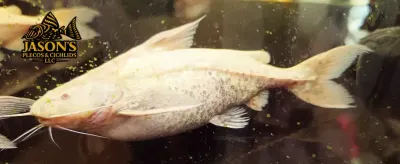
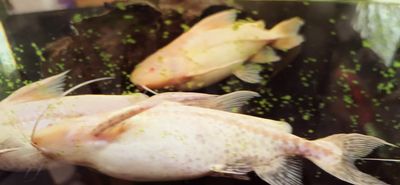
Dirty Albino Granulated Catfish - (Pterodoras granulosus)
Dirty Albino Granulated Catfish - (Pterodoras granulosus)
Price of shipping is not included.
was $3 000.00
Save 16%
$2 515.00
Captive Bred
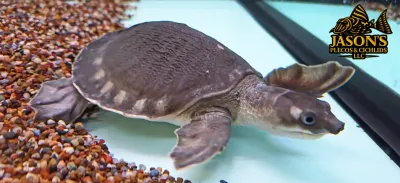
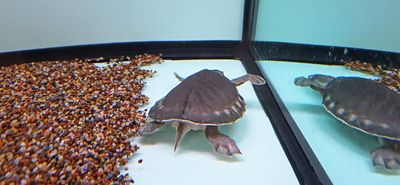
Fly River Turtle/Pig Nose Turtle - (Carettochelys insculpta)
Fly River Turtle/Pig Nose Turtle - (Carettochelys insculpta)
Price of shipping is not included.
was $1 600.00
Save 22%
$1 250.00
Captive Bred
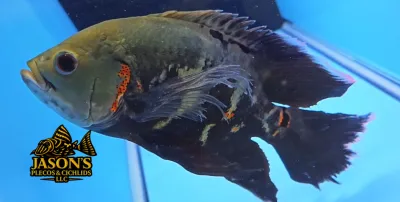
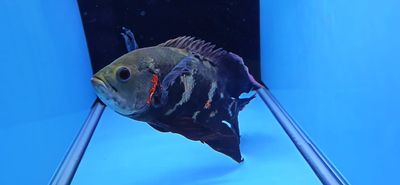
Longfin Tiger Oscar - (Astronotus ocellatus)
Longfin Tiger Oscar - (Astronotus ocellatus)
Price of shipping is not included.
5.0
(1)
was $160.00
Save 6%
$150.00
Wild Caught
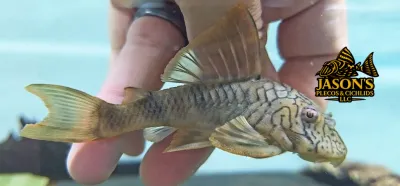
L076 Orange Seam Pleco - (Peckoltia sp.)
L076 Orange Seam Pleco - (Peckoltia sp.)
Price of shipping is not included.
5.0
(1)
was $80.00
Save 6%
$75.00
Wild Caught
L004 Angelicus Pleco - (Hypancistrus sp.)
L004 Angelicus Pleco - (Hypancistrus sp.)
Price of shipping is not included.
was $50.00
Save 10%
$45.00
Powered by Lightspeed
Display prices in:USD