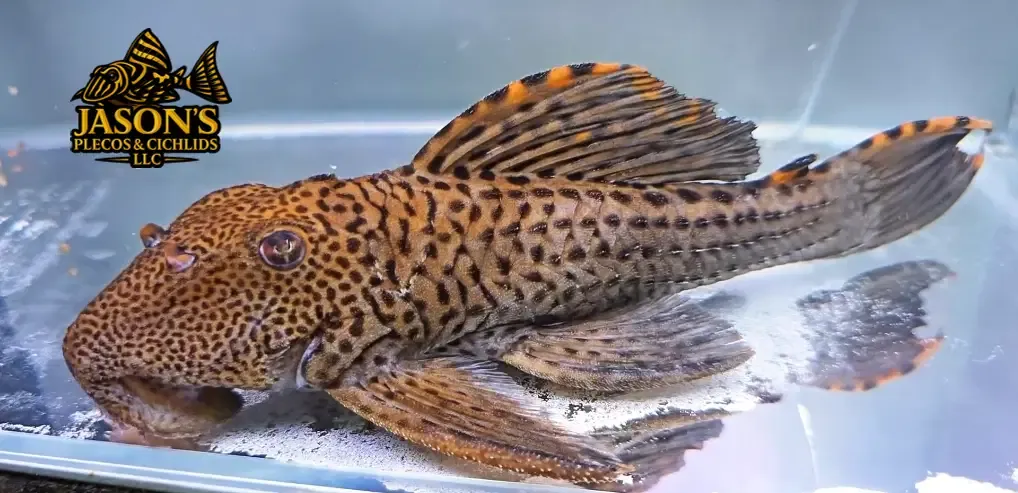
L091 Three Beacon Pleco/Redfin Blackspot Pleco - (Leporacanthicus triactis)
5.0
3 reviews
Reviews from verified customers who have purchased products at this store.
$90.00
Wild Caught
was $100.00 Save 10%
Size
Questions, Comments, Concerns? Let us know!
Enter your text
Price of shipping is not included.
In stock: 1 available
1
Save this fish to my favorites.
Customer reviews
Reviews only from verified customers
Reviews are only accepted from verified customers who have signed in and purchased the products. This ensures that each review is based on genuine customer experiences. All reviews are checked before publication to prevent spam.
NORTH ARLINGTON,
United States
Aug 10, 2025
Wonderful service and selection
L091 Three Beacon Pleco/Redfin Blackspot Pleco - (Leporacanthicus triactis)
Fish Details, Description and Information Below:
🔥 L091 Three Beacon Pleco / Redfin Blackspot Pleco – (Leporacanthicus triactis) – Wild-Caught Orinoco Pleco
The L091 Three Beacon Pleco, also known as the Redfin Blackspot Pleco (Leporacanthicus triactis), is an impressive South American armored catfish known for its dark spotted body and brilliant orange to red-orange markings on three prominent fins.
The fish typically develops a:
- Dark brown
- Gray-brown
- Charcoal
- Nearly black
body covered with darker spotting.
Its most striking feature is the intense orange, yellow-orange, or reddish coloration associated with the:
- 🔥 Dorsal fin
- 🔥 Adipose fin
- 🔥 Caudal fin
These three bright areas are responsible for the aquarium name:
Three Beacon Pleco
The orange coloration can remain prominent into adulthood and may become even more intense as mature fish settle into good aquarium conditions.
L091 belongs to the genus Leporacanthicus, a group sometimes collectively called:
Vampire Plecos
because of their unusually enlarged upper-jaw teeth.
These specialized teeth reflect a feeding strategy much more focused on:
- Aquatic invertebrates
- Crustaceans
- Mollusks
- Insect larvae
- Other protein-rich foods
than is typical of algae-grazing plecos.
The Three Beacon Pleco is native to the upper Rio Orinoco Basin of Colombia and Venezuela, where it inhabits rocky, oxygen-rich freshwater environments and uses protected cavities and burrows for shelter.
This is a substantial pleco capable of reaching approximately:
10–12 Inches Total Length
and should be maintained in a spacious, mature aquarium with strong filtration, excellent oxygenation, rocky shelters, and a varied protein-oriented diet.
This listing is for:
WILD-CAUGHT L091 THREE BEACON PLECOS
Current specimens are approximately:
6–7 INCHES
🔎 Quick Facts – L091 Three Beacon Pleco
- 📛 Common Name: Three Beacon Pleco
- 📛 Other Names: Redfin Blackspot Pleco, Triactis Pleco, Three Beacon Vampire Pleco
- 🔢 L-Number: L091 / L91
- 🔬 Scientific Name: Leporacanthicus triactis
- 🐟 Family: Loricariidae
- 🧬 Subfamily: Hypostominae
- 🌿 Stock: Wild Caught
- 📏 Current Size: Approximately 6–7 inches
- 🌎 Origin: South America
- 🇻🇪 Native Range: Venezuela – Upper Rio Orinoco Basin
- 🇨🇴 Native Range: Colombia – Upper Orinoco Basin
- 📍 Type Locality: Caño Mavaquita, Upper Orinoco, Amazonas, Venezuela
- 💧 Water Type: Freshwater
- 📏 Scientific Maximum: 24.7 cm / approximately 9.7 inches standard length
- 📏 Adult Planning Size: Approximately 10–12 inches total length
- 🏠 Recommended Aquarium: 90 gallons or larger
- 🏠 Preferred Adult Aquarium: 125+ gallons
- 👥 Multiple Adults: Significantly more bottom territory required
- 🌡️ Temperature: Approximately 79–86°F
- 💧 pH: Approximately 6.0–7.2
- 💦 Water: Soft to moderately mineralized
- 💨 Oxygenation: High
- 🌊 Water Movement: Moderate to Strong
- 🍽️ Diet: Protein-Leaning Omnivore / Invertebrate-Oriented Feeder
- 🦐 Animal Foods: Important
- 🌿 Plant Foods: Supplemental
- 🚫 Algae Cleaner: No
- 😠 Temperament: Territorial toward other large plecos
- 🌙 Activity: Primarily nocturnal / crepuscular
- 🐠 Swimming Area: Bottom
- 🥚 Breeding: Cave Spawner
- 👨👩👧 Parental Care: Male guards eggs
- ⭐ Care Level: Intermediate to Advanced
- 🌎 IUCN Status: Least Concern
🧬 Valid Scientific Species
The currently accepted scientific name is:
Leporacanthicus triactis
This remains a valid, formally described species.
It was scientifically described from the:
Upper Rio Orinoco Basin
with the type locality at:
Caño Mavaquita, Amazonas, Venezuela
The documented species distribution includes both:
- Venezuela
- Colombia
within the upper Orinoco drainage.
🔥 Why Is It Called the Three Beacon Pleco?
The common aquarium name:
Three Beacon Pleco
refers to three conspicuous orange or yellow-orange areas associated with the fish's unpaired fins.
Typical specimens display bright coloration on the:
1. Dorsal Fin
2. Adipose Fin
3. Caudal Fin
Against the fish's dark body, these markings resemble three bright:
Beacons
of color.
⚠️ “Three Beacon” & triactis Do Not Mean the Same Thing
This is an interesting distinction.
The common name:
Three Beacon Pleco
refers to the fish's three conspicuous colored fin areas.
However, the scientific species name:
triactis
refers to an anatomical characteristic:
Three Branched Anal-Fin Rays
rather than the orange coloration.
The species is unusual among its close relatives in having three rather than four branched anal-fin rays.
🧛 Why Is It Called a Vampire Pleco?
Members of the genus:
Leporacanthicus
are commonly referred to as:
Vampire Plecos
because they possess distinctive enlarged teeth in the upper jaw.
The teeth can appear almost:
- Fang-like
- Needle-like
- Rabbit-like
compared with the broad scraping teeth of many algae-grazing plecos.
🦷 Specialized Teeth
The specialized dentition of Leporacanthicus appears well suited to feeding on:
- Aquatic invertebrates
- Mollusks
- Crustaceans
- Insect larvae
- Other animal foods
Researchers have suggested the teeth may help these fish manipulate or extract invertebrate prey.
However:
Do Not Describe L091 as a Fish Predator
Its feeding behavior is primarily focused on:
Benthic Invertebrate Foods
rather than actively hunting other aquarium fish.
🐰 What Does Leporacanthicus Mean?
The genus name combines words referring approximately to:
Rabbit + Thorn
The “rabbit” portion relates to the distinctive elongated teeth.
This unusual mouth structure helps make Leporacanthicus very different from the familiar algae-scraping plecos many customers know.
🔥 Appearance
The L091 has a dramatic appearance.
Typical body coloration includes:
- Dark brown
- Gray
- Chocolate brown
- Charcoal
- Blackish gray
with:
- Dark spots
- Black spots
- Mottling
across the body and fins.
🟠 Orange / Red Fin Markings
The signature coloration can range from:
- Yellow
- Golden yellow
- Orange
- Red-orange
- Deep orange-red
The intensity varies between individuals.
Color can be affected by:
- Genetics
- Collection locality
- Age
- Mood
- Diet
- Aquarium background
- Lighting
- Water quality
- Acclimation
🔄 Color May Intensify With Age
Unlike some plecos that lose bright juvenile markings as they mature, the Three Beacon Pleco can retain its orange coloration well into adulthood.
In some individuals:
THE ORANGE MARKINGS BECOME MORE INTENSE WITH AGE
while the body itself may become lighter or darker depending on mood and environment.
🐯 Tiger Fin & Other Color Forms
Different aquarium-trade color forms have been reported.
Some specimens develop unusually extensive orange coloration through the fins.
These may be referred to by hobby names such as:
- Tiger Fin
- Dragon Fin
These are:
COLOR / PATTERN DESCRIPTIONS
not separate scientifically recognized species.
Do not assume every L091 will develop the same amount of orange.
⚠️ Color Disclaimer
Exact adult coloration cannot be guaranteed.
Wild L091 may vary considerably in:
- Amount of orange
- Spot size
- Body darkness
- Fin pattern
- Orange-band width
Always evaluate the actual fish being purchased.
🌎 Native Distribution
Leporacanthicus triactis is native to the:
Upper Rio Orinoco Basin
in:
- 🇻🇪 Venezuela
- 🇨🇴 Colombia
The type locality is:
Caño Mavaquita, Amazonas, Venezuela
This is much more accurate than simply stating:
“South America”
or:
“Amazon Basin.”
L091 is an:
ORINOCO BASIN SPECIES
🪨 Natural Habitat
The Three Beacon Pleco is associated with:
- Rocky river areas
- Boulders
- Crevices
- Burrows
- Moving freshwater
- Oxygen-rich habitat
It spends substantial amounts of time sheltered during daylight.
Wild fish have also been documented using:
Burrows
which helps explain the strong shelter and cave preference seen in aquariums.
🌊 Water Movement
L091 benefits from:
ModerATE TO STRONG WATER MOVEMENT
especially around:
- Rockwork
- Caves
- Filter returns
The aquarium should also provide protected areas where the fish can rest outside the strongest current.
A good design provides:
🌊 Higher-Flow Areas
plus:
🪨 Sheltered Resting Areas
💨 HIGH OXYGENATION
High dissolved oxygen is extremely important.
Recommended methods include:
- Strong surface agitation
- Powerful filter returns
- Air stones
- Powerheads
- Circulation pumps
- Sump filtration
This becomes increasingly important because the species prefers:
Warm Water
which naturally holds less oxygen.
🌡️ Temperature
Your older product page recommended:
74–80°F
I would move that higher.
A more appropriate aquarium range is:
79–86°F / 26–30°C
with:
Excellent Oxygenation
at the warmer end.
💧 Water Parameters
A practical aquarium range is:
- 🌡️ Temperature: 79–86°F
- 💧 pH: Approximately 6.0–7.2
- 💦 Hardness: Soft to moderately mineralized
- 💨 Oxygenation: High
- 🌊 Flow: Moderate to Strong
- ☠️ Ammonia: 0 ppm
- ☠️ Nitrite: 0 ppm
- 🔄 Nitrate: Keep as low as reasonably practical
Clean, stable water is especially important for wild-caught specimens.
📏 Adult Size – Important Correction
Your older page listed:
7–9 Inches
as the maximum size.
Current scientific data document:
24.7 CM / APPROXIMATELY 9.7 INCHES STANDARD LENGTH
Standard length:
DOES NOT INCLUDE THE FULL TAIL FIN
Specialist aquarium references commonly place full adult size around:
30 CM / APPROXIMATELY 11.8 INCHES
Therefore, for customer planning:
EXPECT APPROXIMATELY 10–12 INCHES TOTAL LENGTH
🚨 Current Size Is Not Adult Size
Your current wild-caught specimens are already approximately:
6–7 Inches
but they still have growth potential.
Customers should plan permanent housing around an adult approaching:
ONE FOOT LONG
rather than the current sale size.
🏠 Aquarium Size
The previous:
40-Gallon Minimum
is too small for permanent housing of a territorial pleco capable of approaching 12 inches.
For one adult L091:
90 GALLONS OR LARGER
is a much better long-term starting point.
For a large mature specimen:
125+ GALLONS IS PREFERRED
particularly when other bottom dwellers are present.
📐 Bottom Territory Matters
Because L091 spends most of its life near the bottom:
AQUARIUM LENGTH AND WIDTH MATTER MORE THAN EXCESSIVE HEIGHT
A larger footprint provides:
- Larger caves
- More territories
- More feeding areas
- Visual barriers
- Better water circulation
- Space to avoid other plecos
🪨 Aquarium Setup
Recommended features include:
- Large smooth rocks
- Rock piles
- Large caves
- Ceramic pleco tubes
- Driftwood
- Sand or smooth gravel
- Shaded areas
- Strong filtration
- Moderate to strong circulation
- High dissolved oxygen
Décor should be secure.
A mature L091 is a powerful armored fish capable of shifting poorly secured structures.
🏠 Caves Are Essential
The Three Beacon Pleco strongly appreciates protected shelters.
Suitable options include:
- Large ceramic caves
- Slate caves
- PVC-style pleco tubes
- Rock crevices
- Driftwood cavities
Each adult should have:
ITS OWN SECURE SHELTER
When housing multiple large plecos:
PROVIDE MORE CAVES THAN FISH
🪵 Driftwood
Driftwood provides:
- Shelter
- Shade
- Territory boundaries
- Natural structure
- Biofilm
However:
L091 IS NOT A SPECIALIZED WOOD-EATING PLECO
It does not need wood as a primary food source or digestive requirement.
Use driftwood primarily for:
HABITAT AND ENRICHMENT
💩 Filtration
A mature 10–12 inch protein-eating pleco can produce substantial waste.
Strong mechanical and biological filtration is essential.
Recommended systems include:
- Large canister filters
- Sump filtration
- High-capacity biological filtration
- Strong mechanical filtration
- Supplemental powerheads
- Strong surface agitation
Regular partial water changes should be part of normal care.
🍽️ Diet – Protein-Leaning Omnivore
This is one of the biggest corrections from the older product page.
L091 should not be described as:
“Algae wafers, vegetables, and occasional protein treats.”
The species is better considered a:
PROTEIN-LEANING OMNIVORE
with strong natural specialization toward:
AQUATIC INVERTEBRATES
🦐 Recommended Protein Foods
Suitable foods include:
- Shrimp
- Prawns
- Mysis shrimp
- Krill
- Mussel
- Cockle
- Bloodworms
- Mosquito larvae
- Insect-based sinking pellets
- Quality carnivore pellets
- Quality omnivore catfish tablets
- Appropriate gel foods
🦪 Mollusks & Crustaceans
Foods such as:
- Mussel
- Shrimp
- Prawn
are particularly useful because they provide the type of aquatic animal nutrition associated with the natural feeding strategy of Leporacanthicus.
These should be offered as part of:
A VARIED DIET
rather than feeding one seafood item exclusively.
⚠️ Do Not Feed Unlimited Meat
Protein-oriented does not mean:
100% MEAT WITH NO VARIETY
Published captive husbandry work with Leporacanthicus specifically recommends balancing rich protein foods with:
- Formulated foods
- Gel diets
- Some vegetable material
to avoid nutritional or digestive problems from an excessively rich diet.
🌿 Plant Foods
Vegetable foods can still be offered.
Suitable foods may include:
- Zucchini
- Courgette
- Cucumber
- Spinach
- Kale
- Spirulina-containing wafers
- Vegetable-containing sinking foods
These should:
SUPPLEMENT
the animal-protein component.
🚫 Not an Algae Cleaner
The Three Beacon Pleco should:
NOT BE PURCHASED FOR ALGAE CONTROL
Although it may occasionally graze:
- Biofilm
- Soft organic material
- Some algae
it is not nutritionally comparable to a heavily herbivorous algae-grazing pleco.
Intentional feeding is required.
🌙 Nocturnal Behavior
L091 is primarily:
NOCTURNAL / CREPUSCULAR
It may spend much of the day:
- Inside caves
- Beneath rocks
- Behind driftwood
- Inside protected crevices
Activity normally increases:
- At dusk
- After lights out
- During feeding
Established adults may become increasingly confident during daylight.
🧪 Wild-Caught Acclimation
This listing is for:
WILD-CAUGHT L091 THREE BEACON PLECOS
Careful acclimation is important.
After arrival:
- Keep lighting subdued
- Provide immediate shelter
- Maintain high dissolved oxygen
- Avoid sudden pH changes
- Avoid sudden temperature changes
- Monitor respiration
- Confirm feeding
- Maintain excellent water quality
🍽️ Feed After Lights Out
Because L091 can be shy, faster tankmates may consume food before it emerges.
Offer food:
- Near its cave
- At dusk
- After lights out
- In multiple locations
Make sure the fish maintains:
GOOD BODY CONDITION
and does not develop a severely sunken abdomen.
😠 Temperament
Toward most midwater fish, L091 is generally manageable.
However:
L091 CAN BE VERY TERRITORIAL TOWARD OTHER PLECOS
especially:
- Other L091s
- Other Leporacanthicus
- Similar large loricariids
- Cave-dwelling bottom fish
⚔️ Territorial Conflict
A mature Three Beacon Pleco can use:
- Heavy armor
- Strong pectoral fins
- Odontodes
- Body strength
during territorial disputes.
Conflict may involve:
- Chasing
- Pushing
- Blocking caves
- Pinning competitors
- Odontode contact
Do not overcrowd the bottom.
👥 Keeping More Than One
Multiple L091s can be maintained when provided with:
- A very large aquarium
- Significant bottom area
- Multiple caves
- Visual barriers
- Multiple feeding areas
However:
ONE ADULT PER LIMITED TERRITORY IS SAFER
than crowding several large plecos into a small tank.
🐠 Tankmates
Potential midwater tankmates may include appropriately selected:
- Medium to large characins
- Larger tetras
- Silver-dollar-type fish
- Rheophilic cichlids
- Robust peaceful community fish
Tankmates must tolerate:
- Warm water
- High oxygen
- Good circulation
Use greatest caution with:
OTHER LARGE BOTTOM DWELLERS
♂️ Male vs. Female
Sex differences become more obvious in mature specimens.
Mature Males May Develop:
- Longer and broader head
- More angular head shape
- More pronounced odontodes along the sides of the head
- Stronger pectoral-fin odontodes
- More extensive body odontodes
- Larger dorsal fin
- Strong cave territoriality
Mature Females May:
- Have less odontode development
- Appear fuller through the abdomen when carrying eggs
Juveniles can be difficult to sex.
Unless confidently established:
SELL AS UNSEXED
🥚 Breeding – Confirmed in Captivity
The L091 Three Beacon Pleco has been:
SUCCESSFULLY BRED IN HOME AQUARIUMS
It is a:
CAVE-SPAWNING PLECO
although breeding is still uncommon compared with smaller pleco species.
🏠 Breeding Cave
Breeding adults should receive several large caves.
The preferred cave should generally be:
- Slightly longer than the male
- Not excessively wide
- Closed at one end
- Located in oxygen-rich water
- Securely positioned
Large ceramic tubes are useful.
💕 Courtship
Documented aquarium breeding reports describe a fairly intense courtship.
A mature male establishes a cave.
A receptive female is eventually allowed inside.
After spawning:
THE MALE FORCES OR ENCOURAGES THE FEMALE OUT
and takes over brood care.
👨👧 Male Parental Care
The male remains inside the cave and:
- Guards the eggs
- Fans the clutch
- Maintains water movement
- Protects developing embryos
This is typical paternal care for many cave-spawning loricariids.
🥚 Egg Development
Aquarium breeding reports have documented eggs hatching in approximately:
3 DAYS
under warm conditions.
Exact incubation time depends on:
- Temperature
- Water chemistry
- Oxygenation
After hatching, the fry rely initially on their yolk sacs.
👶 Fry Feeding
Once actively feeding, suitable foods include:
- Crushed sinking carnivore pellets
- Fine omnivore foods
- Baby brine shrimp
- Tiny frozen foods
- Fine gel foods
As with adults:
DIETARY VARIETY IS IMPORTANT
Maintain exceptionally clean water because protein-rich foods can rapidly pollute fry systems.
💧 Breeding Trigger
Aquarium breeders have reported spawning following:
A LARGE PARTIAL WATER CHANGE WITH SLIGHTLY COOLER WATER
which may simulate seasonal environmental changes.
This should not be treated as a guaranteed formula.
Successful breeding also depends on:
- Mature compatible adults
- Proper conditioning
- Excellent water quality
- Suitable caves
- High oxygenation
🧬 Preserve L091 Identification
When breeding L091:
- Keep accurate parent records
- Preserve supplier information
- Preserve collection locality when known
- Avoid mixing other Leporacanthicus species
Do not sell mixed or uncertain offspring as pure:
Leporacanthicus triactis
unless parentage is known.
🌎 Conservation Status
Leporacanthicus triactis is currently assessed by the IUCN as:
LEAST CONCERN
The assessment was completed in:
2020
The species occurs within the upper Orinoco Basin of:
- Colombia
- Venezuela
Responsible sourcing and long-term care remain important, particularly for:
WILD-CAUGHT FISH
⭐ Why Keep an L091 Three Beacon Pleco?
The L091 offers a dramatic combination of:
- 🔥 Three brilliant orange fin markings
- ⚫ Dark spotted body
- 🧛 Vampire Pleco teeth
- 🦐 Unusual invertebrate-focused feeding behavior
- 📏 Impressive 10–12 inch adult size
- 🌊 Upper Orinoco origin
- 🪨 Cave and burrow behavior
- 🌙 Nocturnal personality
- 🥚 Documented captive cave spawning
- 👨👧 Male parental care
that makes it an impressive showpiece bottom-dwelling fish for a properly sized aquarium.
⚠️ Important Considerations
Before purchasing an L091 Three Beacon Pleco:
- The correct scientific name is Leporacanthicus triactis.
- L091 is native to the upper Orinoco Basin of Colombia and Venezuela.
- The type locality is Caño Mavaquita in Amazonas, Venezuela.
- This listing is for wild-caught fish.
- Current specimens are approximately 6–7 inches.
- FishBase documents 24.7 cm / 9.7 inches standard length before the tail.
- Plan for approximately 10–12 inches total adult length.
- Do not use 7–9 inches as a hard adult maximum.
- Provide approximately 90 gallons or larger.
- 125+ gallons is preferred for a mature adult.
- Prioritize aquarium length and bottom territory.
- Provide large secure caves.
- Maintain warm water around 79–86°F.
- Maintain high dissolved oxygen.
- Provide moderate to strong water movement.
- Maintain ammonia and nitrite at zero.
- Use strong mechanical and biological filtration.
- Feed a protein-leaning omnivorous diet.
- Provide substantial aquatic invertebrate and animal-based foods.
- Include some plant-based foods for dietary balance.
- Do not maintain L091 only on vegetables or algae wafers.
- Do not treat it as an algae cleaner.
- Expect territorial behavior toward other plecos.
- Captive cave spawning has been documented.
- Males provide parental care.
- Never release aquarium fish into natural waterways.
🧬 Taxonomy
The currently accepted scientific name is:
Leporacanthicus triactis Isbrücker, Nijssen & Nico, 1992
Classification:
- Order: Siluriformes
- Family: Loricariidae
- Subfamily: Hypostominae
- Genus: Leporacanthicus
- Species: triactis
Current scientific records recognize the species from:
The Upper Orinoco Basin of Venezuela and Colombia
For this product, use:
L091 Three Beacon Pleco / Redfin Blackspot Pleco – (Leporacanthicus triactis)
🔥 Color Form Disclaimer
Different L091 specimens can display varying amounts of:
- Yellow
- Orange
- Red-orange
on the fins.
Aquarium terms such as:
- Tiger Fin
- Dragon Fin
describe unusually colorful forms and are not separate scientific species.
Exact adult fin coloration cannot be guaranteed.
🚚 Live Fish Shipping
Live fish are professionally packed for safe transport.
Shipping availability depends on:
- Fish size
- Destination
- Weather conditions
- Carrier availability
- Applicable state and local regulations
Larger L091 specimens may require:
- Larger insulated shipping boxes
- Additional water
- Heavy-duty shipping bags
- Specialized packing
Care is especially important because mature Leporacanthicus have:
- Strong pectoral fins
- Heavy armor
- Odontodes
Please review our Shipping & Payment Information and Live Arrival Guarantee / DOA Policy before ordering.
⚠️ Buyer Responsibility
Customers are responsible for confirming that Leporacanthicus triactis may legally be purchased, possessed, transported, and received in their state or local jurisdiction before ordering.
Never release aquarium fish into natural waterways.
Below are fish you may also like.
Captive Bred
Longfin Tiger Oscar - (Astronotus ocellatus)
Longfin Tiger Oscar - (Astronotus ocellatus)
Price of shipping is not included.
5.0
(1)
was $160.00
Save 6%
$150.00
Wild Caught
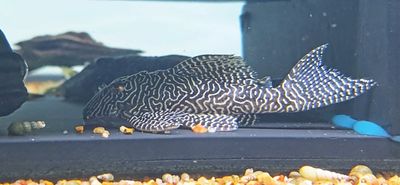
L260 Queen Arabesque Pleco - (Hypancistrus sp.)
L260 Queen Arabesque Pleco - (Hypancistrus sp.)
Price of shipping is not included.
was $80.00
Save 6%
$75.00
Captive Bred
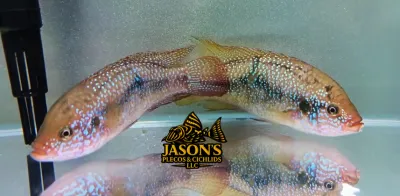
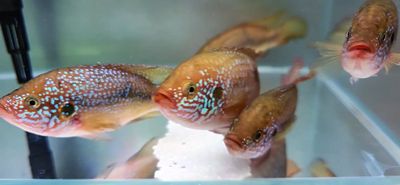
Turquoise Blue Jewel Cichlid - (Hemichromis Bimaculatus)
Turquoise Blue Jewel Cichlid - (Hemichromis Bimaculatus)
Price of shipping is not included.
5.0
(1)
was $55.00
Save 64%
$20.00
Wild Caught
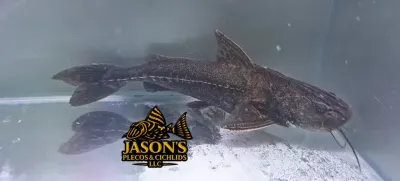
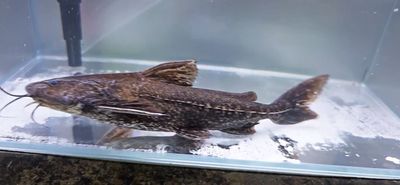
Granulated Catfish - (Pterodoras granulosus)
Granulated Catfish - (Pterodoras granulosus)
Price of shipping is not included.
$95.00
Captive Bred
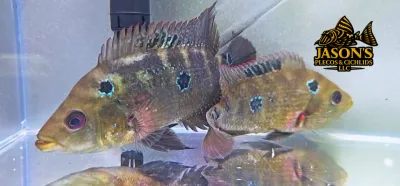
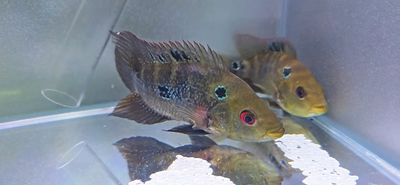
Trimac Cichlid/Three Spot Cichlid - (Amphilophus Trimaculatus)
Trimac Cichlid/Three Spot Cichlid - (Amphilophus Trimaculatus)
Price of shipping is not included.
5.0
(1)
was $70.00
Save 7%
$65.00
Powered by Lightspeed
Display prices in:USD