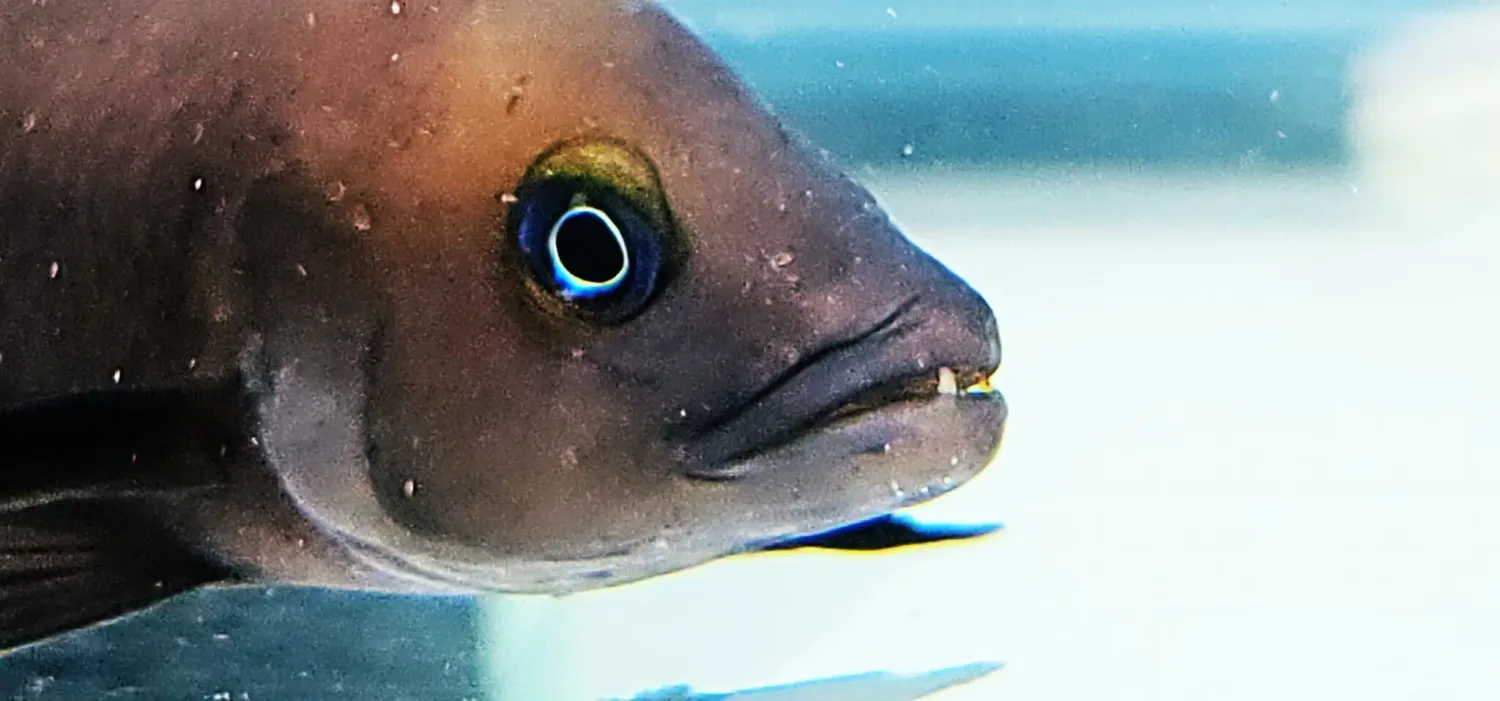
Neolamprologus pectoralis
$800.00
Sold out
Size
Price of shipping is not included.
Sold out
Save this fish to my favorites.
Customer reviews
Reviews only from verified customers
No reviews yet. You can buy this product and be the first to leave a review.
Neolamprologus pectoralis
Fish Details, Description and Information Below:
🐟 Neolamprologus pectoralis – Rare Deepwater Lake Tanganyika Cichlid
Neolamprologus pectoralis is a rare and unusual Lake Tanganyika cichlid known for its oversized pectoral fins, dark adult coloration, rock-hugging behavior, and specialized predatory lifestyle.
Native only to the southwestern coastline of Lake Tanganyika in the Democratic Republic of the Congo, this species inhabits deeper intermediate zones where sand and rock meet. Rather than swimming high in the water column, N. pectoralis spends much of its time only millimeters above rocks, closely following their contours while searching cracks and crevices for food.
Although it does not possess the brilliant coloration associated with some African cichlids, its unusual body shape, enormous pectoral fins, secretive behavior, and rarity make it a fascinating species for experienced Lake Tanganyika enthusiasts.
🔎 Quick Facts – Neolamprologus pectoralis
- 📛 Common Name: Neolamprologus pectoralis
- 🔬 Scientific Name: Neolamprologus pectoralis
- 🐟 Family: Cichlidae
- 🧬 Tribe: Lamprologini
- 🌍 Origin: Africa
- 🌊 Native Range: Lake Tanganyika
- 🇨🇩 Country: Democratic Republic of the Congo
- 📍 Distribution: Southwestern coastline of Lake Tanganyika
- 🌊 Natural Depth: Approximately 15–45 meters
- 📏 Adult Size: Up to approximately 5.5 inches
- 🏠 Recommended Aquarium: 75 gallons or larger, especially when keeping multiple fish or tankmates
- 🌡️ Temperature: 75–82°F
- 💧 pH: 7.5–9.0
- 💦 Water: Hard, alkaline freshwater
- 🍽️ Diet: Carnivore / Invertebrate predator
- 😠 Temperament: Territorial; potentially highly aggressive toward its own species
- 🐠 Swimming Area: Bottom / Rock surfaces
- 🥚 Breeding: Cave-spawning substrate cichlid
- ⭐ Care Level: Intermediate to Advanced
- 🏆 Availability: Rare in the aquarium hobby
🌍 Natural Habitat
Neolamprologus pectoralis is endemic to Lake Tanganyika, meaning it naturally occurs nowhere else in the world.
It has been recorded along portions of the southwestern shoreline of Lake Tanganyika in the Democratic Republic of the Congo.
Unlike many shallow-water Tanganyikan cichlids, N. pectoralis is associated with relatively deep water, generally occurring at approximately:
15–45 meters / 49–148 feet
Its natural habitat consists primarily of intermediate sand-and-rock areas.
The fish maintains extremely close contact with rocky surfaces, often swimming with the underside of its body only a very short distance above the rock while following its contours.
This unusual behavior is an important part of the species' natural feeding strategy.
🪽 Large Pectoral Fins
One of the most distinctive characteristics of this species is its unusually large pectoral fins.
The species name pectoralis refers to these prominent fins.
The large fins contribute to its unusual appearance and help the fish maneuver closely along rocky surfaces while searching crevices and irregular areas for food.
This characteristic makes Neolamprologus pectoralis easy to distinguish from many other Tanganyikan cichlids once mature.
🎨 Appearance
Neolamprologus pectoralis is not primarily kept for extremely bright coloration.
Instead, its appeal comes from:
- Large, dramatic pectoral fins
- Elongated body shape
- Large eyes
- Dark adult coloration
- Unusual movement along rock surfaces
- Rare availability
Juveniles may display more yellowish coloration, while mature individuals can become significantly darker, with some adults appearing dark brown to nearly black.
Coloration can vary according to age, mood, lighting, dominance, and aquarium conditions.
📏 Adult Size
FishBase records a maximum total length of approximately:
14 cm / 5.5 inches
Females may remain somewhat smaller than mature males.
Although this is not an extremely large cichlid, aquarium size should not be determined by body length alone.
Its territorial behavior and potential aggression toward members of its own species mean that floor space, rockwork, caves, and visual barriers are extremely important.
🏠 Aquarium Setup
The aquarium should attempt to reproduce the species' natural sand-and-rock intermediate habitat.
Recommended setup:
- Fine sand substrate
- Large rock formations
- Deep caves
- Narrow rock crevices
- Overhangs
- Shaded areas
- Multiple separate territories
- Strong biological filtration
- Good water movement
- High oxygen levels
Rock formations should be arranged securely so they cannot collapse if fish dig underneath them.
Because these fish naturally remain close to rocks, substantial rockwork is much more important than a large open swimming area.
🌑 Subdued Areas
Providing darker caves and shaded rockwork can help the fish behave more naturally.
Brightly illuminated, completely open aquariums are not ideal for this deeper-water species.
💧 Water Parameters
As a Lake Tanganyika species, Neolamprologus pectoralis requires hard, alkaline water.
Recommended aquarium conditions:
- 🌡️ Temperature: 75–82°F
- 💧 pH: 7.5–9.0
- 💦 Hardness: Approximately 10–25 dH
- ☠️ Ammonia: 0 ppm
- ☠️ Nitrite: 0 ppm
- 🔄 Nitrate: Keep as low as reasonably possible
- 💨 Oxygenation: High
Lake Tanganyika fish generally respond poorly to unstable water conditions.
Avoid rapid changes in:
- Temperature
- pH
- Hardness
Regular partial water changes and strong biological filtration are recommended.
🍽️ Diet & Feeding
Neolamprologus pectoralis is primarily a carnivorous invertebrate predator.
Examination of wild fish has found foods including:
- Crustaceans
- Insect larvae
- Copepods
- Snail material
- Other small aquatic organisms
In the aquarium, offer a varied diet including:
- High-quality carnivore pellets
- Small cichlid pellets
- Mysis shrimp
- Brine shrimp
- Krill
- Daphnia
- Appropriate frozen invertebrate foods
A varied diet is preferable to relying exclusively on one food.
Because this species naturally searches rock surfaces and crevices for prey, sinking or slowly descending foods can encourage more natural feeding behavior.
😠 Temperament & Tankmates
Neolamprologus pectoralis can be highly territorial toward members of its own species.
This is particularly important when attempting to establish a breeding pair.
A male and female should not simply be placed together in a small aquarium with nowhere to escape.
Provide:
- Numerous caves
- Deep rock crevices
- Visual barriers
- Multiple potential territories
- Adequate aquarium space
When obtaining juveniles, starting with several fish may allow a compatible pair to form naturally. Once a pair forms, remaining fish may need to be removed.
Possible Tankmates
In a sufficiently large aquarium, appropriate tankmates may include selected:
- Lake Tanganyika cichlids
- Cyprichromis
- Paracyprichromis
- Other species occupying different areas of the aquarium
Avoid:
- Extremely aggressive Tanganyikan species
- Fish that continuously invade caves
- Very small tanks containing multiple N. pectoralis
- Overcrowding the bottom and rockwork
Individual temperament varies considerably.
⚠️ Intraspecific Aggression
One of the most important considerations with Neolamprologus pectoralis is the relatively weak pair bond reported for the species.
Even after spawning, aggression between a male and female can occur.
In an aquarium that is too small or does not contain enough hiding places, the stronger fish may severely injure or kill the other.
For this reason:
Provide significantly more caves and escape routes than you think are necessary.
Aquarium layout is extremely important when keeping or breeding this species.
🥚 Breeding
Neolamprologus pectoralis is a cave-spawning substrate cichlid.
Breeding generally takes place inside a protected cave or rock crevice.
The female typically selects a protected spawning site and lays the eggs inside the cave.
Reported spawning behavior includes:
- Cave spawning
- Approximately 50–100 eggs in a typical clutch
- Female guarding of the eggs and fry
- Male defending a broader surrounding territory
- Fry remaining protected near the cave during early development
The female may remain deep inside the spawning cave for an extended period.
Because aggression between adults can occur after spawning, several escape routes and alternate caves should always be available.
👶 Raising Fry
Once fry become free-swimming, appropriately sized foods may include:
- Newly hatched baby brine shrimp
- Cyclops
- Microworms
- Quality powdered fry foods
- Other very small live or frozen foods
Clean water and frequent small feedings are important for successful fry development.
Avoid allowing uneaten food to accumulate inside caves or around the substrate.
⭐ Why Keep Neolamprologus pectoralis?
This species is an excellent choice for aquarists who appreciate rare Tanganyikan cichlids and unusual natural behaviors rather than simply bright coloration.
Its combination of:
- 🪽 Oversized pectoral fins
- 🌊 Deepwater habitat
- 🪨 Unique rock-hugging behavior
- 🦐 Specialized invertebrate feeding
- 🖤 Dark adult coloration
- 🥚 Interesting cave-spawning behavior
- 🇨🇩 Restricted natural distribution
- 🏆 Rare availability
makes Neolamprologus pectoralis a unique addition to a specialized Lake Tanganyika aquarium.
⚠️ Important Considerations
Before purchasing Neolamprologus pectoralis:
- Maintain hard, alkaline Lake Tanganyika water.
- Provide extensive rockwork.
- Include deep caves and shaded areas.
- Maintain high oxygen levels.
- Provide strong biological filtration.
- Be prepared for territorial behavior.
- Provide multiple escape routes if keeping more than one.
- Use caution when establishing pairs.
- Avoid overcrowding.
- Maintain stable water chemistry.
This species is best suited for aquarists familiar with Lake Tanganyika cichlids and territorial cave-spawning species.
🚚 Live Fish Shipping
Live fish are professionally packed for safe transport.
Shipping availability depends on destination, weather conditions, carrier availability, and applicable state and local regulations.
Please review our Shipping & Payment Information and Live Arrival Guarantee / DOA Policy before ordering.
⚠️ Buyer Responsibility
Customers are responsible for confirming that this species may legally be purchased, possessed, and received in their state or local jurisdiction before ordering.
Never release aquarium fish into local waterways.
Below are fish you may also like.
Captive Bred


Chocolate Pleco/Alligator Pleco/Rhino Pleco - (Pterygoplichthys scrophus)
Chocolate Pleco/Alligator Pleco/Rhino Pleco - (Pterygoplichthys scrophus)
Price of shipping is not included.
$85.00
Out of stock
Wild Caught


Red Hump Eartheater - (Geophagus steindachneri)
Red Hump Eartheater - (Geophagus steindachneri)
Price of shipping is not included.
5.0
(1)
was $75.00
Save 7%
$70.00
Out of stock
Captive Bred
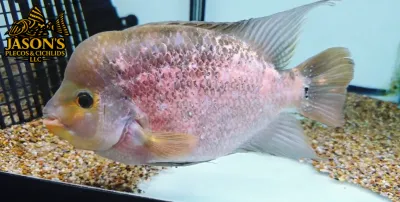
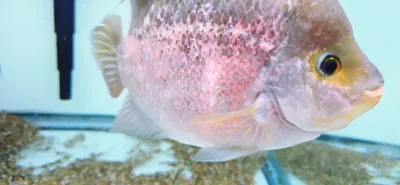
Flowerhorn x Midas Hybrid
Flowerhorn x Midas Hybrid
Price of shipping is not included.
5.0
(1)
was $160.00
Save 6%
$150.00
Out of stock
Wild Caught
Bengal Reticulated Puffer - (Chelonodontops bengalensis)
Bengal Reticulated Puffer - (Chelonodontops bengalensis)
Price of shipping is not included.
$250.00
Out of stock
Wild Caught
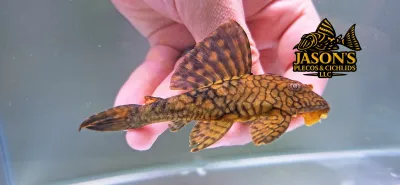
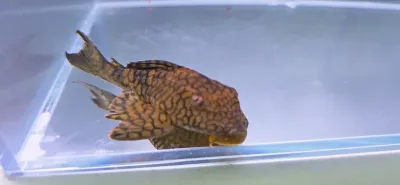
L037 Honeycomb Pleco - (Hypostomus faveolus)
L037 Honeycomb Pleco - (Hypostomus faveolus)
Price of shipping is not included.
was $50.00
Save 10%
$45.00
Out of stock
Wild Caught
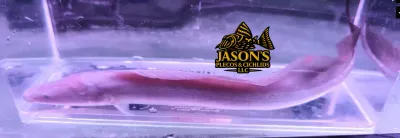
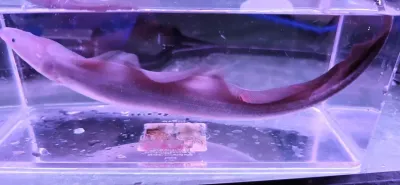
Aba Aba Knifefish - (Gymnarchus niloticus)
Aba Aba Knifefish - (Gymnarchus niloticus)
Price of shipping is not included.
was $250.00
Save 20%
$200.00
Out of stock
Captive Bred
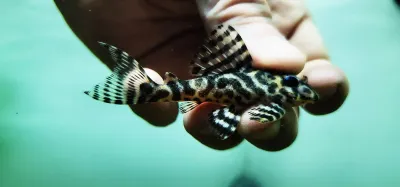
L236 Cracked Zebra Pleco Yellow - (Hypancistrus seideli)
L236 Cracked Zebra Pleco Yellow - (Hypancistrus seideli)
Price of shipping is not included.
$150.00
Out of stock
Captive Bred
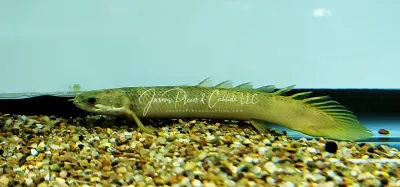
Senegal Bichir - (Polypterus senegalus) Marbled
Senegal Bichir - (Polypterus senegalus) Marbled
Price of shipping is not included.
was $70.00
Save 7%
$65.00
Out of stock
Wild Caught
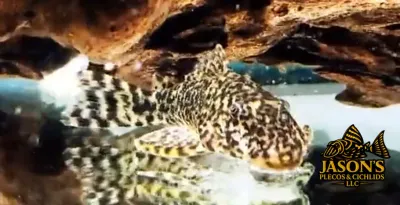
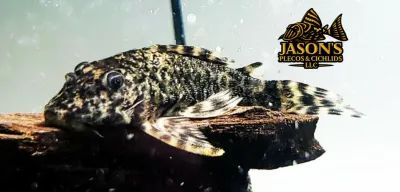
Otali Pleco - (Peckoltia otali)
Otali Pleco - (Peckoltia otali)
Price of shipping is not included.
$200.00
Out of stock
Captive Bred
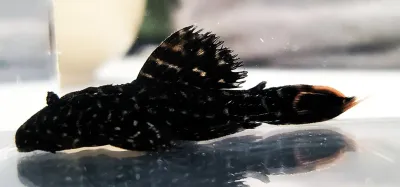
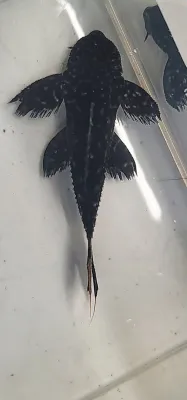
L097 Polka Dot Cactus Pleco x L114 Leopard Cactus Pleco - Hybrid
L097 Polka Dot Cactus Pleco x L114 Leopard Cactus Pleco - Hybrid
Price of shipping is not included.
$250.00
Out of stock
Captive Bred
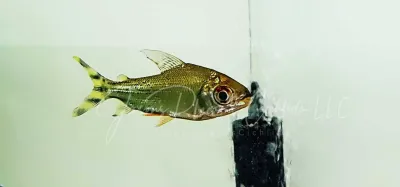
Yellow Flagtail Prochilodus - (Semaprochilodus insignis)
Yellow Flagtail Prochilodus - (Semaprochilodus insignis)
Price of shipping is not included.
$25.00
Out of stock
Wild Caught
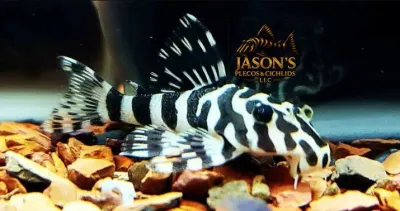
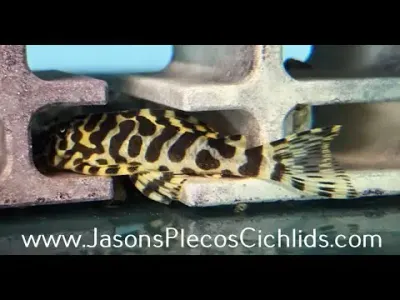
L134 Leopard Frog Pleco - (Peckoltia compta)
L134 Leopard Frog Pleco - (Peckoltia compta)
Price of shipping is not included.
5.0
(2)
was $80.00
Save 6%
$75.00
Out of stock
Powered by Lightspeed
Display prices in:USD