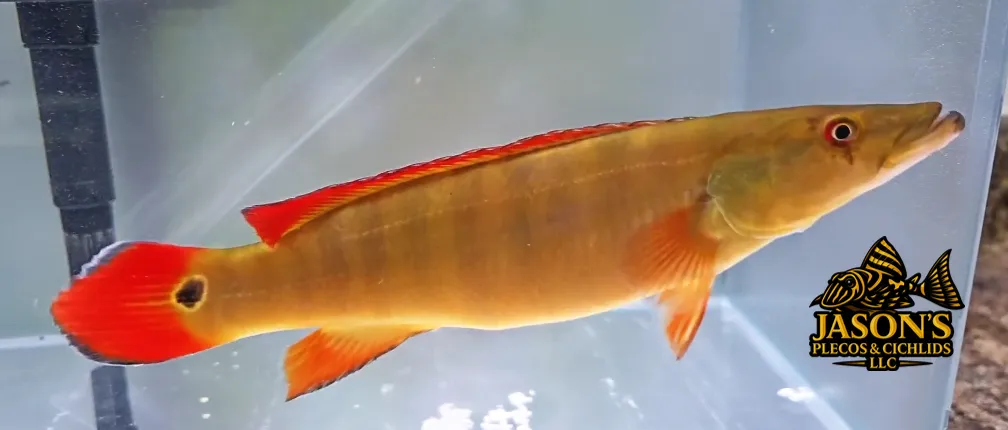
Xingu I Pike Cichlid (Lugubria sp. ‘Xingu I’)
$300.00
Sold out
was $350.00 Save 14%
Size
Questions, Comments, Concerns? Let us know!
Enter your text
Price of shipping is not included.
Sold out
Save this fish to my favorites.
Customer reviews
Reviews only from verified customers
No reviews yet. You can buy this product and be the first to leave a review.
Xingu I Pike Cichlid (Lugubria sp. ‘Xingu I’)
Fish Details, Description and Information Below:
🔥 Xingu I Pike Cichlid – (Lugubria sp. ‘Xingu I’) – Wild-Caught Rio Xingu Pike Cichlid
The Xingu I Pike Cichlid (Lugubria sp. ‘Xingu I’), formerly known as Crenicichla sp. ‘Xingu I’, is a large, powerful predatory cichlid endemic to Brazil’s Rio Xingu Basin.
Juveniles are especially striking, often displaying brilliant:
- Red
- Orange
- Yellow-orange
coloration with a contrasting dark horizontal stripe.
As the fish matures, its coloration changes dramatically. Adult males generally become more:
- Olive
- Gray-green
- Charcoal
while retaining attractive reddish or orange fins.
Mature females can become even more impressive, developing a brilliant:
RED TO WINE-RED MIDSECTION
when sexually mature or in breeding condition.
Xingu I belongs to a group of large rheophilic pike cichlids adapted to the fast-flowing, rocky rapids of the Rio Xingu. Adults are powerful, territorial predators requiring a very large aquarium, exceptionally good oxygenation, strong filtration, and carefully selected tankmates.
This listing is for:
WILD-CAUGHT XINGU I PIKE CICHLIDS
🔎 Quick Facts – Xingu I Pike Cichlid
- 📛 Common Name: Xingu I Pike Cichlid
- 📛 Other Names: Xingu Orange Pike, Orange Pike Cichlid
- 🔬 Current Scientific Identification: Lugubria sp. ‘Xingu I’
- 📚 Older Aquarium Name: Crenicichla sp. ‘Xingu I’
- 🧬 Taxonomic Status: Scientifically Undescribed Species
- 🐟 Family: Cichlidae
- 🧬 Tribe: Geophagini
- 🐟 Genus: Lugubria
- 🌿 Stock: Wild Caught
- 📏 Current Size: Approximately 10 inches
- 🇧🇷 Country: Brazil
- 📍 State: Pará
- 🌊 Native River: Rio Xingu
- 🌎 River System: Amazon Basin
- 🪨 Natural Habitat: Rocky clearwater rapids and fast-flowing sections
- 💧 Water Type: Freshwater
- 📏 Typical Adult Size: Approximately 12–14 inches
- 📏 Adult Planning Size: Approximately 14–16 inches
- 🏠 Minimum Permanent Adult Aquarium: Approximately 125 gallons
- 🏠 Preferred Adult Aquarium: 180+ gallons
- 👥 Pair / Large Tankmates: 240+ gallons strongly preferred
- 📐 Recommended Aquarium Length: Approximately 6 feet or longer
- 🌡️ Temperature: Approximately 79–84°F
- 💧 pH: Approximately 5.5–7.0
- 💦 Water: Soft to moderately mineralized
- 💨 Oxygenation: Very High
- 🌊 Water Movement: Strong
- 🍽️ Diet: Carnivore / Piscivore
- 🐟 Natural Feeding: Fish-oriented predator
- 🦐 Captive Foods: Shrimp, krill, mysis, insects, fish flesh and quality carnivore pellets
- 🚫 Feeder Fish: Not Recommended
- 😠 Temperament: Aggressive / Highly Territorial as an adult
- ⚠️ Conspecific Aggression: Can be severe
- 🐠 Tankmates: Large, robust fish only
- 🌙 Activity: Active predator
- 🥚 Reproduction: Cave / crevice spawning behavior
- 👨👩👧 Parental Care: Biparental
- ⚠️ Captive Breeding: Successful home-aquarium reproduction not reliably documented
- ⭐ Care Level: Advanced
- 🌎 IUCN Status: Not Evaluated as an undescribed species
- 📦 Shipping: Special / heavy-duty shipping bag required for current large specimen
🧬 Important Taxonomy Update
For decades, this fish was known in the aquarium hobby as:
Crenicichla sp. ‘Xingu I’
However, modern taxonomic work reorganized the large pike cichlid complex.
The former:
Crenicichla lugubris GROUP
is now recognized as the genus:
Lugubria
Therefore, the modern aquarium identification is:
Lugubria sp. ‘Xingu I’
⚠️ Xingu I Is Still Scientifically Undescribed
Despite being known to aquarists for decades:
XINGU I STILL DOES NOT HAVE A FORMALLY DESCRIBED SPECIES NAME
Therefore:
DO NOT CALL IT Lugubria lugubris
and do not assign another named Lugubria species to it.
The correct identification remains:
Lugubria sp. ‘Xingu I’
📚 Why Older Information Says Crenicichla
Older:
- Books
- Scientific papers
- Aquarium articles
- Import lists
- Fish photographs
will usually call this fish:
Crenicichla sp. ‘Xingu I’
That information is not necessarily referring to a different fish.
It reflects the older classification before the genus:
Lugubria
was formally recognized.
🧬 The Lugubria Group
Lugubria contains some of the largest pike cichlids.
Members of this group are characterized by:
- Large adult size
- Elongated predatory bodies
- High scale counts
- Strong ontogenetic color changes
- Sexual color differences
- Predatory feeding
- Large-river habitats
Xingu I fits strongly within this group.
🔥 Famous Juvenile Coloration
Young Xingu I are among the most colorful pike cichlids.
Small juveniles can be:
BRIGHT RED
and then transition toward:
BRILLIANT ORANGE
as they grow.
This vivid juvenile coloration is one reason Xingu I became so desirable in the aquarium hobby.
🍟 “French Fry” Pike
European aquarists have historically given young Xingu I the nickname:
“FRENCH FRIES”
because of their brilliant orange juvenile coloration and elongated body shape.
⚠️ Juvenile Color Does Not Remain Unchanged
Customers should understand:
XINGU I CHANGES COLOR DRAMATICALLY WITH AGE
An orange juvenile will not necessarily remain completely orange as an adult.
This color change is:
NORMAL
and not evidence that the fish was mislabeled.
🎨 Adult Male Coloration
Adult males generally become more subdued than juveniles.
Typical adult male coloration includes:
- Olive-gray
- Gray-green
- Brown-gray
- Charcoal
with attractive:
- Red
- Orange-red
- Reddish
unpaired fins.
❤️ Adult Female Coloration
Mature females can become spectacular.
When reproductively mature, females may develop:
AN INTENSE RED OR WINE-RED CENTER BODY
while the:
- Head
- Front body
- Rear body
- Tail region
may become substantially darker.
This produces one of the most dramatic breeding color patterns among large pike cichlids.
⚠️ Sex & Maturity Change the Appearance
The same Xingu I can look completely different depending on:
- Age
- Sex
- Reproductive condition
- Social status
- Stress
- Aquarium lighting
- Water conditions
For this reason:
EXACT ADULT COLOR CANNOT BE GUARANTEED
🆚 Xingu I vs. Xingu II
Xingu I should not be confused with:
Lugubria sp. ‘Xingu II’
formerly:
Crenicichla sp. ‘Xingu II’
Both originate from the Xingu Basin but represent distinct undescribed forms.
🔥 Typical Xingu I
Xingu I is especially known for:
- Brilliant red/orange juveniles
- Strong horizontal juvenile marking
- Dramatic red adult female coloration
- Large adult size
- Powerful predatory behavior
🆚 Xingu II
Xingu II generally has a different:
- Juvenile pattern
- Body coloration
- Adult appearance
and historically has also been referred to as:
Crenicichla cf. lugubris “Xingu”
Do not combine Xingu I and Xingu II simply because both come from the same river.
🆚 Xingu I vs. Xingu III
The fish historically known as:
XINGU III
was eventually scientifically described as:
Lugubria dandara
formerly:
Crenicichla dandara
Xingu I remains undescribed.
⚠️ This Demonstrates Why Trade Names Matter
Several Xingu pike cichlids were originally known only as:
- Xingu I
- Xingu II
- Xingu III
- Xingu IV
Some have since received scientific names.
Others have not.
Until Xingu I is formally described:
PRESERVE THE “XINGU I” DESIGNATION
🌎 Native Distribution
Xingu I is endemic to:
BRAZIL
and specifically the:
RIO XINGU BASIN
in:
PARÁ
📍 Middle Rio Xingu
Aquarium and field records especially associate Xingu I with the:
MIDDLE RIO XINGU
around the:
ALTAMIRA REGION
🌊 Xingu Endemic
Modern scientific research recognizes Xingu I as one of several distinctive pike cichlid lineages:
ENDEMIC TO THE RIO XINGU SYSTEM
It is not a generic Amazon-wide pike cichlid.
🪨 Natural Habitat – Rapids
Xingu I is highly adapted to:
FAST-FLOWING XINGU RAPIDS
Natural habitat includes:
- Rocky river sections
- Rapids
- Large stones
- Boulders
- Crevices
- Strong current
- Highly oxygenated water
🌊 Shallow Fast Water
Historical field observations found Xingu I specifically in:
SHALLOW, FAST-FLOWING RIVER SECTIONS
Its long, streamlined body allows it to:
- Accelerate rapidly
- Maneuver around rocks
- Chase fish
- Hold position in current
🏎️ Built for Speed
Xingu I is not primarily a slow ambush predator.
Its:
- Slender body
- Large mouth
- Strong tail
- Streamlined shape
make it a:
FAST, ACTIVE FISH PREDATOR
🐟 Natural Diet – Specialized Piscivore
Xingu I is best described as a:
SPECIALIZED PISCIVORE
In the wild, fish make up a major portion of its natural feeding ecology.
🚫 That Does Not Mean You Need Live Feeder Fish
There is:
NO NEED
to routinely feed aquarium Xingu I live feeder fish.
Live feeders can introduce:
- Parasites
- Bacterial infections
- Viral disease
- Poor nutrition
- Unwanted pathogens
🍽️ Recommended Captive Diet
A well-acclimated Xingu I can often be transitioned onto:
- Shrimp
- Prawn
- Krill
- Mysis shrimp
- Earthworms
- Insect-based foods
- Pieces of appropriately sourced fish
- Quality carnivore pellets
- Large cichlid pellets
🦐 Crustaceans
Shrimp and other crustaceans make excellent foods.
Suitable options include:
- Shrimp
- Prawn
- Krill
- Mysis
These provide useful protein and nutritional variety.
🪱 Earthworms
Earthworms can be an excellent food for large pike cichlids.
They often trigger a strong natural feeding response and are useful when transitioning wild fish away from live fish prey.
Use worms from:
SAFE, PESTICIDE-FREE SOURCES
🐟 Fish Flesh
Appropriately sourced fish pieces may also be offered.
Rotate species and food types rather than relying on one fish product continuously.
⚠️ Avoid a Single-Food Diet
Do not maintain Xingu I exclusively on:
- Shrimp
- Tilapia
- Feeder fish
- One pellet formula
A varied carnivorous diet provides better long-term nutrition.
🍽️ Wild-Caught Feeding
This listing is for:
WILD-CAUGHT XINGU I PIKE CICHLIDS
Some newly imported wild specimens may initially recognize only moving prey.
They can often be transitioned gradually to:
- Frozen foods
- Fresh foods
- Prepared carnivore foods
🧪 Acclimating a Wild Predator
During acclimation:
- Keep lighting subdued
- Provide secure cover
- Maintain extremely high oxygen
- Avoid excessive disturbance
- Offer highly attractive foods
- Monitor body condition
Once settled, many Xingu I become extremely enthusiastic feeders.
📏 Adult Size
Older aquarium references commonly place Xingu I around:
12–14 INCHES
More recent specialist information covering the Xingu forms reports:
30–40 CM
or approximately:
12–16 INCHES
📏 Responsible Adult Planning
For permanent housing:
PLAN FOR APPROXIMATELY 14–16 INCHES
rather than designing the aquarium around the smallest adult estimates.
A large male can become:
- Long
- Powerful
- Thick-bodied
- Extremely territorial
⚠️ Do Not Purchase Based on Juvenile Size
Young Xingu I may appear manageable.
However, they grow into:
LARGE PREDATORY CICHLIDS
A permanent aquarium plan should already exist before purchase.
🏠 Permanent Aquarium Size
The older page recommends:
100 GALLONS
I would increase that recommendation.
For one mature Xingu I:
125 GALLONS SHOULD BE CONSIDERED THE MINIMUM
with:
180+ GALLONS PREFERRED
for a large adult.
👥 Pairs & Tankmates
For:
- A pair
- Other large cichlids
- Large catfish
- Multiple large tankmates
consider:
240+ GALLONS
or a similarly large custom aquarium.
With this species:
MORE SPACE IS SAFER
📐 Aquarium Length
A mature Xingu I should ideally have:
A 6-FOOT OR LONGER AQUARIUM
because this species is:
- Long-bodied
- Fast
- Active
- Territorial
📐 Width Matters Too
A narrow aquarium can contain many gallons while still making it difficult for a long pike cichlid to turn comfortably.
Choose:
LONG + WIDE
rather than simply:
TALL
🪨 Aquarium Setup
A suitable aquarium should contain:
- Large smooth rocks
- Boulders
- Driftwood
- Large caves
- Rock overhangs
- Visual barriers
- Open swimming areas
- Strong filtration
- Strong water movement
- Very high oxygenation
⚠️ Leave Open Swimming Space
Do not fill the entire aquarium with décor.
Xingu I needs significant:
OPEN HORIZONTAL SWIMMING ROOM
for normal movement.
Use décor primarily around the:
- Back
- Sides
- Territory boundaries
while leaving open lanes.
👀 Visual Barriers
Visual barriers are extremely useful because adults can become:
HIGHLY TERRITORIAL
Use:
- Large rocks
- Driftwood
- Tall décor
to break direct lines of sight.
This can reduce constant aggression between compatible large fish.
💨 Very High Oxygenation
Xingu I naturally inhabits rapids.
Provide:
VERY HIGH DISSOLVED OXYGEN
using:
- Strong surface agitation
- Large air stones
- Powerheads
- Circulation pumps
- Large canister filters
- Sump returns
🌡️ Warm Water Requires More Oxygen
Xingu I prefers warm tropical conditions.
Warm water naturally contains:
LESS DISSOLVED OXYGEN
than cooler water.
Therefore:
HIGH TEMPERATURE MUST BE MATCHED WITH STRONG AERATION
🌊 Strong Water Movement
Provide:
STRONG WATER MOVEMENT
to reflect the species' rheophilic natural habitat.
However, create protected locations behind:
- Rocks
- Wood
- Caves
where the fish can rest away from maximum current.
💧 Water Parameters
A practical long-term range is:
- 🌡️ Temperature: Approximately 79–84°F
- 💧 pH: Approximately 5.5–7.0
- 💦 Water: Soft to moderately mineralized
- 💨 Oxygenation: Very High
- 🌊 Water Movement: Strong
- ☠️ Ammonia: 0 ppm
- ☠️ Nitrite: 0 ppm
- 🔄 Nitrate: Keep low
💧 Soft, Slightly Acidic Water
Natural Xingu water around known collecting areas can be:
- Soft
- Low in dissolved minerals
- Slightly acidic
A stable aquarium pH between approximately:
5.5–7.0
is appropriate.
Avoid chasing exact numbers at the expense of stability.
🌡️ Temperature
A good maintenance range is:
79–84°F / 26–29°C
The previous:
75–82°F
range was somewhat cool at the bottom end for this rheophilic Xingu form.
⚠️ Temperature Above 84°F
Warmer conditions can be tolerated, but they dramatically increase:
OXYGEN REQUIREMENTS
Unless there is a specific husbandry reason, maintaining continuously extreme temperatures is unnecessary.
💩 Strong Filtration
Large predatory cichlids produce significant waste.
Recommended filtration includes:
- Large canister filters
- Sump filtration
- Strong mechanical filtration
- High-capacity biological media
- Supplemental circulation
🔄 Water Changes
Regular partial water changes are important.
Large predatory fish consuming protein-rich diets produce substantial:
- Nitrogenous waste
- Dissolved organics
- Nitrate
Keep nitrate as low as reasonably practical.
🚨 Tight-Fitting Lid Required
Pike cichlids can:
JUMP
A frightened or excited Xingu I can launch itself from an open aquarium.
Use a:
SECURE, TIGHT-FITTING LID
and cover openings around:
- Filters
- Hoses
- Cables
😠 Adult Temperament
Juvenile Xingu I may initially appear surprisingly:
SOCIAL
or relatively tolerant.
Do not assume that behavior will continue into adulthood.
⚠️ Major Personality Change With Maturity
As Xingu I matures, territorial behavior can increase dramatically.
Adults can become:
EXTREMELY AGGRESSIVE
especially toward:
- Other pike cichlids
- Similar-shaped fish
- Territorial competitors
- Newly introduced tankmates
🐟 Predation Risk
Any fish small enough to fit into the Xingu I's mouth should be considered:
POTENTIAL FOOD
Because pike cichlids possess:
- Large mouths
- Expandable jaws
- Long bodies
they can swallow surprisingly large prey.
🐠 Potential Tankmates
In a sufficiently large aquarium, potential companions may include selected:
- Large Geophagus
- Large robust cichlids
- Large datnoids
- Large catfish
- Large characins
- Other powerful fish of similar size
Compatibility is never guaranteed.
🚫 Avoid Small Tankmates
Do not keep Xingu I with:
- Small tetras
- Small barbs
- Guppies
- Small cichlids
- Small catfish
- Small loaches
They may eventually be eaten.
⚠️ Avoid Slow or Delicate Fish
Even fish too large to swallow may be inappropriate if they are:
- Slow
- Timid
- Long-finned
- Easily stressed
Xingu I is an assertive predator.
🐟 Introducing Tankmates
If attempting a large predator community:
INTRODUCING COMPATIBLE TANKMATES BEFORE THE PIKE
can sometimes reduce territorial problems.
A mature Xingu I already established in an aquarium may treat later additions as intruders.
⚠️ There Is No Guaranteed Community Setup
Individual temperament varies dramatically.
One fish may coexist successfully with selected large tankmates while another may:
REFUSE TO TOLERATE THEM
Always have a:
BACKUP SEPARATION PLAN
👥 Conspecific Aggression
Keeping multiple adult Xingu I is difficult.
Mature fish may show severe aggression toward:
THEIR OWN SPECIES
unless a compatible pair has formed.
💑 Pair Formation
If breeding is attempted, beginning with a group of juveniles allows fish to:
SELECT THEIR OWN PARTNER
However, once a pair forms:
- Remaining fish may need removal
- Aggression may increase dramatically
- A very large aquarium is required
♂️ Male vs. Female
Sexual differences become much more obvious with maturity.
Mature Males
Generally:
- Grow larger
- Become longer-bodied
- Develop a more pointed dorsal fin
- Become olive, gray, or green-gray
- Retain reddish fins
Mature Females
Generally:
- Remain somewhat smaller
- Develop a fuller body
- Can develop intense red/wine coloration across the central body
- Become especially colorful in reproductive condition
❤️ Female Breeding Color
A mature breeding female can develop:
A BRILLIANT RED MIDSECTION
contrasting dramatically against a darker:
- Head
- Front body
- Tail region
This is one of the most spectacular features of the species.
🥚 Breeding – Important Accuracy Note
Xingu I breeding should not be advertised as:
ROUTINELY ACCOMPLISHED IN HOME AQUARIUMS
Older aquarium reports document:
- Courtship
- Cave spawning attempts
- Eggs
but successful reproduction with surviving fry has not been reliably established in normal home aquariums.
🪨 Cave / Crevice Spawner
Based on observations of Xingu I and related Lugubria, spawning takes place in:
- Caves
- Rock crevices
- Protected cavities
Eggs are attached to surfaces within the spawning site.
🥚 Captive Egg-Laying Has Occurred
There are historical aquarium reports of Xingu I:
LAYING EGGS
but those reported clutches:
DID NOT SUCCESSFULLY HATCH
Therefore, avoid claiming established captive propagation.
👨👩👧 Parental Care
Like other large pike cichlids, parental care is:
BIPARENTAL
During spawning:
Female
primarily:
- Tends the eggs
- Remains near the spawning cavity
- Protects the immediate brood area
Male
primarily:
- Patrols the surrounding territory
- Defends the perimeter
- Drives away intruders
👶 Wild Parental Care
Field observations have documented females of Xingu I leading:
VERY LARGE GROUPS OF JUVENILES
through strong current.
This demonstrates strong parental investment in nature.
⚠️ Breeding Aggression
If a pair attempts to spawn:
AGGRESSION CAN INCREASE DRAMATICALLY
Tankmates that were previously tolerated may suddenly be attacked.
A breeding pair is best managed:
- Alone
- Or in an exceptionally large aquarium
🧬 Preserve Xingu I Identity
Because several Xingu Lugubria remain scientifically unresolved, preserve:
- “Xingu I” designation
- Supplier information
- Collection locality when known
- Sex
- Photographic records
- Breeding information
⚠️ Do Not Mix Xingu Forms for Breeding
Avoid intentionally breeding Xingu I with:
- Xingu II
- Other unidentified Lugubria
- Other pike cichlids
and later marketing offspring as pure Xingu I.
🌎 Conservation Status
Because Xingu I remains:
SCIENTIFICALLY UNDESCRIBED
it does not currently have its own formal species-level IUCN Red List assessment.
Therefore:
IUCN STATUS: NOT EVALUATED
is the most accurate wording.
⚠️ Not Evaluated Does Not Mean No Conservation Concerns
The Rio Xingu has experienced major environmental changes associated with:
- Hydroelectric development
- Habitat alteration
- Changing flow regimes
- Mining
- Land-use change
- Water-quality pressures
An undescribed species can face conservation concerns even without its own IUCN assessment.
⭐ Why Keep a Xingu I Pike Cichlid?
The Xingu I combines:
- 🔥 Brilliant red/orange juvenile coloration
- ❤️ Spectacular mature female breeding colors
- 🐊 Powerful predatory appearance
- 🏎️ Fast swimming behavior
- 🌊 Specialized Xingu rapid habitat
- 🇧🇷 Brazilian endemic identity
- 📏 Approximately 14–16 inch adult potential
- 🐟 Natural piscivorous feeding behavior
- 🧠 Strong personality
- 🧬 Fascinating undescribed-species status
into one of the most impressive South American pike cichlids available to experienced aquarists.
⚠️ Important Considerations
Before purchasing a Xingu I Pike Cichlid:
- The modern identification is Lugubria sp. ‘Xingu I’.
- Older references call it Crenicichla sp. ‘Xingu I’.
- Lugubria became the recognized genus for this pike-cichlid group following modern taxonomic revision.
- Xingu I remains scientifically undescribed.
- Do not invent a formal species name.
- The species is endemic to Brazil's Rio Xingu Basin.
- It is especially associated with the middle Xingu around Altamira.
- Natural habitat consists of fast-flowing rocky rapids.
- This listing is for wild-caught fish.
- The current listed specimen is approximately 10 inches.
- Juveniles can be brilliant red or orange.
- Juvenile coloration changes significantly with maturity.
- Adult males become more gray, olive, or greenish.
- Mature females may develop a spectacular wine-red midsection.
- Exact adult coloration cannot be guaranteed.
- Older sources commonly list 12–14 inches.
- Specialist Xingu references report approximately 30–40 cm.
- Plan for approximately 14–16 inches.
- Provide approximately 125 gallons minimum for one adult.
- 180+ gallons is preferred.
- Use 240+ gallons when attempting pairs or large tankmates.
- A 6-foot or longer aquarium is strongly recommended.
- Provide open swimming areas.
- Provide substantial rocks and caves.
- Break lines of sight with large décor.
- Use a secure tight-fitting aquarium lid.
- Maintain approximately 79–84°F.
- Maintain soft to moderately mineralized water.
- Maintain approximately pH 5.5–7.0.
- Maintain very high dissolved oxygen.
- Provide strong water movement.
- Use powerful mechanical and biological filtration.
- Keep ammonia and nitrite at zero.
- Keep nitrate low.
- Feed a carnivorous / piscivorous diet.
- Shrimp, krill, mysis, earthworms, fish flesh, insects, and quality carnivore pellets are suitable.
- Do not rely on live feeder fish.
- Adults can become highly territorial.
- Small fish will be treated as prey.
- Conspecific aggression can become severe.
- Always have a backup separation plan.
- Captive egg-laying has been reported.
- Successful home-aquarium reproduction is not reliably documented.
- Xingu I uses cave / crevice spawning behavior.
- Parental care is biparental.
- Preserve the Xingu I locality and trade identification.
- Never release aquarium fish into natural waterways.
🧬 Taxonomy
The modern aquarium identification is:
Lugubria sp. ‘Xingu I’
Classification:
- Order: Cichliformes
- Family: Cichlidae
- Subfamily: Cichlinae
- Tribe: Geophagini
- Genus: Lugubria
- Species: Scientifically Undescribed
- Aquarium / Locality Designation: Xingu I
Former classification:
Crenicichla sp. ‘Xingu I’
Native locality:
RIO XINGU – PARÁ, BRAZIL
For this product, use:
Xingu I Pike Cichlid – (Lugubria sp. ‘Xingu I’)
🧬 Taxonomy & Locality Disclaimer
Xingu I remains a scientifically undescribed pike cichlid.
Older literature refers to this fish as:
Crenicichla sp. ‘Xingu I’
Modern pike-cichlid classification places it in:
Lugubria
Because similar undescribed Xingu pike cichlids exist, preserve:
- Xingu I designation
- Wild collection locality when known
- Supplier records
- Breeding records
Do not substitute another named Lugubria species based only on appearance.
🚚 Live Fish Shipping
Live fish are professionally packed for safe transport.
Shipping availability depends on:
- Fish size
- Destination
- Weather conditions
- Carrier availability
- Applicable state and local regulations
The current large Xingu I Pike Cichlid requires:
A SPECIAL / HEAVY-DUTY SHIPPING BAG
Large specimens may require:
- Heavy-duty shipping bags
- Multiple protective bag layers
- Larger insulated boxes
- Additional water
- Specialized packing
- Airline cargo depending on size and destination
Please review our Shipping & Payment Information and Live Arrival Guarantee / DOA Policy before ordering.
⚠️ Buyer Responsibility
Customers are responsible for confirming that Lugubria sp. ‘Xingu I’ may legally be purchased, possessed, transported, and received in their state or local jurisdiction before ordering.
Never release aquarium fish into natural waterways.
Below are fish you may also like.
Captive Bred
Longfin Common Bristlenose Catfish - (Ancistrus cf. cirrhosus) Breeding Pair
Longfin Common Bristlenose Catfish - (Ancistrus cf. cirrhosus) Breeding Pair
Price of shipping is not included.
was $100.00
Save 10%
$90.00
Out of stock
Wild Caught
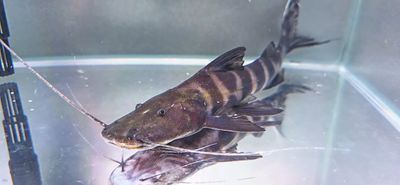
Juruense Catfish/Gold Zebra Pim/Flash Zebra Catfish - (Brachyplatystoma juruense)
Juruense Catfish/Gold Zebra Pim/Flash Zebra Catfish - (Brachyplatystoma juruense)
Price of shipping is not included.
was $300.00
Save 13%
$260.00
Out of stock
Wild Caught
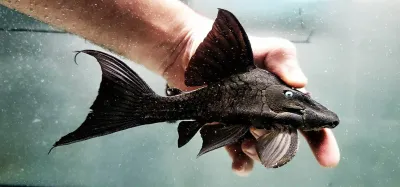
Blue Eyed Pleco - (Panaque cochliodon) Honda
Blue Eyed Pleco - (Panaque cochliodon) Honda
Price of shipping is not included.
$475.00
Out of stock
Captive Bred
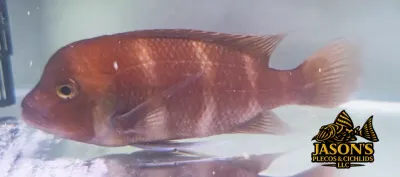
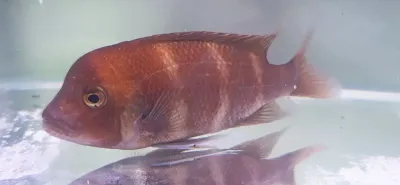
Red Frontosa - (Cyphotilapia Frontosa)
Red Frontosa - (Cyphotilapia Frontosa)
Price of shipping is not included.
5.0
(1)
was $140.00
Save 7%
$130.00
Out of stock
Wild Caught
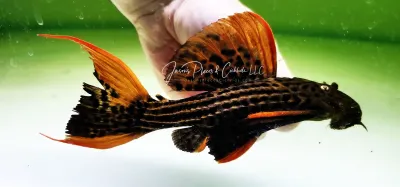
L025 Scarlet Cactus Pleco - (Pseudacanthicus pirarara) 7 Pointer
L025 Scarlet Cactus Pleco - (Pseudacanthicus pirarara) 7 Pointer
Price of shipping is not included.
5.0
(1)
$400.00
Out of stock
Wild Caught
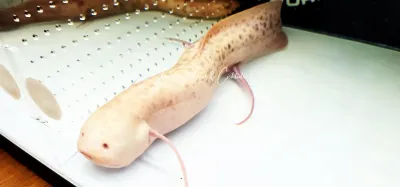
Albino Marbled Lungfish - (Protopterus aethiopicus)
Albino Marbled Lungfish - (Protopterus aethiopicus)
Price of shipping is not included.
$1 500.00
Out of stock
Wild Caught
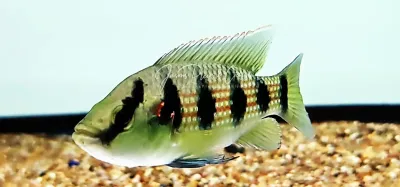
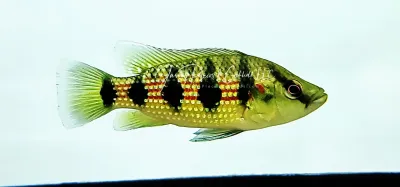
Five Star General Cichlid - (Hemichromis elongatus)
Five Star General Cichlid - (Hemichromis elongatus)
Price of shipping is not included.
$35.00
Out of stock
Captive Bred
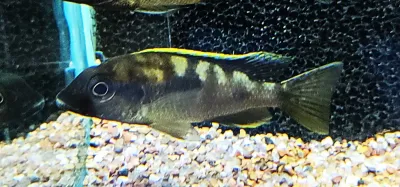
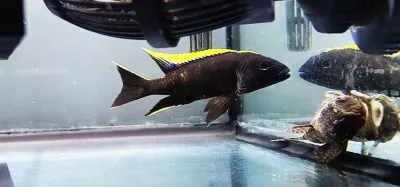
Black Orange Dorsal - (Otopharynx Lithobates)
Black Orange Dorsal - (Otopharynx Lithobates)
Price of shipping is not included.
$60.00
Out of stock
Captive Bred
Cuban Cichlid - (Nandopsis tetracanthus)
Cuban Cichlid - (Nandopsis tetracanthus)
Price of shipping is not included.
5.0
(1)
was $60.00
Save 17%
$50.00
Out of stock
Wild Caught
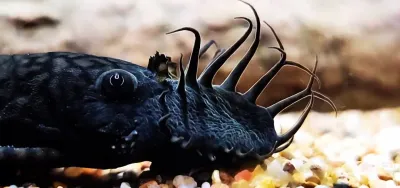
Colombia Ancistrus sp.
Colombia Ancistrus sp.
Price of shipping is not included.
5.0
(1)
was $110.00
Save 9%
$100.00
Out of stock
Wild Caught
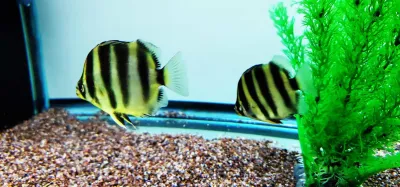
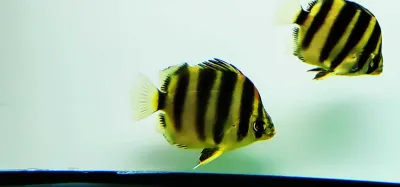
African Tiger Scat - (Scatophagus tetracanthus)
African Tiger Scat - (Scatophagus tetracanthus)
Price of shipping is not included.
$100.00
Out of stock
Powered by Lightspeed
Display prices in:USD