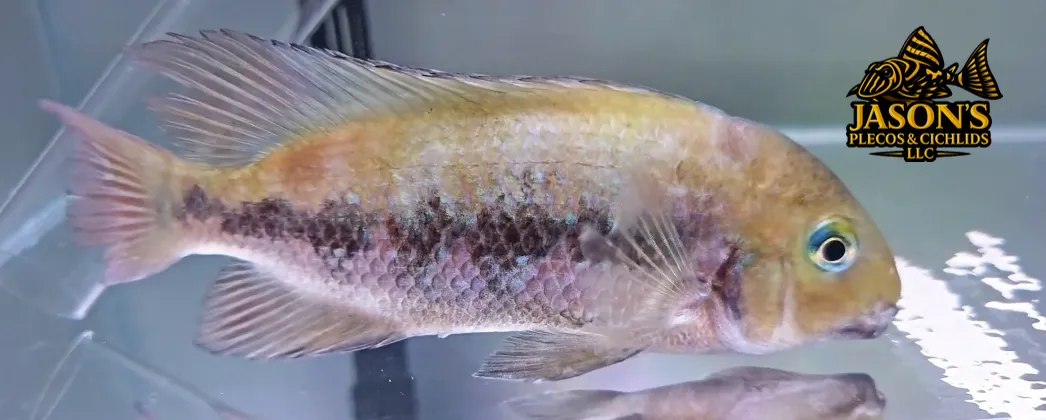
Teapa Cichlid — (Paraneetroplus gibbiceps)
$200.00
Sold out
was $250.00 Save 20%
Size
3 Digit Airport Code
Questions, Comments, Concerns? Let us know!
Enter your text
Price of shipping is not included.
Sold out
Save this fish to my favorites.
Customer reviews
Reviews only from verified customers
No reviews yet. You can buy this product and be the first to leave a review.
Teapa Cichlid — (Paraneetroplus gibbiceps)
Fish Details, Description and Information Below:
🐟 Teapa Cichlid – (Paraneetroplus gibbiceps) – Wild-Caught Mexican River Cichlid
The Teapa Cichlid (Paraneetroplus gibbiceps) is an unusual and impressive Mexican cichlid adapted to fast-flowing, rocky, highly oxygenated rivers.
Unlike many Central American cichlids associated primarily with slower pools, lakes, or protected shoreline habitat, the Teapa Cichlid is strongly associated with:
- Rapids
- Current
- Rocky river bottoms
- Large stones and boulders
- Highly oxygenated water
- River channels
Its body is powerful but relatively streamlined for life in moving water, and mature specimens can develop a distinctive high forehead and substantial adult body mass.
Coloration can vary with:
- Sex
- Age
- Mood
- Breeding condition
- Collection locality
- Lighting
- Aquarium conditions
Adults commonly display combinations of:
- Silver
- Gray
- Olive
- Blue-gray
- Greenish coloration
- Dark vertical bars
- Irregular dark lateral markings
- Red or reddish coloration in the fins
This species is native only to:
SOUTHERN MEXICO
and is especially associated with the Grijalva–Usumacinta region, including the Rio Teapa in Tabasco, from which its common name originates.
This listing is for:
WILD-CAUGHT TEAPA CICHLIDS
🔎 Quick Facts – Teapa Cichlid
- 📛 Common Name: Teapa Cichlid
- 📛 Other Names: Mojarra del Teapa, Corrientero Verde, Roquera
- 🔬 Scientific Name: Paraneetroplus gibbiceps
- 📚 Original Scientific Name: Heros gibbiceps
- 📚 Older Aquarium Names: Cichlasoma gibbiceps, Theraps gibbiceps
- 🐟 Family: Cichlidae
- 🧬 Subfamily: Cichlinae
- 🧬 Tribe: Therapsini
- 🌿 Stock: Wild Caught
- 🇲🇽 Country: Mexico
- 📍 Primary Region: Southern Mexico
- 🌊 River System: Grijalva–Usumacinta region
- 📍 Type Locality: Rio Teapa, Tabasco, Mexico
- 💧 Water Type: Freshwater
- 🌊 Natural Habitat: Fast-flowing rivers and rapids
- 🪨 Bottom Habitat: Rocks, pebbles, sand, boulders and submerged structure
- 📏 Scientific Maximum: Approximately 23 cm / 9 inches standard length
- 📏 Adult Planning Size: Approximately 10–12 inches total length
- 🏠 Recommended Aquarium: Approximately 125 gallons or larger
- 👫 Adult Pair: Approximately 180+ gallons strongly preferred
- 📐 Recommended Aquarium Length: Approximately 6 feet or longer
- 🌡️ Temperature: Approximately 73–79°F
- 💧 pH: Approximately 7.0–8.0
- 💦 Hardness: Moderately mineralized to hard water preferred
- 💨 Oxygenation: Very High
- 🌊 Water Movement: Strong
- 🍽️ Diet: Plant / Aufwuchs-Leaning Omnivore
- 🌿 Algae & Plant Foods: Important
- 🦐 Animal / Insect Protein: Supplemental
- 😠 Temperament: Territorial / Semi-Aggressive to Aggressive
- ⚠️ Breeding Temperament: Aggression increases significantly
- 👫 Pair Bond: Monogamous / Biparental
- 🥚 Breeding: Open-Substrate Spawner
- 👨👩👧 Parental Care: Both Parents
- ⭐ Care Level: Intermediate to Advanced
- 🌎 Conservation Status: Data Deficient
🧬 Valid Scientific Species
The currently accepted scientific name is:
Paraneetroplus gibbiceps
The species was originally described by:
Franz Steindachner
in:
1864
under the name:
Heros gibbiceps
📚 Historical Scientific Names
Older aquarium and scientific literature may list the Teapa Cichlid as:
- Heros gibbiceps
- Cichlasoma gibbiceps
- Theraps gibbiceps
The name:
Cichlasoma teapae
was also applied historically but is now considered a synonym of Paraneetroplus gibbiceps.
For this product, use:
Teapa Cichlid – (Paraneetroplus gibbiceps)
🇲🇽 Mexican Endemic
The Teapa Cichlid is:
NATIVE TO MEXICO
and has a relatively restricted natural distribution compared with many widely distributed Central American cichlids.
Its natural range is associated with southern Mexico on the:
ATLANTIC SLOPE
🌊 Rio Teapa
The species takes its common name from:
RIO TEAPA
in:
TABASCO, MEXICO
The Rio Teapa is also the:
TYPE LOCALITY
of Paraneetroplus gibbiceps.
This locality information is especially important for wild-caught specimens.
🌎 Grijalva–Usumacinta Region
Current scientific references associate the Teapa Cichlid with the:
GRIJALVA / USUMACINTA REGION
of southern Mexico.
Records particularly include portions of the:
- Rio Grijalva system
- Rio Teapa
- Connected Atlantic-slope drainage
For aquarium records, a useful origin description is:
SOUTHERN MEXICO – GRIJALVA / TEAPA DRAINAGE
🌊 A True River Cichlid
The Teapa Cichlid is unusual because it is strongly adapted to:
FLOWING RIVER HABITAT
It is not simply a fish that tolerates current.
Current is a major feature of its natural environment.
🪨 Natural Habitat
Wild Teapa Cichlids inhabit areas containing:
- Rapids
- Fast current
- Rocky riverbeds
- Pebbles
- Large stones
- Boulders
- Sand
- Submerged wood
- Leaf material trapped between rocks
They may occur near:
- Riffles
- Cascades
- Waterfalls
- Fast-running channels
💨 Very High Oxygenation
Fast-moving water naturally contains substantial dissolved oxygen.
For that reason:
HIGH OXYGENATION IS ONE OF THE MOST IMPORTANT HUSBANDRY REQUIREMENTS
Suitable methods include:
- Strong surface agitation
- Large air stones
- Powerheads
- Circulation pumps
- Strong canister-filter returns
- Sump filtration
🌊 Strong Water Movement
Provide:
STRONG WATER MOVEMENT
but avoid designing an aquarium where the fish must fight the strongest current every second of the day.
Create:
🌊 High-Flow Areas
for:
- Natural behavior
- Oxygenation
- Exercise
- Waste transport
and:
🪨 Current Breaks
behind:
- Rocks
- Boulders
- Driftwood
where the fish can rest.
🪨 River-Style Aquarium
A natural Teapa Cichlid aquarium should emphasize:
- Smooth boulders
- Rounded stones
- River rock
- Sand
- Pebbles
- Large driftwood
- Open swimming areas
A realistic layout should look more like:
A MEXICAN RIVER CHANNEL
than a heavily planted tropical aquarium.
⚠️ Secure All Rocks
A mature Teapa Cichlid is:
- Strong
- Territorial
- Capable of digging
- Capable of moving substrate
Heavy rocks should rest securely and should not be positioned where digging can cause them to:
COLLAPSE
🌿 Plants
Plants are generally not an essential part of this species' aquarium.
Adults may:
- Dig around roots
- Damage plants
- Uproot vegetation
- Graze soft growth
If plants are used, hardy species firmly attached to:
- Rocks
- Wood
are generally more practical.
🎨 Appearance
Adult Teapa Cichlids generally display a substantial, high-bodied appearance.
Typical base coloration can include:
- Silver
- Gray
- Olive-gray
- Blue-gray
- Greenish silver
⚫ Dark Body Markings
Depending on mood and age, the body may show:
- Vertical dark bars
- Irregular black patches
- A broken dark lateral band
- Dark blotches near the center of the body
These markings can become:
MUCH STRONGER
when the fish is:
- Stressed
- Territorial
- Courting
- Guarding offspring
🔴 Red Fin Coloration
Healthy mature specimens may develop:
- Red dorsal-fin coloration
- Reddish tail coloration
- Red-orange fin highlights
The intensity varies between individuals.
♂️ Mature Males
Mature males can become especially impressive.
Possible characteristics include:
- Larger adult size
- Heavier body
- More developed forehead
- Longer pointed fins
- Stronger territorial behavior
Older males may develop a more pronounced:
FOREHEAD / NAPE PROFILE
♀️ Mature Females
Females generally remain:
- Somewhat smaller
- Slightly less massive
and may develop a fuller abdominal profile when carrying eggs.
Color can become extremely intense during:
BREEDING CONDITION
⚠️ Sexing Juveniles
Young Teapa Cichlids can be difficult to sex reliably.
Unless clear mature characteristics are present:
SELL AS UNSEXED
📏 Adult Size
FishBase documents Paraneetroplus gibbiceps reaching:
23 CM STANDARD LENGTH
or approximately:
9 INCHES BEFORE THE FULL TAIL FIN
📏 Standard Length vs. Total Length
Standard length is measured from:
THE TIP OF THE SNOUT TO THE BASE OF THE TAIL
and excludes the full caudal fin.
Therefore, a 23 cm standard-length fish will be longer when measured:
SNOUT TO TAIL TIP
📏 Responsible Adult Planning
For permanent aquarium planning:
EXPECT APPROXIMATELY 10–12 INCHES TOTAL LENGTH
A particularly substantial mature male may appear even larger because of its:
- Deep body
- Heavy head
- Large fins
🏠 Aquarium Size
This species should not be housed permanently in a small Central American cichlid aquarium.
For one mature adult:
125 GALLONS OR LARGER
is a responsible starting point.
👫 Adult Pair
For a compatible mature pair:
180+ GALLONS
is strongly preferred.
A large aquarium provides:
- More swimming area
- Better current distribution
- Better water stability
- More escape distance
- Reduced aggression
- More breeding territory
📐 Aquarium Length
A Teapa Cichlid benefits greatly from:
APPROXIMATELY 6 FEET OR MORE OF SWIMMING LENGTH
The fish is naturally adapted to active river environments and should not be confined to a short aquarium.
📐 Width Matters
A large adult also needs adequate:
FRONT-TO-BACK WIDTH
for:
- Turning
- Territorial behavior
- Courtship
- Avoiding aggressive tankmates
Choose:
LONG + WIDE
over simply:
TALL
🌡️ Temperature
Scientific and specialist references place natural temperatures approximately around:
73–79°F / 23–26°C
This is important because the Teapa Cichlid should not automatically be maintained at the very high temperatures commonly used for some Central American cichlids.
💧 Water Parameters
A practical long-term range is:
- 🌡️ Temperature: Approximately 73–79°F
- 💧 pH: Approximately 7.0–8.0
- 💦 Hardness: Moderately mineralized to hard
- 💨 Oxygenation: Very High
- 🌊 Water Movement: Strong
- ☠️ Ammonia: 0 ppm
- ☠️ Nitrite: 0 ppm
- 🔄 Nitrate: Keep low
⚠️ Stable Water Is Important
Avoid constantly changing water chemistry in an attempt to reach one exact number.
A:
STABLE, CLEAN, WELL-OXYGENATED AQUARIUM
is more important than repeatedly adjusting pH.
💩 Filtration
Large river cichlids require substantial:
- Mechanical filtration
- Biological filtration
- Water turnover
Suitable filtration may include:
- Large canister filters
- Sump filtration
- Supplemental powerheads
- Strong biological media
- Prefilters
🔄 Regular Water Changes
Regular partial water changes help maintain:
- Low nitrate
- High oxygen
- Low dissolved waste
- Stable mineral levels
The exact schedule depends on:
- Aquarium volume
- Stocking
- Feeding
- Filtration
🍽️ Diet – Aufwuchs / Plant-Leaning Omnivore
The Teapa Cichlid belongs to a group of specialized river cichlids strongly associated with:
ALGAE AND AUFWUCHS GRAZING
🔬 What Is Aufwuchs?
Aufwuchs is the mixed biological layer that grows naturally over:
- Rocks
- Boulders
- Wood
- Other submerged surfaces
It may contain:
- Algae
- Biofilm
- Microorganisms
- Detritus
- Tiny crustaceans
- Insect larvae
This means the fish can ingest both:
PLANT
and:
ANIMAL
material while grazing.
🌿 Plant Foods Are Important
A captive diet should include substantial:
- Spirulina
- Algae-based foods
- Vegetable-containing pellets
- High-quality herbivore cichlid foods
- Plant-rich gel foods
🥬 Fresh Vegetable Foods
Appropriate supplemental foods may include:
- Zucchini
- Squash
- Peas
- Green beans
- Appropriate leafy greens
Not every individual will accept every vegetable.
🦐 Supplemental Animal Foods
Animal protein may be offered in moderation.
Suitable foods can include:
- Mysis shrimp
- Brine shrimp
- Insect larvae
- Krill-containing pellets
- Quality omnivorous cichlid foods
⚠️ Do Not Make Meat the Entire Diet
I would avoid maintaining Teapa Cichlids primarily on:
- Shrimp
- Beef heart
- Large quantities of bloodworms
- High-fat carnivore pellets
- Feeder fish
A diet with a:
STRONG PLANT / AUFWUCHS COMPONENT
better reflects the feeding specialization of Paraneetroplus.
🚫 Avoid Feeder Fish
Feeder fish are unnecessary.
They can introduce:
- Parasites
- Bacteria
- Disease
- Nutritional imbalance
Quality prepared and frozen foods are safer.
😠 Temperament
The Teapa Cichlid should be considered:
TERRITORIAL
and potentially:
AGGRESSIVE
especially as it reaches sexual maturity.
⚠️ Not a Typical Community Cichlid
Do not combine adult Teapa Cichlids with:
- Small tetras
- Small barbs
- Small catfish
- Delicate community fish
- Very passive cichlids
🐠 Potential Tankmates
In a sufficiently large aquarium, potential tankmates may include carefully selected:
- Robust Central American cichlids
- Large livebearers
- Large fast-moving fish
- Other substantial river species
Compatibility depends heavily on:
- Individual temperament
- Tank size
- Territory
- Breeding condition
⚠️ No Tankmate Is Guaranteed
With large cichlids:
INDIVIDUAL PERSONALITY MATTERS
A fish that accepts a tankmate for months can become aggressive after:
- Sexual maturity
- Pair formation
- Spawning
- Territory changes
Always have a:
SEPARATION PLAN
👫 Pair Compatibility
Even males and females are not automatically compatible.
Two mature fish can:
- Fight
- Reject one another
- Injure one another
A successful breeding pair should be observed carefully.
Large aquariums with:
- Visual barriers
- Escape routes
- Multiple territories
greatly reduce risk.
🥚 Reproduction – Open-Substrate Spawner
The Teapa Cichlid is a:
MONOGAMOUS OPEN-SUBSTRATE SPAWNER
Pairs select and clean a suitable breeding surface.
Possible spawning surfaces include:
- Flat rocks
- Large stones
- Rock faces
- Other solid surfaces
💕 Pair Formation
Once a compatible pair forms, both fish participate in:
- Territory defense
- Site preparation
- Spawning
- Offspring protection
🥚 Eggs
The female deposits adhesive eggs on the selected:
OPEN SUBSTRATE
and the male fertilizes them.
Both parents defend the spawning territory.
👨👩👧 Biparental Care
The Teapa Cichlid provides:
STRONG BIPARENTAL CARE
Both parents participate in protecting:
- Eggs
- Larvae
- Free-swimming fry
🪨 Larval Relocation
After hatching, parents may move larvae into:
PROTECTED CREVICES
where they remain sheltered from strong river current.
This behavior has also been observed in natural-habitat accounts.
👩 Female Parental Role
Field observations indicate that females can take a particularly strong role in:
DIRECT FRY GUARDING
while both parents defend the broader territory.
👶 Free-Swimming Fry
Once young become free-swimming, the parents guide them around protected portions of the habitat.
Young fish stay relatively close to:
THE BOTTOM
which reduces the risk of being swept away by strong current.
🍽️ Fry Diet
Young Teapa Cichlids naturally begin grazing:
- Fine algae
- Biofilm
- Microorganisms
while also consuming:
- Tiny crustaceans
- Other small animal foods
🐣 Aquarium Fry Foods
Suitable foods can include:
- Baby brine shrimp
- Spirulina-based fry foods
- Fine powdered cichlid foods
- Crushed quality pellets
- Natural mature-aquarium biofilm
⚠️ Breeding Aggression
A spawning pair may become:
EXTREMELY TERRITORIAL
toward other aquarium inhabitants.
A pair that previously tolerated tankmates may suddenly:
- Chase
- Bite
- Corner
- Injure
them.
🛑 Consider a Dedicated Breeding Aquarium
For serious breeding:
A LARGE SPECIES-ONLY AQUARIUM
is often the safest approach.
🧪 Wild-Caught Acclimation
This listing is for:
WILD-CAUGHT TEAPA CICHLIDS
Wild specimens deserve careful acclimation.
After arrival:
- Keep lighting subdued
- Maintain very high oxygenation
- Provide strong but varied current
- Avoid abrupt temperature changes
- Avoid abrupt pH changes
- Maintain excellent water quality
- Provide secure rocky shelters
- Confirm feeding
⚠️ Wild River Fish & Oxygen
A wild fish collected from oxygen-rich flowing water may react poorly to:
- Warm stagnant water
- Low surface movement
- Shipping-related oxygen stress
Prioritize:
OXYGEN
during acclimation.
🍽️ Feeding New Imports
New wild fish may initially prefer:
- Algae-covered rocks
- Spirulina-based foods
- Frozen foods
- Familiar natural-style foods
Offer several food types while establishing a balanced long-term diet.
🌎 Conservation Status
The current global IUCN assessment lists:
Paraneetroplus gibbiceps
as:
DATA DEFICIENT – DD
The assessment dates to:
2018
❓ What Does Data Deficient Mean?
Data Deficient does:
NOT
mean the species has been determined to be secure.
It means available information is currently insufficient for the IUCN to confidently assign it to categories such as:
- Least Concern
- Vulnerable
- Endangered
🇲🇽 Restricted Native Range
Because the species is endemic to a relatively limited portion of southern Mexico, responsible treatment of:
WILD-CAUGHT FISH
is especially important.
🌱 Responsible Captive Breeding
Captive propagation can help:
- Maintain aquarium populations
- Reduce dependence on future wild collection
- Preserve known-locality lines
- Improve husbandry knowledge
🚫 Never Release
Never release a Teapa Cichlid into:
- Rivers
- Lakes
- Ponds
- Streams
- Canals
- Storm drains
- Natural waterways
An aquarium fish introduced outside its natural range may:
- Compete with native fish
- Spread pathogens
- Reproduce
- Alter local ecosystems
⭐ Why Keep a Teapa Cichlid?
The Teapa Cichlid combines:
- 🇲🇽 True Mexican endemic heritage
- 🌊 Fast-river specialization
- 🪨 Fascinating rocky habitat behavior
- 💨 Strong oxygen dependence
- 🌿 Aufwuchs-grazing feeding behavior
- 📏 Impressive 10–12 inch adult potential
- 🔴 Attractive reddish fin coloration
- 👫 Strong pair bonding
- 🥚 Open-substrate spawning
- 👨👩👧 Exceptional biparental care
- 🧬 Distinctive Paraneetroplus identity
into an unusual fish for aquarists who want something very different from the typical large Central American cichlid.
⚠️ Important Considerations
Before purchasing a Teapa Cichlid:
- The correct scientific name is Paraneetroplus gibbiceps.
- The species was originally described as Heros gibbiceps in 1864.
- Cichlasoma teapae is a historical synonym.
- The species is native to southern Mexico.
- The Rio Teapa in Tabasco is the type locality.
- Its range is associated with the Grijalva–Usumacinta region.
- This listing is for wild-caught fish.
- This is a fast-water river cichlid.
- Provide strong water movement.
- Maintain very high dissolved oxygen.
- Use substantial rocky structure.
- Scientific records document 23 cm standard length.
- Standard length excludes the full tail.
- Plan for approximately 10–12 inches total length.
- Provide approximately 125 gallons or larger for a mature adult.
- Approximately 180+ gallons is strongly preferred for an adult pair.
- A 6-foot or longer aquarium is recommended.
- Maintain approximately 73–79°F.
- Maintain approximately pH 7.0–8.0.
- Moderately mineralized water is appropriate.
- Feed a plant- and aufwuchs-oriented omnivorous diet.
- Algae and vegetable-based foods should be important.
- Provide supplemental animal and insect protein.
- Do not rely on a meat-heavy diet.
- Do not use feeder fish.
- Expect territorial behavior.
- Breeding pairs can become highly aggressive.
- The species is an open-substrate spawner.
- Both parents guard the offspring.
- Parents may move larvae to protected crevices.
- The current IUCN classification is Data Deficient.
- Never release aquarium fish into natural waterways.
🧬 Taxonomy
The currently accepted scientific name is:
Paraneetroplus gibbiceps (Steindachner, 1864)
Classification:
- Order: Cichliformes
- Family: Cichlidae
- Subfamily: Cichlinae
- Tribe: Therapsini
- Genus: Paraneetroplus
- Species: gibbiceps
Original scientific combination:
Heros gibbiceps
Historical names include:
- Cichlasoma gibbiceps
- Theraps gibbiceps
- Cichlasoma teapae
For this product, use:
Teapa Cichlid – (Paraneetroplus gibbiceps)
🇲🇽 Locality Disclaimer
Wild Teapa Cichlids originate from a relatively restricted Mexican river system.
Preserve:
- Species identification
- Supplier information
- Collection locality when known
- Breeding-line information
Locality records can become particularly valuable for species with limited native distributions.
🚚 Live Fish Shipping
Live fish are professionally packed for safe transport.
Shipping availability depends on:
- Fish size
- Destination
- Weather conditions
- Carrier availability
- Applicable state and local regulations
Larger Teapa Cichlids may require:
- Larger insulated shipping boxes
- Additional water
- Heavy-duty shipping bags
- Multiple protective bag layers
- Specialized packing
- Airline cargo shipping depending on size and destination
Please review our Shipping & Payment Information and Live Arrival Guarantee / DOA Policy before ordering.
⚠️ Buyer Responsibility
Customers are responsible for confirming that Paraneetroplus gibbiceps may legally be purchased, possessed, transported, and received in their state or local jurisdiction before ordering.
Never release aquarium fish into natural waterways.
Powered by Lightspeed
Display prices in:USD