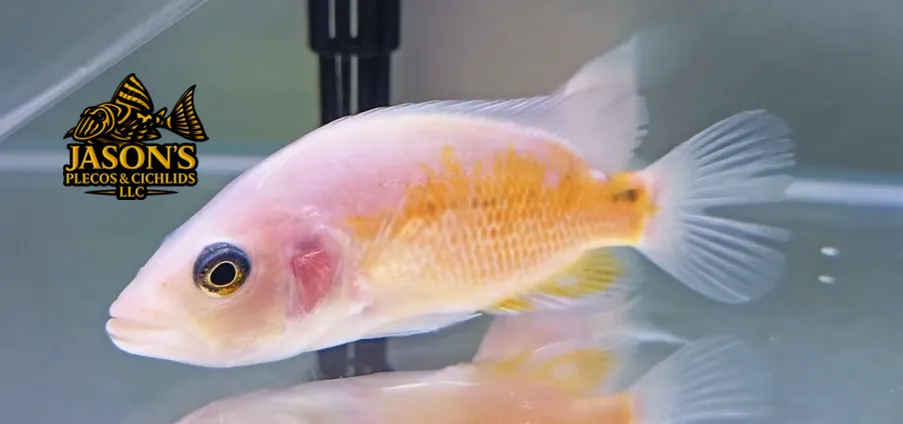
Red Dovii Cichlid - (Parachromis Dovii “Red”)
$100.00
Sold out
was $110.00 Save 9%
Size
Questions, Comments, Concerns? Let us know!
Enter your text
Price of shipping is not included.
Sold out
Save this fish to my favorites.
Customer reviews
Reviews only from verified customers
No reviews yet. You can buy this product and be the first to leave a review.
Red Dovii Cichlid - (Parachromis Dovii “Red”)
Fish Details, Description and Information Below:
🔴 Red Dovii Cichlid – (Parachromis dovii “Red”) – Captive-Bred Red Wolf Cichlid
The Red Dovii Cichlid (Parachromis dovii “Red”) is a selectively propagated color form of the legendary Dovii / Wolf Cichlid, one of the largest and most powerful predatory cichlids maintained in freshwater aquariums.
Instead of the silver, blue, gold, and black coloration normally associated with standard Parachromis dovii, the Red Dovii develops varying combinations of:
- Yellow
- Gold
- Orange
- Red-orange
- Copper
- Cream
with red to orange spotting and patterning across the body and fins.
The Red Dovii is not a separate species and not a hybrid. It remains:
Parachromis dovii
with:
“Red”
used to identify the captive color morph.
This listing is for:
CAPTIVE-BRED RED DOVII CICHLIDS
🔎 Quick Facts – Red Dovii Cichlid
- 📛 Common Name: Red Dovii Cichlid
- 📛 Other Names: Red Wolf Cichlid, Red Dovii, Red Guapote
- 🔬 Scientific Name: Parachromis dovii
- 🎨 Color Form: “Red”
- 🧬 Color-Form Status: Captive-bred color morph; not a separate species
- 🚫 Hybrid: No
- 🐟 Family: Cichlidae
- 🌿 Stock: Captive Bred
- 📏 Current Size: Approximately 4 inches
- 🌎 Wild Species Origin: Central America
- 🇭🇳 Native Range: Honduras
- 🇸🇻 Native Range: El Salvador
- 🇳🇮 Native Range: Nicaragua
- 🇨🇷 Native Range: Costa Rica
- 💧 Water Type: Freshwater
- 📏 Maximum Documented Species Size: 72 cm / approximately 28.3 inches total length
- ⚖️ Maximum Published Weight: Approximately 6.8 kg / 15 lb
- ♂️ Adult Male: Can exceed 24 inches and potentially approach 28 inches
- ♀️ Adult Female: Usually substantially smaller than a mature male
- 🏠 Permanent Adult Male Aquarium: 300+ gallons recommended
- 💕 Adult Pair: 400–500+ gallons strongly preferred with separation capability
- 📐 Aquarium Length: Approximately 8 feet or longer strongly preferred for a mature male
- 🌡️ Temperature: Approximately 75–82°F
- 💧 pH: Approximately 7.0–8.0
- 💦 Hardness: Moderate to Hard
- 💨 Oxygenation: Good to High
- 🌊 Water Movement: Moderate
- 🍽️ Diet: Carnivorous / Predatory
- 🐟 Natural Diet: Primarily fish, with crustaceans and insects also consumed
- 🚫 Feeder Fish: Not recommended
- 😠 Temperament: Extremely aggressive and territorial
- 🐠 Tankmates: Solitary housing is safest for most adults
- 💕 Pairs: Possible but potentially dangerous
- 🧠 Behavior: Bold, intelligent, highly interactive
- 🥚 Breeding: Substrate Spawner
- 👨👩👧 Parental Care: Biparental
- 🥚 Egg Production: Large clutches; approximately 1,000–1,500 eggs documented for the species
- ⭐ Care Level: Advanced
- 🌎 Species Conservation Status: Least Concern
- 🚨 Best For: Experienced keepers with very large aquariums
🧬 The Red Dovii Is a Color Morph – Not a Separate Species
The correct scientific species name is:
Parachromis dovii
The word:
“Red”
is used to identify the unusual color form.
Therefore, the best product name is:
Red Dovii Cichlid – (Parachromis dovii “Red”)
and not:
- Parachromis red dovii
- Parachromis dovii redensis
- Red Dovii hybrid
- A separate Red Dovii species
None of those would be correct.
🎨 What Is the Red Morph?
The Red Dovii is a reduced-dark-pigment color form that replaces much of the normal Dovii's silver, dark, and blue appearance with:
- Yellow
- Gold
- Orange
- Red
- Cream
coloration.
The aquarium hobby often describes the form as:
XANTHIC
or involving reduced melanin pigmentation.
However:
THE EXACT GENETIC MECHANISM SHOULD NOT BE PRESENTED AS COMPLETELY ESTABLISHED
without a formal genetic study.
The safest description is:
CAPTIVE-BRED RED / GOLD COLOR MORPH OF PARACHROMIS DOVII
🚫 Not a Hybrid
An important distinction:
RED DOVII ARE NOT AUTOMATICALLY HYBRIDS
The Red Dovii has been maintained and reproduced as a color form of:
Parachromis dovii
Unless a particular breeder line has documented hybrid ancestry, the Red Dovii should not be labeled a hybrid merely because its coloration differs from wild-type Dovii.
🐺 Wolf Cichlid
The standard Parachromis dovii is commonly called the:
WOLF CICHLID
because of its:
- Powerful predatory behavior
- Large adult size
- Territorial personality
- Strong jaws
- Intelligence
- Aggressive feeding behavior
The Red Dovii retains all of these characteristics.
The color mutation does:
NOT
make the fish:
- Smaller
- More peaceful
- Less predatory
- Easier to house
🎨 Appearance
Red Dovii coloration can include:
- Pale yellow
- Golden yellow
- Tangerine
- Orange
- Red-orange
- Copper-red
- Cream
with darker or brighter patterning across the:
- Head
- Flanks
- Dorsal fin
- Anal fin
- Caudal fin
🔴 Red & Orange Spotting
Many Red Dovii develop rows of:
- Red spots
- Orange-red spots
- Copper markings
- Red-orange scale coloration
across the body.
These replace much of the blue or blue-green iridescent spotting normally associated with wild-type Dovii.
👶 Juvenile Coloration
Young Red Dovii may initially appear:
- Yellow
- Gold
- Pale orange
- Cream-orange
with relatively modest red coloration.
The deeper red and orange pattern may become more obvious as the fish:
- Grows
- Matures
- Establishes territory
- Reaches breeding condition
⚠️ Color Cannot Be Guaranteed
Exact adult coloration varies.
Individual fish may mature:
- More yellow
- More orange
- More red
- More cream
- More heavily spotted
- More lightly patterned
than another fish from the same line.
Color can also be affected by:
- Genetics
- Age
- Sex
- Diet
- Lighting
- Aquarium background
- Stress
- Breeding condition
Therefore:
DO NOT GUARANTEE AN EXACT SHADE OF RED
🧬 Valid Scientific Species
The accepted scientific name is:
Parachromis dovii (Günther, 1864)
The species was originally described as:
Heros dovii
Older scientific literature may also use names such as:
- Cichlasoma dovii
- Nandopsis dovii
The currently accepted genus is:
Parachromis
🌎 Native Range of the Species
The Red color form is captive propagated, but the wild species:
Parachromis dovii
is native to:
CENTRAL AMERICA
including:
- Honduras
- El Salvador
- Nicaragua
- Costa Rica
🌊 Atlantic-Slope Distribution
Wild Parachromis dovii occurs on the Atlantic slope from approximately the:
RÍO AGUÁN IN HONDURAS
southward to the:
RÍO MOÍN IN COSTA RICA
🌊 Pacific-Slope Distribution
On the Pacific side, its natural distribution extends approximately from the:
RÍO YEGUARE REGION OF HONDURAS
southward to the:
RÍO BEBEDERO IN COSTA RICA
🇳🇮 Lake Nicaragua
The species is especially famous from:
LAKE NICARAGUA
which is also associated with the original scientific description of the species.
Wild Dovii are important predatory fish within their native ecosystems and are also known locally as:
GUAPOTE
🌊 Natural Habitat
Adult Dovii inhabit:
- Lakes
- Large rivers
- Lower river valleys
- Middle river valleys
- Rocky shorelines
- Areas with submerged structure
They are powerful, mobile predators rather than small fish tied permanently to one cave.
🕳️ Powerful Diggers
Parachromis dovii is a:
STRONG SUBSTRATE DIGGER
Adults may move enormous amounts of:
- Gravel
- Sand
- Small rocks
especially when:
- Establishing territory
- Preparing to spawn
- Guarding offspring
⚠️ Expect Aquarium Rearranging
A Red Dovii may decide that your aquarium layout is incorrect.
It can:
- Dig large pits
- Move substrate
- Push decorations
- Uproot plants
- Rearrange rocks
- Move unsecured equipment
Design the aquarium with this behavior in mind.
📏 Adult Size – One of the Most Important Facts
FishBase documents Parachromis dovii reaching:
72 CM TOTAL LENGTH
or approximately:
28.3 INCHES
with a maximum published weight around:
6.8 KG / 15 POUNDS
This makes Dovii one of the largest cichlids commonly maintained by monster-fish enthusiasts.
♂️ Males Become Enormous
Mature males can exceed:
24 INCHES
and exceptional fish may approach:
28 INCHES
total length.
They also develop:
- Massive heads
- Thick bodies
- Powerful jaws
- Large fins
so aquarium requirements cannot be based on length alone.
♀️ Females Are Usually Smaller
Females generally remain:
SUBSTANTIALLY SMALLER THAN MALES
but they are still large and powerful cichlids.
A smaller female should never be assumed to be safe with a much larger male.
⚠️ Red Does Not Mean Dwarf
The Red color morph does not create a:
- Mini Dovii
- Dwarf Dovii
- Smaller aquarium strain
Customers should plan for the same enormous adult potential as:
STANDARD PARACHROMIS DOVII
🏠 Aquarium Size – Permanent Adult Housing
The old idea that a large cichlid can simply be maintained in an aquarium it technically fits inside is not adequate for Dovii.
For a mature male:
300+ GALLONS IS RECOMMENDED
with an aquarium approximately:
8 FEET LONG OR LONGER
strongly preferred.
📐 Footprint Matters More Than Height
A Dovii needs room to:
- Turn comfortably
- Patrol territory
- Swim
- Dig
- Display
- Avoid hitting décor
Prioritize:
LENGTH + WIDTH
rather than excessive aquarium height.
💕 Aquarium Size for a Pair
Keeping an adult pair is substantially more difficult than keeping one fish.
For a mature pair:
400–500+ GALLONS IS STRONGLY PREFERRED
along with the ability to:
SEPARATE THE MALE AND FEMALE IMMEDIATELY
if aggression escalates.
Even extremely large aquariums cannot guarantee pair compatibility.
🚨 Solitary Housing Is Safest
For most aquarium keepers:
ONE ADULT DOVII PER AQUARIUM
is the safest long-term recommendation.
An adult Dovii may kill:
- Smaller fish
- Similar-sized fish
- Other cichlids
- Catfish
- Plecos
- Other Dovii
depending on the individual.
⚠️ Tankmates Are Never Guaranteed
Some individual Dovii temporarily tolerate other large fish.
That does not make community housing predictable.
A fish that coexists peacefully for:
- Weeks
- Months
- Years
can become aggressively intolerant after:
- Sexual maturity
- A spawning attempt
- Territory changes
- Aquarium rearrangement
- Introduction of another fish
🚫 Do Not Promise Compatibility
There is no list of:
“SAFE DOVII TANKMATES”
that can guarantee success.
Every combination must be treated cautiously.
For mature Red Dovii:
SPECIES-ONLY / SOLITARY HOUSING IS THE SAFEST PLAN
😠 Extremely Aggressive Cichlid
Dovii have a well-earned reputation for:
EXTREME TERRITORIAL AGGRESSION
especially after reaching sexual maturity.
They may attack:
- Other fish
- Tank dividers
- Aquarium equipment
- Nets
- Hands near territory
⚠️ Individual Personality Varies
Not every Red Dovii behaves identically.
Some individuals may be:
- Relatively tolerant
- Extremely aggressive
- Highly defensive
- More aggressive during breeding
Never assume a juvenile's temperament predicts adult behavior.
🧠 Intelligent & Interactive
Dovii often become highly aware of activity outside the aquarium.
Established fish may:
- Recognize feeding routines
- Approach familiar people
- Follow movement outside the glass
- Beg for food
- Defend particular areas
- Display during interaction
This interactive behavior is one reason experienced cichlid keepers find the species so fascinating.
⚠️ Avoid Humanizing Aggressive Behavior
While Dovii may learn routines and respond to their keeper:
THEY REMAIN LARGE PREDATORY FISH
A fish approaching the glass may be:
- Expecting food
- Defending territory
- Investigating movement
rather than expressing the same social behavior as a domestic mammal.
🦷 Powerful Jaws & Teeth
A mature Dovii has:
- Strong jaws
- Visible teeth
- Powerful jaw muscles
Large adults are capable of causing painful injuries.
Use caution when:
- Cleaning the aquarium
- Moving décor
- Handling dividers
- Working around breeding adults
🚫 Do Not Hand-Feed Large Adults
Hand-feeding is unnecessary.
Use:
- Feeding tongs
- Appropriate tools
- Safe feeding techniques
with very large territorial specimens.
🪨 Aquarium Setup
A suitable Red Dovii aquarium should provide:
- Large open swimming areas
- Heavy secure décor
- Large rocks
- Thick driftwood if desired
- Sand or rounded gravel
- Strong filtration
- Good oxygenation
⚠️ Secure Every Heavy Object
Dovii are powerful enough to move decorations.
Large rocks should be positioned so they cannot:
- Collapse
- Roll
- Trap the fish
- Strike the aquarium glass
Do not balance heavy rocks loosely on movable substrate.
🌿 Plants
Red Dovii are generally:
NOT IDEAL FOR DELICATE PLANTED AQUARIUMS
They may:
- Dig up plants
- Move substrate
- Damage roots
- Rearrange décor
Hardy plants attached securely to heavy décor may survive, but they should not be considered permanent.
🛡️ Secure Lid
A large Dovii is powerful and capable of sudden bursts of speed.
Use a:
STRONG, SECURE AQUARIUM COVER
Keep:
- Lids
- Access panels
- Equipment openings
secure.
💩 Very High Bioload
Large carnivorous cichlids create:
A LOT OF WASTE
A mature Red Dovii requires substantial:
- Mechanical filtration
- Biological filtration
- Water volume
- Water changes
💩 Filtration
Suitable filtration may include:
- Large sump systems
- Multiple large canister filters
- Strong mechanical prefiltration
- High-capacity biological media
- Supplemental aeration
Design filtration with an adult:
TWO-FOOT-PLUS PREDATORY CICHLID
in mind.
🔄 Water Changes
Regular partial water changes are essential.
Frequency depends on:
- Aquarium volume
- Fish size
- Feeding quantity
- Filtration
- Nitrate production
Maintain:
AMMONIA = 0
and:
NITRITE = 0
at all times.
Keep nitrate as low as reasonably practical.
💧 Water Parameters
A practical long-term aquarium range is:
- 🌡️ Temperature: Approximately 75–82°F
- 💧 pH: Approximately 7.0–8.0
- 💦 Hardness: Moderate to Hard
- 💨 Oxygenation: Good to High
- 🌊 Water Movement: Moderate
- ☠️ Ammonia: 0 ppm
- ☠️ Nitrite: 0 ppm
- 🔄 Nitrate: Keep low
🌡️ Temperature
A good aquarium range is:
75–82°F / 24–28°C
Stable temperature is more important than constantly trying to achieve one exact number.
💨 Oxygenation
Provide good surface movement and dissolved oxygen.
Large fish consume considerable oxygen, particularly in:
- Warm water
- Heavily fed aquariums
- Large closed systems
🍽️ Diet – Carnivorous Predator
Wild Parachromis dovii are primarily:
PISCIVOROUS
meaning fish make up a major part of their natural diet.
They also naturally consume:
- Crustaceans
- Insects
🍽️ Captive Diet
In captivity, the diet should be varied and nutritionally balanced.
Good staple foods include:
- High-quality large cichlid pellets
- Predator pellets
- Quality carnivore sticks
- Insect-based pellets
🦐 Supplemental Foods
Suitable supplemental foods can include:
- Shrimp
- Prawn
- Krill
- Mysis
- Earthworms
- Insects
- Appropriate pieces of fish
- Mussel
⚠️ Do Not Feed Only One Food
Avoid maintaining the fish exclusively on:
- Shrimp
- Tilapia
- Pellets
- Krill
or any other single food.
Dietary variety helps provide more complete nutrition.
🚫 Avoid Feeder Fish
There is no need to routinely feed live:
- Goldfish
- Rosy reds
- Feeder guppies
- Other feeder fish
Feeder fish can introduce:
- Parasites
- Bacteria
- Disease
- Nutritional imbalance
High-quality prepared and frozen foods are safer.
🐟 Whole-Fish Foods
When appropriate whole-fish foods are used, choose:
- Properly sourced
- Disease-free
- Nutritionally appropriate
foods rather than unquarantined aquarium feeder fish.
⚠️ Do Not Overfeed
Large predatory fish are capable of eating substantial amounts of food.
That does not mean they should be fed until distended at every meal.
Overfeeding contributes to:
- Obesity
- Poor water quality
- Excess organic waste
👶 Juvenile Feeding
Young Red Dovii grow quickly when provided:
- Quality pellets
- Krill
- Mysis
- Insect foods
- Shrimp
- Other balanced protein-rich foods
Juveniles can be fed more frequently than mature adults.
🌙 Activity
Dovii are active:
DAYTIME AND CREPUSCULAR PREDATORS
and are generally much more visible than nocturnal catfish.
They commonly patrol the aquarium and interact strongly with their surroundings.
♂️ Male vs. Female
Sexual differences become increasingly obvious with maturity.
Mature Males
Typically become:
- Much larger
- More heavily built
- Larger-headed
- More heavily finned
- More imposing
and may develop elongated:
- Dorsal-fin extensions
- Anal-fin extensions
Mature Females
Typically remain:
- Smaller
- Shorter-bodied
- Less massive
than males.
Females are still highly territorial fish and can become extremely aggressive during breeding.
⚠️ Sexing Red Dovii by Color
The Red morph alters normal pigmentation.
Therefore, some traditional visual sexing clues used with wild-type Dovii may be:
LESS RELIABLE
in Red Dovii.
Body:
- Size
- Head structure
- Fin shape
- Breeding behavior
become increasingly useful as the fish matures.
🥚 Captive Breeding – Confirmed
The Red Dovii color morph has been:
SUCCESSFULLY BRED IN CAPTIVITY
and breeding reports for Red Dovii have been published within the cichlid hobby.
The underlying species is a:
BIPARENTAL SUBSTRATE SPAWNER
🪨 Spawning Site
Pairs may prepare:
- Flat rocks
- Large stones
- Excavated areas
- Protected surfaces
for spawning.
They can also dig extensively around the chosen breeding territory.
🥚 Large Clutches
FishBase documents approximately:
1,000–1,500 EGGS
for Parachromis dovii.
Actual clutch size varies with:
- Female size
- Age
- Condition
- Pair compatibility
Do not promise an exact egg count.
👨👩👧 Biparental Care
Both parents may participate in:
- Defending the territory
- Guarding eggs
- Protecting larvae
- Defending free-swimming fry
Parental aggression can become:
EXTREME
during this period.
🚨 Pair Aggression Is the Biggest Breeding Danger
Breeding Dovii is not difficult simply because of water parameters.
The major challenge is:
KEEPING BOTH ADULTS ALIVE
A male can seriously injure or kill a female very quickly.
Females can also become highly aggressive.
🛡️ Heavy-Duty Divider Recommended
Anyone attempting to maintain an adult pair should have a:
VERY STRONG DIVIDER
available.
A divider should be:
- Secure
- Heavy-duty
- Properly anchored
- Unable to be pushed aside
Large Dovii are strong enough to move or damage flimsy barriers.
⚠️ Ordinary Egg Crate May Not Be Enough
Large mature Dovii can place enormous force on aquarium dividers.
Lightweight plastic barriers should not automatically be assumed to be sufficient for a full-sized adult male.
💕 Pair Compatibility Is Never Guaranteed
A male and female that previously spawned successfully can still:
- Fight
- Separate
- Become incompatible
- Injure one another
Pair bonding should never be interpreted as a permanent guarantee of safety.
🐣 Raising Fry
Once free swimming, fry can receive:
- Newly hatched brine shrimp
- Fine high-quality cichlid foods
- Appropriate fry pellets
- Small insect foods
Growth can be extremely rapid under proper feeding and water quality.
⚠️ Plan for Hundreds of Juveniles
A successful Dovii spawn can produce:
A VERY LARGE NUMBER OF FRY
Before breeding, aquarists should have a plan for:
- Grow-out space
- Filtration
- Feeding
- Separating aggressive juveniles
- Responsible rehoming
🧬 Keep the Red Line Accurately Labeled
Offspring should be labeled:
Parachromis dovii “Red”
when bred from a documented Red Dovii line.
Do not invent a new scientific species name.
⚠️ Do Not Mix Unknown Hybrid Lines
Because Central American cichlids can hybridize in captivity, breeding fish of uncertain ancestry can create identification problems.
If preserving Red Dovii:
USE VERIFIED PARACHROMIS DOVII PARENT STOCK
🌎 Conservation Status
The natural species:
Parachromis dovii
is currently classified as:
LEAST CONCERN
The global assessment dates to:
2019
🔴 Red Morph Conservation Status
The Red Dovii is a:
CAPTIVE COLOR MORPH
and does not have a separate IUCN conservation category.
Its conservation status should therefore not be listed separately from the species.
⭐ Why Keep a Red Dovii?
The Red Dovii combines:
- 🔴 Dramatic red-orange coloration
- 🐺 Legendary Wolf Cichlid personality
- 📏 Potential 24–28+ inch male size
- 🧠 Highly interactive behavior
- 🦷 Powerful predatory anatomy
- 🐟 Impressive adult presence
- 🥚 Captive breeding potential
- 👨👩👧 Biparental care
- 🧬 Established captive color-morph identity
into an extraordinary centerpiece fish for an aquarist prepared to dedicate a massive aquarium to it.
🚨 This Is Not a Beginner Fish
The Red Dovii is best suited to:
EXPERIENCED LARGE-CICHLID KEEPERS
because of its:
- Enormous adult size
- Extreme territorial behavior
- Powerful jaws
- Predatory feeding
- Large bioload
- Expensive permanent housing requirements
- Potentially lethal pair aggression
⚠️ Important Considerations
Before purchasing a Red Dovii Cichlid:
- The correct species name is Parachromis dovii.
- “Red” identifies the captive color morph.
- Red Dovii are not a separate species.
- Do not invent a scientific name for the morph.
- The Red Dovii is not automatically a hybrid.
- This listing is for captive-bred fish.
- The current fish are approximately 4 inches.
- Wild P. dovii are native to Central America.
- Native countries include Honduras, El Salvador, Nicaragua, and Costa Rica.
- FishBase documents the species to 72 cm / approximately 28.3 inches total length.
- Maximum published weight is approximately 6.8 kg / 15 pounds.
- Mature males become much larger than females.
- The Red morph does not remain smaller than normal Dovii.
- Plan for a 300+ gallon permanent aquarium for a mature male.
- An approximately 8-foot or longer aquarium is strongly preferred.
- Adult pairs require substantially more room.
- 400–500+ gallons is strongly preferred for a pair.
- Even enormous aquariums cannot guarantee pair compatibility.
- Solitary housing is safest for most mature adults.
- Tankmates are never guaranteed.
- Provide strong filtration.
- Expect a very high bioload.
- Secure all heavy décor.
- Use a strong aquarium cover.
- Expect extensive substrate digging.
- Maintain approximately 75–82°F.
- Maintain approximately pH 7.0–8.0.
- Maintain good dissolved oxygen.
- Feed a varied carnivorous diet.
- Quality pellets can form the nutritional foundation.
- Shrimp, krill, insects, worms, and appropriate fish-based foods provide variety.
- Routine live feeder fish are unnecessary and not recommended.
- Use caution around the jaws and teeth of large adults.
- Captive breeding of the Red morph is documented.
- Dovii are biparental substrate spawners.
- Large clutches are normal.
- Pair aggression can be lethal.
- A heavy-duty divider should be available when attempting to breed adults.
- Label Red Dovii offspring accurately.
- The wild species is currently Least Concern.
- Never release aquarium fish into natural waterways.
🧬 Taxonomy
The currently accepted scientific name is:
Parachromis dovii (Günther, 1864)
Classification:
- Order: Cichliformes
- Family: Cichlidae
- Genus: Parachromis
- Species: dovii
- Color Morph: “Red”
Older scientific names include:
- Heros dovii
- Cichlasoma dovii
- Nandopsis dovii
For this product, use:
Red Dovii Cichlid – (Parachromis dovii “Red”)
🔴 Color-Morph Disclaimer
“Red” is an aquarium color-form designation and is not part of the formal scientific species name.
Individual Red Dovii may differ naturally in:
- Red intensity
- Orange coloration
- Yellow coloration
- Spot density
- Pattern
- Adult appearance
Exact adult coloration cannot be guaranteed.
The color form does not alter the enormous adult size or extreme territorial behavior of the species.
🚚 Live Fish Shipping
Live fish are professionally packed for safe transport.
Shipping availability depends on:
- Fish size
- Destination
- Weather conditions
- Carrier availability
- Applicable state and local regulations
Larger Red Dovii may require:
- Larger insulated shipping boxes
- Additional water
- Heavy-duty shipping bags
- Multiple bag layers
- Specialized packing
- Airline cargo shipping depending on adult size and destination
Please review our Shipping & Payment Information and Live Arrival Guarantee / DOA Policy before ordering.
⚠️ Buyer Responsibility
Customers are responsible for confirming that Parachromis dovii “Red” may legally be purchased, possessed, transported, and received in their state or local jurisdiction before ordering.
Never release aquarium fish into natural waterways.
Below are fish you may also like.
Wild Caught
Spotted Tilapia - (Pelmatolapia cf mariae)
Spotted Tilapia - (Pelmatolapia cf mariae)
Price of shipping is not included.
$40.00
Out of stock
Wild Caught
L397 Tangerine Tiger Pleco - (Panaqolus sp.)
L397 Tangerine Tiger Pleco - (Panaqolus sp.)
Price of shipping is not included.
was $95.00
Save 21%
$75.00
Out of stock
Wild Caught
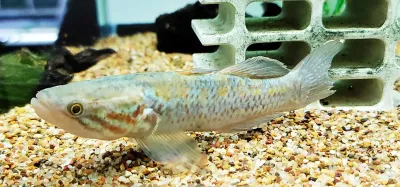
Snakehead Gudgeon - (Giuris margaritacea)
Snakehead Gudgeon - (Giuris margaritacea)
Price of shipping is not included.
$40.00
Out of stock
Wild Caught
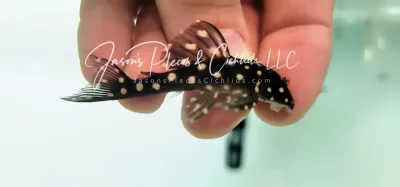
Orinoco Polka-Dot Pleco - (Hypancistrus contradens)
Orinoco Polka-Dot Pleco - (Hypancistrus contradens)
Price of shipping is not included.
$45.00
Out of stock
Wild Caught
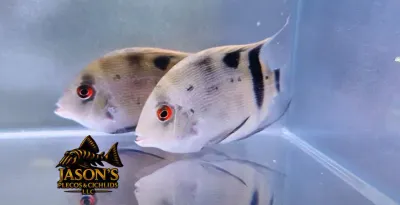
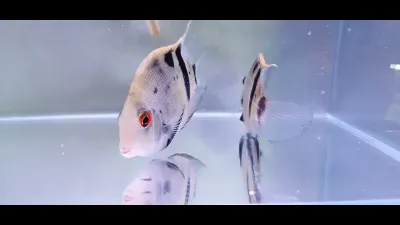
Panda Uaru - (Uaru fernandezyepezi)
Panda Uaru - (Uaru fernandezyepezi)
Price of shipping is not included.
was $95.00
Save 5%
$90.00
Out of stock
Wild Caught
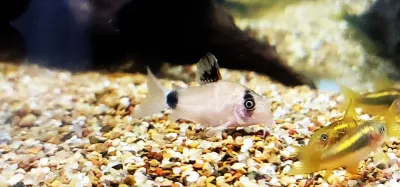
Panda Cory - (Corydoras (lineage 9) Panda
Panda Cory - (Corydoras (lineage 9) Panda
Price of shipping is not included.
$25.00
Out of stock
Wild Caught
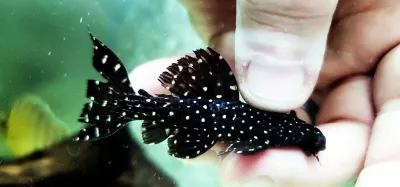
L452 Mustang Cactus Pleco - (Pseudacanthicus sp.)
L452 Mustang Cactus Pleco - (Pseudacanthicus sp.)
Price of shipping is not included.
$180.00
Out of stock
Captive Bred
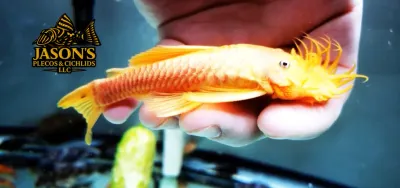
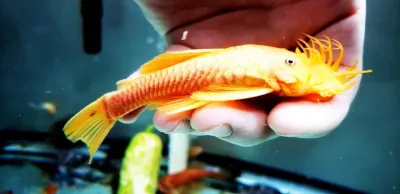
L144 Black Eyed Yellow Bristlenose - (Ancistrus sp. (4)
L144 Black Eyed Yellow Bristlenose - (Ancistrus sp. (4)
Price of shipping is not included.
was $40.00
Save 13%
$35.00
Out of stock
Wild Caught
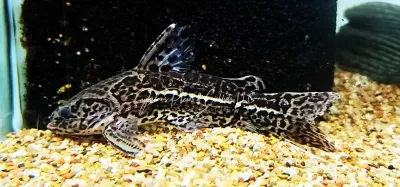
Jaguar Catfish - (Liosomadoras oncinus)
Jaguar Catfish - (Liosomadoras oncinus)
Price of shipping is not included.
5.0
(1)
$65.00
Out of stock
Wild Caught
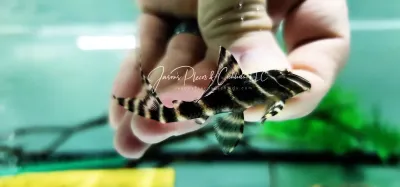
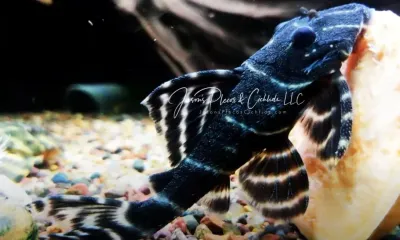
L204 Flash Pleco - (Panaqolus albivermis)
L204 Flash Pleco - (Panaqolus albivermis)
Price of shipping is not included.
was $50.00
Save 10%
$45.00
Out of stock
Captive Bred
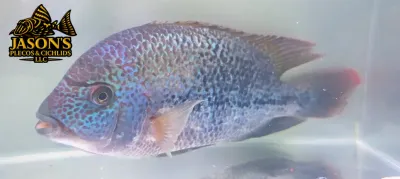
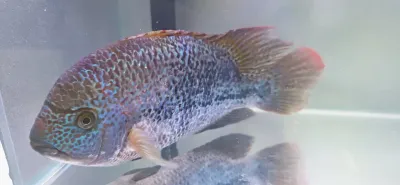
Tailbar Cichlid - (Vieja Hartwegi)
Tailbar Cichlid - (Vieja Hartwegi)
Price of shipping is not included.
was $110.00
Save 9%
$100.00
Out of stock
Wild Caught
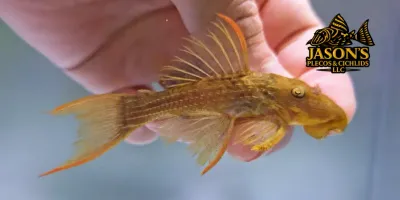
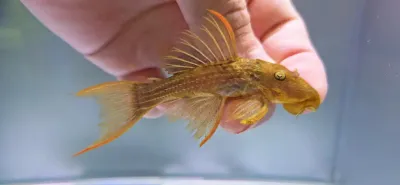
L024 Red Fin Cactus Pleco - (Pseudacanthicus pitanga)
L024 Red Fin Cactus Pleco - (Pseudacanthicus pitanga)
Price of shipping is not included.
$120.00
Out of stock
Powered by Lightspeed
Display prices in:USD