Parancistrus aurantiacus vs. Pseudancistrus sp. (L056)
🐟 Parancistrus aurantiacus vs. Pseudancistrus sp. (L056) vs. Parancistrus sp. (LDA046)
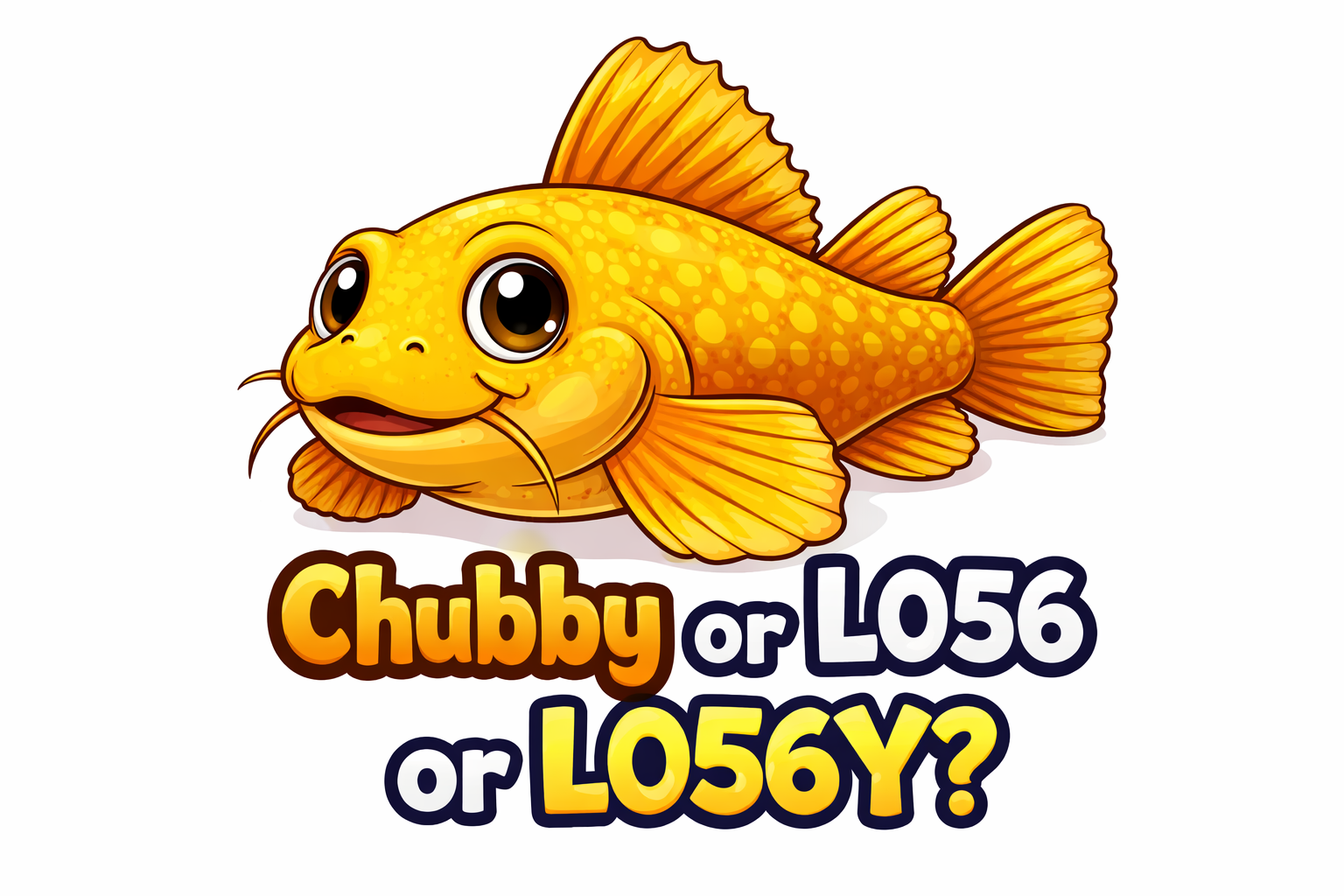
Chubby Plecos, Color Change, L-Numbers, and the “L056Y” Myth — Fully Explained
Several visually similar South American plecos are frequently misidentified in the aquarium trade, especially when sold as juveniles. The most common confusion involves Parancistrus aurantiacus, Pseudancistrus sp. (L056) (commonly called the Black Gudgeon Pleco), and the newer Parancistrus sp. (LDA046)—often made worse by incorrect labels such as “L056Y” (Yellow).
To complicate matters further, mounting evidence suggests the true Pseudancistrus sp. (L056) may not even be established in the hobby, or may represent a rare, one-off or misidentified historical import.
This article explains what these fish really are, why the confusion exists, and how to identify them correctly.
🧬🔍 Genus Comes First
Correct identification starts at the genus level.
🧬 Parancistrus
- Thick, heavy-bodied “chubby” plecos
- Broad heads and powerful sucker mouths
- Includes both color-changing and non-color-changing species
🧬 Pseudancistrus
- More slender body
- Blunt snout profile
- Lighter overall build
- Does not change color
🐟🔥 Parancistrus aurantiacus
(The true color-changing chubby pleco)
🎨 Color is unpredictable at any stage of life
🟡 Juveniles may appear yellow, orange, dark, or mixed
⚫ Adults may also show a wide range of coloration
❓ No one knows why, how, or when color changes occur
🔄 Some individuals change early, others late, some gradually
🚫 There is NO proven method to “lock in” gold or orange coloration — despite claims sometimes made by sellers
📏 Adult size ~7–8 inches (18–20 cm)
🧱 Thick, stocky body
🧠 Why the Name aurantiacus Matters
📚 Latin origin: aurantiacus = “orange-colored” or “orange”
The name reflects the species’ natural tendency to display orange or gold coloration at some point in its life, not a guarantee that it will remain orange permanently.
👉 Key rule:
If it changes color → it is Parancistrus aurantiacus.
🐟🖤 Pseudancistrus sp. (L056)
(Common name: Black Gudgeon Pleco)
🖤 Known as the Black Gudgeon Pleco
⚫ Dark, uniform body coloration
🎨 Color remains stable throughout life
🧬 Slender body and blunt snout compared to Parancistrus
⚠️ A Critical Reality Check
- L056 is rarely exported, if at all
- Despite this, the L-number L056 is commonly seen for sale
- In nearly all such cases, the fish being sold is actually Parancistrus aurantiacus
- This confusion originates from a misidentification in the Aqualog L-number book in the mid-1990s
- That early error has been copied and perpetuated for decades by exporters, importers, and sellers
👉 Practical truth:
Most hobbyists — even experienced collectors — have never seen a confirmed, true L056, despite the name being widely used.
🪱🐟 Parancistrus sp. (LDA046) — “Wormline Chubby”
(A newer, legitimate species that adds to the confusion)
🪱 Distinct worm-like / maze-line patterning
⚫ Dark base coloration with pale, consistent line markings
🧬 Confirmed Parancistrus genus
🎨 Does NOT change color
📏 Adult size similar to P. aurantiacus
⚠️ Important:
LDA046 is pattern-based, not a color-phase fish. Its appearance remains stable throughout life.
🧬⭐ Notable Hobby Milestone
As part of ongoing efforts to expand accurate representation of rare plecos in the hobby:
🏆 Jason’s Plecos & Cichlids LLC
were the first to import an Albino Parancistrus aurantiacus into the United States.
This import helped confirm:
- The species’ genetic variability
- That albinism exists independently of the normal color-change process
- That even albino forms still follow the same unpredictable coloration rules inherent to P. aurantiacus
📛⚠️ The “L056Y” Myth — Why It Is Incorrect
Many exporters and collectors still label chubby yellow or orange plecos as “L056” or “L056Y” (Y = Yellow).
This is biologically, logically, and taxonomically incorrect.
🚫 Why “L056Y” Fails
- L056 / Black Gudgeon Pleco does not change color
- “Y” implies a permanent yellow morph
- A fish that changes color cannot retain a color-based L-number
- If the fish changes color, the designation ceases to apply
- Therefore, L056Y is not a valid fish
👉 If L056Y were real, the fish would:
- Stay yellow permanently
- Never darken
- Never shift tone
That fish does not exist.
🔁 Simple, Reliable Identification Rules
- 🔥 Color unpredictable or changing at any stage → Parancistrus aurantiacus
- 🪱 Wormline pattern, no color shift → Parancistrus sp. (LDA046)
- 🖤 Stable dark color, slender body, blunt snout (rare/questionable) → Possible true Black Gudgeon Pleco (L056)
- ❌ “L056Y” → Not valid
✅ Bottom Line
- ❌ “L056Y” is not a real fish
- 🖤 The true L056 (Black Gudgeon Pleco) may not be present in the hobby
- 🔥 Parancistrus aurantiacus is the only color-changing chubby pleco
- 📚 aurantiacus means “orange-colored,” not permanently orange
- 🚫 There is no secret method to keeping them gold
- 🪱 LDA046 is a stable-pattern Parancistrus, not a color morph
- 📛 Most confusion traces back to 1990s literature errors and repeated mislabeling
Correct identification protects hobbyists from false promises, pricing confusion, improper expectations, and long-term disappointment.
Powered by Lightspeed
Display prices in:USD