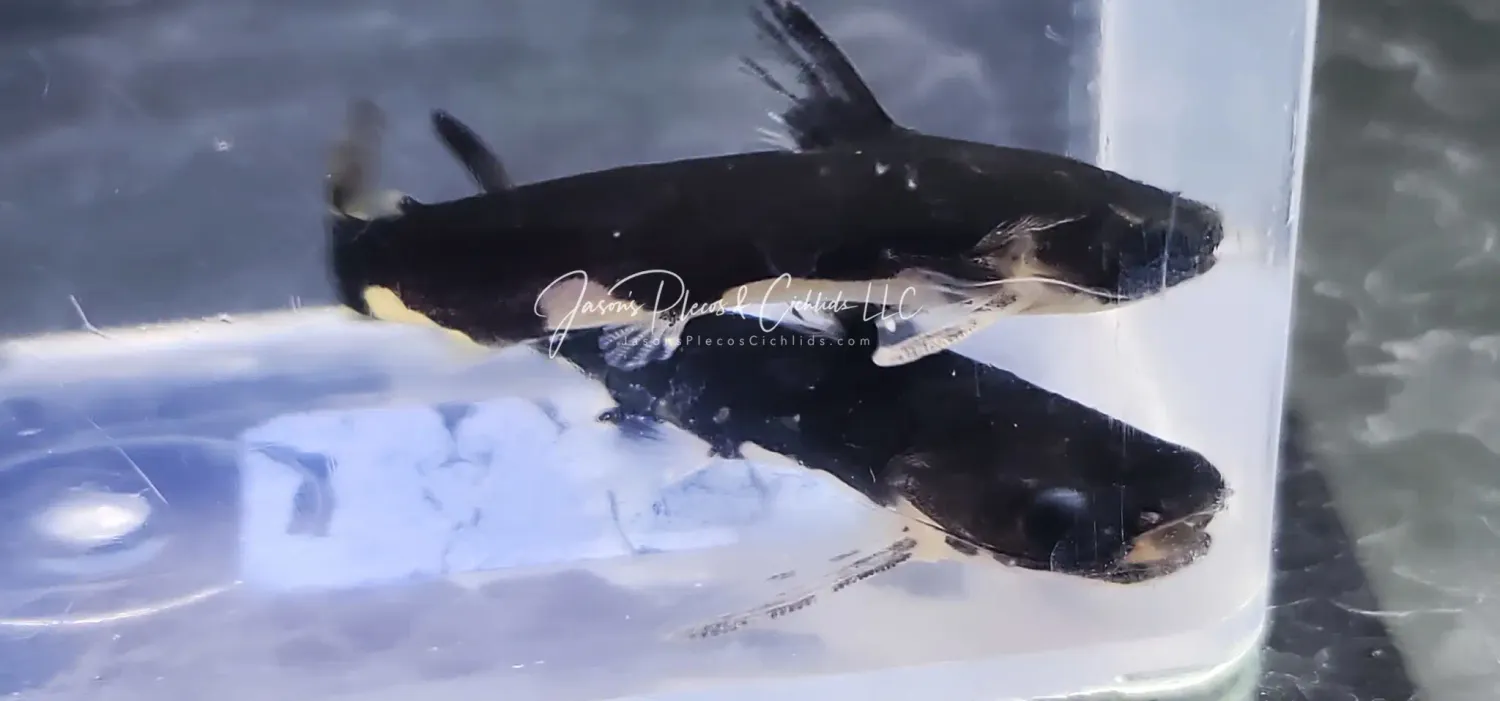
Ninja Woodcat - (Centromochlus orca)
$45.00
Sold out
Size
Questions, Comments, Concerns? Let us know!
Enter your text
Price of shipping is not included.
Sold out
Save this fish to my favorites.
Customer reviews
Reviews only from verified customers
No reviews yet. You can buy this product and be the first to leave a review.
Ninja Woodcat - (Centromochlus orca)
Fish Details, Description and Information Below:
🥷 Ninja Woodcat – (Centromochlus orca) – Black & White Brazilian Driftwood Catfish
The Ninja Woodcat (Centromochlus orca), also known as the Orca Woodcat or Ninja Tatia, is a small, unusual South American driftwood catfish recognized by its dramatic black-and-white coloration, enormous dark eyes, nocturnal behavior, and ability to disappear into tiny cracks and cavities during the day.
Its bold pattern is immediately recognizable:
- Deep black upper body
- Bright white underside
- Irregular white patches extending upward along the sides
- Large dark eyes
- Pale fins with contrasting dark markings
- Black-and-white pattern reminiscent of an orca
That resemblance inspired the scientific species name:
orca
Although called a “woodcat,” this species should not be thought of as a pleco-like wood grazer or a bottom-cleaning catfish.
Wild Centromochlus orca have actually been observed actively swimming through the midwater and near the surface at night, where they search for small animal foods.
🔎 Quick Facts – Ninja Woodcat
- 📛 Common Name: Ninja Woodcat
- 📛 Other Names: Orca Woodcat, Ninja Tatia, Orca Driftwood Catfish
- 🔬 Scientific Name: Centromochlus orca
- 📚 Older Scientific Combination: Tatia orca
- 📅 Formally Described: 2017
- 🐟 Family: Auchenipteridae
- 🧬 Subfamily: Centromochlinae
- 🌎 Origin: South America
- 🇧🇷 Country: Brazil
- 🌊 Primary Native Drainage: Rio Nhamundá Basin
- 📍 Type Locality: Mouth of Igarapé Jamari with Lago de Terra Santa, Pará, Brazil
- 📍 Additional Locality: Lagoa Sete Ilhas near the Amazonas–Pará border
- 💧 Water Type: Freshwater
- 🏞️ Natural Habitat: Floodplain-edge channels, lake margins and slow or nearly still water
- 🌙 Activity: Strongly nocturnal / crepuscular
- 🏊 Nighttime Position: Midwater and surface activity documented
- 📏 Scientific Maximum: 5.68 cm / approximately 2.2 inches standard length
- 📏 Adult Planning Size: Approximately 2.25–2.5 inches
- 🏠 Recommended Aquarium: 20 gallons or larger
- 👥 Small Group: Approximately 20–30+ gallons with abundant shelters
- 🌡️ Temperature: Approximately 75–82°F
- 💧 pH: Approximately 6.0–7.5
- 💦 Water: Soft to moderately mineralized
- 💨 Oxygenation: Good
- 🌊 Water Movement: Gentle to Moderate
- 🚫 Strong Current Required: No
- 🍽️ Diet: Small Animal / Invertebrate-Based Omnivore
- 🦐 Frozen & Live Foods: Very Important
- 🐛 Insect Foods: Excellent
- 🚫 Algae Cleaner: No
- 🚫 Detritus Cleaner: No
- 🪵 Driftwood: Strongly recommended for shelter
- 😌 Temperament: Peaceful
- ⚠️ Tankmate Size: Keep with peaceful fish too small to intimidate or outcompete it
- 🥚 Reproduction: Internal fertilization occurs within this catfish group
- 🔬 Male Feature: Modified anal fin associated with insemination
- ⭐ Care Level: Intermediate
- 🌎 IUCN Status: Least Concern
🧬 Current Scientific Name
The currently accepted scientific name is:
Centromochlus orca
The species was formally named by:
Sarmento-Soares, Lazzarotto, Rapp Py-Daniel & Leitão
and is currently recognized as a valid member of the family:
AUCHENIPTERIDAE
or:
DRIFTWOOD CATFISHES
📚 What About Tatia orca?
Aquarium literature may also list this fish as:
Tatia orca
That name reflects a previous taxonomic placement.
Modern classification has returned the species to:
Centromochlus
Therefore, the correct current product name is:
Ninja Woodcat – (Centromochlus orca)
Older references using Tatia orca can still contain useful husbandry information, but the scientific name on the product page should be updated to Centromochlus orca.
🐋 Why Is It Called orca?
The species name:
orca
refers directly to its remarkable resemblance in coloration to the:
ORCA / KILLER WHALE
The fish has a sharply contrasting:
- Black upper body
- White underside
- Irregular white side markings
creating an unmistakable black-and-white pattern.
🥷 Why “Ninja Woodcat”?
The aquarium name:
NINJA WOODCAT
fits its behavior extremely well.
During daylight, this fish can seemingly:
DISAPPEAR
into:
- Driftwood cracks
- Hollow branches
- Narrow caves
- Rock crevices
- Tubes
- Shaded structures
It may remain almost completely invisible until the aquarium lights dim.
👀 Huge Eyes
One of the most noticeable characteristics of Centromochlus orca is its:
VERY LARGE EYES
The original scientific description specifically noted the unusually large eye diameter as an identifying characteristic.
Those large eyes fit perfectly with its:
NOCTURNAL LIFESTYLE
and allow it to function effectively in low-light environments.
🎨 Appearance
The upper body is generally:
- Black
- Charcoal
- Very dark brown-black
while the underside is:
BRIGHT WHITE
The boundary between the black and white areas is not straight.
Instead, it forms an attractive:
WAVY, IRREGULAR BORDER
along the fish's sides.
⚪ White Side Markings
The white coloration extends upward onto portions of the lower sides of the body.
This creates:
- White patches
- Irregular bands
- Broken markings
- High-contrast shapes
against the black background.
Individual fish can show slightly different patterns.
⚠️ Pattern Variation
Exact black-and-white markings cannot be guaranteed.
Individuals may differ naturally in:
- Amount of white
- Shape of side patches
- Tail pattern
- Fin coloration
- Width of black areas
Stress can also temporarily alter overall coloration.
🆚 Ninja Woodcat vs. Centromochlus musaicus
A particularly important identification issue involves:
Centromochlus musaicus
which has historically been confused with C. orca.
The two species are:
NOT THE SAME FISH
🐟 Centromochlus orca
The Ninja / Orca Woodcat is associated primarily with:
THE RIO NHAMUNDÁ BASIN IN BRAZIL
and has a black body with:
LARGE, CLEAR WHITE AREAS
extending upward onto the lower sides.
🐟 Centromochlus musaicus
Centromochlus musaicus originates from the:
UPPER ORINOCO SYSTEM
and differs in:
- Geographic origin
- Pattern arrangement
- Pigmentation
- Certain anatomical characteristics
Because aquarium trade names have historically been confused, scientific identification is important.
⚠️ Preserve Scientific Identification
For this product, use:
Centromochlus orca
rather than assuming every black-and-white “Ninja Tatia” is the same species.
Supplier and collection information should be preserved whenever available.
🌎 Native Distribution
Centromochlus orca is native to:
BRAZIL
and was originally scientifically described from the:
RIO NHAMUNDÁ BASIN
along the border region between:
- Pará
- Amazonas
📍 Type Locality
The type locality is:
MOUTH OF IGARAPÉ JAMARI WITH LAGO DE TERRA SANTA
near:
TERRA SANTA, PARÁ, BRAZIL
within the:
RIO NHAMUNDÁ BASIN
🌊 Lagoa Sete Ilhas
Additional original specimens were collected from:
LAGOA SETE ILHAS
upstream from Nhamundá near the boundary between:
- Amazonas
- Pará
This region represents an ecological transition between:
THE AMAZON FLOODPLAIN
and:
THE GUIANA SHIELD
🌊 Important Habitat Correction
It would be easy to assume that a small Amazonian catfish requires:
STRONG RIVER CURRENT
but that is not what scientists observed for Centromochlus orca.
At Igarapé Jamari:
THE WATER CURRENT WAS VIRTUALLY ABSENT
Wild fish were found around the transition between:
- Flowing channels
- Quiet floodplain habitats
- Várzea lakes
Therefore:
DO NOT BUILD THE CARE GUIDE AROUND STRONG CURRENT
🌊 Aquarium Water Movement
A much better aquarium recommendation is:
GENTLE TO MODERATE WATER MOVEMENT
with:
- Good filtration
- Good surface oxygen exchange
- Quiet sheltered areas
- No extreme torrent conditions
Strong current throughout the aquarium may make it more difficult for these small nocturnal fish to feed comfortably.
🌙 Wild Fish Are Active at Night
Every specimen in the original field study was collected:
AT NIGHT
This confirms the strongly nocturnal nature of the species.
💡 Wild Fish Were Attracted to Lighted Areas
One of the most interesting observations was that Ninja Woodcats were seen actively swimming near:
- Shoreline lights
- Boat lights
at night.
They were observed in:
THE MIDWATER
and:
NEAR THE WATER SURFACE
🏊 Not Just a Bottom-Dwelling Catfish
This is an important correction.
Although Centromochlus orca spends daylight hours hiding around structure:
IT IS NOT STRICTLY A BOTTOM FISH
At night, it can actively enter:
- Midwater
- Upper water levels
- Surface-feeding zones
in search of food.
🍽️ Feed the Entire Water Column
Because of this behavior, do not offer only:
HEAVY SINKING BOTTOM TABLETS
Instead, provide a mixture of foods that:
- Sink slowly
- Drift through the water
- Remain suspended temporarily
- Reach sheltered nighttime feeding areas
This better matches natural feeding behavior.
📏 Adult Size
FishBase documents a maximum of:
5.68 CM STANDARD LENGTH
or approximately:
2.2 INCHES BEFORE THE FULL TAIL
Other aquarium references commonly place total adult size around:
2.25–2.5 INCHES
Therefore:
EXPECT APPROXIMATELY 2.25–2.5 INCHES AS AN ADULT
🐱 True Dwarf Catfish
Unlike many aquarium catfish that are sold small but eventually become enormous:
THIS REALLY IS A SMALL SPECIES
That makes it an excellent option for aquarists wanting an unusual catfish without needing a giant aquarium.
🏠 Aquarium Size
For a single fish or small compatible group:
20 GALLONS OR LARGER
is a good starting point.
A:
20–30+ GALLON
aquarium provides considerably more room for:
- Multiple shelters
- Nighttime swimming
- Feeding areas
- Small peaceful tankmates
📐 Horizontal Space
Although tiny, the Ninja Woodcat becomes an active swimmer after dark.
Prioritize:
HORIZONTAL SWIMMING AREA
rather than a very tall aquarium.
🪵 Aquarium Setup
A suitable aquarium should contain:
- Driftwood
- Branches
- Hollow wood
- Small caves
- Narrow tubes
- Rock crevices
- Leaf litter when appropriate
- Shaded areas
- Plants
- Floating plants
- Open nighttime swimming areas
🪵 Driftwood Is Important for Shelter
As a driftwood catfish, this species strongly appreciates:
TIGHT WOODEN HIDING PLACES
Useful structures include:
- Hollow driftwood
- Root tangles
- Branch intersections
- Narrow wood crevices
🚫 Driftwood Is Not Food
Unlike:
- Panaque
- Panaqolus
the Ninja Woodcat does:
NOT EAT WOOD AS A SPECIALIZED DIET
Driftwood is primarily:
- Shelter
- Security
- Shade
- Territory
- Environmental structure
🏠 Tight Shelters Are Especially Important
These fish often prefer spaces that appear:
ALMOST TOO SMALL
for them.
Suitable shelters include:
- Narrow tubes
- Small hollow wood sections
- Tight rock cracks
- Tiny caves
They may wedge themselves deeply into a shelter during daylight.
⚠️ Check Décor Before Moving It
Because Ninja Woodcats hide extremely deeply inside wood:
NEVER ASSUME A PIECE OF DRIFTWOOD IS EMPTY
before removing it from an aquarium.
A fish may be hidden completely inside.
Always inspect submerged décor carefully before:
- Removing wood
- Moving the aquarium
- Cleaning shelters
- Transferring fish
🌿 Planted Aquariums
Ninja Woodcats are excellent candidates for planted aquariums.
They generally do not damage:
- Plants
- Roots
- Leaves
A heavily planted aquarium can help them feel secure.
🌿 Floating Plants
Floating plants can provide:
- Dim lighting
- Security
- Shade
- Natural cover
and may encourage the fish to become more active earlier in the evening.
🌡️ Temperature
A practical long-term range is:
75–82°F / 24–28°C
Stable temperature is more important than chasing one exact number.
💧 Water Parameters
A practical aquarium range is:
- 🌡️ Temperature: Approximately 75–82°F
- 💧 pH: Approximately 6.0–7.5
- 💦 Hardness: Soft to moderately mineralized
- 💨 Oxygenation: Good
- 🌊 Water Movement: Gentle to Moderate
- ☠️ Ammonia: 0 ppm
- ☠️ Nitrite: 0 ppm
- 🔄 Nitrate: Keep low
💨 Oxygenation
Provide reliable:
GOOD OXYGENATION
through:
- Surface agitation
- Proper filtration
- Air stones when useful
However, this should not be confused with creating:
EXTREME CURRENT
The species' natural habitat includes very slow water.
💩 Filtration
Because these are small fish, their individual bioload is modest.
However, they still require:
- Mature biological filtration
- Stable water quality
- Regular maintenance
Suitable filtration can include:
- Sponge filters
- Hang-on-back filters
- Canister filters
- Small sump systems
⚠️ Protect Filter Intakes
These fish are:
- Small
- Nocturnal
- Curious
- Able to enter narrow spaces
Use an:
INTAKE PREFILTER / SPONGE
where necessary to prevent fish from entering filter plumbing.
🍽️ Diet – Small Animal / Invertebrate Foods
The Ninja Woodcat should be fed primarily as a:
SMALL NOCTURNAL PREDATOR / OMNIVORE
rather than an algae-eating catfish.
🐛 Excellent Foods
Suitable foods include:
- Bloodworms
- Mosquito larvae
- Daphnia
- Cyclops
- Small insect larvae
- Small insect-based foods
🦐 Small Crustacean Foods
Excellent choices include:
- Baby brine shrimp
- Adult brine shrimp
- Mysis chopped appropriately
- Small crustacean-based frozen foods
🥣 Prepared Foods
Once acclimated, many specimens will accept:
- Small sinking micro-pellets
- Soft granules
- Small carnivore pellets
- Insect-based micro-pellets
- Fine omnivore foods
🌙 Feed After Lights Dim
Because the species is strongly nocturnal:
EVENING FEEDING IS VERY IMPORTANT
Offer at least part of its food:
- At dusk
- Immediately after lights out
- Under dim lighting
⚠️ Make Sure the Ninja Woodcat Actually Eats
One of the greatest husbandry mistakes is assuming that a nocturnal catfish will survive on:
LEFTOVERS
It may not.
🚫 Not a Cleanup Fish
Do not purchase a Ninja Woodcat as a:
- Bottom cleaner
- Algae eater
- Waste eater
- Leftover-food scavenger
It requires:
ITS OWN DELIBERATE FEEDING
just like every other aquarium fish.
⚠️ Food Competition Can Be Dangerous
Because Ninja Woodcats are:
- Small
- Shy
- Nocturnal
they can lose food to:
- Fast tetras
- Barbs
- Large cichlids
- Aggressive catfish
- Large plecos
A fish can slowly starve even while the aquarium appears to be receiving plenty of food.
🍽️ Feeding Strategy
A good strategy is to:
- Feed other fish normally
- Wait until lighting dims
- Add a second small feeding for the woodcats
- Deliver food near their shelters
- Include slowly sinking foods
👀 Monitor Body Condition
Healthy fish should maintain:
- Full body profile
- Normal activity
- Good muscle condition
Watch for:
- Sunken belly
- Hollow flanks
- Weak swimming
- Long-term hiding combined with weight loss
🌙 Daytime Behavior
During daylight, the Ninja Woodcat may:
REMAIN COMPLETELY HIDDEN
This is normal.
It does not automatically indicate:
- Illness
- Stress
- Poor health
if the fish becomes active and feeds normally after dark.
🌙 Nighttime Behavior
After dark, the fish may transform into an active swimmer.
It may:
- Leave wood cavities
- Patrol the aquarium
- Swim through midwater
- Feed near the surface
- Search actively for small prey
This is one of the most interesting aspects of keeping the species.
😌 Temperament
The Ninja Woodcat is generally:
PEACEFUL
and poses little threat to appropriately sized tankmates.
🐟 Tankmates
Good companions can include peaceful fish such as appropriately selected:
- Small tetras
- Pencilfish
- Rasboras
- Corydoras
- Small peaceful cichlids
- Other non-aggressive community fish
provided water requirements are compatible.
⚠️ Avoid Very Large or Aggressive Fish
Because the Ninja Woodcat reaches only about:
2.5 INCHES
avoid housing it with fish capable of:
- Swallowing it
- Bullying it
- Controlling all food
- Constantly forcing it from shelter
👥 Keeping More Than One
Ninja Woodcats can be maintained in:
SMALL GROUPS
when enough hiding places are available.
Provide:
MULTIPLE SHELTERS
rather than forcing several fish into one small cavity.
🪵 Shelter Competition
Even peaceful woodcats may compete for preferred:
- Hollow wood
- Tubes
- Cracks
Provide several options of different:
- Diameters
- Shapes
- Locations
♂️ Male vs. Female
Auchenipterid driftwood catfish have unusual reproductive anatomy.
Mature males develop a modified:
ANAL FIN
associated with:
INTERNAL INSEMINATION
🔬 Scientific Observation in C. orca
The original species description examined sexual development in Centromochlus orca.
Researchers observed a maturing male with a:
PARTIALLY MODIFIED ANAL FIN
consistent with the reproductive specialization characteristic of this group.
🥚 Unusual Reproduction
Driftwood catfish are unusual among catfish because fertilization occurs:
INTERNALLY
rather than through the simple external fertilization familiar from many aquarium catfish.
The female can receive sperm from the male before eggs are deposited.
⚠️ Not a Typical Cave-Spawning Pleco
Do not describe Centromochlus orca as reproducing like:
- Ancistrus
- Hypancistrus
- Peckoltia
This is:
NOT A MALE-GUARDED PLECO CAVE-SPAWNING SYSTEM
It belongs to an entirely different catfish family with a different reproductive strategy.
🥚 Captive Breeding Information
Species-specific captive breeding information for:
Centromochlus orca
remains limited and somewhat inconsistent in aquarium literature.
Some aquarium sources report successful reproduction of Orca/Ninja woodcats, while others still describe commercial specimens as primarily wild collected.
Because of this:
DO NOT PRESENT EXACT BREEDING INSTRUCTIONS AS ESTABLISHED FACT FOR C. ORCA
⚠️ Avoid Inventing Exact Egg Numbers
Until better species-specific documentation is available, I would avoid claiming exact:
- Clutch size
- Incubation period
- Spawning cave size
- Fry count
- Breeding trigger
for Centromochlus orca.
🧬 Family-Level Reproductive Strategy
What is well supported is that Centromochlinae have:
- Modified male anal fins
- Internal insemination
- Egg-laying reproduction
This is already much more unusual than the reproductive biology of most commonly kept aquarium catfish.
🌎 Conservation Status
Centromochlus orca is currently assessed as:
LEAST CONCERN
on the IUCN Red List.
The global assessment dates to:
2020
🌿 Why Least Concern?
The species has been reported as:
- Locally abundant
- Present at multiple locations
- Not primarily targeted by commercial fisheries
Although specimens are collected for the ornamental aquarium trade, the original scientific researchers did not consider that collection to represent a major threat to the wild population.
⚠️ Least Concern Still Requires Responsible Care
Least Concern does not mean aquarium fish are disposable.
Every specimen should still receive:
- Proper acclimation
- Appropriate food
- Correct tankmates
- Permanent suitable housing
⭐ Why Keep a Ninja Woodcat?
The Ninja Woodcat combines:
- 🥷 Extremely secretive daytime behavior
- 🐋 Beautiful orca-like black-and-white coloration
- 👀 Enormous nocturnal eyes
- 🌙 Fascinating nighttime activity
- 🏊 Midwater and surface feeding behavior
- 🪵 Driftwood-cavity lifestyle
- 📏 True dwarf adult size of approximately 2.5 inches
- 😌 Peaceful temperament
- 🧬 Unusual internal fertilization biology
- 🇧🇷 Brazilian Amazon origin
into one of the most unusual small catfish available to freshwater aquarists.
⚠️ Important Considerations
Before purchasing a Ninja Woodcat:
- The correct current scientific name is Centromochlus orca.
- Tatia orca is an older taxonomic combination.
- Do not confuse C. orca with Centromochlus musaicus.
- The species originates from Brazil.
- Its primary native distribution is the Rio Nhamundá Basin.
- The type locality is Igarapé Jamari at Lago de Terra Santa in Pará.
- Wild fish occur near the transition between the Amazon floodplain and Guiana Shield.
- Natural habitat can have extremely little current.
- Do not describe this as a strong-current river catfish.
- Provide gentle to moderate water movement.
- Maintain good oxygenation and clean water.
- Wild fish are strongly nocturnal.
- At night they have been observed swimming through midwater and near the surface.
- Do not treat the species as strictly bottom-dwelling.
- Feed small frozen, live, and prepared animal-based foods.
- Offer some food after the aquarium lights dim.
- Do not expect the fish to survive on leftovers.
- Do not purchase it as an algae cleaner.
- Do not purchase it as a detritus cleaner.
- Driftwood is important primarily for shelter.
- This species does not eat wood like Panaque or Panaqolus.
- Scientific maximum is approximately 5.68 cm standard length.
- Plan for approximately 2.25–2.5 inches total adult size.
- A 20-gallon or larger aquarium works well.
- Provide numerous tight hiding places.
- Use peaceful tankmates that will not outcompete it for food.
- Keep filter intakes protected.
- Male reproductive anatomy is modified for internal insemination.
- Do not describe reproduction as typical pleco cave spawning.
- Exact species-specific captive breeding information remains limited.
- The species is currently Least Concern.
- Never release aquarium fish into natural waterways.
🧬 Taxonomy
The currently accepted scientific name is:
Centromochlus orca Sarmento-Soares, Lazzarotto, Rapp Py-Daniel & Leitão, 2017
Classification:
- Order: Siluriformes
- Family: Auchenipteridae
- Subfamily: Centromochlinae
- Genus: Centromochlus
- Species: orca
Older combination:
Tatia orca
Native distribution:
RIO NHAMUNDÁ BASIN – BRAZIL
For this product, use:
Ninja Woodcat – (Centromochlus orca)
🐋 Identification Disclaimer
Black-and-white driftwood catfish have historically been confused in the aquarium trade.
The Ninja / Orca Woodcat Centromochlus orca should not automatically be confused with:
Centromochlus musaicus
Useful identification information includes:
- Black-and-white pattern
- Amount of white extending onto the sides
- Geographic origin
- Supplier identification
- Collection locality when available
🚚 Live Fish Shipping
Live fish are professionally packed for safe transport.
Shipping availability depends on:
- Fish size
- Destination
- Weather conditions
- Carrier availability
- Applicable state and local regulations
Because Ninja Woodcats are small and secretive, appropriate packing should provide secure transportation while minimizing unnecessary stress.
Please review our Shipping & Payment Information and Live Arrival Guarantee / DOA Policy before ordering.
⚠️ Buyer Responsibility
Customers are responsible for confirming that Centromochlus orca may legally be purchased, possessed, transported, and received in their state or local jurisdiction before ordering.
Never release aquarium fish into natural waterways.
Below are fish you may also like.
Illegal in USA!!!
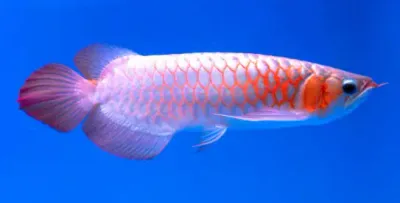
Asian Arowana - (Scleropages formosus) ILLEGAL IN USA!
Asian Arowana - (Scleropages formosus) ILLEGAL IN USA!
Asian Arowana is ILLEGAL IN USA! This is for informational purposes ONLY!
$10 000.00
Out of stock
Captive Bred
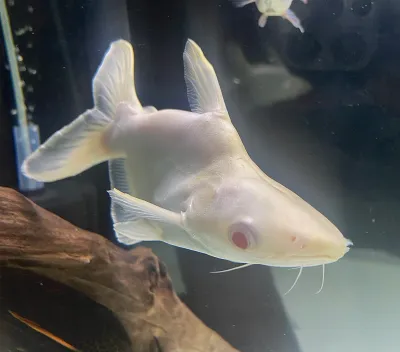
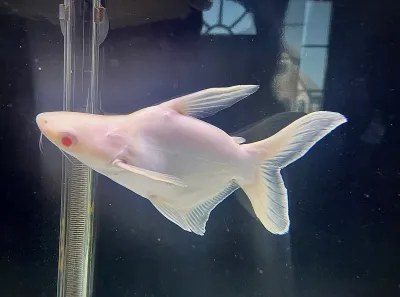
Albino Shortbody Iridescent Shark Catfish - (Pangasianodon hypophthalmus)
Albino Shortbody Iridescent Shark Catfish - (Pangasianodon hypophthalmus)
Price of shipping is not included.
$300.00
Out of stock
Captive Bred
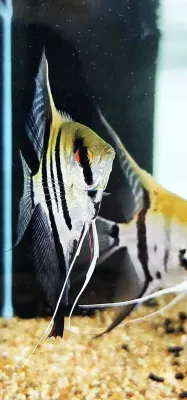
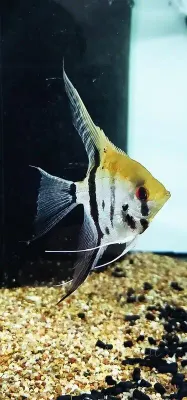
Angelfish - (Pterophyllum scalare) Proven Breeding Pair
Angelfish - (Pterophyllum scalare) Proven Breeding Pair
Price of shipping is not included.
was $60.00
Save 33%
$40.00
Out of stock
Captive Bred
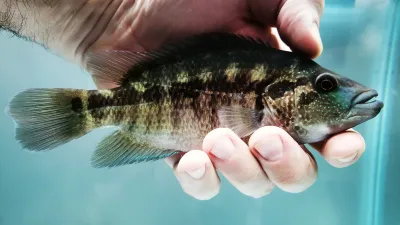
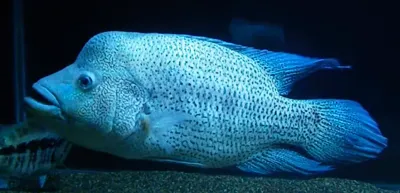
Dovii Cichlid/Guapote Cichlid - (Parachromis Dovii)
Dovii Cichlid/Guapote Cichlid - (Parachromis Dovii)
Price of shipping is not included.
$65.00
Out of stock
Captive Bred
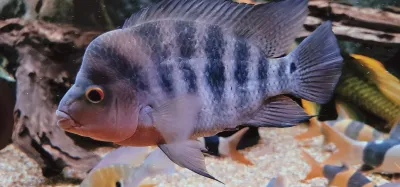
Red isletas Cichlid - (Amphilophus sp.)
Red isletas Cichlid - (Amphilophus sp.)
Price of shipping is not included.
$100.00
Out of stock
Captive Bred
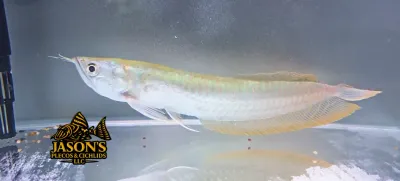
Silver Arowana - (Osteoglossum bicirrhosum)
Silver Arowana - (Osteoglossum bicirrhosum)
Price of shipping is not included.
5.0
(1)
$90.00
Out of stock
Captive Bred
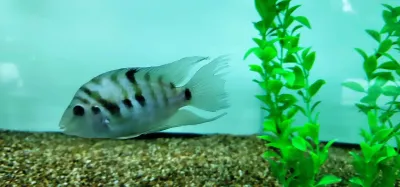
Black Convict Cichlid - (Amatitlania nigrofasciata)
Black Convict Cichlid - (Amatitlania nigrofasciata)
Price of shipping is not included.
$20.00
Out of stock
Captive Bred
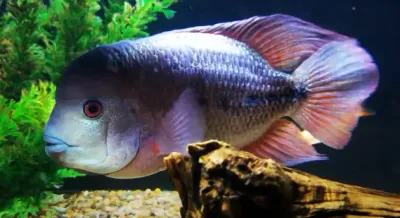
Angostura cichlid - (Vieja breidohri)
Angostura cichlid - (Vieja breidohri)
Price of shipping is not included.
$150.00
Out of stock
Wild Caught
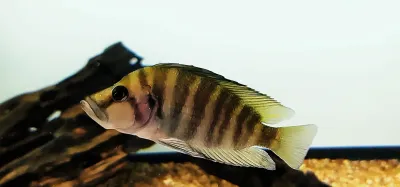
Red Fin Compressiceps - (Altolamprologus Compressiceps)
Red Fin Compressiceps - (Altolamprologus Compressiceps)
Price of shipping is not included.
$60.00
Out of stock
Wild Caught
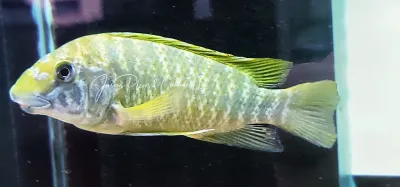
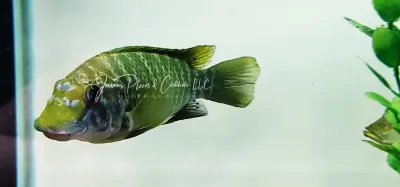
Petrochromis Macrognathus Moshi
Petrochromis Macrognathus Moshi
Price of shipping is not included.
$90.00
Out of stock
Captive Bred
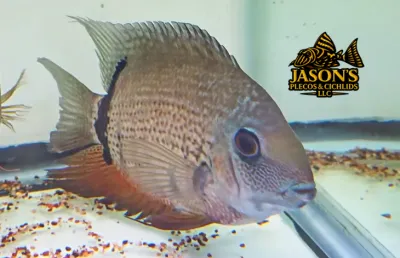
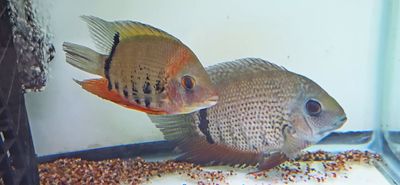
Green Severum - (Heros efasciatus)
Green Severum - (Heros efasciatus)
Price of shipping is not included.
5.0
(1)
was $75.00
Save 13%
$65.00
Wild Caught
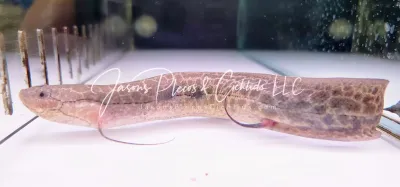
Marbled Lungfish - (Protopterus aethiopicus)
Marbled Lungfish - (Protopterus aethiopicus)
Price of shipping is not included.
$160.00
Out of stock
Powered by Lightspeed
Display prices in:USD