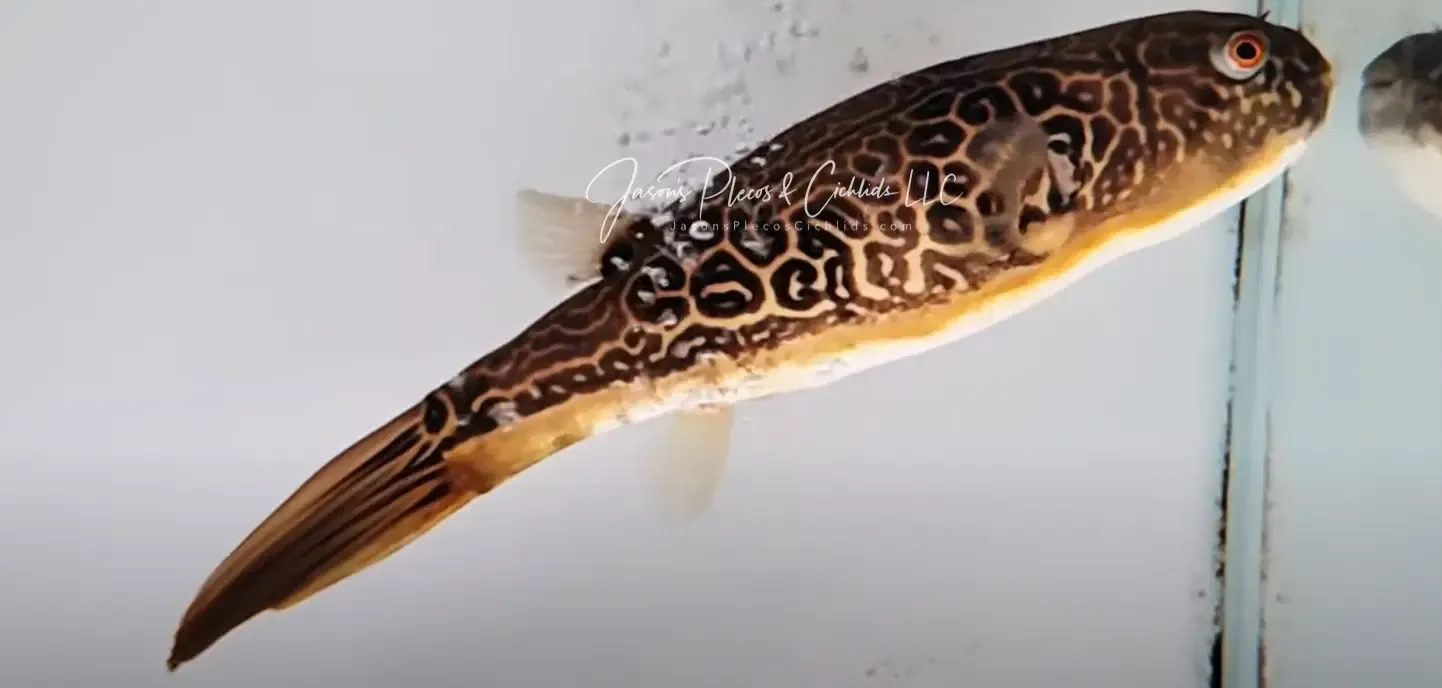
Mbu Puffer - (Tetraodon mbu)
5.0
1 review
Reviews from verified customers who have purchased products at this store.
$800.00
Sold out
was $900.00 Save 11%
Size
Questions, Comments, Concerns? Let us know!
Enter your text
Special Bag
3 Digit Airport Code
Price of shipping is not included.
Sold out
Save this fish to my favorites.
Customer reviews
Reviews only from verified customers
Reviews are only accepted from verified customers who have signed in and purchased the products. This ensures that each review is based on genuine customer experiences. All reviews are checked before publication to prevent spam.
NORTH ARLINGTON,
United States
May 18, 2025
.Wonder selection and wonderful services
Mbu Puffer - (Tetraodon mbu)
Fish Details, Description and Information Below:
🐡 Mbu Puffer – (Tetraodon mbu) – Giant Freshwater African Pufferfish
The Mbu Puffer (Tetraodon mbu), also known as the Giant Freshwater Puffer, is one of the largest and most impressive freshwater pufferfish in the world.
Native to the Congo Basin and Lake Tanganyika region of Africa, the Mbu Puffer is famous for its incredible maze-like pattern, expressive eyes, powerful beak, intelligence, and highly interactive personality.
Juveniles may be sold at relatively small sizes, but this is not a small aquarium fish. A full-grown Mbu Puffer can reach approximately 26 inches, creating a long-term requirement for an exceptionally large aquarium, massive filtration, and a substantial food budget.
For the properly prepared aquarist, however, few freshwater fish can match the personality and presence of a mature Mbu Puffer.
🔎 Quick Facts – Mbu Puffer
- 📛 Common Names: Mbu Puffer, Giant Freshwater Puffer, Giant Puffer
- 🔬 Scientific Name: Tetraodon mbu
- 🐡 Family: Tetraodontidae
- 🌍 Origin: Africa
- 🌊 Native Range: Congo Basin and Lake Tanganyika
- 💧 Water Type: Freshwater
- 📏 Maximum Recorded Size: Approximately 26.4 inches / 67 cm
- 🏠 Adult Aquarium: Approximately 400 gallons or larger; 500+ gallons is strongly preferred when possible
- 📐 Tank Shape: Long and especially wide aquarium footprint
- 🌡️ Temperature: Approximately 75–79°F
- 💧 pH: Approximately 7.0–8.0
- 🍽️ Diet: Carnivore / Mollusk and crustacean predator
- 🦷 Special Requirement: Hard-shelled foods are essential for proper beak wear
- 😠 Temperament: Individual personality varies; predatory and potentially aggressive
- 🐠 Recommended Stocking: Best planned as a single centerpiece fish
- ⭐ Care Level: Advanced / Expert
- 🏆 Availability: Highly sought-after specialty freshwater puffer
📏 Adult Size – Please Plan Ahead
The Mbu Puffer is one of the largest freshwater puffers available in the aquarium hobby.
It can reach approximately:
67 cm / 26.4 inches
This adult size needs to be taken seriously before purchasing a juvenile.
A small Mbu Puffer may temporarily fit into a smaller aquarium while growing, but it should only be purchased by someone already prepared to provide an extremely large permanent aquarium.
Adult Housing Recommendation
For a mature Mbu Puffer, we recommend planning for approximately:
400 gallons or larger
Whenever possible, 500+ gallons provides additional room for swimming, turning, filtration capacity, and long-term maintenance.
Aquarium dimensions are just as important as gallon volume.
The aquarium needs enough:
- Length for swimming
- Width for comfortable turning
- Open floor space
- Water volume for waste dilution
- Filtration capacity
A tall but narrow aquarium is not an appropriate substitute for a large-footprint aquarium.
🎨 Appearance
The Mbu Puffer is one of the most visually distinctive freshwater fish.
Its body develops an intricate pattern of:
- Yellow
- Cream
- Olive
- Brown
- Black
- Golden coloration
The markings create an elaborate maze-like or labyrinth pattern across the body.
This pattern becomes increasingly impressive as the fish grows.
Other distinctive features include:
- Large expressive eyes
- Rounded body
- Small fins
- Powerful jaws
- Four fused teeth forming a strong beak
- Ability to inflate its body when threatened
Mbu Puffers should never intentionally be frightened or handled simply to make them inflate.
🧠 Personality & Intelligence
One of the biggest attractions of the Mbu Puffer is its personality.
Many individuals learn to recognize:
- Their keeper
- Feeding routines
- Activity around the aquarium
- Particular areas where food is offered
They may follow their keeper from one end of the aquarium to the other and can become extremely interactive.
This behavior has led many puffer keepers to describe large puffers as having an almost dog-like personality.
Every fish is still an individual, and behavior should never be assumed to be identical from one Mbu to another.
🌍 Natural Habitat
Tetraodon mbu is native to tropical Africa.
Its documented distribution includes:
- Congo River Basin
- Large Central African rivers
- Lakes
- Lake Tanganyika
The species inhabits large freshwater systems where it has access to a wide variety of hard-shelled aquatic prey.
An aquarium designed for an Mbu should provide plenty of swimming space while still offering visual structure and environmental enrichment.
🏠 Aquarium Setup
An adult Mbu Puffer requires an exceptionally large aquarium with excellent filtration.
Recommended aquarium features include:
- Large open swimming areas
- Sand substrate
- Large pieces of driftwood
- Smooth rocks
- Durable décor
- Visual barriers
- Strong biological filtration
- High-capacity mechanical filtration
- Excellent oxygenation
- Consistent water movement
Avoid sharp decorations that could injure the puffer.
Because Mbu Puffers are large-bodied fish capable of turning quickly, aquarium decorations should leave plenty of unobstructed swimming room.
💩 Filtration & Waste Production
Large Mbu Puffers produce an extremely heavy bioload.
They consume substantial amounts of meat and shellfish, and large meals create significant solid waste.
An adult system should use filtration considerably stronger than what would normally be used for an aquarium of the same volume.
Consider:
- Large sump systems
- High-capacity canister filtration
- Strong mechanical filtration
- Large biological filtration capacity
- Easy-to-clean prefilters
- High oxygenation
- Frequent water changes
The aquarium must be fully cycled before introducing the fish.
Water Quality
Maintain:
- ☠️ Ammonia: 0 ppm
- ☠️ Nitrite: 0 ppm
- 🔄 Nitrate: As low as reasonably possible
Large water changes may become necessary as the fish grows.
Do not underestimate the amount of maintenance required for a full-grown Mbu.
💧 Water Parameters
Recommended aquarium conditions:
- 🌡️ Temperature: 75–79°F
- 💧 pH: Approximately 7.0–8.0
- 💦 Water: Stable freshwater
- 💨 Oxygenation: High
- ☠️ Ammonia: 0 ppm
- ☠️ Nitrite: 0 ppm
The Mbu Puffer is a freshwater species.
It does not require marine salt or permanent brackish conditions to be successfully maintained.
Stable water quality is more important than constantly adjusting water chemistry to chase one exact number.
🦷 The Mbu Puffer's Beak
One of the most important aspects of Mbu Puffer care is maintaining its constantly growing teeth.
The puffer's four fused teeth form a powerful beak capable of crushing hard-shelled prey.
If the diet consists mainly of soft foods, the teeth may eventually become overgrown.
Severe overgrowth can interfere with the fish's ability to eat.
Hard-Shelled Foods Are Essential
Regularly provide foods that require the puffer to crush or chew through hard shells.
This provides natural wear on the beak.
Preventing excessive tooth growth through proper diet is much better than eventually having to deal with an overgrown beak.
🍽️ Diet & Feeding
The Mbu Puffer is primarily a carnivorous mollusk and crustacean predator.
A varied diet is extremely important.
Recommended foods may include:
- 🐌 Aquatic snails
- 🦪 Clams
- 🦪 Cockles
- 🦪 Mussels in shell
- 🦐 Shell-on shrimp
- 🦀 Crab
- 🦞 Crayfish
- Squid
- Other appropriate seafood
- Earthworms for smaller individuals
- Other appropriately sized frozen foods
Variety Is Important
Do not rely exclusively on one food item.
A varied diet provides a broader nutritional profile while also encouraging natural feeding behavior.
Hard-shelled foods should make up a significant portion of the diet because of the need for proper beak wear.
🚫 Avoid Feeder Fish
We do not recommend routinely feeding live feeder fish to Mbu Puffers.
Feeder fish can:
- Introduce parasites
- Introduce bacterial infections
- Provide an unbalanced diet
- Increase unnecessary disease risk
Mbu Puffers can be successfully maintained on appropriate prepared, frozen, and fresh seafood.
🦐 Shellfish Safety
Only use seafood from a source you trust.
Avoid feeding spoiled, seasoned, cooked-with-additives, or chemically treated seafood.
Rinse foods as appropriate before feeding.
A varied diet of appropriately sourced foods is always preferable to depending on one inexpensive food item.
😠 Temperament & Tankmates
Mbu Puffers have a reputation for being somewhat less aggressive than certain other large freshwater puffers, but this should never be interpreted as guaranteed community-fish behavior.
They are large predatory fish equipped with a powerful beak.
Individual Mbu Puffers may range from relatively tolerant to highly aggressive.
A fish that accepts tankmates while young may also change its behavior as it matures.
Safest Recommendation
The safest long-term approach is:
Plan to keep the Mbu Puffer as the primary or sole centerpiece fish.
Some experienced aquarists have successfully kept individual Mbu Puffers with selected large tankmates, but compatibility is never guaranteed.
Potential problems include:
- Fin biting
- Serious bite injuries
- Predation
- Territorial behavior
- Sudden behavioral changes
Any tankmates should only be attempted by experienced keepers with an aquarium large enough to separate fish immediately if problems occur.
🐡 Inflation
Like other puffers, the Mbu Puffer can inflate its body when threatened.
This is a defensive mechanism.
Inflation should never intentionally be triggered for entertainment, photography, or handling.
Avoid:
- Chasing the fish
- Netting unnecessarily
- Removing the fish from water unnecessarily
- Intentionally frightening it
When moving a puffer is unavoidable, extra care should be used to minimize stress.
🥚 Breeding
Captive breeding of Tetraodon mbu is extraordinarily uncommon and is not considered practical for the typical home aquarium.
Reliable information about successful aquarium reproduction remains extremely limited.
The species should therefore be purchased primarily as a long-term display animal rather than with expectations of breeding it.
♂️ Male vs. Female
There is no easy, reliable external method for sexing juvenile Mbu Puffers.
Males and females generally do not display obvious external sexual differences that allow routine aquarium identification.
Fish should not be sold as confidently sexed unless sex has been established through a reliable method.
⚠️ Advanced Fish – Not an Impulse Purchase
The Mbu Puffer should only be purchased after considering its adult requirements, not its current sale size.
Before purchasing, make sure you are prepared for:
- A fish potentially reaching approximately 26 inches
- A 400+ gallon permanent aquarium
- Very large aquarium dimensions
- Extremely strong filtration
- Significant water changes
- High food consumption
- Regular hard-shelled foods
- Continually growing teeth
- Potential tankmate aggression
- A long-term financial commitment
A juvenile Mbu Puffer may look manageable in a typical aquarium.
A mature Mbu Puffer is an entirely different animal.
⭐ Why Keep an Mbu Puffer?
For an experienced aquarist with the proper setup, few freshwater fish can match the Mbu Puffer.
Its combination of:
- 🐡 Massive adult size
- 🧠 Intelligent, interactive behavior
- 🎨 Incredible maze-like pattern
- 👀 Expressive appearance
- 🦷 Powerful shell-crushing beak
- 🍽️ Fascinating feeding behavior
- 🌍 African freshwater origin
- 🏆 Impressive centerpiece presence
makes Tetraodon mbu one of the most unforgettable freshwater fish in the aquarium hobby.
The key is understanding that this remarkable fish requires an equally remarkable commitment.
⚠️ Important Considerations
Before purchasing an Mbu Puffer:
- Research its adult size carefully.
- Have a realistic plan for a 400+ gallon aquarium.
- Provide an aquarium with substantial width and length.
- Use extremely strong filtration.
- Maintain excellent water quality.
- Provide hard-shelled foods regularly.
- Feed a varied diet.
- Do not rely on feeder fish.
- Never intentionally make the puffer inflate.
- Assume tankmates may eventually become incompatible.
- Never purchase one based only on its juvenile size.
This species is best suited for advanced aquarists who understand the long-term requirements of giant freshwater puffers.
🚚 Live Fish Shipping
Live fish are professionally packed for safe transport.
Shipping availability depends on destination, weather conditions, carrier availability, fish size, and applicable state and local regulations.
Please review our Shipping & Payment Information and Live Arrival Guarantee / DOA Policy before ordering.
⚠️ Buyer Responsibility
Customers are responsible for confirming that this species may legally be purchased, possessed, and received in their state or local jurisdiction before ordering.
Never release aquarium fish into local waterways.
⚠️ Not for Human Consumption
Pufferfish may contain potent toxins and are sold strictly as ornamental aquarium animals. They are not sold or intended for human or animal consumption.
Below are fish you may also like.
Wild Caught
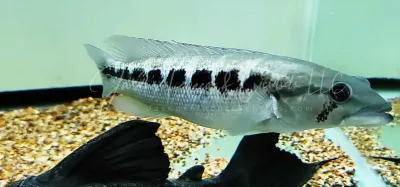
Iguassuensis Pike Cichlid - (Crenicichla iguassuensis)
Iguassuensis Pike Cichlid - (Crenicichla iguassuensis)
Price of shipping is not included.
was $150.00
Save 67%
$50.00
Out of stock
Wild Caught
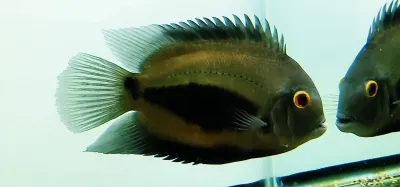
Uaru Cichlid - (Uaru amphiacanthoides)
Uaru Cichlid - (Uaru amphiacanthoides)
Price of shipping is not included.
5.0
(1)
$60.00
Out of stock
Wild Caught
Malawi Blue Dolphin - (Cyrtocara moorii)
Malawi Blue Dolphin - (Cyrtocara moorii)
Price of shipping is not included.
$30.00
Out of stock
Wild Caught
Harlequin Lancer Catfish - (Bagroides melapterus)
Harlequin Lancer Catfish - (Bagroides melapterus)
Price of shipping is not included.
was $75.00
Save 13%
$65.00
Out of stock
Wild Caught
L025 Scarlet Cactus Pleco - (Pseudacanthicus pirarara) 7 Pointer
L025 Scarlet Cactus Pleco - (Pseudacanthicus pirarara) 7 Pointer
Price of shipping is not included.
5.0
(1)
$400.00
Out of stock
Captive Bred
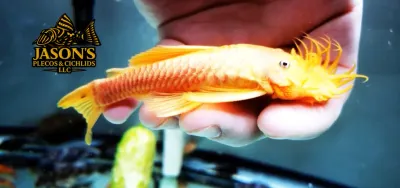
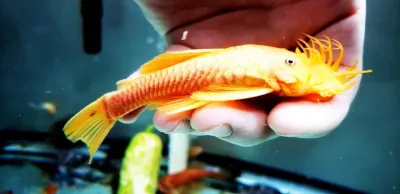
L144 Black Eyed Yellow Bristlenose - (Ancistrus sp. (4)
L144 Black Eyed Yellow Bristlenose - (Ancistrus sp. (4)
Price of shipping is not included.
was $40.00
Save 13%
$35.00
Out of stock
Wild Caught
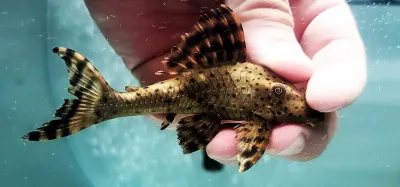
L303 Red Pepper Pleco - (Hypostomus macushi)
L303 Red Pepper Pleco - (Hypostomus macushi)
Price of shipping is not included.
$50.00
Out of stock
Wild Caught
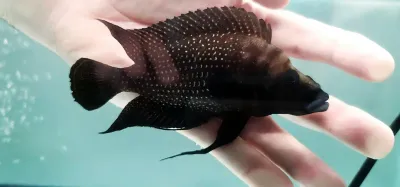
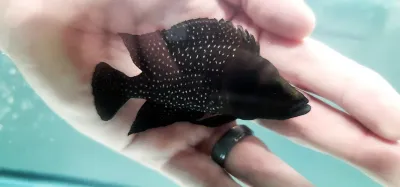
Ink Fin Calvus - (Altolamprologus calvus) - Breeding Pair
Ink Fin Calvus - (Altolamprologus calvus) - Breeding Pair
Price of shipping is not included.
$250.00
Out of stock
Wild Caught
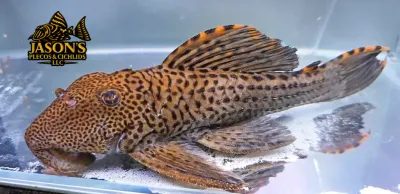
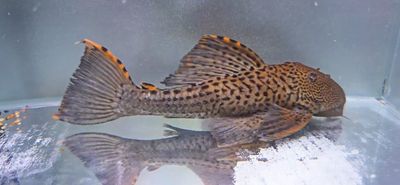
L091 Three Beacon Pleco/Redfin Blackspot Pleco - (Leporacanthicus triactis)
L091 Three Beacon Pleco/Redfin Blackspot Pleco - (Leporacanthicus triactis)
Price of shipping is not included.
5.0
(3)
was $100.00
Save 10%
$90.00
Captive Bred
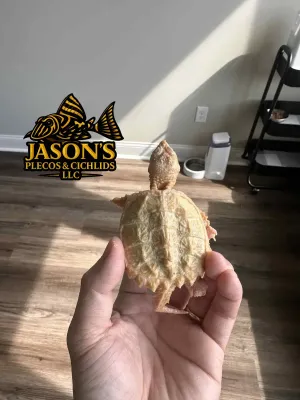
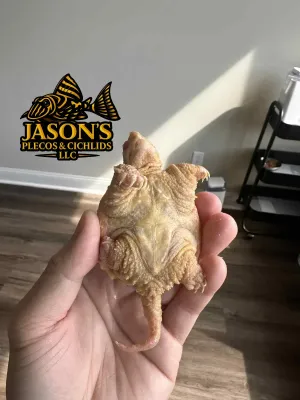
Albino Common Snapping Turtle - (Chelydra serpentina)
Albino Common Snapping Turtle - (Chelydra serpentina)
Price of shipping is not included.
$1 315.00
Wild Caught
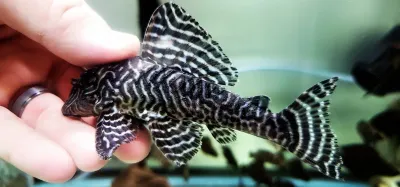
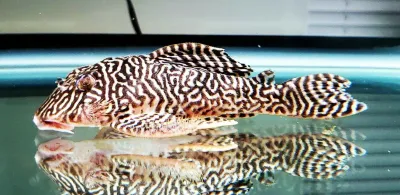
L401 Rio Curua Pleco - (Hypancistrus sp.)
L401 Rio Curua Pleco - (Hypancistrus sp.)
Price of shipping is not included.
$75.00
Out of stock
Powered by Lightspeed
Display prices in:USD