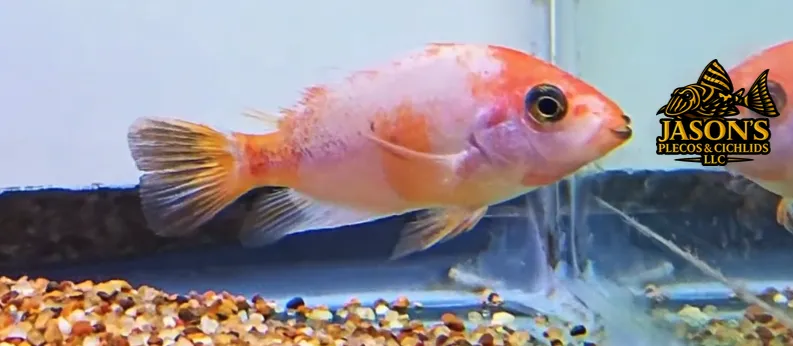
Marbled Fenestratus - (Vieja fenestrata)
5.0
1 review
Reviews from verified customers who have purchased products at this store.
$50.00
Sold out
was $55.00 Save 9%
Size
Questions, Comments, Concerns? Let us know!
Enter your text
Price of shipping is not included.
Sold out
Save this fish to my favorites.
Customer reviews
Reviews only from verified customers
Reviews are only accepted from verified customers who have signed in and purchased the products. This ensures that each review is based on genuine customer experiences. All reviews are checked before publication to prevent spam.
Robert J.
Post Falls,
United States
Dec 11, 2025
Jason cichlids is one of my favorite vendors to shop. He made shipping very fast and easy. He did not skimp on the packaging at all. It made it through the hard winter. the fish are beautiful. Definitely ordering more fish soon!!!
Marbled Fenestratus - (Vieja fenestrata)
Fish Details, Description and Information Below:
🐟 Marbled Fenestratus – (Vieja fenestrata) – Marbled Central American Cichlid
The Marbled Fenestratus (Vieja fenestrata) is a striking Central American cichlid known for its dramatic marbled pattern, powerful body, changing coloration, and bold personality.
Marbled specimens can develop an incredible mixture of white, cream, pink, red, burgundy, black, blue-green, and metallic coloration, with every individual developing its own unique pattern as it matures.
Unlike many smaller community fish, the Marbled Fenestratus becomes a large, intelligent cichlid with a strong territorial personality. Adults can recognize their keeper, aggressively defend territory, rearrange aquarium décor, and become impressive centerpiece fish.
The underlying species is native to Mexico, where Vieja fenestrata occurs in lakes and slower-moving river habitats.
Because of its adult size, strength, and territorial behavior, this fish is best suited for aquarists experienced with large Central American cichlids.
🔎 Quick Facts – Marbled Fenestratus
- 📛 Common Name: Marbled Fenestratus / Marbled Vieja
- 🔬 Scientific Name: Vieja fenestrata
- 🎨 Color Form: Marbled
- 🐟 Family: Cichlidae
- 🌎 Origin of Species: Mexico
- 🌊 Natural Distribution: Papaloapán River to the Chachalacas River basin
- 🏞️ Habitat: Lakes and slower-moving river environments with mud or sand bottoms
- 📏 Adult Size: Approximately 10–12 inches
- 🏠 Recommended Adult Aquarium: 90+ gallons for a single adult
- 👥 Pair / Community: 125+ gallons or larger strongly recommended
- 🌡️ Temperature: Approximately 73–86°F
- 💧 pH: Around neutral; approximately 6.8–7.8 is suitable for aquarium maintenance
- 💦 Hardness: Soft to moderately hard water
- 🍽️ Diet: Omnivorous with a strong plant-based component
- 😠 Temperament: Semi-aggressive to aggressive
- 🐠 Swimming Area: Middle / Lower water column
- ⭐ Care Level: Intermediate
- 🏆 Availability: Uncommon specialty Central American cichlid
🎨 What Is a Marbled Fenestratus?
The Marbled Fenestratus is a selectively produced aquarium color and pattern form associated with:
Vieja fenestrata
Its unusual appearance may include combinations of:
- 🤍 White
- 🖤 Black
- ❤️ Red
- 🩷 Pink
- 🍷 Burgundy
- 💛 Cream or gold
- 💚 Blue-green or turquoise tones
- ✨ Metallic iridescence
One of the most interesting characteristics of these fish is that:
No two individuals necessarily develop exactly the same pattern.
Coloration can change substantially as juveniles mature.
A fish with relatively simple markings when young may develop much stronger marbling, contrasting patches, and coloration as it grows.
Because coloration is influenced by:
- Genetics
- Age
- Sex
- Dominance
- Diet
- Environment
- Stress
- Breeding condition
the exact adult coloration or pattern of an individual fish cannot be guaranteed.
🌈 Color Changes With Age
Juvenile Marbled Fenestratus may look dramatically different from mature adults.
As they grow, the body may develop increasingly intense:
- Red
- Pink
- Black
- Cream
- White
- Blue-green
- Metallic coloration
Dark patches may expand, disappear, or change position as the fish develops.
Dominant males can become especially impressive.
Adult males frequently develop:
- More intense coloration
- Greater body mass
- Extended dorsal and anal fins
- A prominent forehead or nuchal hump
This transformation is one of the reasons Marbled Fenestratus are so popular among collectors of larger Central American cichlids.
📏 Adult Size
Vieja fenestrata is a substantial Central American cichlid.
Adults should generally be expected to reach approximately:
10–12 inches
Males normally become larger and heavier-bodied than females.
Do not purchase this fish based solely on its juvenile size.
A 2–3 inch juvenile requires relatively little space.
A mature 10–12 inch adult is:
- Much stronger
- More territorial
- More aggressive
- More demanding on filtration
- Capable of moving aquarium décor
- Capable of injuring smaller or weaker fish
Long-term aquarium planning should begin before purchasing the fish.
🚨 Do Not Purchase Based on Juvenile Size
Juvenile Marbled Fenestratus are often sold when still relatively small.
Their adult requirements are considerably different.
Before purchasing, plan for:
- Adult aquarium size
- Territorial behavior
- Strong filtration
- Large water changes
- Suitable tankmates
- Heavy waste production
- Adult aggression
- Long-term housing
These are not small community cichlids.
🏠 Adult Aquarium Size
For a single adult Marbled Fenestratus, we recommend approximately:
90+ gallons
Larger aquariums are strongly preferred.
For a compatible pair:
125+ gallons
is a much better long-term starting point.
For a mixed Central American cichlid aquarium:
150+ gallons or larger
may be necessary depending on:
- Number of fish
- Species
- Adult sizes
- Sex
- Temperament
- Aquarium dimensions
- Number of territories
Aquarium length and width are particularly important.
Extra swimming space and visual separation between territories can help reduce aggression.
📐 Aquarium Footprint Matters
Gallons alone do not determine whether an aquarium is appropriate.
Large Central American cichlids need room to:
- Swim
- Turn comfortably
- Establish territories
- Avoid dominant fish
- Escape aggression
- Feed without constant conflict
A long, wide aquarium is generally preferable to a tall aquarium with limited floor space.
When keeping multiple large cichlids, additional aquarium length can make a significant difference in compatibility.
🪨 Aquarium Setup
Marbled Fenestratus are powerful fish and may rearrange their environment.
Recommended aquarium features include:
- 🏖️ Sand or fine gravel substrate
- 🪨 Large smooth rocks
- 🪵 Driftwood
- 🏠 Large caves or protected areas
- 🌊 Open swimming areas
- 💦 Strong filtration
- 💨 Good oxygenation
- 🔒 Secure aquarium cover
Décor should be positioned securely.
Large adults may:
- Dig
- Move gravel
- Push rocks
- Rearrange wood
- Uproot plants
- Create their own territories
Avoid unstable rock structures that could fall against the aquarium glass.
🌿 Plants
Live plants can be challenging with adult Marbled Fenestratus.
These fish may:
- Dig around roots
- Uproot plants
- Bite vegetation
- Move substrate
- Rearrange the aquarium
Hardy plants attached to:
- Rocks
- Driftwood
- Heavy décor
may have a better chance of remaining intact.
Artificial plants can also be used if they are sturdy and securely positioned.
💩 Filtration & Bioload
Large cichlids produce substantially more waste than small community fish.
A mature Marbled Fenestratus should have:
- Oversized mechanical filtration
- Strong biological filtration
- Good surface agitation
- High oxygenation
- Regular substrate cleaning
- Consistent water changes
Good filtration is especially important when several large cichlids share one aquarium.
Maintain:
- ☠️ Ammonia: 0 ppm
- ☠️ Nitrite: 0 ppm
- 🔄 Nitrate: As low as reasonably practical
- 💨 Oxygenation: High
Stable water quality is extremely important for long-term health.
💧 Water Parameters
Vieja fenestrata is a tropical freshwater cichlid.
Recommended aquarium conditions include approximately:
- 🌡️ Temperature: 73–86°F
- 💧 pH: Approximately 6.8–7.8
- 💦 Hardness: Soft to moderately hard freshwater
- ☠️ Ammonia: 0 ppm
- ☠️ Nitrite: 0 ppm
- 🔄 Nitrate: Kept as low as reasonably possible
- 💨 Oxygen: Moderate to high
A stable aquarium is more important than constantly using chemicals to chase one exact pH number.
🌎 Natural Habitat
Vieja fenestrata is native to Mexico.
The species occurs along the Atlantic slope from approximately the:
- Papaloapán River
- Chachalacas River basin
Wild fish primarily inhabit:
- Lakes
- Slower-moving portions of rivers
- Areas with sandy bottoms
- Areas with muddy bottoms
- Areas containing aquatic vegetation
Understanding its natural environment helps explain why the species does well in spacious aquariums with large territories and relatively open swimming areas.
🍽️ Diet & Feeding
Marbled Fenestratus are omnivorous, but plant and vegetable material should make up an important part of their diet.
Wild Vieja fenestrata feed heavily on plant material while also consuming insects and other small invertebrates.
Recommended aquarium foods include:
- 🟢 High-quality cichlid pellets
- 🌱 Spirulina-based pellets
- 🌿 Algae wafers
- 🥬 Vegetable-based foods
- 🥒 Zucchini
- 🫛 Peas
- 🥦 Other appropriate vegetables
- 🦐 Shrimp
- 🦪 Mussel
- 🐟 Appropriate fish-based foods
- 🦐 Krill
- ❄️ Quality frozen foods
A varied diet generally produces the best:
- Growth
- Body condition
- Coloration
- Digestion
- Overall health
🌿 Don't Overlook Vegetable Matter
Although large cichlids are frequently fed protein-heavy diets, Vieja fenestrata naturally consumes significant amounts of plant material.
Vegetable-based foods should therefore remain an important component of the diet.
Good options include:
- Spirulina
- Algae-based pellets
- Vegetable-based cichlid pellets
- Zucchini
- Peas
- Other aquarium-safe vegetables
An excessively rich, protein-heavy diet is unnecessary.
🚫 Avoid Overfeeding
Large cichlids are enthusiastic feeders and can easily be overfed.
Feed portions that the fish can consume without leaving significant uneaten food in the aquarium.
Overfeeding can contribute to:
- Obesity
- Poor water quality
- Excessive nitrate
- Increased waste
- Digestive problems
The goal should be steady, healthy growth rather than maximum growth as quickly as possible.
😠 Temperament
The Marbled Fenestratus should be considered:
Semi-aggressive to aggressive
Temperament varies between individuals.
Some specimens may coexist successfully with other large Central American cichlids while others become highly territorial.
Aggression can increase dramatically when:
- The fish reaches maturity
- A pair forms
- Spawning begins
- Aquarium space is limited
- Territories overlap
Large males can become particularly dominant.
Never assume that peaceful behavior as a juvenile guarantees peaceful behavior as an adult.
🐠 Tankmates
Potential tankmates may include similarly sized, robust fish capable of defending themselves.
Possible candidates in a sufficiently large aquarium may include:
- Other Vieja species
- Large Central American cichlids
- Large Severums
- Large Geophagus-type cichlids
- Oscar Cichlids
- Large Jack Dempsey-type cichlids
- Large plecos
- Other appropriately sized robust fish
Compatibility is never guaranteed.
Individual personality plays a major role.
Avoid housing adult Marbled Fenestratus with:
- Small community fish
- Small tetras
- Guppies
- Small barbs
- Small cichlids
- Very timid fish
- Slow fish unable to escape aggression
- Fish small enough to be injured or swallowed
Always have a backup plan when combining large aggressive cichlids.
⚠️ Size Alone Does Not Guarantee Compatibility
Two fish being approximately the same length does not automatically make them compatible.
Consider:
- Temperament
- Body shape
- Swimming speed
- Territory requirements
- Sex
- Breeding condition
- Aquarium footprint
- Hiding areas
A particularly aggressive individual may need to be separated regardless of aquarium size.
👥 Keeping Multiple Fenestratus
Multiple Marbled Fenestratus can sometimes be maintained together in a sufficiently large aquarium.
Success is more likely when:
- Fish have substantial space
- Multiple territories are available
- Visual barriers are provided
- Fish are similarly sized
- Aggression is monitored carefully
However, once a male and female form a breeding pair, they may become extremely territorial toward other fish.
Be prepared to:
- Add dividers
- Rearrange territories
- Remove an aggressive individual
- Move other tankmates
- Separate a pair
if necessary.
♂️ Male vs. Female
Sexual differences become easier to identify as the fish matures.
Adult males typically become:
- Larger
- More massive
- More intensely colored
- Longer-finned
- More likely to develop a pronounced nuchal hump
Females usually remain:
- Somewhat smaller
- Less massive
- Less pronounced through the forehead
Juvenile fish can be difficult to sex reliably.
Unless a fish has been reliably identified, it should be considered:
Unsexed
❤️ Pair Formation
Marbled Fenestratus should not simply be assumed to form a compatible pair because one fish is male and one is female.
Cichlids can be selective when choosing mates.
A compatible pair may:
- Stay close together
- Defend the same territory
- Clean spawning surfaces
- Display to each other
- Drive other fish away
However, pair aggression can become intense.
The female should have areas where she can escape the male if necessary.
If aggression becomes excessive, the fish should be separated.
🥚 Breeding
Vieja fenestrata is a substrate-spawning cichlid.
A breeding pair may select and clean:
- A flat rock
- Wood
- A cave surface
- Another suitable hard surface
before spawning.
The female deposits eggs and the male fertilizes them.
Both parents may participate in defending:
- Eggs
- Newly hatched larvae
- Free-swimming fry
- The surrounding territory
Eggs generally hatch within several days under appropriate conditions.
Once free swimming, fry can be offered appropriately sized foods such as:
- Newly hatched brine shrimp
- Fine fry foods
- Crushed pellets
- Microworms
Parents can become exceptionally aggressive while protecting their offspring.
👶 Excellent Parental Behavior
One of the most fascinating characteristics of Central American cichlids is their parental behavior.
A breeding pair may:
- Guard the eggs
- Fan the eggs
- Remove damaged eggs
- Move larvae
- Protect fry
- Attack intruders
- Patrol the breeding territory
Watching a pair raise their young can be one of the most interesting aspects of keeping Marbled Fenestratus.
However, breeding aggression makes adequate aquarium space especially important.
🧠 Intelligent & Interactive
Large Vieja cichlids are often extremely responsive to their environment.
Marbled Fenestratus may learn to:
- Recognize their keeper
- Approach the aquarium during feeding
- Follow movement outside the tank
- Defend favorite areas
- Rearrange decorations
- Establish feeding routines
This combination of intelligence, personality, size, and coloration is a major reason these fish appeal to experienced cichlid keepers.
⭐ Why Keep a Marbled Fenestratus?
The Marbled Fenestratus combines:
- 🎨 Highly variable marbled coloration
- 🌈 Dramatic adult color development
- 🧠 Intelligent behavior
- 💪 Powerful adult body shape
- 👀 Interactive personality
- 🐟 Impressive 10–12 inch adult size
- ❤️ Fascinating breeding behavior
- 🥚 Strong parental instincts
- 🌎 Central American cichlid heritage
- 🏆 Uncommon availability
into one impressive aquarium fish.
Each specimen can develop differently, making mature Marbled Fenestratus especially interesting for collectors who enjoy watching juvenile fish transform into colorful adults.
⚠️ Important Considerations
Before purchasing a Marbled Fenestratus:
- Plan for an adult approximately 10–12 inches long.
- Do not purchase based only on juvenile size.
- Provide approximately 90+ gallons for a single adult.
- Use larger aquariums for pairs or multiple large cichlids.
- Provide strong filtration.
- Maintain excellent water quality.
- Perform regular water changes.
- Secure rocks and aquarium decorations.
- Expect digging and rearranging of décor.
- Include plant-based foods in the diet.
- Avoid an excessively protein-heavy diet.
- Choose tankmates carefully.
- Expect territorial behavior.
- Understand that breeding pairs can become extremely aggressive.
- Have a backup plan for incompatible fish.
- Understand that individual coloration will vary.
- Never release aquarium fish into local waterways.
This species is best suited for aquarists prepared to maintain a large, territorial Central American cichlid.
🚨 Legal & Environmental Responsibility
Customers are responsible for confirming whether this species may legally be:
- Purchased
- Possessed
- Imported
- Transported
- Shipped
- Received
in their state or local jurisdiction.
Regulations concerning live nonnative fish can vary by location.
Never release aquarium fish into local waterways.
Releasing nonnative aquarium fish can damage local ecosystems and may also violate state or local law.
🚚 Live Fish Shipping
Live fish are professionally packed for safe transport.
Shipping availability depends on:
- Fish size
- Destination
- Weather
- Carrier availability
- Applicable state and local regulations
Larger specimens may require:
- Larger insulated shipping boxes
- Additional water
- Larger shipping bags
- Specialized packing
- Airline cargo shipment
Please review our Shipping & Payment Information and Live Arrival Guarantee / DOA Policy before ordering.
⚠️ Buyer Responsibility
Customers are responsible for confirming that the Marbled Fenestratus may legally be purchased, possessed, transported, and received in their state or local jurisdiction before ordering.
Individual coloration and marbling will vary from fish to fish and may continue changing as the fish matures.
Never release aquarium fish into local waterways.
Powered by Lightspeed
Display prices in:USD