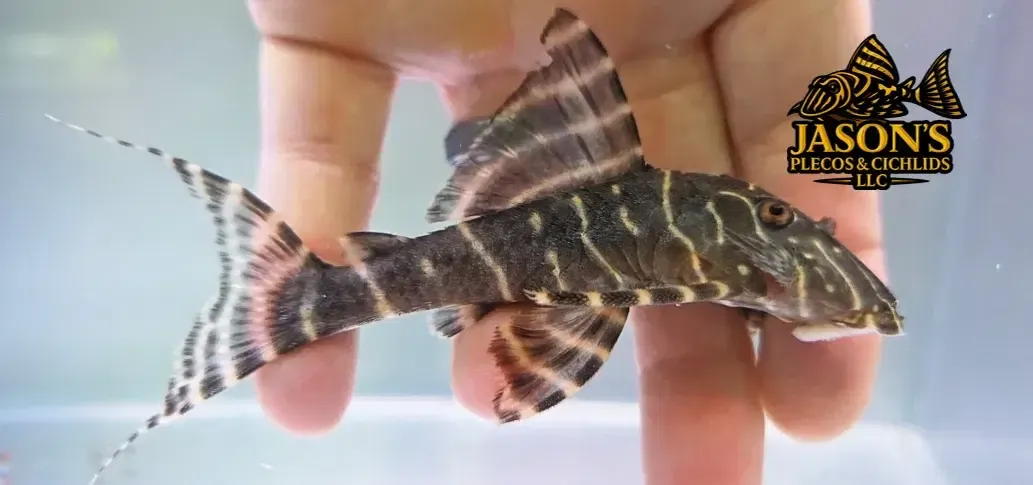
L204 Flash Pleco - (Panaqolus albivermis)
$70.00
Sold out
was $75.00 Save 7%
Size
Questions, Comments, Concerns? Let us know!
Enter your text
Price of shipping is not included.
Sold out
Save this fish to my favorites.
Customer reviews
Reviews only from verified customers
No reviews yet. You can buy this product and be the first to leave a review.
L204 Flash Pleco - (Panaqolus albivermis)
Fish Details, Description and Information Below:
⚡ L204 Flash Pleco – (Panaqolus albivermis) – Wild-Caught Peruvian Wood-Grazing Pleco
The L204 Flash Pleco (Panaqolus albivermis) is a striking Peruvian pleco famous for its dramatic black body crossed by thin cream, yellow, golden, or white worm-like bands and markings.
Young specimens can display especially bold contrasting stripes across the:
- Head
- Body
- Dorsal fin
- Pectoral fins
- Pelvic fins
- Caudal fin
As the fish matures, those markings may become:
- Thinner
- Broken
- More irregular
- Vermiculated
- Spot-like
giving mature L204s a very different appearance from brightly striped juveniles.
The Flash Pleco originates from the:
RIO SAN ALEJANDRO IN PERU
within the upper:
RIO UCAYALI DRAINAGE
where it is strongly associated with:
- Submerged wood
- Woody debris
- Rocks
- Moving water
- Oxygen-rich river habitat
L204 was known within the aquarium hobby for many years before scientists formally described it in 2013 as:
Panaqolus albivermis
The name albivermis roughly means:
WHITE WORM
in reference to the distinctive pale worm-like markings across the fish.
L204 is a specialized wood-grazing, detritus-oriented omnivore. Natural driftwood should be an important part of its aquarium environment, but wood should not be presented as a complete diet or as something the fish must digest in order for its digestive system to function.
This listing is for:
WILD-CAUGHT L204 FLASH PLECOS
🔎 Quick Facts – L204 Flash Pleco
- 📛 Common Name: Flash Pleco
- 📛 Other Names: L204 Pleco, Pinstripe Pleco, Ringlet Pleco, Peru Zebra Pleco
- 🔢 L-Number: L204
- 🔬 Scientific Name: Panaqolus albivermis
- 📅 Formally Described: 2013
- 🐟 Family: Loricariidae
- 🧬 Subfamily: Hypostominae
- 🌿 Stock: Wild Caught
- 📏 Current Size: Approximately 2.5–3 inches
- 🇵🇪 Country: Peru
- 🌊 Native River: Rio San Alejandro
- 🌊 Drainage: Rio Aguaytía → Rio Ucayali → Amazon
- 📍 Region: Padre Abad Province, Ucayali, Peru
- 💧 Water Type: Freshwater
- 📏 Scientific Maximum: 95.8 mm / approximately 3.8 inches standard length in the original description
- 📏 Adult Planning Size: Approximately 5–6 inches total length
- 🏠 Recommended Aquarium: 30 gallons or larger
- 👥 Groups: 40–55+ gallons depending on bottom territory
- 🌡️ Temperature: Approximately 77–84°F
- 💧 pH: Approximately 6.0–7.5
- 💦 Water: Soft to moderately mineralized
- 💨 Oxygenation: High
- 🌊 Water Movement: Moderate to Strong
- 🍽️ Diet: Wood-Grazing / Detritus-Leaning Omnivore
- 🪵 Driftwood: Strongly Recommended
- 🌿 Plant / Algae Foods: Important
- 🦐 Animal / Insect Protein: Supplemental
- 🚫 Algae Cleaner: Should not be purchased solely for algae control
- 😌 Temperament: Generally peaceful
- ⚠️ Pleco Temperament: Mature males may be territorial
- 🌙 Activity: Primarily crepuscular / nocturnal
- 🥚 Breeding: Cave Spawner
- 👨👧 Parental Care: Male guards eggs and fry
- ♂️ Male Trait: Strong body and fin odontodes
- ⭐ Care Level: Intermediate
- 🚨 IUCN Status: Endangered
🚨 Conservation Status – Endangered
One of the most important facts about L204 is that:
Panaqolus albivermis IS LISTED AS ENDANGERED
The current IUCN category used by FishBase is:
ENDANGERED – EN (B1ab(v))
The assessment is based on concerns including:
- Restricted geographic range
- Limited known distribution
- Collection from a very small area
- Pressure associated with the international ornamental-fish trade
- Inferred decline in mature individuals
⚠️ Endangered Does Not Automatically Mean Illegal to Own
An:
IUCN ENDANGERED
classification is a conservation assessment.
It does not automatically mean:
- CITES listed
- Federally prohibited in the United States
- Illegal to possess
- Illegal to sell domestically
Those are separate legal questions.
However, because L204 is an Endangered wild species:
RESPONSIBLE SOURCING MATTERS
and wild-caught fish deserve especially careful permanent care.
🧬 Formally Described Species
L204 circulated through the aquarium trade for many years under names such as:
Panaqolus sp. L204
and older references may also use:
Panaque sp. L204
In:
2013
Nathan Lujan, Sarah Steele, and Miquel Velasquez formally described the species as:
Panaqolus albivermis
The correct modern product identification is:
L204 Flash Pleco – (Panaqolus albivermis)
📖 Original Scientific Description
The species was described from only:
FOUR SCIENTIFIC SPECIMENS
collected from the:
RIO SAN ALEJANDRO
in central Peru.
The holotype measured:
95.8 MM STANDARD LENGTH
or approximately:
3.8 INCHES BEFORE THE FULL TAIL FIN
This limited original sample is one reason aquarium adult-size observations remain useful when planning permanent housing.
🪱 What Does albivermis Mean?
The species name combines Latin words meaning approximately:
WHITE + WORM
The name refers to the distinctive:
WHITE TO YELLOW WORM-LIKE MARKINGS
covering the fish.
These markings are one of the easiest ways to recognize L204.
⚡ Why Is It Called the Flash Pleco?
The aquarium name:
FLASH PLECO
comes from the dramatic contrast between its:
DARK BODY
and:
BRIGHT PALE BANDS
The pale markings can appear:
- White
- Cream
- Yellow
- Golden
- Orange-yellow
depending on the fish.
🎨 Appearance
The base body coloration is generally:
- Black
- Charcoal
- Very dark brown
with contrasting:
- White lines
- Cream bands
- Yellow stripes
- Golden vermiculations
The pattern occurs over the:
- Head
- Body
- Fins
- Tail
🪱 Vermiculated Pattern
The word:
VERMICULATED
means:
WORM-LIKE
and perfectly describes many mature L204 markings.
Instead of perfectly straight zebra stripes, the lines may:
- Curve
- Twist
- Branch
- Break apart
- Form irregular loops
- Become spot-like
👶 Juvenile Pattern
Juvenile Flash Plecos often display:
STRONG, CLEAN BANDING
with wide visual contrast between the dark body and pale markings.
This is often when the fish displays its most obviously:
ZEBRA-LIKE
appearance.
🔄 Adult Pattern Changes
As L204 matures, the original bands may become:
- Narrower
- More broken
- More irregular
- More worm-like
- Partially spotted
The original scientific description itself recognizes substantial variation involving:
- Spots
- Vermiculations
- Thin oblique bands
Therefore:
A MATURE L204 MAY LOOK VERY DIFFERENT FROM A JUVENILE
🐟 Long Tail Filaments
Healthy mature L204 may develop impressive extensions to the:
UPPER AND LOWER CAUDAL-FIN LOBES
creating a graceful:
- Lyre-tail
- Streamer
- Filamented-tail
appearance.
These extensions are particularly attractive on mature specimens.
⚠️ Fin Filaments Can Be Damaged
Long caudal extensions can be damaged by:
- Aggressive tankmates
- Sharp decorations
- Poor shipping conditions
- Fighting with other plecos
Provide smooth décor and adequate territory.
Healthy fins may regrow after minor damage when water quality remains excellent.
⚠️ Color & Pattern Disclaimer
Exact adult pattern cannot be guaranteed.
Wild specimens may differ in:
- Stripe width
- Stripe color
- Number of lines
- Tail pattern
- Amount of vermiculation
- Adult spotting
- Fin extensions
Color can also temporarily change because of:
- Shipping
- Stress
- Aquarium lighting
- Background color
- Diet
- Water quality
- Acclimation
🌎 Native Distribution
Panaqolus albivermis is native to:
PERU
and is scientifically confirmed from the:
RIO SAN ALEJANDRO
🌊 River System
The Rio San Alejandro belongs to the:
RIO AGUAYTÍA SYSTEM
which drains into the:
RIO UCAYALI
and ultimately:
THE AMAZON RIVER
The species therefore belongs to the western Amazon drainage.
📍 Type Locality
The original type locality is in:
PADRE ABAD PROVINCE
within the:
IRAZOLA DISTRICT
of Peru.
The collection site was approximately:
195 METERS ABOVE SEA LEVEL
⚠️ Restricted Known Distribution
The species has an unusually restricted scientifically documented distribution.
It is currently known primarily from:
THE RIO SAN ALEJANDRO SYSTEM
This limited distribution is one reason its conservation status deserves special attention.
🌊 Natural Habitat
Wild L204s are strongly associated with:
SUBMERGED WOOD IN FLOWING WATER
Specialist field observations report fish around:
- Large wood accumulations
- Fallen branches
- Driftwood piles
- Rocks
- Current-swept areas
🌊 Flowing Water Is Important
Field observations have found L204 in:
CURRENT-SWEPT WOOD ACCUMULATIONS
while comparable fish were reportedly difficult to locate in quieter nearby sections.
This means the aquarium should provide:
MODERATE TO STRONG CIRCULATION
rather than completely stagnant water.
💨 HIGH OXYGENATION
L204 should be maintained in:
HIGHLY OXYGENATED WATER
Suitable methods include:
- Strong surface agitation
- Air stones
- Sponge filters
- Powerheads
- Canister-filter returns
- Sump returns
Warm water naturally contains less dissolved oxygen, making aeration especially important.
🌊 Aquarium Water Movement
Provide:
MODERATE TO STRONG WATER MOVEMENT
with sheltered areas behind:
- Driftwood
- Rocks
- Caves
The goal is not to blast the fish continuously.
Instead create:
FLOWING AREAS + RESTING AREAS
within the same aquarium.
🪵 Driftwood Is Extremely Important
A proper L204 aquarium should contain:
MULTIPLE PIECES OF NATURAL AQUARIUM-SAFE DRIFTWOOD
Wood provides:
- Natural grazing surfaces
- Shelter
- Biofilm
- Detritus
- Microorganisms
- Territory
- Environmental enrichment
L204 spends substantial time rasping wood surfaces.
⚠️ Wood-Grazing Does Not Mean Wood Alone
The L204 is often described simply as a:
WOOD EATER
That wording can be misleading.
Although Panaqolus ingest large quantities of wood:
WOOD ALONE IS NOT A COMPLETE DIET
Aquarium driftwood does not provide everything necessary for long-term nutrition.
🚫 Do Not Claim Wood Is Required “For Digestion”
A common aquarium statement says:
“Panaqolus need wood to digest their food.”
I would not use that claim.
Research on wood-grazing loricariids shows that they ingest substantial wood but do not efficiently digest cellulose like a specialized fermenting herbivore.
A better explanation is:
DRIFTWOOD SUPPORTS NATURAL GRAZING, BIOFILM FEEDING, DETRITUS CONSUMPTION, SHELTER, AND BEHAVIOR.
🪵 Recommended Wood
Suitable aquarium-safe wood can include:
- Malaysian driftwood
- Bogwood
- Mopani
- Manzanita
- Other aquarium-safe hardwoods
Provide several:
- Thicknesses
- Textures
- Surfaces
- Crevices
rather than one tiny decorative branch.
📏 Adult Size
The largest fish in the original scientific description measured:
95.8 MM / 3.8 INCHES STANDARD LENGTH
Standard length:
DOES NOT INCLUDE THE COMPLETE TAIL FIN
📏 Aquarium Adult Size
Specialist L-number records place total adult length around:
14–15 CM
or approximately:
5.5–6 INCHES TOTAL LENGTH
Therefore, for responsible customer planning:
EXPECT APPROXIMATELY 5–6 INCHES
⚠️ Update the Old 4–5 Inch Maximum
The older page gives:
4–5 INCHES
A five-inch fish is certainly normal, but some mature specimens grow somewhat larger.
Using:
5–6 INCHES ADULT PLANNING SIZE
gives customers a more realistic permanent-housing expectation.
🏠 Aquarium Size
For one adult:
30 GALLONS OR LARGER
is a reasonable long-term starting point.
For:
- Several L204s
- A breeding group
- Multiple plecos
consider:
40–55+ GALLONS
with substantial bottom area.
📐 Aquarium Footprint Matters
L204 spends most of its time around:
- Wood
- Caves
- Substrate
so:
LENGTH + WIDTH
matter more than excessive aquarium height.
A long aquarium provides:
- More wood surfaces
- More territories
- More feeding locations
- More caves
🪨 Aquarium Setup
A good L204 aquarium should contain:
- Large amounts of driftwood
- Ceramic pleco caves
- Rock crevices
- Smooth rocks
- Slate
- Sand or smooth gravel
- Shaded areas
- Strong filtration
- Good circulation
- High dissolved oxygen
🏠 Caves Are Important
Each adult should have access to:
A SECURE CAVE OR SHELTER
Suitable shelters include:
- Ceramic pleco caves
- Wood cavities
- Slate caves
- Rock crevices
- One-ended tubes
For groups:
PROVIDE MORE CAVES THAN PLECOS
💧 Water Parameters
A practical long-term range is:
- 🌡️ Temperature: Approximately 77–84°F
- 💧 pH: Approximately 6.0–7.5
- 💦 Hardness: Soft to moderately mineralized
- 💨 Oxygenation: High
- 🌊 Water Movement: Moderate to Strong
- ☠️ Ammonia: 0 ppm
- ☠️ Nitrite: 0 ppm
- 🔄 Nitrate: Keep reasonably low
🌡️ Temperature
A good maintenance range is:
77–84°F / 25–29°C
Some established fish tolerate temperatures around:
86°F / 30°C
but high oxygenation becomes increasingly important as temperature increases.
💩 Significant Waste Production
Wood-grazing Panaqolus can produce surprising amounts of:
FINE WOOD-LIKE WASTE
even though L204 remains relatively small.
This material commonly collects:
- Beneath driftwood
- Behind rocks
- Inside low-flow areas
- Around caves
💩 Filtration
Good mechanical filtration is especially useful.
Suitable systems include:
- Canister filters
- Hang-on-back filters
- Sump filtration
- Sponge filtration
- Powerheads
Regularly remove accumulated waste while allowing useful:
BIOFILM
to remain on wood and natural surfaces.
🍽️ Diet – Wood-Grazing / Detritus-Leaning Omnivore
The L204 is best described as a:
WOOD-GRAZING, DETRITUS-LEANING OMNIVORE
Its diet should emphasize:
- Plant-based foods
- Algae-containing foods
- Biofilm
- Detritus-oriented foods
- Fiber-rich prepared foods
with:
MODEST ANIMAL / INSECT PROTEIN
🌿 Staple Foods
Suitable staple foods include:
- Quality algae wafers
- Spirulina wafers
- Vegetable-based pleco foods
- Fiber-rich sinking pellets
- Quality gel foods
- Wood-grazer formulas
🥒 Fresh Vegetables
Suitable vegetable foods include:
- Zucchini
- Squash
- Pumpkin
- Green beans
- Sweet potato
- Appropriate leafy greens
Remove leftovers before they decay.
🦐 Supplemental Protein
Moderate animal protein may include:
- Mysis shrimp
- Brine shrimp
- Bloodworms
- Insect larvae
- Insect-based sinking foods
- Quality omnivore pellets
These foods should provide:
VARIETY
rather than dominate the diet.
🚫 Avoid a Heavy Carnivore Diet
L204 should not be maintained primarily on:
- Shrimp
- Mussel
- High-protein carnivore pellets
- Large quantities of bloodworms
A more appropriate approach is:
PLANT / BIOFILM / DETRITUS FOODS + MODEST PROTEIN
🚫 Not Just an Algae Cleaner
L204 may graze:
- Soft algae
- Biofilm
- Organic coatings
but it should:
NOT BE PURCHASED SIMPLY TO CLEAN AN AQUARIUM
It requires intentional feeding.
🌙 Activity
The Flash Pleco is primarily:
CREPUSCULAR / NOCTURNAL
Activity increases:
- At dusk
- After lights dim
- During feeding
- At night
Established fish may become increasingly visible during daylight.
🧪 Wild-Caught Acclimation
This listing is for:
WILD-CAUGHT L204 FLASH PLECOS
Careful acclimation is especially important for this Endangered wild species.
After arrival:
- Provide immediate driftwood
- Provide secure caves
- Keep lighting subdued
- Maintain high oxygen
- Avoid abrupt temperature changes
- Avoid abrupt chemistry changes
- Maintain excellent water quality
- Confirm feeding
🍽️ Confirm That Every Fish Is Eating
Newly imported plecos may remain hidden while faster tankmates consume their food.
Feed:
- Near driftwood
- Near caves
- At dusk
- After lights out
- In several locations
Watch for:
- Sunken abdomen
- Loss of body mass
- Weakness
- Persistent refusal to feed
😌 Temperament
Toward most community fish, L204 is generally:
PEACEFUL
Potential tankmates may include appropriately selected:
- Tetras
- Rasboras
- Corydoras
- Peaceful cichlids
- Other calm community species
provided water requirements overlap.
⚠️ Territorial With Other Plecos
Adult males may defend:
- Caves
- Driftwood
- Feeding areas
- Favorite shelters
against:
- Other L204s
- Other Panaqolus
- Similar bottom-dwelling plecos
👥 Keeping L204 in Groups
L204 can be maintained in groups when adequate structure is provided.
For multiple fish:
- Provide numerous pieces of wood
- Provide multiple caves
- Create visual barriers
- Feed in several areas
- Provide adequate bottom territory
♂️ Male vs. Female
Sex differences become much clearer after maturity.
Mature Males
Develop strong:
ODONTODES
over portions of the:
- Body
- Caudal peduncle
- Pectoral fins
- Interopercular region
These may give mature males a:
HAIRY OR FURRY APPEARANCE
Mature Females
Generally:
- Have less extensive odontode development
- Develop fuller abdominal profiles
- Appear broader when carrying eggs
Juveniles are difficult to sex reliably.
Unless confidently identified:
SELL AS UNSEXED
🥚 Captive Breeding – Confirmed
L204 has been:
SUCCESSFULLY BRED IN CAPTIVITY
It is a:
CAVE-SPAWNING PLECO
🏠 Breeding Caves
Provide several caves of different:
- Widths
- Lengths
- Shapes
The male normally selects a cave that is:
- Closed at one end
- Slightly wider than his body
- Long enough for spawning
- Positioned in clean, oxygen-rich water
💕 Spawning Behavior
Typical Panaqolus spawning behavior includes:
- The male selects a cave.
- A receptive female enters.
- Spawning occurs inside.
- Eggs are fertilized.
- The female leaves.
- The male remains with the clutch.
👨👧 Male Parental Care
After spawning:
THE MALE GUARDS THE EGGS
He:
- Fans the clutch
- Protects the eggs
- Maintains water movement
- Guards the developing young
🥚 Clutch Size
Specialist breeding records have reported broods of approximately:
UP TO AROUND 50 YOUNG
under successful conditions.
Actual clutch size varies according to:
- Female size
- Age
- Conditioning
- Genetics
No clutch size should be guaranteed.
💧 Breeding Conditions
Documented captive breeding has occurred around:
- 🌡️ Approximately 82°F / 28°C
- 💧 pH approximately 6.5–7.2
- 💨 High oxygenation
- 🌊 Good circulation
- 🏠 Suitable caves
Well-conditioned mature adults and stable water remain more important than chasing one exact number.
👶 Raising Fry
Once yolk sacs are absorbed, fry can receive:
- Fine vegetable-based pleco foods
- Spirulina-containing foods
- Fine gel foods
- Crushed sinking pellets
- Small amounts of baby brine shrimp
- Natural biofilm
Provide small pieces of driftwood from an early age for:
- Shelter
- Grazing
- Biofilm
but continue deliberate feeding.
🪵 Fry Still Need Food
Young L204 may begin rasping wood early.
However:
WOOD ALONE WILL NOT RAISE HEALTHY FRY
Provide a balanced feeding program while maintaining:
EXCELLENT WATER QUALITY
🧬 Preserve L204 Lines
When breeding:
- Preserve L204 identification
- Preserve wild locality when known
- Maintain parent records
- Avoid mixing with other unidentified Panaqolus
Accurate records are particularly valuable for a species with:
A RESTRICTED NATURAL RANGE
🚨 Conservation & Aquarium Responsibility
Because Panaqolus albivermis is listed as:
ENDANGERED
aquarists should take special care to:
- Purchase responsibly sourced fish
- Provide permanent appropriate housing
- Avoid unnecessary mortality
- Maintain breeding records
- Support responsible captive propagation
- Never release fish into nature
🌱 Captive Breeding Matters
Successful captive breeding can:
- Reduce future pressure on wild populations
- Preserve aquarium lineages
- Increase availability of captive-produced fish
- Improve husbandry knowledge
This makes L204 an especially worthwhile breeding project for experienced pleco keepers.
⭐ Why Keep an L204 Flash Pleco?
The L204 combines:
- ⚡ Dramatic black-and-gold coloration
- 🪱 Unique worm-like markings
- 🐟 Attractive tail streamers
- 🪵 Fascinating wood-grazing behavior
- 🇵🇪 Peruvian origin
- 📏 Manageable approximately 5–6 inch adult size
- 😌 Generally peaceful temperament
- 🥚 Confirmed captive breeding
- 👨👧 Male parental care
- 🧬 Formally described scientific identity
into one of the most distinctive smaller Panaqolus plecos in the aquarium hobby.
⚠️ Important Considerations
Before purchasing an L204 Flash Pleco:
- The correct scientific name is Panaqolus albivermis.
- The species was formally described in 2013.
- Older references may use Panaque sp. L204.
- L204 originates from Peru.
- Its confirmed type locality is the Rio San Alejandro.
- The Rio San Alejandro belongs to the Aguaytía / upper Ucayali drainage.
- The known scientific distribution is restricted.
- The species is currently classified as Endangered.
- This listing is for wild-caught fish.
- Use approximately 5–6 inches for adult planning.
- Provide approximately 30 gallons or larger.
- Use larger aquariums for groups.
- Provide abundant natural driftwood.
- Provide multiple caves.
- Maintain approximately 77–84°F.
- Maintain high dissolved oxygen.
- Provide moderate to strong circulation.
- Keep ammonia and nitrite at zero.
- Maintain low nitrate.
- Expect significant fine wood-related waste.
- Use strong mechanical filtration.
- Feed a plant-, biofilm-, and detritus-oriented diet.
- Provide modest supplemental animal and insect protein.
- Do not maintain L204 on a heavy carnivore diet.
- Do not rely on driftwood as the complete diet.
- Do not claim wood is required specifically for digestion.
- Do not purchase L204 simply as an algae cleaner.
- Mature males develop extensive odontodes.
- Captive cave spawning is documented.
- Males guard the eggs and young.
- Captive propagation is especially valuable for this Endangered species.
- Never release aquarium fish into natural waterways.
🧬 Taxonomy
The currently accepted scientific name is:
Panaqolus albivermis Lujan, Steele & Velasquez, 2013
Classification:
- Order: Siluriformes
- Family: Loricariidae
- Subfamily: Hypostominae
- Genus: Panaqolus
- Species: albivermis
- L-Number: L204
Older aquarium identification includes:
Panaque sp. L204
For this product, use:
L204 Flash Pleco – (Panaqolus albivermis)
🔢 L-Number & Locality Disclaimer
L204 is the established aquarium designation for Panaqolus albivermis.
Because the species has a limited known natural distribution:
LOCALITY RECORDS ARE VALUABLE
Preserve:
- L204 identification
- Supplier information
- Collection locality when known
- Parent records for captive breeding
🚨 Endangered Species Disclaimer
Panaqolus albivermis is currently classified as:
ENDANGERED
on the IUCN Red List.
The IUCN category is a conservation assessment and should not automatically be interpreted as a blanket prohibition on aquarium ownership or trade.
Customers remain responsible for complying with all applicable:
- Federal laws
- State laws
- Local regulations
- Import requirements
Responsible sourcing and long-term care are especially important for wild-caught specimens.
🚚 Live Fish Shipping
Live fish are professionally packed for safe transport.
Shipping availability depends on:
- Fish size
- Destination
- Weather conditions
- Carrier availability
- Applicable state and local regulations
Please review our Shipping & Payment Information and Live Arrival Guarantee / DOA Policy before ordering.
⚠️ Buyer Responsibility
Customers are responsible for confirming that Panaqolus albivermis may legally be purchased, possessed, transported, and received in their state or local jurisdiction before ordering.
Never release aquarium fish into natural waterways.
Below are fish you may also like.
Captive Bred
Indo Datnoid - (Datnioides microlepis)
Indo Datnoid - (Datnioides microlepis)
Price of shipping is not included.
was $800.00
Save 9%
$725.00
Captive Bred
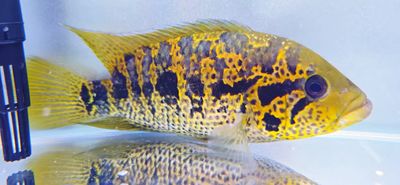
Yellowjacket Cichlid - (Parachromis multifasciatus)
Yellowjacket Cichlid - (Parachromis multifasciatus)
Price of shipping is not included.
5.0
(1)
was $85.00
Save 6%
$80.00
Wild Caught
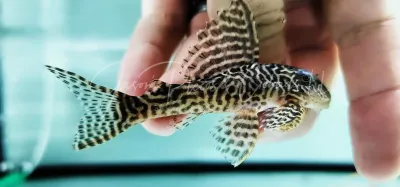
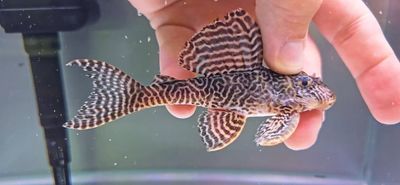
L066 King Tiger Pleco - (Hypancistrus Seideli)
L066 King Tiger Pleco - (Hypancistrus Seideli)
Price of shipping is not included.
was $75.00
Save 7%
$70.00
Captive Bred
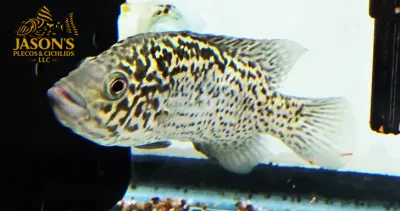
Cuban Cichlid - (Nandopsis tetracanthus)
Cuban Cichlid - (Nandopsis tetracanthus)
Price of shipping is not included.
was $100.00
Save 20%
$80.00
Captive Bred
Cobra Snakeskin Peacock Bass - (Hybrid Peacock Bass)
Cobra Snakeskin Peacock Bass - (Hybrid Peacock Bass)
Price of shipping is not included.
5.0
(1)
was $190.00
Save 5%
$180.00
Powered by Lightspeed
Display prices in:USD