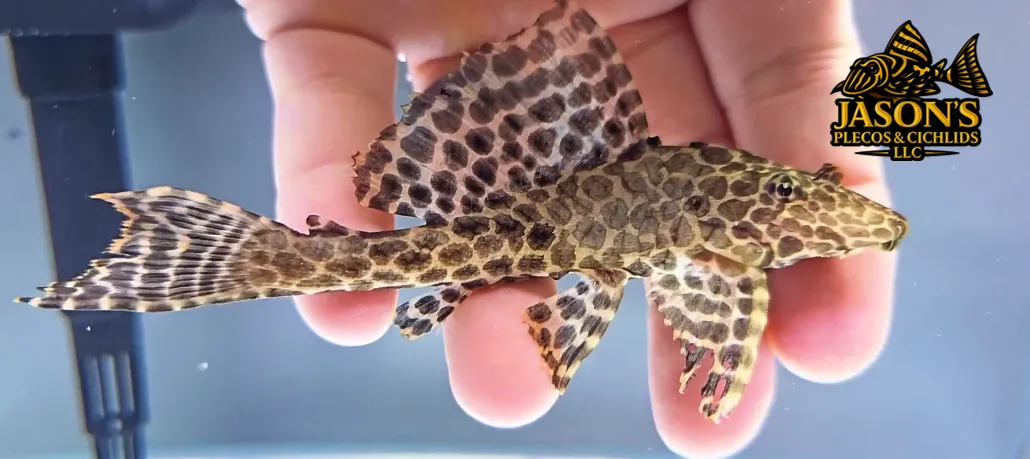
L165 Sail Fin Pleco - (Pterygoplichthys gibbiceps)
4.0
1 review
Reviews from verified customers who have purchased products at this store.
$45.00
Sold out
was $50.00 Save 10%
Size
Questions, Comments, Concerns? Let us know!
Enter your text
Price of shipping is not included.
Sold out
Save this fish to my favorites.
Customer reviews
Reviews only from verified customers
Reviews are only accepted from verified customers who have signed in and purchased the products. This ensures that each review is based on genuine customer experiences. All reviews are checked before publication to prevent spam.
Bill C.
Winchester,
United States
Dec 19, 2025
This customer didn’t leave a review but rated the product.
L165 Sail Fin Pleco - (Pterygoplichthys gibbiceps)
Fish Details, Description and Information Below:
🐟 L165 Sail Fin Pleco – (Pterygoplichthys gibbiceps) – Captive-Bred Leopard Sailfin Pleco
The L165 Sail Fin Pleco (Pterygoplichthys gibbiceps), also known as the Leopard Sailfin Pleco, Sailfin Pleco, or Gibby, is a large South American armored catfish famous for its enormous sail-like dorsal fin and beautiful leopard-style pattern.
Young specimens display an attractive network of dark brown to black markings over a tan, golden-brown, or olive background. As the fish matures, its heavily armored body, impressive size, and enormous dorsal fin make it an outstanding showpiece catfish.
Customers should understand that the small Sail Fin Pleco commonly offered in the aquarium trade eventually becomes a very large adult pleco. Scientific records document Pterygoplichthys gibbiceps reaching approximately 50 cm / 19.7 inches total length, so permanent housing should be planned around an approximately 18–20 inch adult.
This listing is for:
CAPTIVE-BRED L165 SAIL FIN PLECOS
🔎 Quick Facts – L165 Sail Fin Pleco
- 📛 Common Name: Sail Fin Pleco
- 📛 Other Names: Leopard Sailfin Pleco, Gibby, Leopard Pleco
- 🔢 L-Number: L165
- 🔢 Related Historical L-Number: L083
- 🔬 Scientific Name: Pterygoplichthys gibbiceps
- 🐟 Family: Loricariidae
- 🧬 Subfamily: Hypostominae
- 🐣 Stock: Captive Bred
- 🌎 Origin of Species: South America
- 🌊 Native Range: Middle and Upper Amazon and Orinoco Basins
- 🇧🇷 Type Locality: Upper Rio Negro region, Brazil
- 💧 Water Type: Freshwater
- 📏 Scientific Maximum: Approximately 50 cm / 19.7 inches total length
- 📏 Adult Planning Size: Approximately 18–20 inches
- 🏠 Minimum Permanent Adult Aquarium: Approximately 125 gallons
- 🏠 Preferred Adult Aquarium: 180+ gallons
- 📐 Aquarium Footprint: Long and wide tanks strongly preferred
- 🌡️ Temperature: Approximately 74–82°F
- 💧 pH: Approximately 6.0–8.0
- 💦 Hardness: Approximately 5–19 dH
- 💨 Oxygenation: Good to High
- 🍽️ Diet: Plant-Leaning Omnivorous Grazer
- 🌿 Vegetable Foods: Important
- 🦐 Animal Protein: Supplemental
- 🌙 Activity: Primarily nocturnal / crepuscular
- 😌 Temperament: Generally peaceful toward other fish
- ⚠️ Pleco Temperament: Can become territorial with other large plecos
- 💩 Bioload: Very High
- 💨 Special Adaptation: Facultative Air Breather
- 🥚 Reproduction: Burrow / Bank Spawner
- ⭐ Care Level: Intermediate due primarily to adult size and bioload
- 🌎 Conservation Status: Least Concern
⛵ Why Is It Called the Sail Fin Pleco?
The most obvious characteristic of Pterygoplichthys gibbiceps is its enormous:
SAIL-LIKE DORSAL FIN
When fully extended, the dorsal fin can appear almost as tall as the fish's body.
The large dorsal fin contains considerably more rays than the smaller dorsal fins seen in many other pleco genera.
This impressive feature is one of the easiest ways to recognize a mature:
Pterygoplichthys
🐆 Leopard Pattern
The L165 develops an intricate leopard-like pattern over nearly the entire body.
Typical background coloration may include:
- Tan
- Beige
- Golden brown
- Olive-brown
- Light chocolate
covered with:
- Dark brown spots
- Black spots
- Leopard-like markings
- Reticulated patterns
The markings extend onto the:
- Head
- Body
- Dorsal fin
- Pectoral fins
- Pelvic fins
- Caudal fin
🕸️ Honeycomb-Like Pattern
On many individuals, the combination of dark markings and lighter background coloration creates an attractive:
HONEYCOMB OR RETICULATED APPEARANCE
This pattern can be especially dramatic across the enormous dorsal fin.
As the fish grows:
- Individual markings may appear smaller relative to the body
- The pattern may become more complex
- Reticulation may become more noticeable
- Body coloration may lighten or darken
🎨 Color & Pattern Variation
Individual Sail Fin Plecos may vary considerably.
Coloration can include:
- Golden brown
- Chocolate
- Gray-brown
- Olive
- Tan
Pattern intensity may also vary according to:
- Genetics
- Age
- Stress
- Diet
- Lighting
- Aquarium background
- Water quality
- Acclimation
Exact adult coloration cannot be guaranteed.
🧬 Valid Scientific Species
The currently accepted scientific name is:
Pterygoplichthys gibbiceps
Older scientific names found in aquarium literature may include:
- Ancistrus gibbiceps
- Glyptoperichthys gibbiceps
Older aquarium books commonly used:
Glyptoperichthys gibbiceps
but the accepted genus today is:
Pterygoplichthys
🔢 L165 & L083
Both:
L165
and:
L083
have historically been associated with:
Pterygoplichthys gibbiceps
L-numbers were originally created to identify aquarium plecos before all of their scientific relationships were fully understood.
For this product:
L165
should remain the primary aquarium designation.
⚠️ Not Every “Common Pleco” Is the Same Fish
The term:
Common Pleco
has been used very loosely throughout the aquarium trade.
Large plecos sold under generic names may actually belong to:
- Pterygoplichthys gibbiceps
- Pterygoplichthys pardalis
- Pterygoplichthys disjunctivus
- Various Hypostomus
These are not all the same species.
This listing specifically represents:
Pterygoplichthys gibbiceps
🆚 L165 vs. L021 Common Pleco
The L165 Sail Fin Pleco is different from:
L021 – Pterygoplichthys pardalis
Both become large and develop enormous dorsal fins, but their coloration and body patterns differ.
L165 – Pterygoplichthys gibbiceps
Typically has:
- Leopard-like spotting
- Honeycomb or reticulated pattern
- Heavily patterned dorsal fin
- Distinctive raised profile behind the head
L021 – Pterygoplichthys pardalis
Typically displays:
- Different body spotting
- Different head markings
- Distinctive spotted abdominal pattern
Correct scientific identification is important.
🗿 The Hump Behind the Head
The species name:
gibbiceps
refers to the characteristic:
HUMPED OR RIDGED HEAD PROFILE
The raised area behind the head becomes particularly noticeable in larger adults.
This gives mature Sail Fin Plecos a powerful, high-backed appearance.
🌎 Native Distribution
Pterygoplichthys gibbiceps naturally occurs in South America within portions of the:
MIDDLE AND UPPER AMAZON BASIN
and:
ORINOCO BASIN
Its native distribution includes major tropical freshwater systems of northern South America.
🇧🇷 Type Locality
The historical type locality is associated with the:
UPPER RIO NEGRO
near:
Marabitanos, Amazonas, Brazil
The Rio Negro is a major tributary of the Amazon River system.
🌊 Natural Habitat
Wild Sail Fin Plecos can occupy a variety of freshwater habitats including:
- Rivers
- River margins
- Slower-flowing areas
- Floodplain habitats
- Submerged woody areas
- Mud banks
- Marginal vegetation
They are adaptable fish and are not restricted exclusively to high-current rocky rapids.
💨 Facultative Air Breathing
One fascinating adaptation of Pterygoplichthys gibbiceps is its ability to:
USE ATMOSPHERIC AIR
under certain environmental conditions.
The species is considered a:
FACULTATIVE AIR BREATHER
This adaptation can help it survive temporary periods of reduced dissolved oxygen.
⚠️ Air Breathing Does Not Mean Poor Water Is Acceptable
The ability to gulp atmospheric air does not mean the aquarium can have:
- Poor filtration
- Low oxygen
- High ammonia
- High nitrite
- Excessive waste
Always maintain:
CLEAN, WELL-OXYGENATED WATER
Air breathing is a survival adaptation, not a substitute for proper aquarium care.
📏 Adult Size
This is one of the most important facts customers should understand before purchasing L165.
Scientific records document Pterygoplichthys gibbiceps reaching:
50 CM / APPROXIMATELY 19.7 INCHES TOTAL LENGTH
For practical aquarium planning:
EXPECT APPROXIMATELY 18–20 INCHES AS AN ADULT
🚨 Small Juveniles Become Very Large Adults
Sail Fin Plecos are commonly purchased when they are only a few inches long.
A juvenile may initially appear appropriate for a relatively small aquarium.
As it matures, it develops into a:
- Very long
- Thick-bodied
- Heavily armored
- Powerful
- Heavy-feeding
- Heavy-waste-producing
adult pleco.
Always purchase based on:
ADULT SIZE
rather than juvenile size.
🏠 Permanent Aquarium Size
For one mature L165:
125 GALLONS SHOULD BE CONSIDERED THE MINIMUM
with:
180+ GALLONS STRONGLY PREFERRED
for a fully mature adult.
Larger aquariums become increasingly important when keeping:
- Other large plecos
- Large cichlids
- Large catfish
- Multiple substantial bottom dwellers
📐 Aquarium Footprint Is Critical
For a fish approaching 20 inches:
LENGTH AND WIDTH MATTER
A tall aquarium with limited floor space is not ideal.
Permanent housing should allow the fish to:
- Turn comfortably
- Move around decorations
- Rest fully extended
- Establish territory
- Reach feeding areas easily
An aquarium approximately:
6 FEET LONG OR LARGER
is strongly preferred.
Additional front-to-back width is extremely valuable.
🚫 55–75 Gallons Is Not Permanent Adult Housing
A smaller aquarium may temporarily accommodate a juvenile.
However:
A 55- OR 75-GALLON AQUARIUM SHOULD NOT BE CONSIDERED PERMANENT ADULT HOUSING
for a species capable of approaching 20 inches.
Customers should have a permanent upgrade plan before purchasing.
🪨 Aquarium Setup
A suitable L165 aquarium should include:
- Large open bottom area
- Large pieces of driftwood
- Smooth rocks
- Large shelters
- Sand or smooth gravel
- Shaded resting locations
- Strong mechanical filtration
- Strong biological filtration
- Good oxygenation
Leave enough open space for a full-grown fish to move comfortably.
⚠️ Secure All Décor
Adult Sail Fin Plecos are extremely powerful.
Large specimens may:
- Move driftwood
- Push rocks
- Rearrange substrate
- Uproot plants
- Knock over decorations
Heavy décor should be stable and positioned so it cannot:
- Collapse
- Trap the fish
- Damage the aquarium
🌿 Planted Aquariums
Young L165 may coexist successfully with many aquarium plants.
As the fish grows, its:
- Size
- Strength
- Grazing behavior
can become disruptive.
Adults may:
- Uproot plants
- Rasp softer leaves
- Disturb substrate
- Damage delicate aquascapes
Hardier plants securely attached to rocks or wood generally have a better chance of remaining intact.
🪵 Driftwood
Driftwood is strongly recommended.
It provides:
- Shelter
- Shade
- Biofilm
- Grazing surfaces
- Territory
- Environmental enrichment
However:
L165 IS NOT A SPECIALIZED WOOD-EATING PLECO
and it should not be claimed that driftwood is required specifically for digestion.
Wood is useful habitat and a natural grazing surface, but it is not a complete diet.
💩 VERY HEAVY BIOLOAD
One of the biggest considerations when keeping a mature Sail Fin Pleco is:
WASTE PRODUCTION
A large adult consumes significant amounts of:
- Vegetables
- Algae-based foods
- Pellets
- Biofilm
- Organic material
and produces a substantial amount of waste.
🧹 The “Tank Cleaner” Still Creates Waste
Sail Fin Plecos are often purchased as:
Algae Cleaners
They certainly can consume large amounts of algae.
However:
THEY DO NOT REMOVE WASTE FROM THE AQUARIUM
They convert food and algae into:
- Feces
- Dissolved organic waste
- Nitrate-producing material
A mature L165 can create significantly more maintenance than many customers expect.
💩 Filtration
Oversized filtration is strongly recommended.
Suitable systems include:
- Large sump filtration
- Large canister filters
- Strong mechanical filtration
- High-capacity biological media
- Prefilters
- Strong surface agitation
Maintain:
- ☠️ Ammonia: 0 ppm
- ☠️ Nitrite: 0 ppm
- 🔄 Nitrate: Keep as low as reasonably practical
🔄 Water Changes
Regular substantial water changes should be part of routine care.
The exact schedule depends on:
- Aquarium volume
- Number of fish
- Feeding
- Filtration capacity
- Nitrate accumulation
Do not allow large amounts of pleco waste to remain trapped beneath:
- Driftwood
- Rocks
- Caves
- Decorations
💧 Water Parameters
A practical long-term aquarium range is:
- 🌡️ Temperature: Approximately 74–82°F
- 💧 pH: Approximately 6.0–8.0
- 💦 Hardness: Approximately 5–19 dH
- 💨 Oxygenation: Good to High
- 🌊 Water Movement: Moderate
- ☠️ Ammonia: 0 ppm
- ☠️ Nitrite: 0 ppm
- 🔄 Nitrate: Keep reasonably low
This is a fairly adaptable species when water conditions remain stable.
🌡️ Temperature
For normal long-term maintenance:
74–82°F
is appropriate.
There is generally no reason to maintain this species continuously at extremely high temperatures.
Choose tankmates whose temperature requirements overlap appropriately.
🍽️ Diet – Plant-Leaning Omnivorous Grazer
The L165 Sail Fin Pleco is best described as a:
PLANT-LEANING OMNIVOROUS GRAZER
Its natural feeding behavior includes substantial grazing on:
- Algae
- Biofilm
- Organic material
- Plant matter
while also consuming other available foods.
🌿 Plant-Based Foods Should Be the Foundation
Recommended staple foods include:
- High-quality algae wafers
- Spirulina wafers
- Vegetable-based sinking pellets
- Fiber-rich pleco foods
- Quality gel foods
A varied diet is better than relying on a single type of wafer.
🥒 Fresh Vegetables
Suitable vegetables may include:
- Zucchini
- Squash
- Pumpkin
- Green beans
- Peas
- Appropriate leafy greens
Large adults can consume:
SURPRISINGLY LARGE AMOUNTS OF VEGETABLE MATTER
Remove uneaten vegetables before they begin decomposing.
🦐 Supplemental Protein
Moderate amounts of animal or insect-based foods may include:
- Shrimp-based sinking pellets
- Mysis shrimp
- Bloodworms
- Insect-based foods
- Quality omnivore pellets
Protein should:
SUPPLEMENT
rather than dominate the diet.
🚫 Do Not Feed a Heavy Carnivore Diet
Avoid maintaining L165 primarily on:
- Shrimp
- Mussels
- High-protein carnivore pellets
- Large quantities of meaty frozen foods
This species is better suited to:
PLANT-HEAVY OMNIVOROUS FEEDING
🚫 Aquarium Algae Alone Is Not Enough
Although L165 will consume aquarium algae:
ALGAE ALONE IS NOT A COMPLETE DIET FOR A NEARLY 20-INCH PLECO
Intentional feeding is required.
Food quantity requirements increase dramatically as the fish grows.
🌙 Behavior
The Sail Fin Pleco is primarily:
NOCTURNAL / CREPUSCULAR
Activity commonly increases:
- At dusk
- After lights out
- During feeding
Captive-bred specimens often become comfortable feeding during daylight once established.
😌 Temperament
Toward most appropriately sized fish, the L165 is generally:
PEACEFUL
It can coexist with many large aquarium fish when adequate space is provided.
Potential tankmates may include appropriately sized:
- Large peaceful cichlids
- Silver dollars
- Larger characins
- Large community fish
- Other robust tropical fish
⚠️ Territorial Toward Other Plecos
Large L165 may become territorial toward:
- Other L165
- Other Pterygoplichthys
- Large Hypostomus
- Similar bottom dwellers
especially when competing over:
- Shelters
- Driftwood
- Feeding areas
- Resting locations
⚔️ Large Plecos Are Powerful
Territorial disputes may involve:
- Pushing
- Tail slapping
- Pectoral-spine contact
- Blocking shelters
Even a generally peaceful species can injure another large pleco when bottom territory is inadequate.
🐢 Use Caution With Slow-Bodied Animals
Large plecos sometimes develop problematic rasping behavior toward animals such as:
- Large slow-moving fish
- Freshwater stingrays
- Aquatic turtles
A pleco repeatedly attaching to another animal can damage:
- Slime coating
- Skin
- Tissue
If this behavior occurs:
SEPARATE THE ANIMALS
🛡️ Large Dorsal & Pectoral Spines
Use caution when moving a mature Sail Fin Pleco.
Its:
- Strong dorsal spine
- Strong pectoral spines
- Armored body
can make ordinary aquarium netting difficult.
Large adults may become tangled in conventional nets.
Safer options may include:
- Large rigid containers
- Fish tubs
- Heavy-duty transfer bags
♂️ Male vs. Female
Sexing juvenile L165 can be difficult.
Mature fish may show differences in:
- Body shape
- Genital papilla
- Territorial behavior
but external sexing is not as straightforward as it is in some smaller pleco genera.
Unless confidently determined:
SELL AS UNSEXED
🥚 Reproduction
Reproduction in Pterygoplichthys is very different from the small ceramic-cave spawning behavior familiar to many pleco keepers.
These fish are associated with:
BANK / BURROW SPAWNING
🕳️ Burrow-Spawning Behavior
Wild and introduced Pterygoplichthys construct or occupy long nesting burrows in:
- Mud banks
- Earthen riverbanks
- Canal banks
- Soft shoreline substrate
These tunnels provide protected breeding areas.
This behavior is very different from the small rock or ceramic cave spawning seen in:
- Hypancistrus
- Peckoltia
- Ancistrus
🏠 Why Home-Aquarium Breeding Is Uncommon
Most conventional glass aquariums do not provide:
DEEP EARTHEN BANKS
for large adults to excavate.
For this reason:
HOME-AQUARIUM BREEDING IS UNCOMMON
🐣 Commercial Captive Breeding
The species can be produced commercially using:
- Large ponds
- Specialized breeding systems
- Earthen environments
- Systems that allow natural burrowing behavior
The fish offered in this listing are:
CAPTIVE BRED
🐣 Captive Bred Does Not Mean Smaller
Captive breeding does not reduce adult-size potential.
A captive-bred Sail Fin Pleco is not:
- Dwarf
- Miniature
- Permanently small
It still requires permanent housing appropriate for:
AN APPROXIMATELY 18–20 INCH ADULT
🌎 Invasive Species Warning
Large Pterygoplichthys species have become established outside their native range in many warm parts of the world.
One of the major introduction pathways is:
AQUARIUM RELEASE
🕳️ Environmental Impact
Established populations of sailfin catfish can:
- Dig nesting burrows
- Destabilize shorelines
- Increase erosion
- Alter sediment
- Affect nutrient cycling
- Compete with native species
Their ability to:
- Grow large
- Tolerate challenging conditions
- Breathe atmospheric air
- Reproduce successfully
can help them establish where climate permits.
🚨 NEVER RELEASE A SAIL FIN PLECO
Never release an unwanted L165 into:
- Rivers
- Streams
- Lakes
- Ponds
- Canals
- Springs
- Storm drains
- Natural waterways
If you can no longer keep the fish:
- Rehome it
- Contact an aquarium store
- Contact an aquatic rescue
- Contact an experienced aquarist
- Contact the appropriate wildlife agency
NEVER RELEASE AQUARIUM FISH INTO THE WILD.
🌎 Conservation Status
Within its native South American range, Pterygoplichthys gibbiceps is currently classified as:
LEAST CONCERN
Its native range includes portions of the:
- Amazon Basin
- Orinoco Basin
This should not be confused with the environmental problems caused when sailfin plecos establish outside their natural range.
⭐ Why Keep an L165 Sail Fin Pleco?
When given appropriate permanent housing, a mature L165 is an impressive aquarium fish.
Its combination of:
- ⛵ Enormous sail-like dorsal fin
- 🐆 Leopard / honeycomb pattern
- 🛡️ Heavy armored body
- 📏 Approximately 18–20 inch adult size
- 👄 Powerful sucker mouth
- 🌙 Nocturnal behavior
- 💨 Air-breathing adaptation
- 🌎 Amazon and Orinoco ancestry
- 🐣 Captive-bred availability
makes Pterygoplichthys gibbiceps a striking centerpiece catfish for very large freshwater aquariums.
⚠️ Important Considerations
Before purchasing an L165 Sail Fin Pleco:
- The correct scientific name is Pterygoplichthys gibbiceps.
- Older literature may use Glyptoperichthys gibbiceps.
- L165 and L083 have both historically been associated with this species.
- This listing is for captive-bred fish.
- Scientific records document approximately 19.7 inches maximum total length.
- Plan for approximately 18–20 inches as an adult.
- Do not purchase based on juvenile size.
- Provide approximately 125 gallons minimum for permanent adult housing.
- 180+ gallons is strongly preferred.
- Prioritize aquarium length and width.
- Use strong mechanical and biological filtration.
- Expect extremely heavy waste production.
- Maintain ammonia and nitrite at zero.
- Provide good oxygenation.
- Feed a plant-leaning omnivorous diet.
- Provide algae-based foods and vegetables regularly.
- Offer modest supplemental animal or insect protein.
- Do not rely solely on aquarium algae.
- Do not purchase the fish simply as a tank cleaner.
- Provide driftwood for shelter, grazing surfaces, and enrichment.
- Do not claim driftwood is required for digestion.
- Expect territorial behavior toward other large plecos.
- Understand that natural reproduction involves bank/burrow nesting behavior.
- Home-aquarium breeding is uncommon.
- Captive-bred fish still reach full adult size.
- Understand the invasive-species risk.
- Never release this fish into natural waterways.
🧬 Taxonomy
The currently accepted scientific name is:
Pterygoplichthys gibbiceps (Kner, 1854)
Classification:
- Order: Siluriformes
- Family: Loricariidae
- Subfamily: Hypostominae
- Genus: Pterygoplichthys
- Species: gibbiceps
Older scientific combinations include:
- Ancistrus gibbiceps
- Glyptoperichthys gibbiceps
Aquarium numbers historically associated with this species include:
- L083
- L165
For this product, use:
L165 Sail Fin Pleco – (Pterygoplichthys gibbiceps)
🔢 L-Number Disclaimer
L083 and L165 have historically both been applied to Pterygoplichthys gibbiceps within the aquarium hobby.
For this listing:
L165
should remain the primary aquarium-trade identifier.
Exact collection locality should only be stated when documented.
🌎 Invasive-Species Disclaimer
Pterygoplichthys species have established non-native populations in multiple warm regions following aquarium releases.
Customers must never release unwanted fish into:
- Natural waterways
- Ponds
- Canals
- Streams
- Rivers
- Lakes
Rehome unwanted fish responsibly.
🚚 Live Fish Shipping
Live fish are professionally packed for safe transport.
Shipping availability depends on:
- Fish size
- Destination
- Weather conditions
- Carrier availability
- Applicable state and local regulations
Larger Sail Fin Plecos may require:
- Larger insulated shipping boxes
- Additional water
- Heavy-duty shipping bags
- Multiple protective layers
- Specialized packing
- Airline cargo shipping
Large specimens require extra care because of their:
- Large dorsal spine
- Strong pectoral spines
- Heavy armored body
Please review our Shipping & Payment Information and Live Arrival Guarantee / DOA Policy before ordering.
⚠️ Buyer Responsibility
Customers are responsible for confirming that Pterygoplichthys gibbiceps may legally be purchased, possessed, transported, and received in their state or local jurisdiction before ordering.
Never release aquarium fish into natural waterways.
Powered by Lightspeed
Display prices in:USD