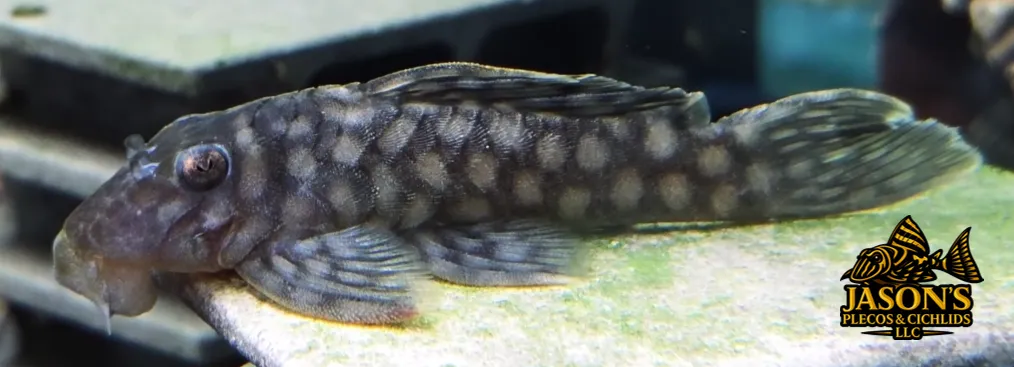
L020 Acari Bola Branca - (Spectracanthicus zuanoni)
$50.00
Sold out
was $55.00 Save 9%
Size
Questions, Comments, Concerns? Let us know!
Enter your text
Price of shipping is not included.
Sold out
Save this fish to my favorites.
Customer reviews
Reviews only from verified customers
No reviews yet. You can buy this product and be the first to leave a review.
L020 Acari Bola Branca - (Spectracanthicus zuanoni)
Fish Details, Description and Information Below:
⚪ L020 Acari Bola Branca – (Spectracanthicus zuanoni) – White-Spotted Rio Xingu Pleco
The L020 Acari Bola Branca (Spectracanthicus zuanoni) is a striking Rio Xingu pleco known for its dark brown to charcoal-black body covered with large contrasting white to pale gray spots.
The Portuguese name:
Acari Bola Branca
refers to the fish's distinctive:
White-Spotted Appearance
Unlike many plecos whose spotting consists of tiny dots, Spectracanthicus zuanoni naturally develops relatively large, obvious white spots across the body and fins.
The species is native to Brazil's famous Rio Xingu basin near Altamira and Belo Monte, where it inhabits rocky areas exposed to moderate and strong current. Adults shelter beneath boulders, while juveniles use spaces underneath rocks.
This is a warm-water, current-loving pleco that benefits from:
- High dissolved oxygen
- Strong filtration
- Rocky shelter
- Caves
- Moderate to strong water movement
- A mature aquarium with natural grazing surfaces
Although it will graze algae and biofilm, the L020 should not be purchased simply as an aquarium cleaner. In nature it grazes periphyton, which is a complex mixture of algae, microorganisms, organic material, and tiny food organisms growing on submerged surfaces.
This listing is for:
WILD-CAUGHT L020 ACARI BOLA BRANCA
🔎 Quick Facts – L020 Acari Bola Branca
- 📛 Common Name: Acari Bola Branca
- 📛 Other Names: White-Spotted Pleco, Grey-Spotted Sailfin Pleco
- 🔢 L-Number: L020
- 🔢 Related Historical Number: L354
- 🔬 Scientific Name: Spectracanthicus zuanoni
- 🐟 Family: Loricariidae
- 🧬 Subfamily: Hypostominae
- 🌿 Stock: Wild Caught
- 🇧🇷 Country: Brazil
- 🌊 Native Range: Rio Xingu Basin
- 📍 Documented Locality: Near Altamira and Belo Monte, Pará State
- 💧 Water Type: Freshwater
- 📏 Original Type Series: Up to approximately 12.9 cm / 5.1 inches standard length
- 📏 Current FishBase Species Maximum: Up to approximately 24 cm / 9.4 inches total length
- 📏 Aquarium Planning: Commonly around 5–6 inches, but potentially larger; provide housing capable of accommodating a substantially larger adult
- 🏠 Recommended Aquarium: 55 gallons or larger
- 👥 Group Housing: 75+ gallons preferred with abundant caves and territories
- 🌡️ Temperature: Approximately 79–86°F
- 💧 pH: Approximately 5.5–7.2
- 💨 Oxygenation: High
- 🌊 Water Movement: Moderate to Strong
- 🍽️ Diet: Omnivorous Aufwuchs / Periphyton Grazer
- 😌 Temperament: Generally peaceful toward midwater fish; territorial with other bottom dwellers
- 🌙 Activity: Primarily nocturnal
- 🐠 Swimming Area: Bottom
- 🥚 Breeding: Cave Spawner
- ⭐ Care Level: Intermediate
- 🌎 IUCN Status: Not Evaluated
- 🏆 Type: Rio Xingu L-Number Pleco
🧬 A Formally Described Species
For many years, L020 was known in the aquarium hobby without a formal scientific species name.
That changed in:
2014
when the species was formally described as:
Spectracanthicus zuanoni
by Chamon and Rapp Py-Daniel.
Therefore, this fish should no longer be listed simply as:
Spectracanthicus sp. L020
The correct current identification is:
Spectracanthicus zuanoni
👨🔬 What Does “zuanoni” Mean?
The species name:
zuanoni
honors Brazilian ichthyologist and ecologist:
Jansen Zuanon
who made important contributions to the study of Neotropical fishes.
He was also the first ichthyologist reported to have collected and recognized this fish as a previously undescribed species.
🔢 L020 & L354
The formal species description recognizes Spectracanthicus zuanoni under the aquarium identifiers:
- L020
- L354
Historically, aquarists sometimes treated these numbers as different forms or populations.
Modern taxonomy places them within:
Spectracanthicus zuanoni
Even when two L-numbers are currently considered the same scientific species, preserving the original L-number and collection information remains valuable for aquarium records and breeding programs.
For this listing:
L020 Should Remain Prominent
because it is the aquarium identification associated with the fish being sold.
⚪ Appearance
The L020 Acari Bola Branca has one of the most recognizable patterns within Spectracanthicus.
Typical body coloration includes:
- Dark brown
- Chocolate brown
- Gray-brown
- Charcoal
- Nearly black
covered with:
Large White to Pale Gray Spots
These markings may occur across:
- Body
- Dorsal fin
- Caudal fin
- Pectoral fins
- Pelvic fins
The dorsal and caudal fins often display especially noticeable spotting.
👶 Juvenile Pattern
Juveniles can look somewhat different from adults.
Young fish may display:
- Closely spaced white spots
- Overlapping spots
- Irregular pale patches
- Smudge-like markings
As the fish grows, the pattern may become more clearly separated.
This is normal development.
🎨 Individual Variation
Not every L020 looks identical.
Individuals may vary in:
- Spot size
- Spot density
- Body darkness
- Number of spots
- Spot shape
- Fin pattern
- Head markings
Some individuals may develop almost:
Vermiculated or Wavy Markings
near the snout.
Exact adult pattern cannot be guaranteed.
🧬 How Is S. zuanoni Identified?
One of the primary features scientists use to distinguish this species from other Spectracanthicus is its:
Large White Spots
Other members of the genus may have:
- Smaller yellowish spots
- Much finer spotting
- Little or no spotting
The species also possesses anatomical characteristics involving:
- Eye size
- Opercular structure
- Odontodes
- Teeth
- Fin-ray structure
that separate it from related species.
🦈 Sailfin Appearance
The L020 has a large dorsal fin that gives the fish a distinctive:
Sail-Like Profile
Another characteristic of Spectracanthicus is the membranous connection between the:
- Dorsal fin
- Adipose-fin region
This feature helps separate these fish from several superficially similar spotted plecos.
🌎 Native Distribution
Spectracanthicus zuanoni is native to:
Brazil's Rio Xingu Basin
and has been scientifically documented near:
- Altamira
- Belo Monte
in:
Pará State, Brazil
The species has a much more geographically restricted distribution than many widespread South American plecos.
🪨 Natural Habitat
This species is strongly associated with:
Rocky River Habitat
Wild L020s have been found in areas containing:
- Large rocks
- Boulders
- Crevices
- Rocky substrate
- Strong current
- Backwater areas
- Highly oxygenated water
Specimens have been collected at depths of approximately:
Up to 2 meters
🪨 Adult Shelter
Adult Spectracanthicus zuanoni commonly shelter:
Beneath Large Boulders
These protected spaces provide:
- Shade
- Security
- Current breaks
- Territory
- Feeding surfaces
An aquarium should provide similar secure shelter.
👶 Juvenile Shelter
Young fish often remain:
Underneath Rocks and Inside Rocky Spaces
Juveniles have even been recorded sharing these habitats with several other Xingu loricariids, including:
- Ancistrus ranunculus
- Baryancistrus xanthellus
- Spectracanthicus punctatissimus
- Hopliancistrus tricornis
- Parancistrus nudiventris
- Peckoltia vittata
This illustrates just how diverse the Rio Xingu pleco community is.
📏 Adult Size – Important Update
Adult size for L020 deserves some explanation because current references do not completely agree.
The original 2014 scientific description examined specimens reaching:
129 mm / 5.1 inches standard length
Standard length excludes the tail fin.
Many aquarium references therefore commonly describe L020 as approximately:
5–6 inches total length
However, FishBase currently lists a species-level maximum of:
24 cm / approximately 9.4 inches total length
for Spectracanthicus zuanoni.
⚠️ Why the Size Difference?
Part of the confusion may result from:
- L020 and L354 historically being treated differently
- Different collection populations
- Differences between standard length and total length
- Later records being incorporated into the species
Because these forms are now included under the same scientific species:
I would not advertise a strict 5-inch maximum.
For responsible customer planning:
Expect a medium-sized pleco and provide enough space for the possibility of a substantially larger individual.
🏠 Aquarium Size
For an individual L020:
55 gallons or larger
provides comfortable long-term space and good water stability.
For a group:
75 gallons or larger
is preferred.
If keeping:
- Several L020s
- Other plecos
- Additional bottom dwellers
choose a larger aquarium with substantial bottom area.
📐 Bottom Area Matters
Plecos use aquarium floor space much more than excessive height.
Prioritize:
- Length
- Width
- Rock structure
- Cave availability
- Feeding territories
A long, wide aquarium provides more usable habitat than a tall, narrow aquarium of the same volume.
🪨 Aquarium Setup
An ideal L020 aquarium should include:
- Large smooth rocks
- Slate
- Rock piles
- Caves
- Driftwood
- Sand or smooth gravel
- Open grazing surfaces
- Shaded areas
- Strong filtration
- Moderate to strong water movement
- High oxygenation
Create several areas where the fish can retreat completely from view.
🏠 Provide Multiple Caves
When keeping multiple plecos:
Provide More Caves Than Fish
Suitable shelters may include:
- Ceramic pleco caves
- Slate caves
- Rock crevices
- Driftwood shelters
- Natural-style rocky overhangs
This helps reduce competition for preferred territories.
💨 High Oxygen Is Extremely Important
L020 originates from moving Rio Xingu water.
It should be maintained in:
Highly Oxygenated Water
This is particularly important because the species prefers warm temperatures.
Warm water naturally holds less dissolved oxygen.
Recommended ways to increase oxygenation include:
- Strong surface agitation
- Powerful filter returns
- Air stones
- Powerheads
- Circulation pumps
- Sump filtration
🌊 Water Movement
The species is considered:
Moderately Rheophilic
meaning it is adapted to moving-water environments.
Provide:
Moderate to Strong Current
but also create sheltered areas where the fish can rest out of the strongest flow.
An ideal aquarium contains both:
- Higher-flow grazing areas
- Protected resting areas
🌡️ Temperature
A practical aquarium temperature range is:
79–86°F
or approximately:
26–30°C
This is warmer than the 75–82°F range on the older product page.
At the upper end of this range:
Strong oxygenation becomes especially important.
💧 Water Parameters
Recommended conditions:
- 🌡️ Temperature: 79–86°F
- 💧 pH: Approximately 5.5–7.2
- 💦 Water: Soft to moderately mineralized
- 💨 Oxygenation: High
- 🌊 Flow: Moderate to Strong
- ☠️ Ammonia: 0 ppm
- ☠️ Nitrite: 0 ppm
- 🔄 Nitrate: Keep as low as reasonably practical
Avoid:
- Sudden parameter swings
- Poor oxygenation
- Accumulating organic waste
- Uncycled aquariums
💩 Filtration
Strong filtration is important.
Suitable systems may include:
- Canister filters
- Sump filtration
- High-capacity biological media
- Strong mechanical filtration
- Powerheads
- Additional aeration
Regular partial water changes should be part of normal care.
🍽️ Natural Diet
Scientific observations describe Spectracanthicus zuanoni as a:
Nocturnal Periphyton Grazer
Wild fish actively graze over rocky surfaces at night.
They consume:
- Algae
- Biofilm
- Organic material
- Microorganisms
- Tiny organisms living within periphyton
This is broader than simply calling the species:
An Algae Eater
🌿 What Is Periphyton?
Periphyton is the natural biological layer that develops on underwater:
- Rocks
- Wood
- Plants
- Other surfaces
It may contain:
- Algae
- Bacteria
- Microorganisms
- Tiny invertebrates
- Organic material
Wild L020s scrape and graze this complex food source from rocks.
🍽️ Aquarium Diet
A varied omnivorous diet is recommended.
🌿 Plant / Grazing Foods
Suitable foods include:
- High-quality algae wafers
- Spirulina foods
- Vegetable-based sinking pellets
- Zucchini
- Squash
- Green beans
- Other appropriate vegetables
🦐 Protein Foods
Supplement with:
- Insect-based sinking pellets
- Mysis shrimp
- Brine shrimp
- Bloodworms
- Shrimp-based foods
- Mussel
- Quality omnivore pellets
The goal should be:
A Varied Omnivorous Diet
rather than one food type.
🚫 Not Just an Aquarium Cleaner
Your older listing describes the L020 as:
An Excellent Algae Eater That Helps Keep the Tank Clean
I would remove that wording.
The fish certainly grazes algae and biofilm, but:
L020 should be purchased as an aquarium animal—not as cleaning equipment.
Aquarium algae alone will not provide a complete long-term diet.
🪵 Driftwood
Driftwood is useful because it provides:
- Shelter
- Shade
- Biofilm
- Territory
- Natural structure
However:
L020 is not a specialized wood-eating pleco.
It should not be maintained like a Panaque or Panaqolus.
Wood is useful habitat, not its primary food.
🌙 Nocturnal Behavior
Spectracanthicus zuanoni is primarily:
Nocturnal
During brighter periods it may remain:
- Beneath rocks
- Inside caves
- Under driftwood
- In shaded areas
Activity usually increases:
- At dusk
- At night
- During feeding
- Under dim lighting
Established fish may become more visible during the day once they feel secure.
😌 Temperament
Toward fish occupying the middle and upper portions of the aquarium, L020 is generally:
Peaceful
However, territorial behavior may occur toward:
- Other L020s
- Similar plecos
- Other bottom dwellers
- Fish competing for caves
⚠️ Territorial Conflicts
Pleco disputes may involve:
- Chasing
- Pushing
- Tail slapping
- Blocking cave entrances
- Odontode contact
Problems are much more likely when there are:
- Too few shelters
- Too little floor space
- Too many plecos
- Limited food locations
Provide ample territory.
👥 Can L020 Be Kept in Groups?
Yes, groups can be maintained when the aquarium is large enough.
Wild specimens have been documented:
- Individually
- In groups of approximately three
If maintaining several:
- Provide multiple caves
- Provide visual barriers
- Feed in several locations
- Monitor smaller individuals
- Watch for dominant fish
🐠 Tankmates
Potential tankmates include appropriately sized fish that tolerate warm, oxygen-rich water, such as:
- Tetras
- Pencilfish
- Hatchetfish
- Certain Geophagus
- Other peaceful South American fish
- Carefully selected plecos
Avoid combining it with fish that:
- Require much cooler water
- Constantly occupy its caves
- Aggressively dominate feeding areas
♂️ Male vs. Female
Sexing becomes easier in mature specimens.
Mature Males May Develop:
- Stronger odontodes
- More developed pectoral-fin odontodes
- Odontodes along the posterior body
- Increased cave-territorial behavior
Females May:
- Appear broader through the abdomen
- Develop a fuller body when mature
- Have less pronounced odontodes
Juveniles can be difficult to sex accurately.
Unless sex is confirmed:
Sell as Unsexed
🥚 Breeding
The L020 has been bred in captivity.
Like many smaller loricariids, it behaves as a:
Cave-Spawning Pleco
A mature male occupies and defends an appropriate cave.
A receptive female enters the cave to spawn.
Afterward:
The Male Guards the Eggs
and developing fry.
🏠 Breeding Caves
Suitable breeding shelters may include:
- Ceramic pleco caves
- Slate caves
- One-ended breeding tubes
- Tight rock cavities
The cave should:
- Fit the adult fish closely
- Have one primary entrance
- Be positioned where water movement reaches the opening
Providing multiple cave styles allows males to select preferred sites.
💨 Breeding Conditions
Successful breeding is commonly associated with:
- Warm water
- Strong current
- High dissolved oxygen
- Excellent water quality
- Proper conditioning
- Suitable caves
- Regular water changes
Aquarium temperatures around:
82–86°F
with very high oxygen levels may be particularly useful when breeding.
👶 Raising Fry
Once young fish have absorbed their yolk sacs, foods may include:
- Fine algae-based foods
- Crushed omnivore pellets
- Fine sinking pleco foods
- Baby brine shrimp
- Fine frozen foods
- Quality gel foods
Juveniles require:
Excellent Water Quality
and should never be allowed to sit in accumulating food waste.
🧬 Preserve L-Number Information
Even though L020 now has a formal scientific name, the:
L020 Identification Still Matters
Aquarium L-numbers preserve useful information about:
- Historical imports
- Collection forms
- Appearance
- Locality
When breeding, keep accurate records of the parent fish.
Avoid mixing unidentified Spectracanthicus forms and later selling offspring as pure L020.
🌎 Conservation Status
FishBase currently lists Spectracanthicus zuanoni as:
Not Evaluated
by the IUCN Red List.
This does not mean the species has no conservation concerns.
Its known natural distribution is limited to the:
Rio Xingu Basin
so habitat quality within that system remains important.
⭐ Why Keep an L020 Acari Bola Branca?
The L020 is an outstanding pleco for aquarists who enjoy Xingu species.
Its combination of:
- ⚪ Large white spots
- ⚫ Dark body coloration
- 🦈 Sail-like dorsal fin
- 🪨 Rock-dwelling behavior
- 🌊 Current-loving lifestyle
- 🌙 Nocturnal activity
- 🥚 Cave-spawning behavior
- 🇧🇷 Rio Xingu origin
- 🧬 Formally described scientific identity
- 🏆 L-number collector appeal
makes Spectracanthicus zuanoni an impressive addition to a properly maintained freshwater aquarium.
⚠️ Important Considerations
Before purchasing an L020 Acari Bola Branca:
- The correct scientific name is Spectracanthicus zuanoni.
- The species was formally described in 2014.
- L020 and L354 are currently associated with the same scientific species.
- This listing is for wild-caught fish.
- The original scientific series reached approximately 5.1 inches standard length.
- FishBase currently lists a species maximum of approximately 9.4 inches total length.
- Do not rely on a strict 5-inch maximum when planning housing.
- Provide approximately 55 gallons or larger.
- Use larger aquariums for groups and multiple bottom dwellers.
- Provide rocks, caves, and shaded shelters.
- Maintain warm water.
- Maintain high dissolved oxygen.
- Provide moderate to strong current.
- Keep ammonia and nitrite at zero.
- Feed a varied omnivorous diet.
- Provide both plant-based and appropriate protein foods.
- Do not rely solely on aquarium algae.
- Do not market the fish simply as an algae cleaner.
- Expect territorial behavior around caves.
- Preserve L-number information when breeding.
- Never release aquarium fish into natural waterways.
🧬 Taxonomy
The currently accepted scientific name is:
Spectracanthicus zuanoni Chamon & Rapp Py-Daniel, 2014
The species belongs to:
- Order: Siluriformes
- Family: Loricariidae
- Subfamily: Hypostominae
- Genus: Spectracanthicus
- Species: zuanoni
Older aquarium references may use:
- Oligancistrus sp. L020
- Spectracanthicus sp. L020
- L020
- L354
For current product listings, use:
L020 Acari Bola Branca – (Spectracanthicus zuanoni)
🚚 Live Fish Shipping
Live fish are professionally packed for safe transport.
Shipping availability depends on:
- Fish size
- Destination
- Weather conditions
- Carrier availability
- Applicable state and local regulations
Please review our Shipping & Payment Information and Live Arrival Guarantee / DOA Policy before ordering.
⚠️ Buyer Responsibility
Customers are responsible for confirming that Spectracanthicus zuanoni may legally be purchased, possessed, transported, and received in their state or local jurisdiction before ordering.
Never release aquarium fish into natural waterways.
Below are fish you may also like.
Captive Bred
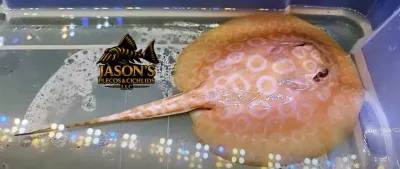
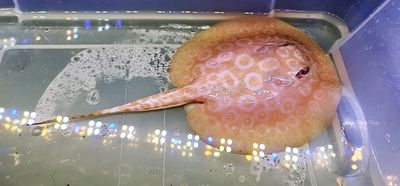
Golden Base Albino Pearl Stingray - (Potamotrygon Jabuti)
Golden Base Albino Pearl Stingray - (Potamotrygon Jabuti)
Price of shipping is not included.
was $850.00
Save 4%
$815.00
Captive Bred
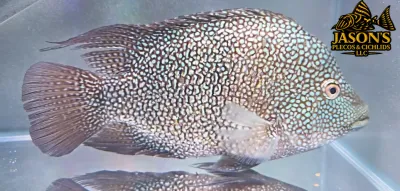
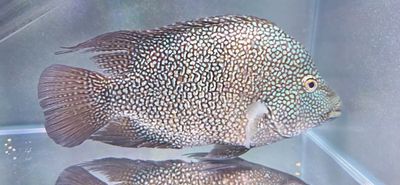
Green Texas Cichlid - (Herichthys carpintis)
Green Texas Cichlid - (Herichthys carpintis)
Price of shipping is not included.
was $190.00
Save 13%
$165.00
Wild Caught
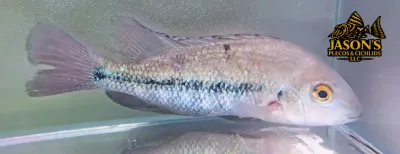
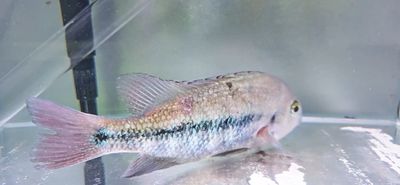
Papaloapan Cichlid - (Paraneetroplus Nebuliferum)
Papaloapan Cichlid - (Paraneetroplus Nebuliferum)
Price of shipping is not included.
was $250.00
Save 20%
$200.00
Captive Bred
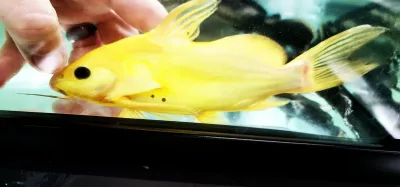
False Upside-down Catfish - (Synodontis nigrita “Yellow”)
False Upside-down Catfish - (Synodontis nigrita “Yellow”)
Price of shipping is not included.
$140.00
Captive Bred
L046 Zebra Pleco - (Hypancistrus zebra)
L046 Zebra Pleco - (Hypancistrus zebra)
Price of shipping is not included.
5.0
(4)
was $175.00
Save 9%
$160.00
Powered by Lightspeed
Display prices in:USD