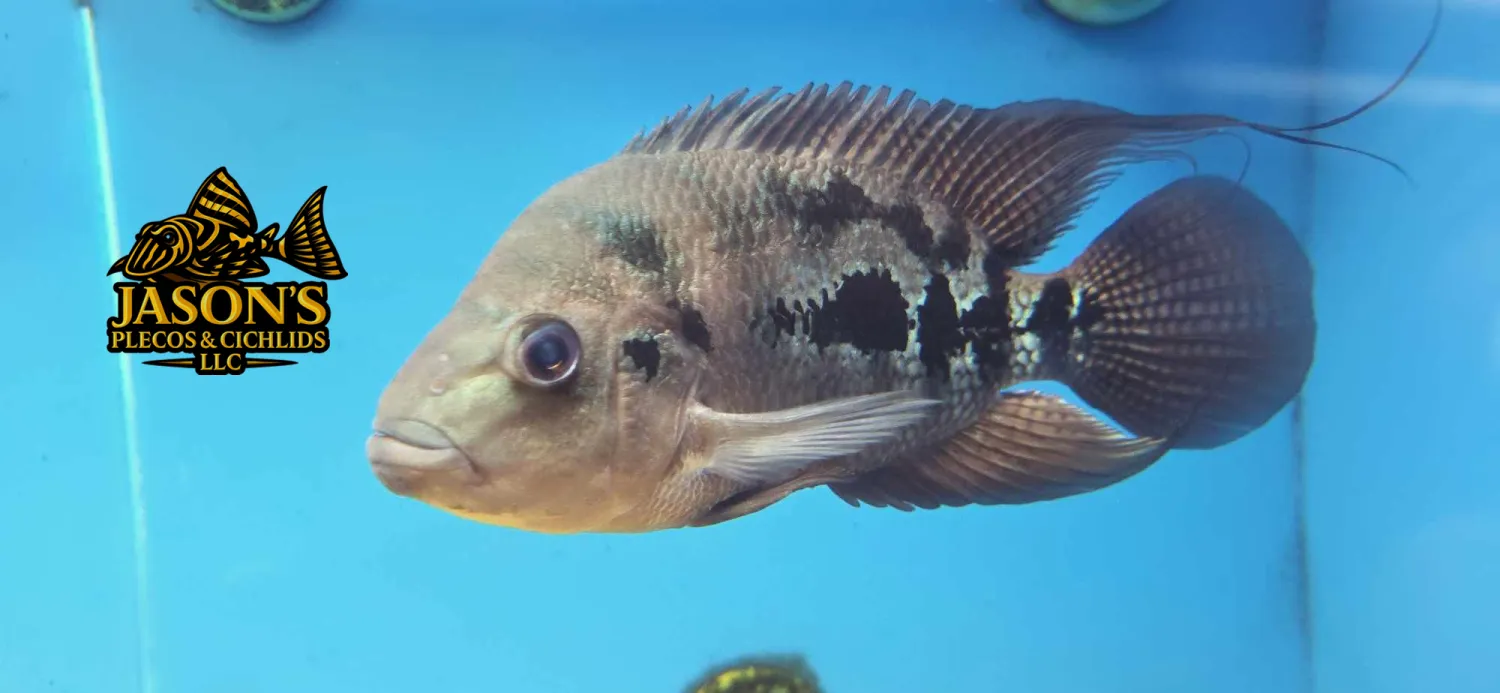
Hybrid Cichlid - Unknown Mix
$160.00
Sold out
Size
Questions, Comments, Concerns? Let us know!
Enter your text
Required Reusable Shipping Bags
Price of shipping is not included.
Sold out
Save this fish to my favorites.
Customer reviews
Reviews only from verified customers
No reviews yet. You can buy this product and be the first to leave a review.
Hybrid Cichlid - Unknown Mix
Fish Details, Description and Information Below:
🐟 Hybrid Cichlid – Unknown Mix – Rare Captive-Bred Mystery Cichlid
The Hybrid Cichlid – Unknown Mix is a unique captive-bred cichlid whose exact parental combination is unknown.
Rather than guessing at its ancestry, this fish is being sold honestly as an:
Unknown Hybrid Cichlid
Hybrid cichlids can inherit an unpredictable combination of characteristics from their parent lines, including differences in:
- Color
- Pattern
- Body shape
- Adult size
- Fin shape
- Nuchal hump development
- Temperament
- Growth rate
This means every individual can develop into something completely different.
Juveniles may change dramatically as they mature, developing new colors, markings, body proportions, and personality traits that were not obvious when they were young.
For aquarists who enjoy unusual fish and watching a mystery cichlid develop over time, an unknown hybrid can make an extremely interesting centerpiece animal.
🔎 Quick Facts – Hybrid Cichlid Unknown Mix
- 📛 Common Name: Hybrid Cichlid – Unknown Mix
- 🧬 Identification: Unknown Hybrid Cichlid
- 🔬 Scientific Name: None – Parent Species Unknown
- 🐟 Family: Cichlidae
- 🐣 Stock: Captive Bred
- 🎨 Type: Hybrid / Designer Cichlid
- 🌎 Wild Origin: Not Applicable – Captive-Bred Hybrid
- 🧬 Parentage: Unknown
- 📏 Adult Size: Cannot be reliably predicted
- 📏 Planning Size: Prepare for approximately 10–12"+ unless confirmed otherwise
- 🏠 Recommended Aquarium: 75 gallons minimum while smaller; 125+ gallons recommended for conservative long-term planning
- 🌡️ Temperature: Approximately 76–82°F
- 💧 pH: Approximately 6.8–8.0
- 💨 Oxygenation: Good
- 🍽️ Diet: Omnivore
- 😠 Temperament: Variable; assume territorial / semi-aggressive to aggressive
- 🐠 Swimming Area: Middle / Lower
- 🥚 Breeding: May be fertile; fertility cannot be guaranteed
- ⭐ Care Level: Intermediate
- 🏆 Availability: Unique Captive-Bred Hybrid
🧬 What Is an Unknown Hybrid Cichlid?
A hybrid cichlid is produced when two genetically compatible cichlid lines reproduce.
In this particular fish:
The exact parent species are unknown.
Because the ancestry cannot be verified, we will not guess at the parentage or advertise the fish as a specific named cross.
The most accurate identification is:
Hybrid Cichlid – Unknown Mix
This provides customers with an honest description without introducing incorrect lineage information into the aquarium hobby.
⚠️ No Scientific Species Name
Because this fish is a hybrid with unknown ancestry, it should not be assigned a scientific species name.
Do not identify it as:
- Vieja sp. unless ancestry supports it
- Amphilophus sp. unless ancestry supports it
- Flowerhorn unless it is known to be a Flowerhorn line
- Texas hybrid unless Texas ancestry is documented
- Midas hybrid unless Midas ancestry is documented
- Any other pure species
For this fish, the correct identification is simply:
Hybrid Cichlid – Parentage Unknown
🎨 Appearance
The appearance of an unknown hybrid can vary dramatically.
Possible coloration may include combinations of:
- 🔴 Red
- 🟠 Orange
- 🟡 Yellow
- 💚 Green
- 💙 Blue
- 🩵 Turquoise
- ⚪ White
- ⚫ Black
- 🌸 Pink
- 🩶 Silver
- 🟤 Brown
Possible markings may include:
- Vertical bars
- Horizontal markings
- Spots
- Blotches
- Pearling
- Metallic scales
- Marbling
- Irregular patterns
- Reduced markings
The individual fish being purchased should be considered the best representation of its current appearance.
🎨 Color Can Change Dramatically
Hybrid cichlids can change significantly as they mature.
A juvenile that appears:
- Gray
- Brown
- Lightly patterned
- Dark
- Plain
may later develop:
- Red
- Orange
- Yellow
- Blue-green pearling
- Black markings
- Metallic coloration
The opposite can also occur.
Some juvenile markings may disappear completely as the fish matures.
⚠️ Color & Pattern Disclaimer
Because parentage is unknown:
Exact adult coloration cannot be guaranteed.
Appearance can be influenced by:
- Genetics
- Age
- Sex
- Dominance
- Breeding condition
- Diet
- Lighting
- Aquarium background
- Stress
- Water quality
Good husbandry helps the fish express its genetic potential, but it cannot determine what genes an unknown hybrid inherited.
📏 Adult Size – UNKNOWN
This is one of the most important things customers need to understand.
Because the parent species are unknown:
The exact adult size cannot be reliably predicted.
Many commonly hybridized Central American-style cichlids reach:
10–12 inches or more
and some grow considerably larger.
For responsible long-term planning, we recommend preparing for:
At least a 10–12"+ adult fish
unless documented ancestry or mature growth later proves otherwise.
🚨 Do Not Purchase Based on Current Size
A small juvenile may look appropriate for a modest aquarium.
That does not mean it will remain small.
Unknown hybrids may inherit:
- Rapid growth
- Large adult size
- Deep body shape
- Heavy muscle development
from one or both parents.
Customers should purchase this fish only if they are prepared to upgrade housing as necessary.
🏠 Aquarium Size
While the fish is young, aquarium size should always be appropriate for its current size.
However, because the adult size is unknown, we recommend planning conservatively.
Long-Term Planning
125 gallons or larger is recommended when possible.
If the fish matures substantially smaller, that additional space remains beneficial.
If it develops into a large 10–14"+ cichlid, the extra space may become essential.
📐 Aquarium Footprint Matters
Large cichlids benefit more from:
- Length
- Width
- Open swimming space
than excessive aquarium height.
Provide enough room for the fish to:
- Turn comfortably
- Swim naturally
- Establish territory
- Avoid tankmates
- Exercise
A long aquarium is strongly preferred.
🪨 Aquarium Setup
A flexible hybrid-cichlid setup should include:
- Sand or smooth gravel
- Large smooth rocks
- Driftwood
- Caves
- Visual barriers
- Open swimming areas
- Strong filtration
- Good oxygenation
Avoid filling the aquarium with excessive décor.
Leave enough open space for a potentially large adult.
⚠️ Secure the Décor
Unknown hybrid cichlids should be expected to behave like powerful large cichlids.
They may:
- Dig
- Move gravel
- Rearrange rocks
- Move driftwood
- Uproot plants
- Attack heaters
- Claim caves
Make sure heavy rocks cannot collapse if the fish excavates underneath them.
🌿 Plants
A heavily planted aquarium may not be practical.
Hybrid cichlids may:
- Dig around roots
- Uproot plants
- Tear leaves
- Eat plant material
Hardy plants attached to:
- Rocks
- Driftwood
may have a better chance.
Even then, compatibility with plants cannot be guaranteed.
💧 Water Parameters
Because the parental species are unknown, there is no natural river or lake chemistry that can accurately be assigned to this fish.
A practical captive range for many large captive-bred hybrid cichlids is:
- 🌡️ Temperature: 76–82°F
- 💧 pH: Approximately 6.8–8.0
- 💨 Oxygenation: Good
- ☠️ Ammonia: 0 ppm
- ☠️ Nitrite: 0 ppm
- 🔄 Nitrate: Keep as low as reasonably possible
Most importantly:
Maintain Stable, Clean Water
Avoid sudden changes in:
- Temperature
- pH
- Hardness
💩 Filtration
Large hybrid cichlids can produce substantial waste.
Strong filtration is recommended.
Suitable filtration may include:
- Large canister filters
- Sump filtration
- Strong mechanical filtration
- High-capacity biological filtration
- Strong surface agitation
Regular partial water changes should be part of normal maintenance.
🍽️ Diet & Feeding
Because exact ancestry is unknown, a balanced:
Omnivorous Cichlid Diet
is the safest general approach.
Recommended staple foods include:
- High-quality cichlid pellets
- Quality omnivore pellets
- Spirulina-containing foods
- Vegetable-based cichlid pellets
Supplemental foods may include:
- Mysis shrimp
- Krill
- Brine shrimp
- Shrimp
- Insect-based foods
- Appropriate frozen foods
A varied diet provides better nutritional coverage than relying on one food.
🥬 Include Plant-Based Nutrition
Because we do not know whether the fish inherited strong herbivorous tendencies from:
- Vieja
- Herichthys
- Other plant-eating cichlids
it is wise to include some:
- Spirulina
- Vegetable ingredients
- Plant-based pellets
- Appropriate fiber
in the diet.
This is preferable to maintaining an unknown hybrid exclusively on high-protein carnivore foods.
🚫 Avoid Routine Feeder Fish
We do not recommend routinely feeding live feeder fish.
Feeder fish can introduce:
- Parasites
- Bacterial disease
- Viral disease
- Nutritional deficiencies
Hybrid cichlids generally accept:
- Pellets
- Frozen foods
- Prepared foods
readily.
🚫 Avoid Mammal & Poultry Meat
Do not routinely feed:
- Beef
- Beef heart
- Pork
- Chicken
These foods should not form a regular part of the diet.
Use nutritionally appropriate aquatic and formulated fish foods instead.
⚠️ Avoid Overfeeding
Large cichlids quickly learn to recognize whoever feeds them.
They may:
- Follow people
- Approach the glass
- Beg constantly
- Become excited when food appears
Begging does not always mean hunger.
Overfeeding contributes to:
- Obesity
- Excessive waste
- Poor water quality
- Digestive problems
Feed controlled portions.
😠 Temperament – UNKNOWN
Temperament is another characteristic that cannot be reliably predicted without knowing the parents.
Therefore:
Assume Semi-Aggressive to Aggressive
until the individual proves otherwise.
The fish may become increasingly territorial as it matures.
🧠 Individual Personality
Hybrid cichlids can inherit very different behavioral traits.
One individual may become:
- Relatively tolerant
- Interactive
- Moderately territorial
while another may become:
- Extremely dominant
- Highly aggressive
- Intolerant of tankmates
Do not assume that two fish from the same group will behave identically.
🐠 Tankmates
Tankmates should be chosen cautiously.
Possible tankmates in a sufficiently large aquarium may include carefully selected:
- Similar-sized cichlids
- Large plecos
- Large catfish
- Other robust fish
Avoid:
- Tiny community fish
- Delicate fish
- Very timid fish
- Slow long-finned fish
- Fish small enough to swallow
Compatibility is never guaranteed.
⚠️ Have a Backup Plan
A hybrid cichlid that lives peacefully with tankmates as a juvenile can become dramatically more aggressive after reaching maturity.
Always have access to:
- Aquarium divider
- Spare aquarium
- Alternate permanent housing
if compatibility changes.
👤 It May Eventually Need to Live Alone
Because parentage and temperament are unknown:
Be prepared for the possibility that this fish may ultimately require its own aquarium.
This is especially important if it develops:
- Strong territorial behavior
- Large adult size
- Breeding aggression
- Dominance toward tankmates
♂️ Male vs. Female
Without knowing the parental species, visual sexing is less reliable.
Possible male traits may include:
- Larger body size
- Broader head
- Longer dorsal and anal fins
- Greater territorial behavior
- Possible nuchal hump
Possible female traits may include:
- Smaller adult size
- Fuller abdomen when carrying eggs
However:
These characteristics cannot be guaranteed for an unknown hybrid.
Unless sex has been confidently established:
Sell as Unsexed
🥚 Breeding
Unknown hybrid cichlids may be:
- Fertile
- Partially fertile
- Sterile
There is no way to guarantee fertility simply because the fish is a hybrid.
If fertile, many large American-style cichlid hybrids retain typical:
Substrate-Spawning Behavior
A pair may choose:
- Flat rock
- Slate
- Flowerpot
- Smooth stone
- Aquarium bottom
as a spawning site.
🚨 Breeding Aggression
If this fish forms a pair, aggression may increase dramatically.
Possible behaviors include:
- Chasing
- Biting
- Digging
- Territory defense
- Attacking tankmates
- Attacking its mate
Always have a divider or alternate aquarium available if breeding is attempted.
🧬 Hybrid Breeding Ethics
Because the parents of this fish are unknown:
Any offspring should also be clearly identified as hybrids of unknown ancestry.
Do not sell offspring as:
- Pure Vieja
- Pure Amphilophus
- Pure Herichthys
- Pure Texas Cichlid
- Pure Midas
- Flowerhorn
- Any named species
unless ancestry can actually be documented.
Accurate labeling helps prevent unknown hybrids from being mixed into pure-species breeding programs.
🧬 Why We Do Not Guess the Parentage
It may be tempting to identify a hybrid based only on:
- Color
- Body shape
- Face shape
- Pattern
- Fins
But visual appearance alone does not reliably establish parentage.
Different cichlid crosses can produce remarkably similar-looking offspring.
Multiple generations of hybridization can make visual identification even more difficult.
For this reason:
Unknown Means Unknown
and we believe honest identification is better than inventing a pedigree.
⭐ Why Keep an Unknown Hybrid Cichlid?
For some aquarists, the mystery is part of the appeal.
An unknown hybrid offers the opportunity to watch a completely individual fish develop over time.
Possible characteristics may include:
- 🎨 Unique coloration
- 💎 Unexpected pearling
- 🔴 Red or orange development
- 💙 Blue-green markings
- 💪 Powerful body shape
- 🧠 Interactive personality
- 🥚 Interesting breeding behavior
- 🧬 One-of-a-kind genetics
- 🏆 Unique appearance
Unlike a pure species where adult appearance is relatively predictable:
An unknown hybrid can be a genuine surprise.
⚠️ Important Considerations
Before purchasing an Unknown Hybrid Cichlid:
- Parent species are unknown.
- Do not assign it a false scientific name.
- Exact adult size cannot be guaranteed.
- Plan conservatively for a potentially 10–12"+ fish.
- Be prepared for the possibility of an even larger adult.
- Plan for a large aquarium.
- 125+ gallons is recommended for conservative long-term planning.
- Exact adult color cannot be guaranteed.
- Exact pattern cannot be guaranteed.
- Exact temperament cannot be guaranteed.
- Assume territorial behavior is possible.
- Be prepared to house the fish alone if necessary.
- Maintain powerful filtration.
- Keep ammonia and nitrite at zero.
- Feed a varied omnivorous diet.
- Include plant-based nutrition.
- Avoid routine feeder fish.
- Secure rocks and aquarium décor.
- Expect digging.
- Do not breed offspring into pure species lines.
- Always identify offspring honestly as hybrids.
- Never release aquarium fish into natural waterways.
🧬 Identification Disclaimer
This fish is being sold as:
Hybrid Cichlid – Unknown Mix
because its exact parental ancestry is not known.
We will not guess or assign parent species based solely on appearance.
There is:
- No valid species-level scientific name
- No confirmed parent formula
- No guaranteed adult size
- No guaranteed adult pattern
- No guaranteed temperament
- No guaranteed fertility
The fish's appearance may change considerably as it matures.
🚚 Live Fish Shipping
Live fish are professionally packed for safe transport.
Shipping availability depends on:
- Fish size
- Destination
- Weather conditions
- Carrier availability
- Applicable state and local regulations
Larger specimens may require:
- Larger insulated shipping boxes
- Additional water
- Specialized packing
- Airline cargo shipping
Please review our Shipping & Payment Information and Live Arrival Guarantee / DOA Policy before ordering.
⚠️ Buyer Responsibility
Customers are responsible for confirming that hybrid cichlids may legally be purchased, possessed, transported, and received in their state or local jurisdiction before ordering.
Never release hybrid aquarium fish into natural waterways.
Powered by Lightspeed
Display prices in:USD